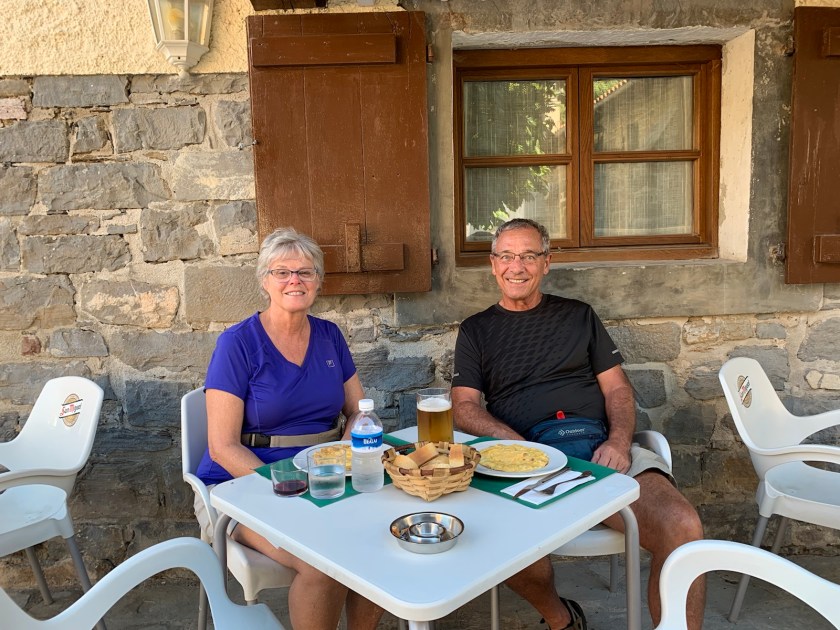
Day 10 – Estella to Villamajor de Monjardin

Walked today: 5.9 miles

Walked Camino 2019: 75.1 miles

We walked less than 6 miles today to avoid a 14 mile walk. There are no places to stop between “Monjardin” and Los Arcos.

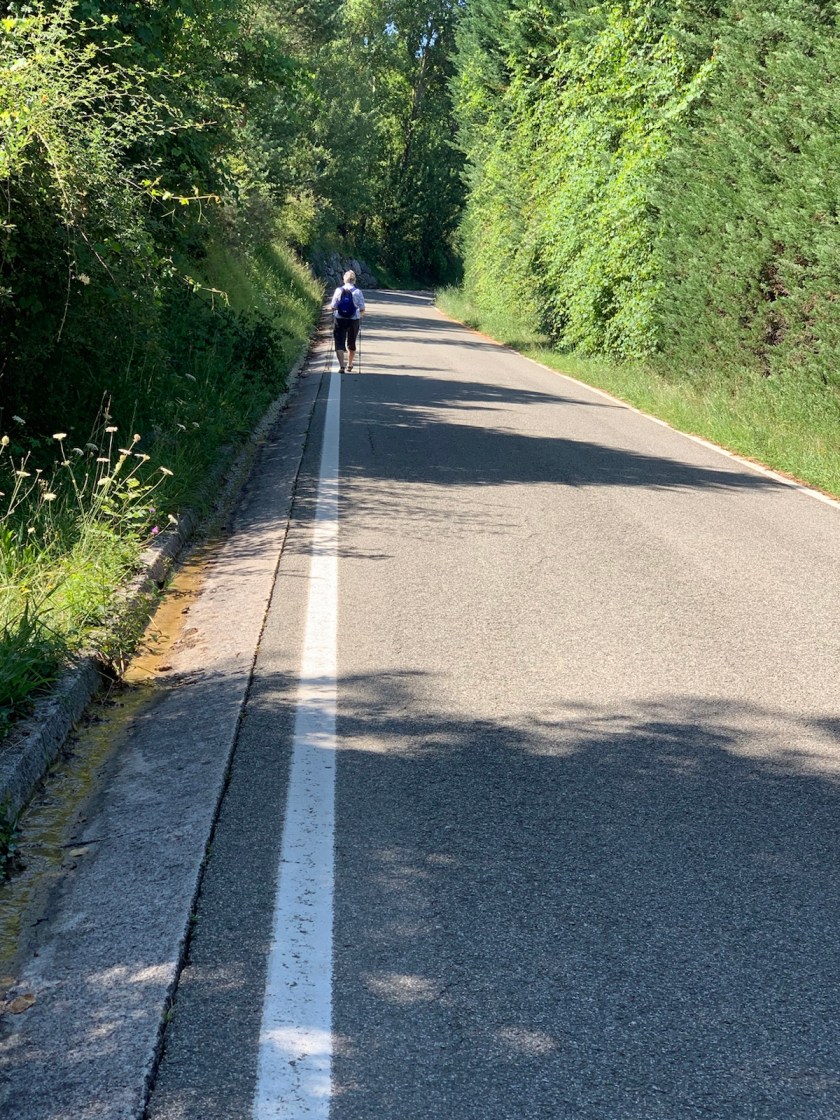
The first mile and a half out of Estella was on steep concrete surfaces through surburban residential areas. Crossing the highway out of town we continued upward passed the Irache Monastery, which dates back to the year 958… and the Irache Winery with its famous wine fountain, yes, 🍷 fountain.
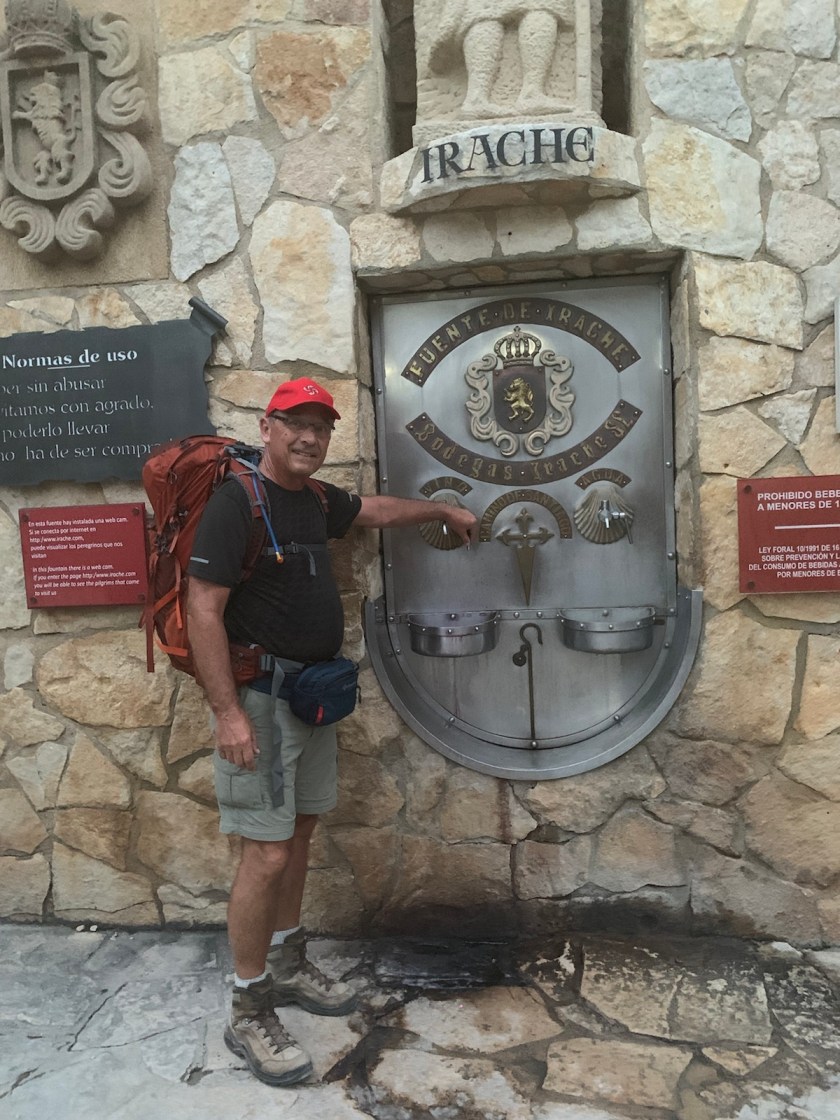
The plaque on the wall next to the fountain reads:

“Pilgrim, if you wish to arrive at Santiago full of strength and vitality, have a drink of this great wine and make a toast to happiness.”

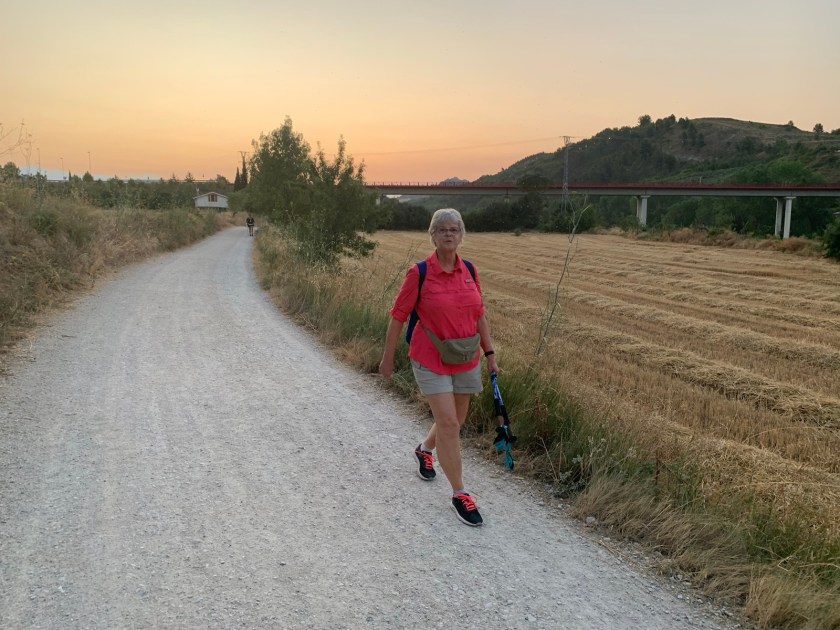
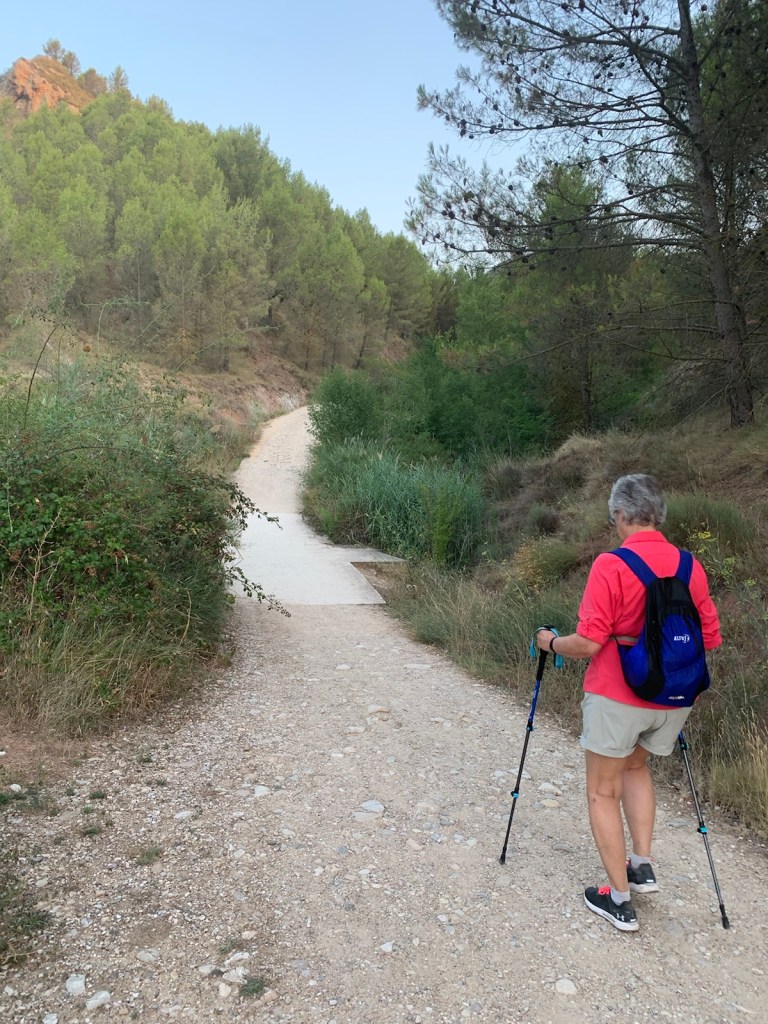
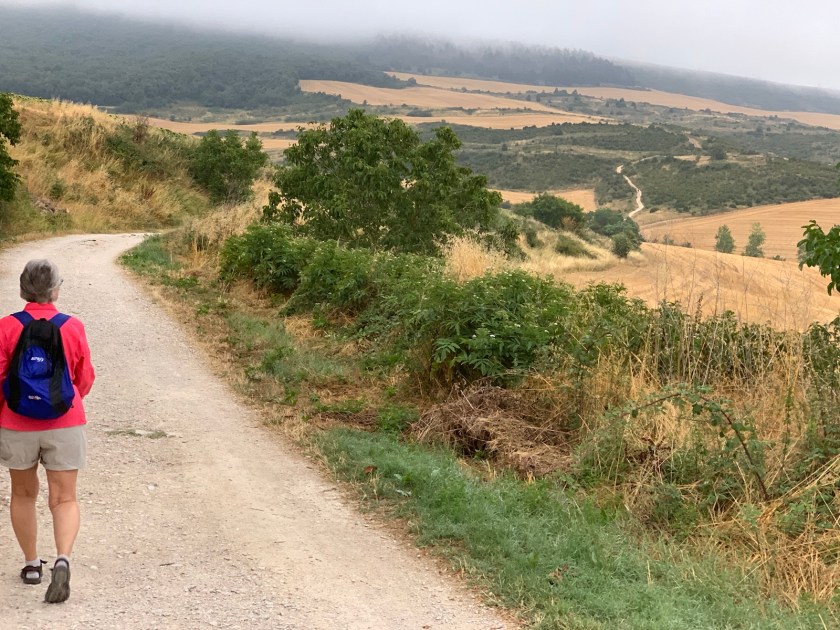
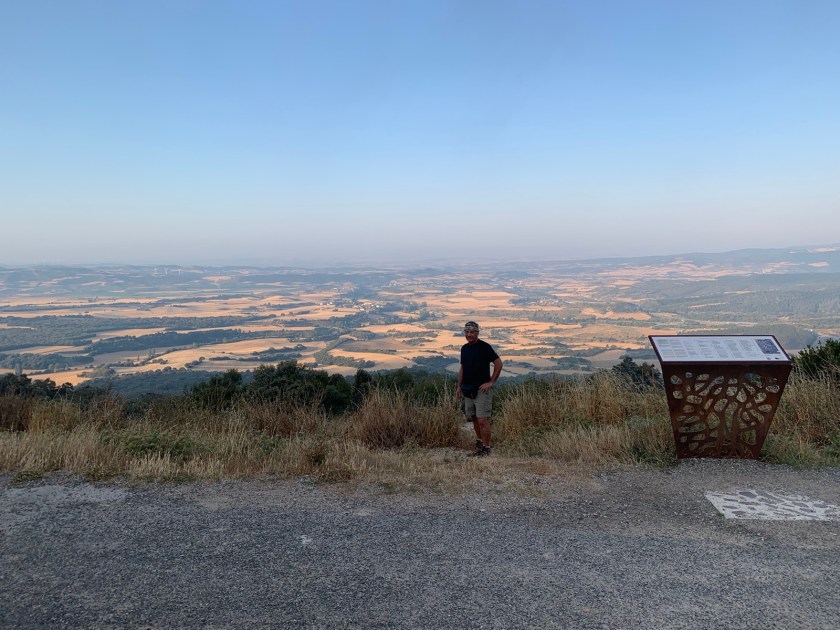
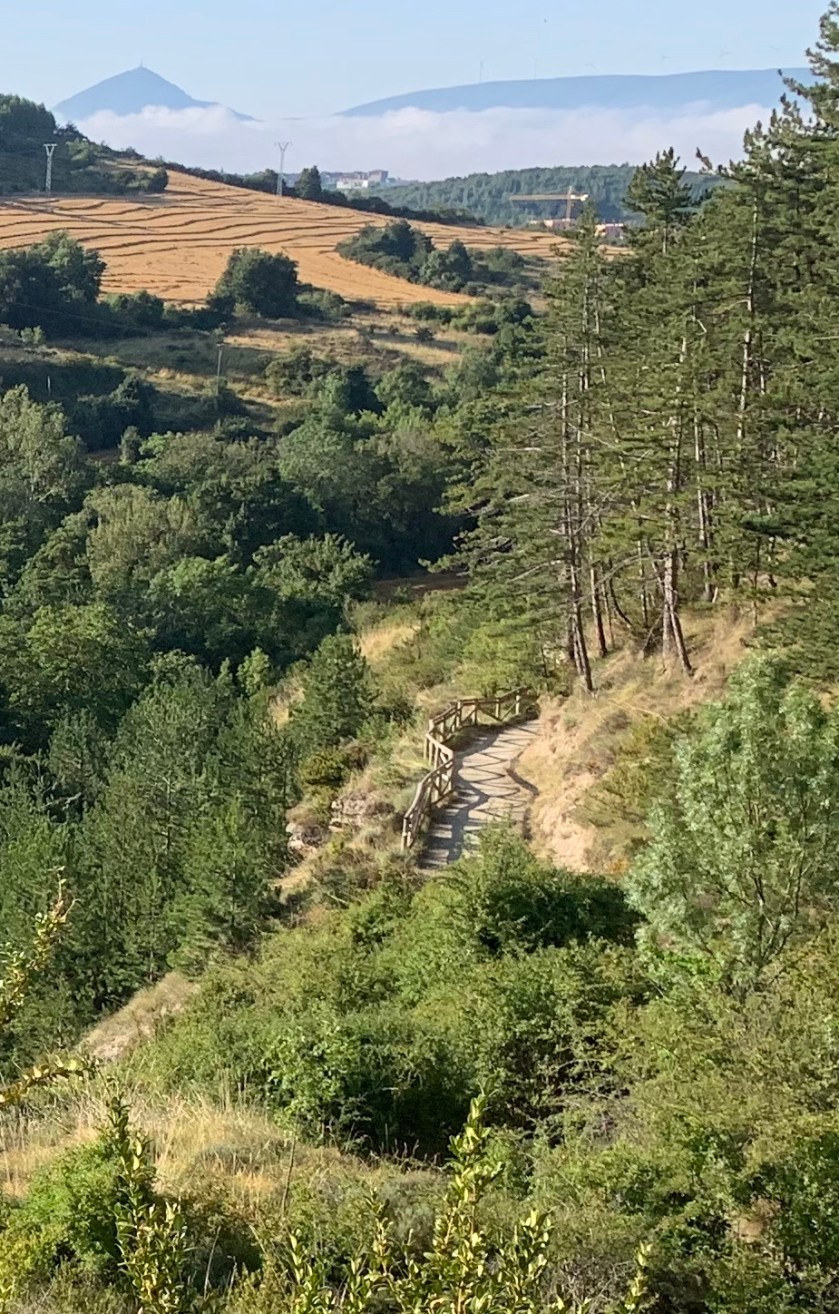
The rest of our morning walk was uneventful… not overly strenuous, varied scenery, a rest stop halfway up Monjardin in the village of Azqueta, and a final steep climb to our destination for the day.
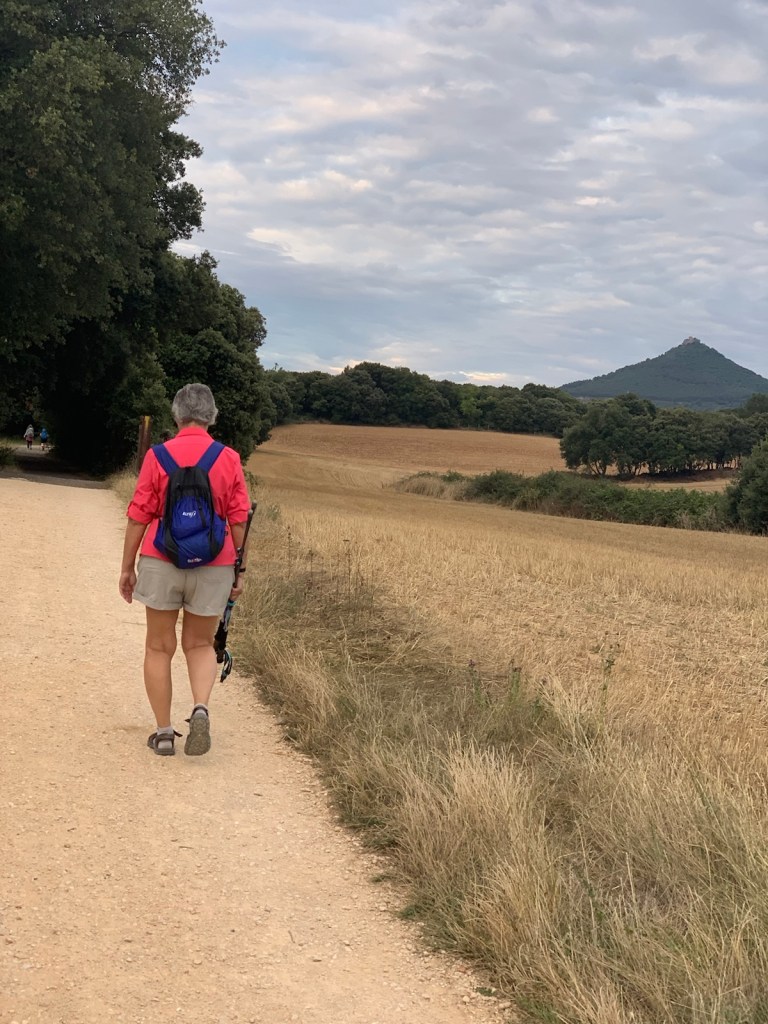
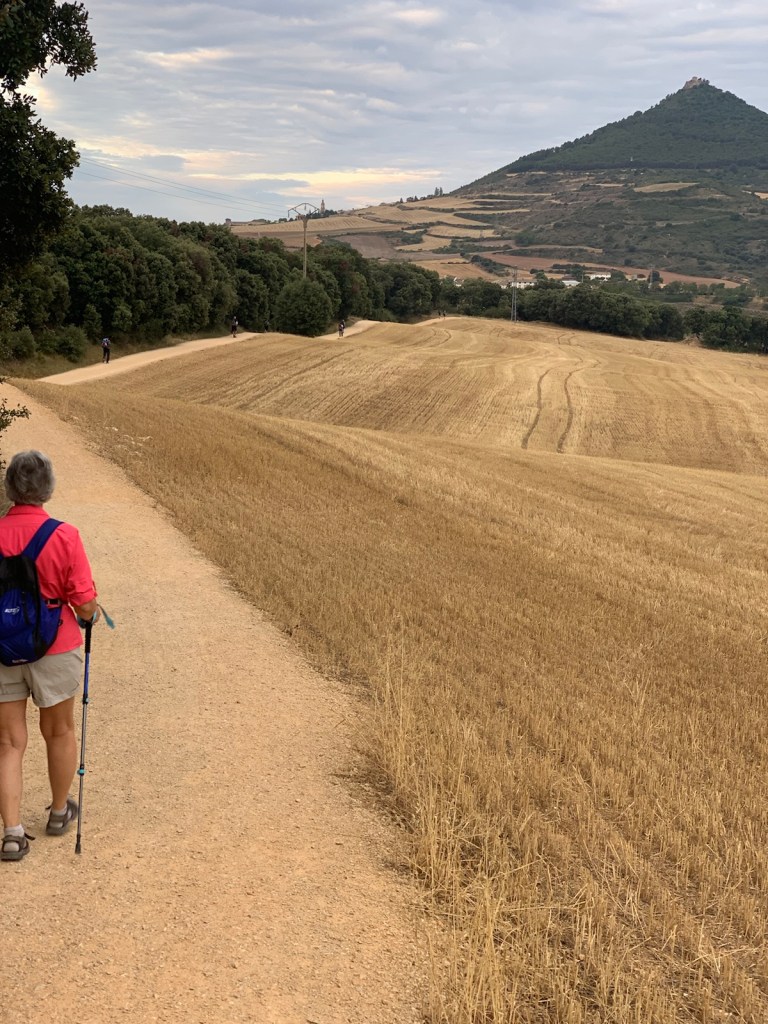
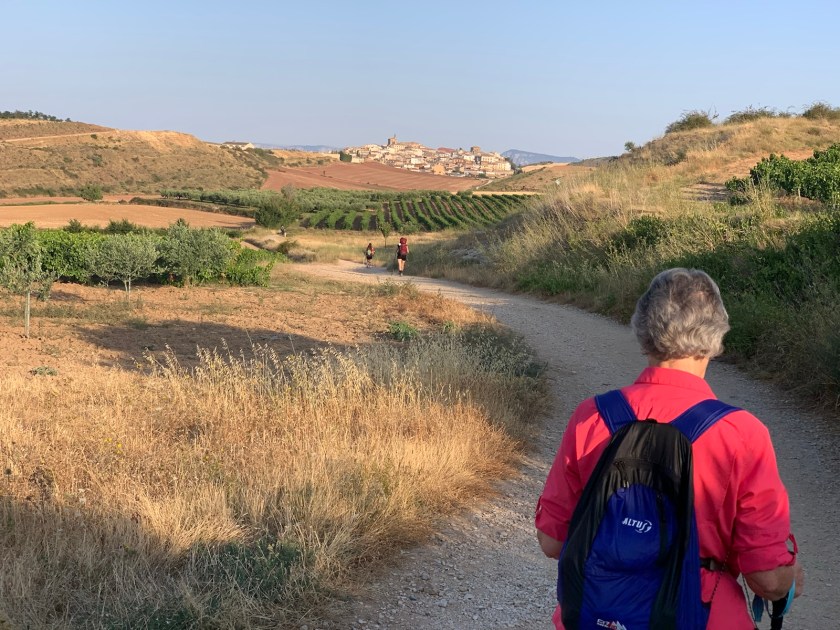
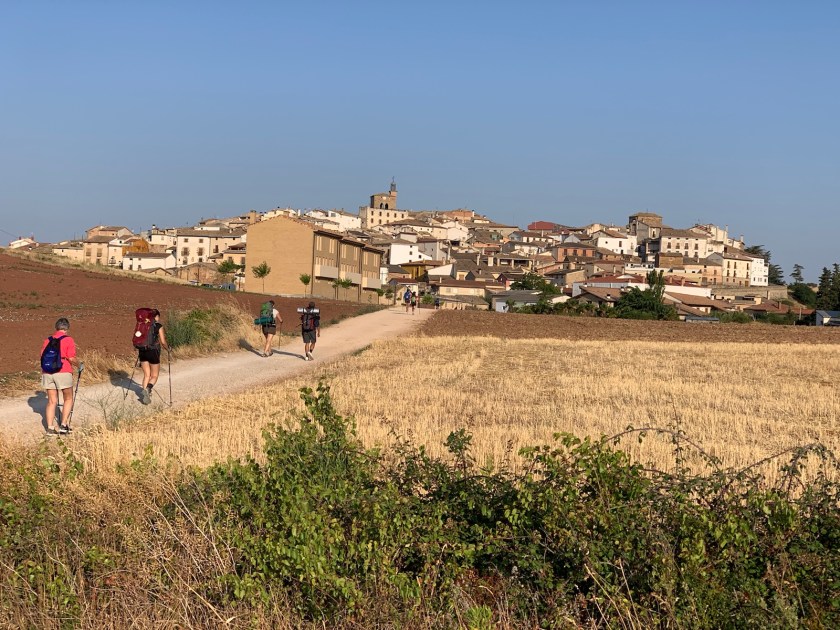
That’s Monjardin with castle ruins on top

Closing in on Monjardin
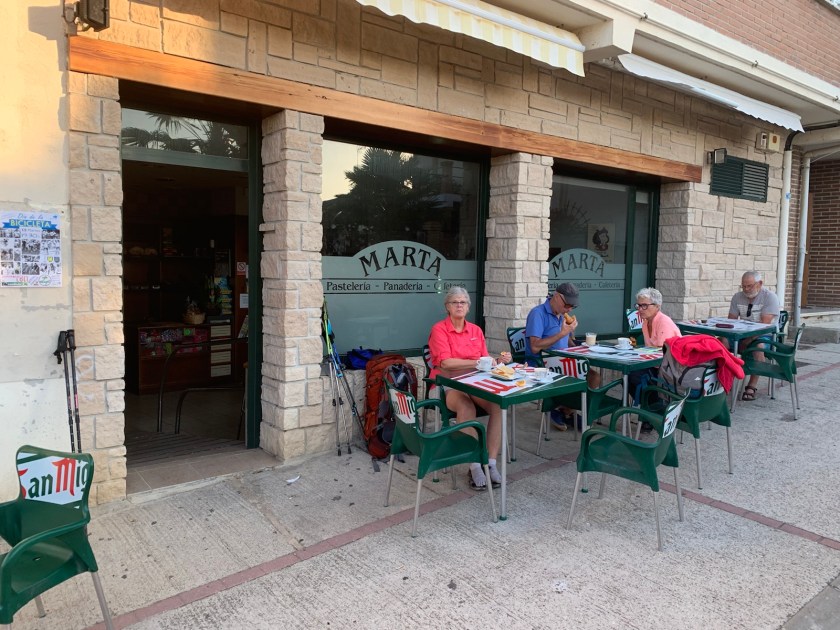
Breakfast stop
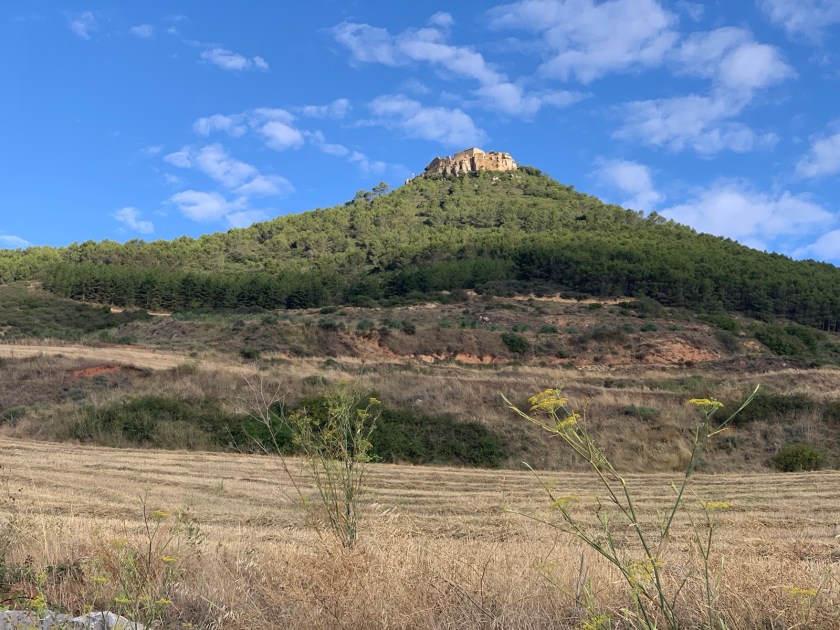
The fortress of Monjardin seen from Villamayor de Monjardin

We entered the village of Villamayor de Monjardin at 9:15, earlier than normal due to our early start (6:10) and the shorter distance to walk.

Villamayor de Monjardin (pop 139), derives from the Latin for “Mount García” for Sancho Garcés, first King of Pamplona (905-925AD), whose remains are interred in the Castle atop Monjardin.
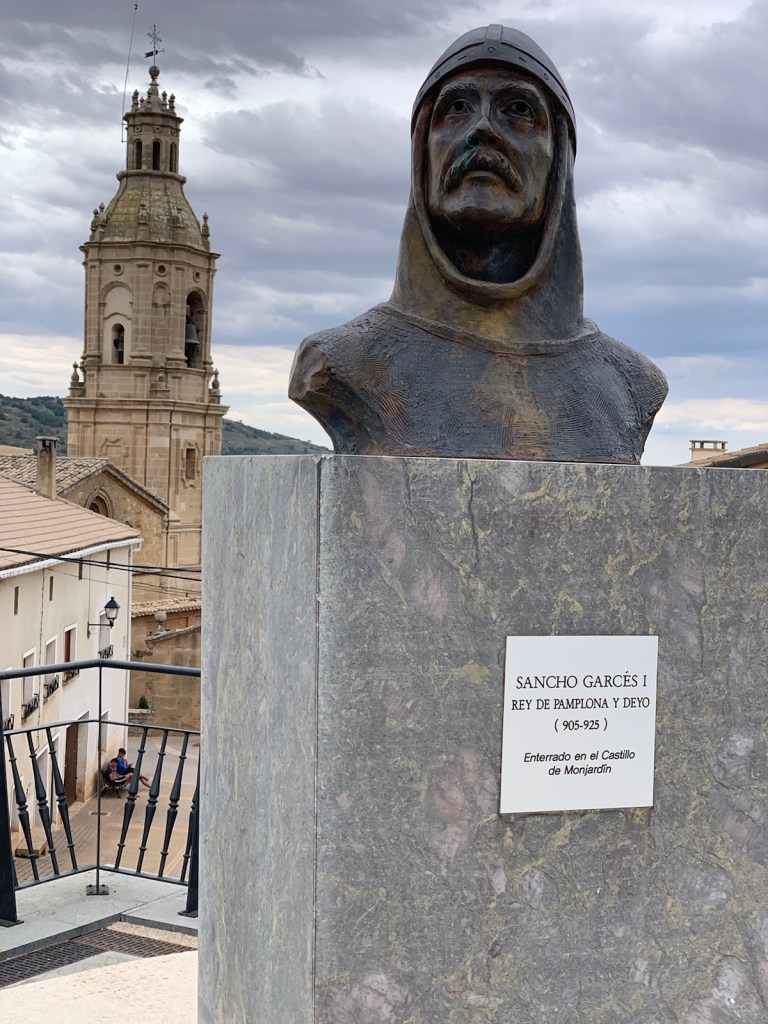
King Sancho I and Iglesia de San Andrés in background

The castle of Monjardín is the very origin of the kingdom of Navarre. The takeover of the castle of Monjardín is the first remarkable conquest that Navarre achieved over the Muslims in the area of the Reconquest. As a result, Navarre rulers were no longer treated as lords or barons, subordinate to the Mohammedan invaders rather than true kings. Sancho Garcés I (905 – 925) was the first to break this relationship of submission and the first to be recognized by the other Christian kings as one of their peers.

We’ve been very fortunate during our first 9 days to have access to our room very early in the day. But our luck ran out today. It’s the earliest we’ve arrived at our destination and the latest access so far… 2:00 p.m.!!

So, we had 4 1/2 hours to wait before getting showers, starting our chores, etc. And tomorrow we’ll need an early start for a much longer walk before it gets too hot.

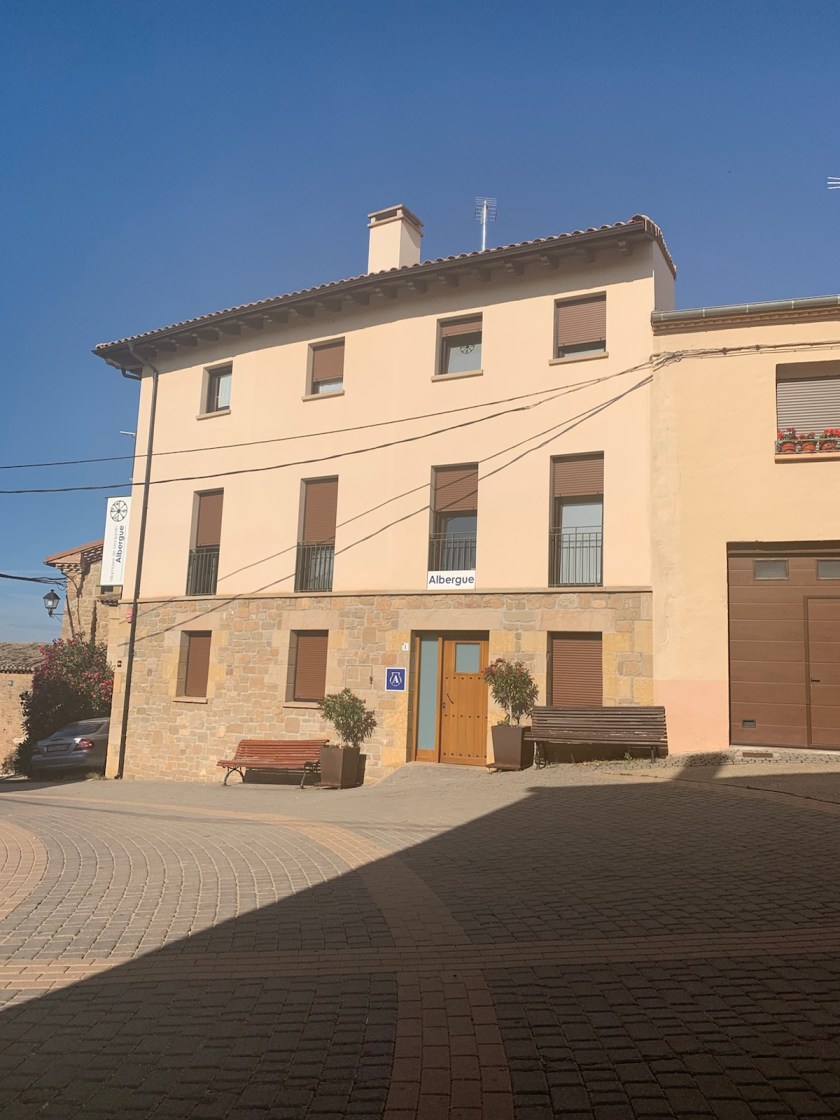
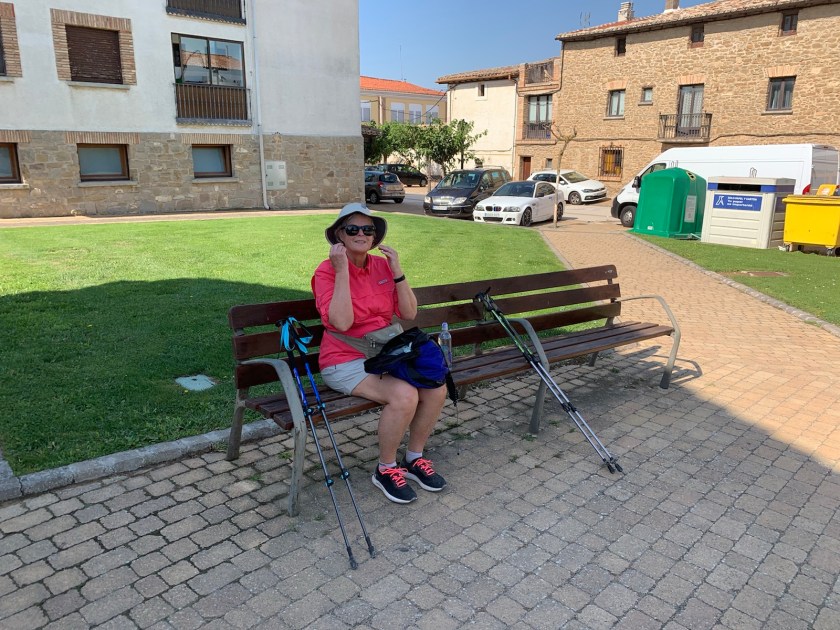
Selfie of us waiting on the bench across from Albergue

Linda found a comfortable bench in the shade in the tiny village square, where we took in all the action of pilgrim after pilgrim passing through and continuing onward. Removing our walking footwear, at least, gave our feet a start on cooling down and recovery time.

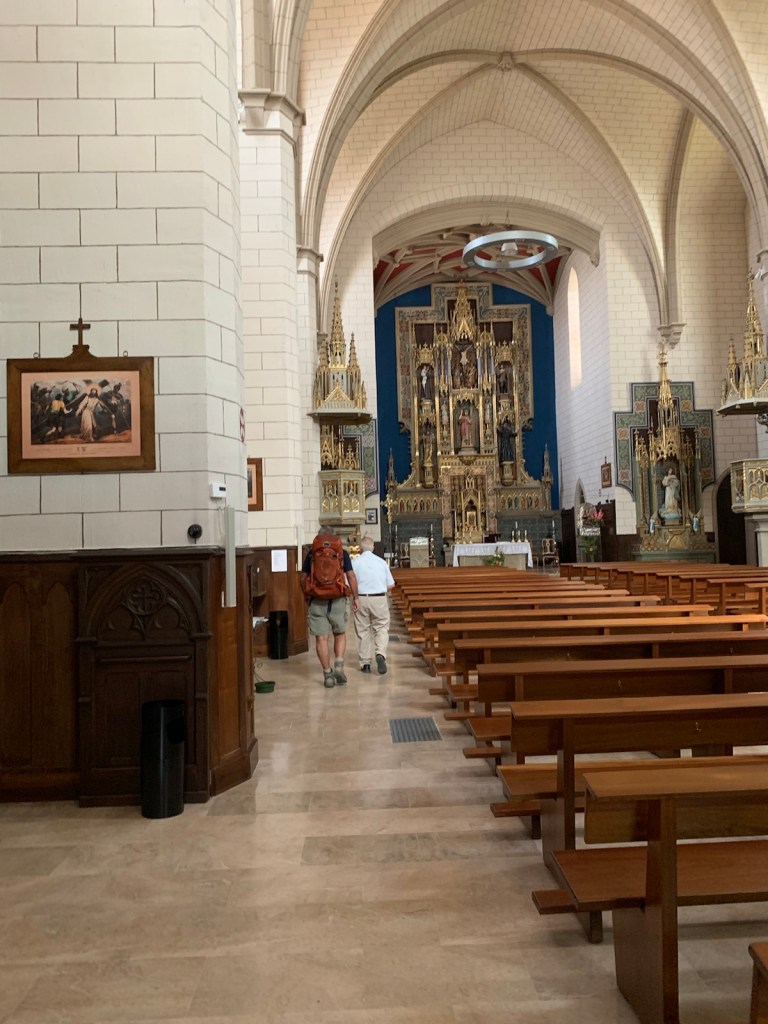
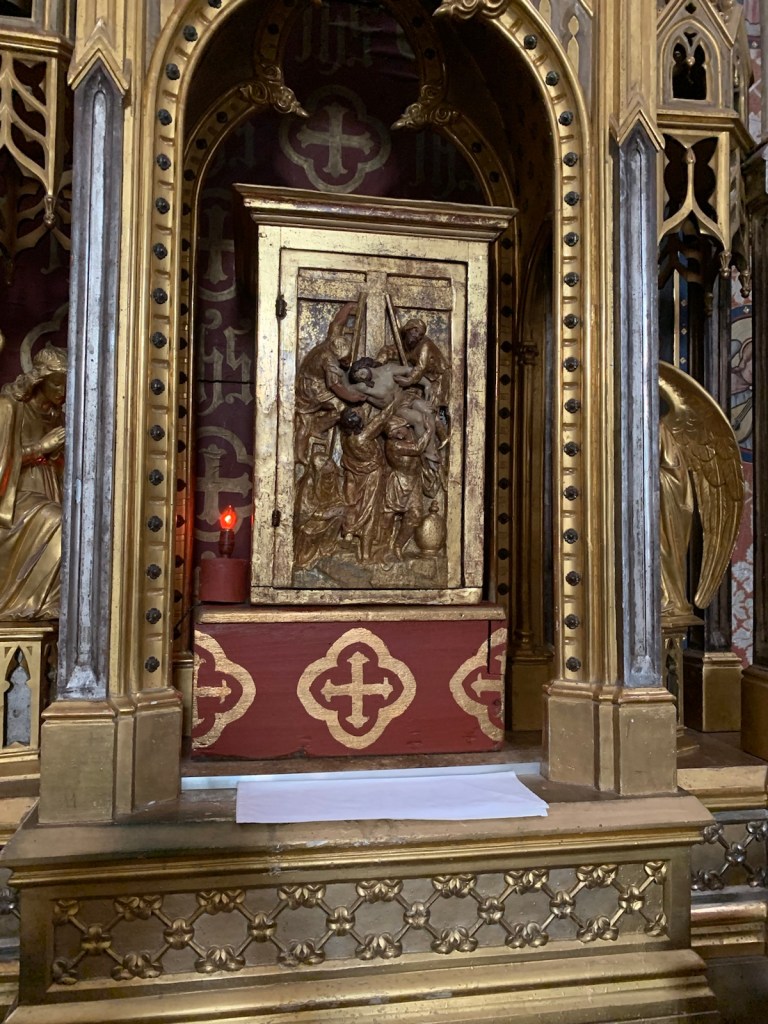
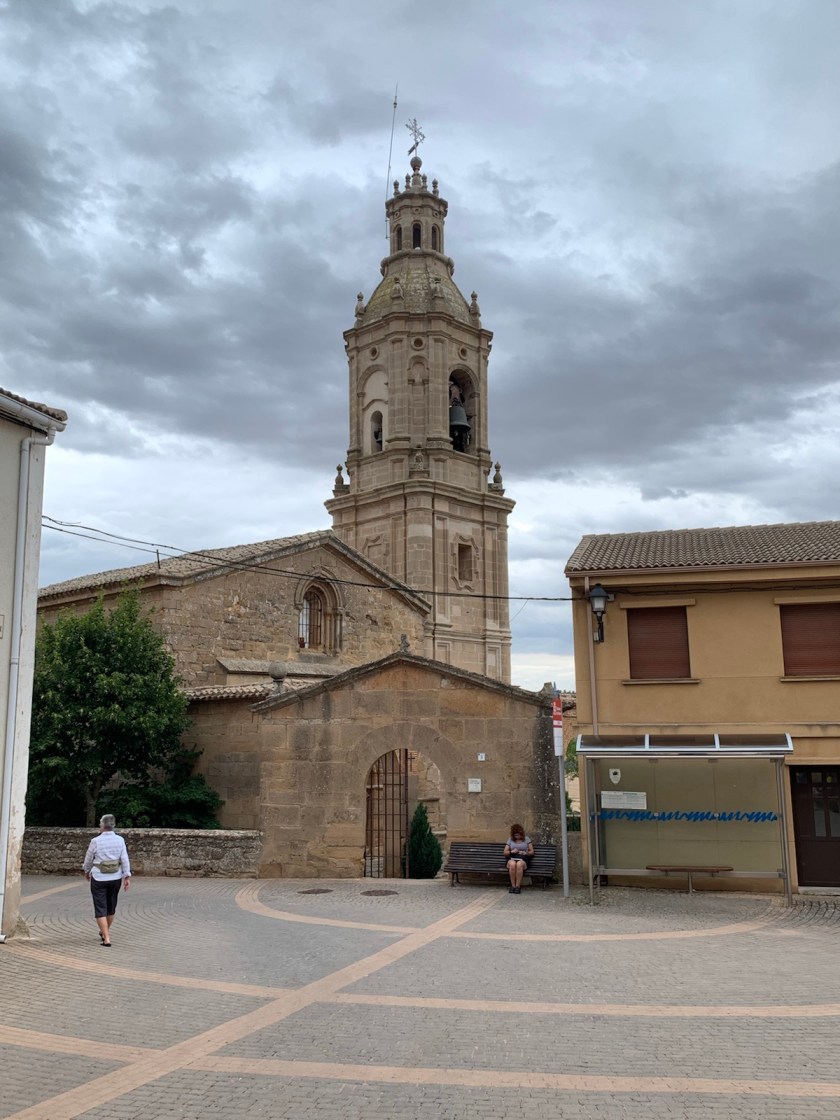
We visited the small 12th century Iglesia de San Andrés on the square and finagled the camera through a metal grated encasement to capture an image of the silver processional crucifix from the year 1200, which is displayed proudly on the sanctuary wall. We also had our credentials stamped by the attending priest.
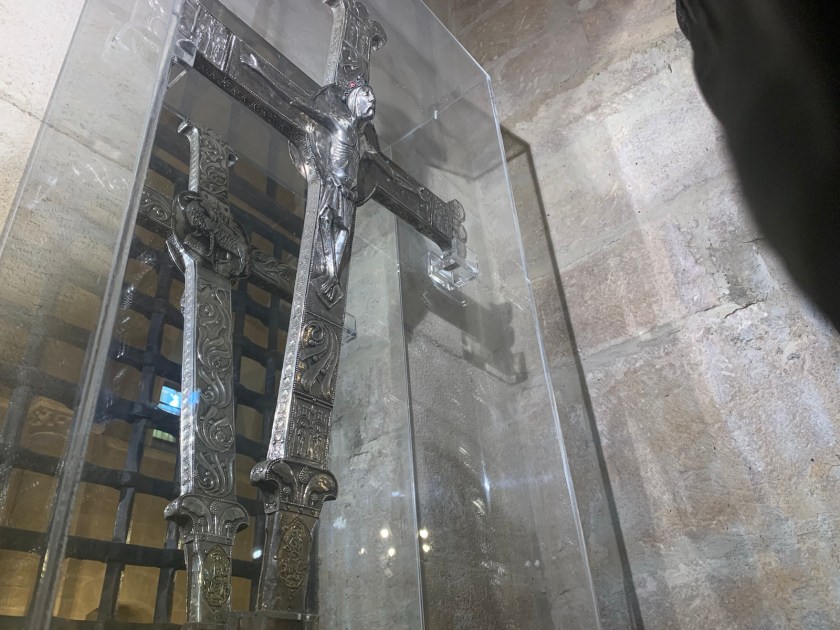
Reflection in mirror shows details of back of crucifix

Next we walked down the hillside for a half mile to visit a local bodega but were thwarted by the manager who said we would need to make a reservation for a wine tasting/tour and that it open from 2-4 only! We did negotiate a visit to their nice restrooms before climbing back up to the village square.

It being noon, by now, we continued further up the hillside to the only bar in town and ordered chicken nuggets for Jim’s birthday lunch a la Camino.
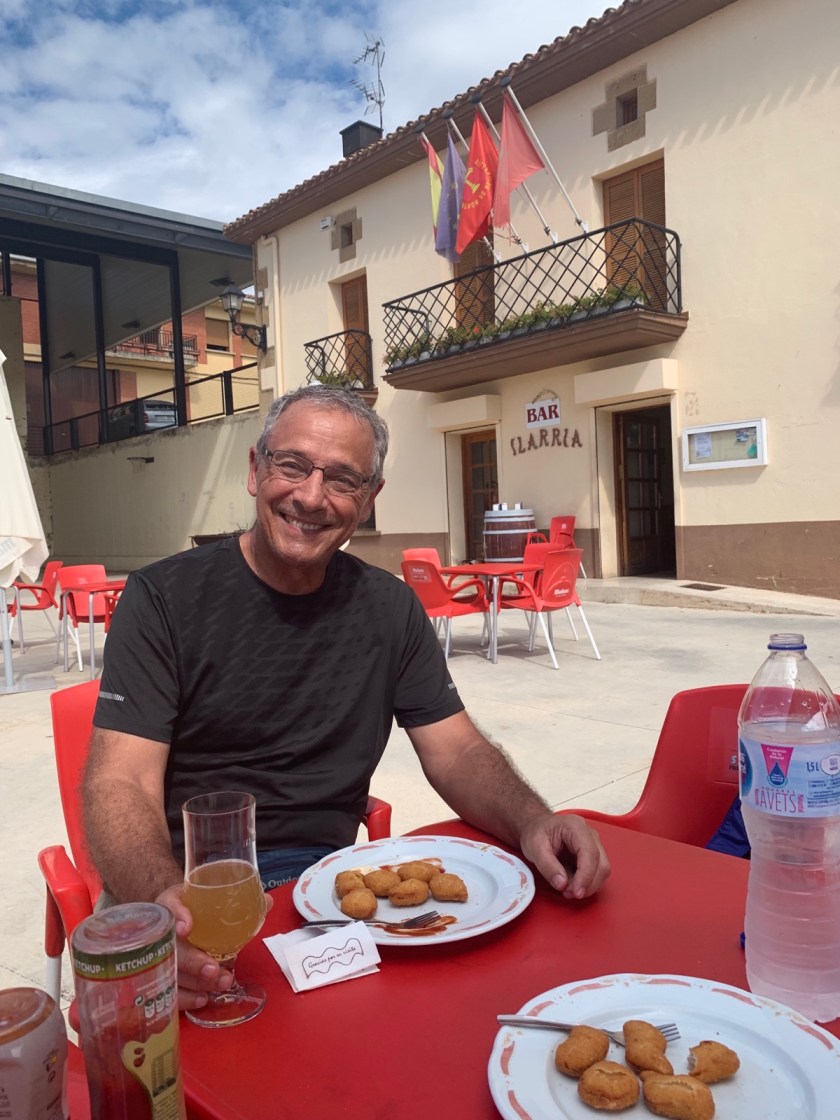
We stretched lunch until 1:30, then headed back down to village square and were delightfully surprised to find an open sign on our Albergue’s window.

We checked in and began our routines at about 1:45.

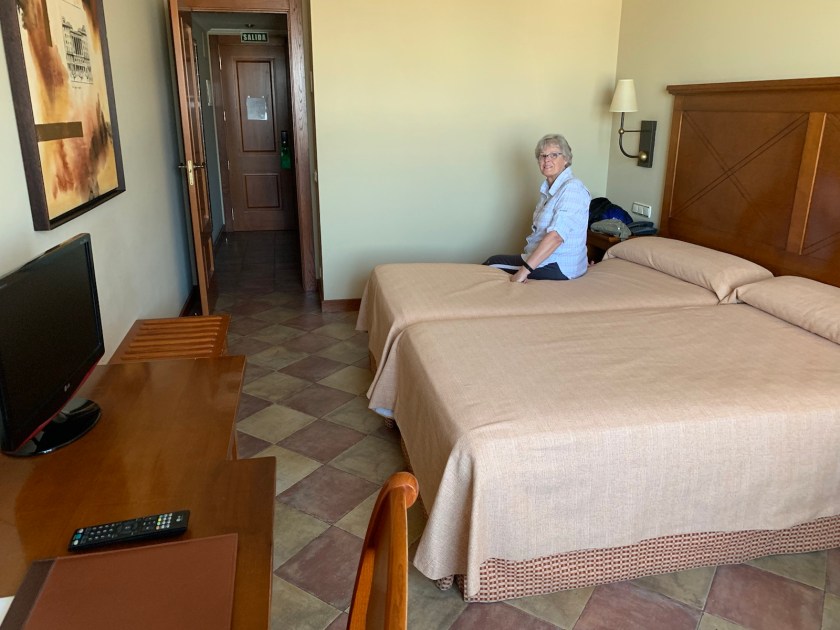
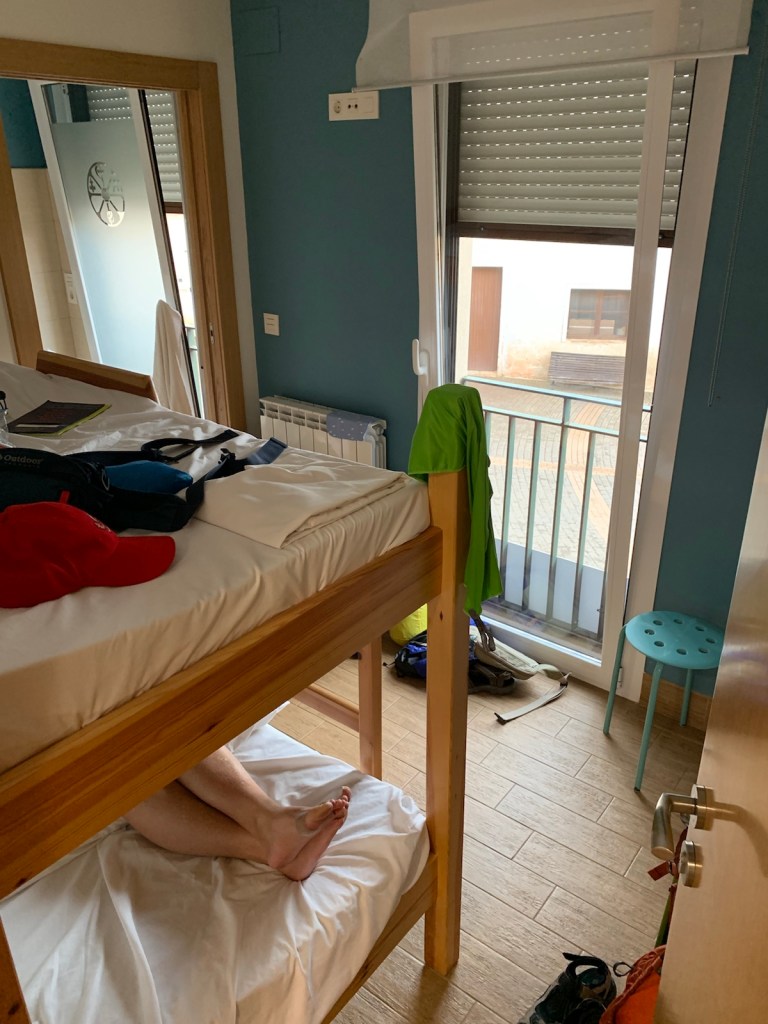
Our private room consists of a bunk bed, a bathroom with sink, toilet and shower, a cabinet to hang clothes and minimal floor space. We were each supplied with a fitted sheet, top sheet, and pillowcase and bath towel. No toiletries are included except a roll of toilet paper. Mattress is foam rubber and pillow is kingsize. While we have more personal space than a dormitory type arrangement with 4,6 or greater beds per room, we keep tripping on our stuff and each other. We have AC but no individual control… fixed at 25C(77F) day, 22.5C(72F) night. The room and bathroom have a floor to ceiling window that can be opened for circulation. (40€).
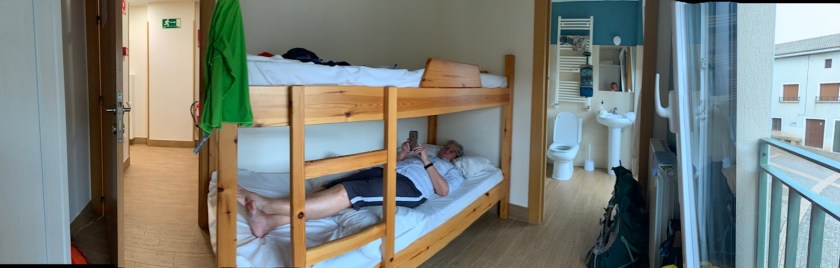
Panoramic photo of our room
Our room from entrance

We have stayed in albergues with the bunk bed arrangement before, but only do it if other options are not available. Normally we stay in a double room with ensuite bathroom, like a typical hotel room. Sharing a bathroom/shower with others is not a problem, only a little inconvenient. Double rooms with bath ( habitacion doble con baño) can be found in pencions, casa rurals, hostals and even most albergues at a cost slightly more than two single bunk beds in a dorm arrangement. Consequently, whenever available, we opt for the double room with bath. For example, we described above our accommodations for tonight which is 40€. Last night in Estella we stayed at ground zero for the biggest festival of the year, watched festivities from our room balcony, amenities like extra towels, soap, shampoo, drinking glasses, chairs to sit in, plenty of room at 45€.

A pilgrims dinner was available in the village bar at 7:00 tonight. We were hungry at 5:30 and the bar kitchen was closed until 7:00. So we went to a small grocery store, assisted by the consumer oriented owner, bought a half baguette, some mayo and mustard packets, a pre-packed ham slices (5) and a bottle of local Chardonnay (from the closed bodega we couldn’t access today). The store owner sliced the bread to our sizes, cut open the blister pack of ham, opened the bottle of wine and loaned us two wine glasses.
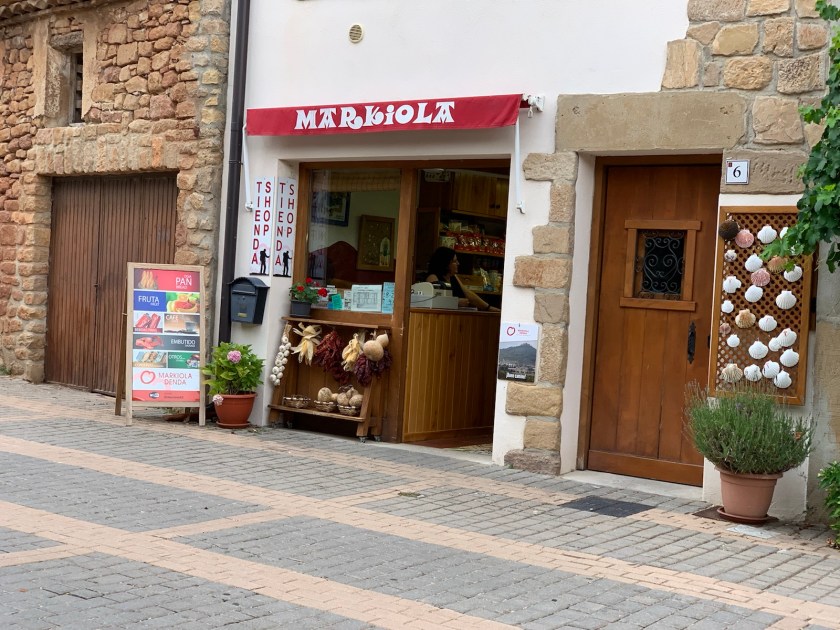
The store with owner who helped us the birthday dinner
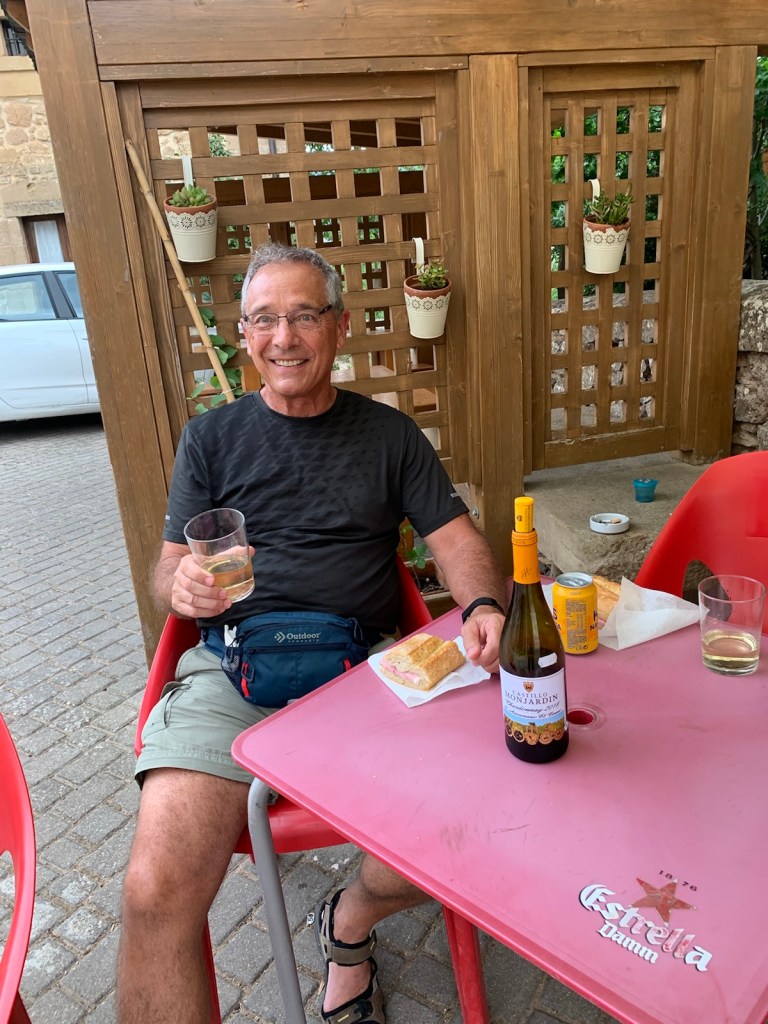
Jim’s Camino birthday dinner

We had our ” birthday” dinner at a table outside the store in the cool breeze, wine was excellent (8€) and we shared the last third of the bottle with the surprised but grateful store owner. Jim says it was the best birthday dinner he’s had in a year!

Another great day doing the Camino “our way”.
Day 9 – Lorca to Estella

Walked today: 6.1 miles

Walked Camino 2019: 69.2 miles

Our walk began at 6:45 and continued for nearly 3 miles until we stopped for breakfast in Villatuerta at 8:00.

We’ve stopped here each of our three Caminos

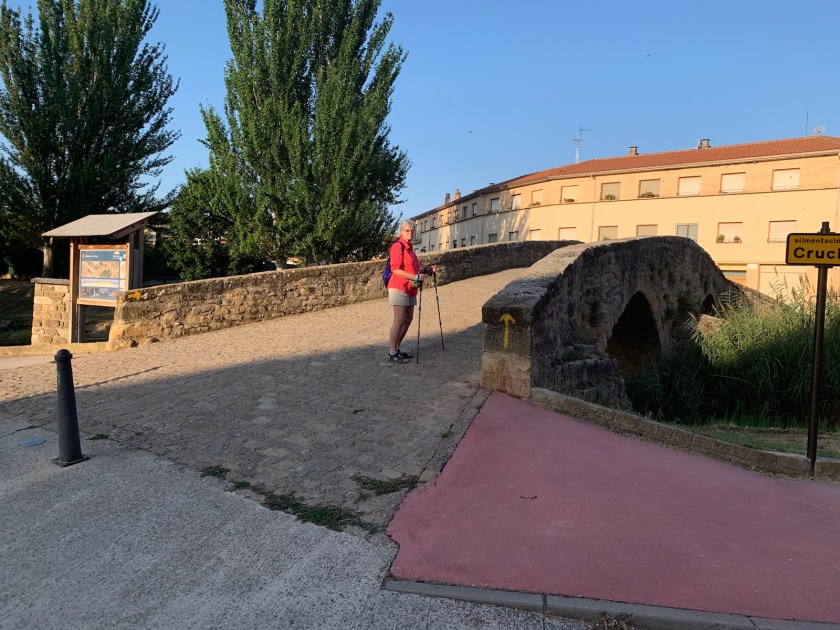
Leaving Villatuerta we crossed over a medieval bridge

and walked another 3.2 miles, arriving at Estella (pop. 14,250) just before 9:30.

Estella has become one of our favorite Camino towns. Founded in the early 11th century by King Sancho Ramírez, the town flourished with a vibrant pilgrim business, agriculture, textile and leather industries. It became wealthy and important religious and civic institutions were built. It’s was nicknamed “Estella the beautiful”.

It has survived the Black Plague of the 14th century which killed half its population and the religious persecution of the 15th century Inquisition.
In 2017 we spent two nights here in Hostal Cristina, located in the center of the town on San Juan Bautista Plaza, only by chance, since all rooms in the destination for our next day’s walk were full. Also by coincidence, the town was in the final day of its annual festival… which further enriched the charm it had for us already.

Once again, we are staying in Hostal Cristina (45€) during festival week with a room and balcony overlooking much of the festivities.

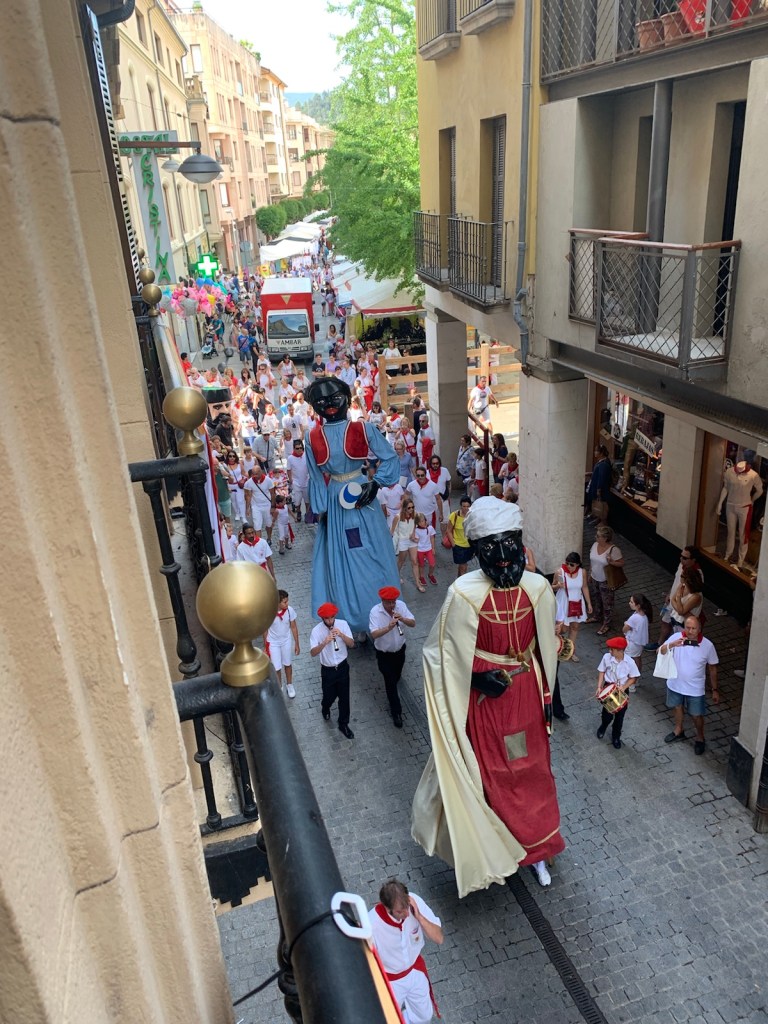
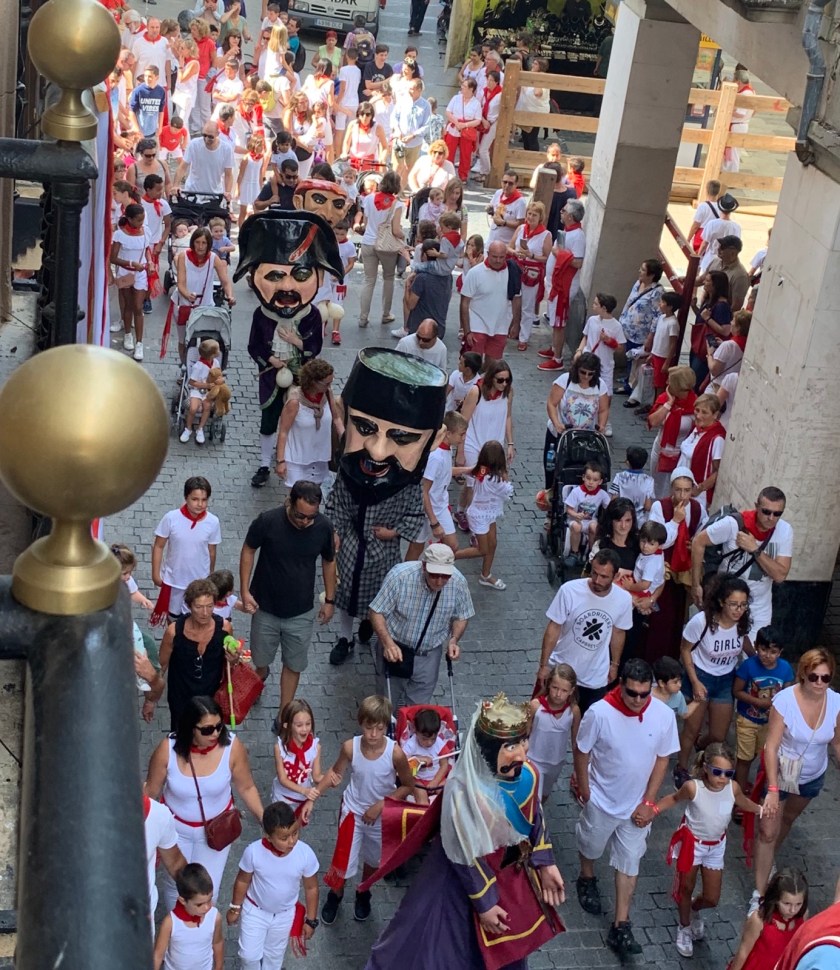
Shortly after attending to our daily chores we heard music outside our room and from our balcony observed this:

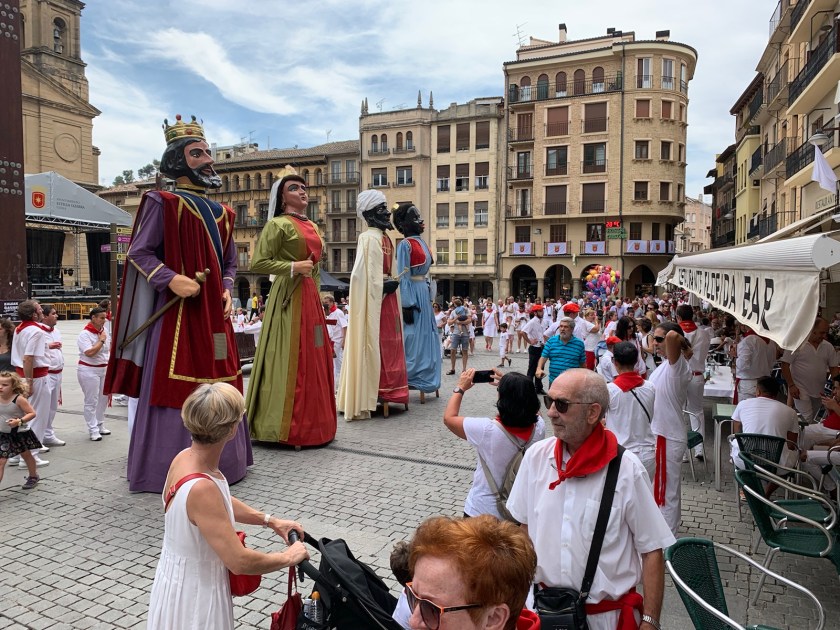
“Gigantes” just outside our room balcony!

The normal bodies, big headed characters are called “Cabezudos”

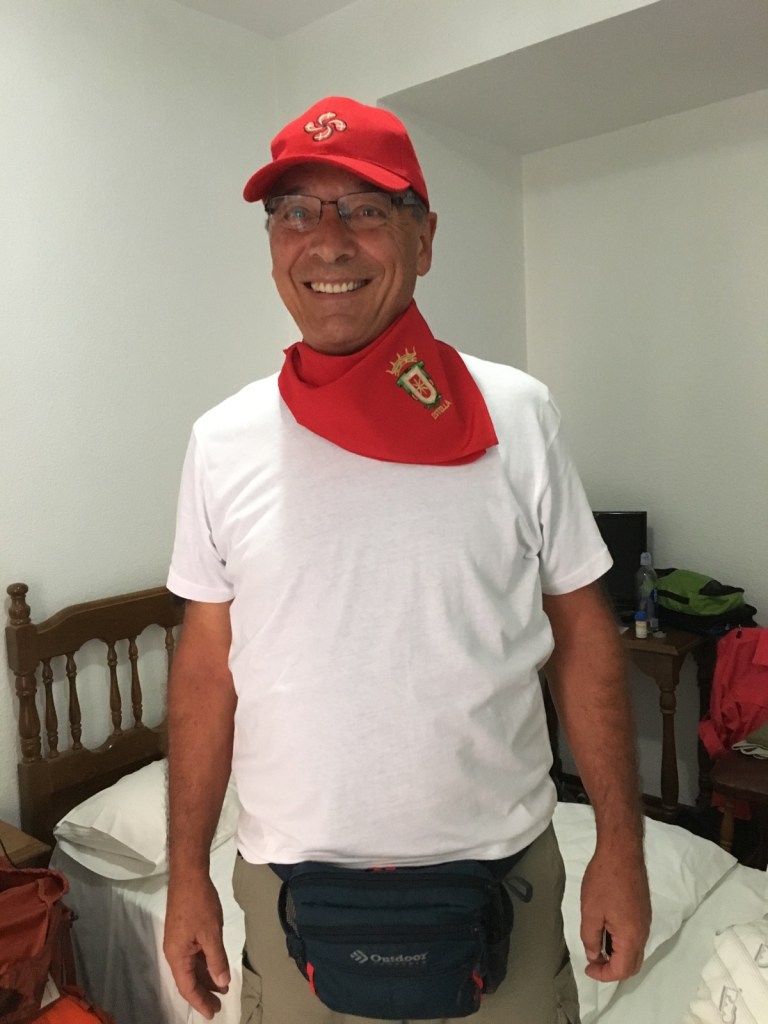
Jim was quickly overcome by the emotion of the festivities and decided to join in:

It was time for lunch so we ventured out onto the plaza, found a strategic location and sat down for lunch and the entertainment that followed:

All around us locals, multi-generation families were all dressed in versions of white garments, red bandannas and sashes. People were spontaneously bursting out in song, bands were meandering among the crowds, everyone was happy and festive.

These are Gigantes, representing historical persons of Estella.
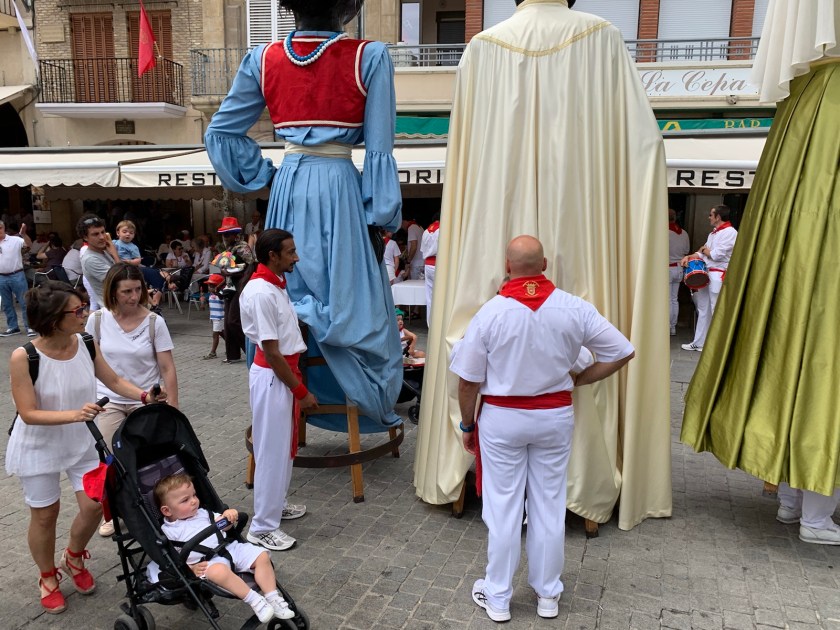
Gigante operators getting into position to perform

Do you recognize the last member of the band waving to Linda?

Day 8 – Puente la Reina to Lorca

Today’s walk: 8.6 miles

Walked Camino 2019: 63.1 miles

Today was our second longest walk so far but we managed it pretty well.

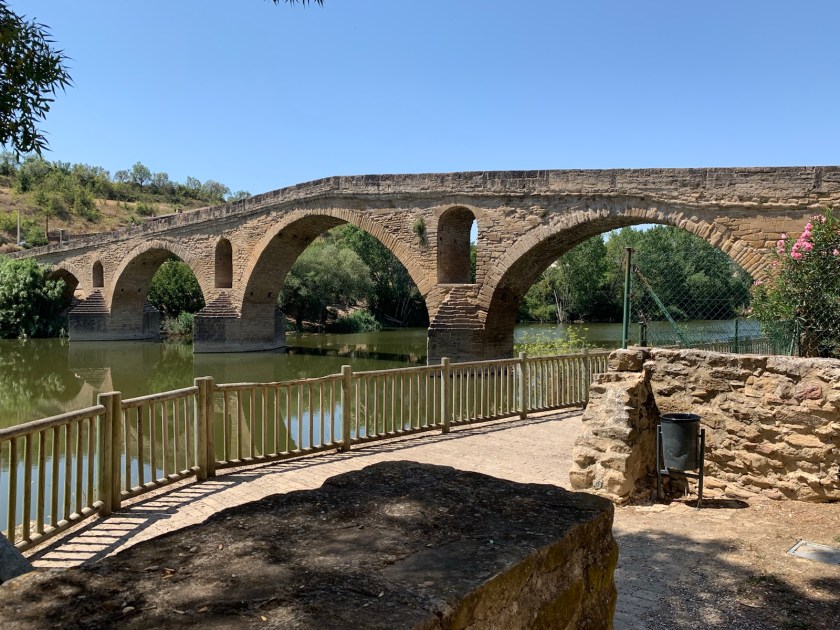
Starting out at 6:20, at first light, gave us confidence we could significantly reduce the sun as an issue. We crossed the Queens Bridge as we left Puente la Reina.

The first 2.5 miles were flat and meandered along the Río Arga and hay fields.

an early start before sunrise

We then made a right turn and immediately headed straight up the side of a mountain

leaving our nice flat path
a tough climb
at the top, finally

until reaching the top a mile later at the village of Mañeru. We made a 15 minute rest stop, then continued another 1.5 miles to the village of Cirauqui.

The approach to Cirauqui is an iconic Camino image. From a distance, the medieval village is set upon a hilltop like a nest.

Approaching Cirauqui
Closer look… Cirauqui

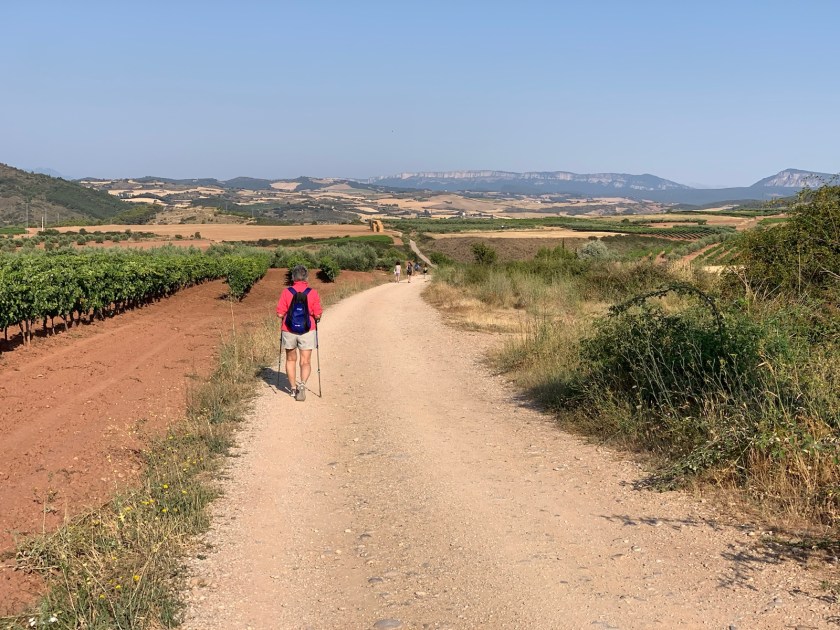
Vineyards, an occasional small olive grove and fields of grain fill the approaching valley. The Camino path winds through the valley like a snake.

The translation of Cirauqui is “nest of vipers”.

This is our 3rd time to pass through Cirauqui. The Camino markers take you directly through the village which is a maze of straight up and then straight down narrow paved streets. It’s a killer hike itself.

We suffered through our first time, looked for a “go around route” the second time until we got lost and still ended going up then down, an even greater ” killer”.

Being old timer peregrines, today we pulled out Google earth, confirmed our proposed route with two locals, and walked around the village!!!

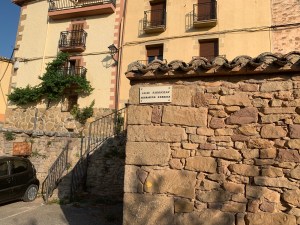
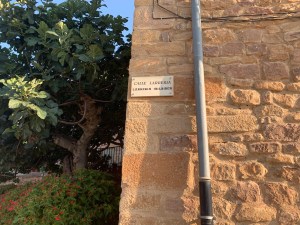
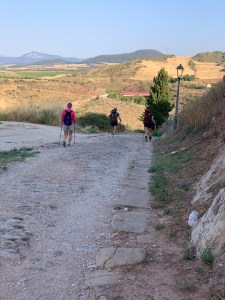
For any interested future peregrines, as you pass through the village gates, bear left on the second street you come to, Calle Sarriozar, and continue, then bear right onto Calle Larreria which will take you to the “killer” downhill camino exit onto the Roman road which is the Camino out or the village.

left onto Calle Sarriozar
bear right on Calle Larreria
pass downhill walk exiting village..,,

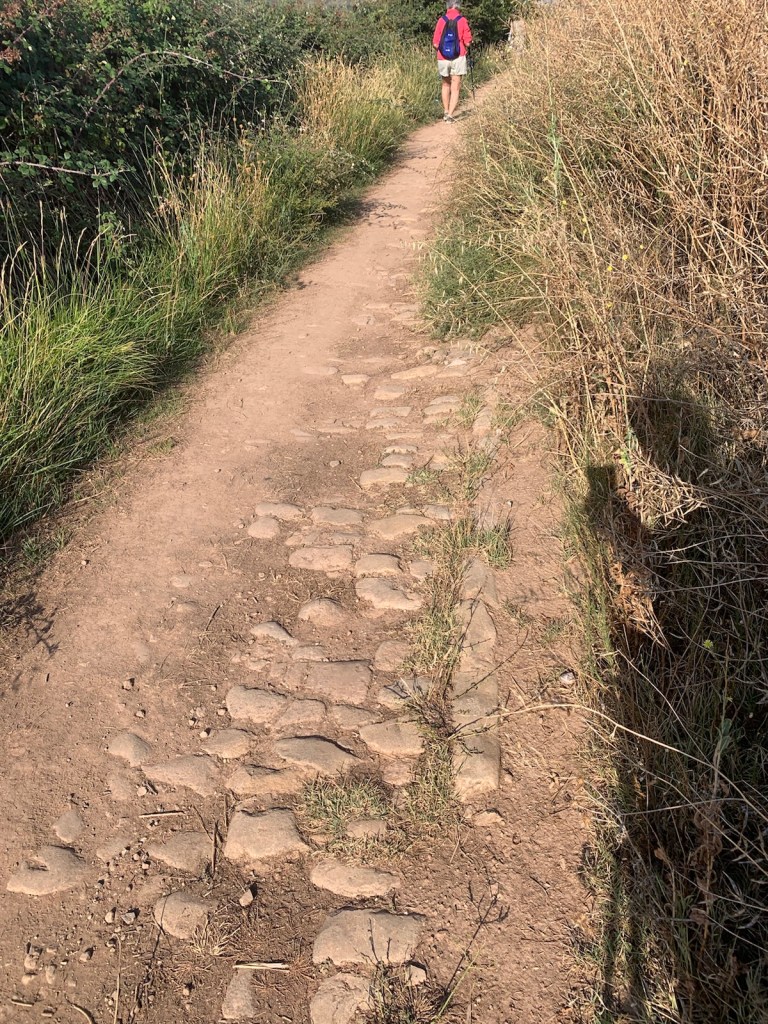
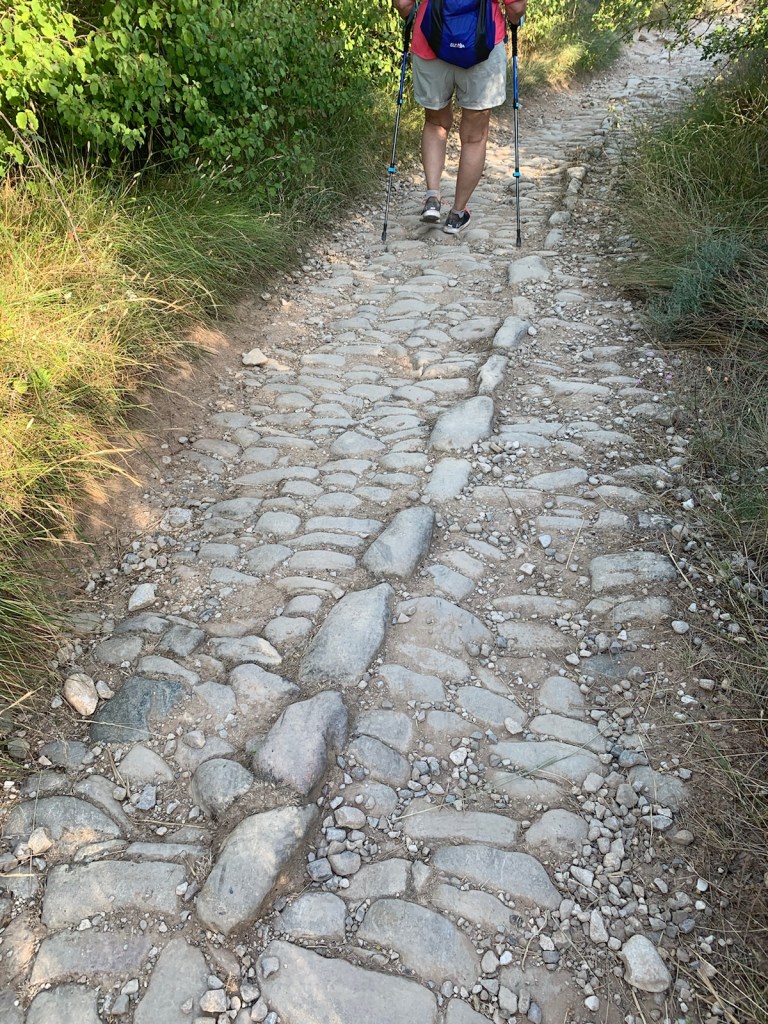
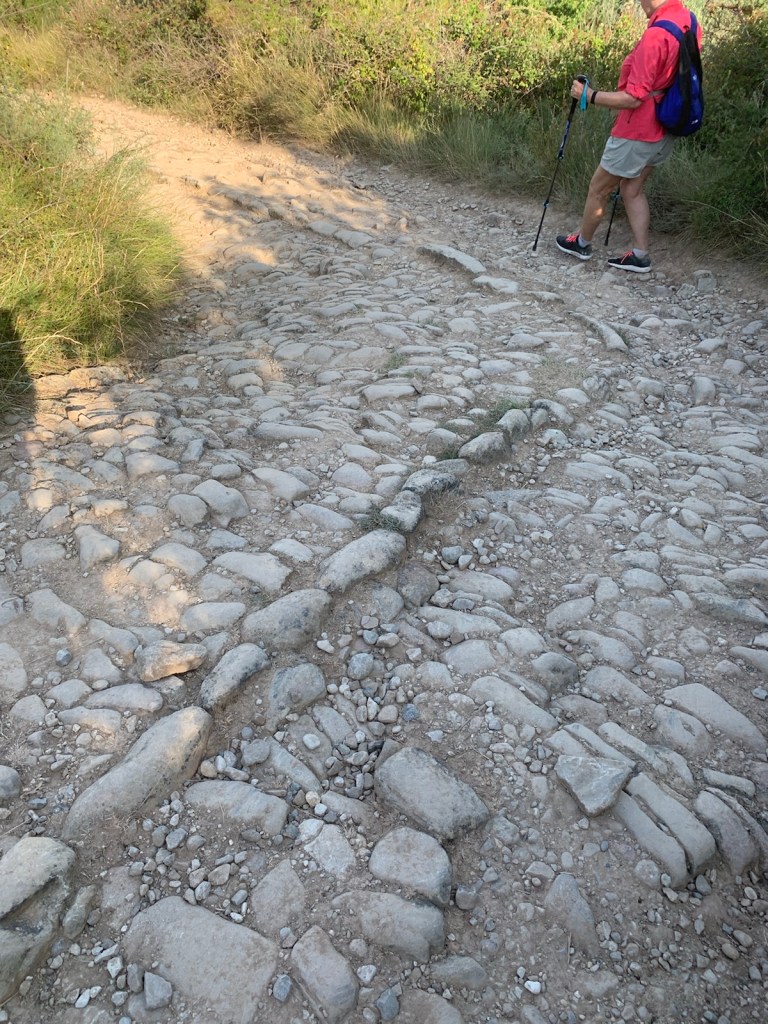
… onto a real 2000 year old Roman road = Camino

We continued on the Roman road down the hill to the ruins of, but still functioning Roman bridge, then up the hill to cross an expressway to the path leading, gradually downhill to the village of Lorca.

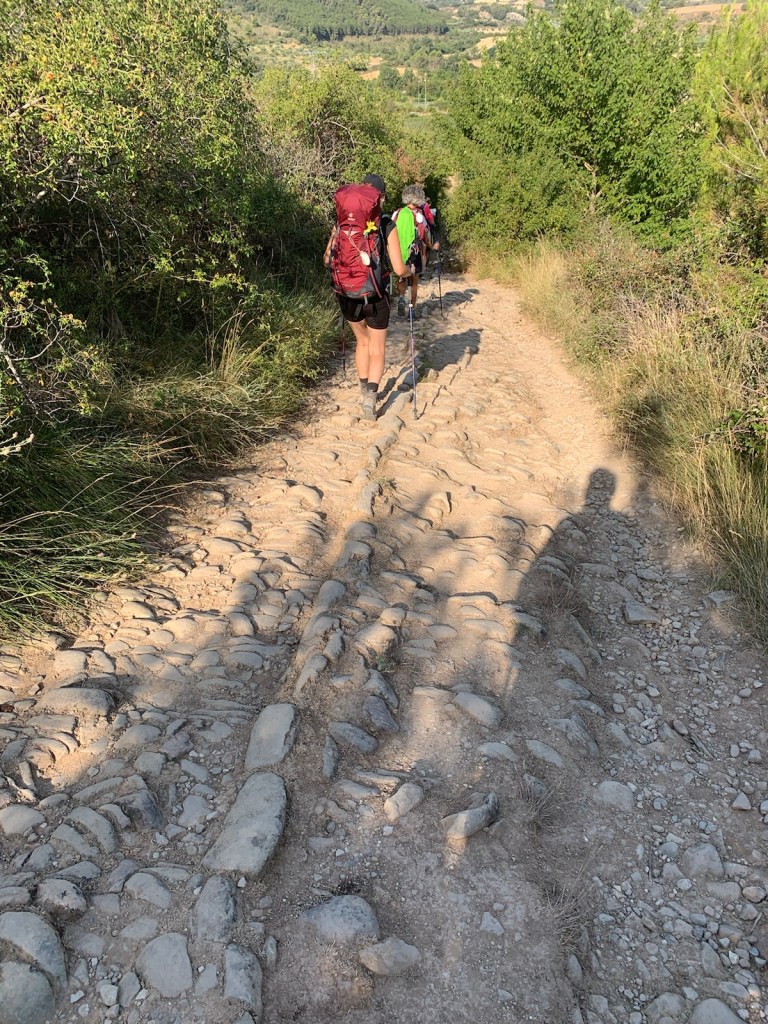
Along the 2mile stretch we passed another small, not in ruins, Roman bridge and walked on more Roman road… mostly in poor shape from 2000 years of erosion and weathering… not to mention millions of peregrine footsteps since the middle ages.

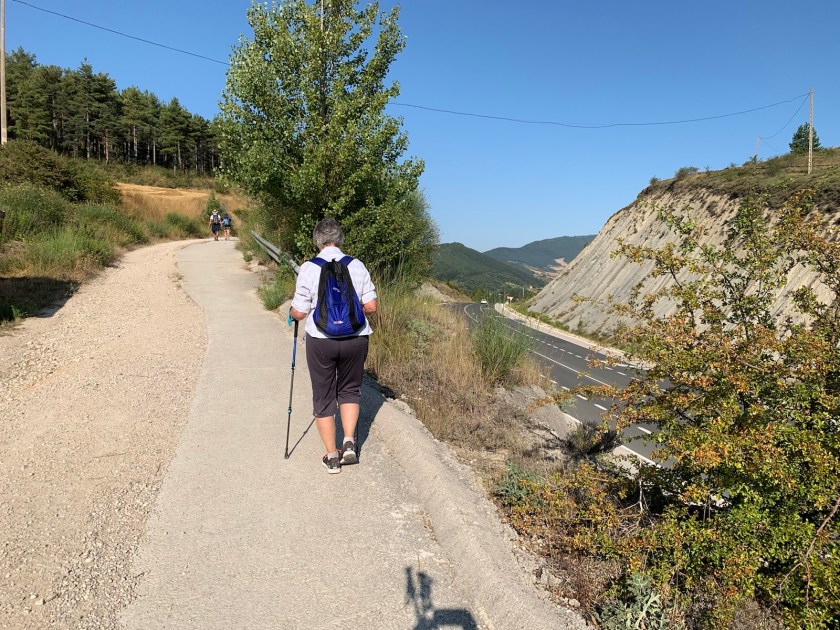
As we neared Lorca, we both began to feel the effects of the walk. Realizing that we were near the end (pun intended) we took a short break in the shade of an expressway underpass, paced ourselves up a steep concrete path and survived the last several hundred yard climb on a dirt path into the village.

Linda, true to form, secured a place/collapsed on a shady bench and Jim walked another 50 yards to check the status of our room in La Bodega del Camino.

Thankfully our room (42€-double room, kingbed, ensuite bathroom) was ready, allowing us to crash, recover, shower, wash(3€) and dry(3€) our sweaty clothes, get lunch, chat with other pilgrims (from Wash.,DC, Seattle, New Zealand, etc.) and update the blog until the pilgrim dinner at 7:00p.m. which was served in the albergue.

Day 7 – Villava to Puente la Reina

Walked today: 7.6 miles

Walked Camino 2019: 54.5 miles

We took a taxi from our hotel up to Zariquegui (elev. 2054 ft), where we stopped on our walk from Pamplona last Sunday.

We got breakfast at the San Andrés Albergue, (same as last Sunday morning), then began our trek up the Alto de Perdón at 7:15.

leaving Zariquegui and heading up Alto de Perdón

We took photos on the way up looking back at Pamplona as we worked our way up the steep slope. The 450 ft climb covered 1.5 miles.

Zariquegui and Pamplona in background
near the top

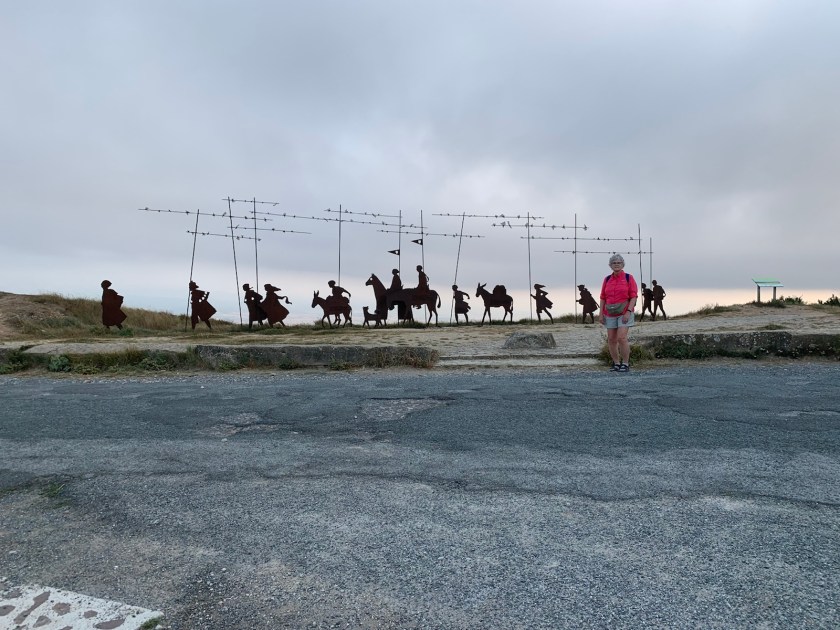
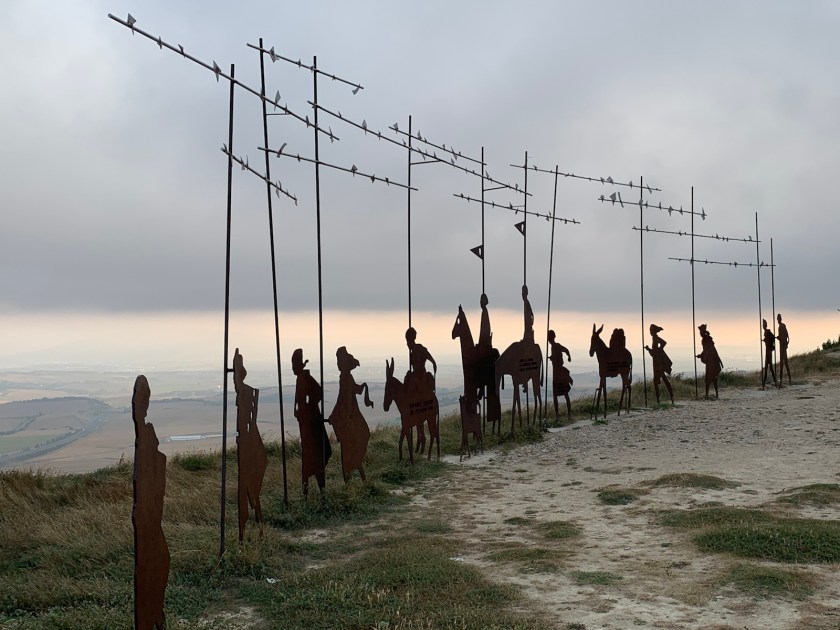
At the top (elev 2510 ft) we took a short break for photos of the pilgrim sculptures, a popular icon of the Camino Frances.

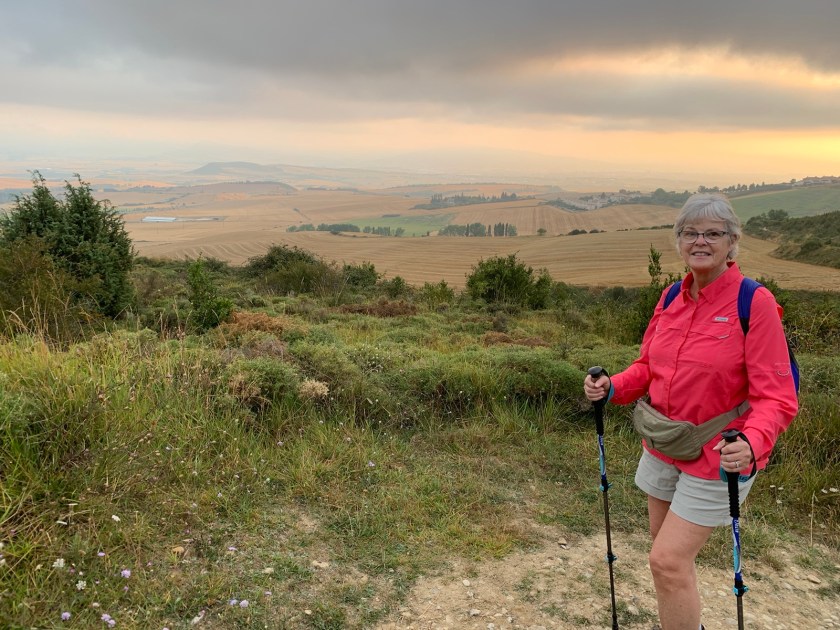
Linda at the top, 2510 ft.

Alto de Perdón pilgrim statues, up close, Pamplona in background

Looking westward from Alto de Perdón

The windmills that lined the ridge were obviously well placed as the wind was continuous at 20-30 mph.

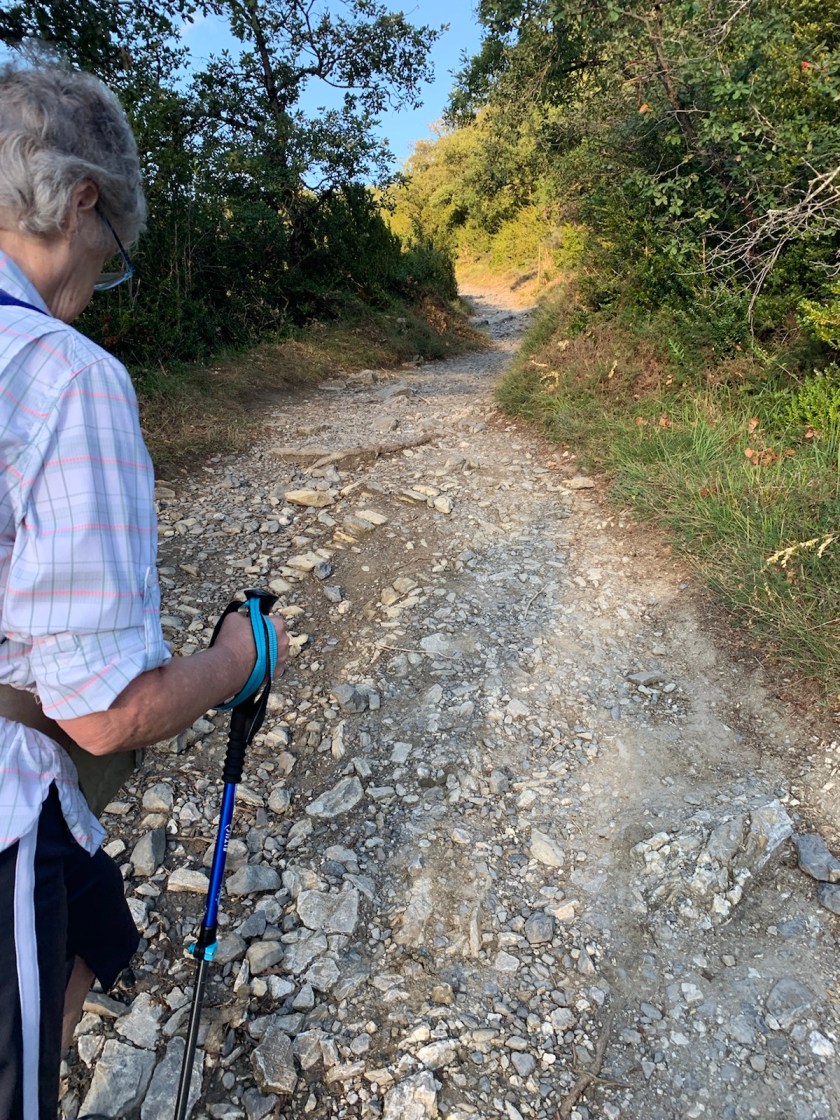
We headed down the mountain on the other side of the ridge. The steep path was only slightly curved, almost straight down and was covered most of the way with large, loose, stones.

The 600 ft drop in elevation covered only .65 miles!!

Heading down from Alto de Perdón
Rough going
Almost down
Made it!! Finally

Once we cleared the rocky path, the walking surface dramatically improved and the next 300 ft descent was gradual over the 1.6 miles into Uterga (pop.205) which served as our much needed mid-morning break featuring zuma naranja (fresh squeezed Valencia orange juice) and more cafe con leche.

Our Uterga rest stop

We passed through Muruzábel, another small village with an impressive church tower,

huge church and tower for small village

then on to Óbanos (pop. 800), where Linda found a nice shady bench.

While enjoying the cool, dry breeze and shade, a Óbanian? local gentleman approached us and tried to carry on a conversation with us which wasn’t going well as his English was even worse that our Spanish. We struggled with our itranslate app, which became even more frustrating for all. Finally, he wished us “ buen Camino” and began walking toward town center. Jim tried the app once more and finally created a message in Spanish thanking the gentleman for his kindness and hospitality. He grabbed his pack and walked hurriedly to catch the gentleman.

Jim called out and the gentleman stopped just in front of the Iglesia San Juan Bautista. When Jim showed him the Spanish note, he smiled, a little in disbelief, and said it was nothing. He then pulled some keys out of his pocket and gestured for Jim to follow him toward the church door, which was closed.

A little background before we continue:

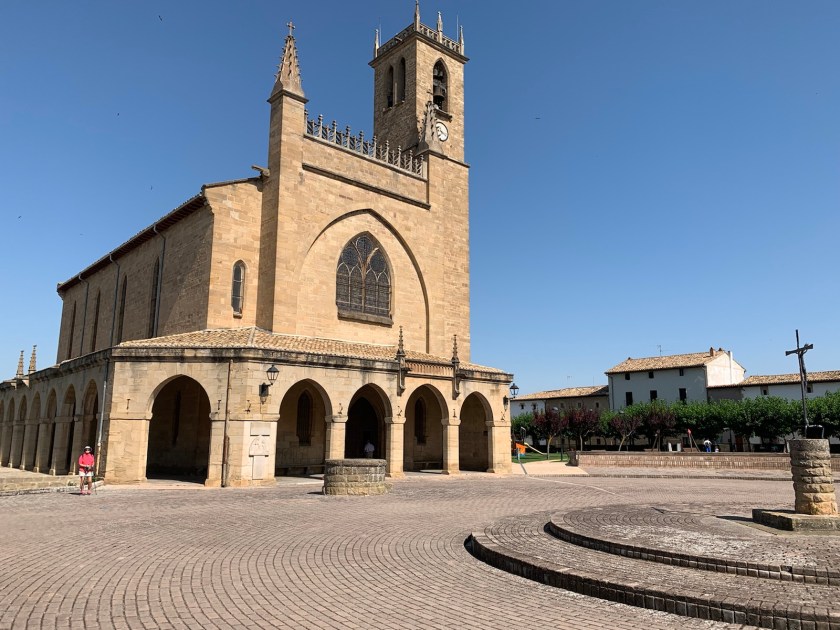
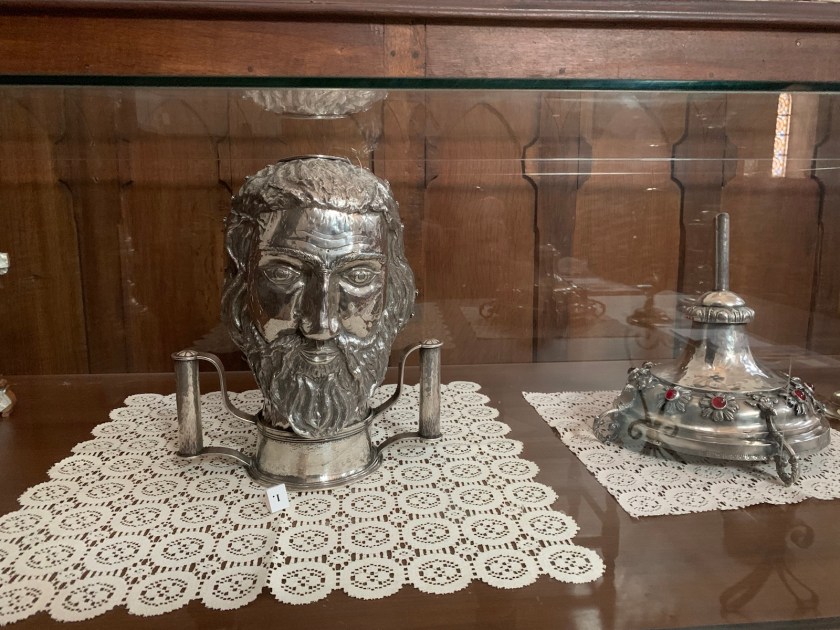
Óbanos is a lovely historic Camino town, best known for a murderous 14th-century pilgrim legend. Duke William (Guillermo) of Aquitane and his sister Felicia undertook the Camino de Santiago. On the return journey, Felicia was overwhelmed with piety and went to become a hermit in Amocain rather than returning to her life of luxury. Her brother tracked her down and tried to convince her to return to her court duties. When she refused, he became enraged and stabbed her to death. He was then overcome by remorse and walked to Santiago again and returned to Óbanos to mourn his sister for the rest of his life. He built a hermitage on Arnotegui (a southern hilltop) to serve pilgrims and the poor. Guillermo’s silver-covered skull is kept in Iglesia San Juan Bautista. The town puts on a play called The Mystery of Óbanos every year, retelling the legend with a cast of most of the 800 villagers!

-“A Village to Village Guide to Hiking the Camino de Santiago”, Dintaman&Landis

In 2014, we stayed in Óbanos and we walked through it again in 2017. On both occasions we were disappointed because the church was always locked and we were intrigued by the legend and the “ silver covered skull”.

Iglesia San Juan Bautista in Óbanos

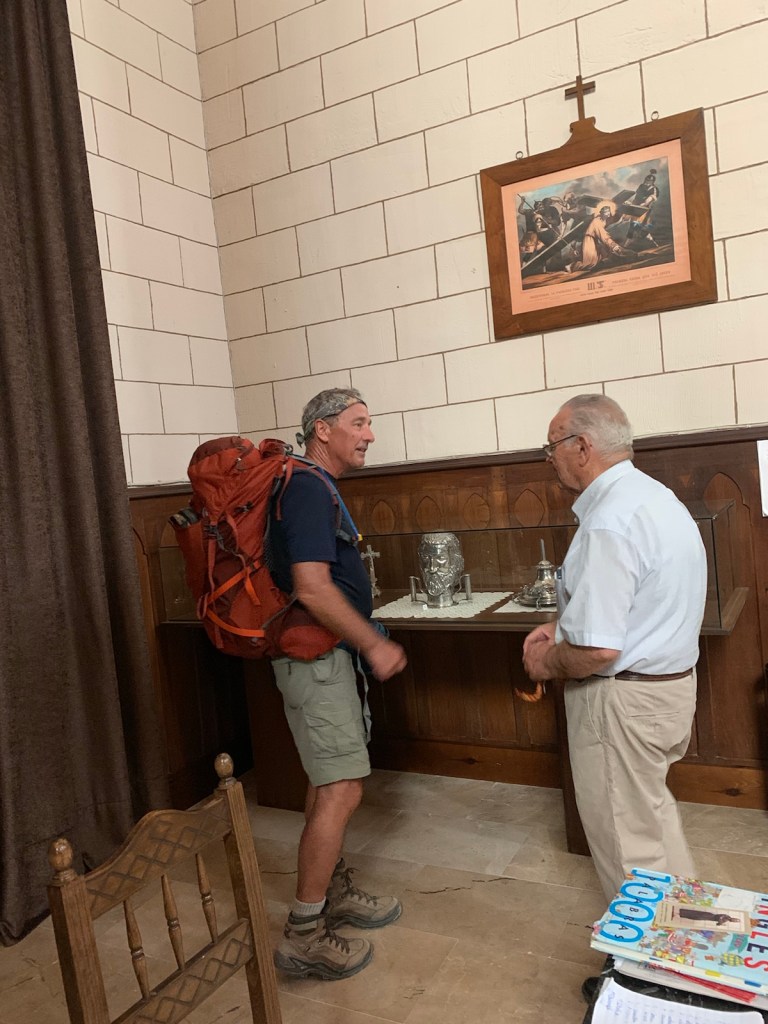
Well, it seems that our gentleman friend was apparently the church Priest. He unlocked the door and lead us into the church, showed us the famous skull, the other remains of Guillermo placed in a box on the church altar and also apparently the remains of his martyred sister, Felicia,

were prominently place in a 12th century container, also on the altar.

Priest pointing out prized Guillermo relics

Guillermo’s silver covered skull

Priest leading Jim up to the altar

the rest of Guillermo’s remains are encased here

The priest then asked us if we would like our pilgrim credentials stamped with the church logo, which we happily said “si” in perfect Spanish and “muchas gracias” on our way out of the sanctuary.

We continued the remaining 1.4 miles into Puente la Reina and our room at Hotel Yakue (62€).

In the 11th century, Sancho el Fuerte’s wife financed a beautiful 6-arched Romanesque bridge over the Río Arga, so pilgrims and other travelers on the Roman route could avoid expensive ferrymen and treacherous boat rides.

Consequently the town of Puente la Reina grew around the Queen’s Bridge to provide services and commerce in support of pilgrims.

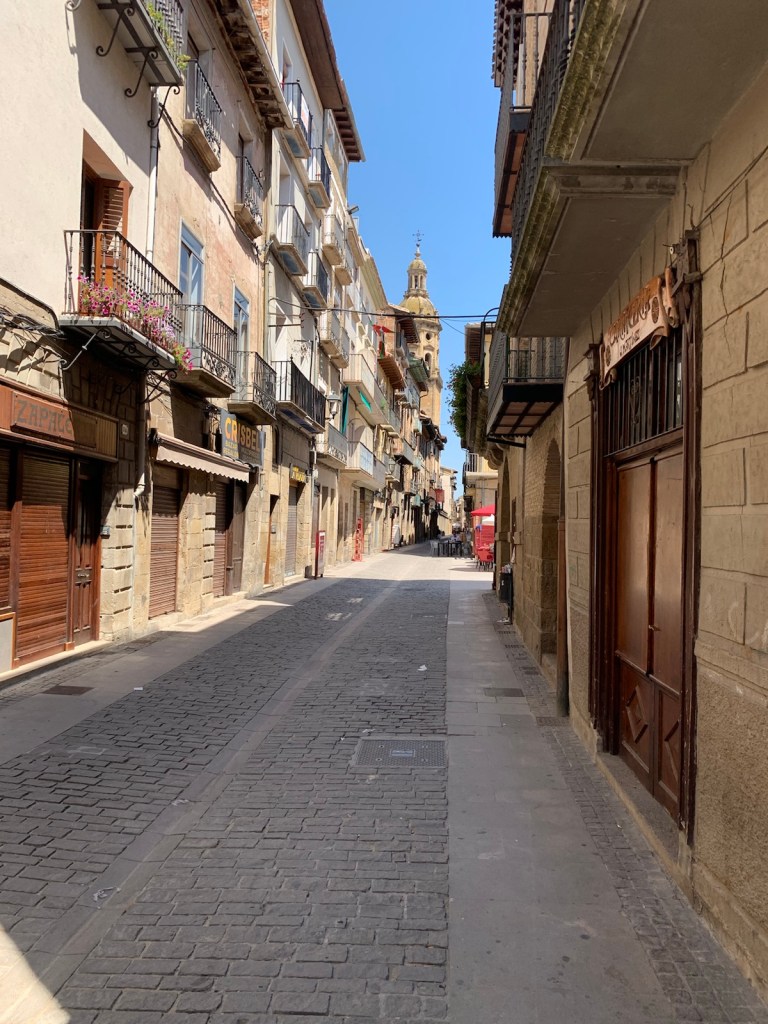
Old part of Puente la Reina

We had bogadilla’s for lunch and supper from the Jakue bar and got to bed early for a 6:00 start in the morning.

Day 6 – Larrasoaña to Villava (Pamplona)

Walked today: 7.6 miles

Walked Camino 2019: 46.9 miles

The forecasted high for Pamplona was 94 degrees, so we left at 6:30, just after daybreak, to avoid the heat.

An interesting “tunnel” as we passed Akerreta before sunrise

The path was not difficult with only short rocky sections and gentle slopes and grades most of the way.

Extreme climbs and descents are typically the number one challenge for us, then heat, then rocky walking surfaces and then distances. Any one can be tough, but combinations in varying degrees are the tests one deals with every day on the Camino.

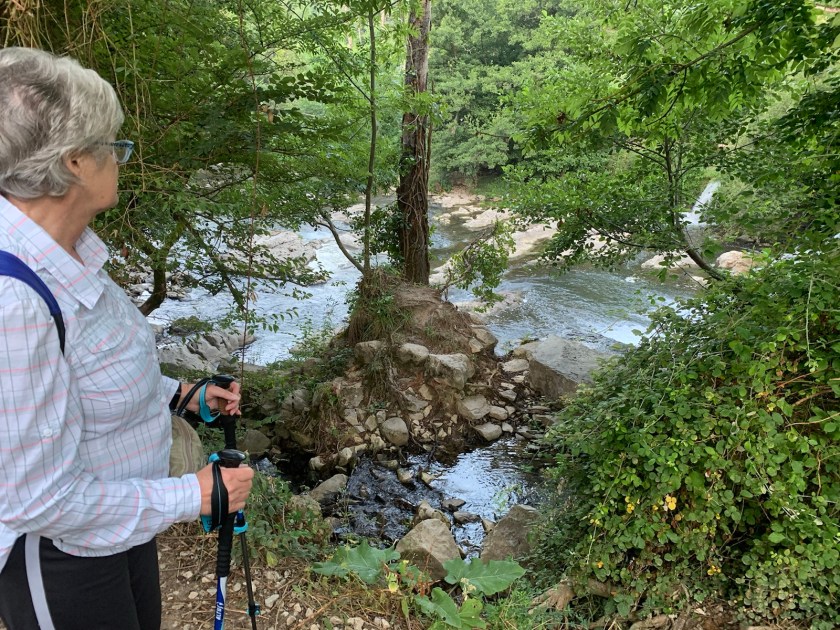
We followed the Arre river most of the way crossing it a few times over very old stone bridges.

We were gradually descending through the valley approaching Pamplona, the same route we took by bus last Monday to SJPDP.

Mountains behind us and on both sides shielded us from early morning sunrays. The scenery was not spectacular but still picturesque as we passed thru several hamlets that were purely residential, without stores or businesses.

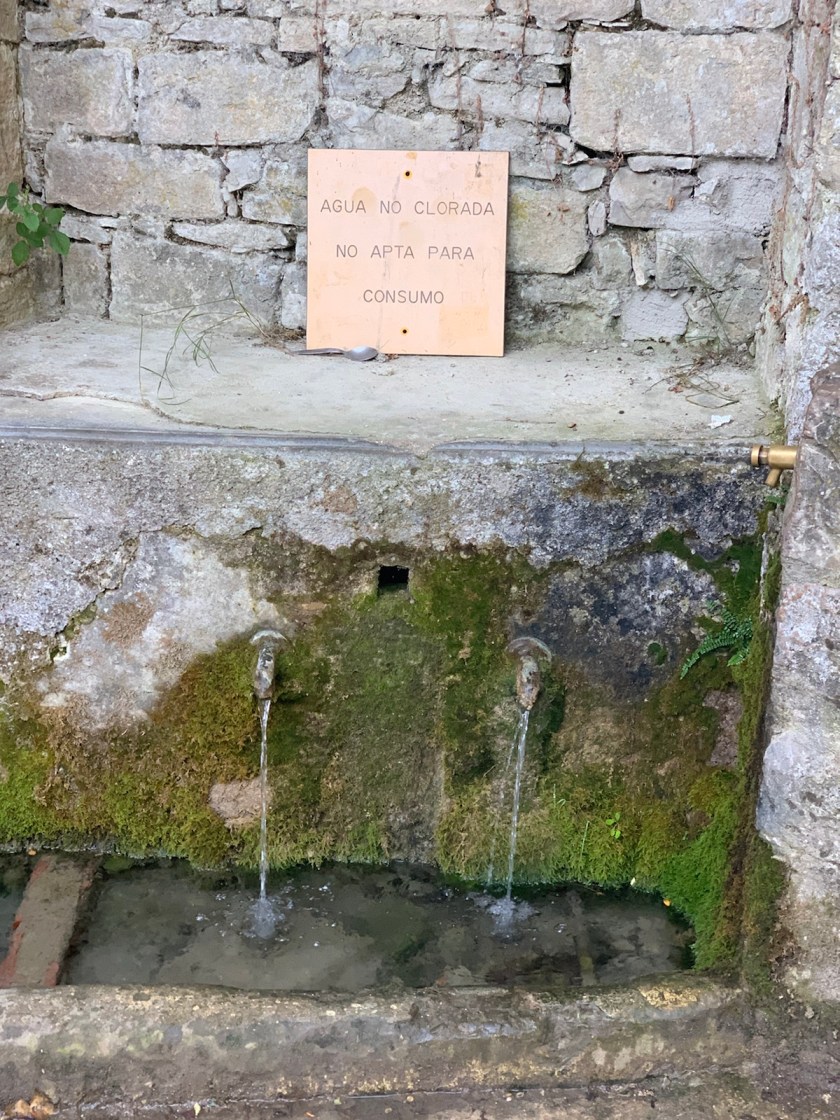
A public water fountain with unsafe water to drink on Irotz.

We shared the Camino with several pairs and groups of possibly local, weekend walkers and saw relatively few peregrinos/as.

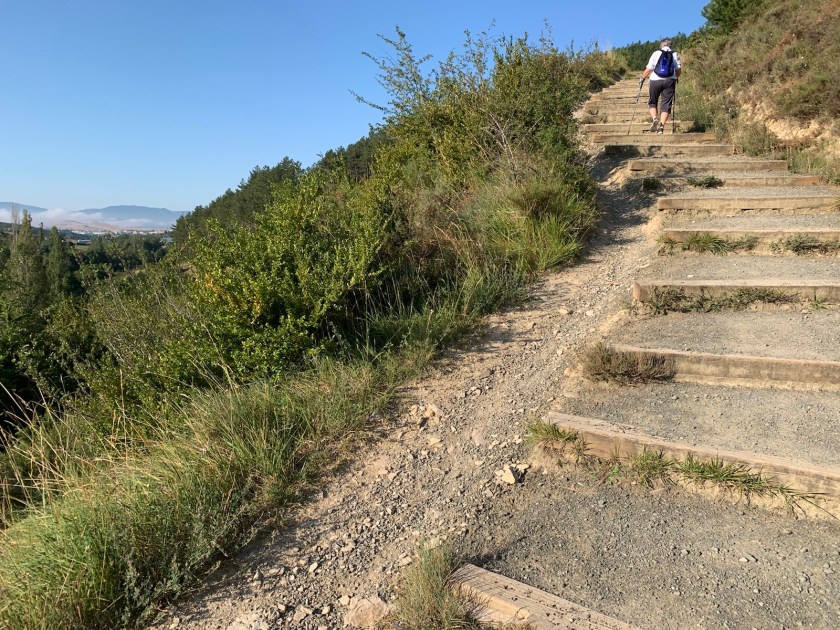
About 20 local walkers had just passed us at the base of these helpful steps

The last section of dirt path hugged the hillside with scenic overviews of farms and Pamplona suburbs in the distance,

before tunneling under an expressway,

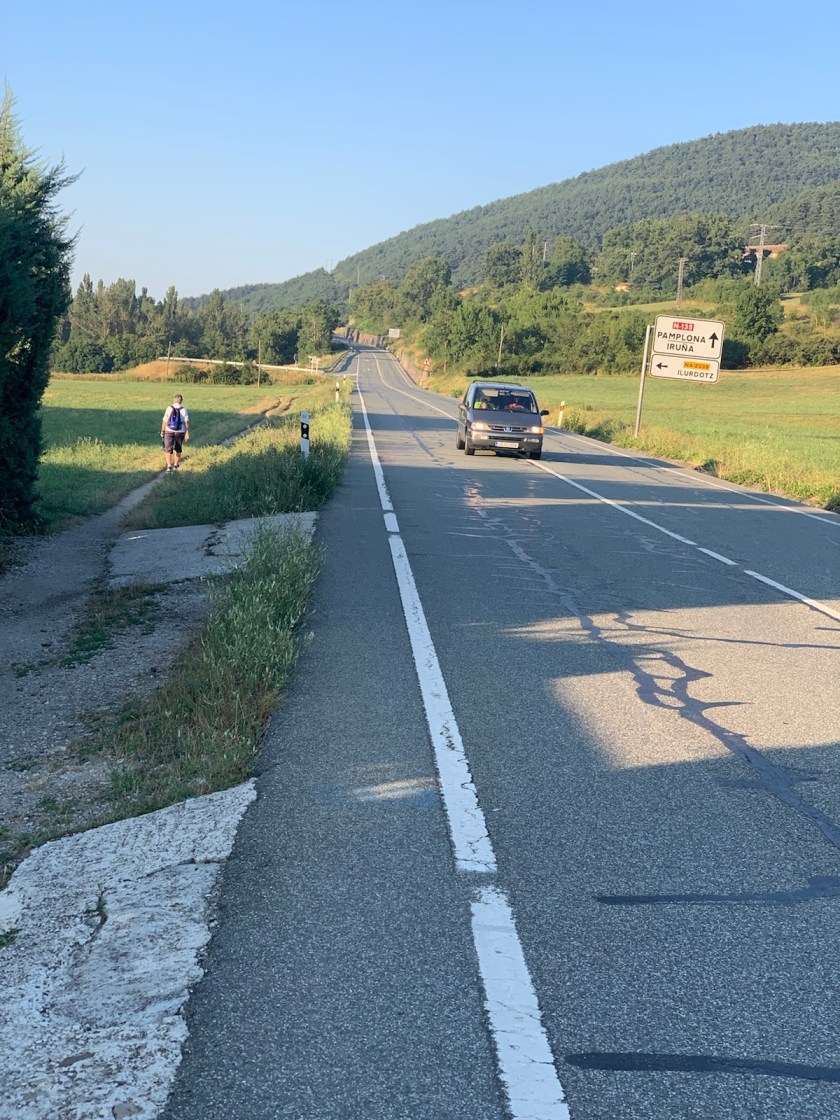
climbing to a paved road paralleling the expressway, then terminating at the medieval Romanesque bridge leading into the city.

Just as we crossed the bridge, we helped an Irish couple who had taken a wrong turn just ahead of us (we made the same wrong turn in 2017!).

It was only 10:30 when we arrived at Hotel Pamplona-Villava and it was already uncomfortable in the sun.

Our room in Hotel Pamplona- Villava (59€)

Fortunately, our air conditioned room was ready, so we had time for a quick recovery nap and an early start on chores, before having pizza for lunch in the hotel bar.

The bar closes from 4:00 to 8:00 and the hotel restaurant doesn’t open until 9:00 -11:00 for dinner, typical for a mostly residential, non-touristy area in Spain. There aren’t many eateries nearby and we’ve had our walk for the day, so we’ll get room service before they close at 4:00 for an early dinner, then call it a day.

Day 5 – Bizkarreta to Larrasoaña

Walked today: 10.1 miles

Walked Camino 2019: 39.3 miles

Today’s walk which began at 7:15, and an initially cool 51 degrees was our longest so far and probably too long for so soon. Our bodies (vintage at 70+) are still adjusting to the routine and building stamina to accommodate the daily physical challenges but it’s a gradual, week to 10 day process and pushing too soon can make you lose ground rather than gain some.

Last night, a father and 22 year old son from Germany stayed at Amatxi Elsa and we chatted with them briefly. They had started at SJPDP yesterday morning and walked the entire 25+ miles to Bizkarreta in one day!! We thought they had already left ahead of us this morning, but about 30 minutes into our walk, they passed us and said they were tired from the previous day and slept in! Duh! They only have 27 days vacation time, but at that pace, they should easily make it to Santiago before having to return home.

We, on the other hand, were both exhausted from today’s walk due to the total length and the heat of the mid-day sun plus a combination of: (1) frequent up and down sections, shorter in duration than crossing the Pyrennes, but nonetheless, physically challenging.

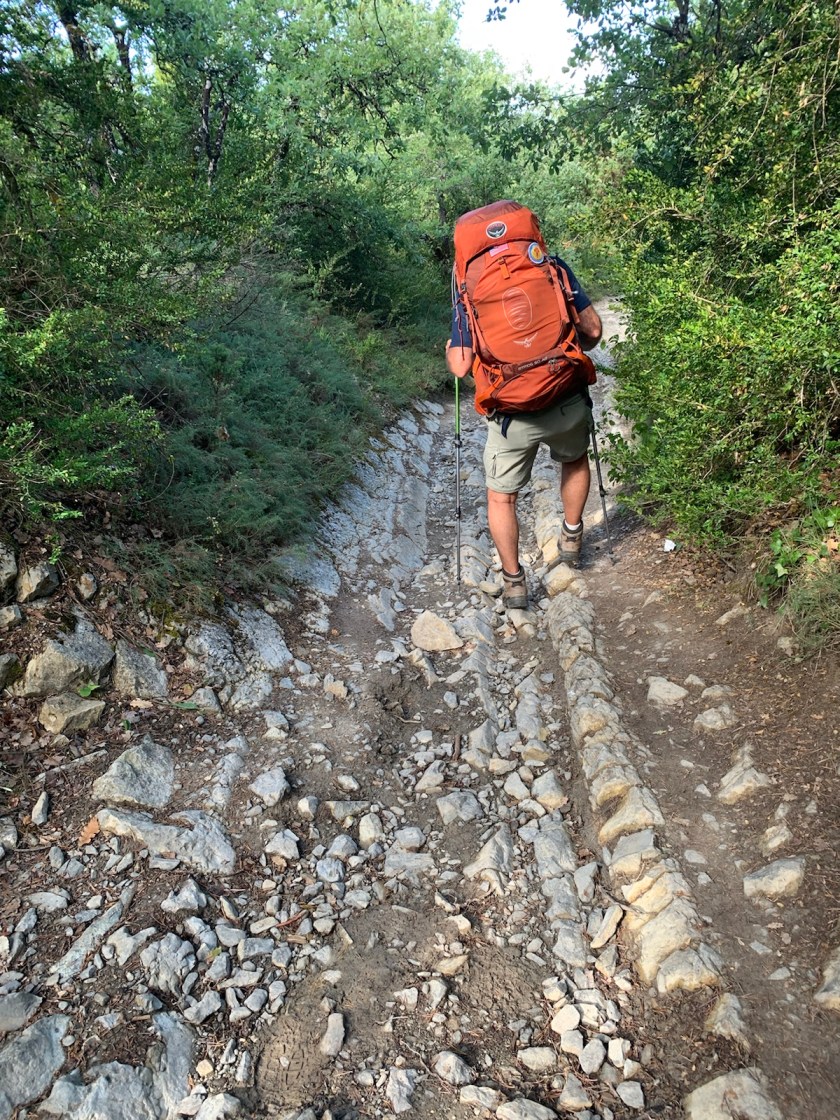
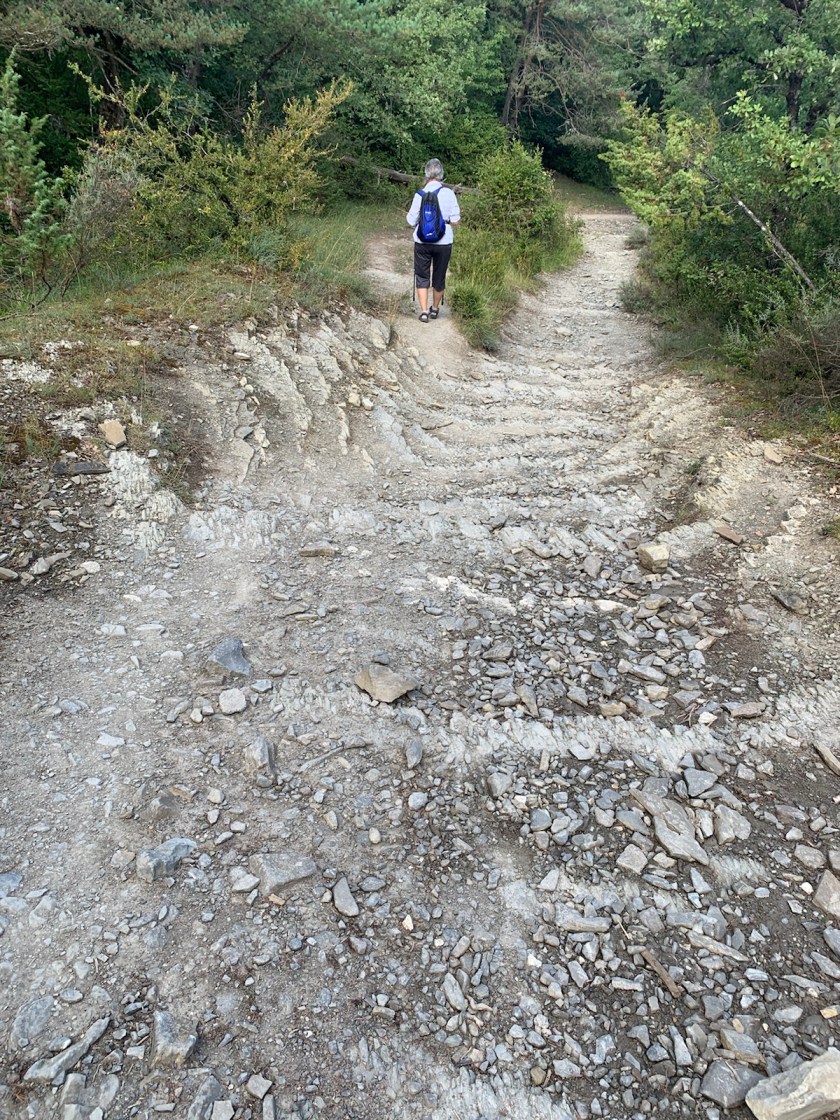
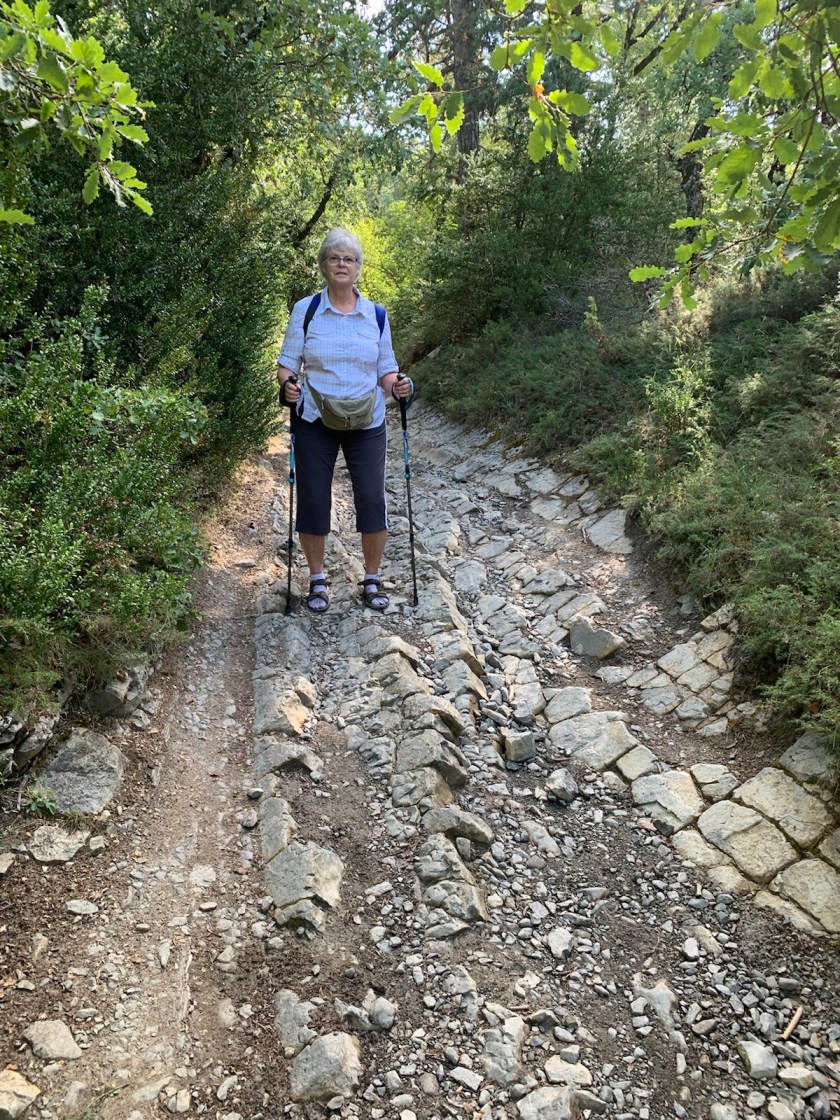
(2) more than half of the time, paths consisted of treacherous footing on sharp, shale-like layered rock either loose or extending vertically or at an angle instead of horizontal… almost continuous for the last 1.5 miles into Zubiri

(3) the only potential stopping places for food or restrooms along the way were closed.

The medieval bridge leading into Zubiri.

Finally, the Camino without rocks, just past Zubiri

Our first opportunity for breakfast came at Zubiri at 11:00. We had cafe con leche and croissants and only a brief rest before continuing the final 3 miles to Larrasoaña and the Casa Elita (60€, incl. bfst) casa rural, our retreat for the afternoon and evening.

Medieval bridge across the Arre Rio into Larrasoaña
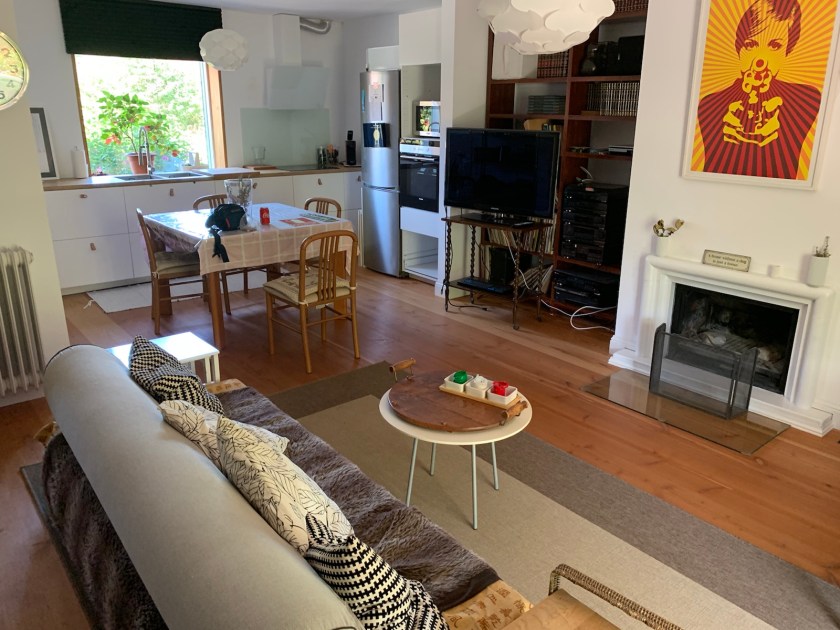
Common area for Casa Elita

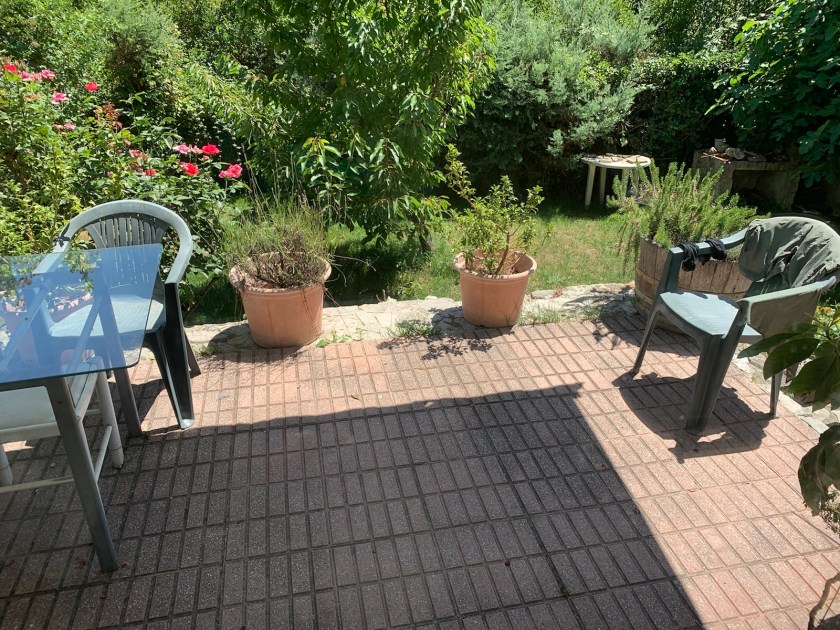
Back Jardin of Casa Elita

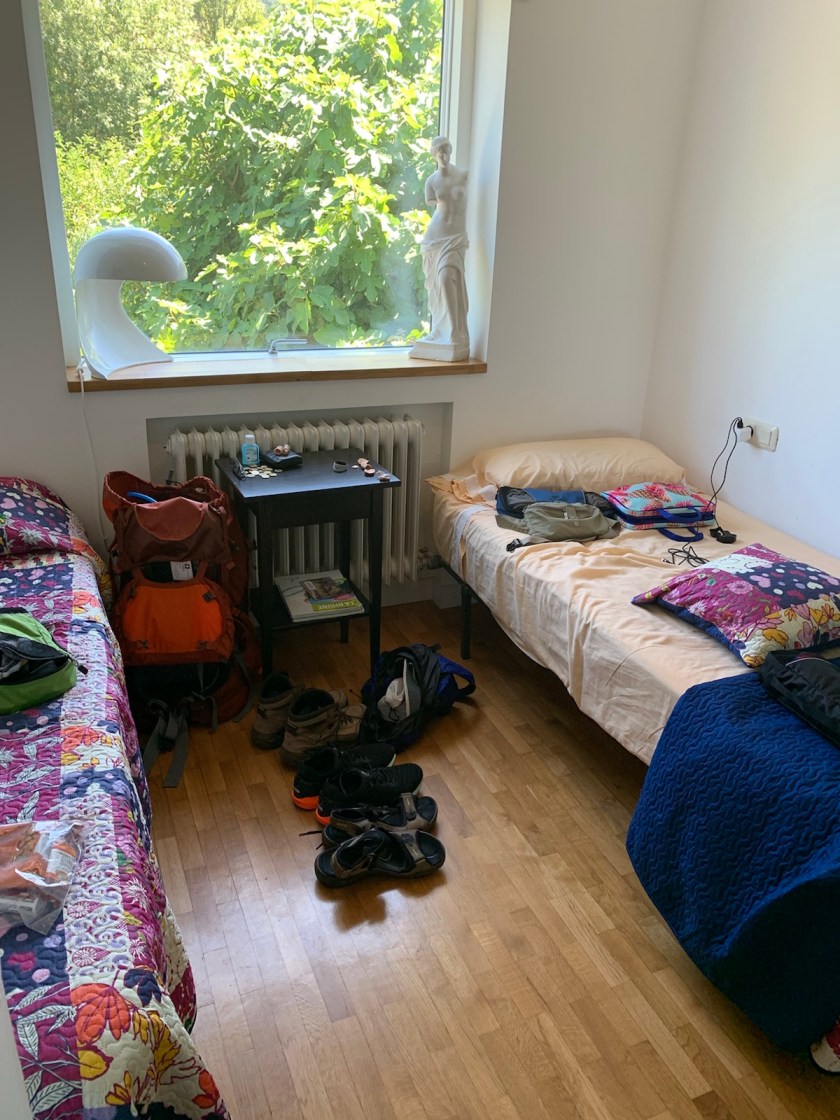
Our room

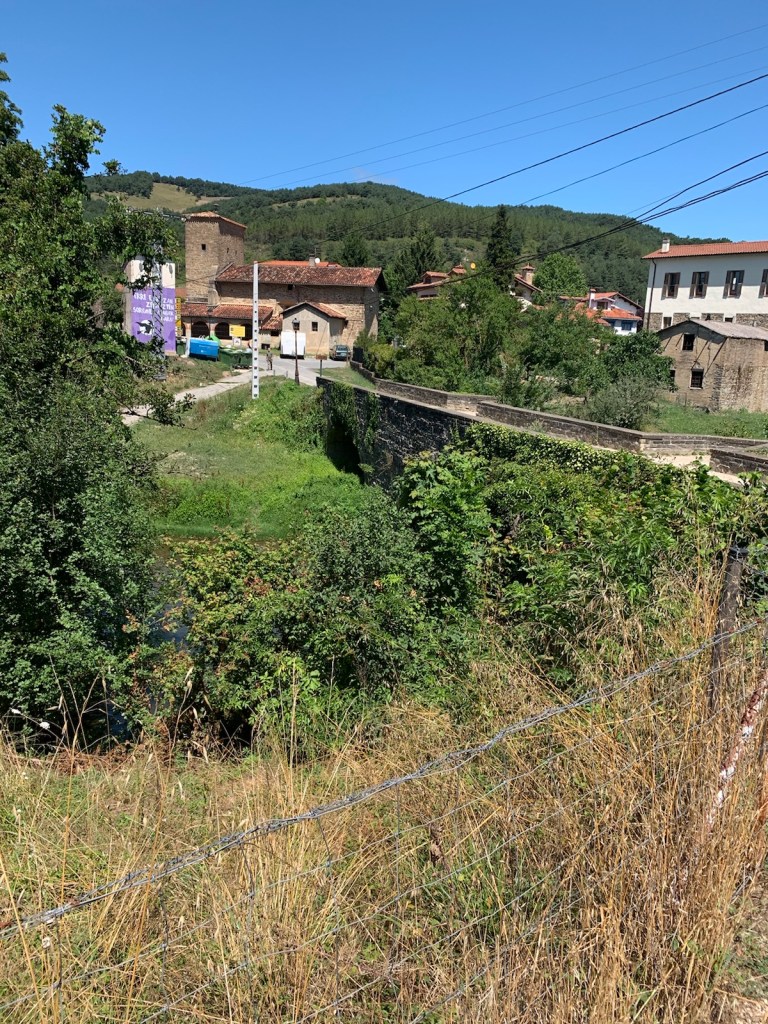
There was only one bar/restaurant in the village of Larrasoaña (pop. 120) and we didn’t want to wait for the pilgrim menu served at 7:00, so we ordered omelettes and local wine for dinner, enjoying it outside in the shade, cool breeze and quite ambiance of this residential Basque community.