
Walked today: 4.0 miles
Walked Camino 2019: 390 miles
When we awoke this morning there was no rain, but all the weather forecasts and weather maps showed it was raining, or would be in 18 minutes. So we put on our rain gear and departed for Arzúa, a mere 4 miles away.
When we realized we were going to arrive in Santiago a week early, we tried to change our airline tickets accordingly. But we only had two openings, one on the Sept 27, which was too early and the other was Oct 2, sooner than our original ticket by 5 days, so we rebooked it.
We preferred to have two days in Santiago after finishing Camino 2019, a day for the train trip from Santiago to Madrid and two days in Madrid before boarding our flight back home. The two day buffers were in case there were unforeseen delays in getting to Santiago and/or Madrid. With our new schedule, we still had four extra days to burn, so we decided to burn two of them on the Camino and two in Santiago, since Madrid hotels were running about twice the cost of Santiago.
Our method of burning two days on the Camino was to have several very short days leading up to Santiago. Today was one of them at 4 miles and the other two will be 3 and 3.2 miles respectively. In addition to making our final few days physically easier, this will also let us experience three new properties and two new villages on our way to completing Camino 2019.
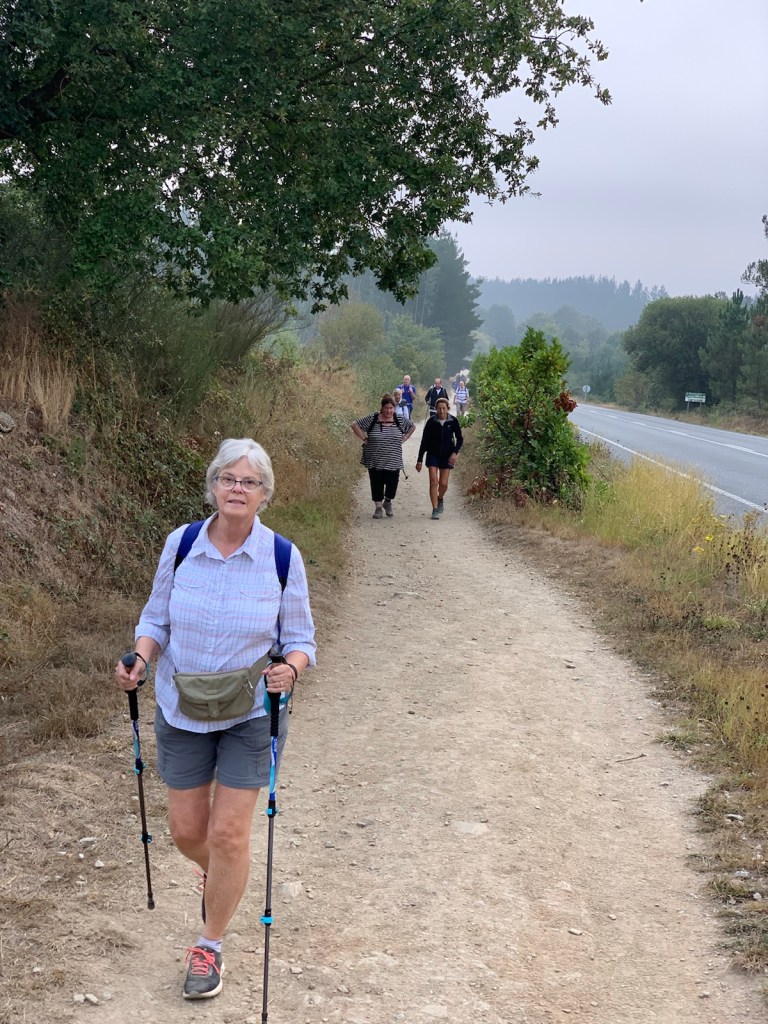
Getting back to today’s walk, it was threatening rain the entire way with slight drizzles but nothing to justify serious rain gear. Linda was first to take off her poncho, but Jim hung on for a little longer feeling that if we both took off our gear we would lose it’s deterrent effect.
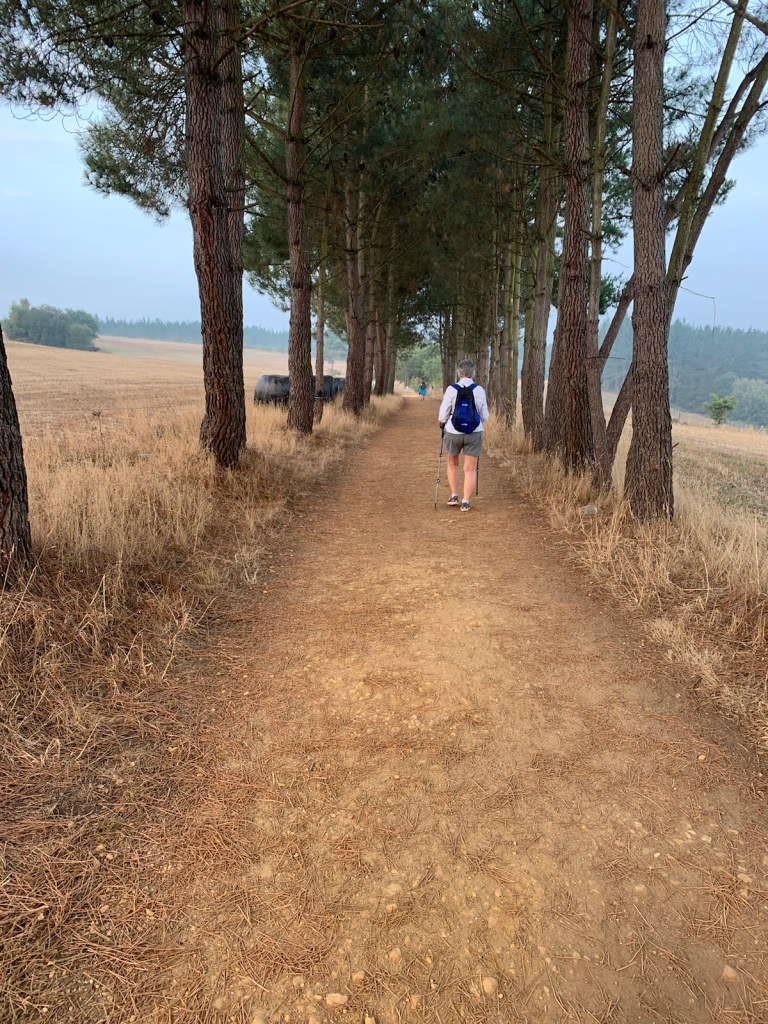
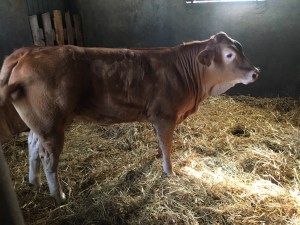
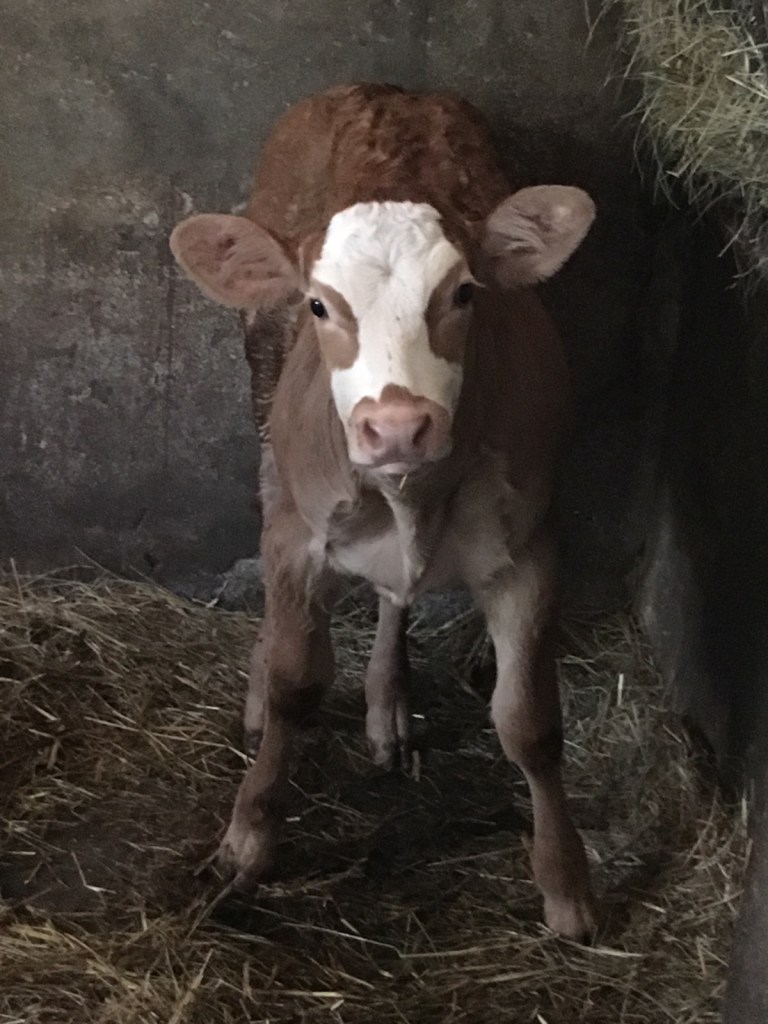
The path took us through alternating corn fields, 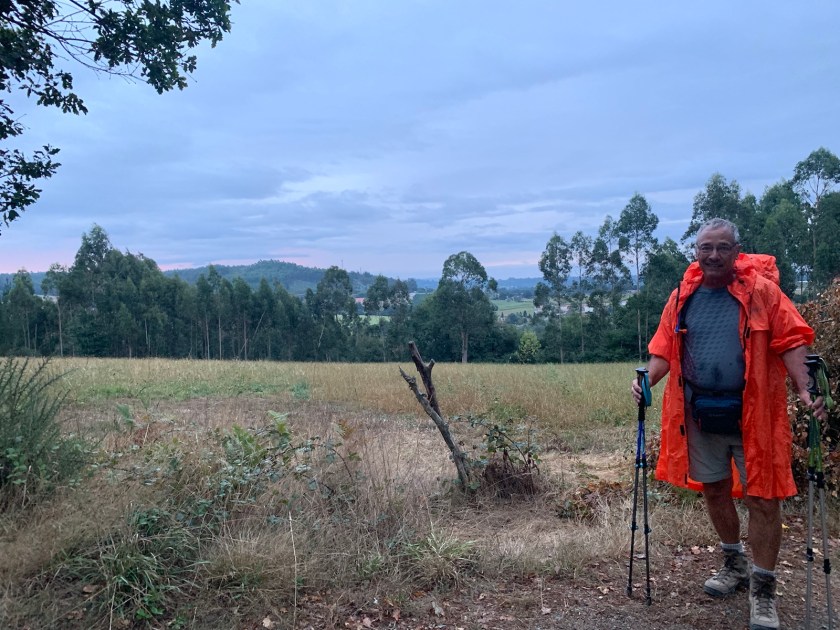 holstein pastures, open unplanted fields
 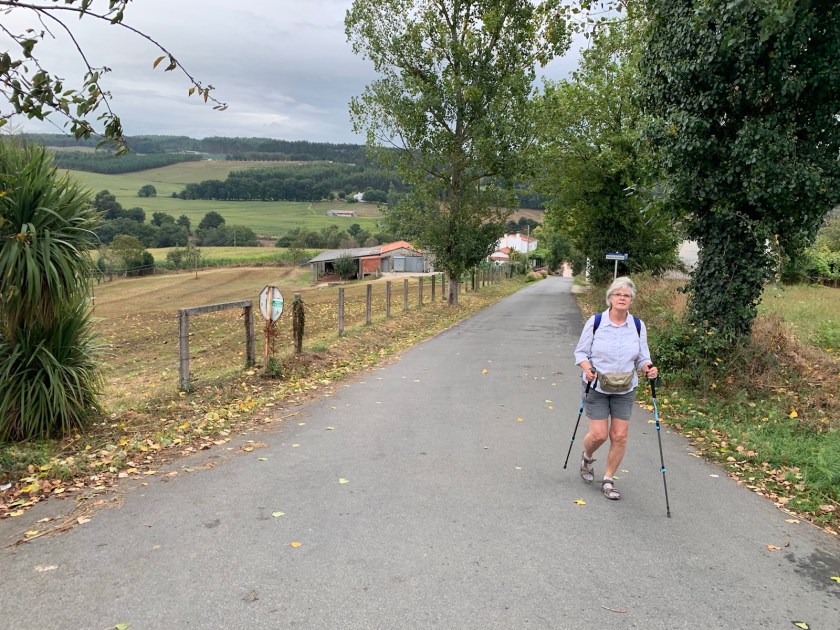 and eucalyptus forests,
 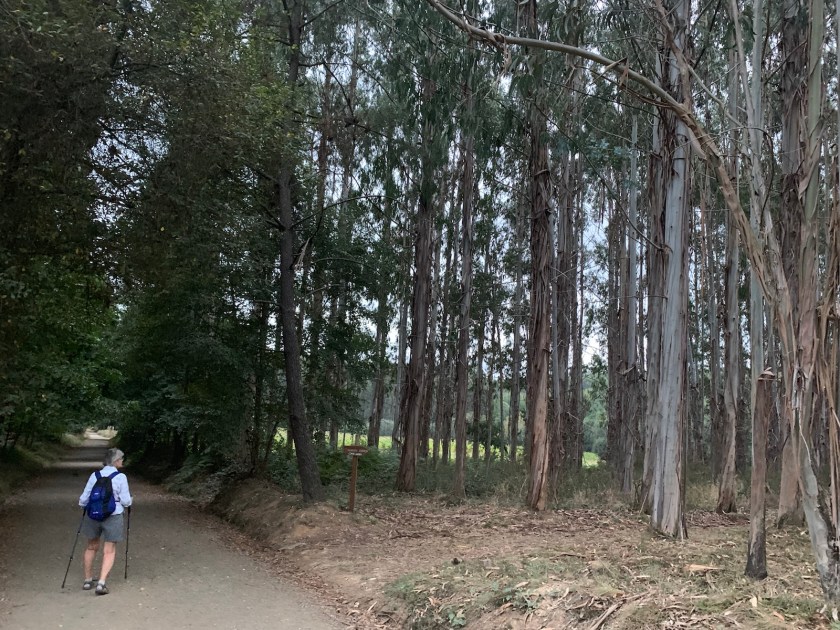 not necessarily in that order.
We did pass through the 16th century village, Ribadiso da Baixo, where we stopped for breakfast and a credential stamp.
In order to validate our pilgrim credential to qualify for a compostela, we must have at least two stamps per day during the final 100 km into Santiago. Our second stamp today will be at our Arzúa hotel.
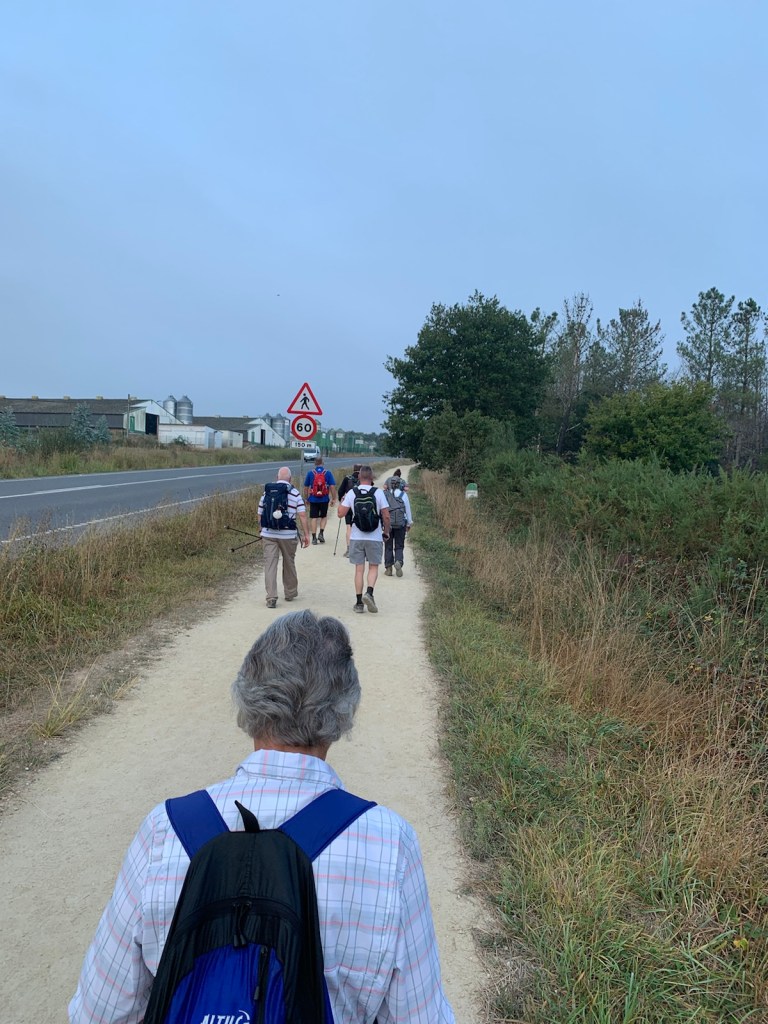
The final mile was along the 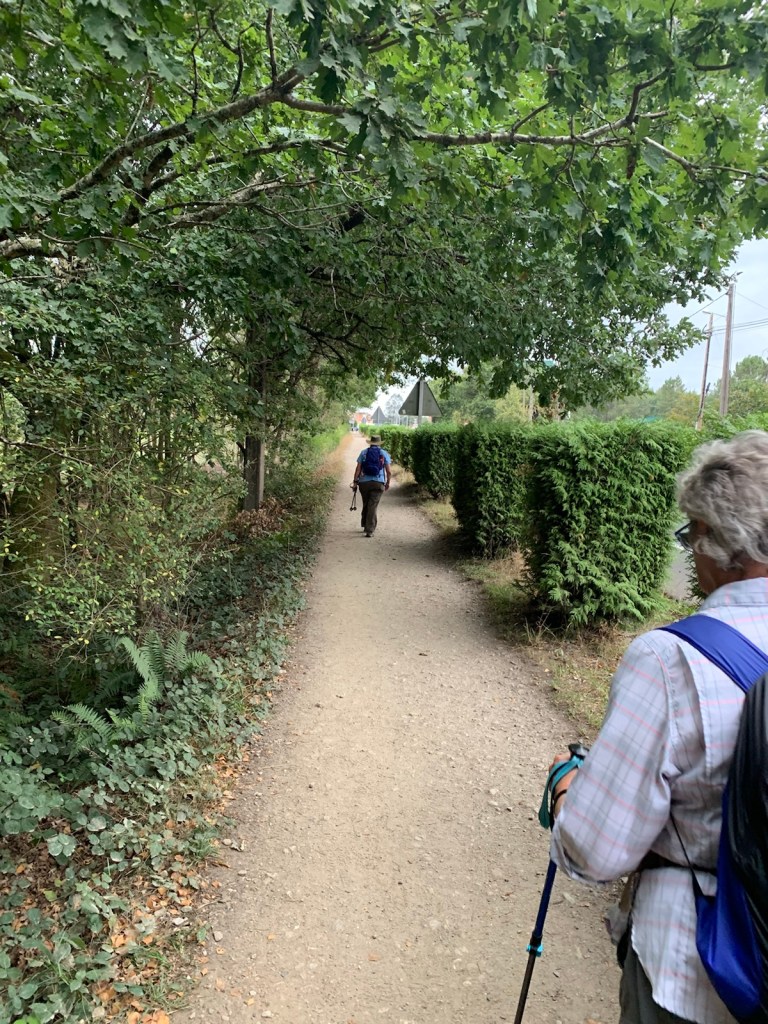 road or on
 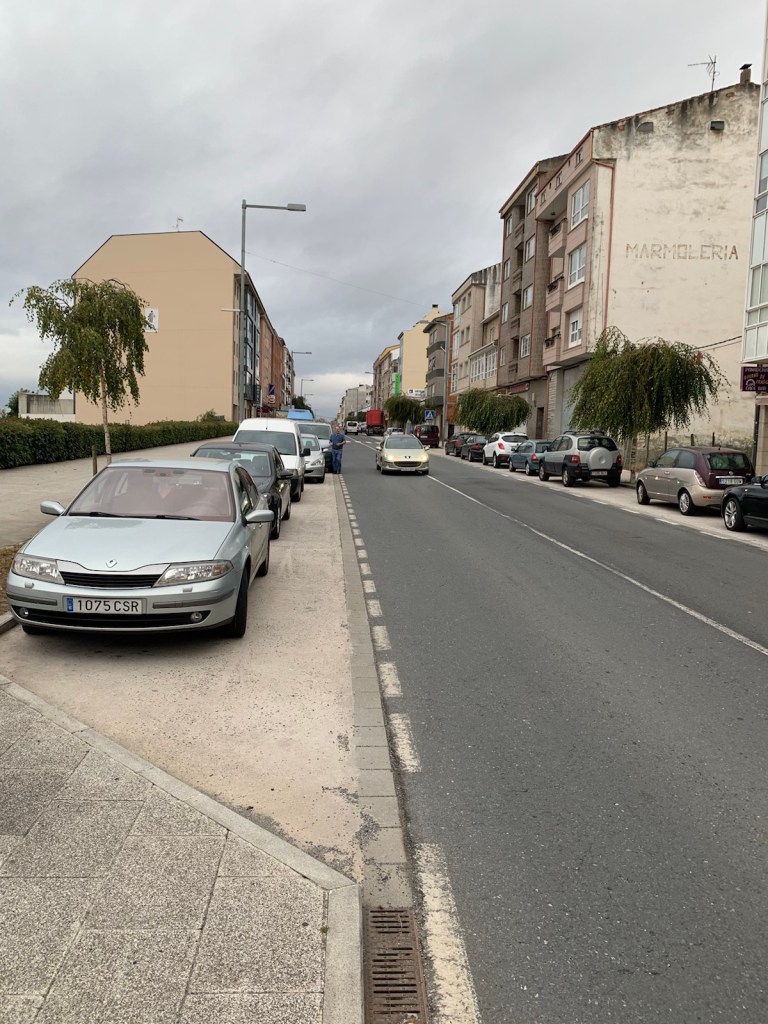 city sidewalks into Arzúa.
We arrived at Pencion Domus Gallery 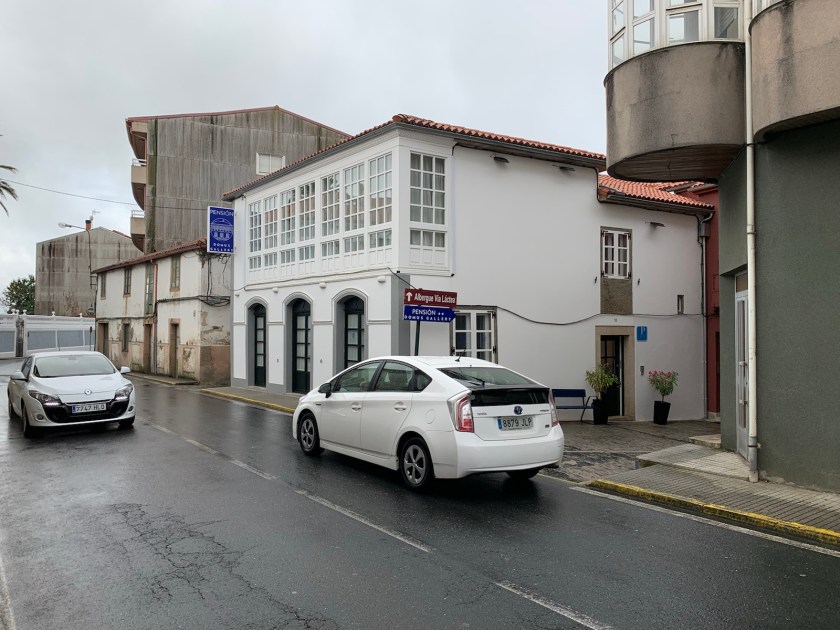 in Arzúa at 10:15 and were able to check-in shortly thereafter. As soon as we sat down in the pencion lobby, waiting for our room, it began to rain seriously… boy, did we dodge a bullet this morning.
Arzúa (pop. 6,238) was previously known as Villanova, as it is called in the Codex Calixtinus. Ample evidence exists of both pre-Roman and Roman settlement nearby. When the area was reconquered, Arzúa was repopulated with Basque people. It was the principle stopping point for medieval pilgrims before Santiago.
Arzúa today is known for its cheese, made from cow’s milk from the municipalities of the Ulloa, raw or pasteurized. It is also known as Ulloa cheese, Ulla, “Paleta cheese” or other more generic names as “Galician cheese” or “cheese of the country “.
The cheese is creamy, rich and smooth. Its crust is thin waxy of yellow and elastic texture, while the paste is white or yellow, very soft and buttery. The flavor is mild, somewhat acidic, varying from a slightly bitter to a slightly sour taste, depending on whether its development has been in winter or summer.
We’ve eaten Arzúa cheeses several times during our walk through Galícia and like its smooth creamy texture and taste.
For lunch/dinner we walked to a small hotel/restaurant on a plaza a block from our hotel. 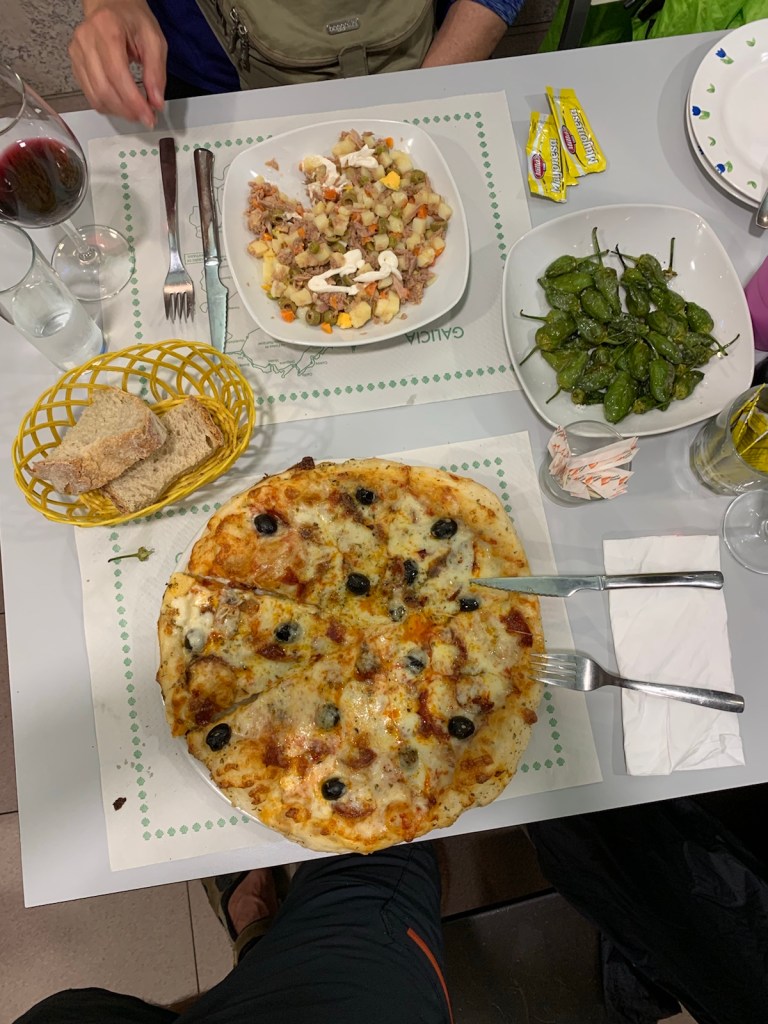 It was a delicious combination of pizza, roasted padrón peppers and ensalad Rusa.
Afterwards we retired to our room for the day for naps, reading and blogging.
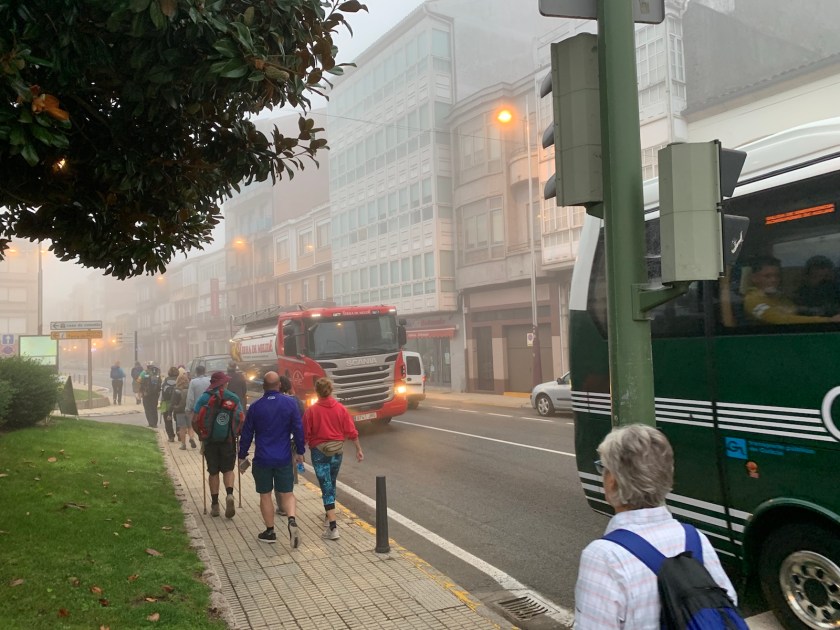 but not enough.
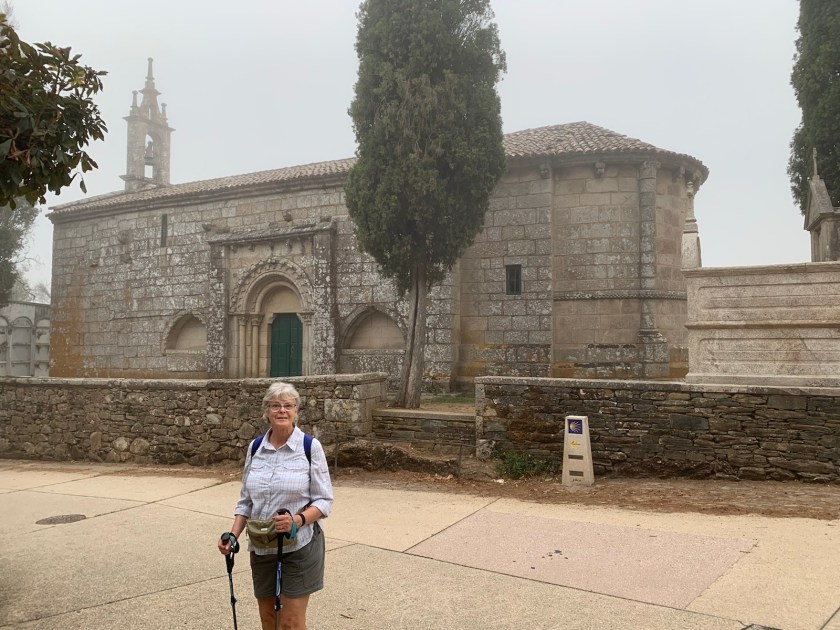 a 13th century church and considered a national monument. It was locked but it was still impressive from the outside.
 but upon closer inspection had a small door for each of two separate compartments,
  carta (mail) and pan (fresh bread delivery).
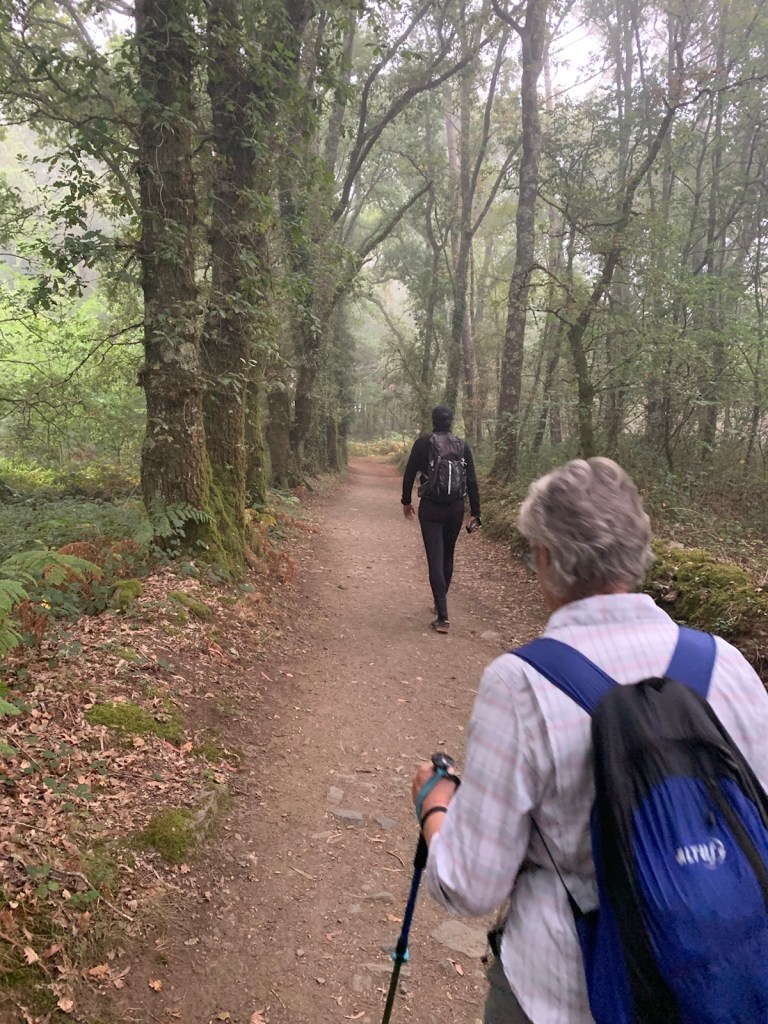 of predominantly eucalyptus trees that are harvested for wood products, a major contributor to the area economy.
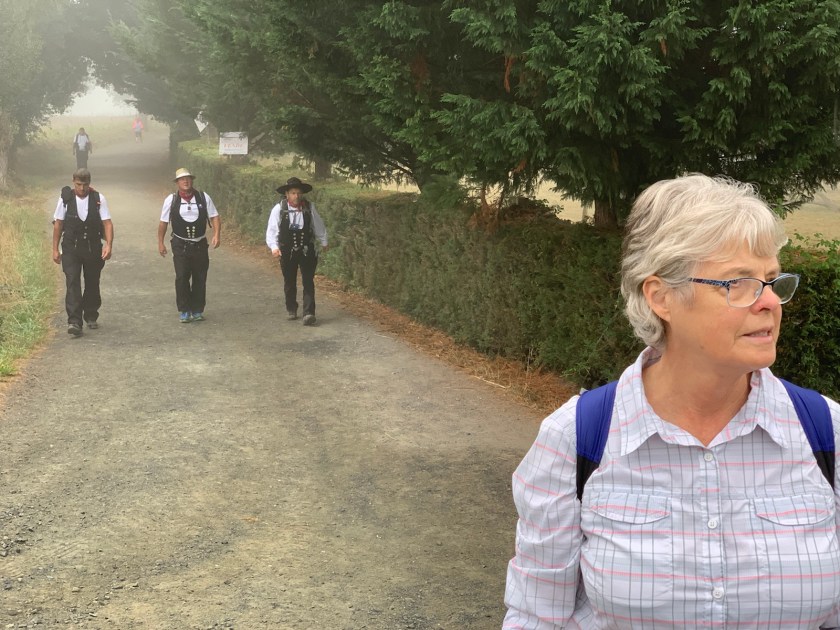 Jim chatted with three different guys as they passed us along the way and discovered they were from Germany, near Kaiserslautern. They all worked for Zimmermann, a roofing company. Herr Zimmermann was also apparently walking with the group. Their outfits were sharp looking and we got a closer look
 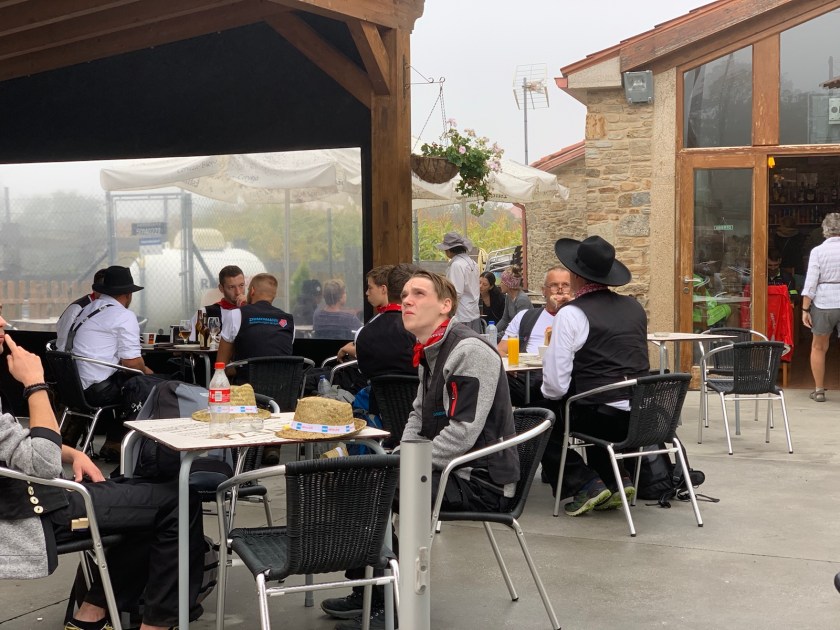 as a number of them stopped at the same bar for a break. Each of the guys had a special pocket on their pants leg
 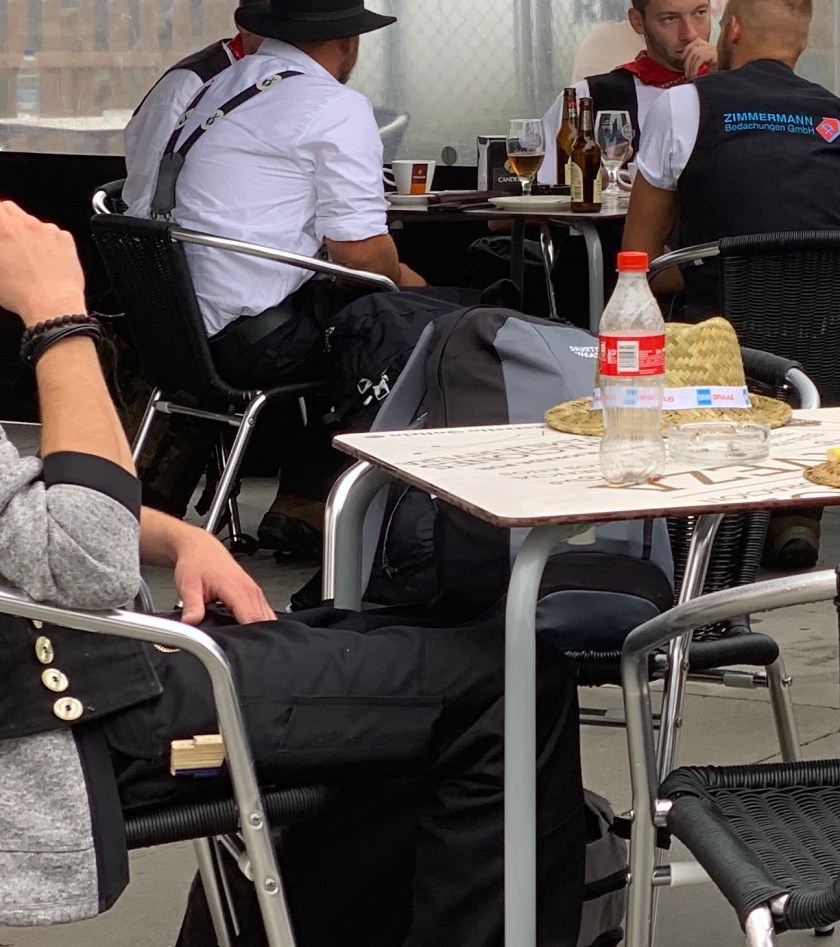 that was holding their carpenter “wooden, folding rule”.
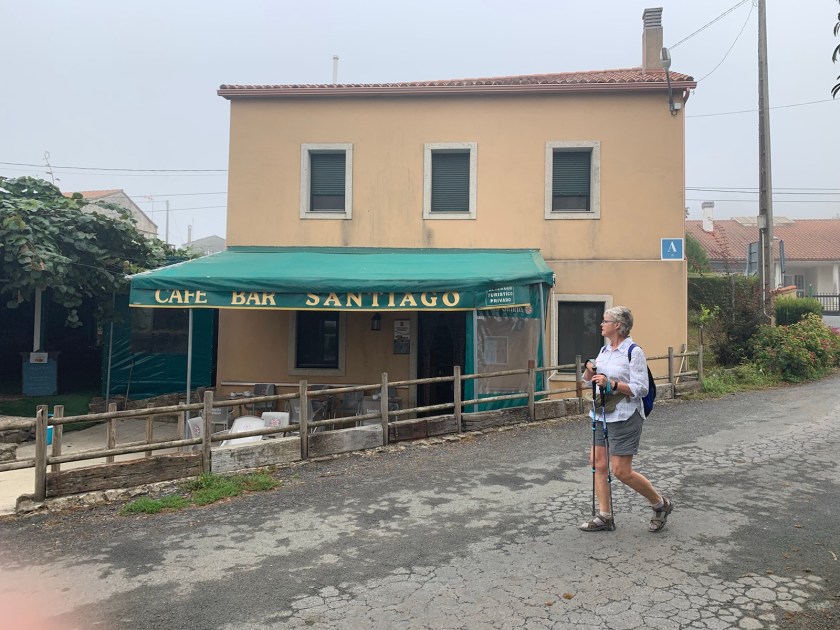
 Cafe/Bar/Albergue Tourista “Santiago”, in Castañeda.
 and decided to give it one more go in 2019.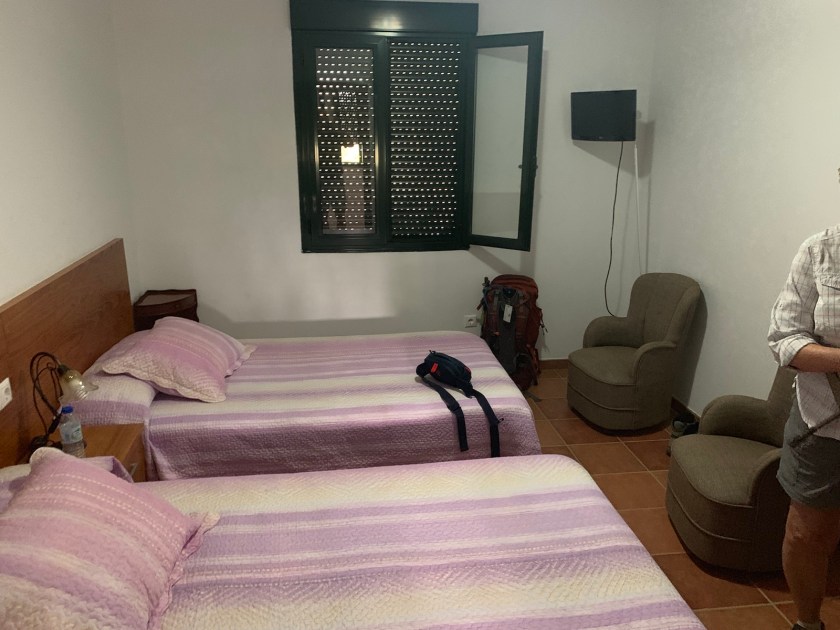
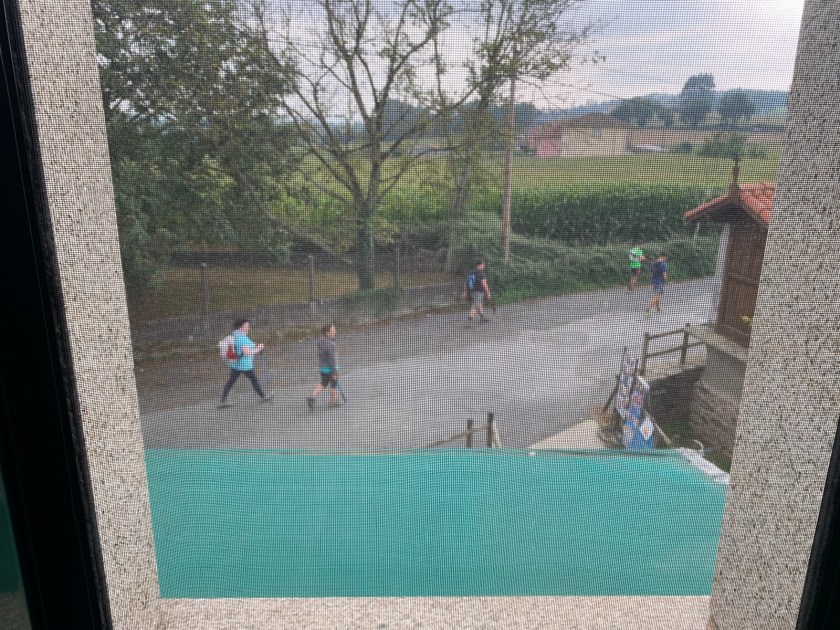 from our bathroom window or the outside sitting area.
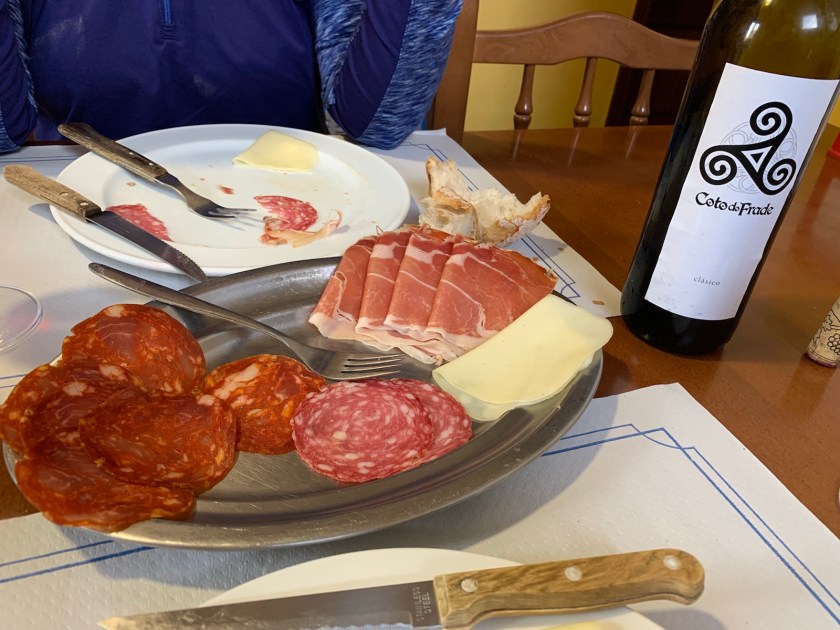 We had a first course of cold cuts and cheese and
 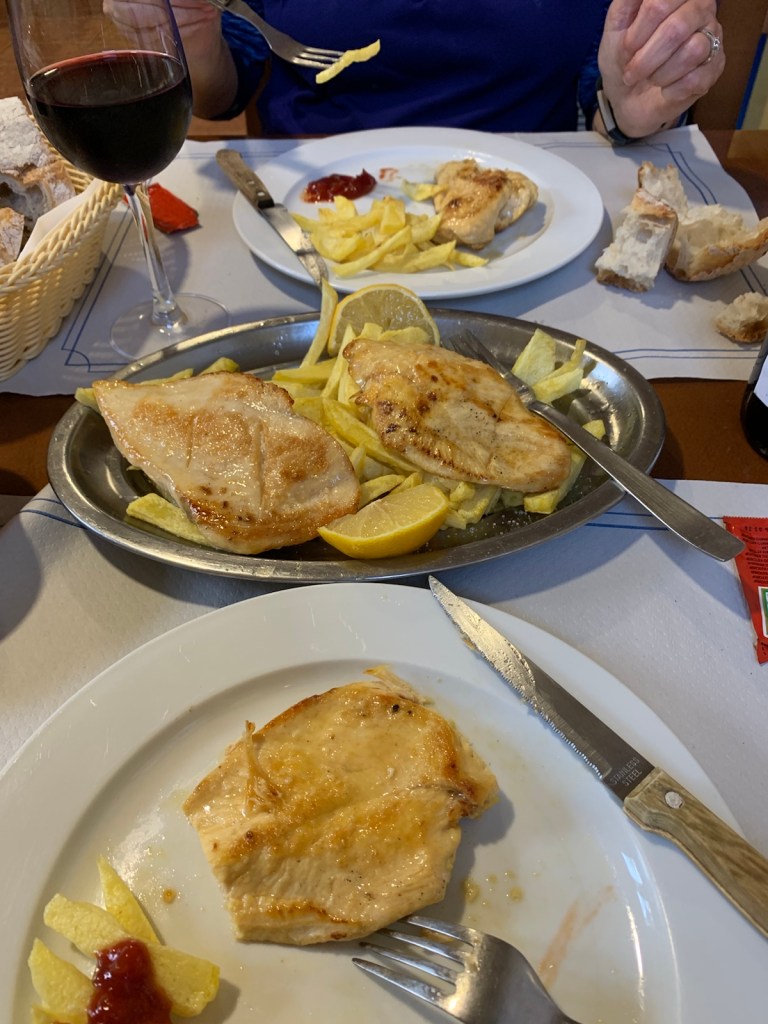 main course of grilled chicken breast and fries. Yum.
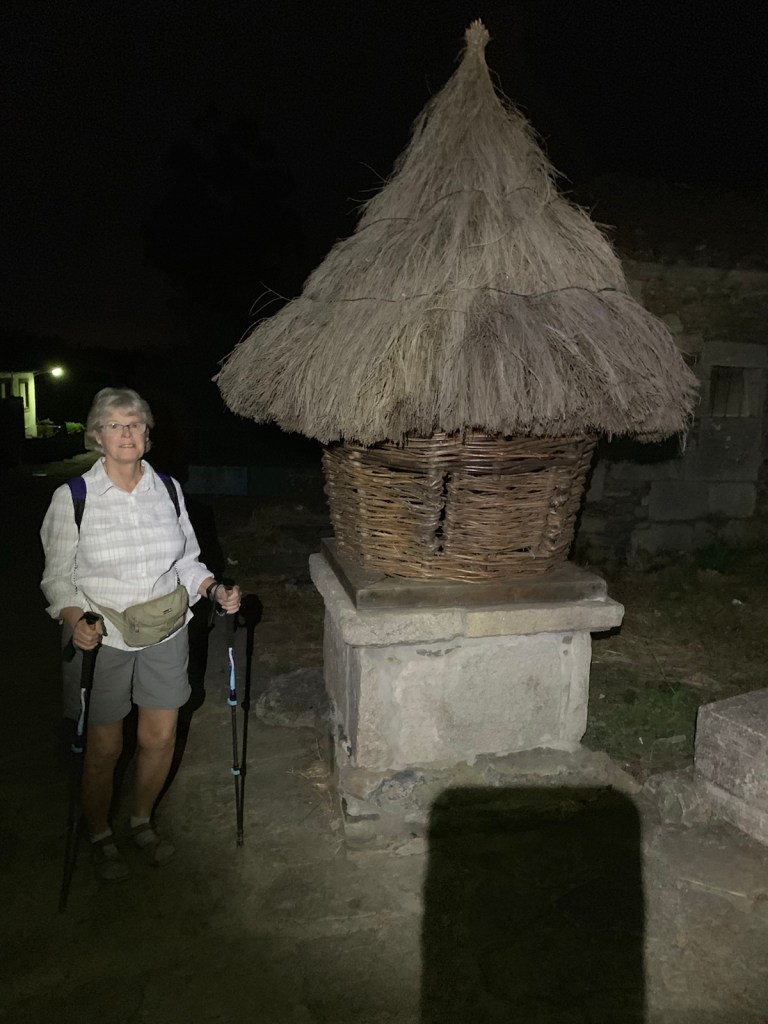 If we haven’t already mentioned, hórroes are for storing grain and corn safely from unwanted critters and weather.
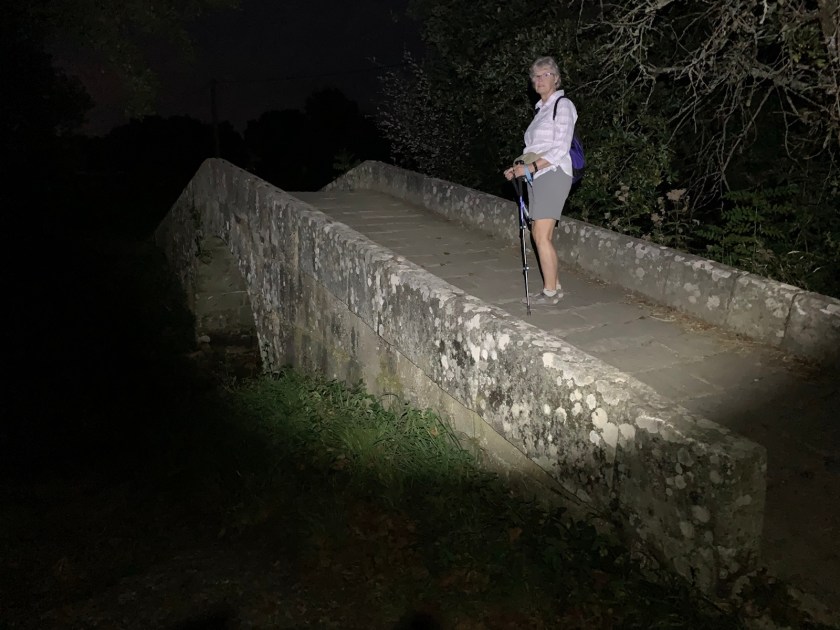 a medieval bridge in the hamlet of Disicabo.
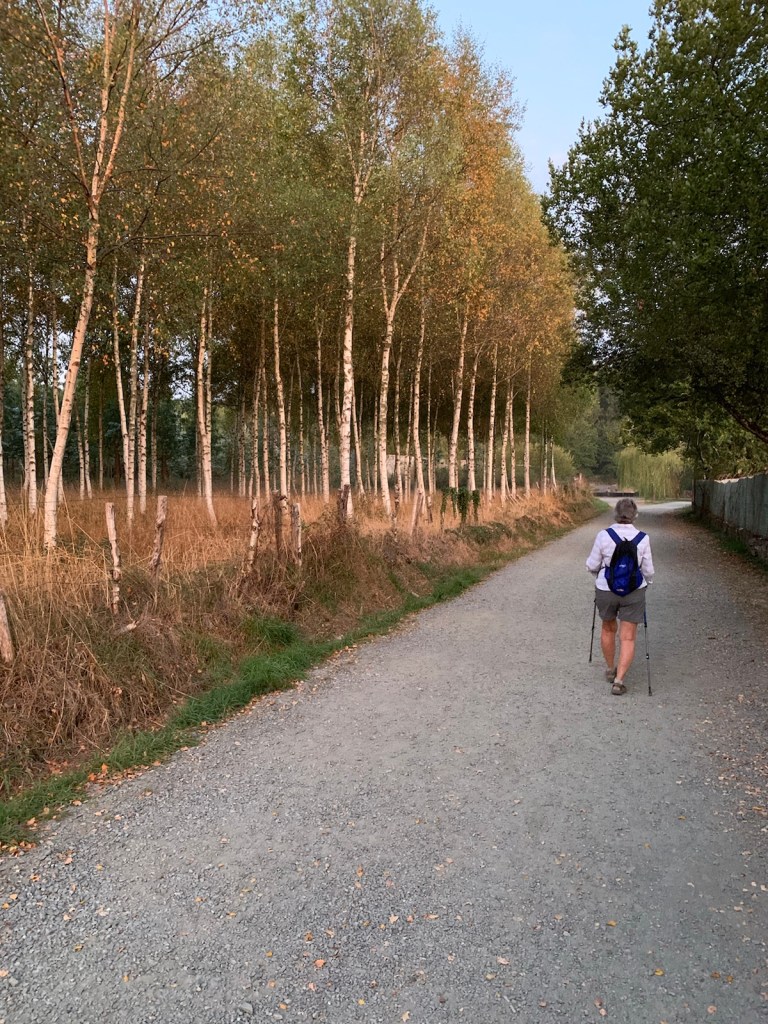 then back into some forests
 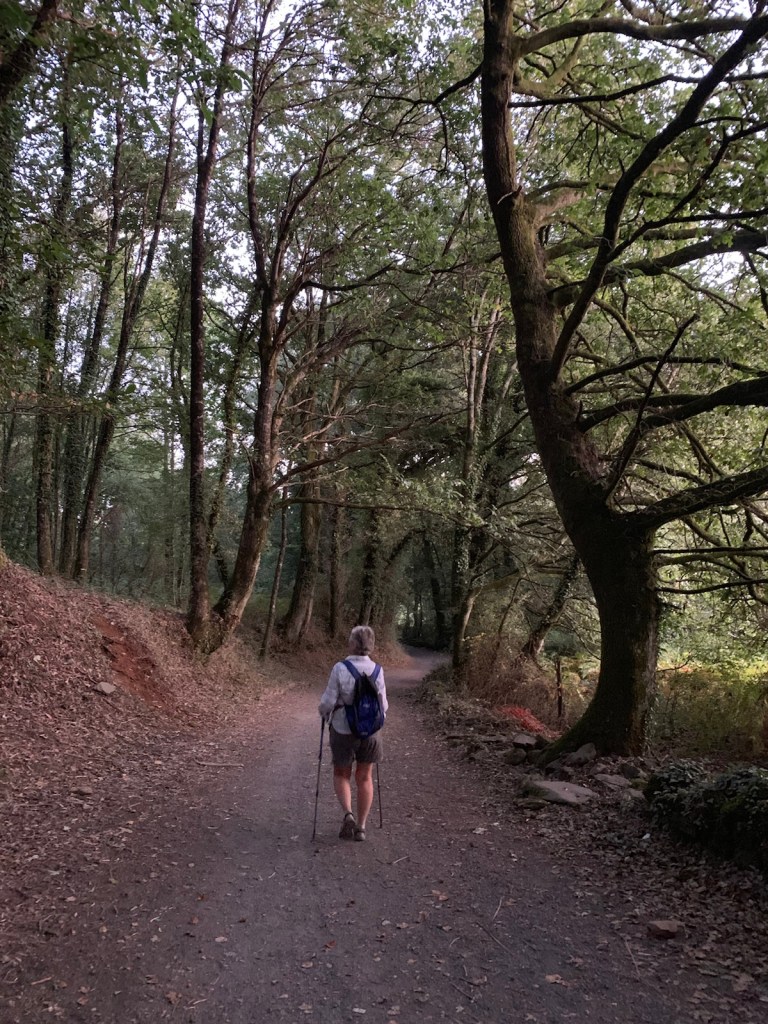 as it got lighter between dawn and sunrise.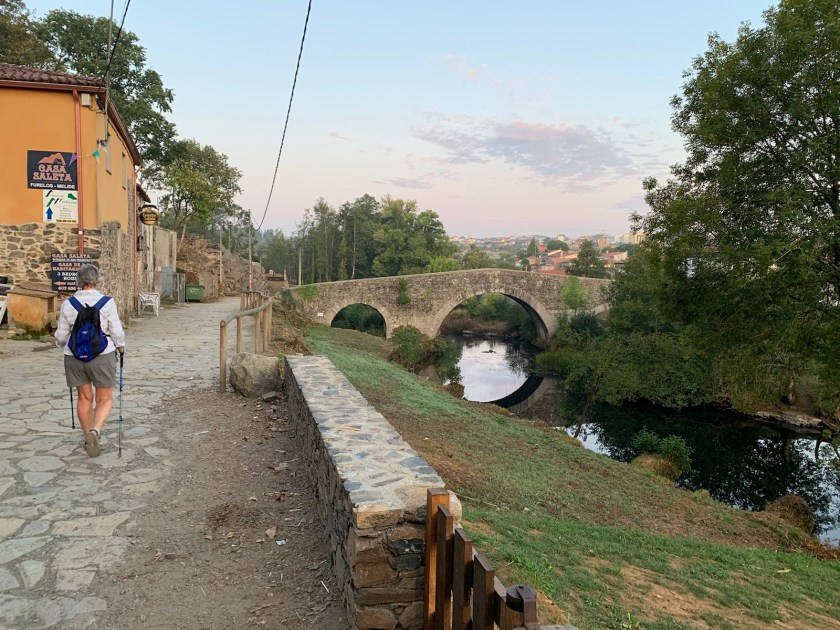
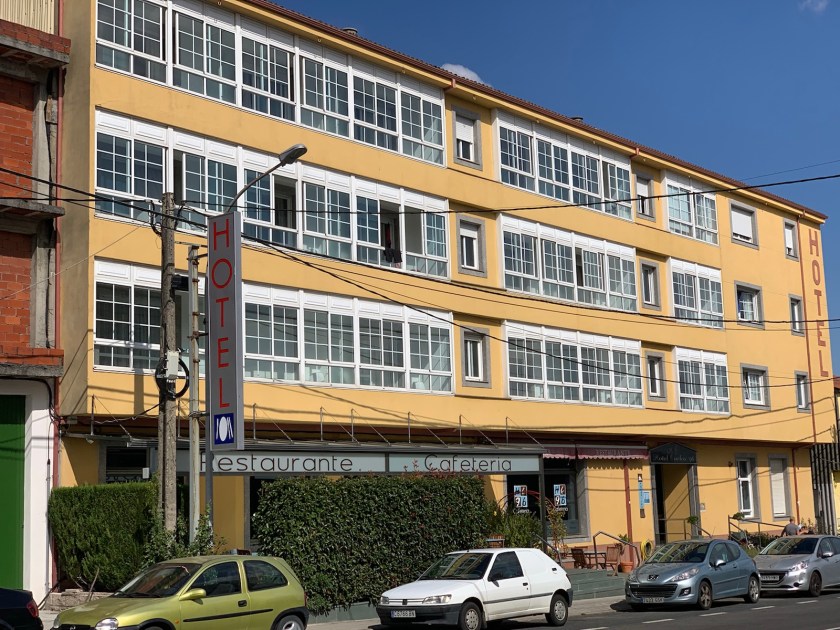 our hotel for today and tonight.
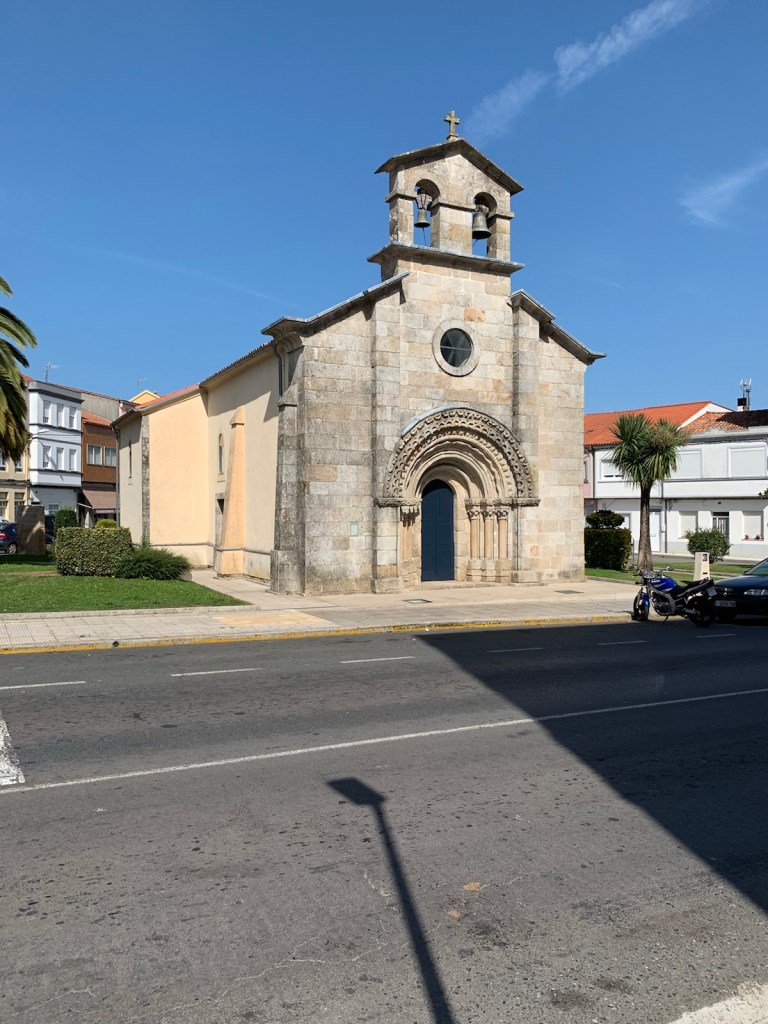 features 14th-century tombs with local coats of arms, and the
 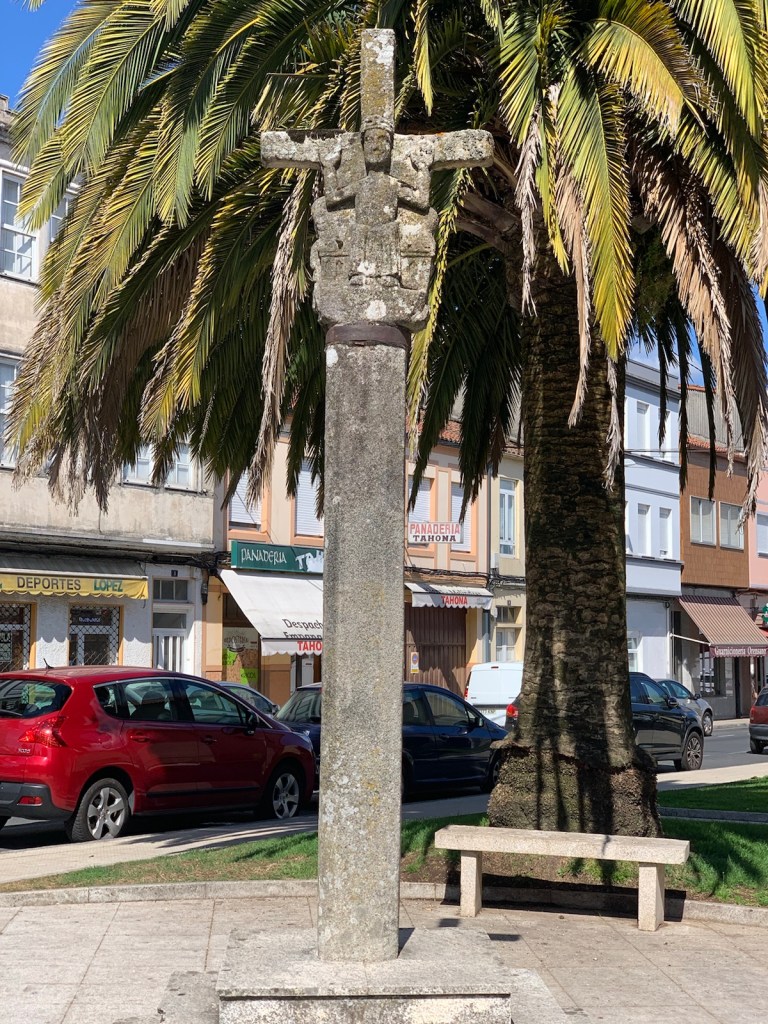 stone cross outside depicts the crucifixion.
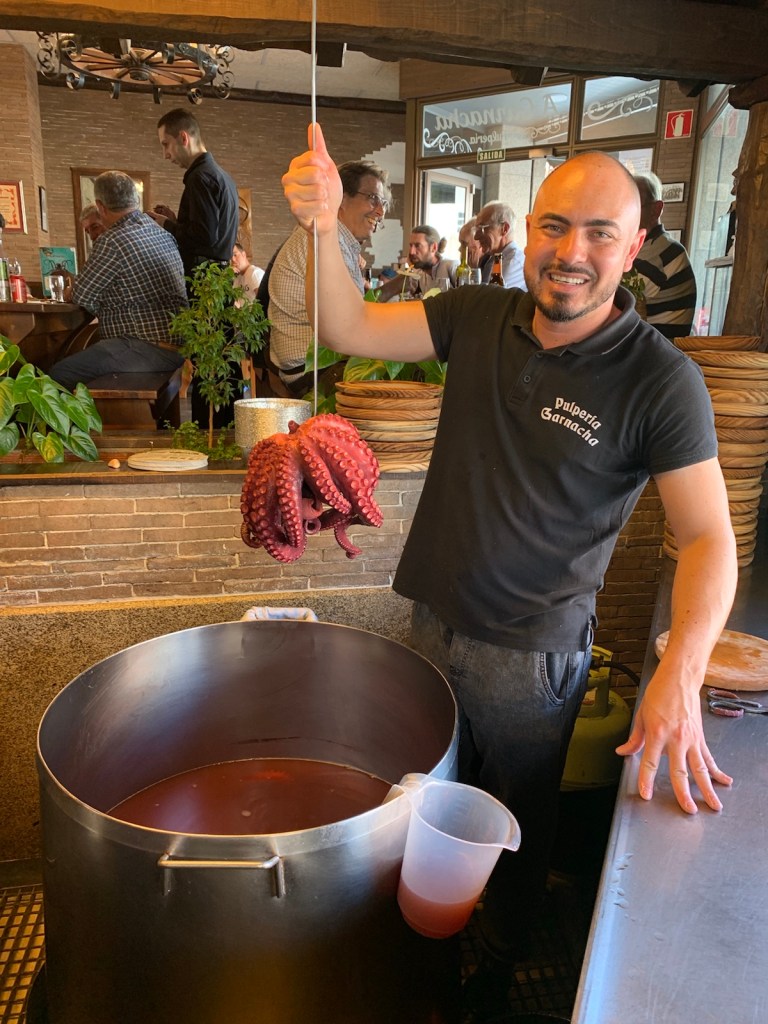 Since then, we have sampled it in a variety of places both on the Camino and elsewhere, and we think Melide’s version is the best, and more specifically, Pulperia el Garancha.
 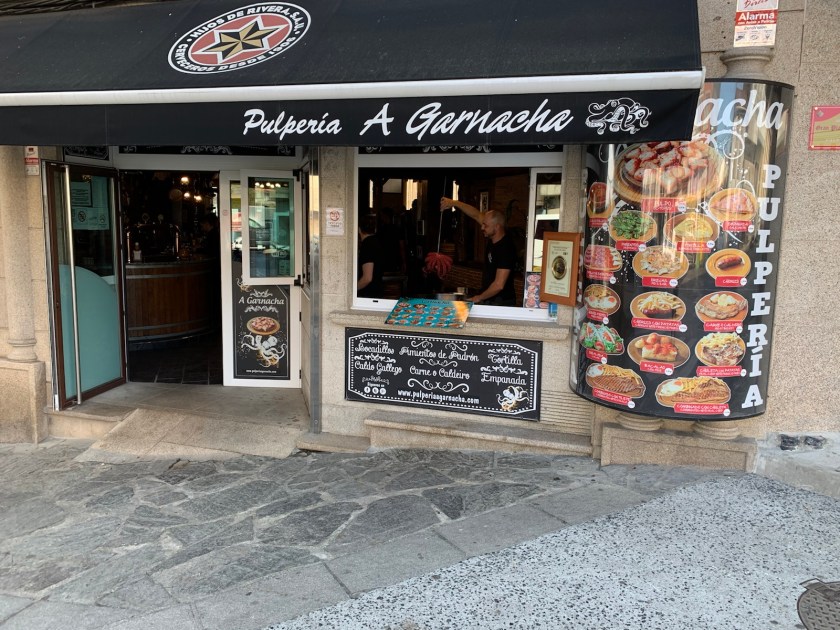 This was the source of our takeout dinner last night. Garancha also has the best roasted Padrón Pimentos we have ever tasted.
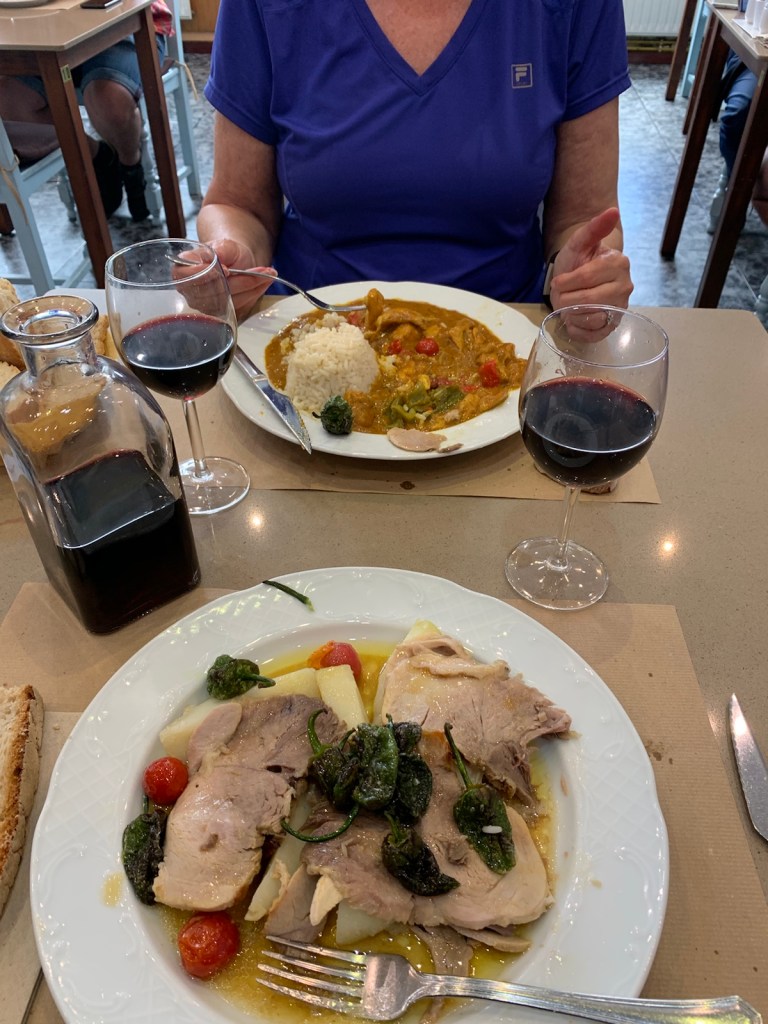 and roasted turkey with Padrón peppers for Jim. Dessert was rice pudding for Linda and ice cream for Jim. A local (no label) wine was included.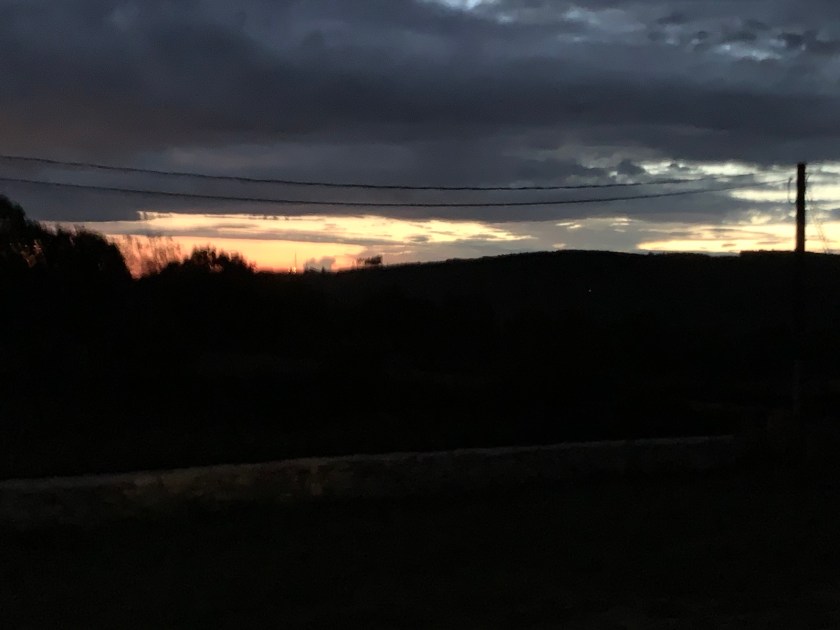
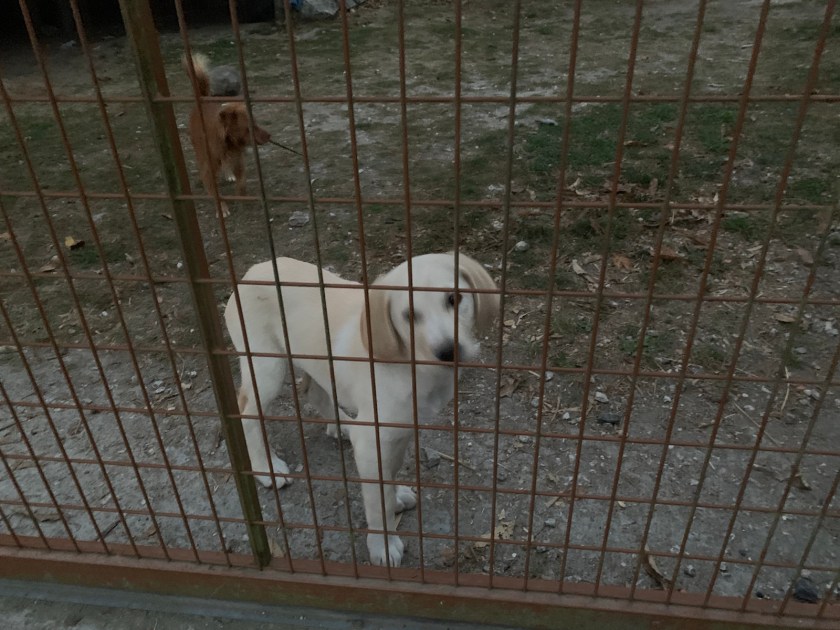 we saw this fellow who wanted to go with us to Santiago to get a Compostela, too.
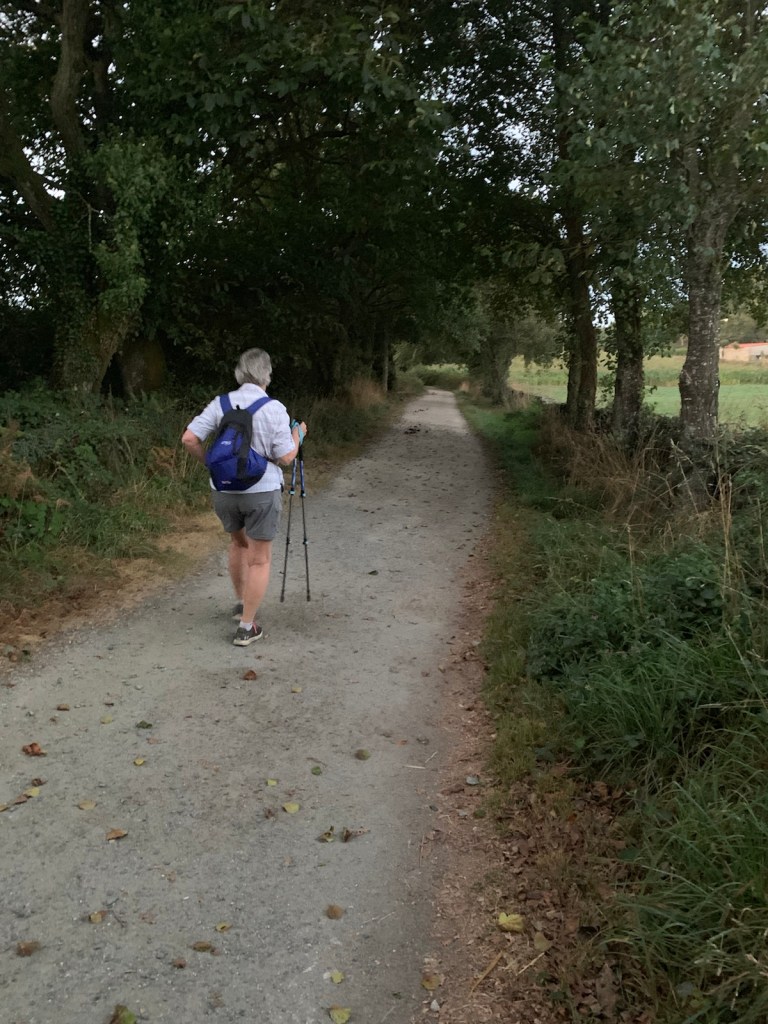 and along small roads
 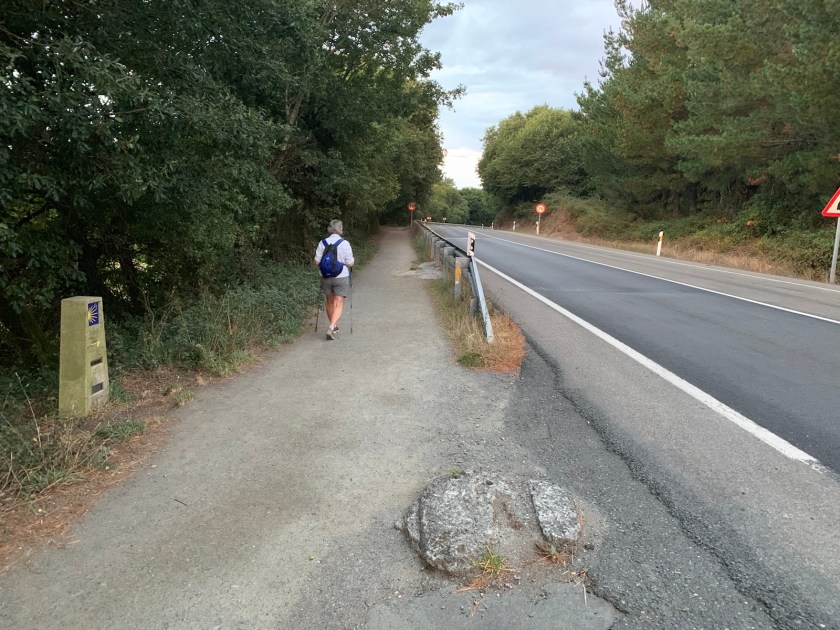 until we reached Palas de Rei, (pop 3743),
  an apparent nest for pilgrims.
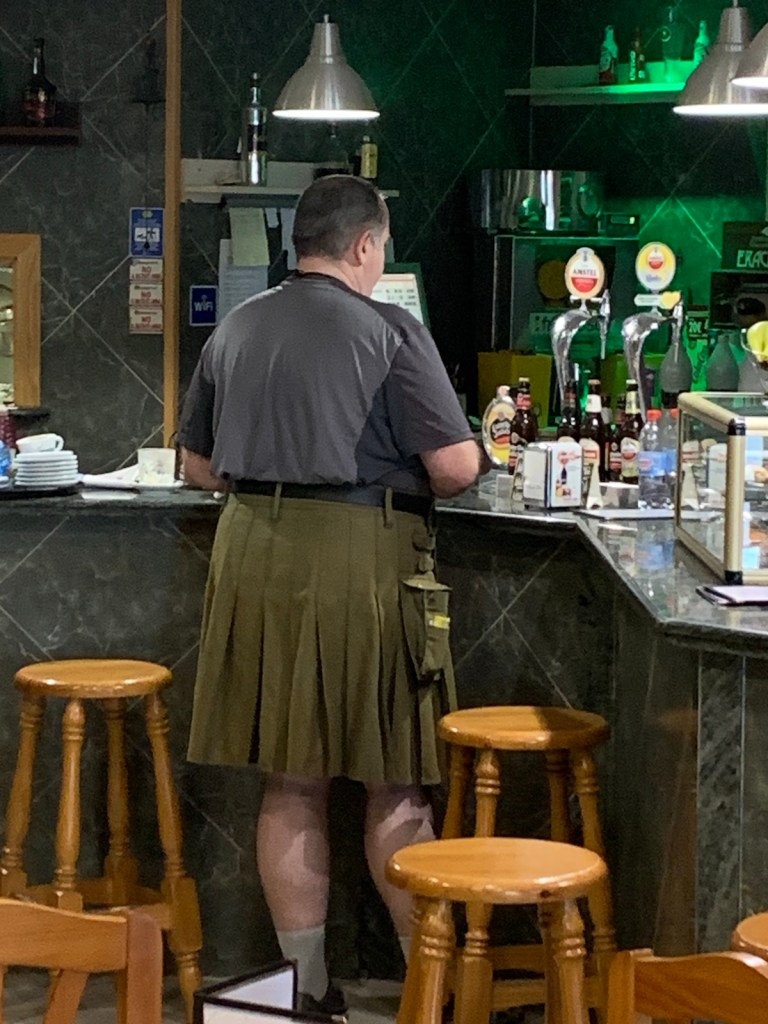 and chatted with a guy in a kilt from Cambridge, England. We later saw him as he passed us
 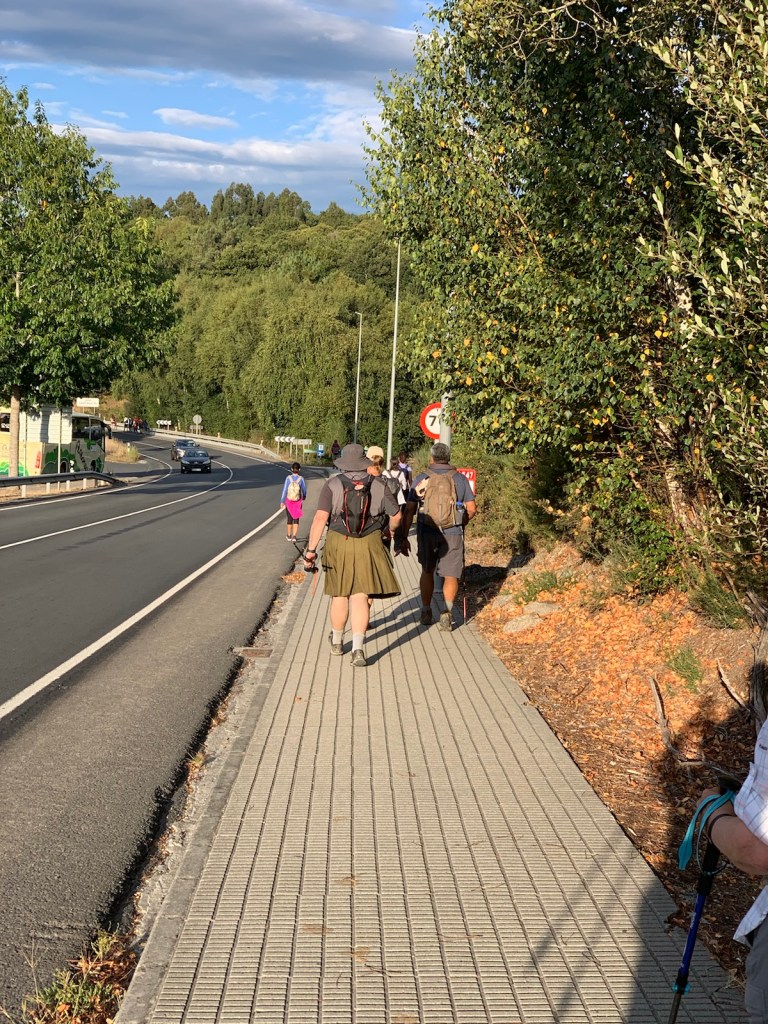 and the pilgrim glut on the way out of Palas de Rei, one of our least favorite Camino towns.
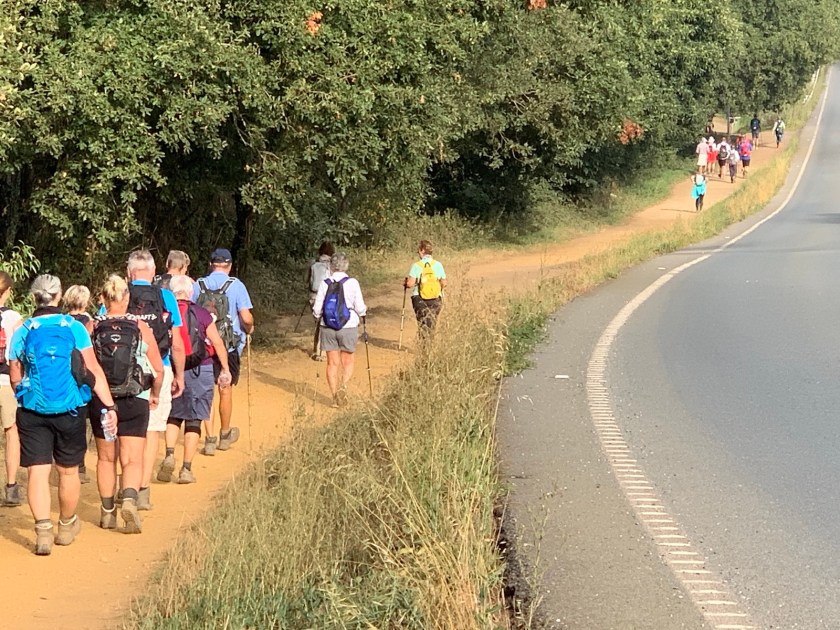
 and gradually through attrition or rate of walking, we regained some breathing room
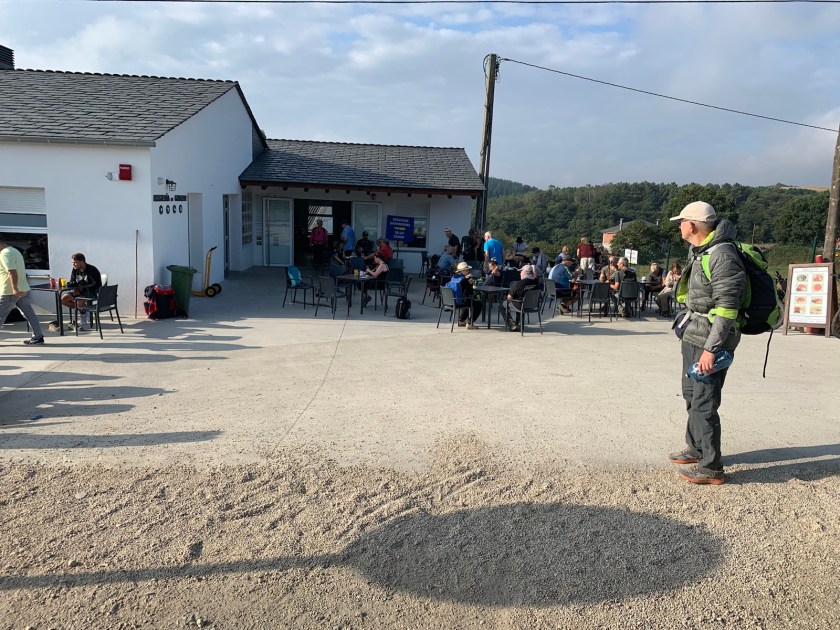
 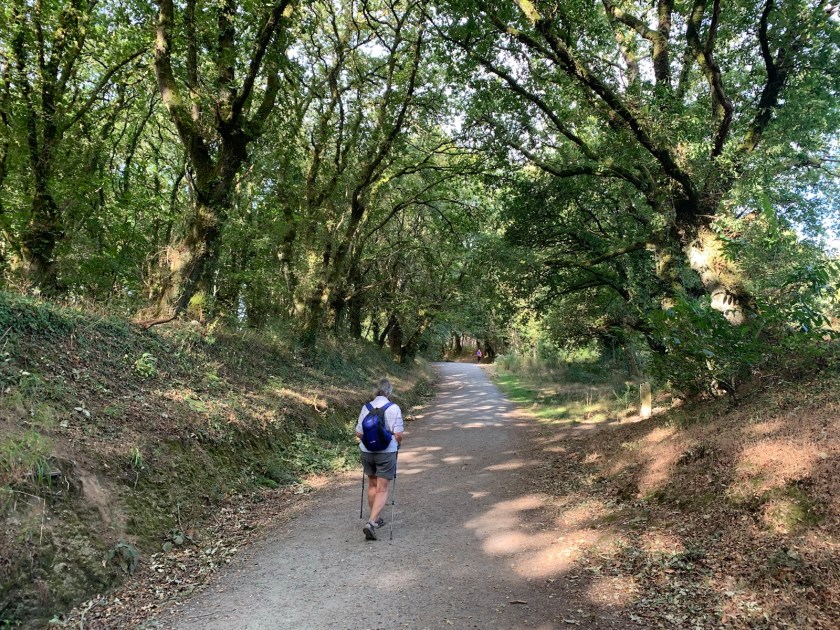 until we stopped at the bar/restaurant of Campanilla for lunch. It was packed mostly with resting pilgrims, occupying the outdoor tables and chatting with one another,
 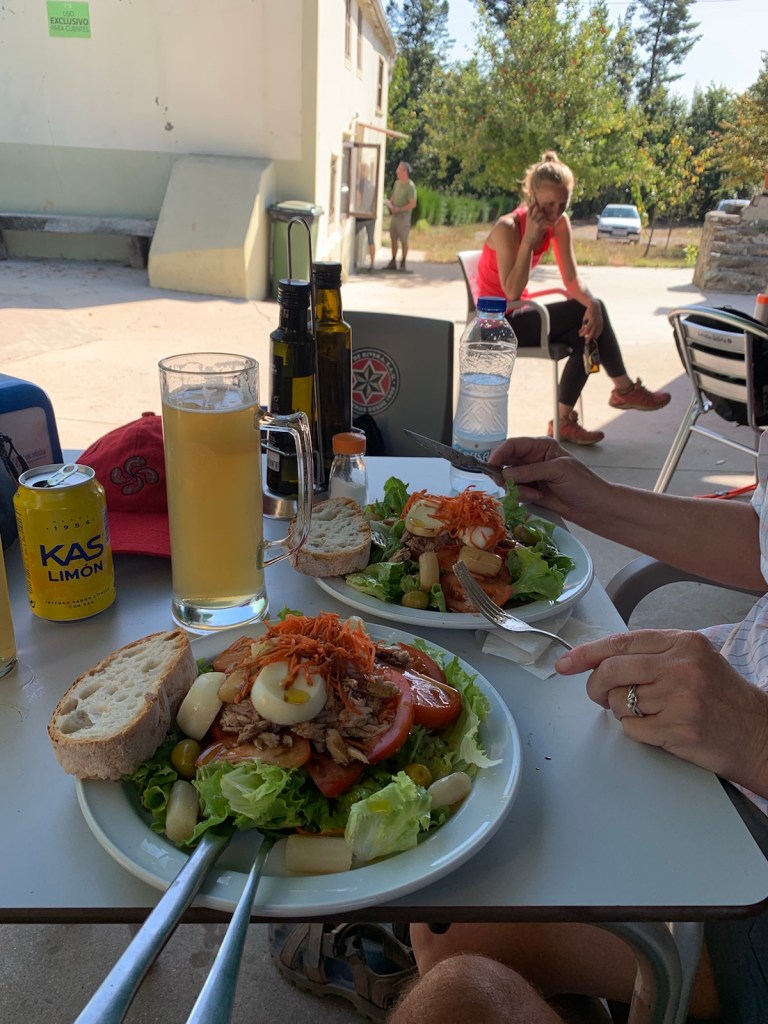 but not buying anything and the others were lined up for the restroom. The restroom line was about 15 pilgrims long and increased and decreased as we watched. We entered the empty restaurant and were happily greeted by the owner when we ordered salads for lunch. We then found a seat and enjoyed a nice lunch as the crowd gradually diminished as the pilgrims disappeared, as we later discovered, into a huge tour bus waiting a few hundred yards up the path.
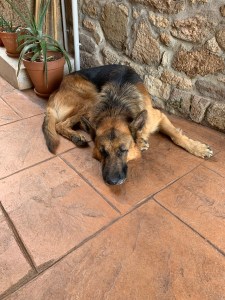
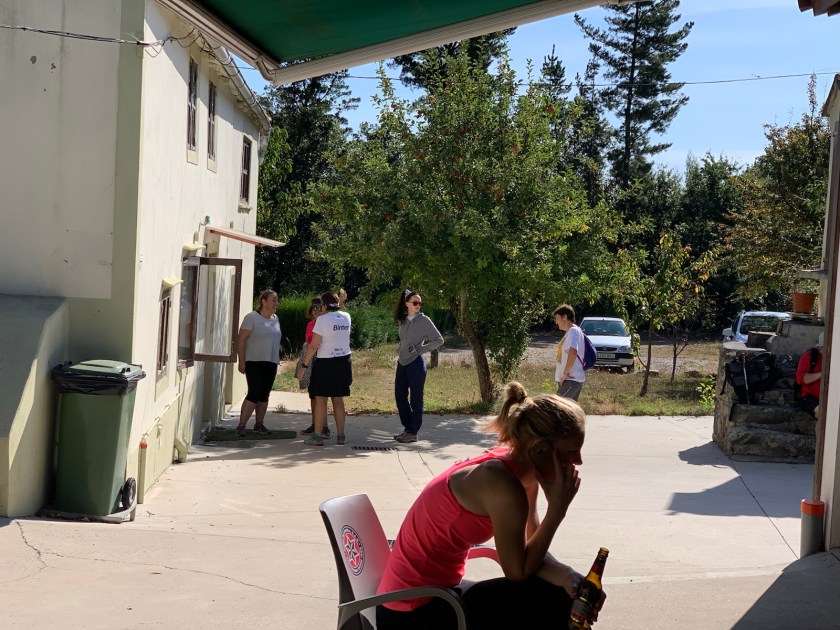 who had started the Camino in Sarria a few days ago with their three dogs. We jokingly asked them if their dogs were pilgrims and they laughed and said, “si”. We also asked if the dogs were going for Compostelas and they jokingly, we thought, said “si”.
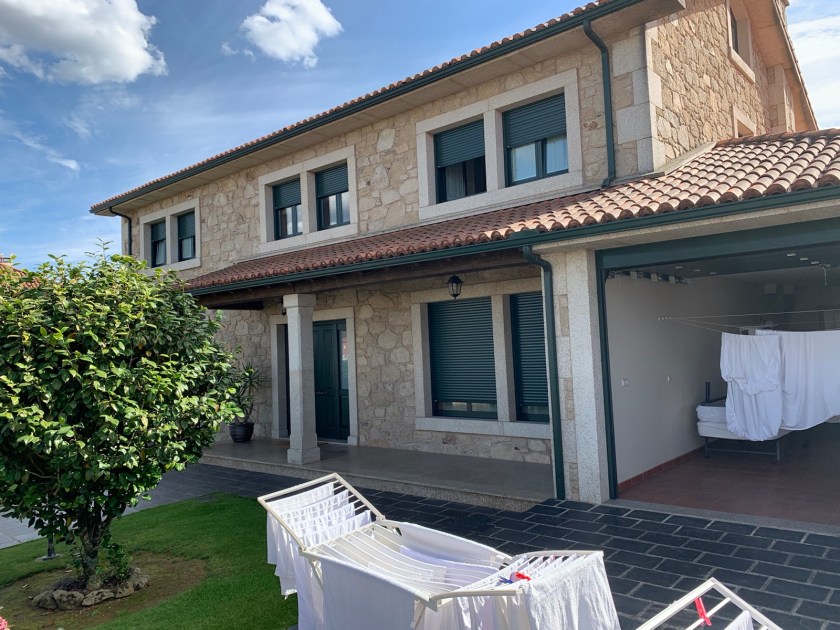 It doesn’t have food, but mostly everything else,
  including a pool, which Jim sampled this afternoon.
  Our room is huge and the bathroom shower was so complicated
 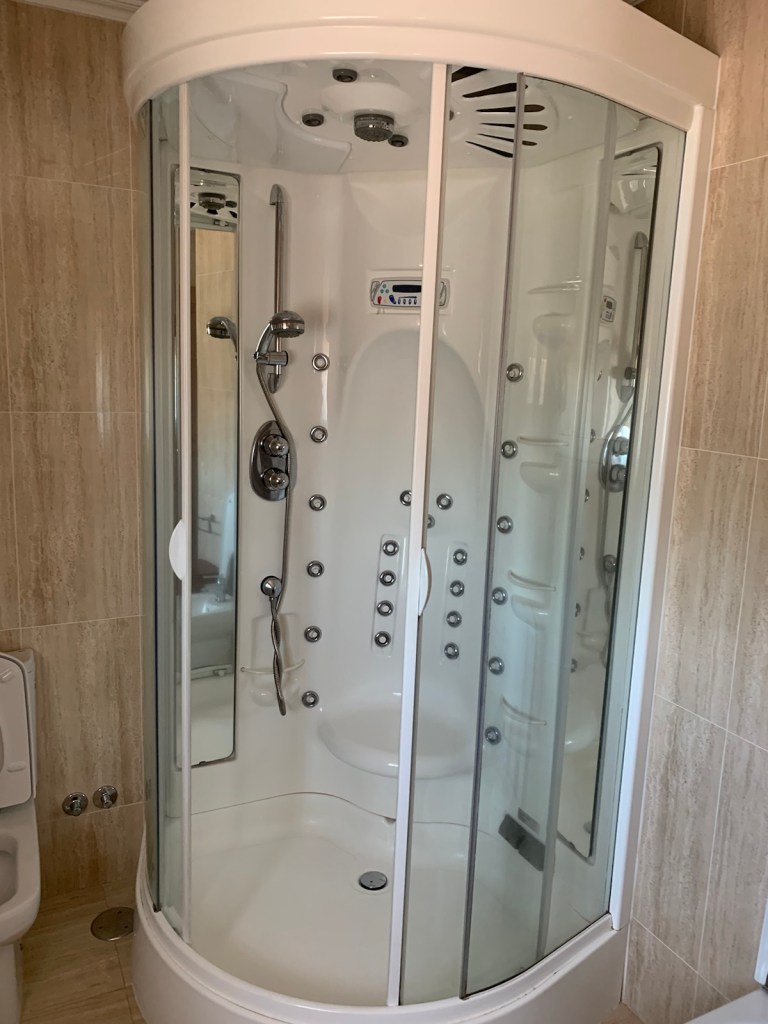 we had to get the receptionist to give us a short course on how to operate it.
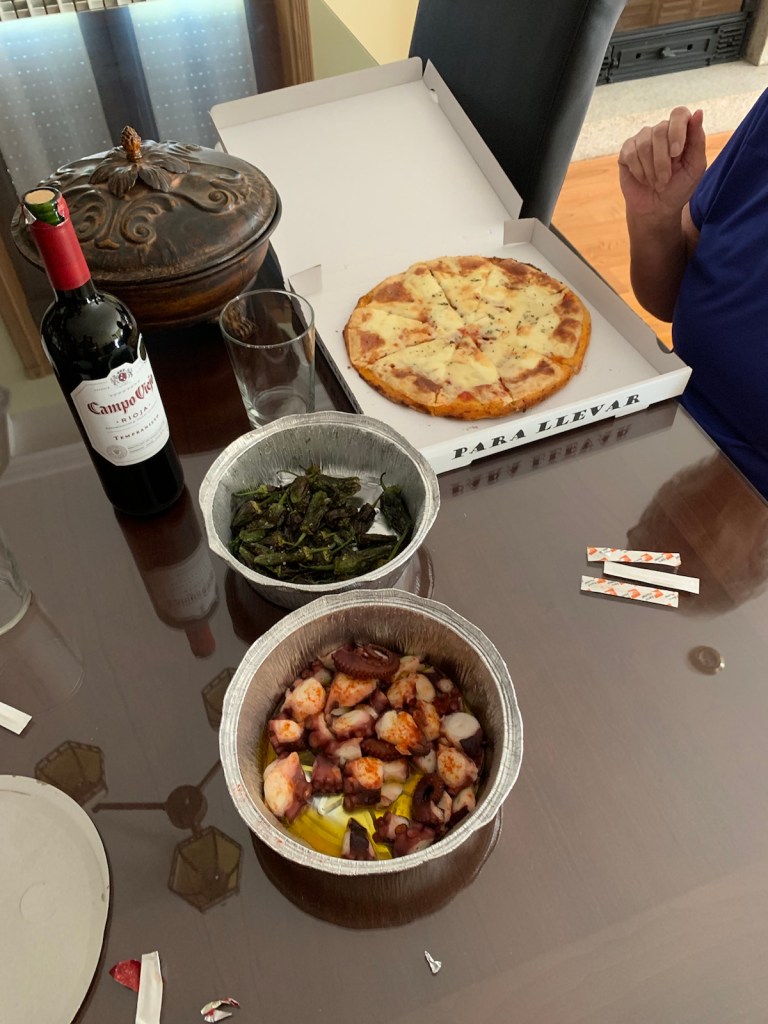 Jim returned with “takeout” pizza, pimentos, pulpo and a (3.60€) bottle of wine for dinner.
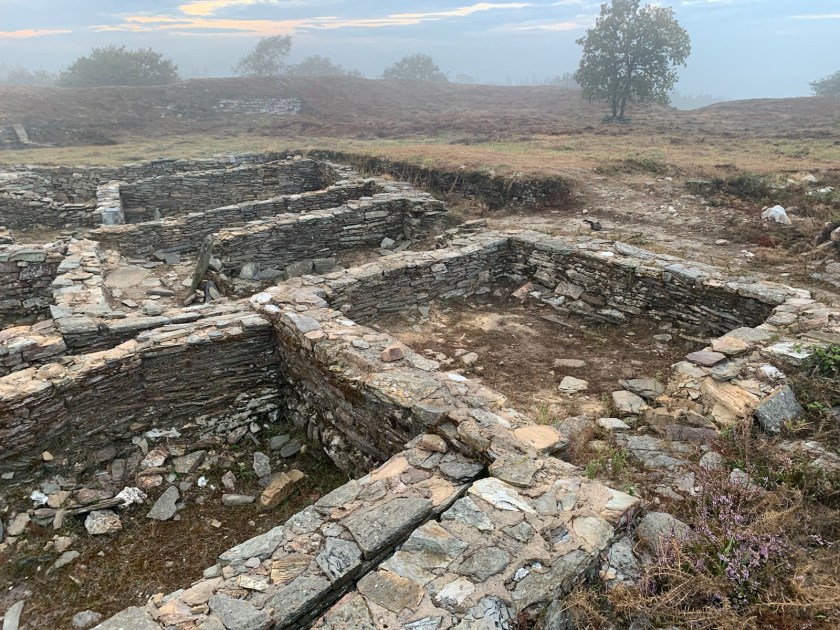 suggested this was primarily a place for safety above anything else.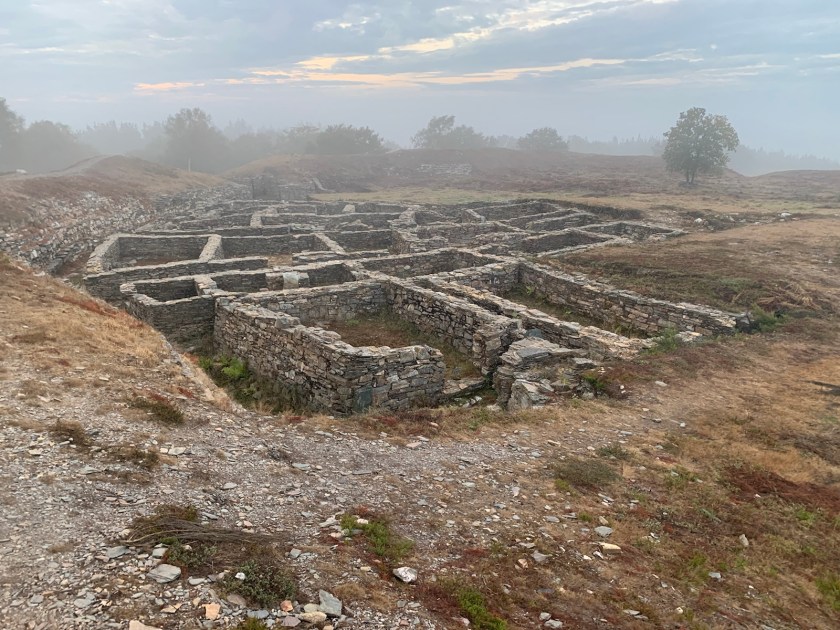
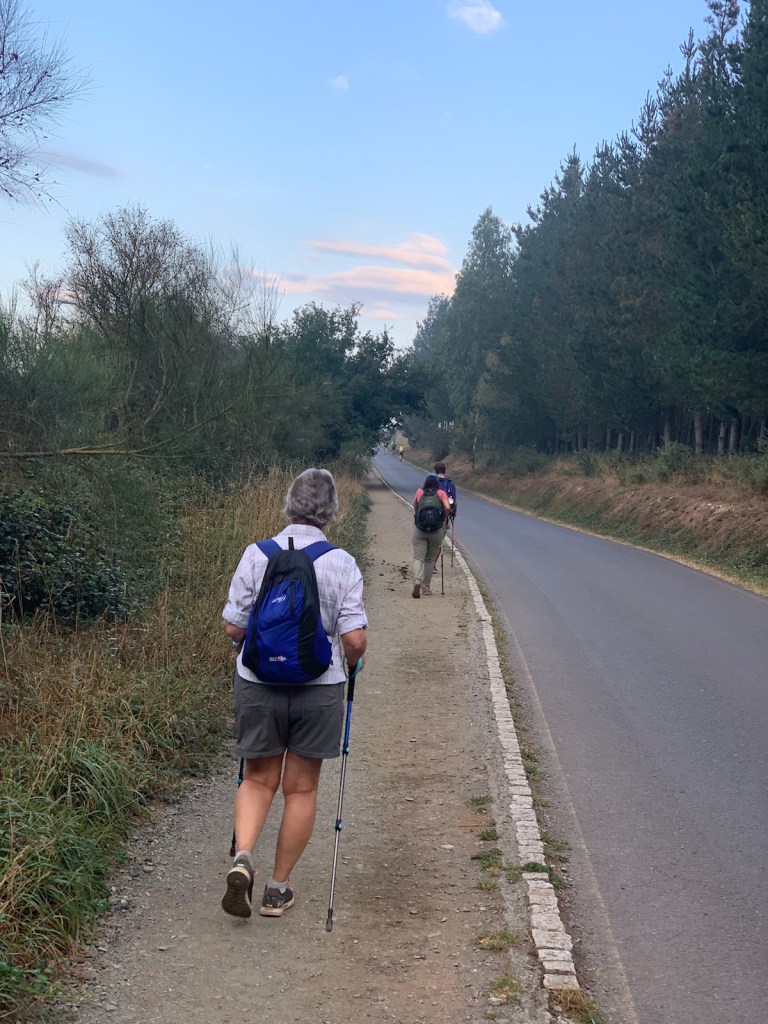 We walked on paths along small farm roads
  and secondary roads through several small villages
  with one or two albergues, but nothing significant.
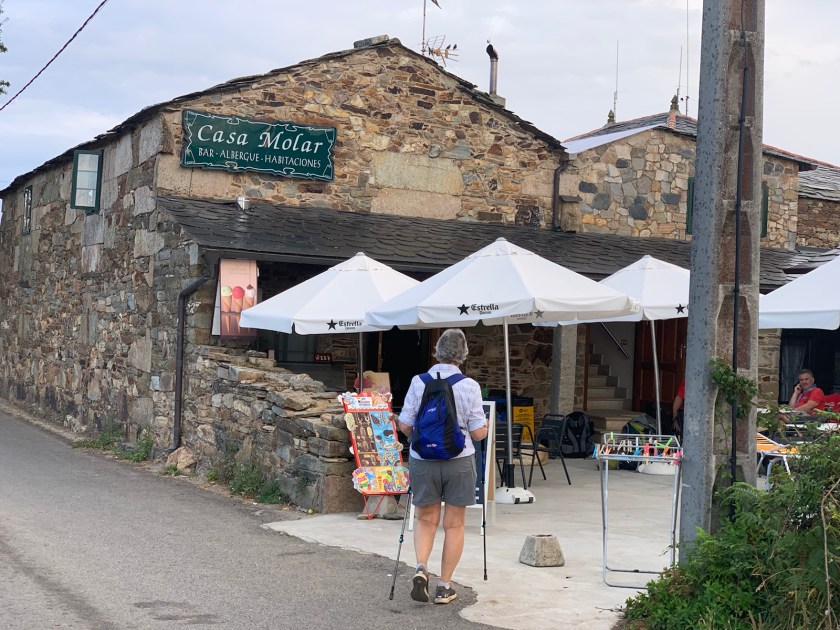 one for breakfast and
 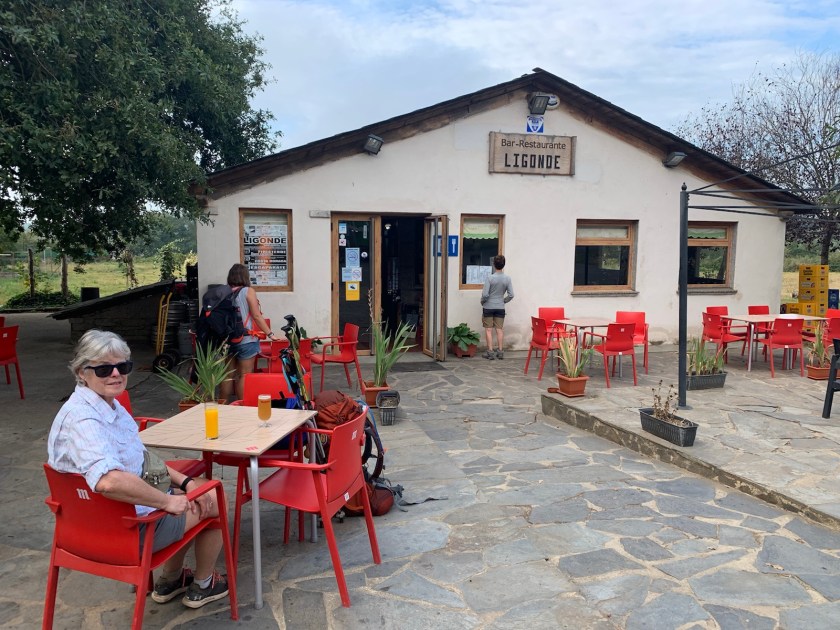 one for OJ.
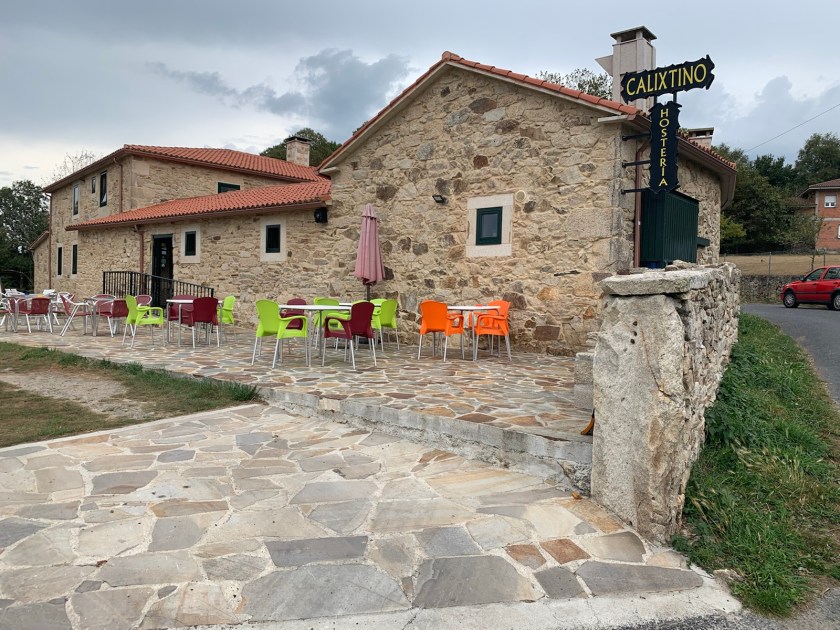 Hosteria Calixtiño in the hamlet of Lestedo.
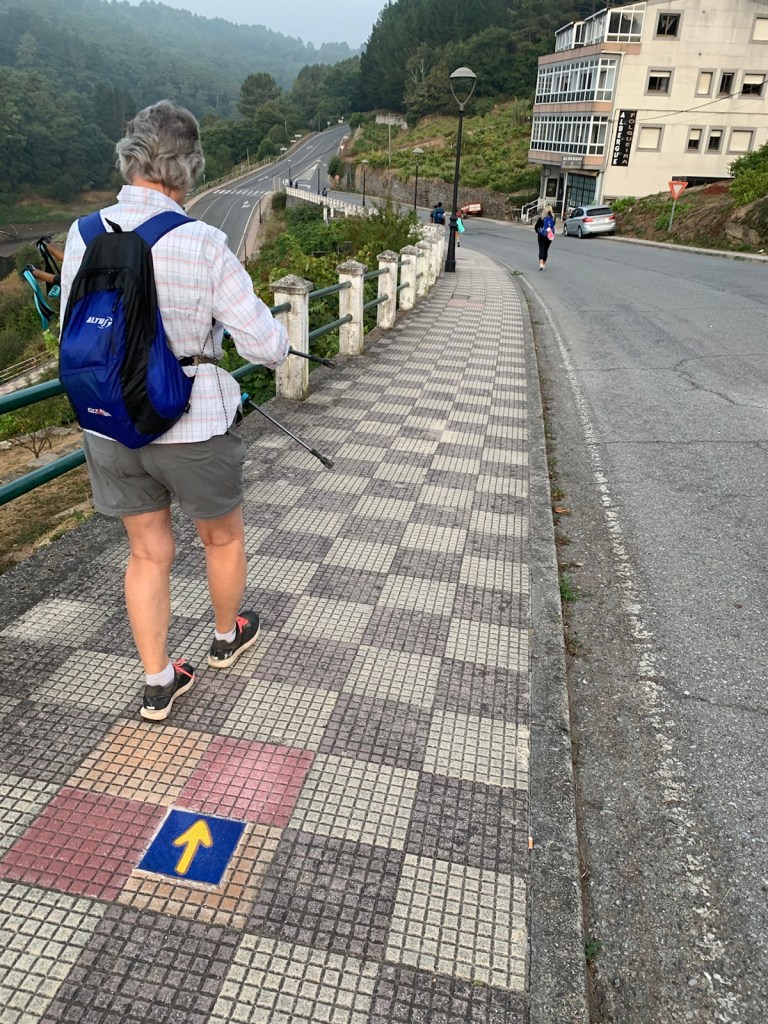


 Jimandi