
Walked today: 5.3 mi. Camino’26: 114 mi.
As we got ready to leave our room at 7:30, we were missing a set of trekking poles. We looked at each other and somewhat short of a panic, recounted our movements yesterday and guessed that we had left the poles at La Puntido while waiting to check in. Realizing that the La Pundito bar may be open, we walked (not ran) to the bar and were so relieved to find the poles where we apparently left them, now waiting anxiously to be reunited with us.
So, we could say, ” the Camino provides” but you already know that, so we’ll get on with our journal of today’s walk?
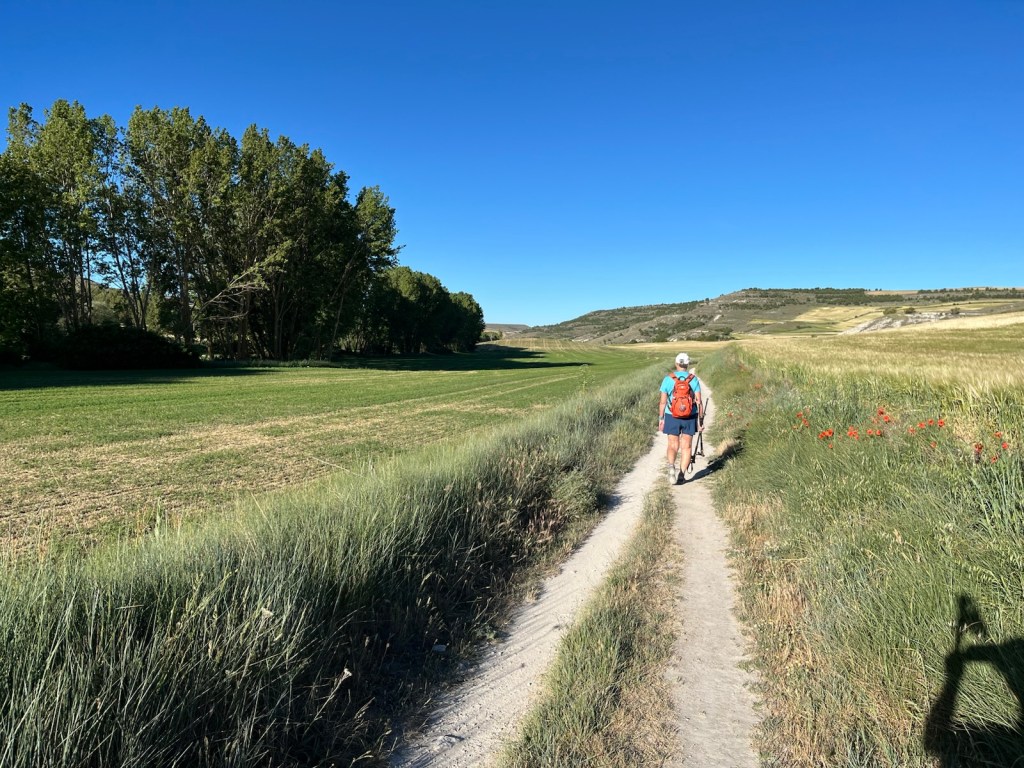
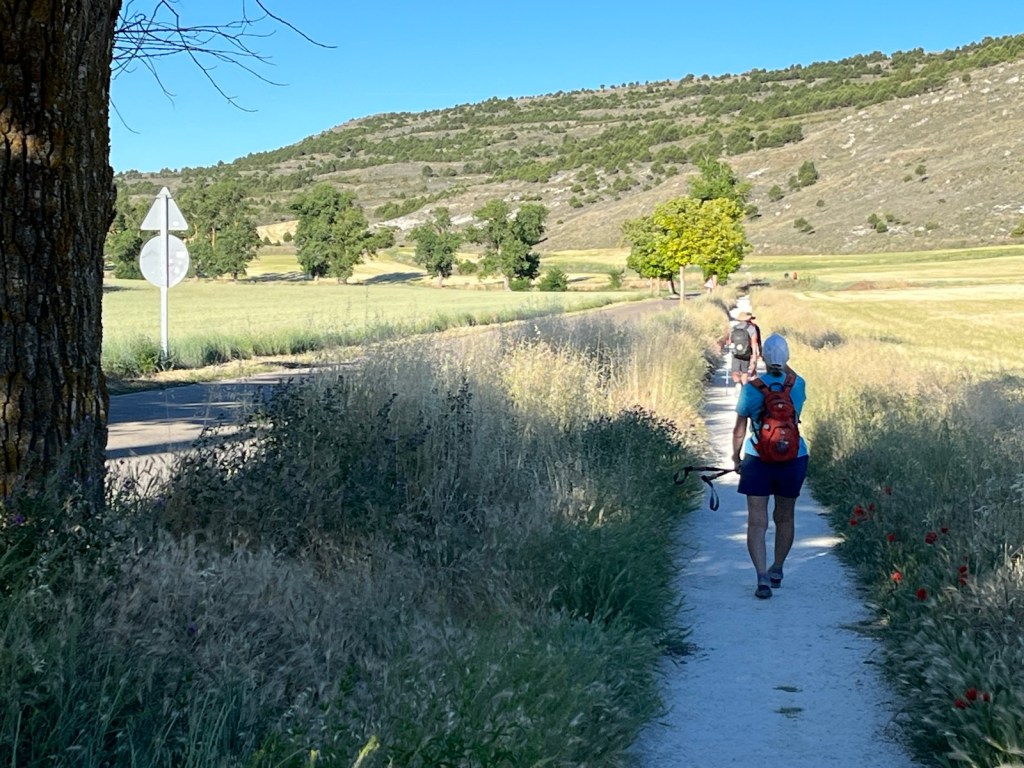
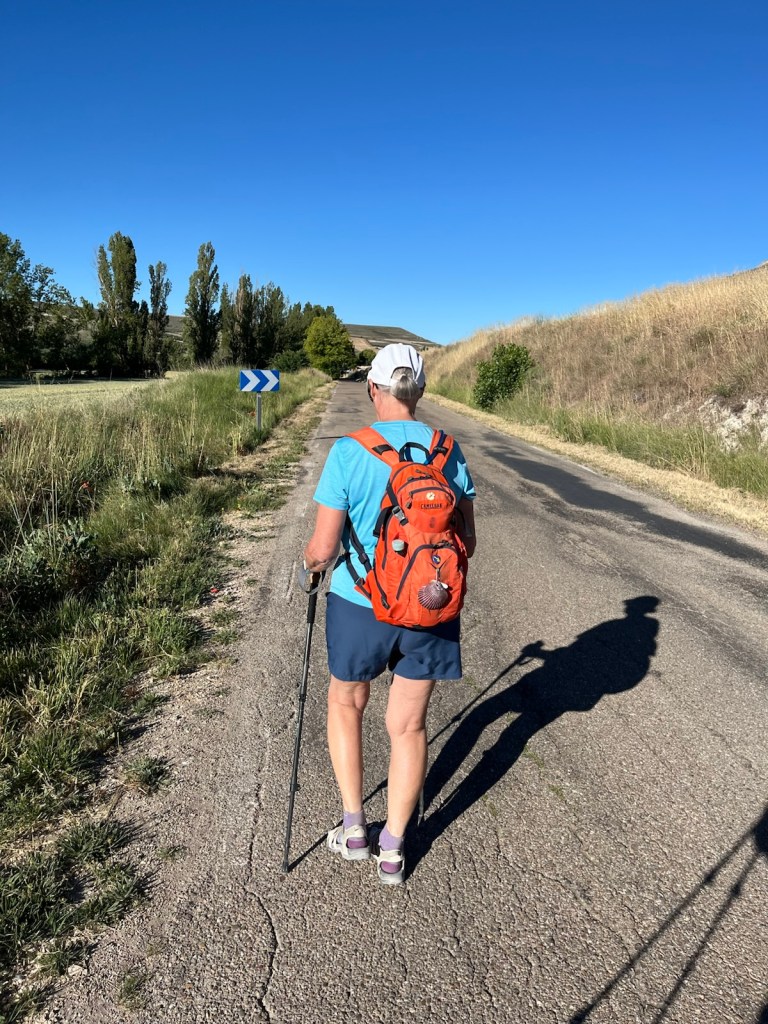
Walking out of Hontanas, a pilgrim has the two options shown in the photo.
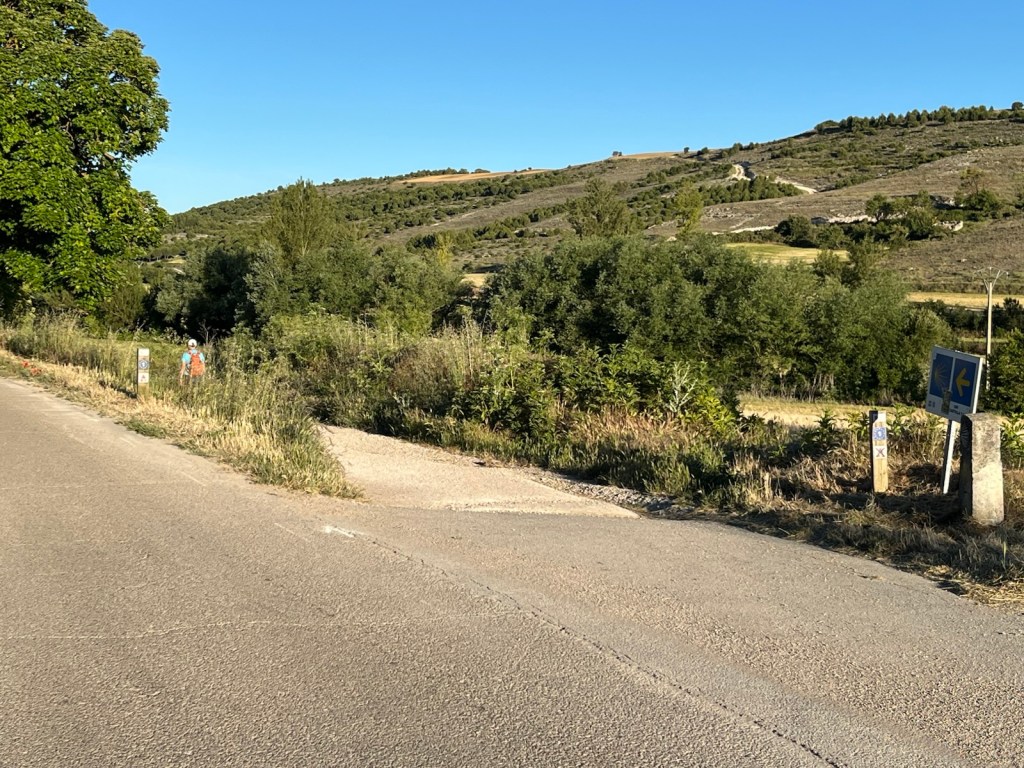
At first glance, the traditional route is the path, but if you look closely at the photo, the path appears to climb back up the hill to the top of the meseta and presumably back down eventually into Castrojeriz.
The road appears to be flat and nicely shaded.
On our first Camino, we were walking in the dark and took the road by accident because we didn’t read the guide clearly. The next two Caminos, we were walking in the summer heat and a shaded, flat path seemed like a good idea. The first 3 Caminos after the pandemic, we walked to Hontanas, took a taxi to Castrojeriz, skipping the Hontanas to Castrojeriz segment altogether. However, in 2025, walking on a cool morning in daylight, we decided to try the path and quickly found that it did not go all the way to top, but leveled off after only a slight elevation above the road and stayed level with a nice view for most of the way to Castrojeriz.
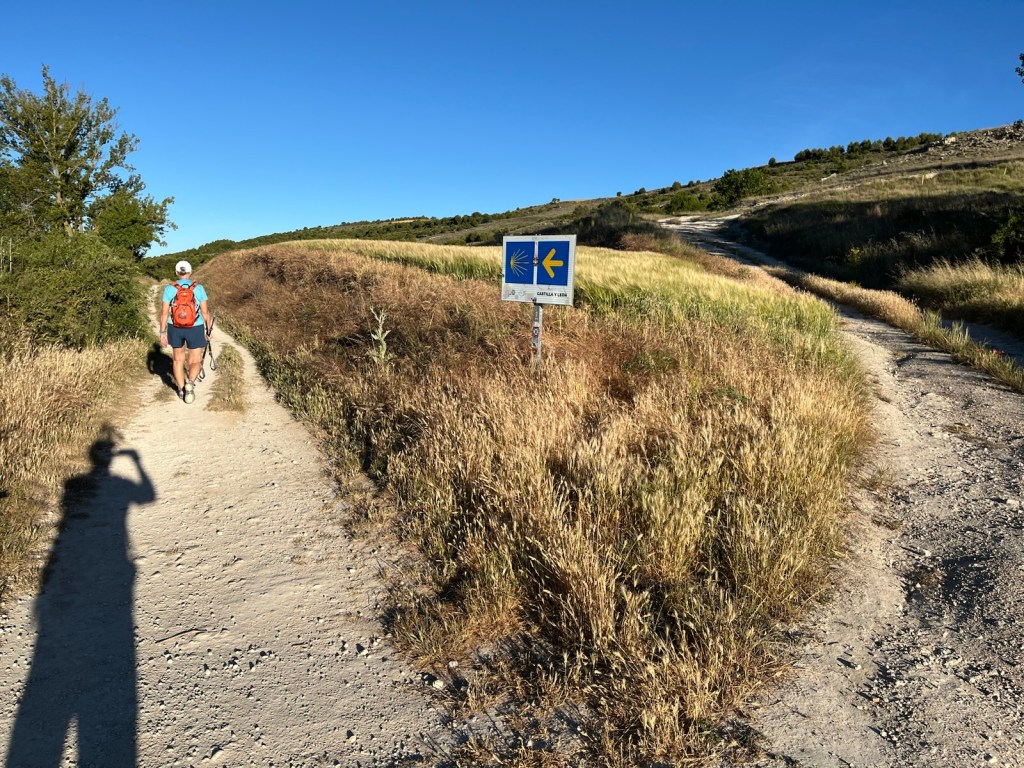
Needless to say, today we took the path again and recommend it, with the only exception being, walking in the heat of the day, when the shady road route could provide some welcome relief on the way to Castrojeriz.
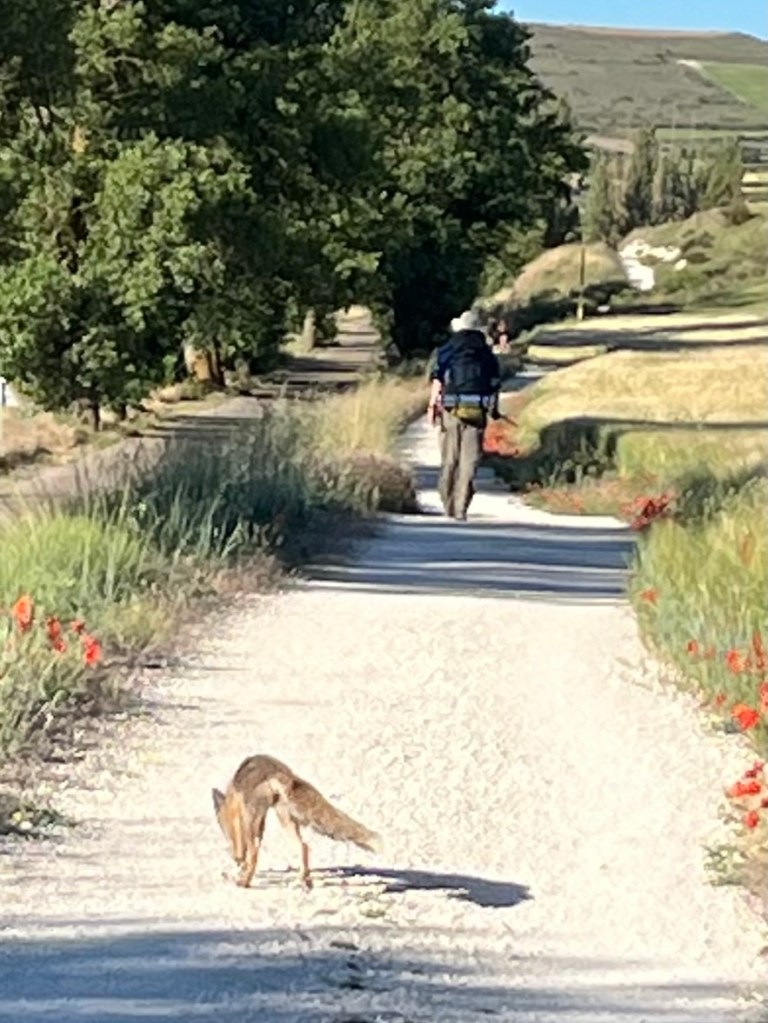
We rarely see wildlife on the Camino, other than birds, squirrels, snails and very infrequently, a small snake. Today we encountered a fox.
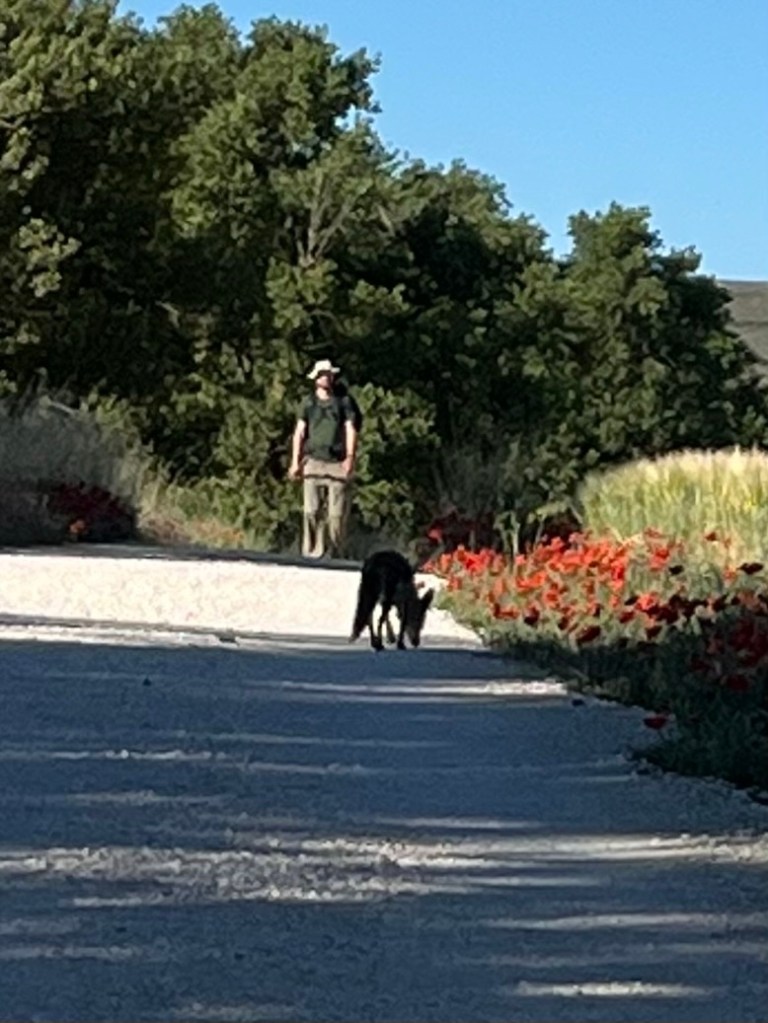
When we first saw him, he headed back into the grain field as another pilgrim or two walked past him. He came back out on the path again, about 50 yards ahead of us and began to walk, matching our pace. This continued for a quarter mile or so until the path ahead narrowed and we switched over to walk in the road, not wanting to creat a potential confrontation.

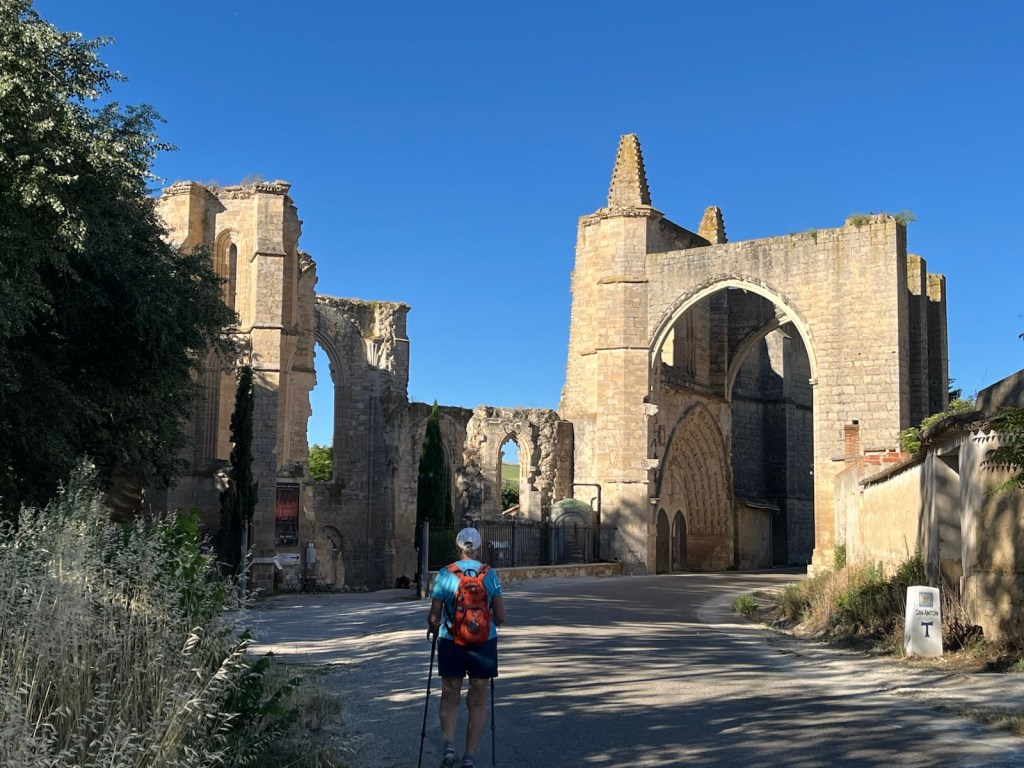
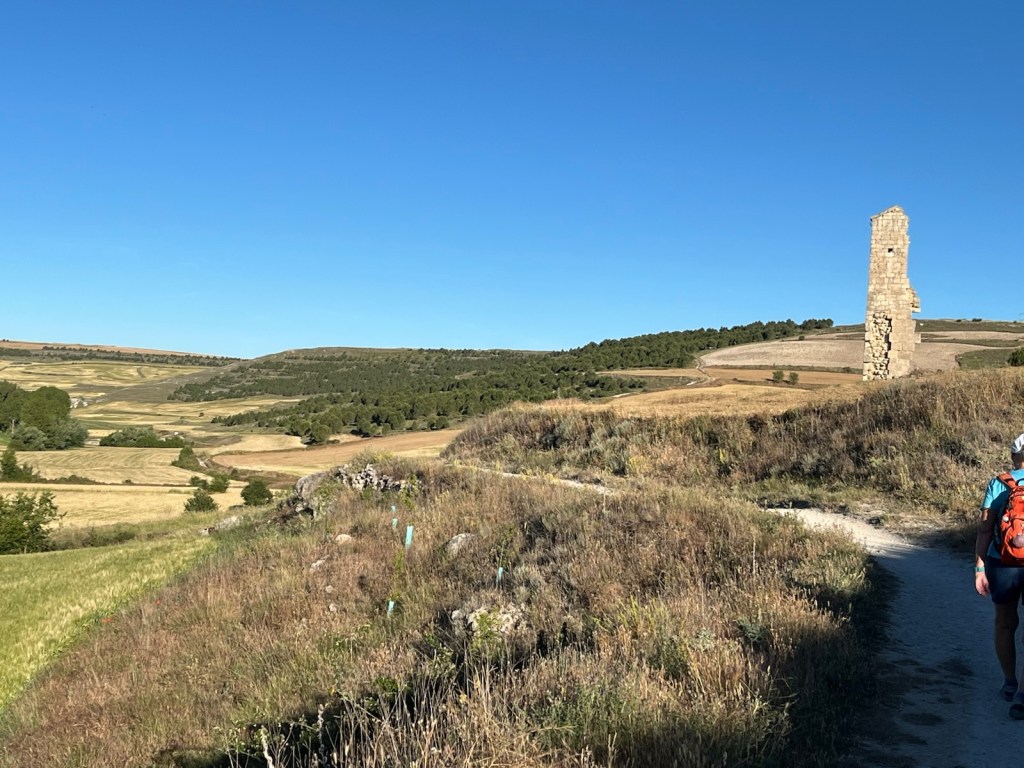
The Monastery of San Antón was founded in 1146 by King Alfonso VII as a hospital for pilgrims, particularly those suffering from St. Anthony’s Fire, a disease widespread in the Middle Ages. The ruins remaining today date back to the 14th century when the Monastery had become a significant architectural structure. St. Antón, an Egyptian hermit of the 3rd-century is the patron saint of animals.
Today, the convent ruins is a primative albergue with communal meals by candlelight, no electricity or hot water, a basic, special experience for some.
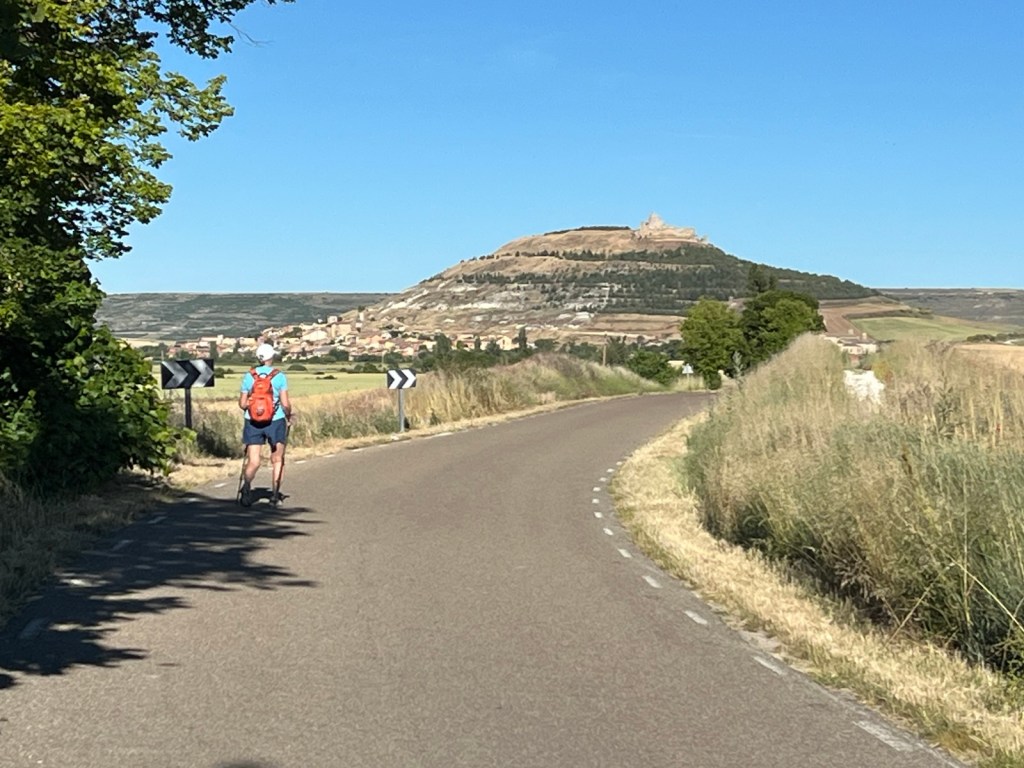
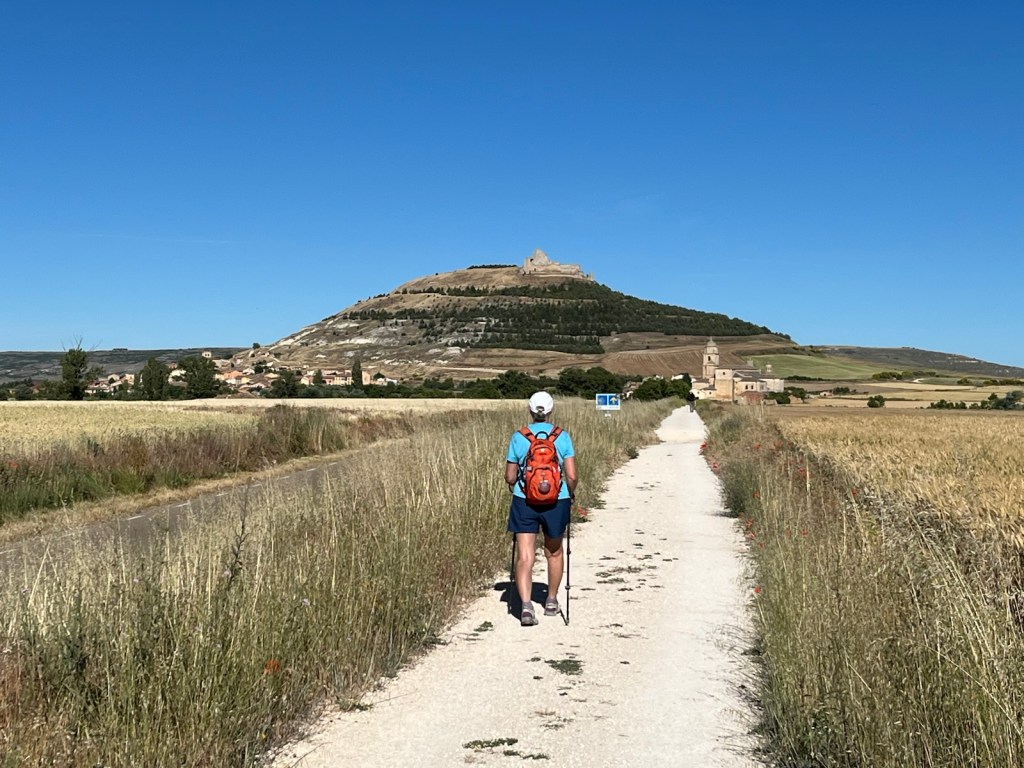
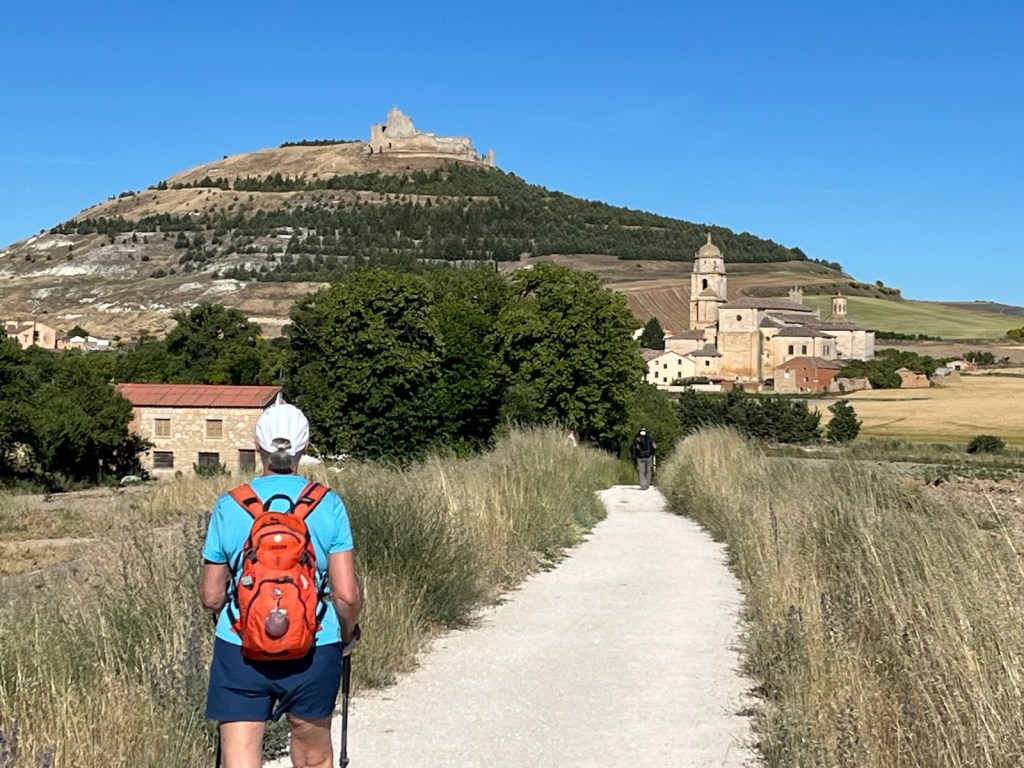
The Castillo de San Esteban was originally used by the Romans (said to be reinforced by Julius Caesar) to protect the roads to Galicia’s lucrative gold mines.
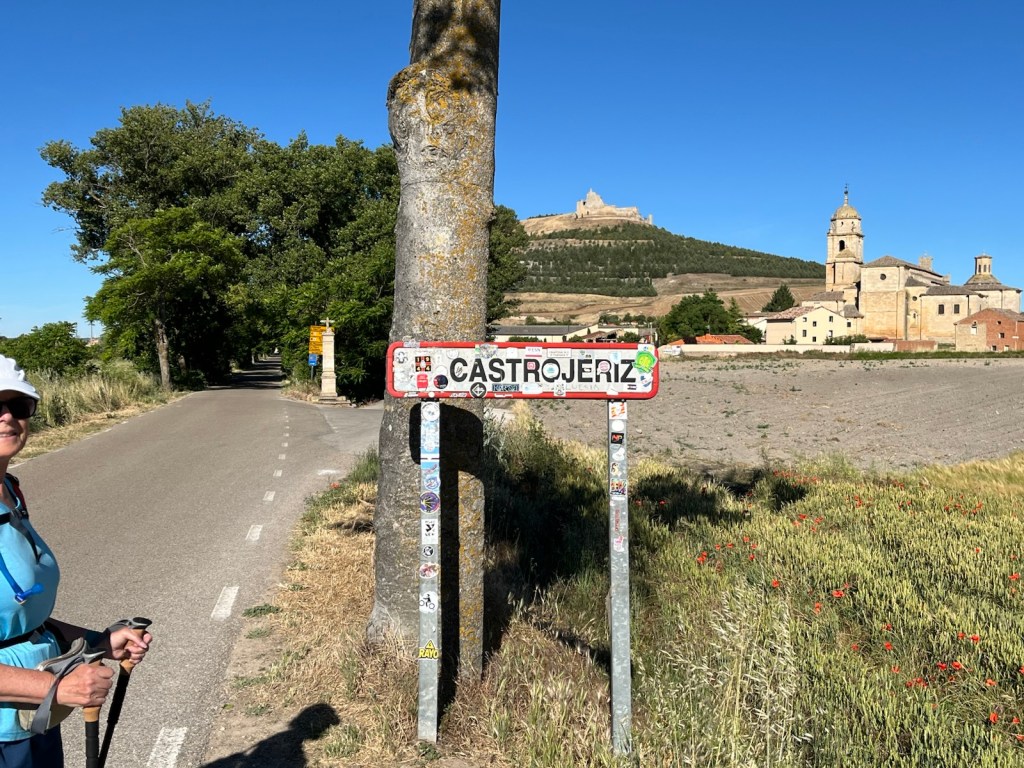
After arriving in Castrojeriz much too early to check in to Albergue Orion we stopped for a leisure breakfast at this delightful new bar.
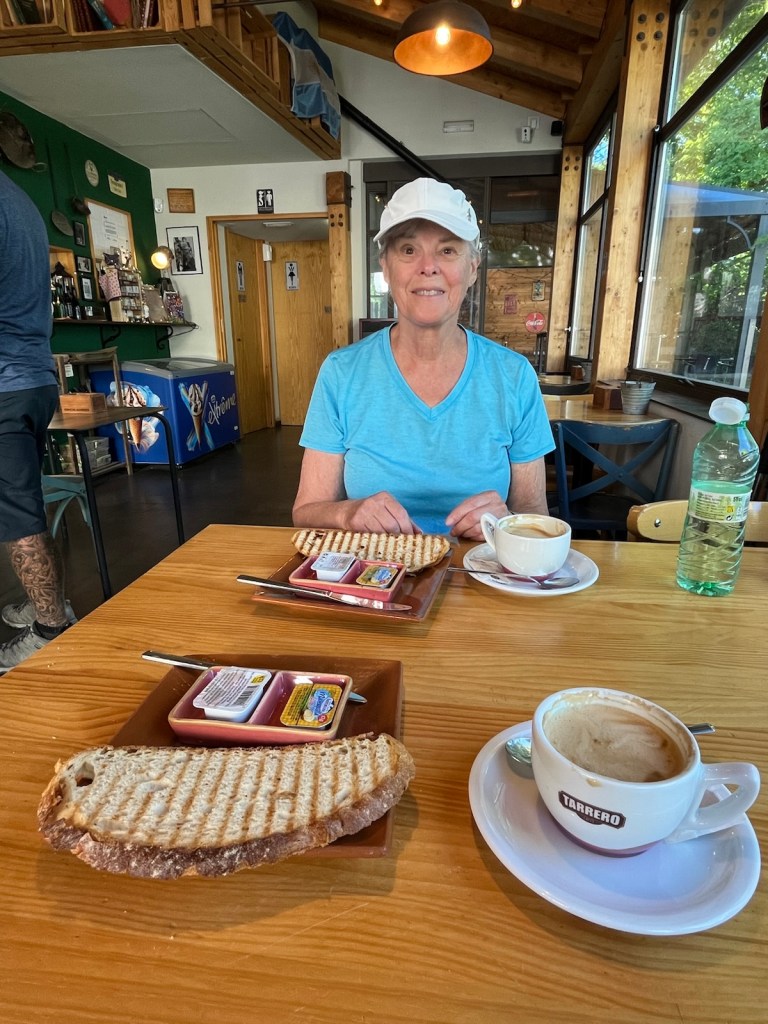
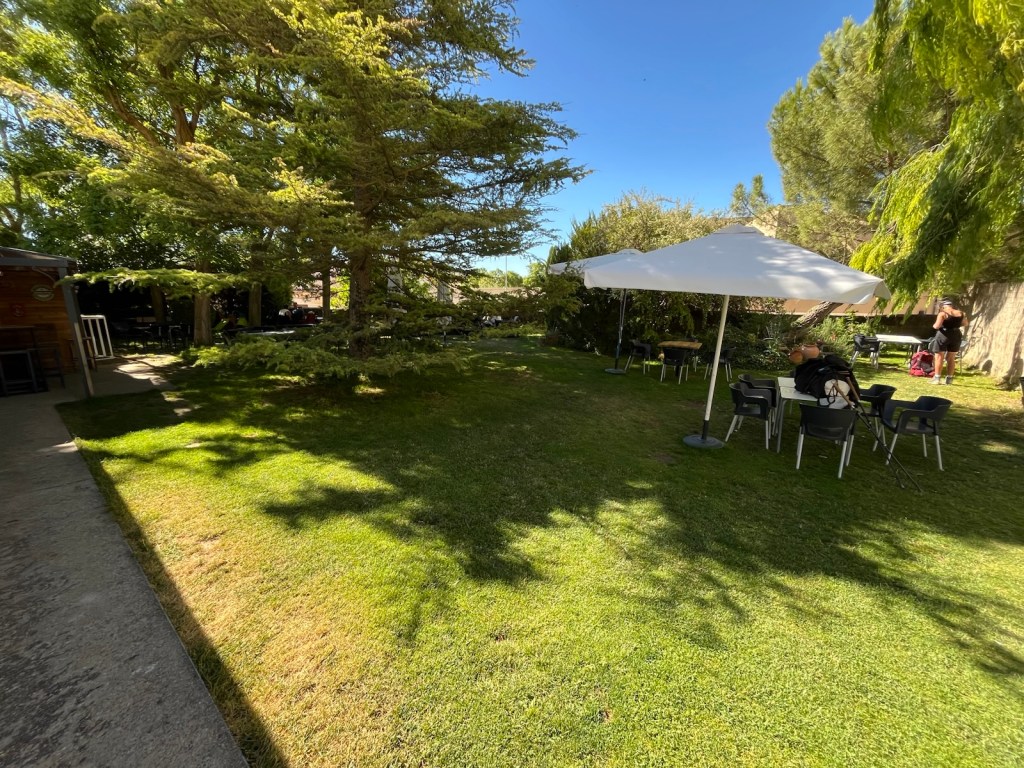
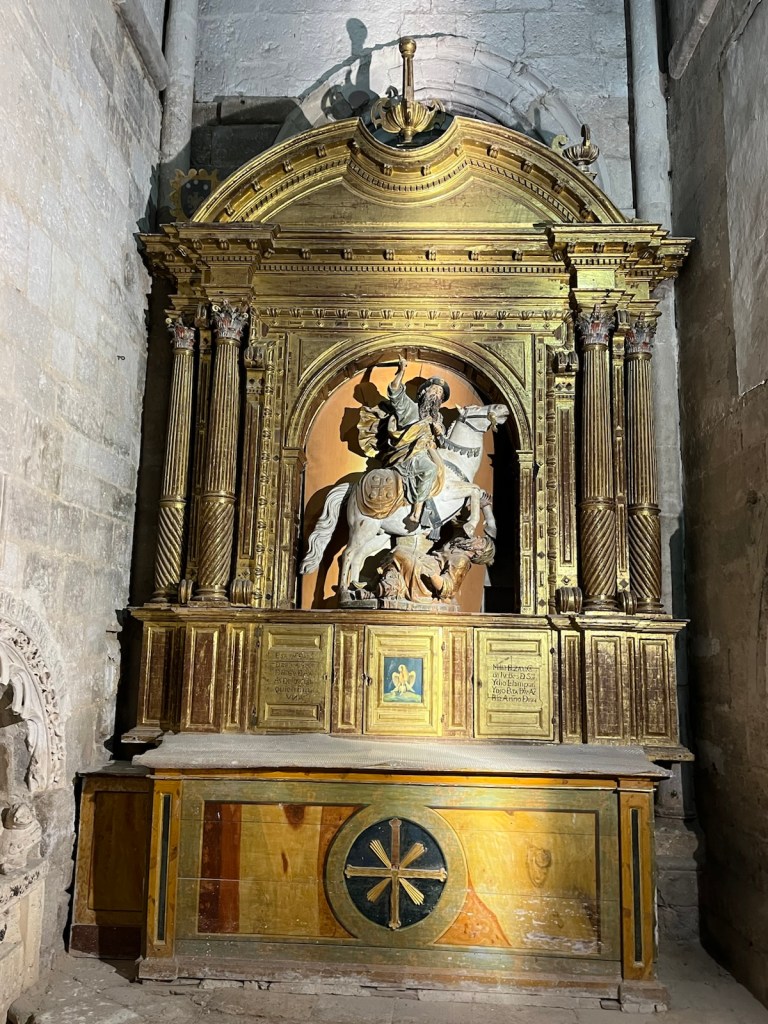
Still too early for check in, we walked across the street from El Jardin and visited the Iglesia de Santa María del Manzano.
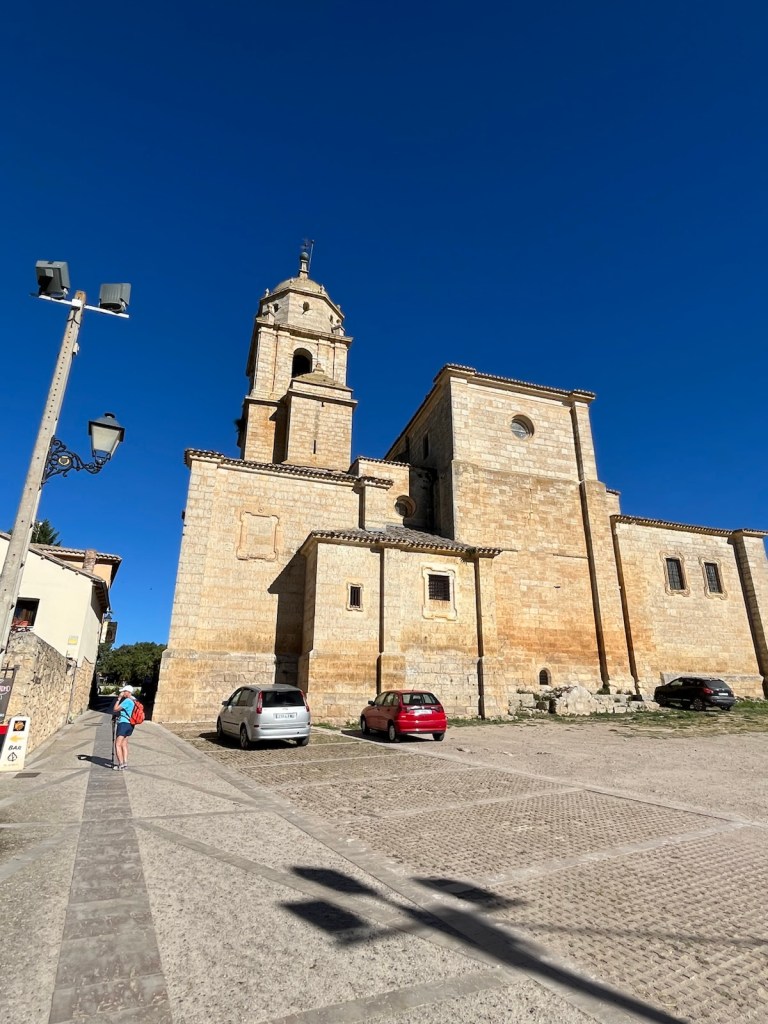
Legend has it that Mary appeared to St. James from an apple tree and he was so startled that his horse reared up and came down heavily, leaving hoofprints in the stone outside the entrance of this 13th-century church.
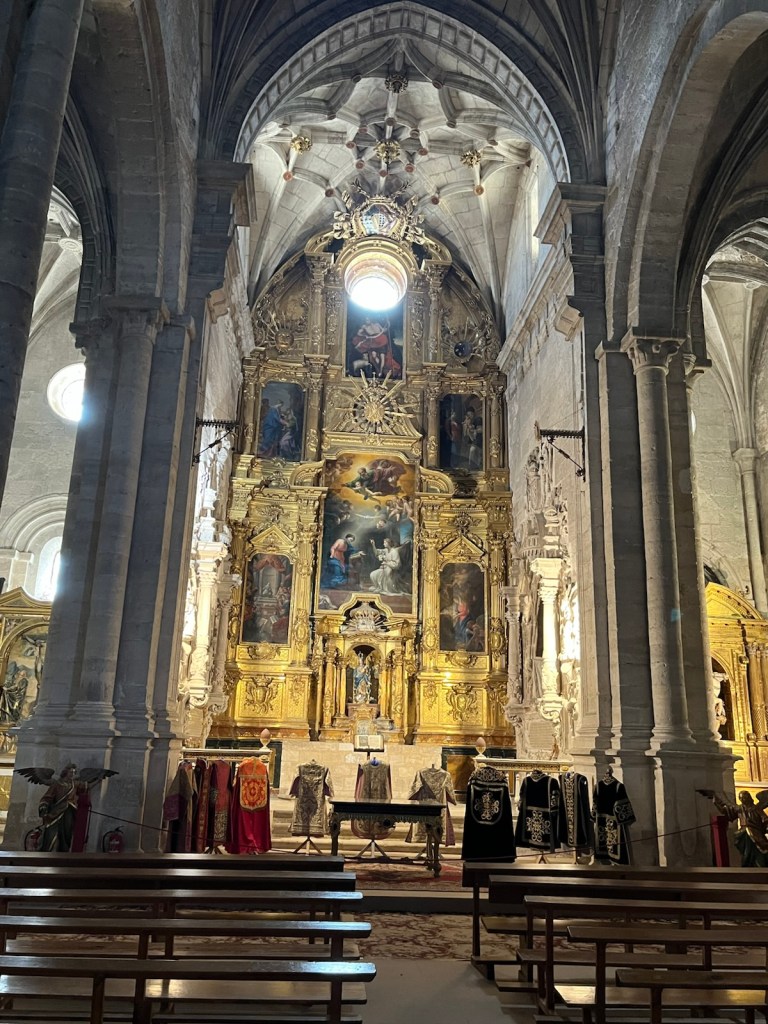
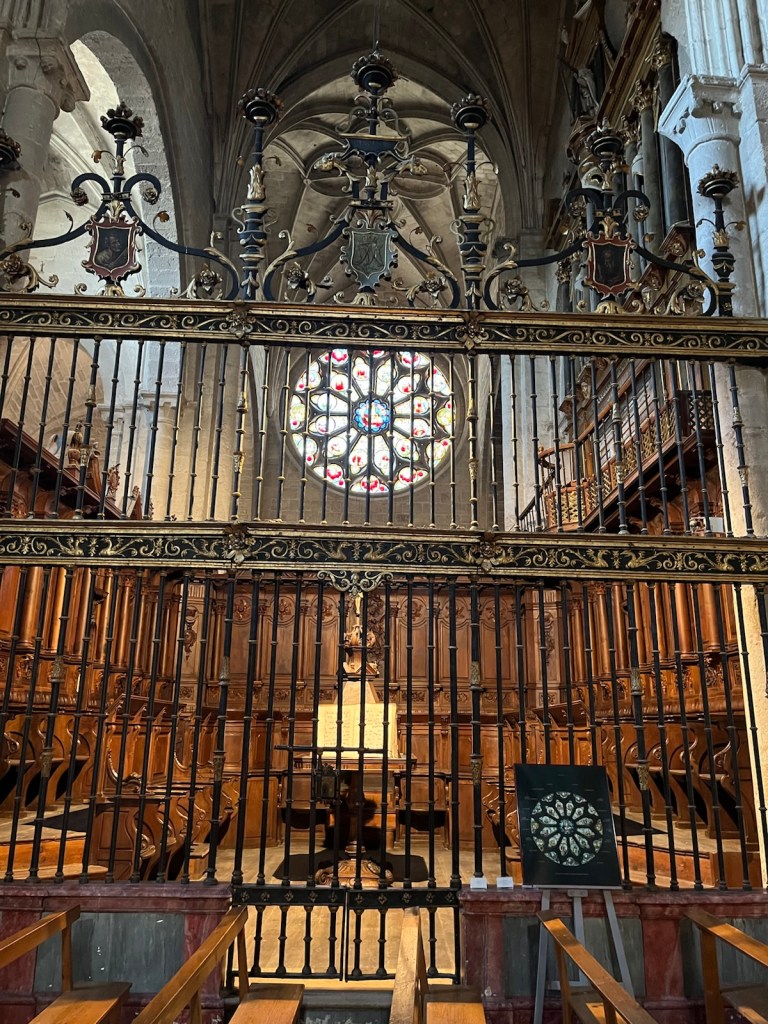
It was getting near to our check in time so we walked on and found a nice bench in the shade just outside of Albergue Orion.
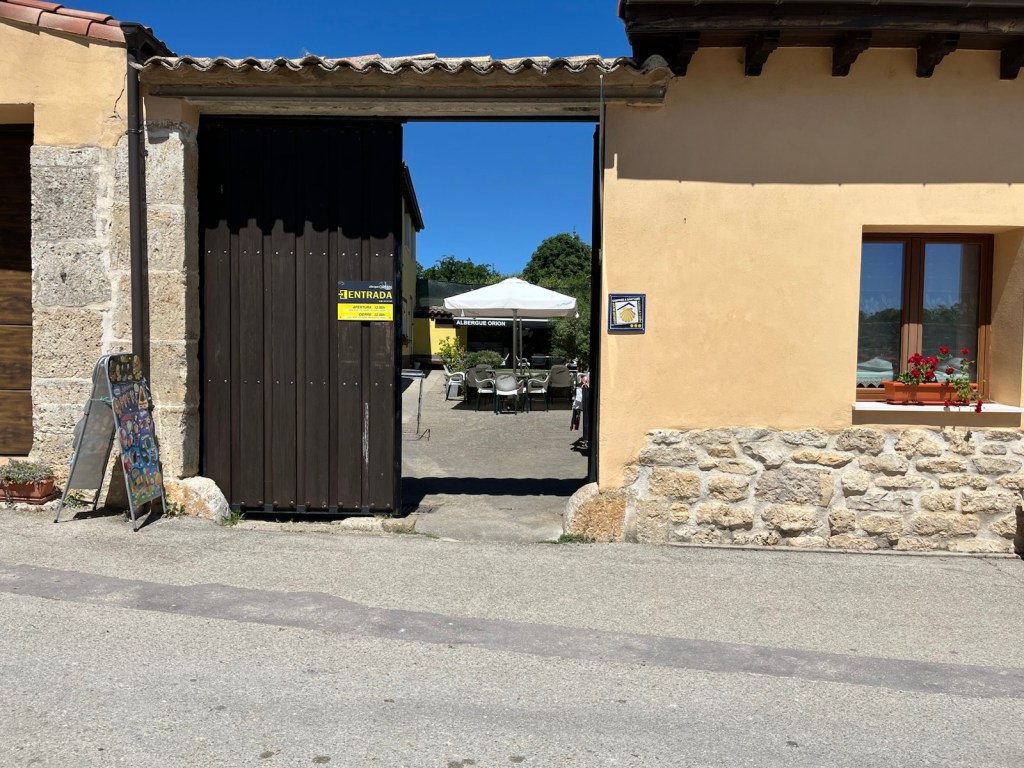
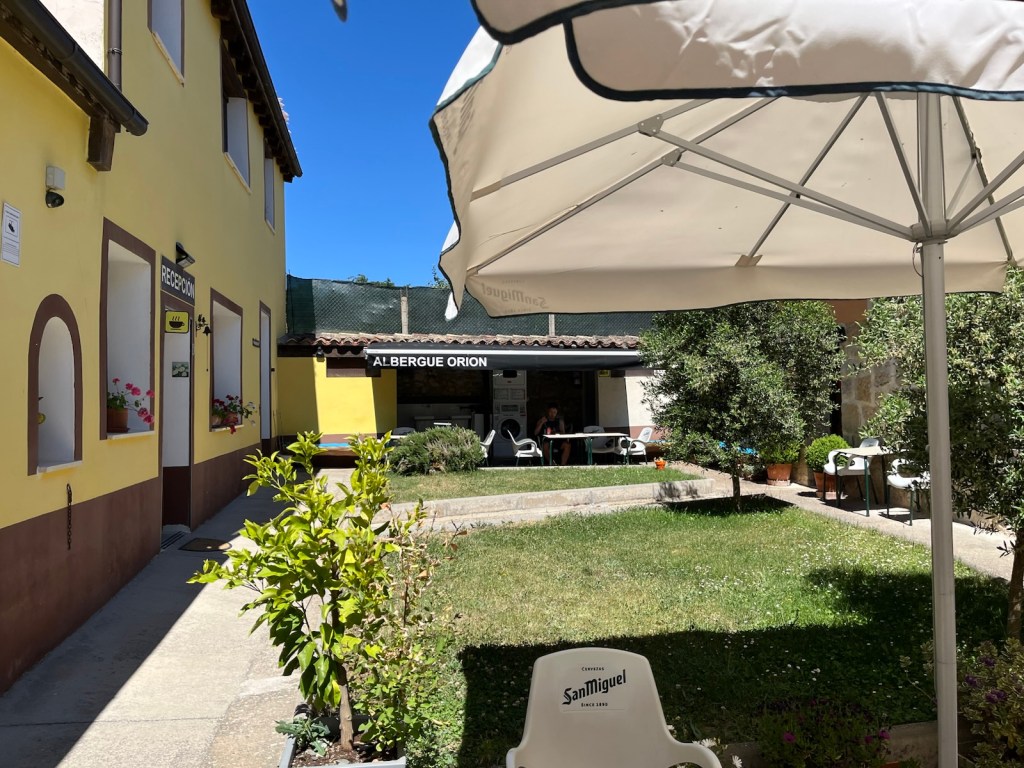
The pilgrim dinner tonight was prepared by the Orion Korean cook. It was called BIB-N-BOP. It was a collection of different Korean vegetables, proteins and sauces presented in a bowl.
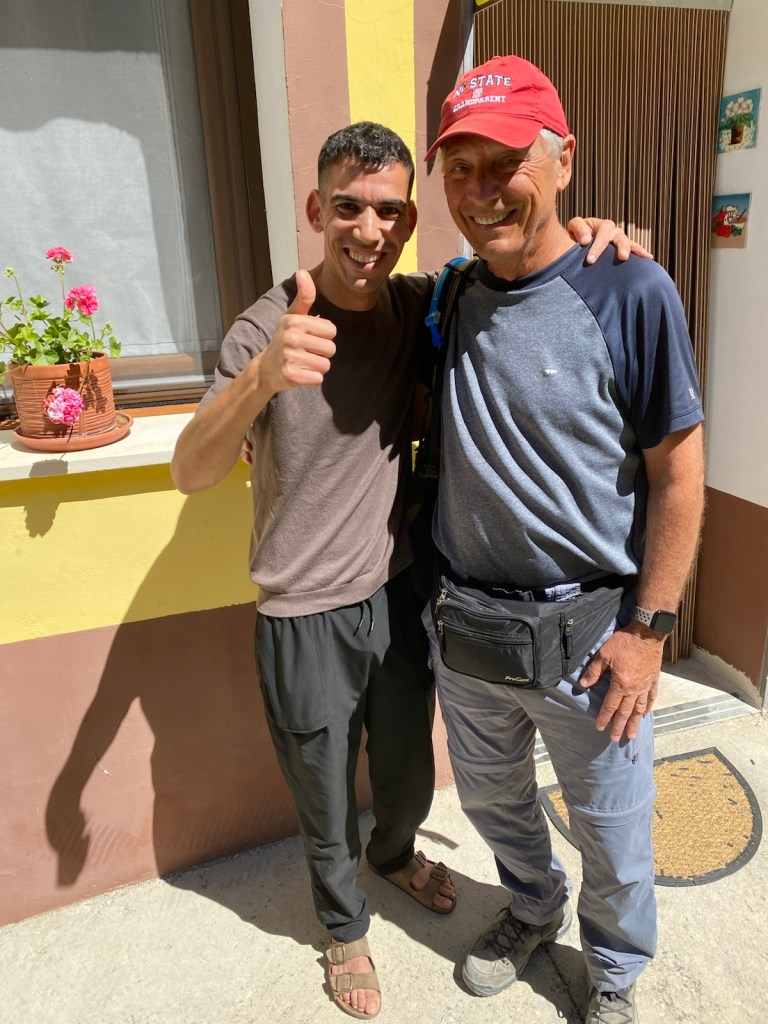
Our dinner conversation was mostly with two young men, a recently discharged South Korean soldier deciding what to do next and a young professional from Switzerland who was a controller for a large company. Both were planning to walk all the way to Santiago.
The BIB-N-BOP was tasty and filling, preparing us for an early bedtime for tomorrow’s walk.

