Day 22 – Terradillos de los Templarios to Sahagún

Walked today: 9.2 mi. Camino’26: 156 mi.

Albergue Terradillos was very quiet as we walked away at 5:42 this morning. We had a relatively long walk today and we started in the dark to reduce the heat we might encounter before arriving in Sahagún,
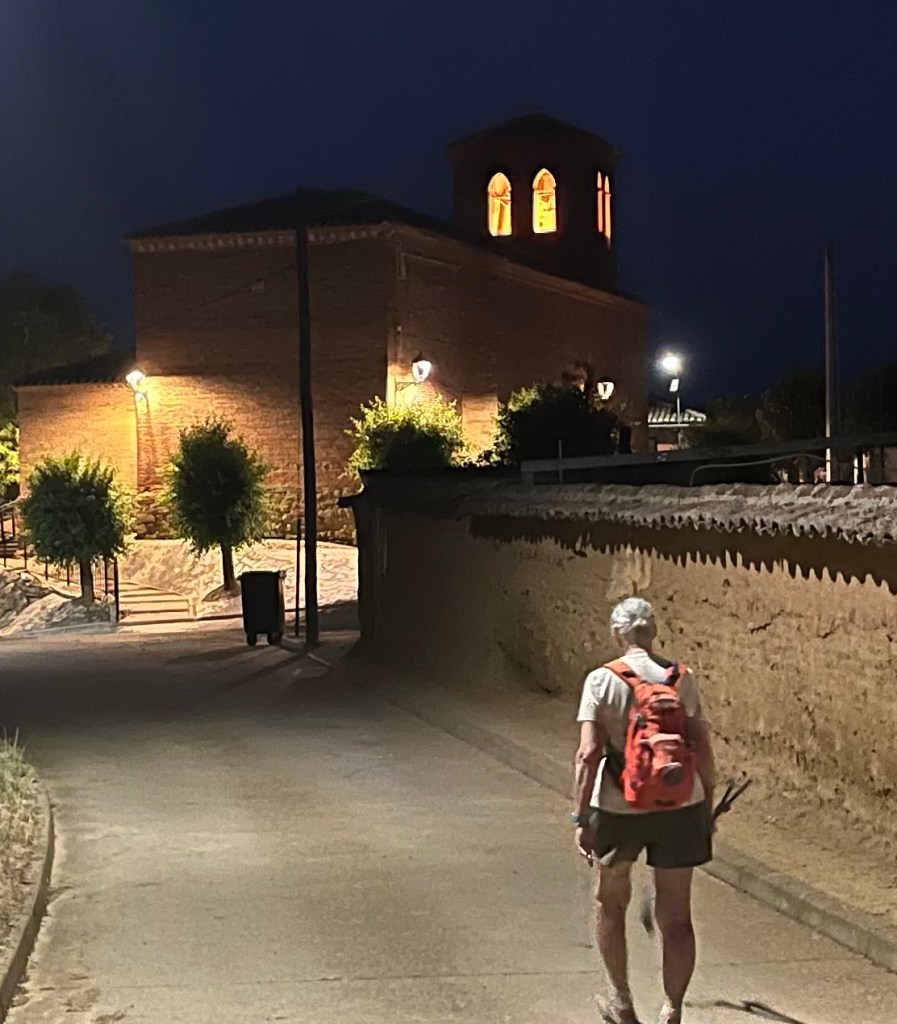
Walking through Terradillos de los Templarios and approaching Iglesia de San Pedro, a 13th-century church belonging to the Knights Templar.

The Knights Templar were a medieval military order responsible for protecting pilgrims. While the order was popular and successful for almost 200 years, grand master Jacques de Molay was arrested in 1307 (on Friday the 13th, possibly the origin of this superstitious date) and burned at the stake for heresy and a variety of trumped-up charges. The order was disbanded in disgrace, though many think the charges had more to do with politics than any actual wrongdoing.
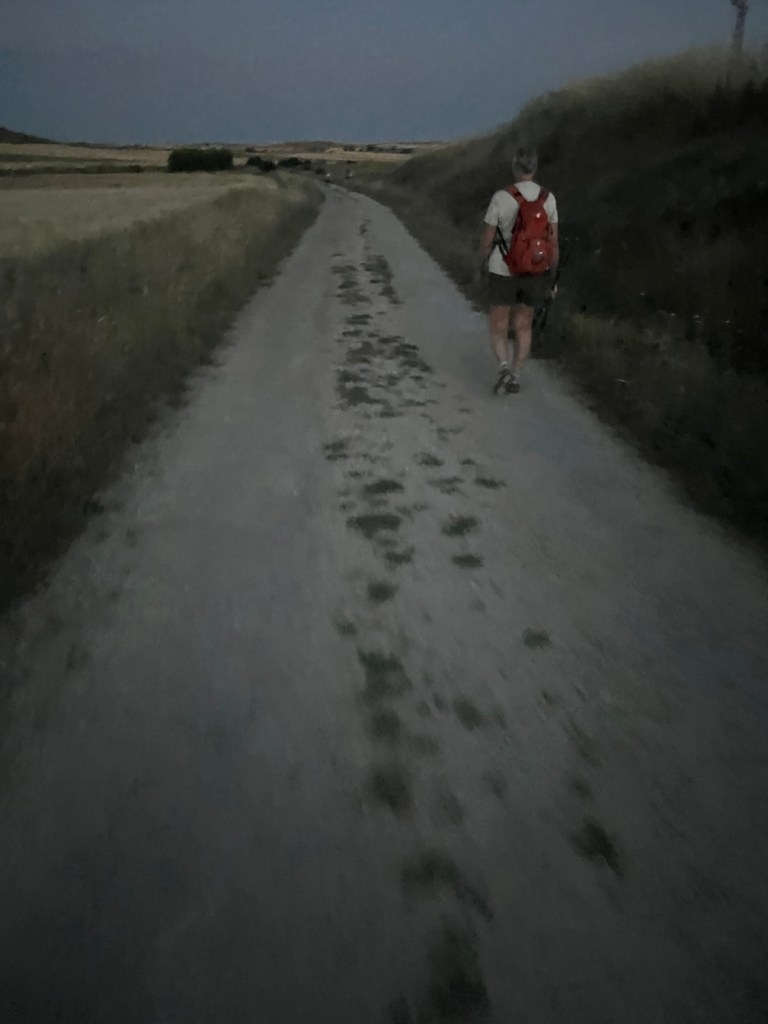
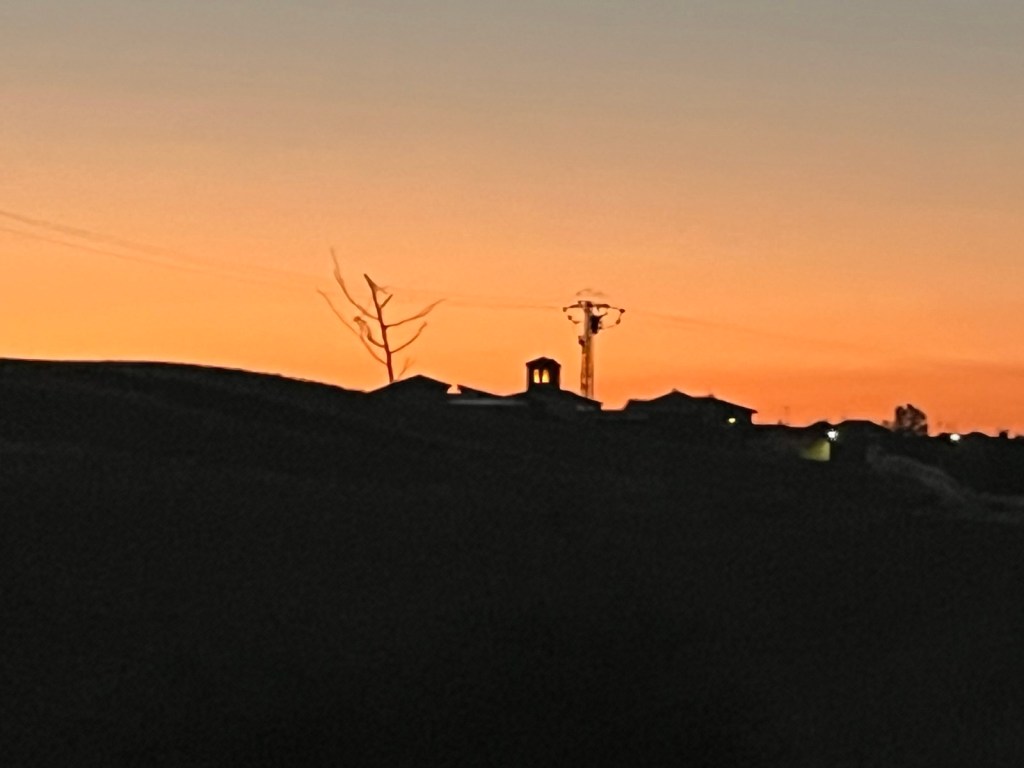
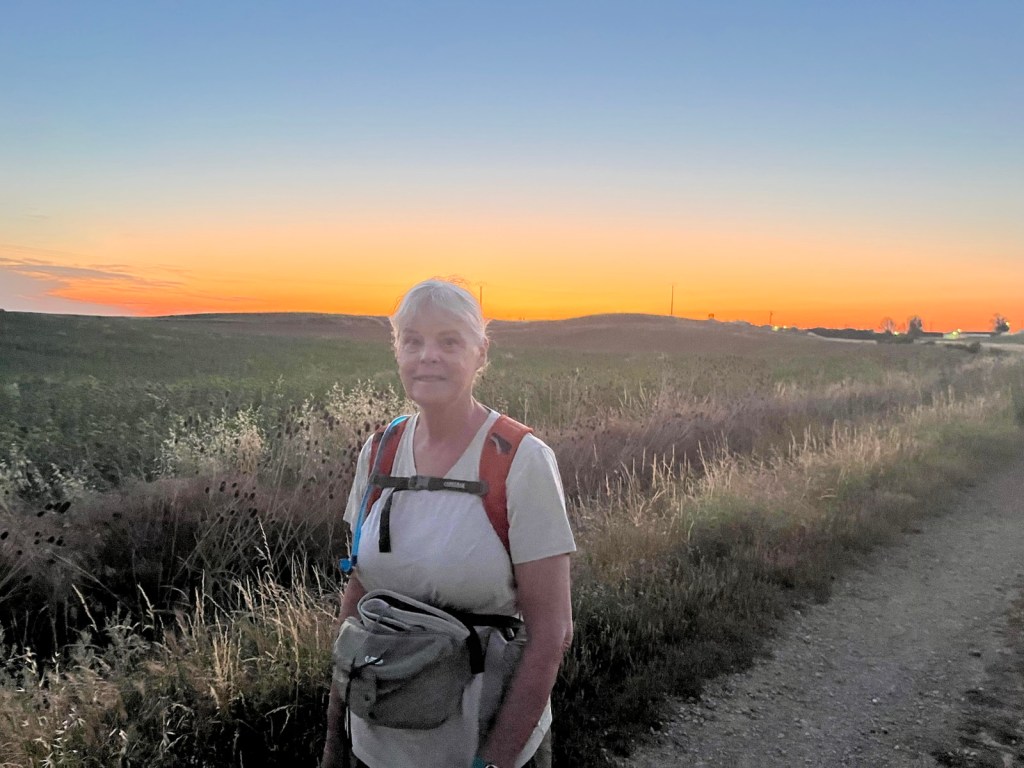
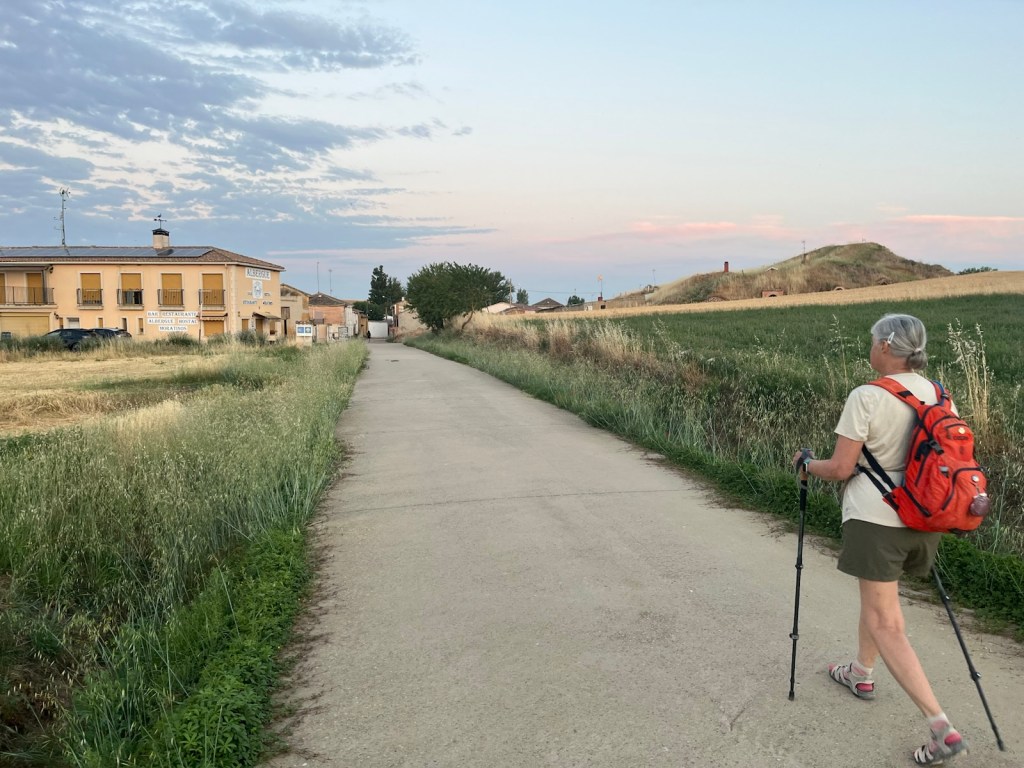
First light began shortly after leaving Terradillos… and following the camino into the fields.
The church and Terradillos silhouetted against the beginnings of the sunrise.
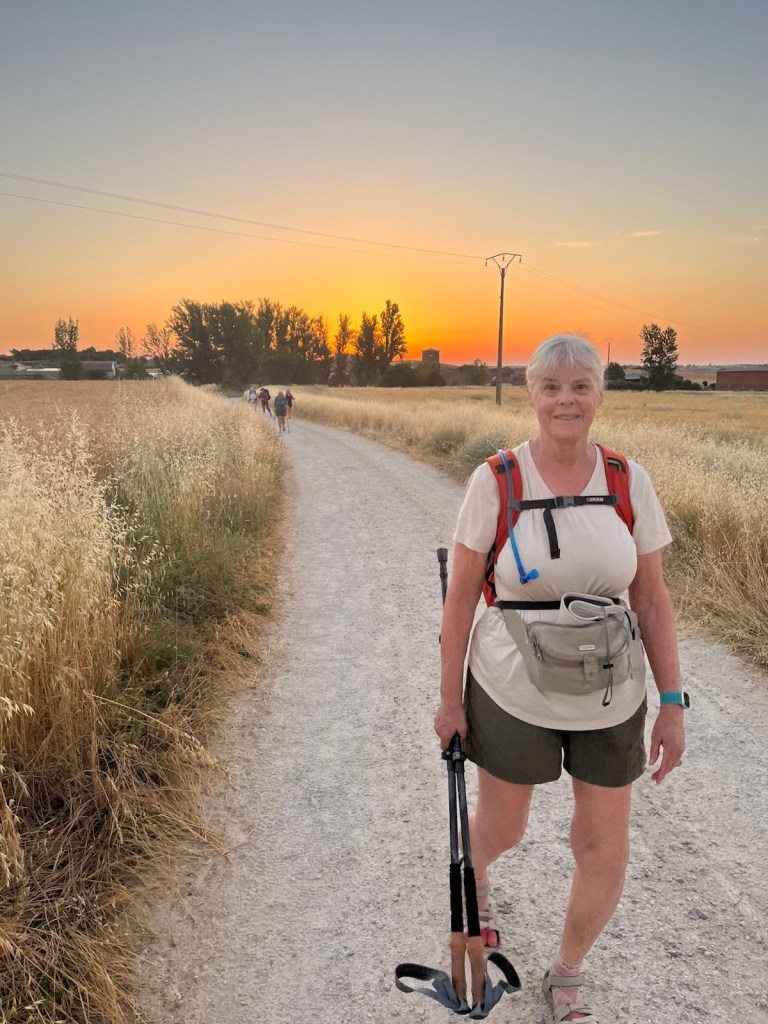
The beginning of another day on the Camino.
The first village we encountered was Moratinos (pop. 68). An early option for a breakfast stop for several caminos in the past, at 6:40 a.m. it was not open for business.
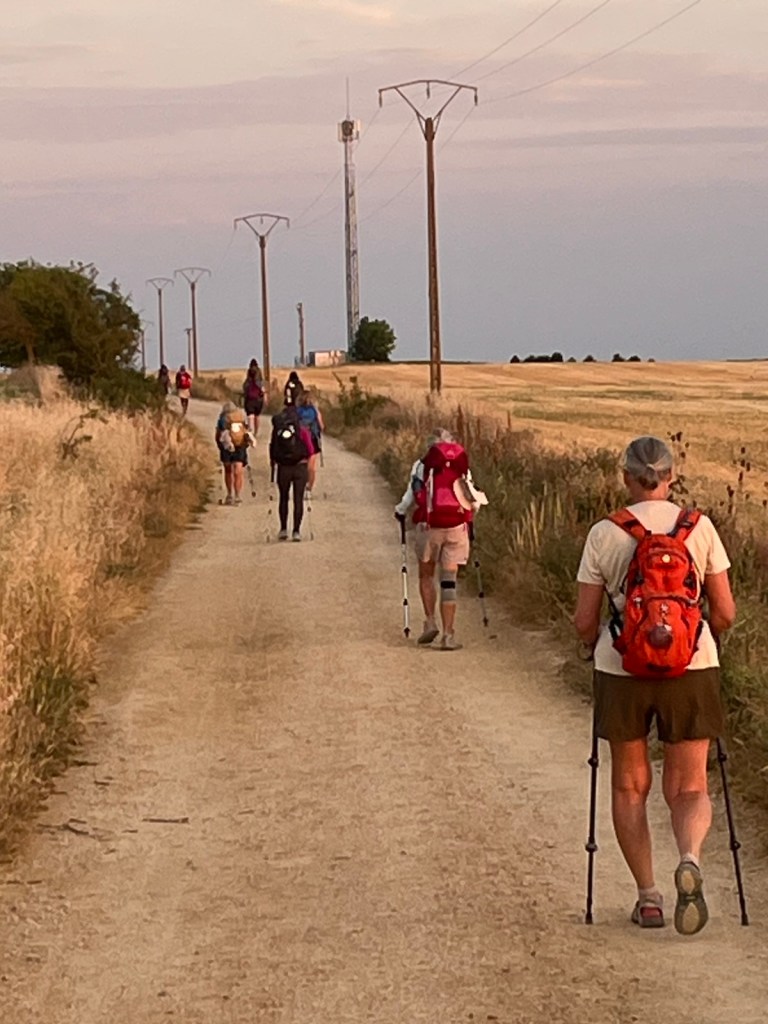
Shortly after leaving Moratinos, a flood of pilgrims began to surge out of the tiny village.
They must have all left from the several albergues in Moratinos, simultaneously.

We walked on after Moratinos for another 1.5 miles and entered a favorite breakfast stop, Casa Barrunta, at the entrance of another small village, San Nícolas de Real Camino (pop. 48).

There was a line already formed by pilgrims at the bar. The couple behind us just happened to be our Austrailan pilgrim friends from two days ago in Villalcazar de Sirga, so we had a fun chat planning “shrimp on the barbie” for our next visit.
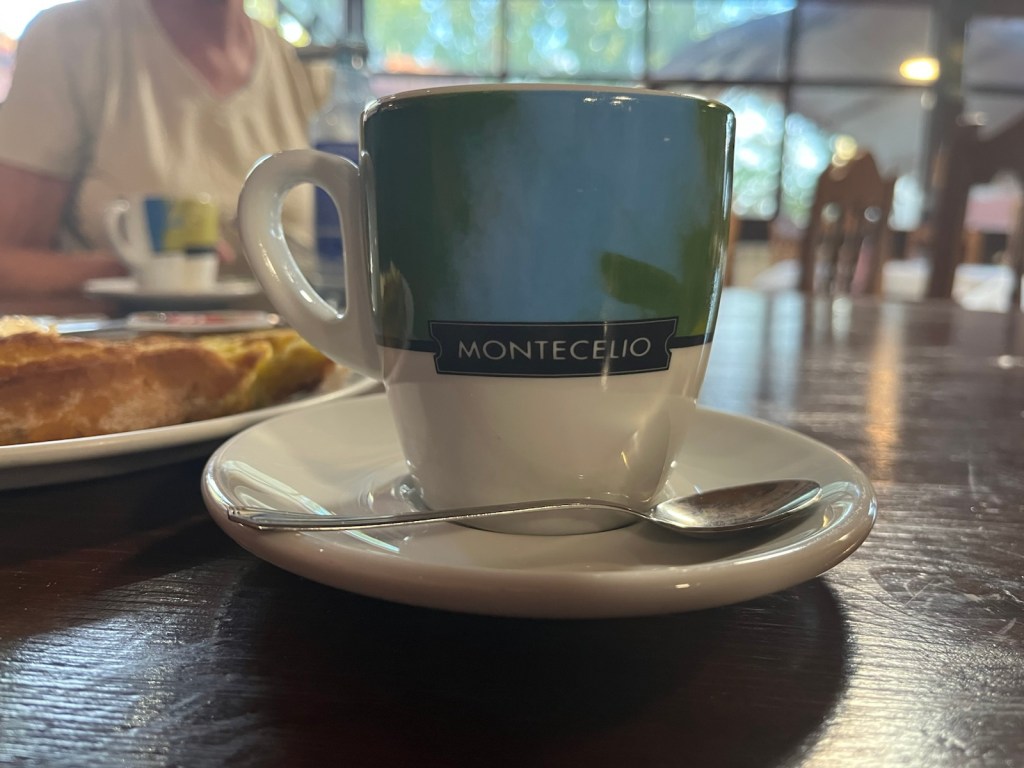
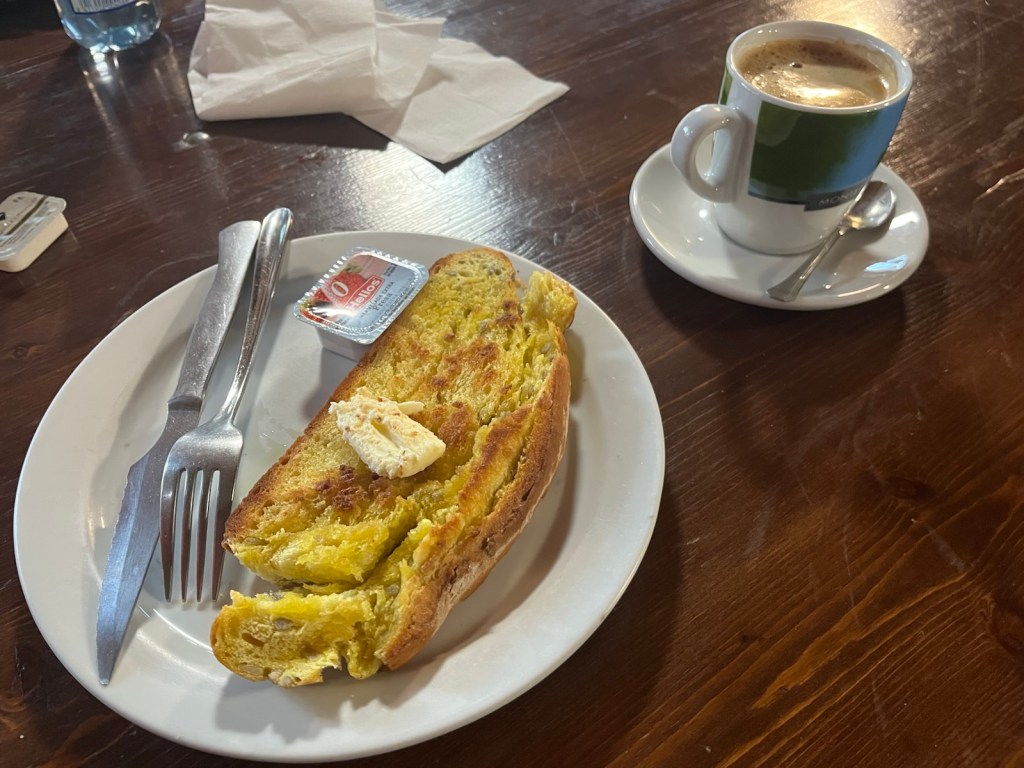
Jim ordered. cafe-con-leche “GRANDE” , hoping for an extra bit of drink to go along with a generous piece of tosta…

…but this is the “grande” version he got!
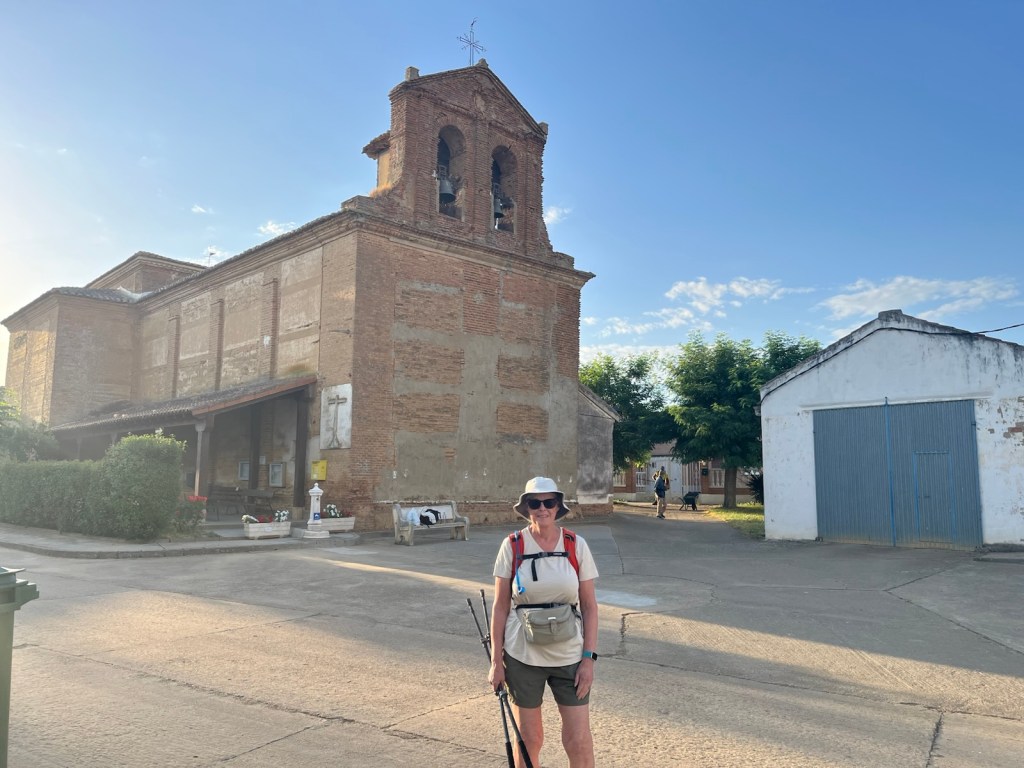
This is the late 12th-century Knights Templar controlled Iglesia de San Nícolas de Bari
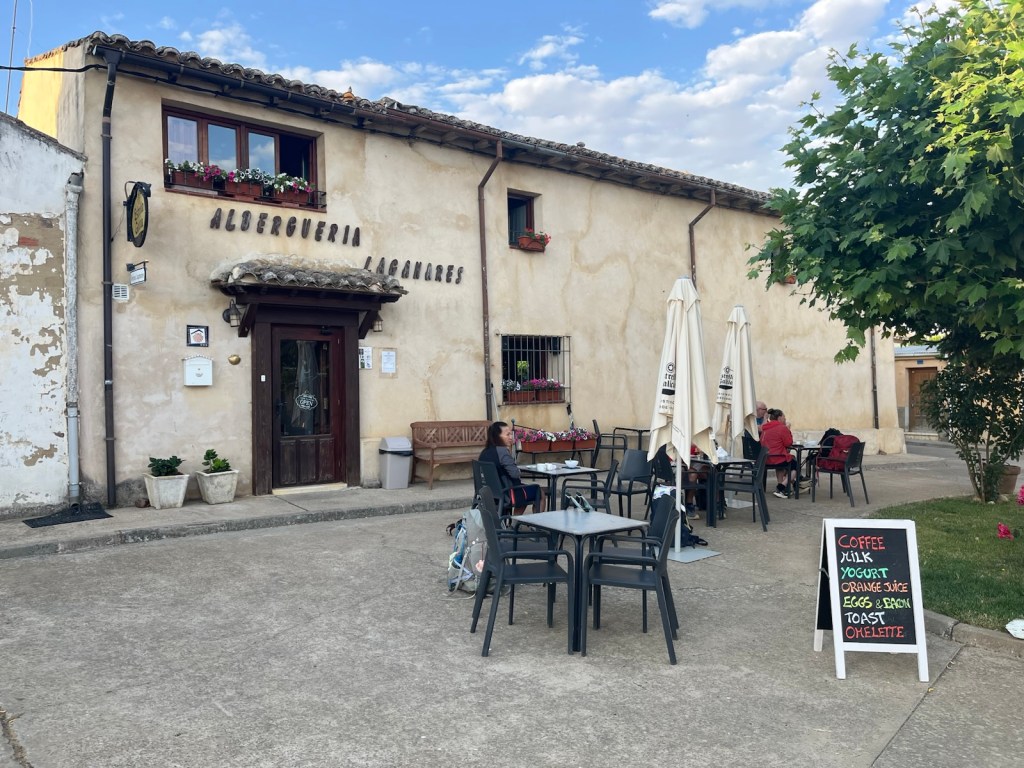
Adjacent to the church is Albergue Restaurant Laganares. We stayed here on our 1st. camino in 2014. We enjoyed the food and the hospitality and unique decor inside.
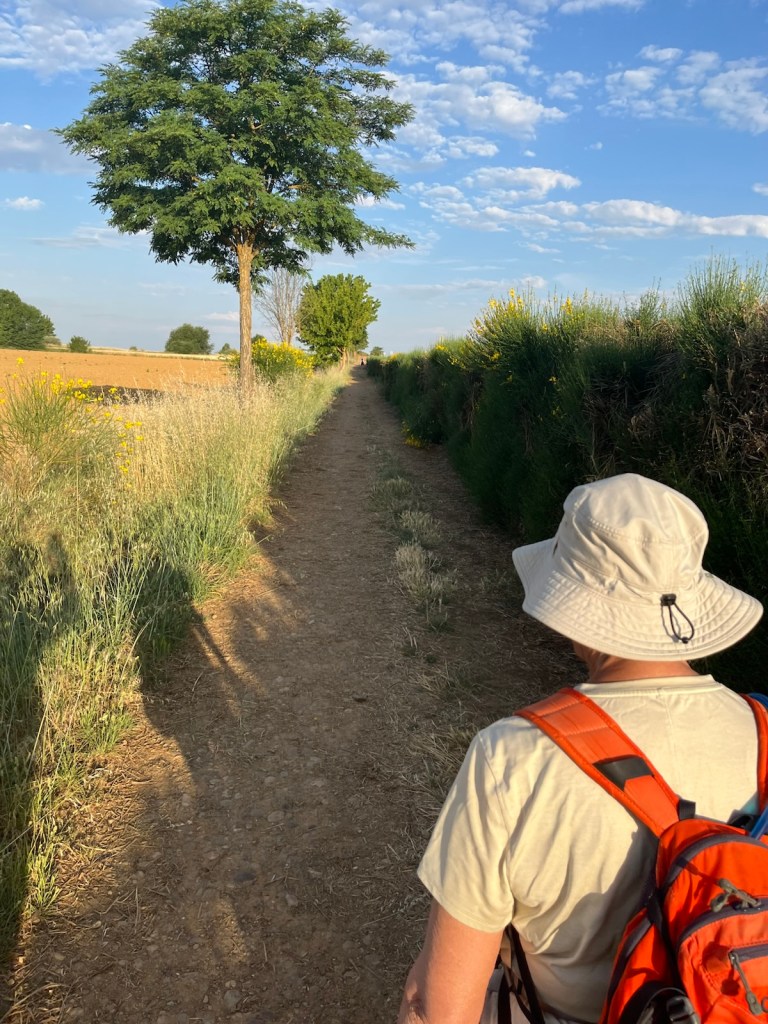
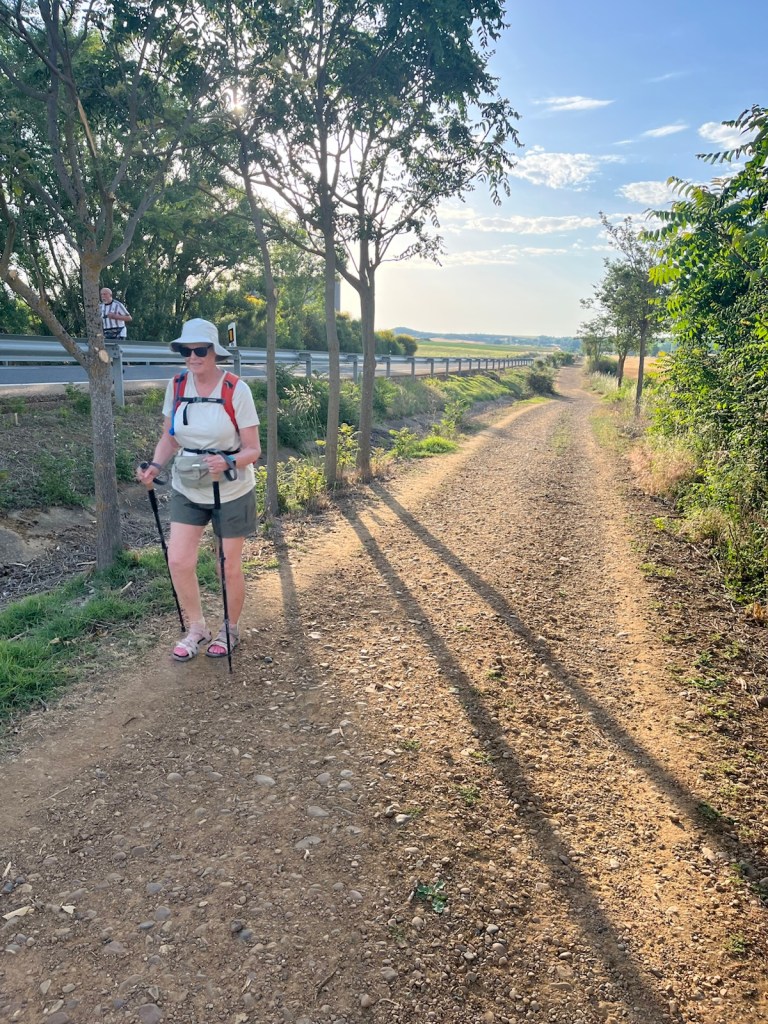
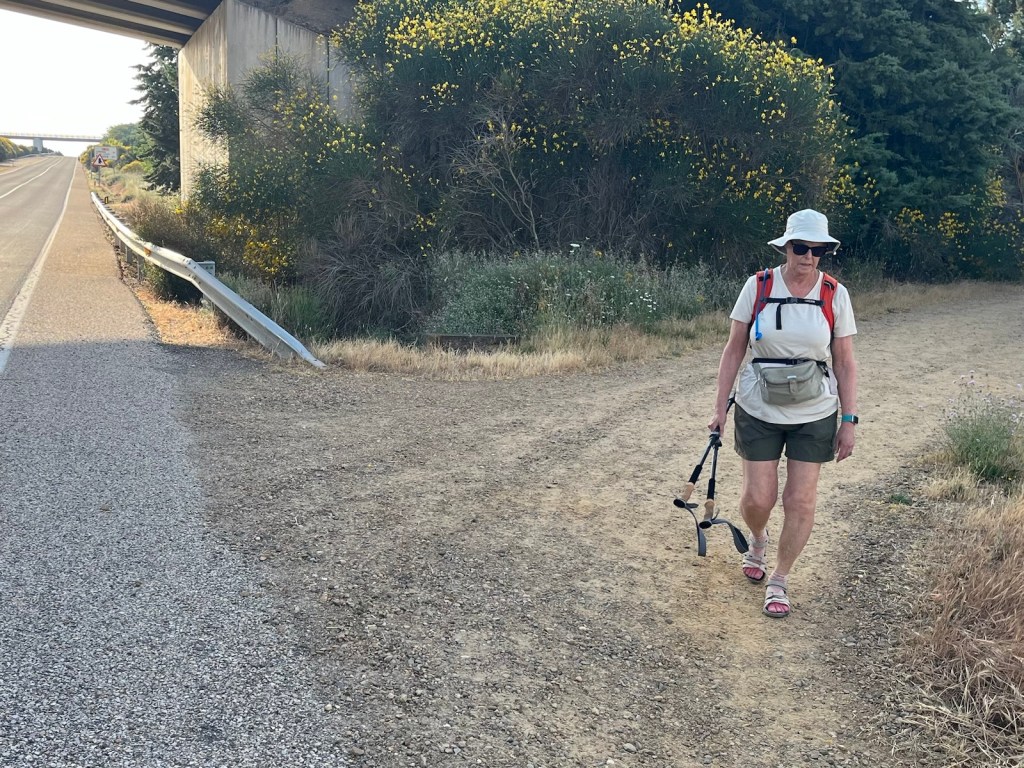
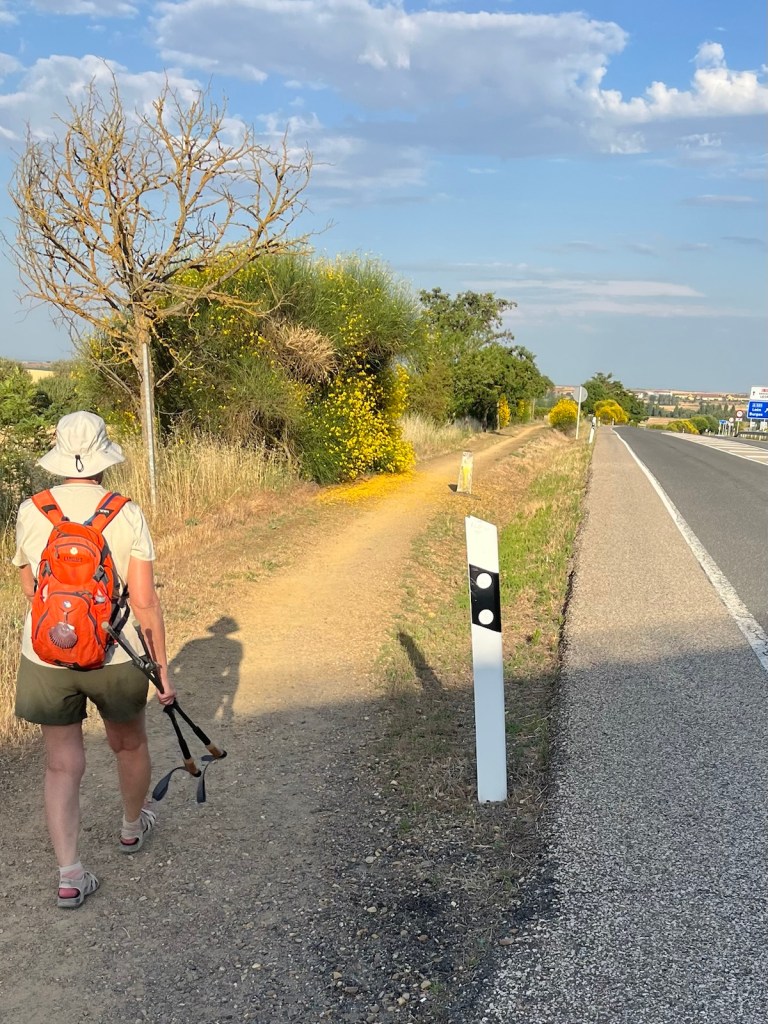
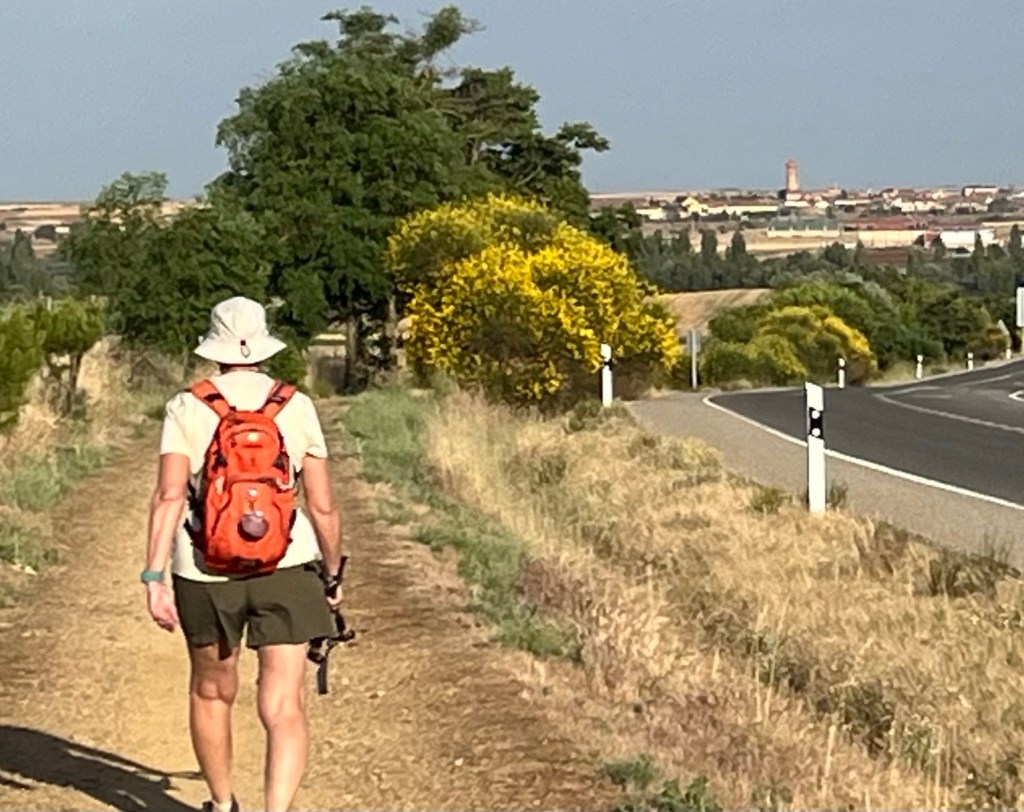
At the halfway point of today’s walk when leaving San Nícolas, the camino path began following a main road into Sahagún. The Spanish Broom hedge helped cushion the infrequent highway noise, but also provided some periodic shading from the sun.
Approaching our first glimpse of Sahagún.
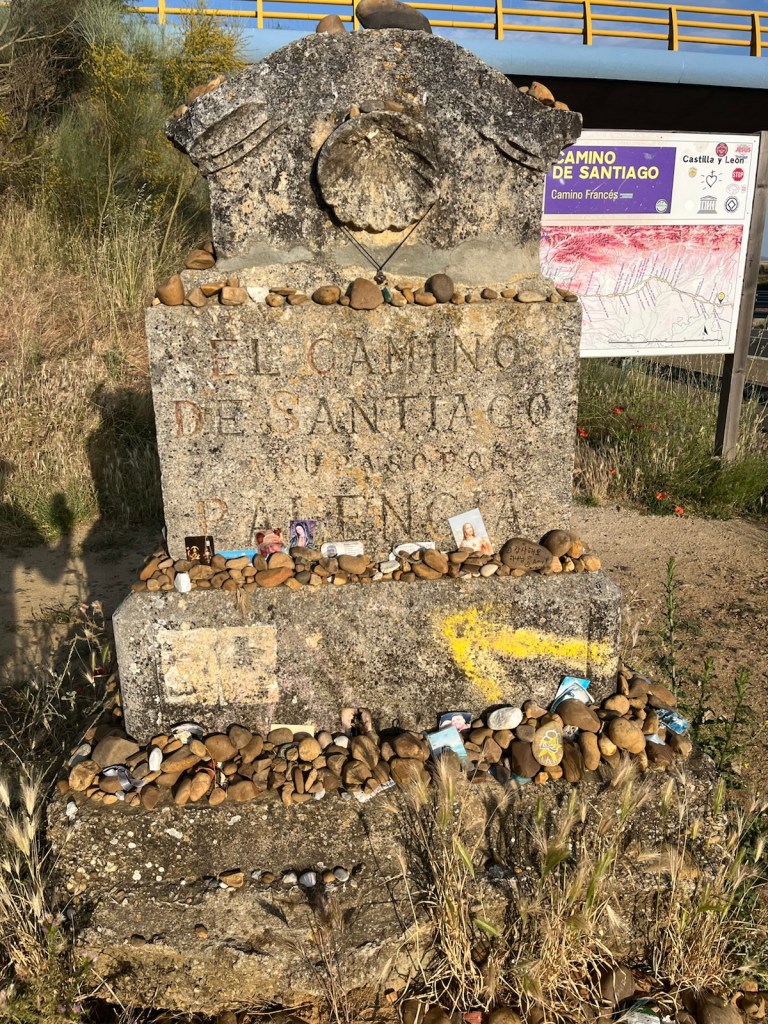
The ancient border marker of Palencia and the Province of León.
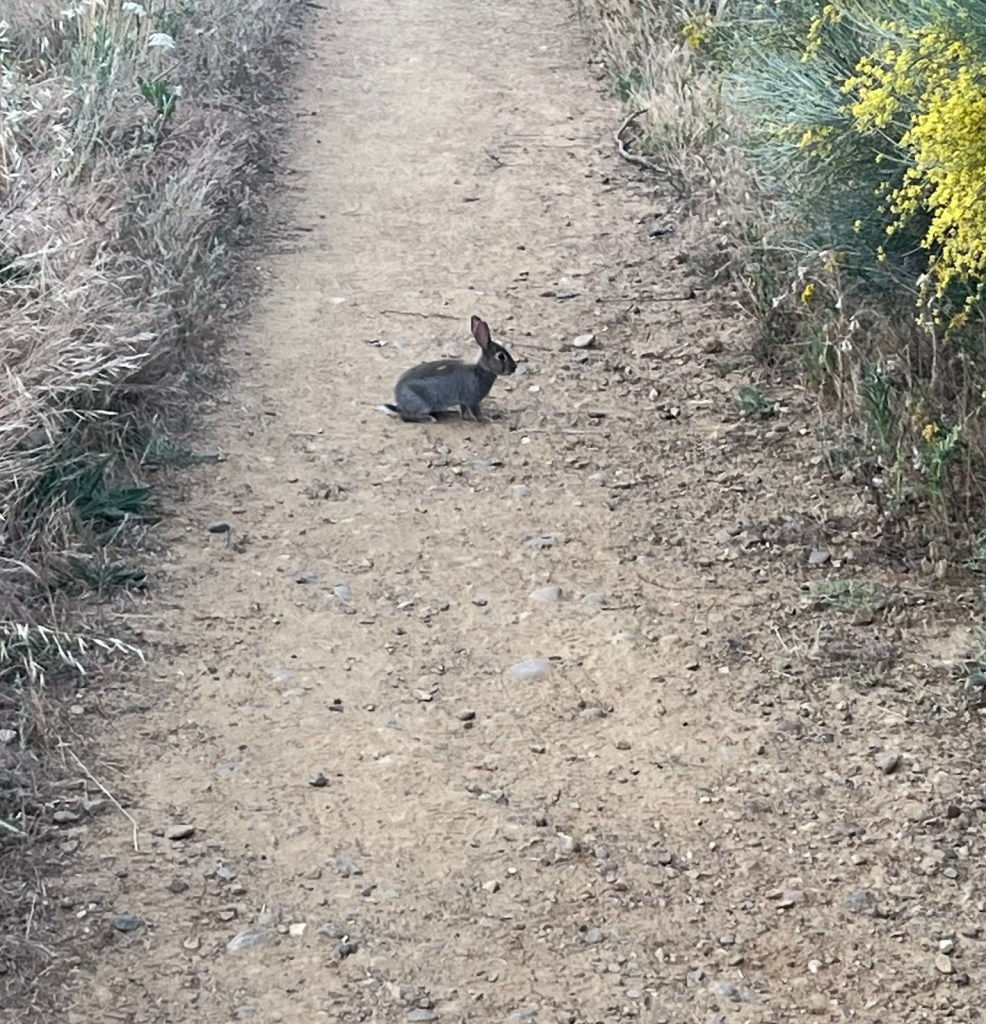
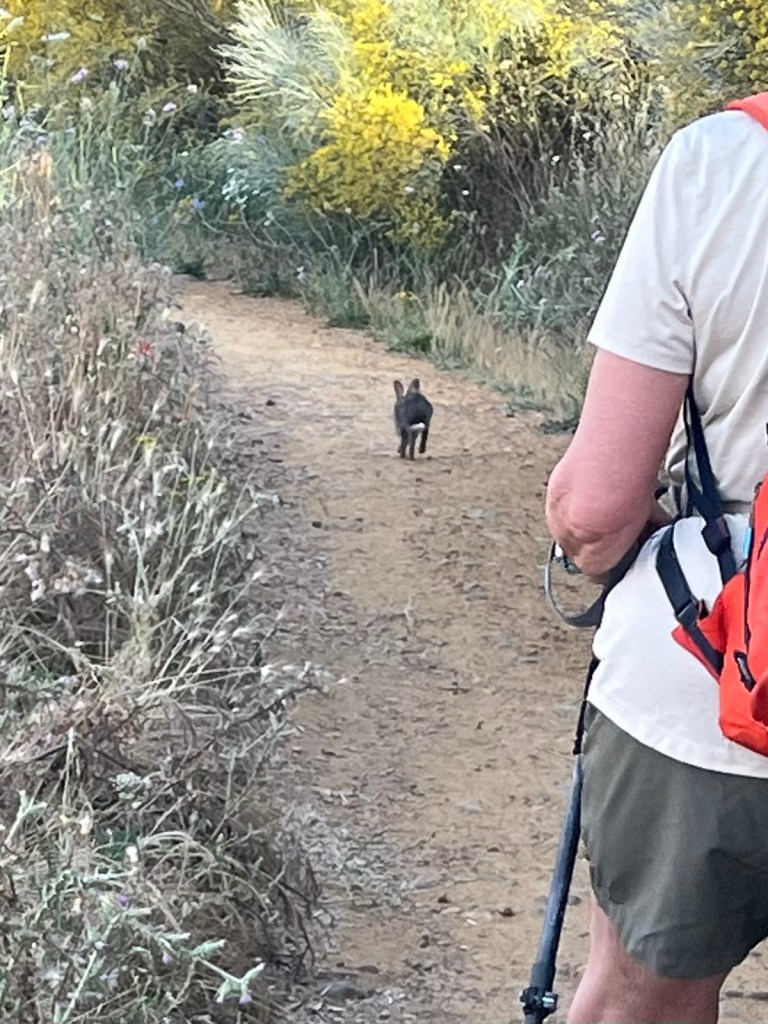
As we followed the pathway going around a road exit, “Thumper” was waiting to escort us safely back to the normal path.
We realized he was trying to help when he continued walking (actually, hopping) with us rather than running away. When he saw we were on track, he stopped, gave us three happy “thumps”, the headed back into the bushes.
Linda getting back on the camino path.
Sahagún in the background.
Less than 1.5 miles away from Sahagún.
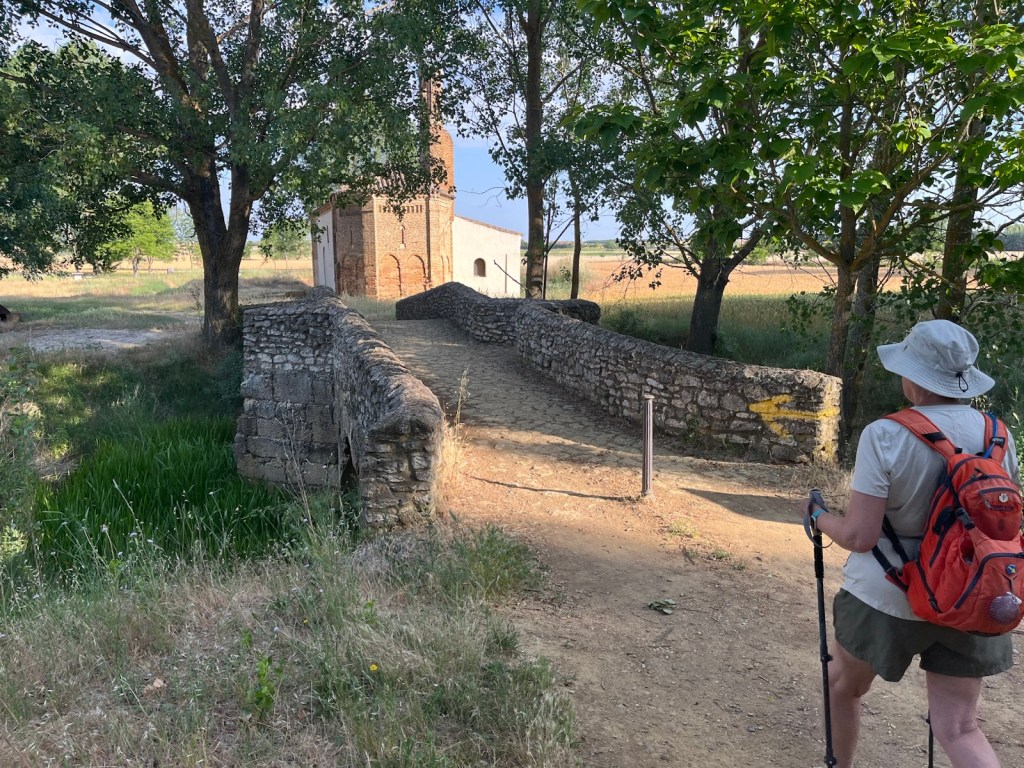
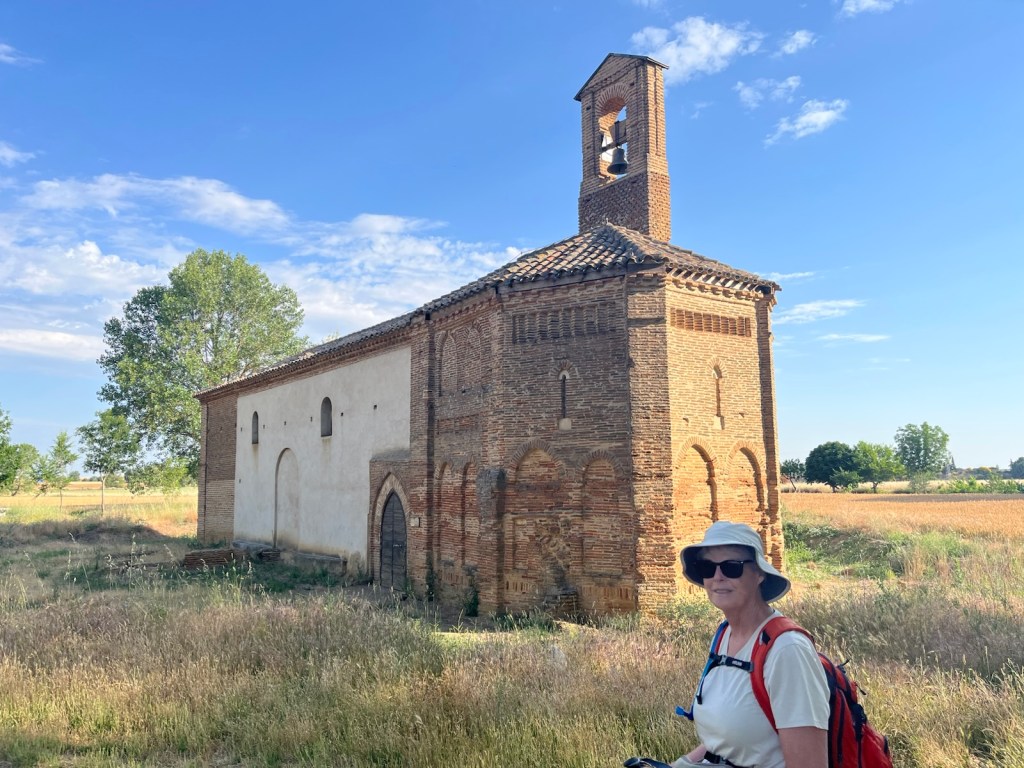
The camino took us across the road to the Ermita de la Virgin Puente. The 13th-century hermitage served as a hospital for pilgrims and leprosy.
The hermitage is of the Mudejar architectural style.
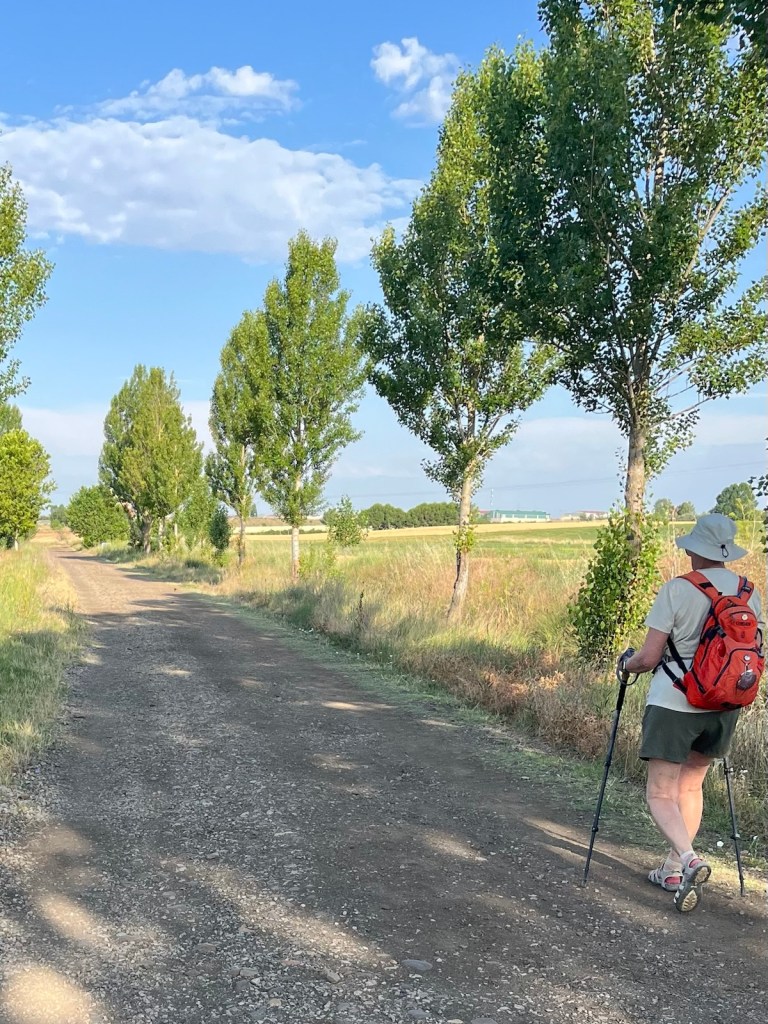
After the hetmitage the path looked like this the rest of the way into Sahagún.
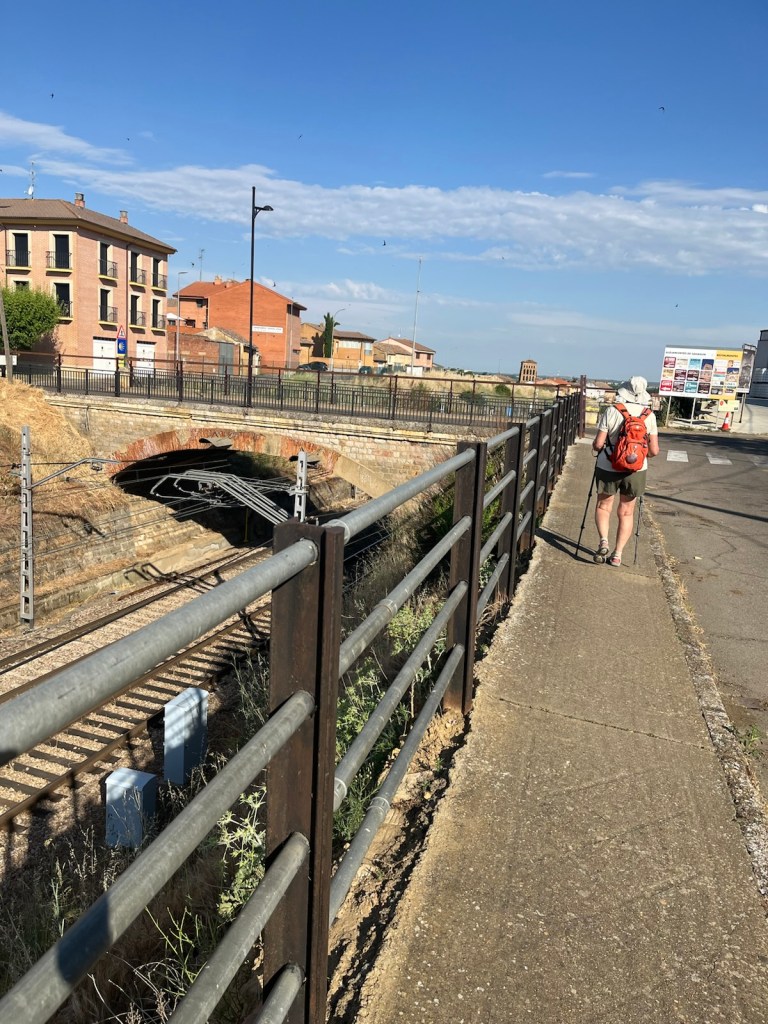
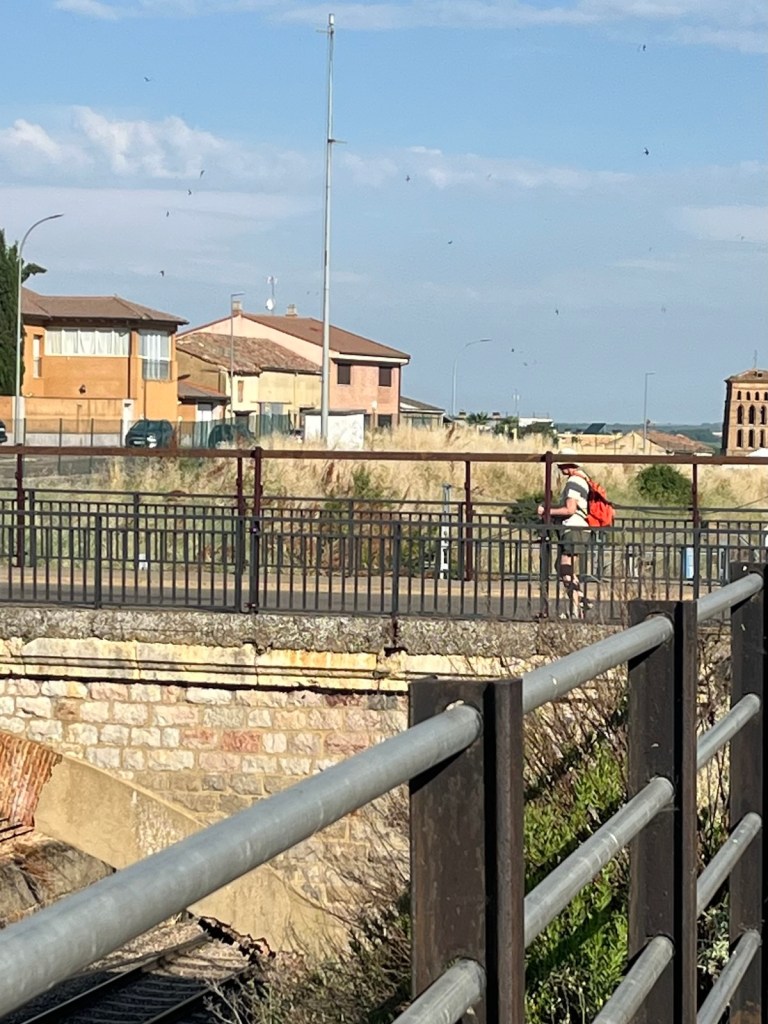
Once on pavement, the camino took us past a bull fight arena and then train tracks, then across a bridge into the town (pop. 2820)
Crossing the bridge into the old town.
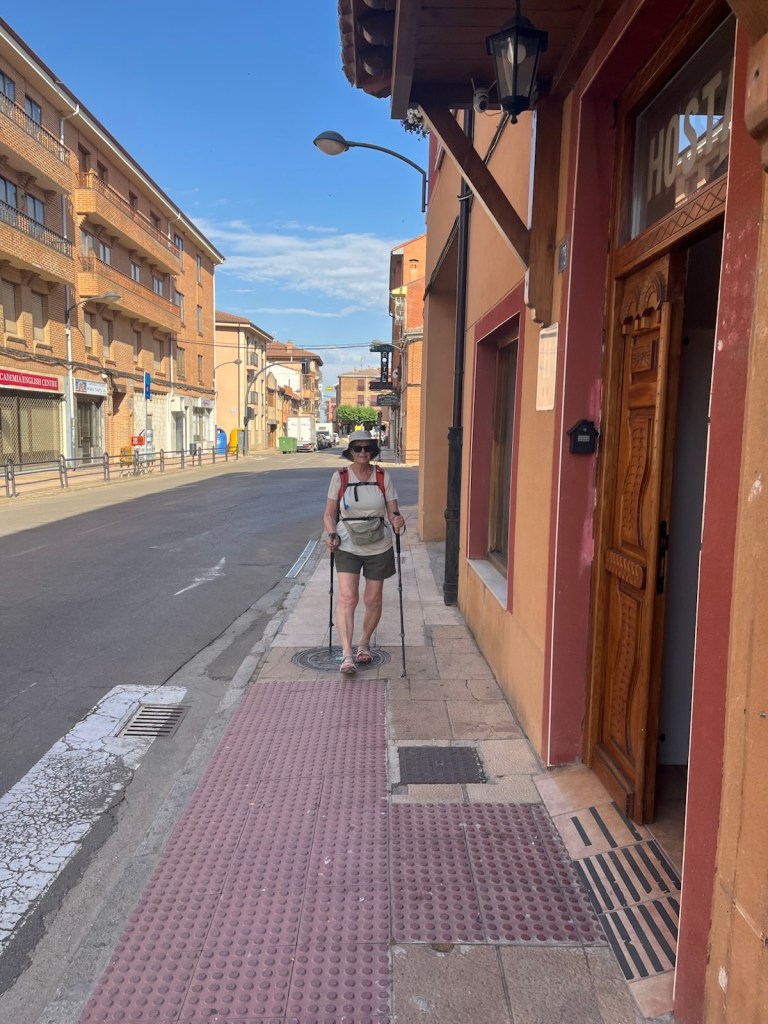
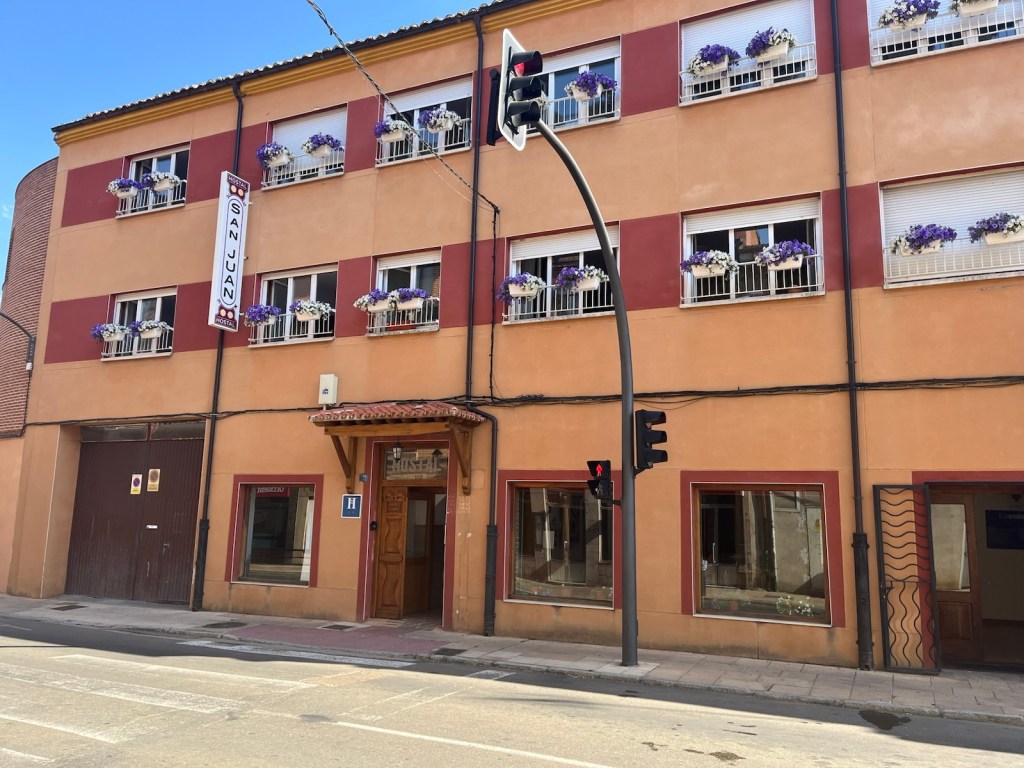
One block after crossing the bridge, we turned left and walked up to the open front door of Hostal San Juan, our destination.
Hostal San Juan

We waited for about 20 minutes on a soft, leather couch in the hostal reception area until our room was cleaned, then checked in at 10:20.

The walk today was longer than we like, but the early start mitigated the heat impact on us until the last half hour or so.

The rest of the day was spent on routines plus adding to our € stash via a convenient Santander ATM, replenishing our snack stash at a nearby mini-market and eating our main meal at a nearby bakery/bar/restaurant.

There are some ruins and relics in the town frequented by tourists and some pilgrims. In medieval times, Sahagún was second in the kingdom of León only to León city. King Alfonso VI was educated in Sahagún and sought refuge here while warring with his brother and richly rewarded the city when he emerged victorious.

The city thrived with a diverse populace including Muslims and Jews. Sahagún’s historic architecture illustrates the Romanesque-Mudéjar style, which incorporated Islamic decorative motifs and was built primarily out of brick rather than stone, which was not readily available.

We will walk through some of the historical structures on the way out of Sahagún tomorrow morning, but didn’t take time to look around today.

We will began the second half of the Camino 2026 tomorrow morning.

Leave a comment

This site uses Akismet to reduce spam. Learn how your comment data is processed.