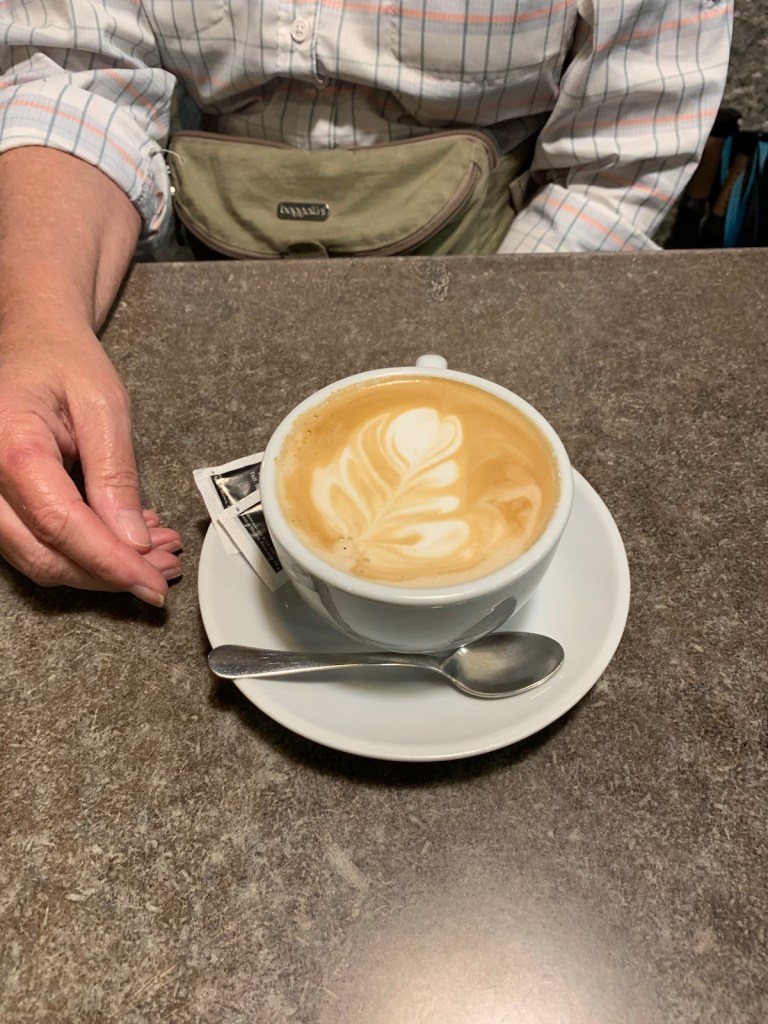
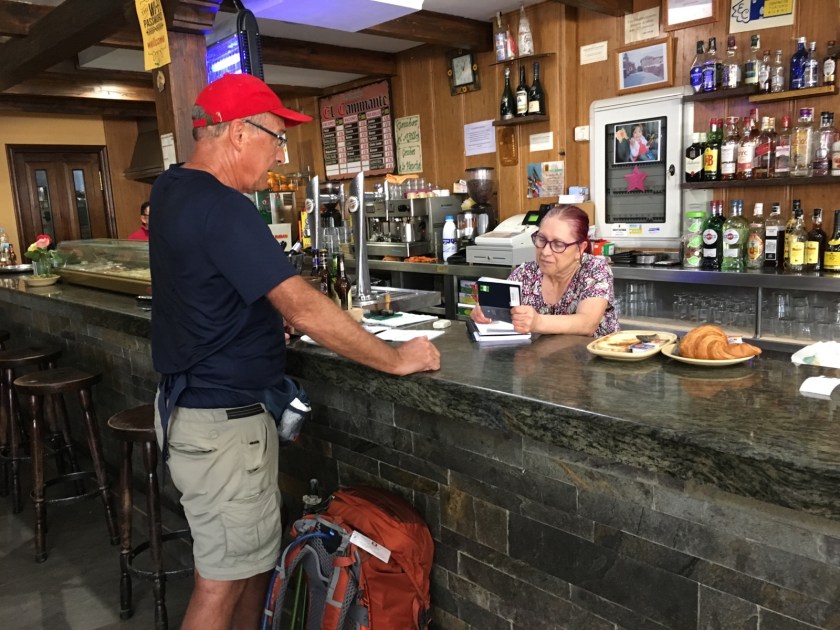
We stopped for breakfast at Hostal/Restaurant Siglo XIX, the same place we had the delicious dinner yesterday. It’s hard to stand out with cafe con leche and tostadas, but they worked at it.
They even threw in some complimentary churros. All for a total of 5€! If you are ever in Cacabelos, we highly recommend Siglo XIX.
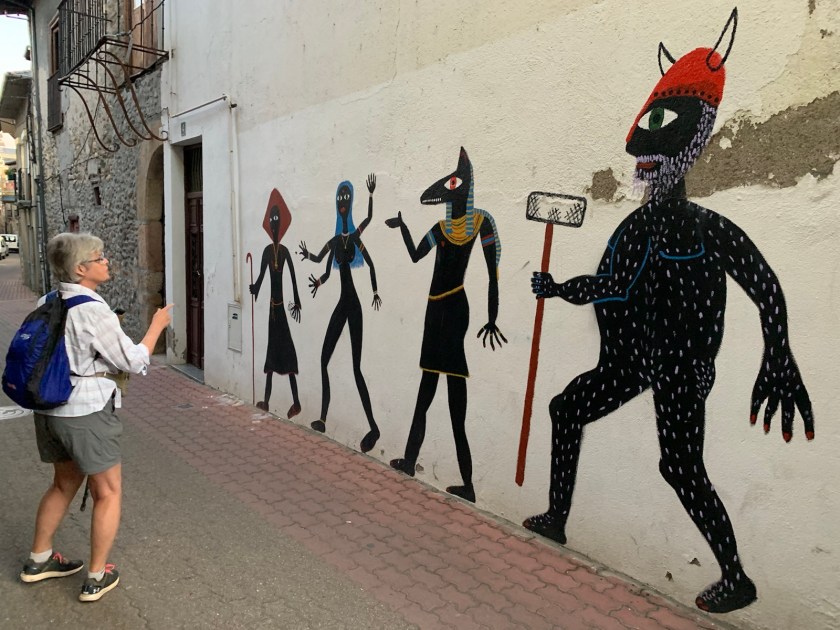
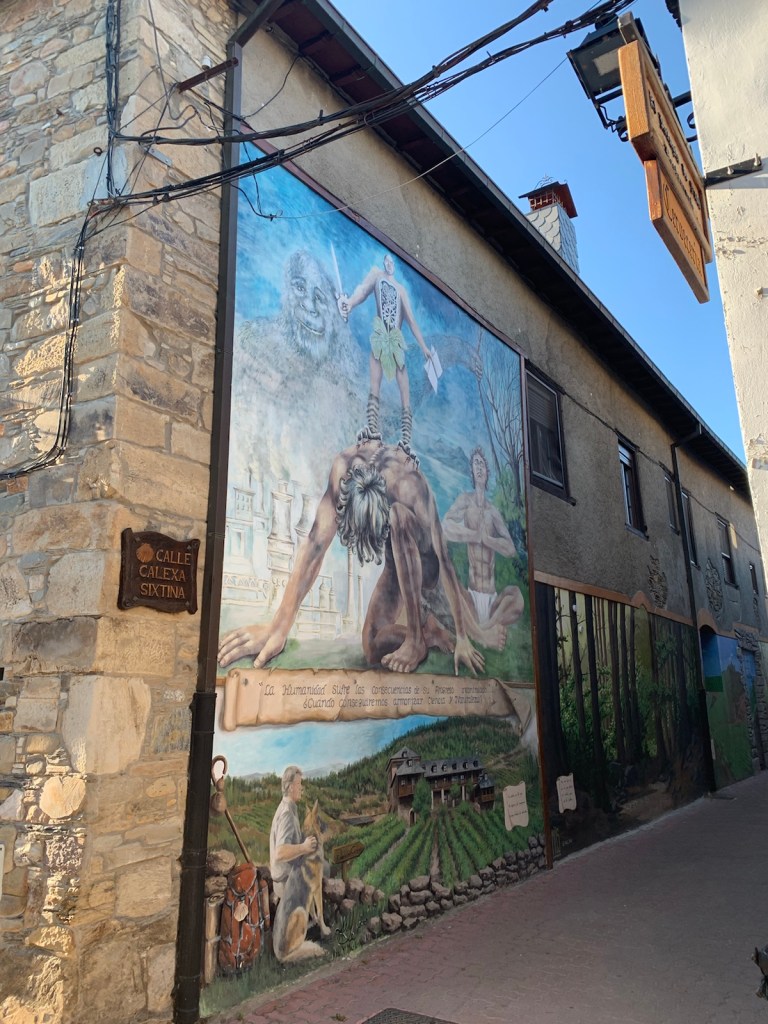
On the way out of Cacabelos, we saw several unusual paintings on the walls.
which for now will have to go unexplained.
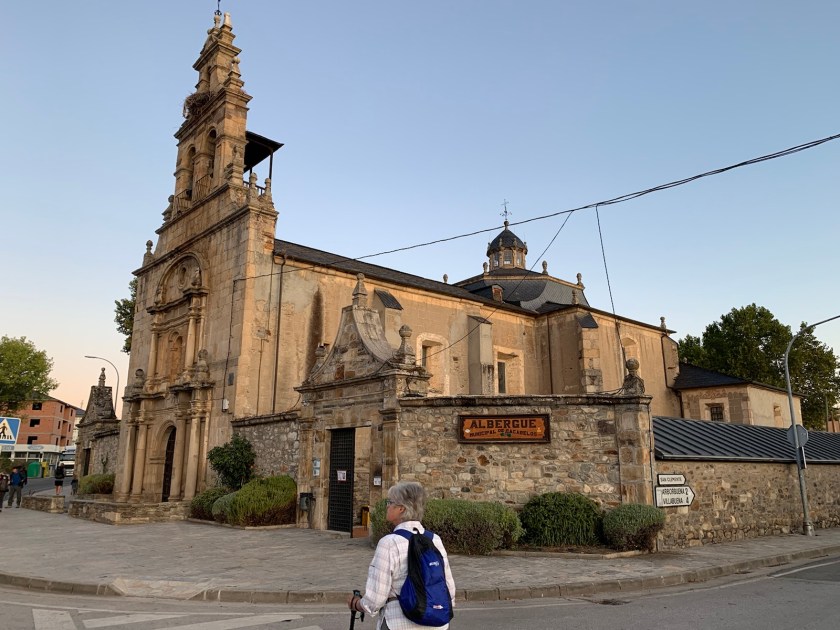
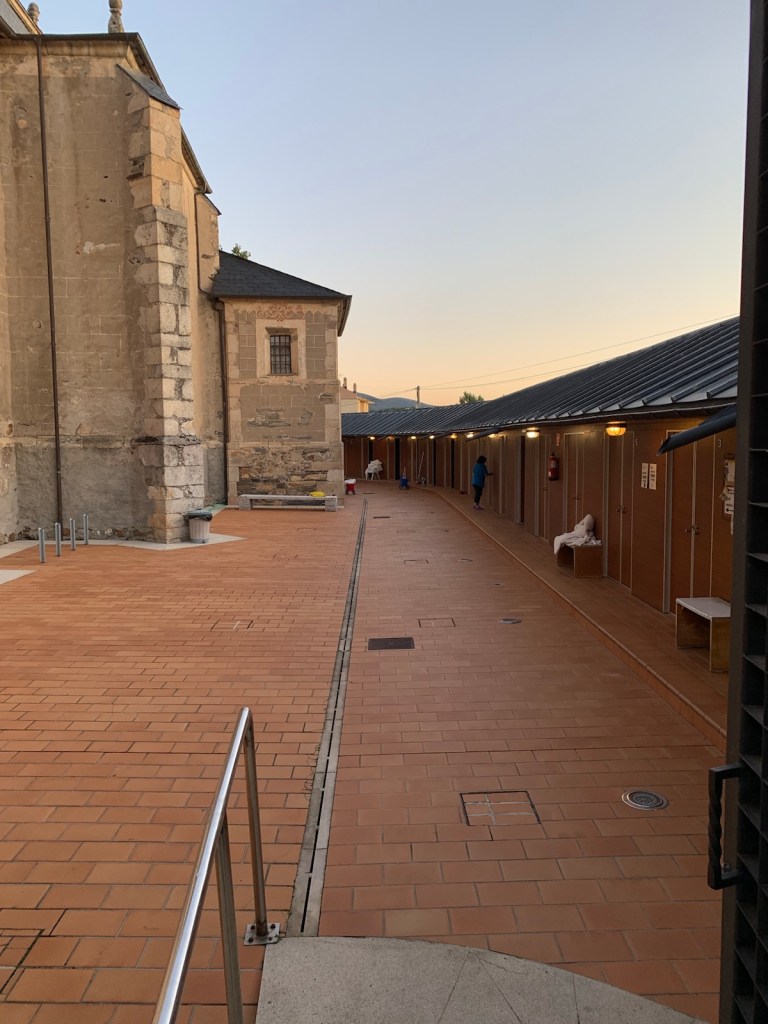
On the edge of town was the Santuario de las Angustias with an unusual albergue surrounding it.
behind each door is a cabin with two twin beds
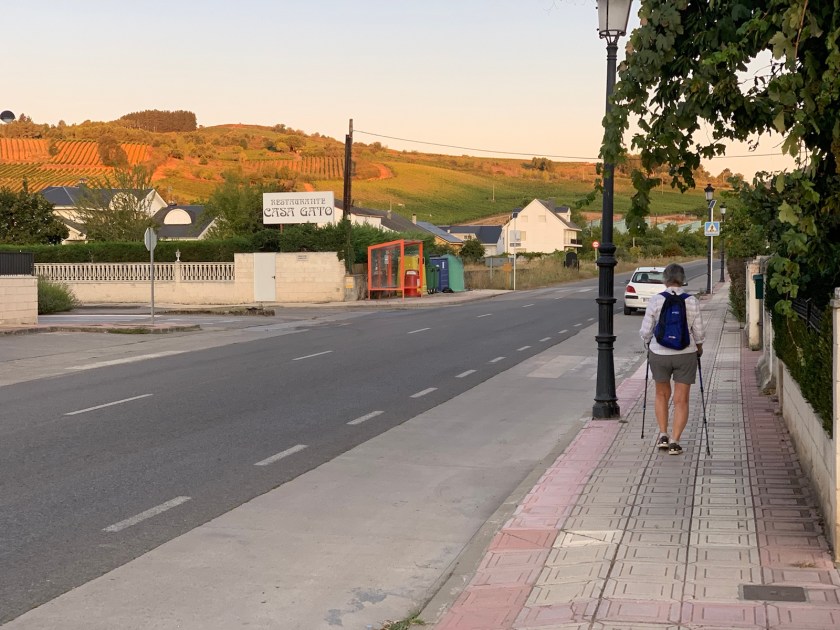
We walked on sidewalks to the edge of town
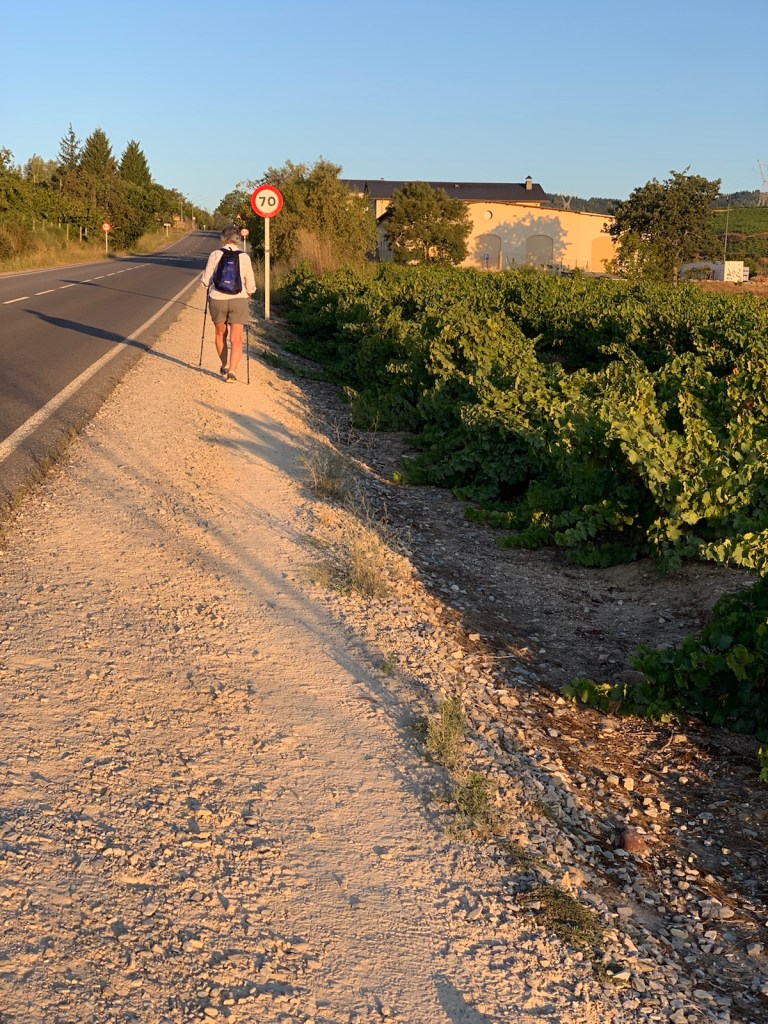
…then walked on a dirt path along the highway
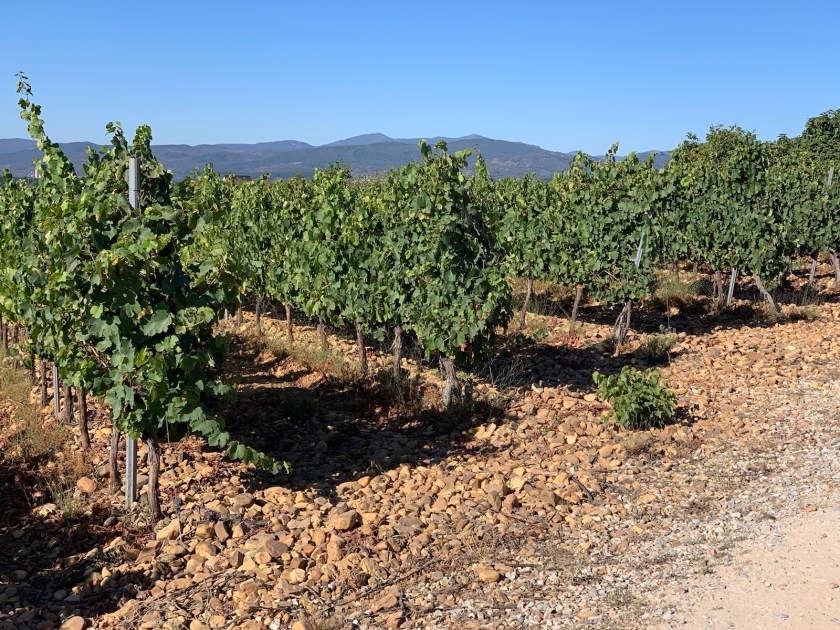
For most of the way we were surrounded by vineyards. Linda said the area reminded her of Napa Valley.
Harvesting the grapes was underway as we walked by workers clipping the bunches of ripe grapes from the vines.
We walked among the vineyards for a while then joined a downhill secondary road feeding into Villafranca del Bierzo (pop. 3,505).
We walked by the Iglesia de Santiago
Iglesia de Santiago
with its Puerto del Pardon whereby if a pilgrim was too sick to make it to Santiago, he could walk through the Puerto de Pardon and receive the same indulgences as if he had walked all the way to Santiago.
Puerto de Pardon
We walked past the Castile
then on into a plaza where we stopped for a second CCL before walking across the pilgrim bridge to the edge of town to Hostal Mendez (44€) our destination for the day.
Our room wasn’t ready at 10:45 (duh), so we ventured back into town to search for some just-in-case-it-gets-cold extra pair of long pants for Linda. But when you are on the Camino you lose all track of time, so we were looking for an open store on Sunday morning. The half mile walk back to town center was fruitless and the walk back to our hotel made it a 6.2 mile day instead of a 5.2 mile day.
Our room was ready when we got back and Linda’s backpack via Jacotrans was waiting for us, so we did our chores, then headed back to town (where the main eateries were) for lunch.
We had pizza for lunch and while we waited, we ordered 4 glasses of 4 different white wines all grown and processed within a few miles from here. After careful tasting, scoring and ranking the four wines, we concluded that while these were all good, we much prefer red wines.
After two delicious pizzas and our wine tasting, we walked back to our room, making this a 7.2 mile day, and settled into our room for the rest of the day.
And did we mention we are on the 3rd floor, which is 4 levels above ground and that wifi above second floor is non-existent? So simple tasks such as blog uploads, checking mail, etc are a real burden not to mention climbing up and down stairs.
There are two Camino routes through Ponferrada, the one which is “recomnended” that goes around the city, which we walked in 2015 and 2017 and the route through the city, which we took today.
We thoroughly enjoyed the walk through the city.
It seemed like Christmas with the Festival lights as we left our hotel
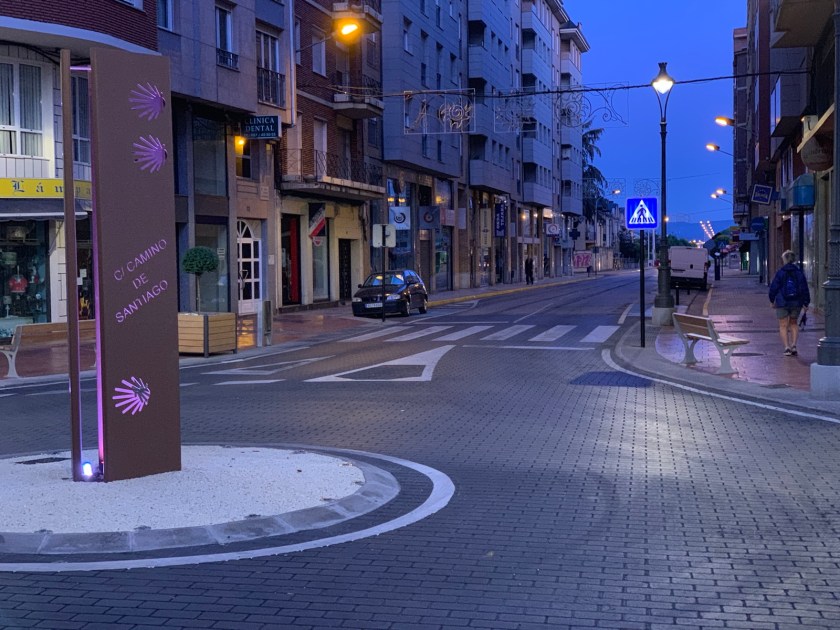
We made a left turn a few blocks from the hotel and began walking in none other than, Calle (street) Camino de Santiago.
Calle Camino de Santiago was straight, no turns, until it merged with the other Camino route some 5 miles later.
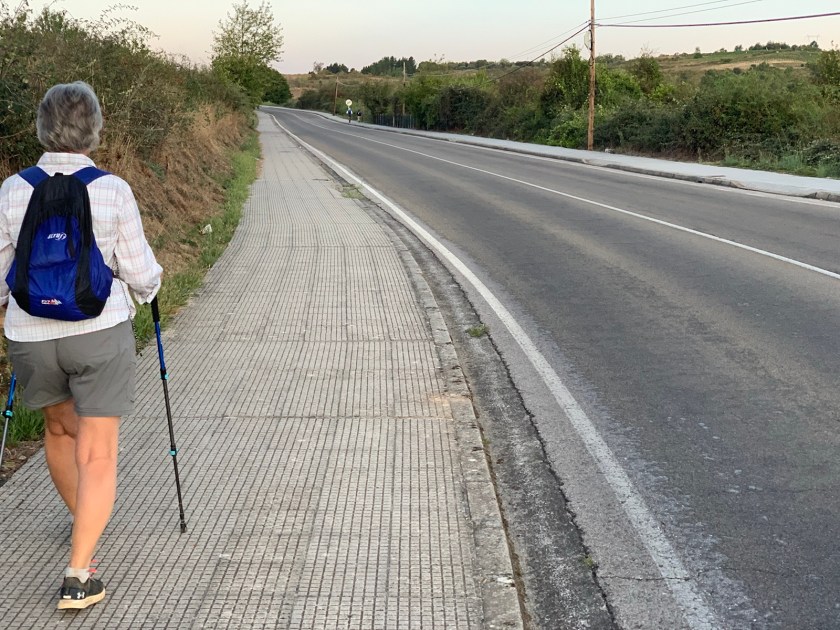
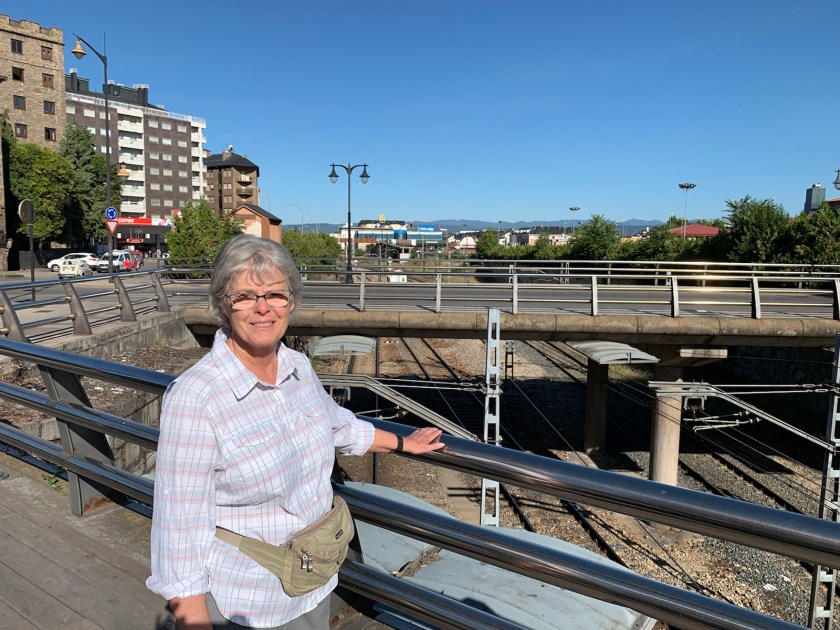
The walk was very pleasant with wide sidewalks on both sides of the road. We passed attractive, architecturally diverse, residential communities unlike we have seen anywhere in Spain, on or off the Camino.
We stopped in the suburb of Fuentes Nuevas in a very nice bar next to a children’s park, Parque de Pablo Picasso, and had breakfast.
Up to this point we had seen very few pilgrims on the “non-recommended” route.
We continued into the town of Camponaraya, where the two Camino routes merged and stopped for a second CCL. We then walked through the older part of the village and the pilgrim traffic increased dramatically.
A group of a dozen or so students from Genoa, Italy joined the Camino in Ponferrada.
This morning we became more aware of the Bierzo region with its temperate microclimate, ideal for viticulture. The scenery is green with vineyards. The mountains of Galicia loom ahead.
Located in the northwest corner of Castile and León, bordering Galicia, Bierzo is known especially for it’s unique Mencía grapes, a relatively new variety and the resulting wines that have been gaining in importance in the wine world.
The soil/rocks reminded us of Cháteauneuf du Pape
We walked among the vineyards for a few miles before entering the town of Cacabelos (pop. 5,495).
approaching the older part of Cacabelosin old Cacabelos near our hotel
This is our third visit to this charming Camino town, that in Roman times served as an administration center for gold mining.
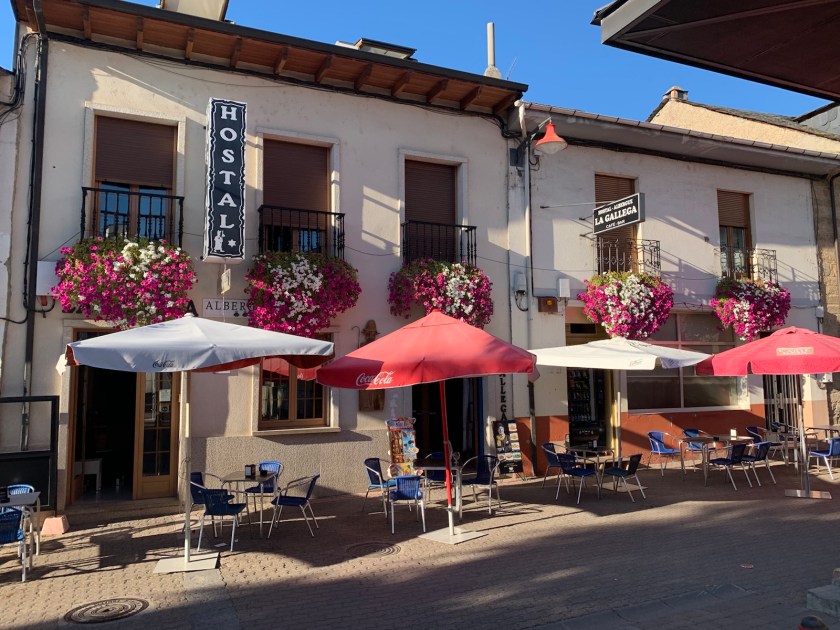
We staying in Hostal La Gallega (46€).
our Hostal
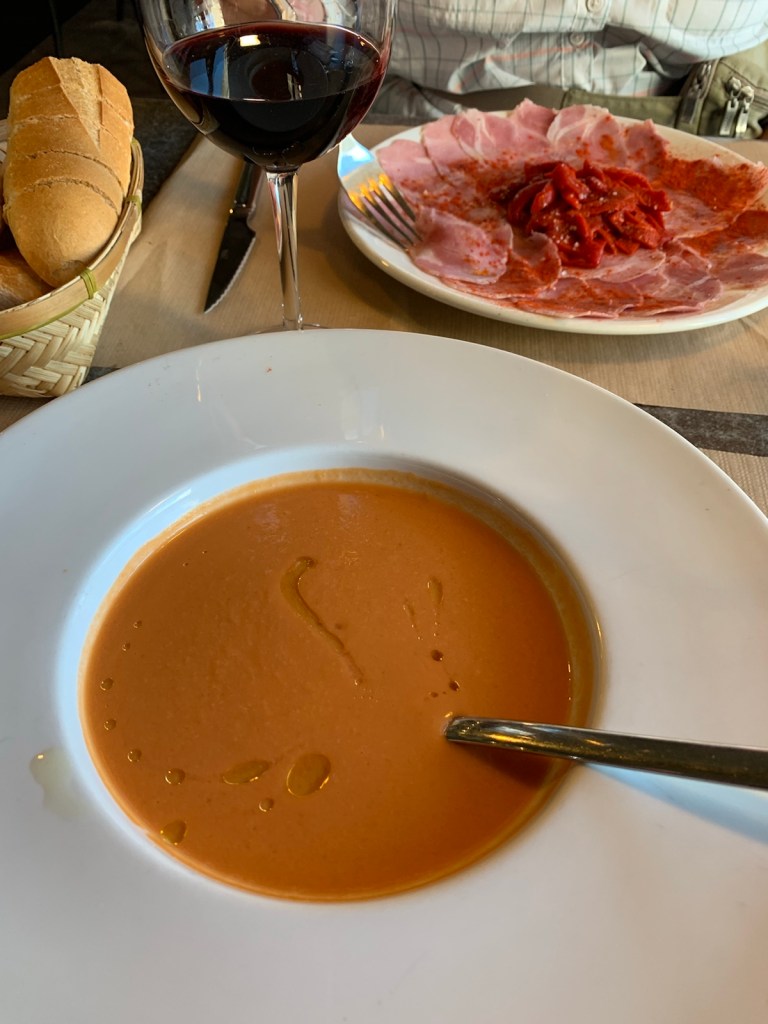
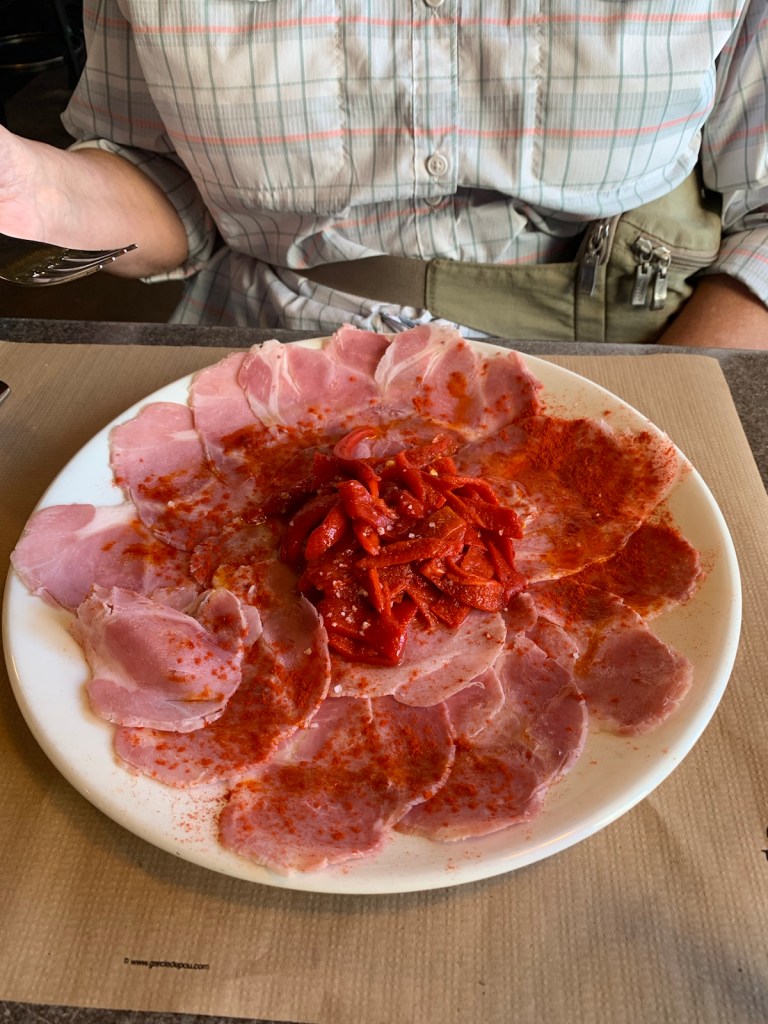
We had our meal for the day at lunch. It was delicious. First course was gazpacho for Jim and Lacón con Pimientos for Linda.
gazpacho for Jimpork shoulder and roasted peppers for Linda
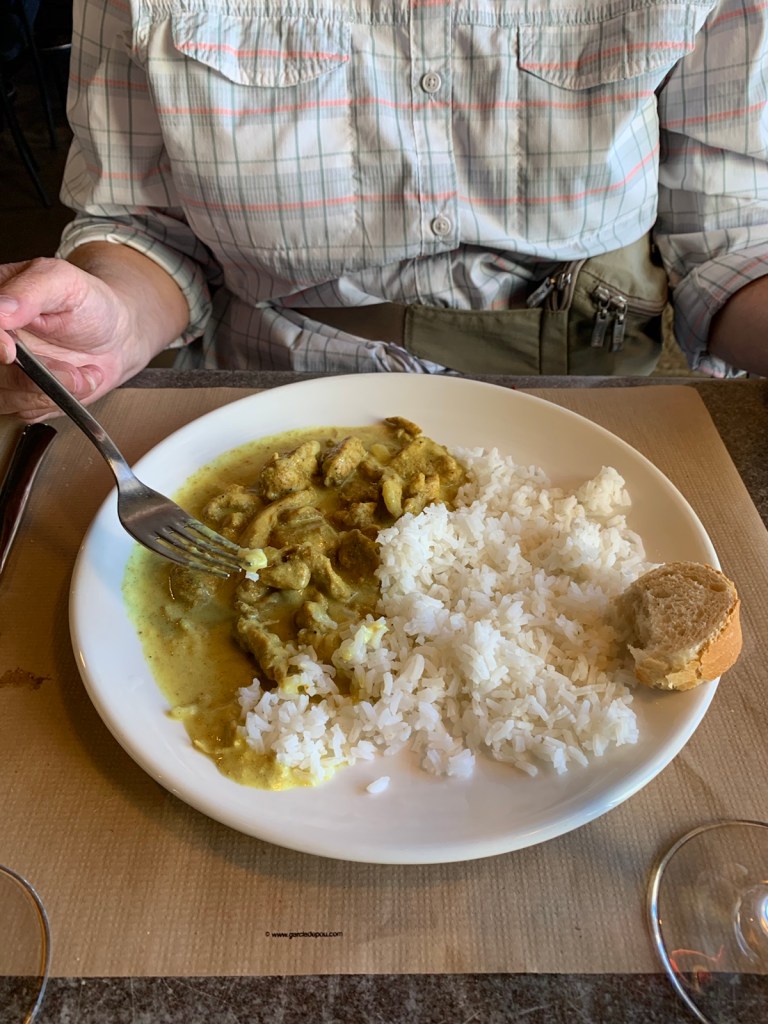
2nd course for Linda was Pollo al curry al con arroz and for Jim, Lubina con salsa de piquillo y ensalada.
curry chicken with rice for Lindasea bass for Jim
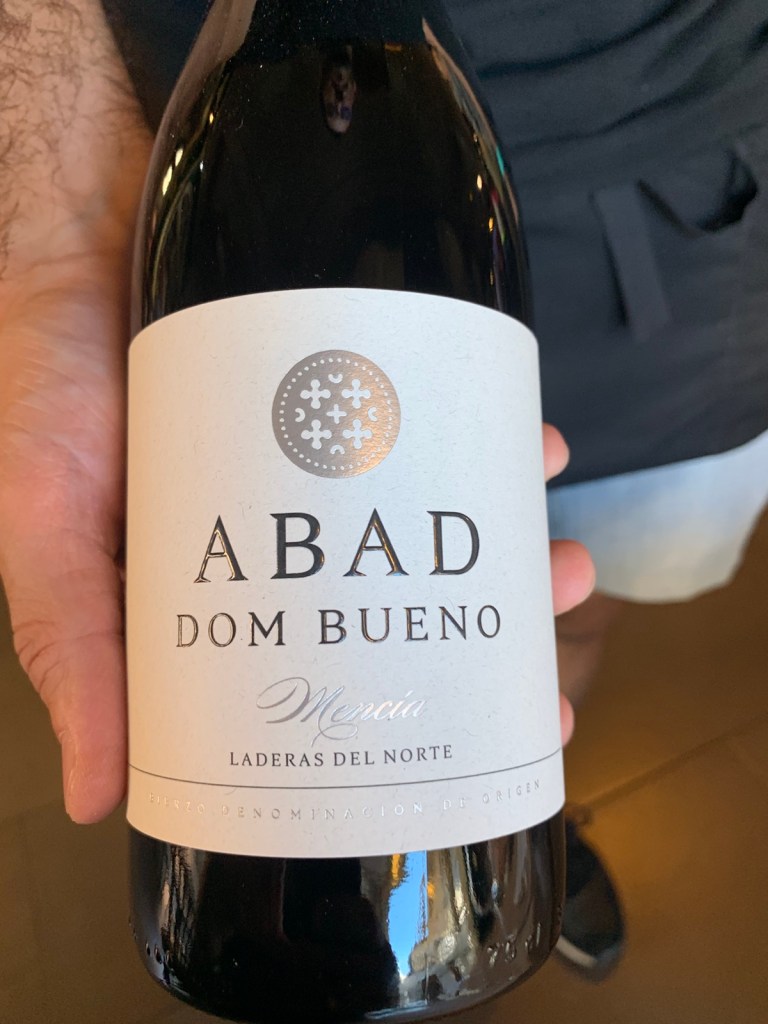
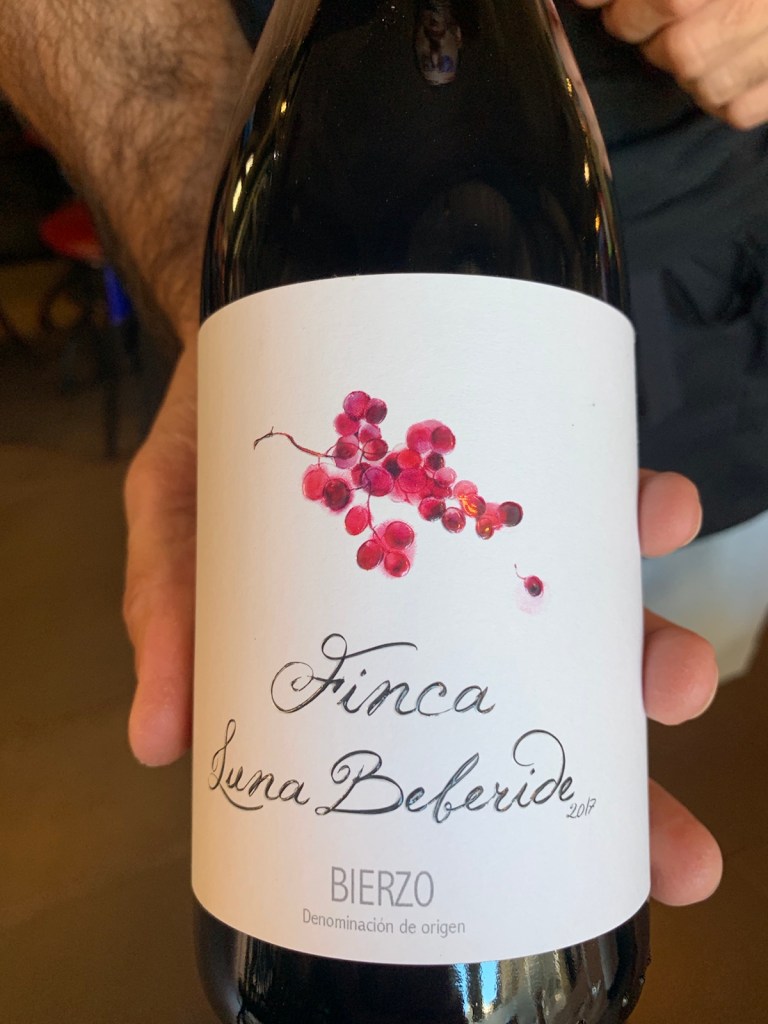
We also had a chocolate tarta and tasted a glass of wine of two difference Bierzo Mencía crianza red wines of the region.
Linda preferred this oneJim preferred this one
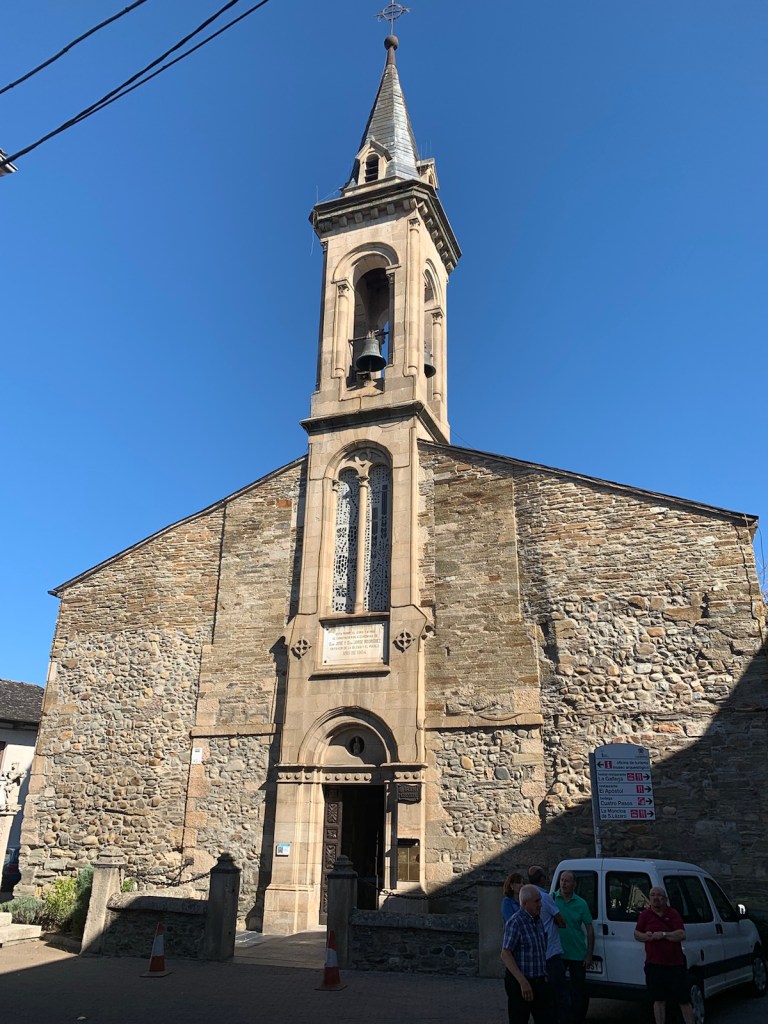
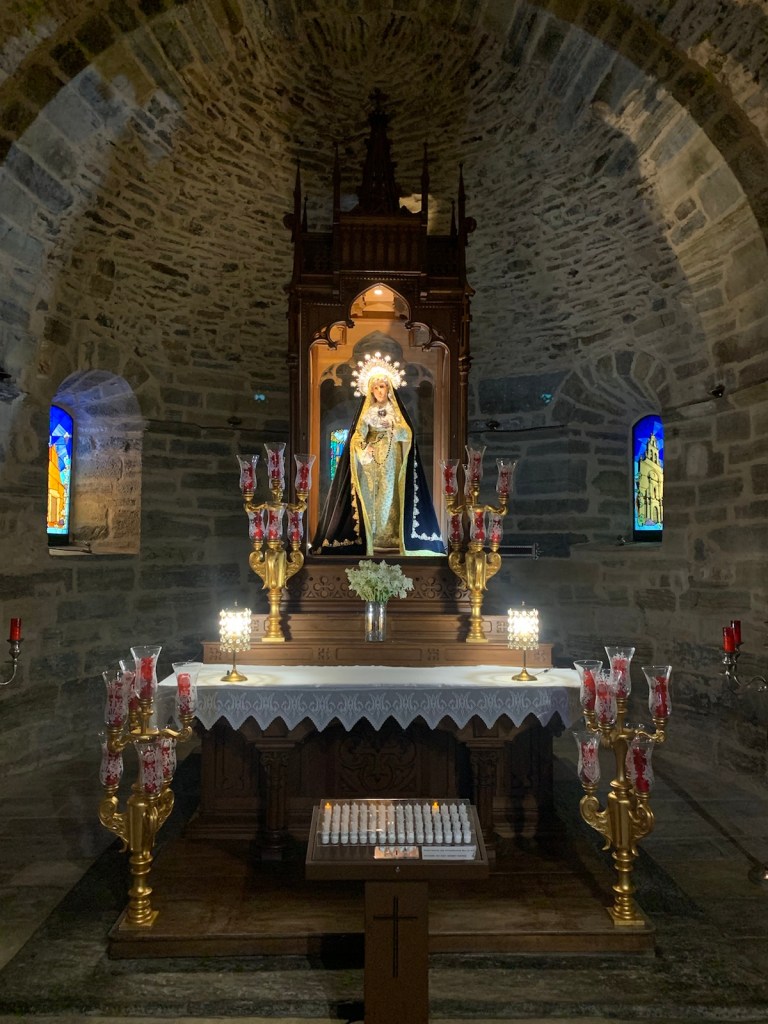
We made a visit to the Iglesia Parroquial de Nuestra Señora de la Plaza, consecrated in 1108, which has seen many renovations over the centuries since, was beautiful inside
inside Nuestra Señora de la Plaza
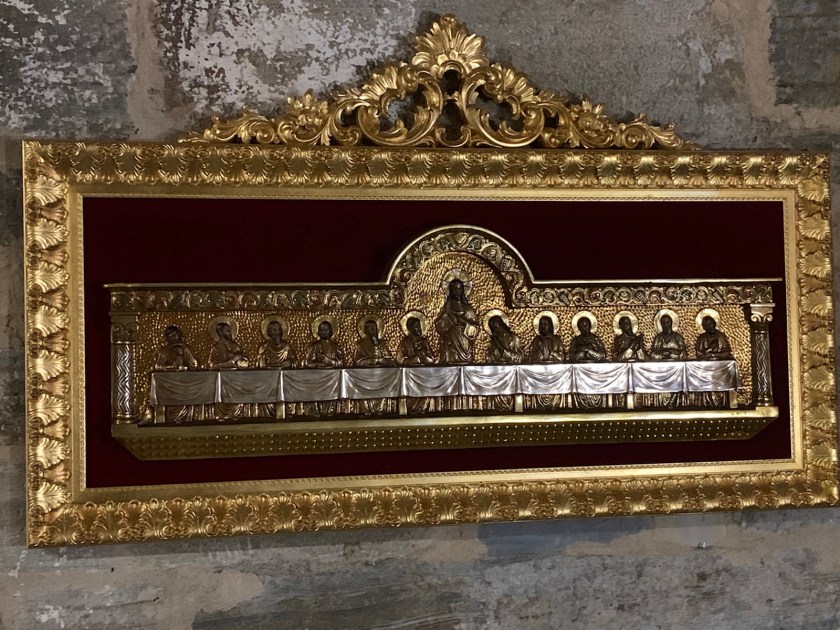
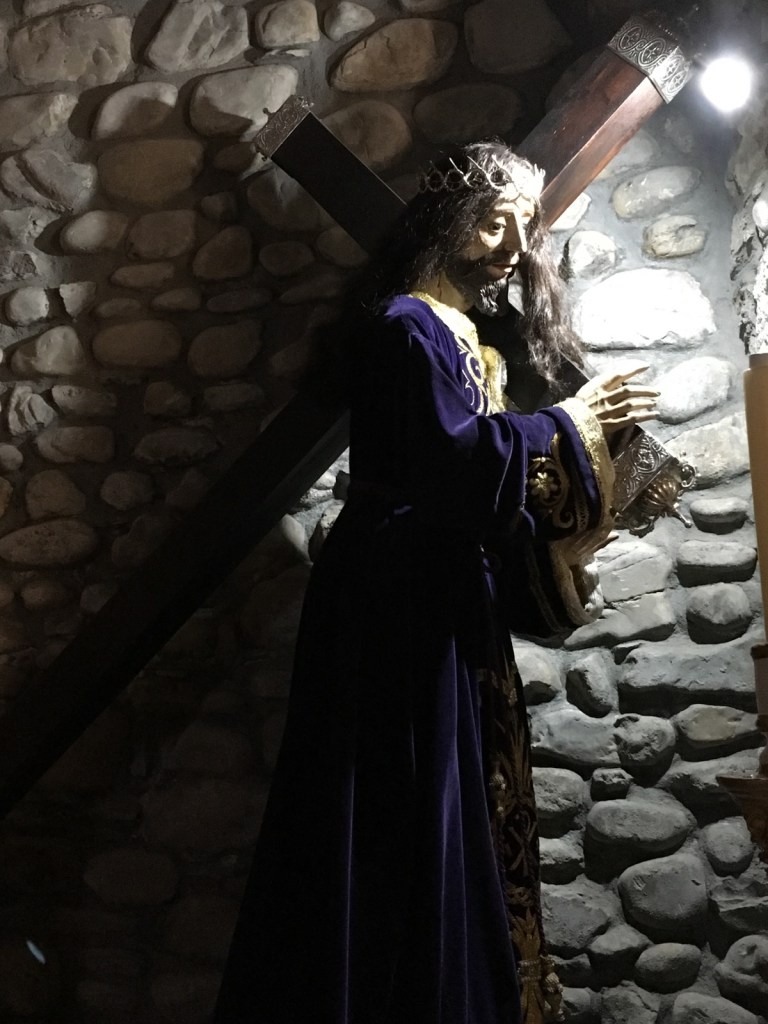
with an impressive collection of religious statues and icons.
striking version of the VirginSt James (Santiago)Last Supper in gold and silver
With a good morning walk behind us, a sampling of Camino history and art, a tasty lunch in our tummies complemented by a sampling of two good wines, there was nothing left to do, but retire to our hotel and savor the day into the night.
Our previous walks into Ponferrada from Molinaseca have been at the end of the very difficult downhill, rocky path from El Acebo into Molinaseca.
This was typical of the walk between Molinaseca and we went straight
Today, having spent the night in Molinaseca, it was a much easier walk plus we decided to take the not recommended route, walking straight into the city on sidewalks versus swinging left of the city through some unattractive farms and abandoned buildings, then into the city through an old, depressed section.
Recommended route went left, here, we went straight
The recommended route left us with a negative feelings about Ponferrada, which was completely different from our experience today.
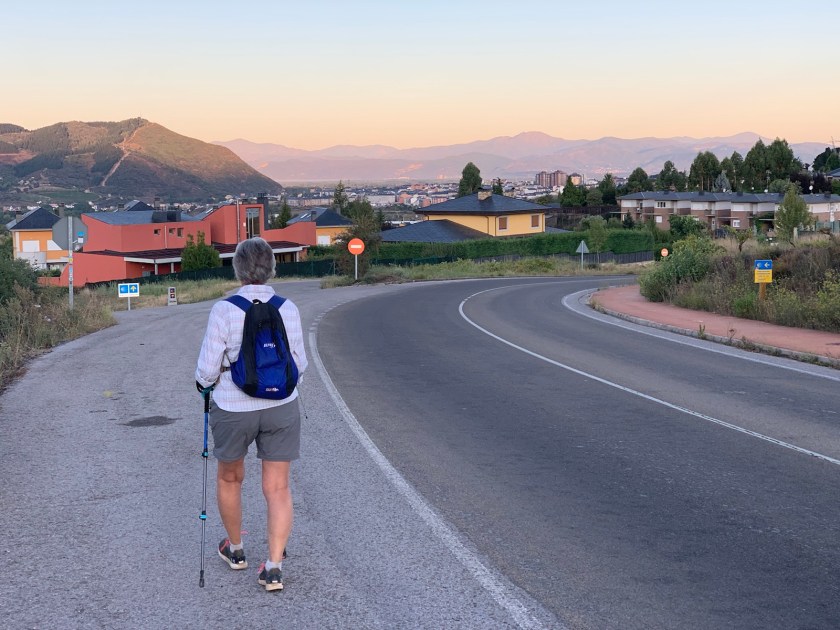
The so-called direct route took us through some beautiful homes and landscapes, high rise (7 stories) residential areas surrounded by parks and winding, wide boulevards with local walkers and limited traffic.
Iglesia de San Andrés Templar Castle, 13th century
We also walked gently down into the historical old city areas instead of climbing up into the same area via the alternate route.
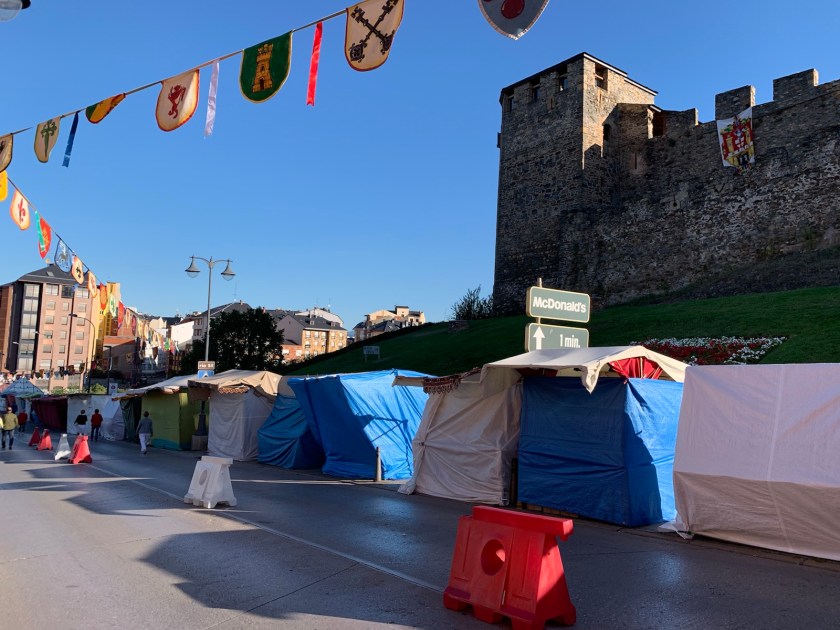
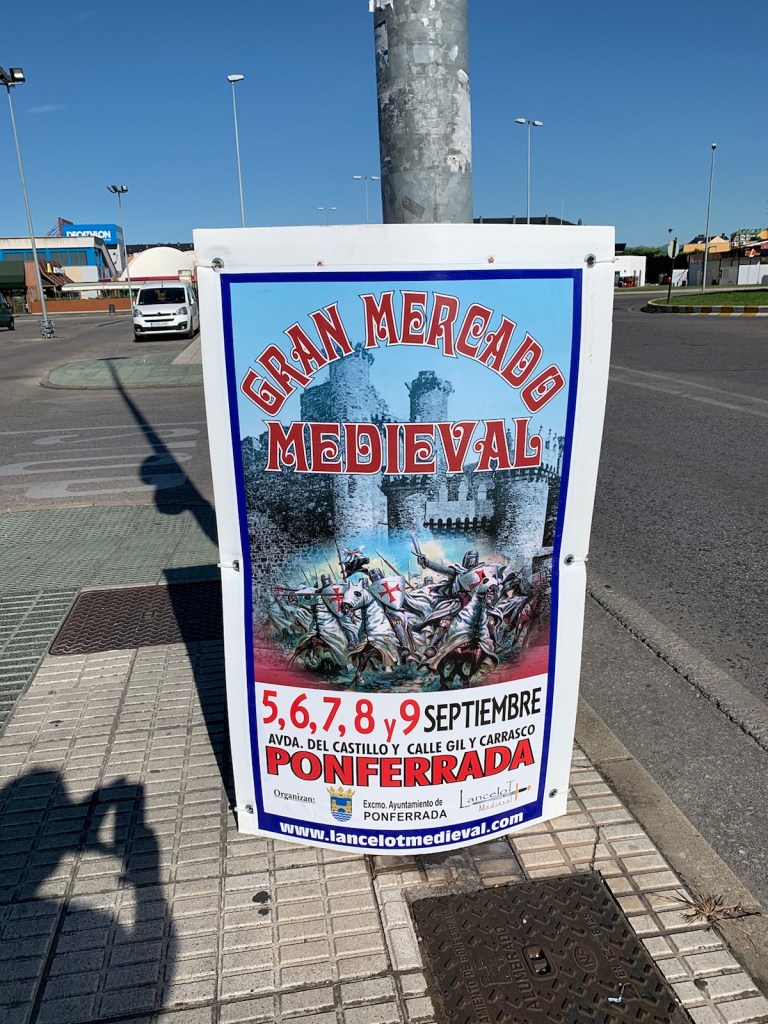
Preparations were underway for this weekend’s festival
Our perception of Ponferrada has improved 100% due entirely to the way we enteted the city today.
Some weeks back, we discovered by accident that Ponferrada has a Decathlon store. We were introduced to Decathlon back in 2017, when we visited the store outside Burgos to replaced Linda’s non-performing fishing sandals. Unfortunately, the only D store in the USA is in San Francisco, so we picked a hotel in Ponferrada about a mile from the D store so we could check it out while we were here, especially since Linda is concerned that she didn’t bring enough warm clothes for our remaining 3 weeks, as the mornings are now dipping into the 40’s.
As soon as we checked into Hostal San Miguel (43€), we headed out to D.
on our walk to Decathlon store in distance behind Linda
When we got there, it was closed up tight. This was in spite of the open hours scheduled on the door and the store hours posted on the internet!
Unwelcoming front doors of Decathlon Store
We checked next door at the McDonald’s restaurant and were informed that the festival for this weekend took precedence over all else.
The reason we missed shopping in Decathlon.
So, we walked back to the hotel, empty handed.
After completing chores, we had a menu of the day at a nearby restaurant/bar. It gave us a chance to taste the “Conference Pear” grown only in the Bierzo region. They were very delicate in flavor and texture and sliced and served in a light syrup.
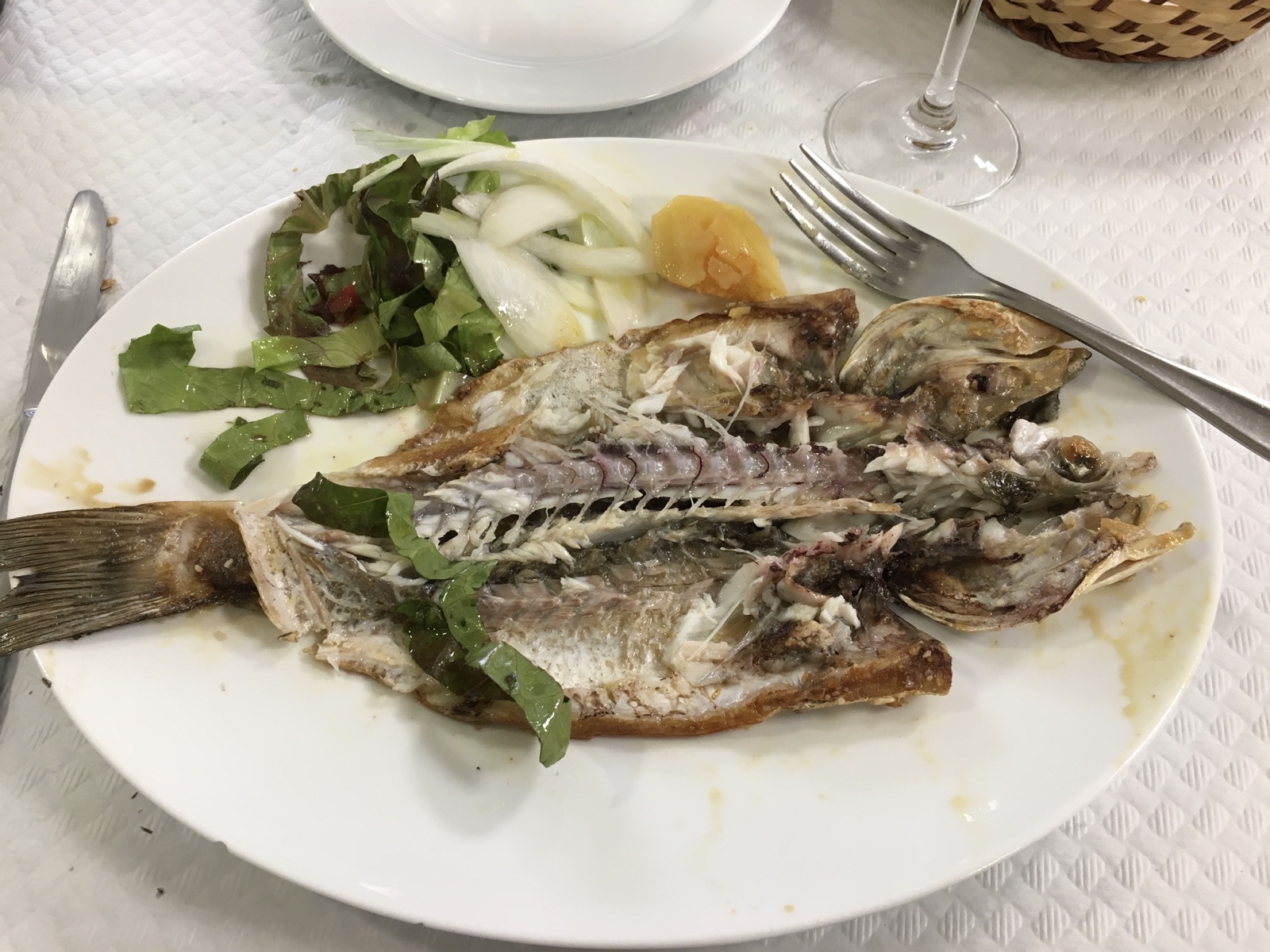
The remains of Jim’s dinner
Jim had grilled fish, called “Lupina” and left only the bones, head and some skin.
That pretty much ended our activity for today and gave us insight to the Camino “alternate/preferred” routes and new perspectives on Ponferrada.
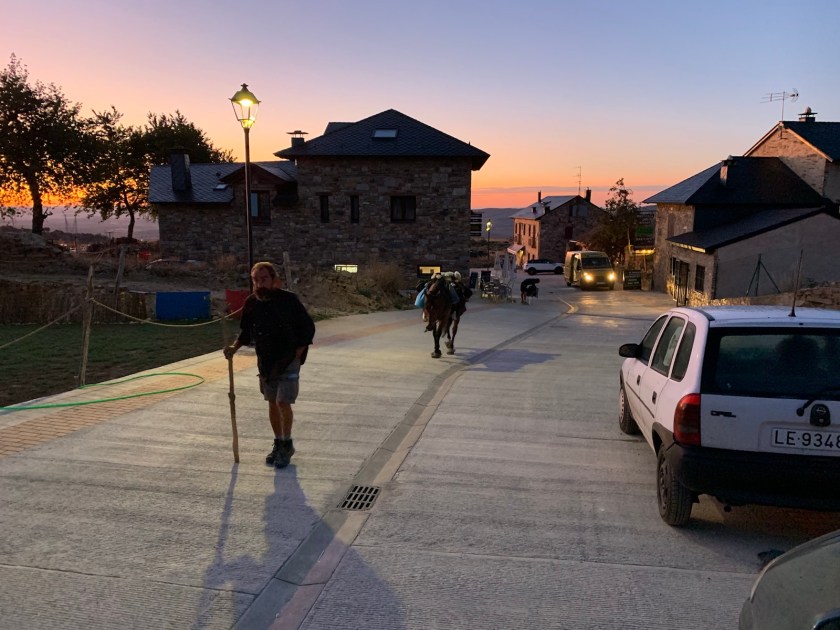
It was dark when we left Rabanal (elev. 3730 ft) and we stopped at Foncebadón (pop.13, elev. 4650 ft.) for breakfast.
We saw the pilgrim being followed by a horse once again while walking out of Foncebadón.Looking back at Foncebadón on the way up to Cruz Ferro
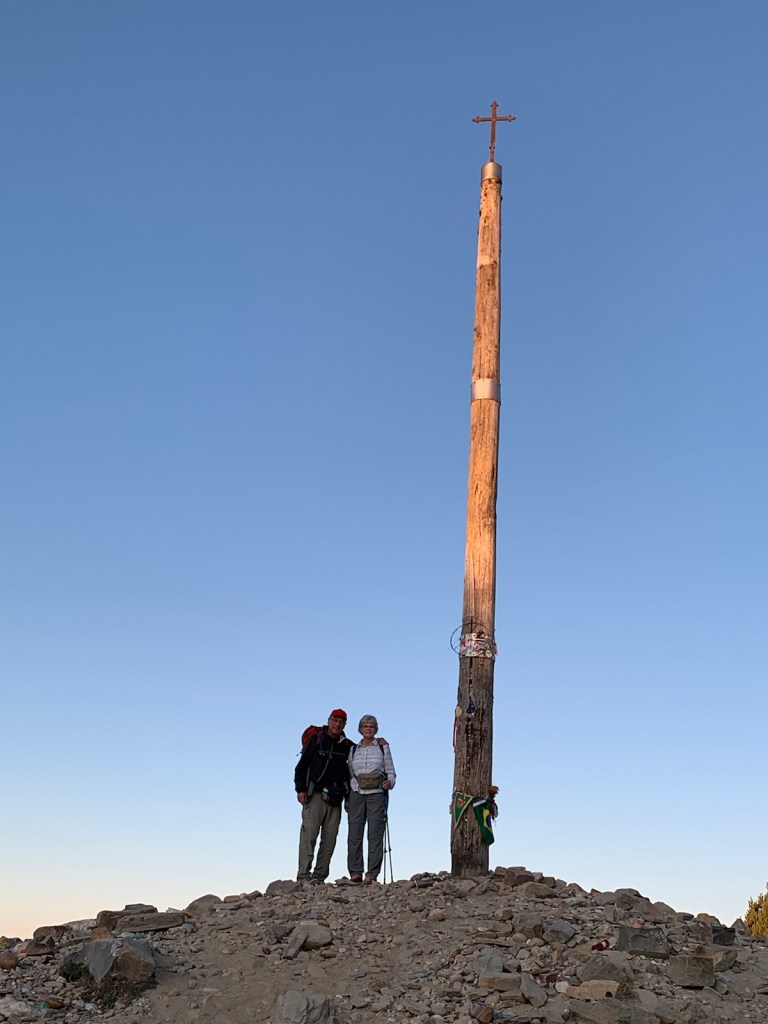
As day was breaking, we walked up another mile to Cruz Ferro (elevation 4930 ft).
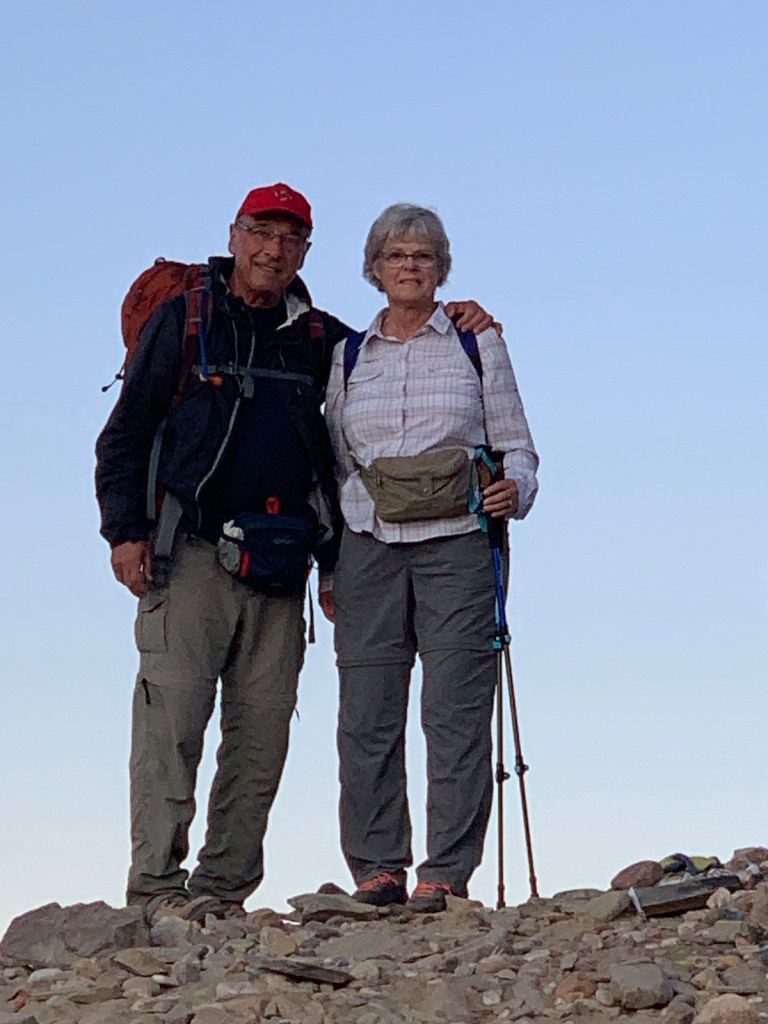
Us at Cruz FerroUs, at Cruz Ferro, up close
The site consists of a tall wooden pole topped with an iron cross. This is said to be an ancient monument, first erected by the ancient Celts, then dedicated by the Romans to their god Mercury (protector of travelers) and later crowned by the cross and renamed as a Christian site by the 9th-century hermit Guacelmo. For centuries, pilgrims have brought a stone to the place (either from home or the flatlands below) to represent their burden. The stone and the burden are left here, leaving the pilgrim lighter (literally and figuratively) for the journey ahead. Today all sorts of symbolic items are left behind, and some stones bear written messages.
Jim left a stone he has been carrying from Col Lopoeder the high point in the Pyrennes, and another stone from Alto de Pardon near Zariguegui. Merging these symbols with Cruz Ferro stones on another high point of the Camino was his way of … we’ll get back to you on that.
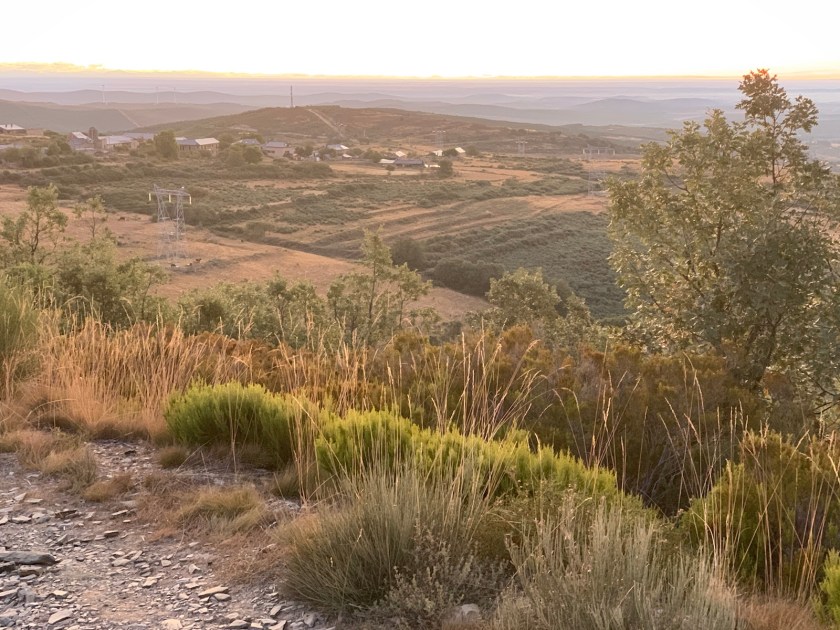
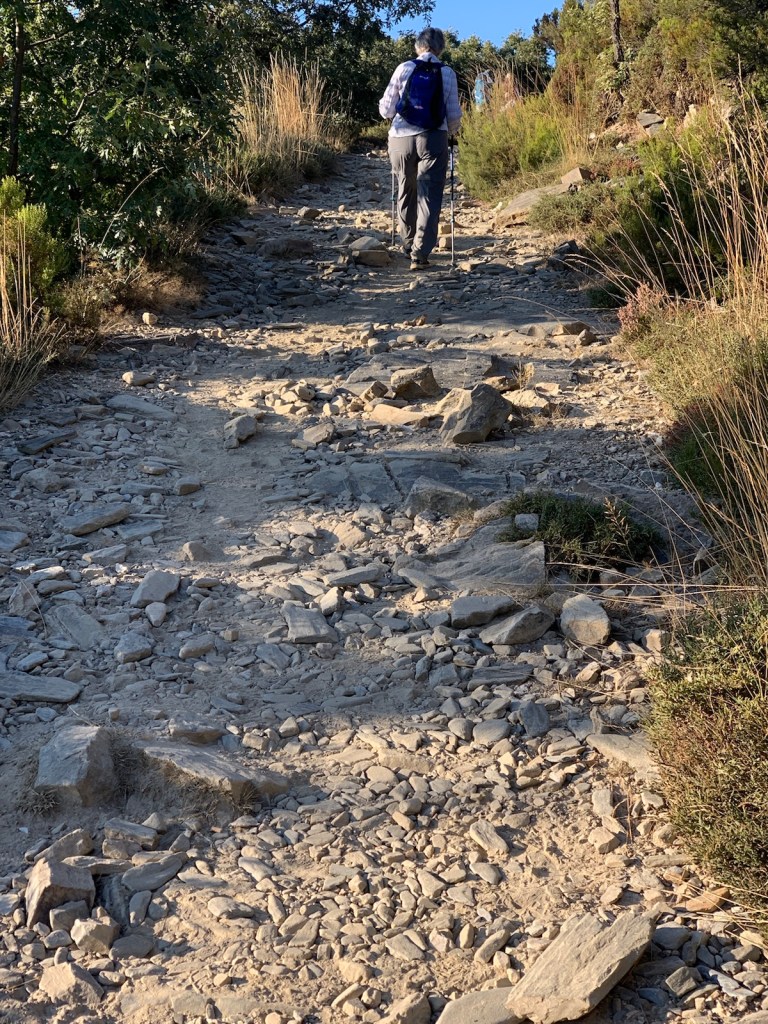
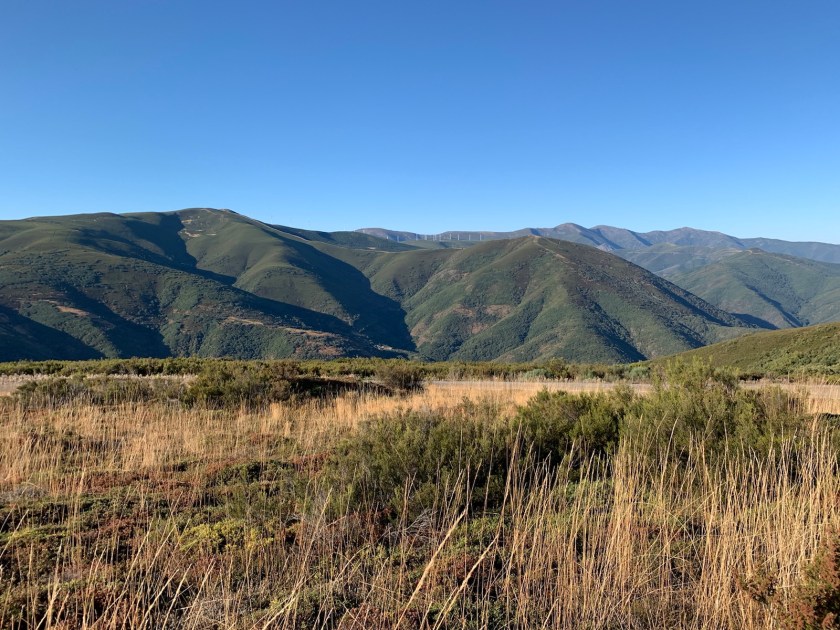
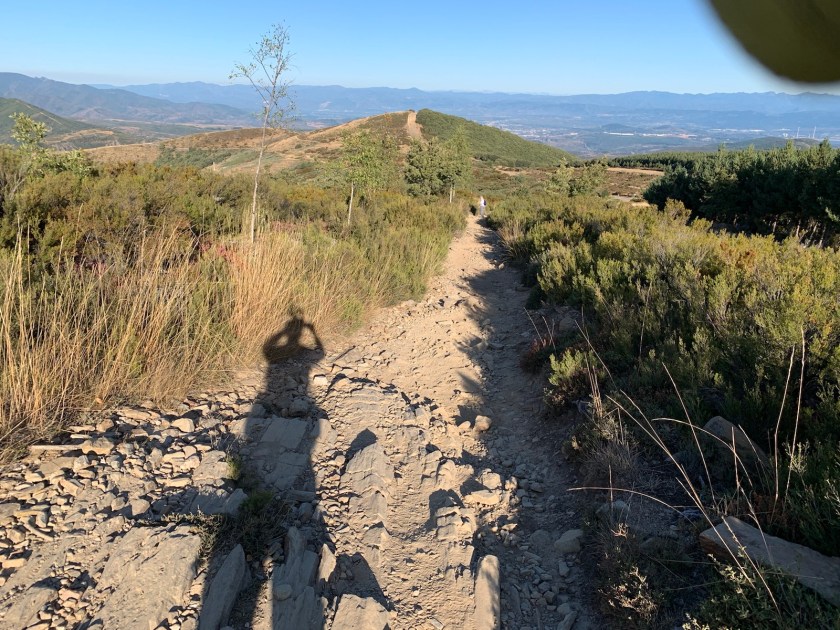
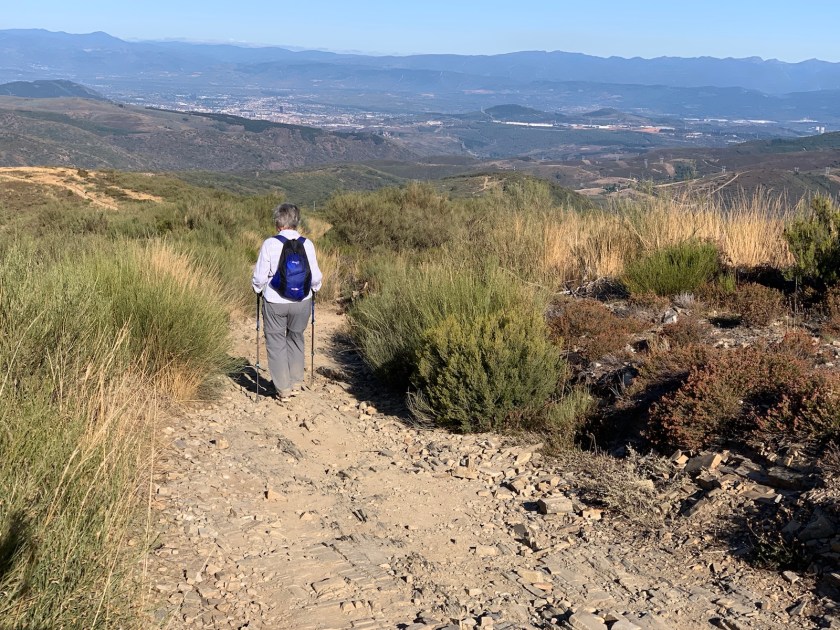
From Cruz Ferro we followed the pass over the Irago Mountains. The pathway
rough footingexpansive scenerymore rough footing and beautiful scenerymore sceneryscenery and rough cliff side walkingTough choices between watching your next step and the views
was rugged at times but the views were beautiful and expansive. It was a struggle from watching every footstep to avoid a Camino-ending fall, but not wanting to miss the ever changing “oooh” and “ahhh” scenery that changed, left and right, with every few steps.
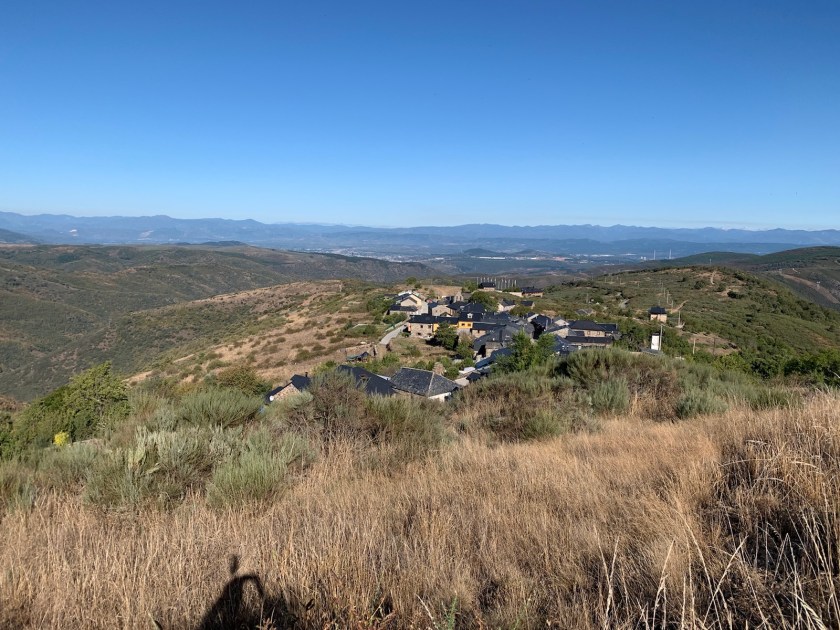
We had one last treacherous downhill section of loose, sharp rock as we descended, slowly into El Acebo (pop. 37).
El Acebo seen from our descent
Walking into El Acebo, still in one piece.
We stopped at a familiar bar from our visits in 2015 and 2017. While sipping our second CCL of the morning, we were satisfied and relieved that we had made it safely to this point. The next section between here and Molinaseca, a descent of another 1900 ft, is for us, one of the most treacherous on the Camino. We survived it in 2015 and 2017, but wondered what we had to prove by doing it once more. We thought about our knees, we thought about the risk of a twisted ankle or sprain or knee injury, with still 150 miles left to go for Camino 2019.
We finished our drinks and asked the nice lady at the bar to please call a taxi to take us the remaining 4.5 miles to Molinaseca, our destination for the day.
Our taxi driver in his best English and sign language said that anyone with knee issues should avoid the section we were skipping. We told him that we had done it twice before, but decided to do it with him in his taxi this time. We also told him we were old but not stupid he laughed and agreed with our logic, having knee issues himself.
When we arrived in Molinaseca, Luis, our driver, explained to us with his translation app that the most difficult part of the rocky path had been created in Roman and Celtic times by metal wheeled carts carrying gold and other items which cut deep ruts in the rock, making it treacherous to walk on.
So we not only survived to walk another day, but learned some interesting history about the Camino, before it was the Camino Frances, nearly 1000 years before.
We had walked through Molinaseca twice before but never stayed here. Its a charming little town on the outskirts of Ponferrada with a majestic medieval bridge reserved for pilgrim traffic entering the town of 854 residents.
We’re staying at the El Capricho de Josana (43€),
our room in the “attic”
strategically located on the Camino path through Molinaseca,
The view down Calle Real toward the Puente de los Peregrinos from our Hostel Rural
just as you exit the old section of town.
We had lunch at a restaurant overlooking the pilgrims bridge and the Río Meruela and were joined by Gary from Texas who also happened to be staying in Molinaseca tonight.
Our tummies still full from lunch we decided to skip dinner and chill for another nice day on the Camino Frances.
Today we began our walk into the Irago Mountains. The way was flat, dirt for the first couple of miles into
El Ganso, “ goose” in Spanish, on the right
El Ganso, where we planned to have breakfast. At first we were frustrated, because the albergues where we previously had breakfast were locked up tight. And then a mild panic set in as we had at least another 4 mile walk ahead of us without food or restrooms.
We circled around to the only other street in town and alas, a relatively new (4 years) tienda (store) had the “abierto” sign on the gate. There were three small round tables on the terrace, suggesting food and rest room possibilities, but, no one was around and we were about to give up when a gentleman walked out of one of the shop doors. Linda quickly said, “desayuno”?, “cafe con leche”?, “aseos?”, which all got the affirmative “si” from our new friend and savior, so we took a seat, breathed a sigh of relief and ordered our usual.
Foncebadon (tomorrow) high on left, Rabanal seen above road sign
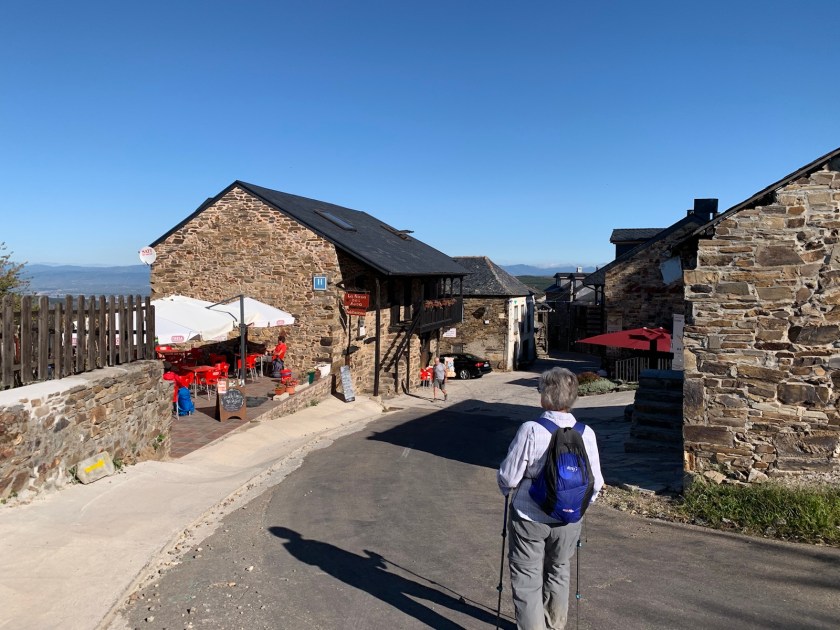
The next 3 miles took us further, but, gradually into the Irago Mountains, with the final 1.5 miles becoming much steeper and we finally walked into Rabanal del Camino (pop.73).
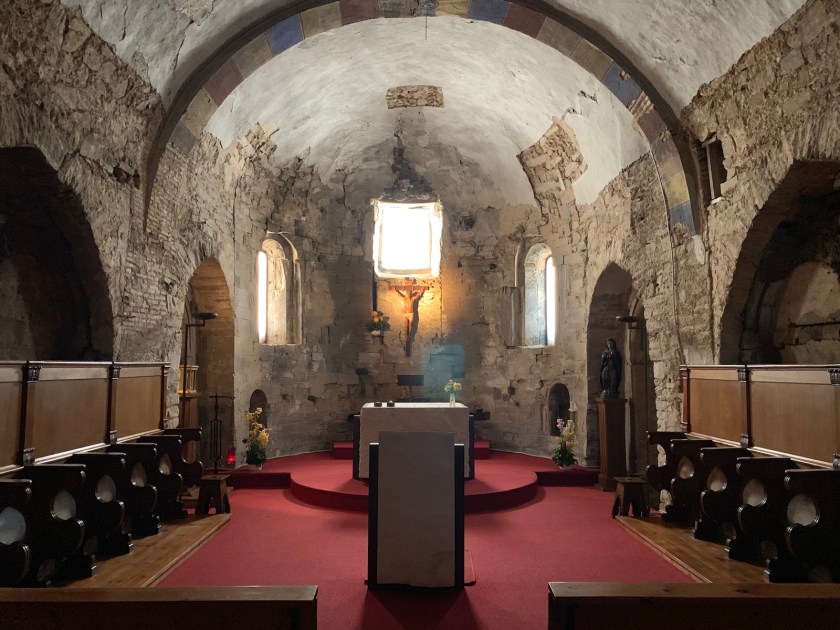
Rabanal del Camino is another beautiful and isolated Maragato village brought back to life by modern pilgrim traffic. This was the end of the 9th stage of the Codex Calixtinus, and many pilgrims stopped to rest from the ascent and find refuge from the wolves and bandits that plagued the León mountains. The Knights Templar ran a fort here to protect passing pilgrims. A legend says that one of Charlemagne’s knights married a Muslim woman in Rabanal.
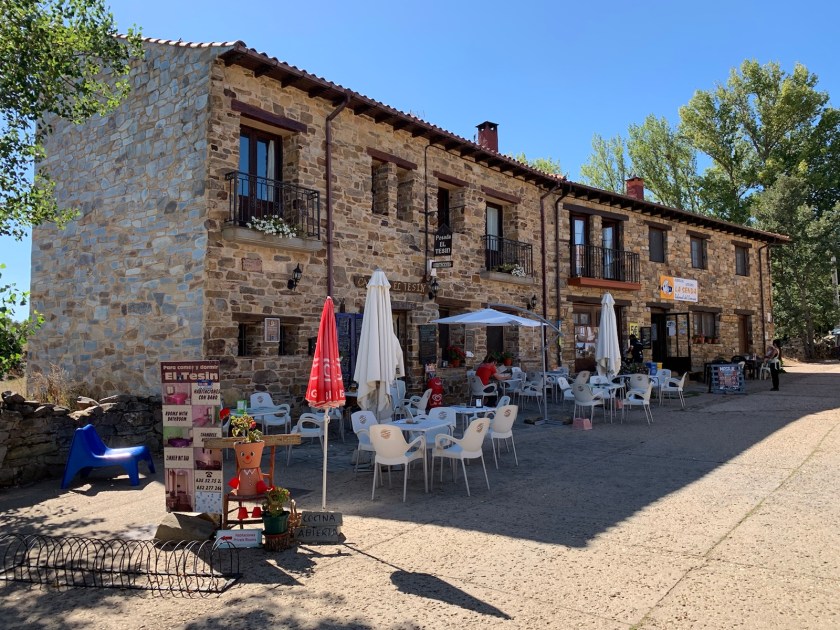
Iglesia de Santa María de la AsunciónInterior of Iglesia Santa María, currently operated bythe Benedictine Abbey of San Salvador del Monte IragoHostal El Tesin (50€)
El Tesin has a warm feeling to it, the owner/manager is very customer oriented and
Cantina El Tesin
unlike most every other establishment of any size in Spain, her kitchen was open from 7am to 9 pm every day!!!
We had the pilgrim menu for lunch which had the usual offerings, was tasty and 11€.
Our clothes were machine washed for us (3€) and we hung them out to dry, which took about 45 minutes in the mid-afternoon sun.
We’re had pasta dinners for supper at 6:00!!
Gary, from Austin, Texas joined us at our table and we shared Camino experiences. It’s his first Camino and he is walking 20-25 miles a day.
We retired early as we walk over and then down the Irago Mountains tomorrow.
It was a chilly 50F when we walked out of San Justo this morning just after 7 a.m.
On the edge of town we noticed two pilgrims, who we recognized were staying in our albergue/hotel last night, seated on a bench and the third walking hurriedly in our direction and passed us, back toward our hotel. We guessed he had forgotten something.
We walked on toward Astorga on sidewalk most of the way, then crossed a small, medieval stone bridge, and shortly after crossed the railroad tracks via a very complex overpass. At the top we got a good view of the city.
Once on the other side of the tracks, we meandered among automobile roundabouts until we began climbing a very steep road up into the 2000 year old city of Astorga.
At the top, immediately on our right, was a church with archeological digs beside it, revealing fairly well preserved remains of a 2nd century Roman home.
At our left was a cafe/chocolate shop which seemed like a perfect spot for breakfast.
A few minutes later, the 3 pilgrims from our hotel also sat down for breakfast and after a brief chat we discovered they were from Ireland and as we guessed, the guy who was hurrying past us earlier, had left is walking poles at the albergue.
Today was market day in Astorga and as we walked thru the main plaza, vendors were busy setting up shop.
Astorga (pop.12,078) began as a Celtic settlement and developed into an important Roman city at the crossroads of the Via Trajana and the Vía de la Plata, as well as an important center for Christianity. According to legend, both St. James and St. Paul preached here. The bishopric of Astorga was one of the earliest Christian titles. The city passed to the Visigoths in the 5th century and was destroyed by the Muslims in 714, then reconquered by Ordoño I in the mid-9th century. After León was destroyed by Al-Mansur’s army, Astorga acted as the capital of the kingdom. The city flourished with the pilgrim trade and housed 21 pilgrim hospitals, the second most on the Camino Francés (after Burgos). One of these hosted Saint Francis of Assisi on his pilgrimage in 1214.
We walked on and stopped to take photos of two main landmarks of Astorga, the Gaudi Palace and the ominous Catedral (not a typo, that’s the way they spell “cathedral” in Spain)
The 15th century catedral occupies a relatively small space in the old city and dwarfs the neaby buildings. It was locked tight this morning, but the external details were impressive.
The Palacio de Gaudí, was a palace for Archbishop Juan Bautista Grau Villespinós until his death, when it sat empty until serving as a military headquarters for the Falange movement.
We continued our walk through the narrow streets and then without warning were out into the countryside and began a gradual ascent toward the Irago Mountains.
We made another brief stop in the charming Maragato village of Murias de Rechivaldo.
The Maragato culture, is centralized in about 40 villages around Astorga. This mysterious group is rumored to be descended from the Berbers of North Africa, who arrived with the Muslim conquest in the 8th century and later converting to Christianity. Maragato men traditionally worked as muleteers, mule drivers who transported goods (especially fish and gold) around the peninsula.
Restaurants in the area offer Cocido Maragato, an extremely filling meal that is served in a kind of “reverse order,” beginning with a hearty meat dish, such as blood sausage, chicken, pork, pig’s ear, pig’s snout, bacon or chorizo, followed by the vegetables (usually chickpeas and cabbage) and finished off with a thick noodle soup and dessert.
It being only 9:30, fortunately, we didn’t partake of the Cocido Maragato today, and instead, began the gradual 3 mile climb into the, all but deserted, Santa Catalina de Somoza (pop. 30), where we stopped for the day at Albergue El Caminante.
Stopping for a photo just outside Santa Catalina
When we attempted to checkin to the El Caminante, the lady at reception said she had no reservation for us. Jim had personally called and was certain that his impeccable command of Catalan could not have contributed to the reservation showing up in her bookings for September 6 and not today.
Jim “assisting” the checkin process
Nevertheless, Jim asked if a room was available, once all agreed that we had no reservation, and the response was yes. We remembered the lady from our stay here in 2017 so we were puzzled as she struggled to transfer the necessary information from our passports to her registry. Jim actually assisted her in distinguishing between first names, last names, birth dates, etc.
When all the formalities were completed, we were escorted to our room, (next door to the one we had in 2017) and given the key, freeing us to began our chores.
We had pizza for lunch at the other albergue/bar/restaurant in this outpost that reminds us of an old western town in the U.S. We stayed at Albergue San Blas in 2015 and wanted to spread our euros around to stimulate the local economy as much as possible.
We had a simple pilgrim dinner, just the two of us in the El Caminante comidor (dining room) with 6 of the 30 village residents playing cards in the adjacent room, while the overhead modern flat screen TV was playing a Jimmy Stewart western. We wondered if it might have been filmed here, years ago.
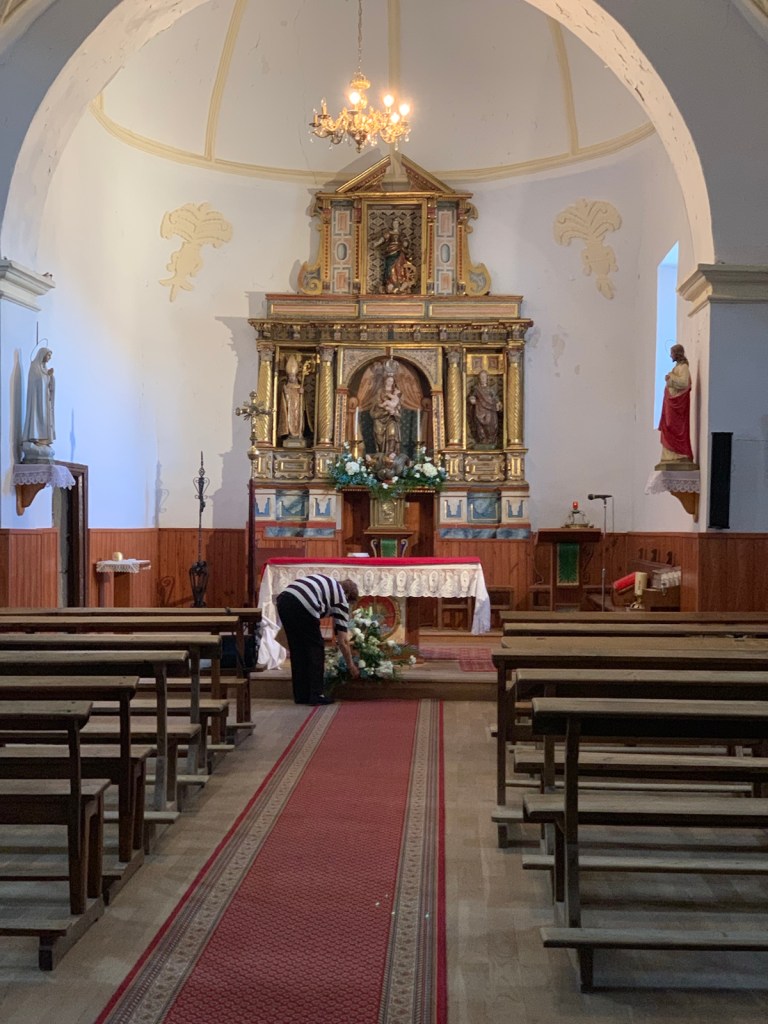
We checked the small Iglesia de Santa Maria, which is only unlocked for Sunday mass and found the door cracked while an apparent parishioner was preparing for the next service. Finally after prior unsuccessful visits in 2015 and 2017, we entered and sat reverently while she worked, then quietly left her to her duties and returned the few steps to El Caminante.
We paused on the balcony overlooking the courtyard of this diamond-in-the-rough albergue and marveled at the efforts required to nurture the abundant plantings that filled the space, and retired to our room for the night.

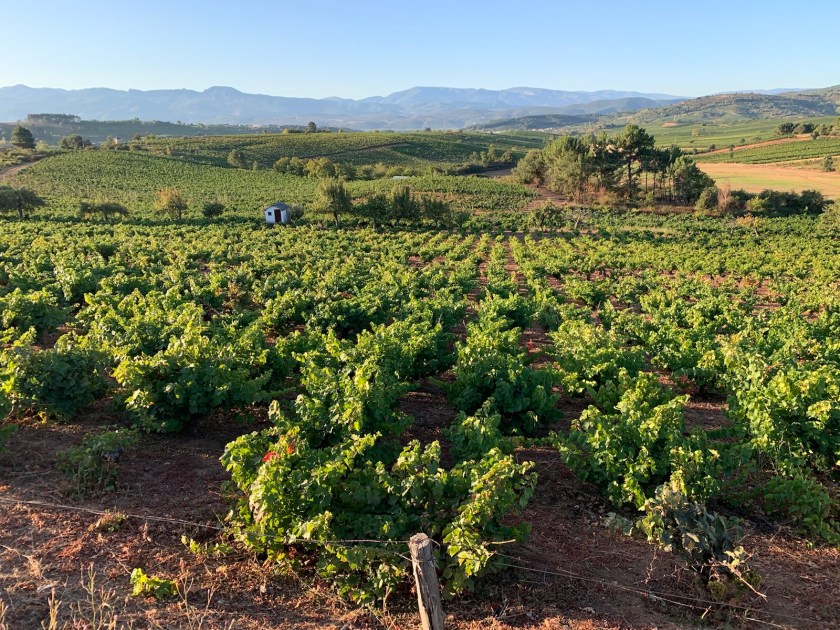 Linda said the area reminded her of Napa Valley.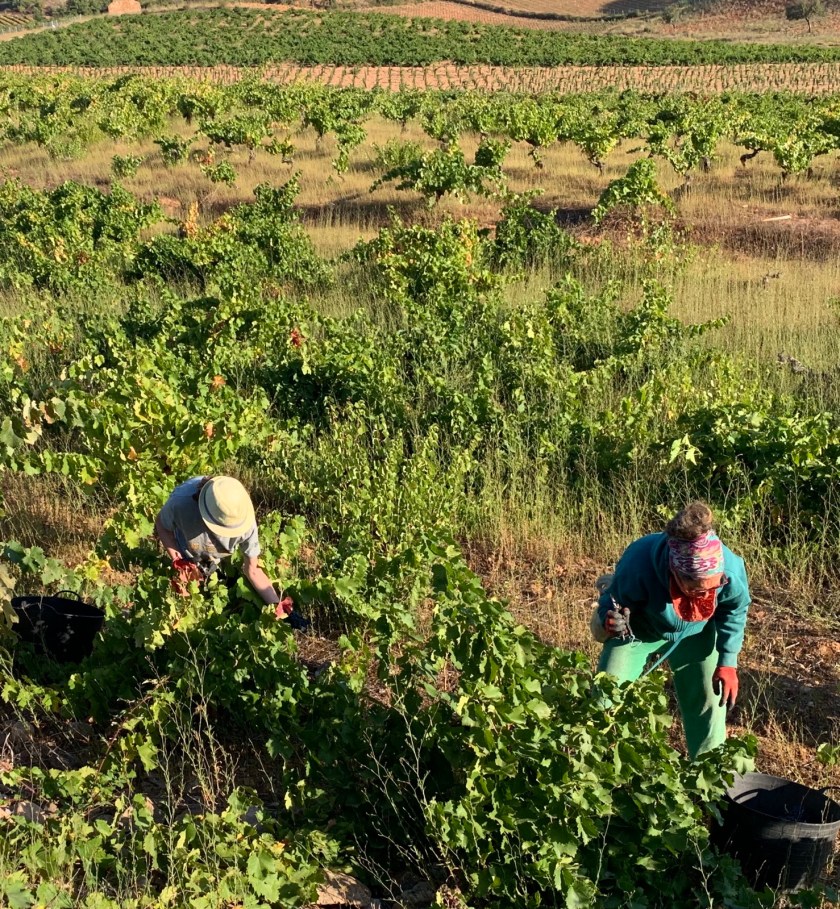

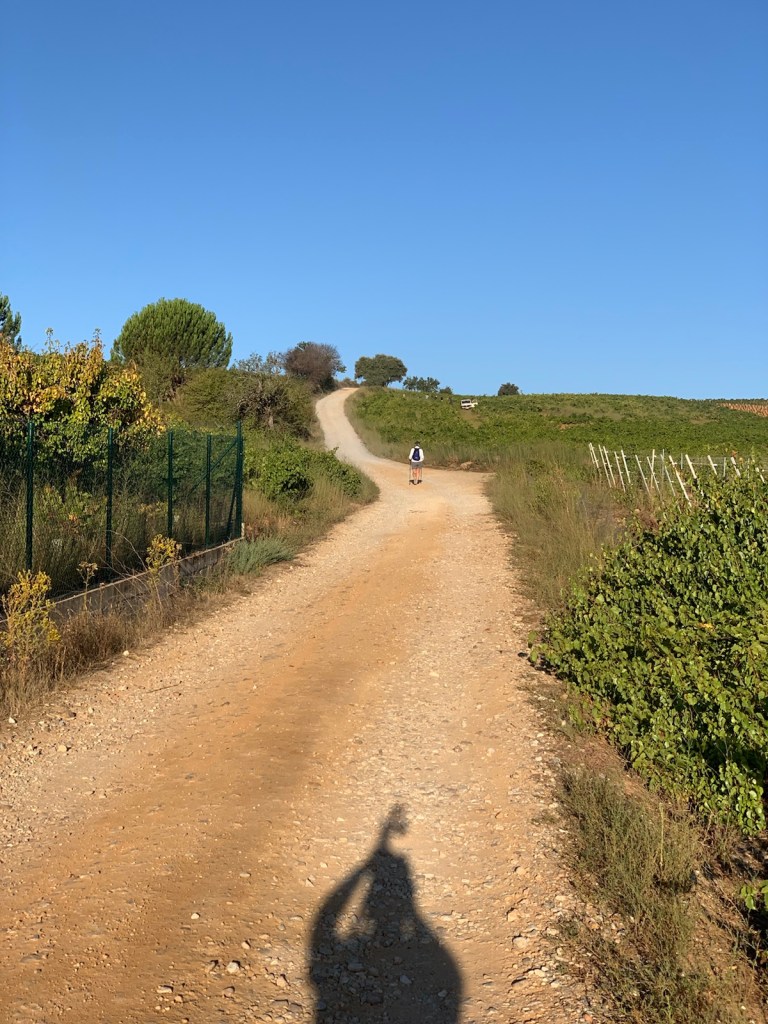 then joined a downhill secondary road feeding into
  Villafranca del Bierzo (pop. 3,505).

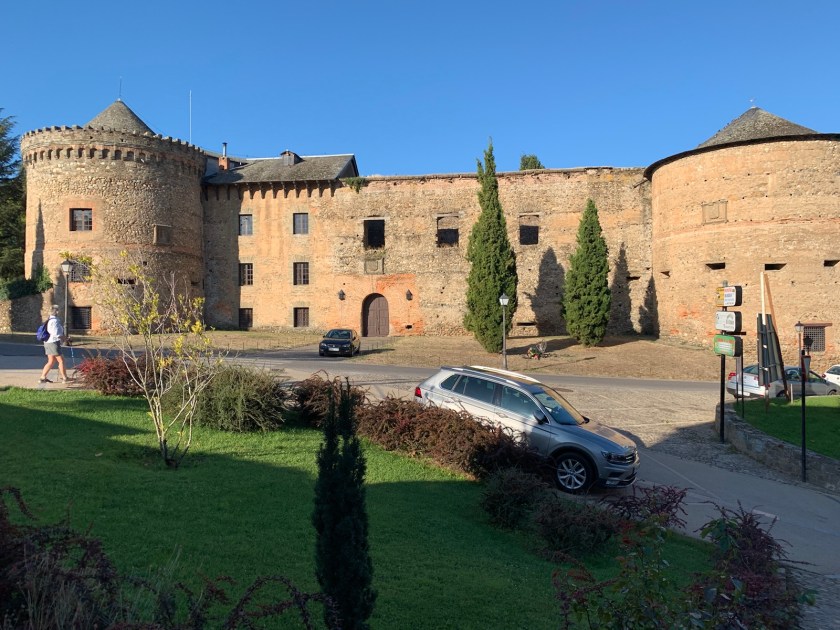
 where we stopped for a second CCL before walking across the pilgrim bridge
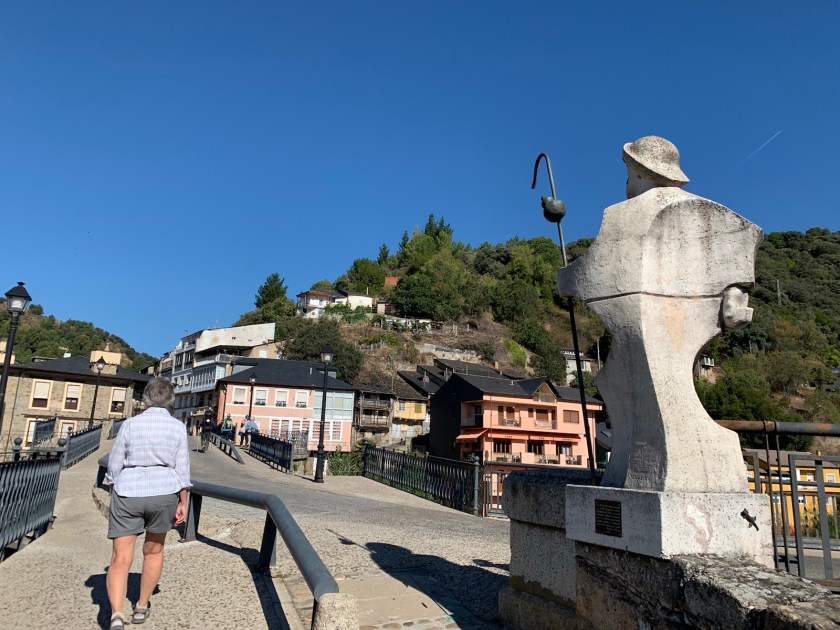 to the edge of town to Hostal Mendez (44€)
  our destination for the day.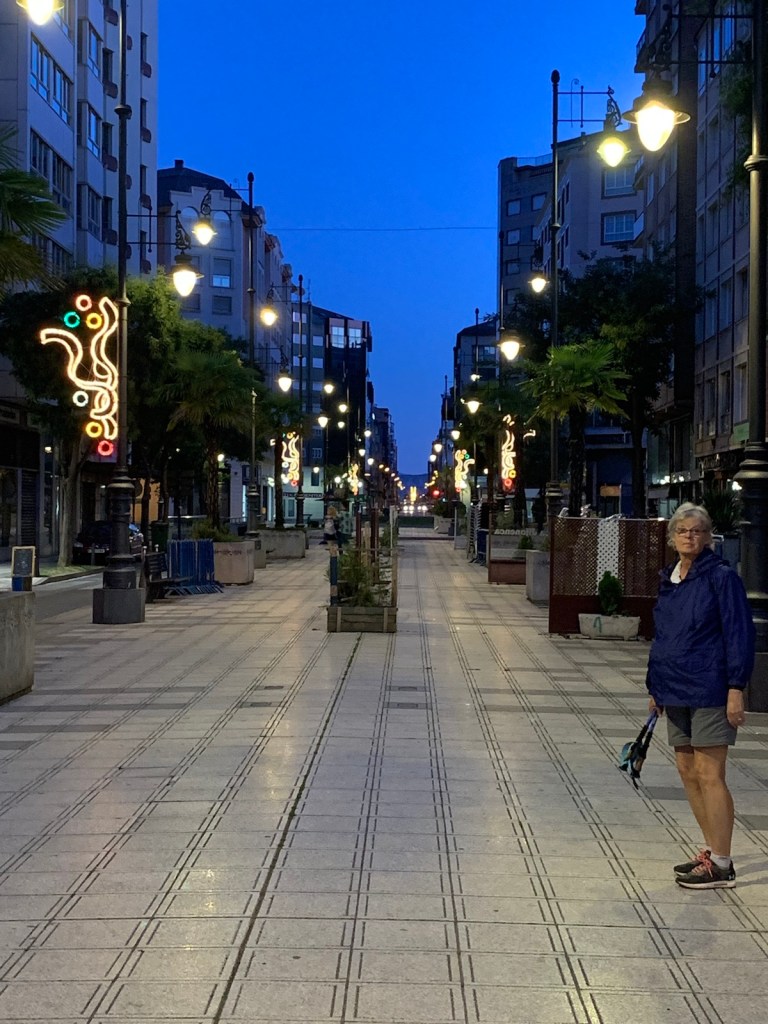
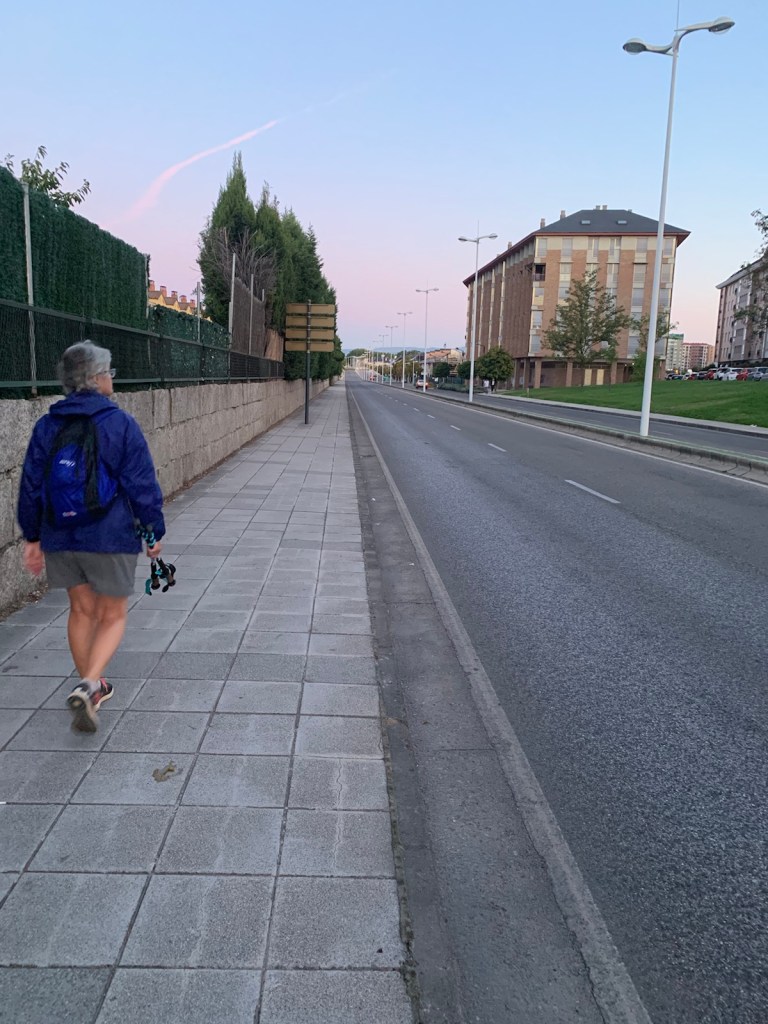 We passed attractive, architecturally diverse, residential communities unlike we have seen anywhere in Spain, on or off the Camino.
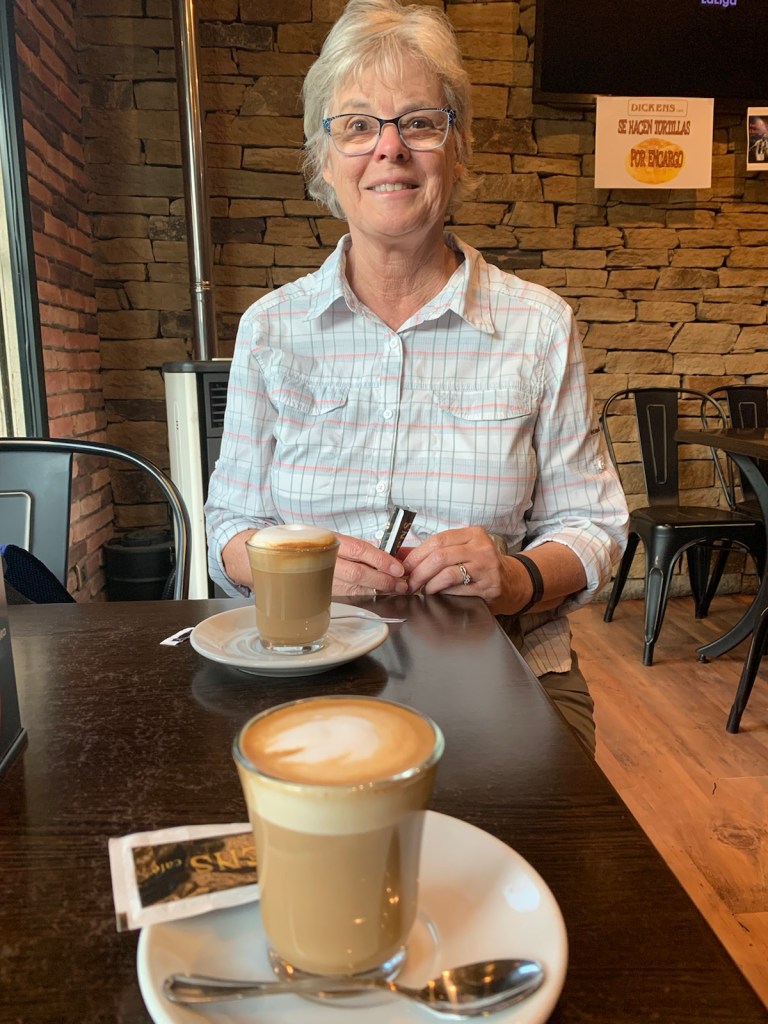 in a very nice bar next to a children’s park, Parque de Pablo Picasso, and had breakfast.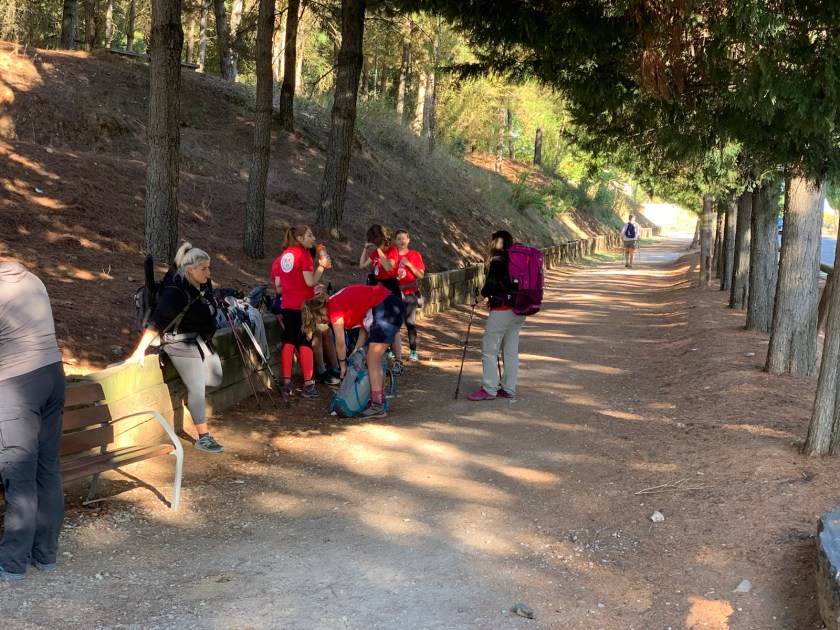
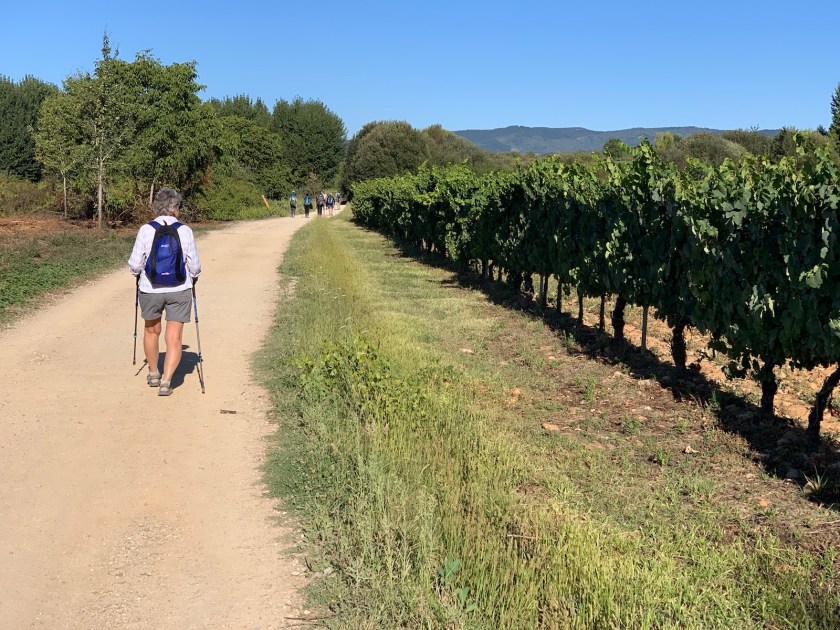 We walked among the vineyards for a few miles before entering the town of Cacabelos (pop. 5,495).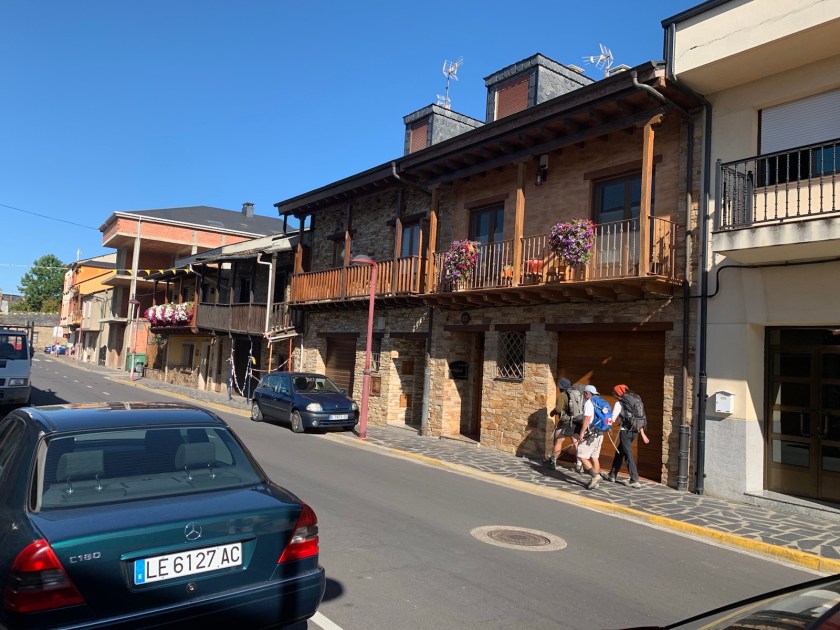


 consecrated in 1108, which has seen many renovations over the centuries since, was beautiful inside

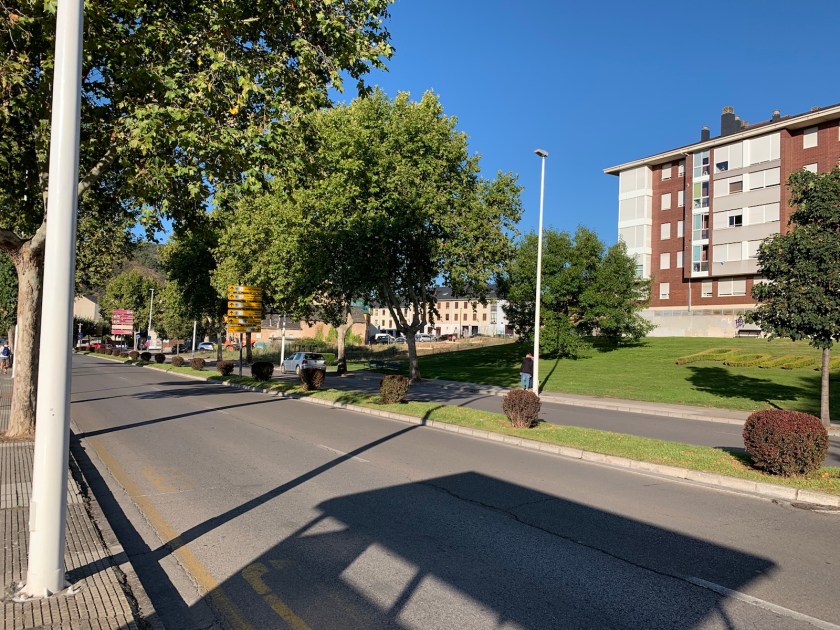 high rise (7 stories) residential areas surrounded by parks and winding, wide boulevards with local walkers and limited traffic.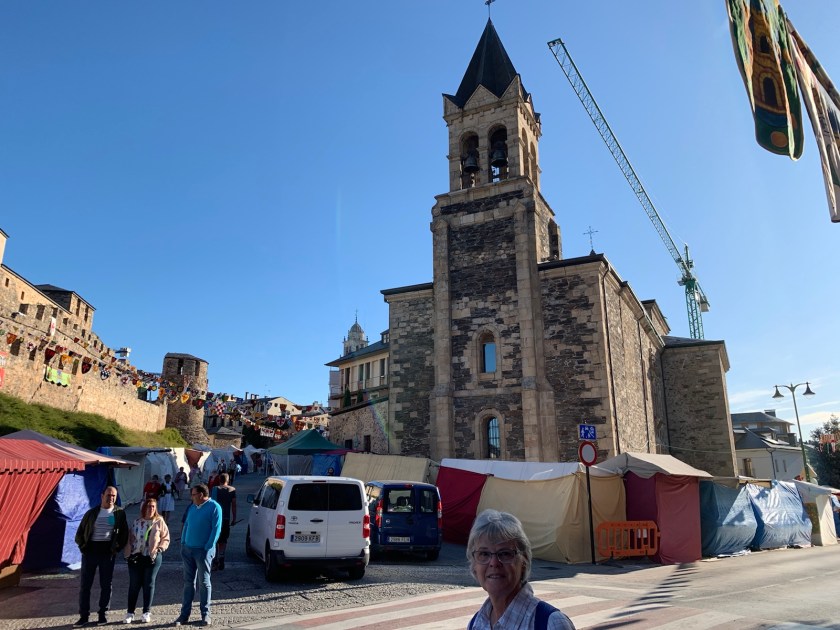
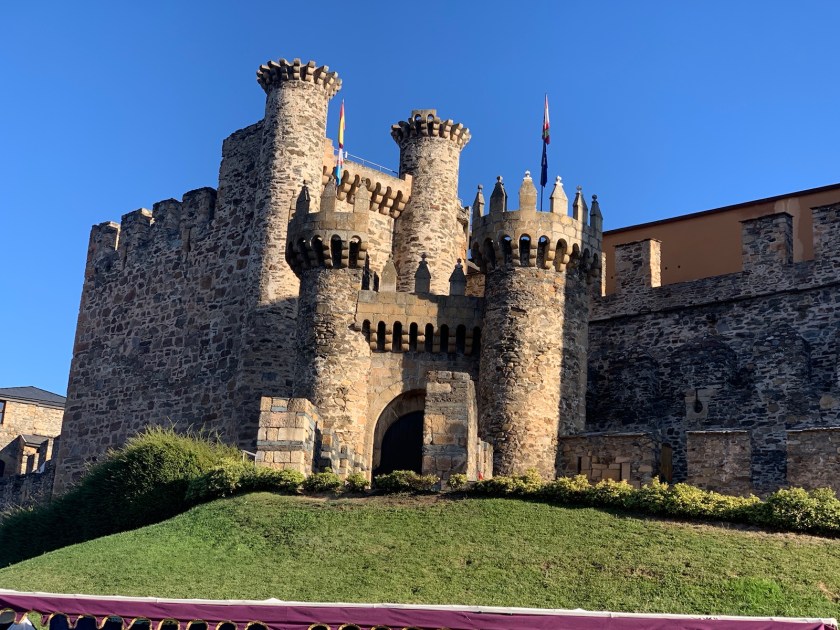



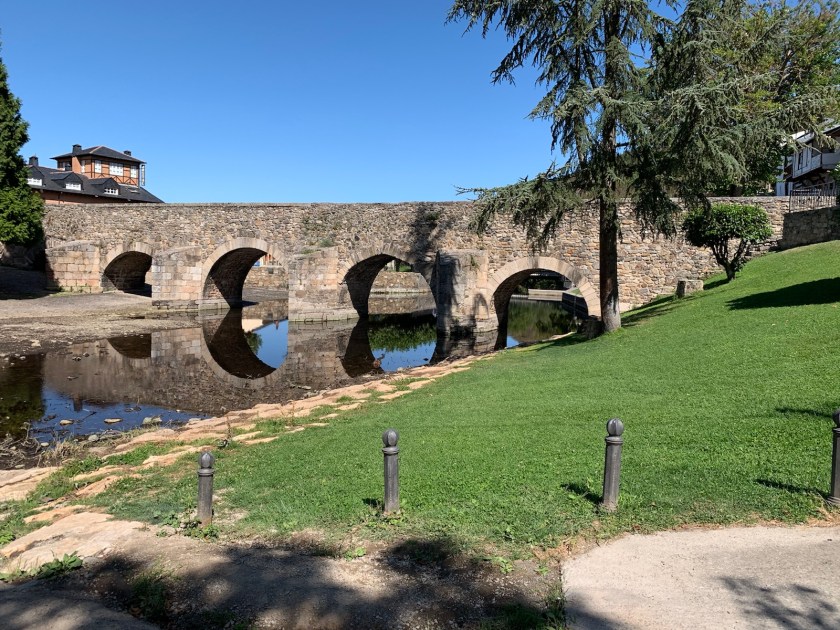 reserved for pilgrim traffic entering the town of 854 residents.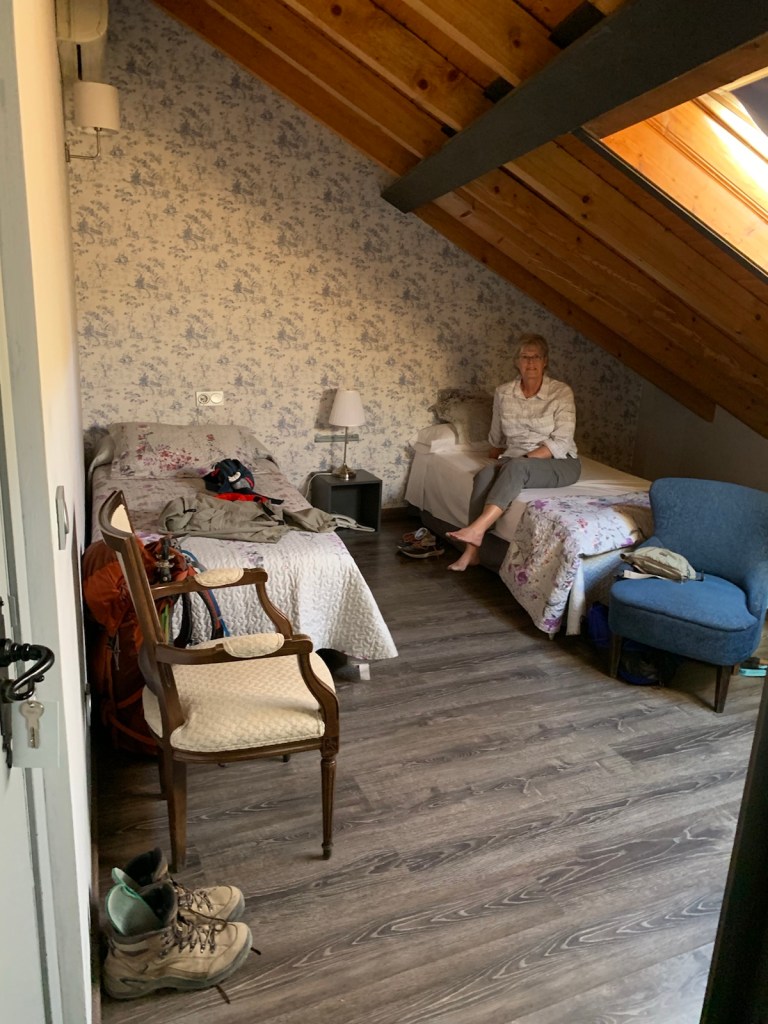
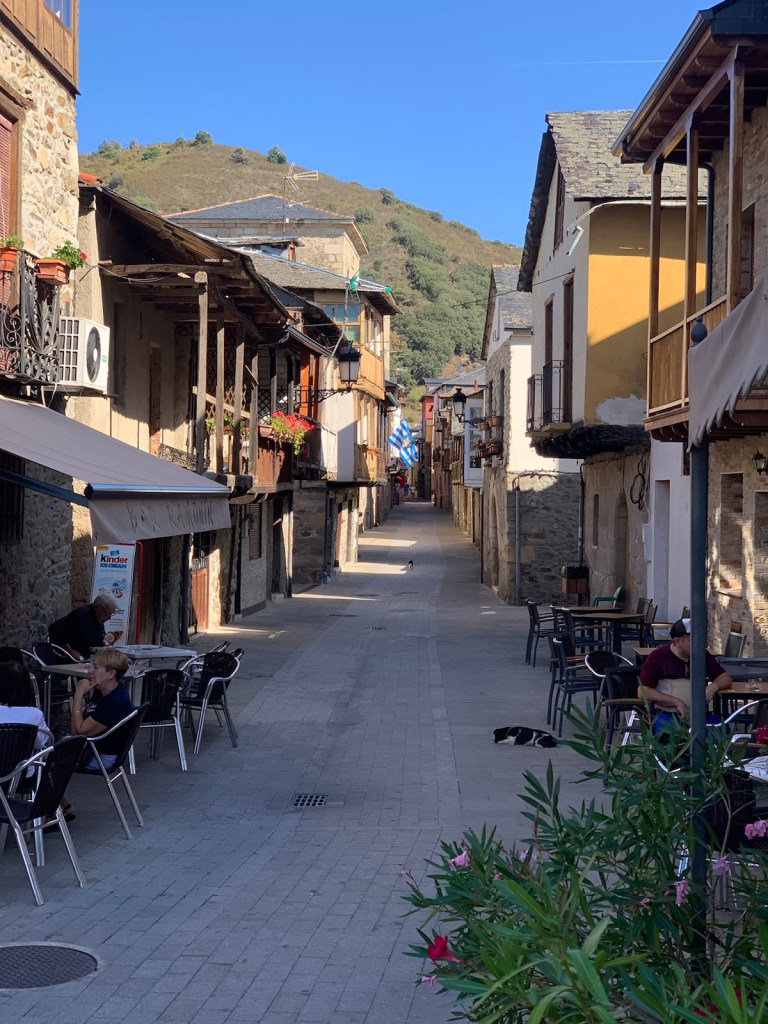
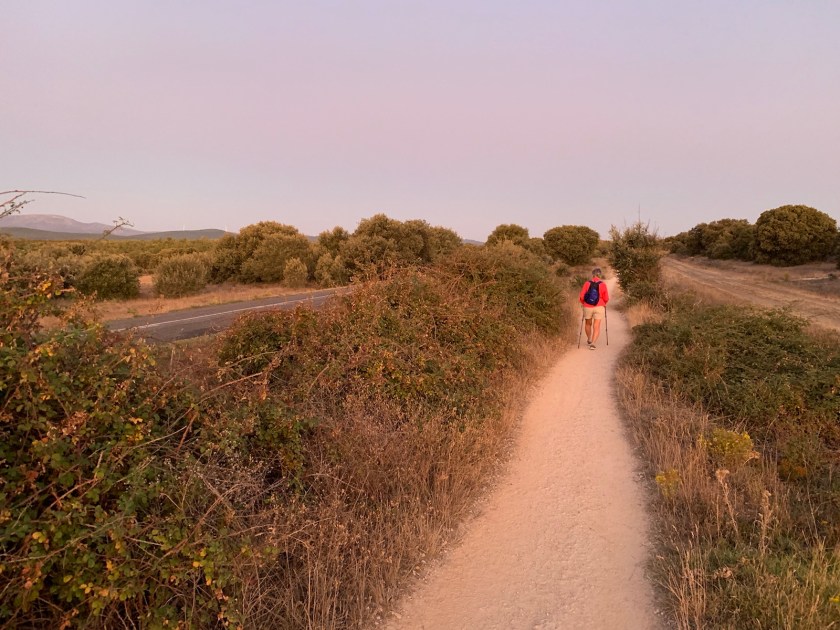 The way was flat, dirt for the first couple of miles into
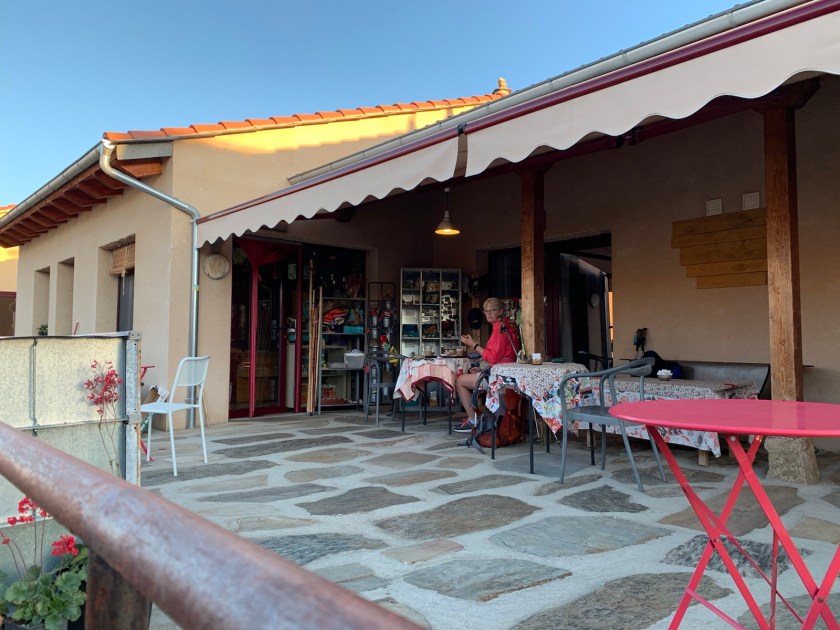 but, no one was around and we were about to give up when a gentleman walked out of one of the shop doors. Linda quickly said, “desayuno”?, “cafe con leche”?, “aseos?”, which all got the affirmative “si” from our new friend and savior, so we took a seat, breathed a sigh of relief and ordered our usual.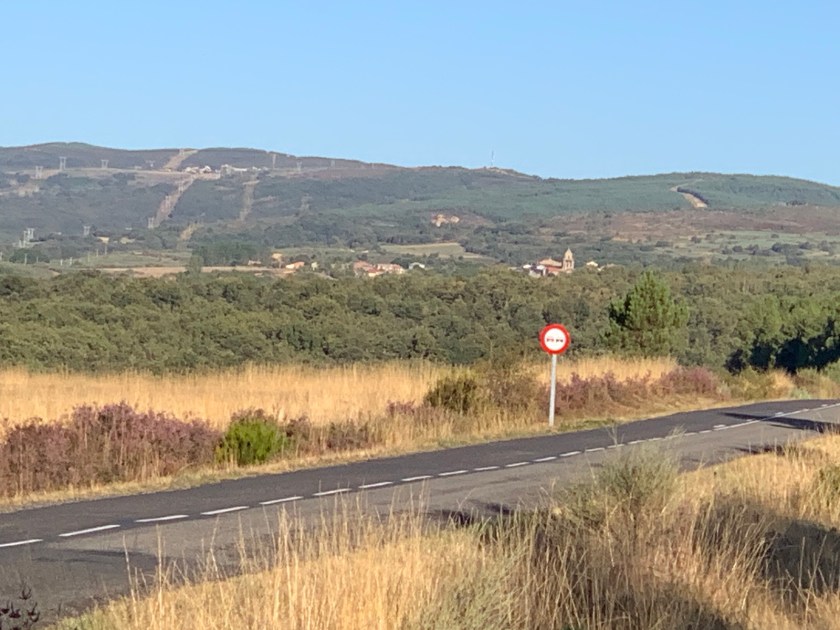
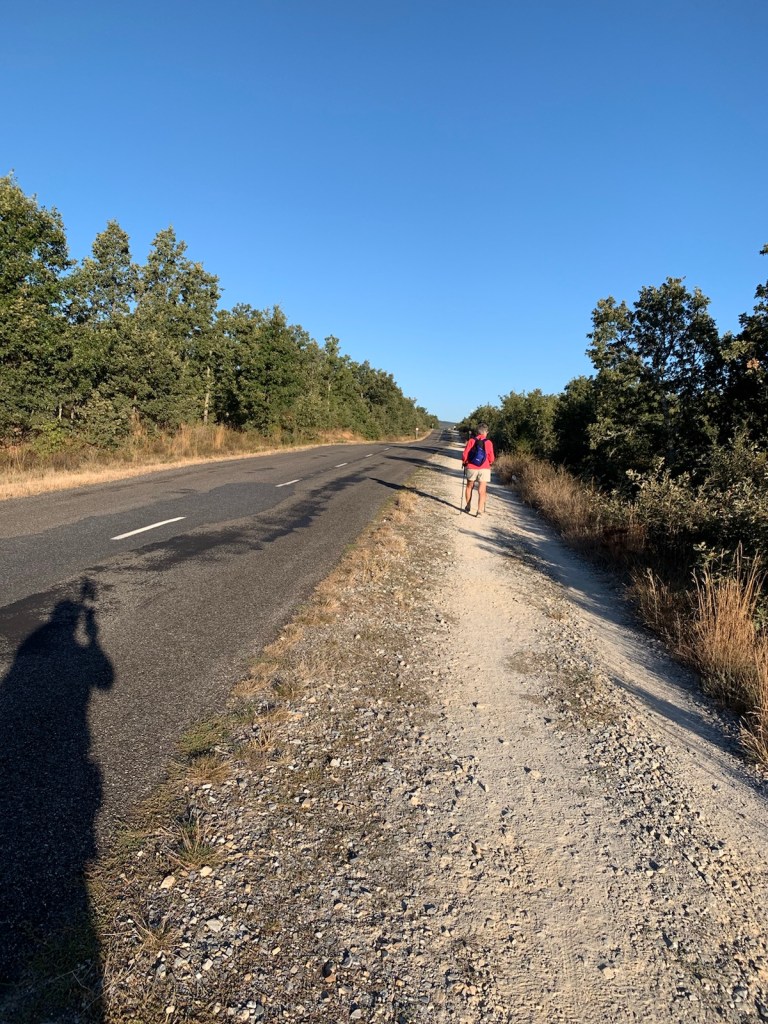 into the Irago Mountains, with the final 1.5 miles becoming much steeper
 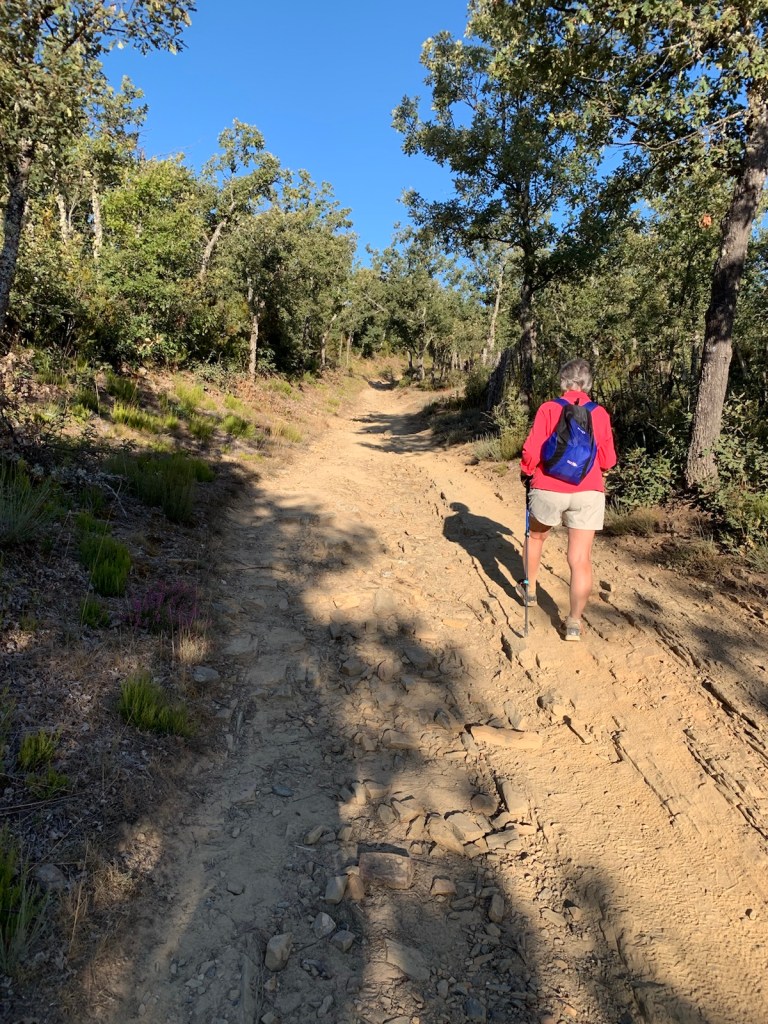 and we finally walked into Rabanal del Camino (pop.73).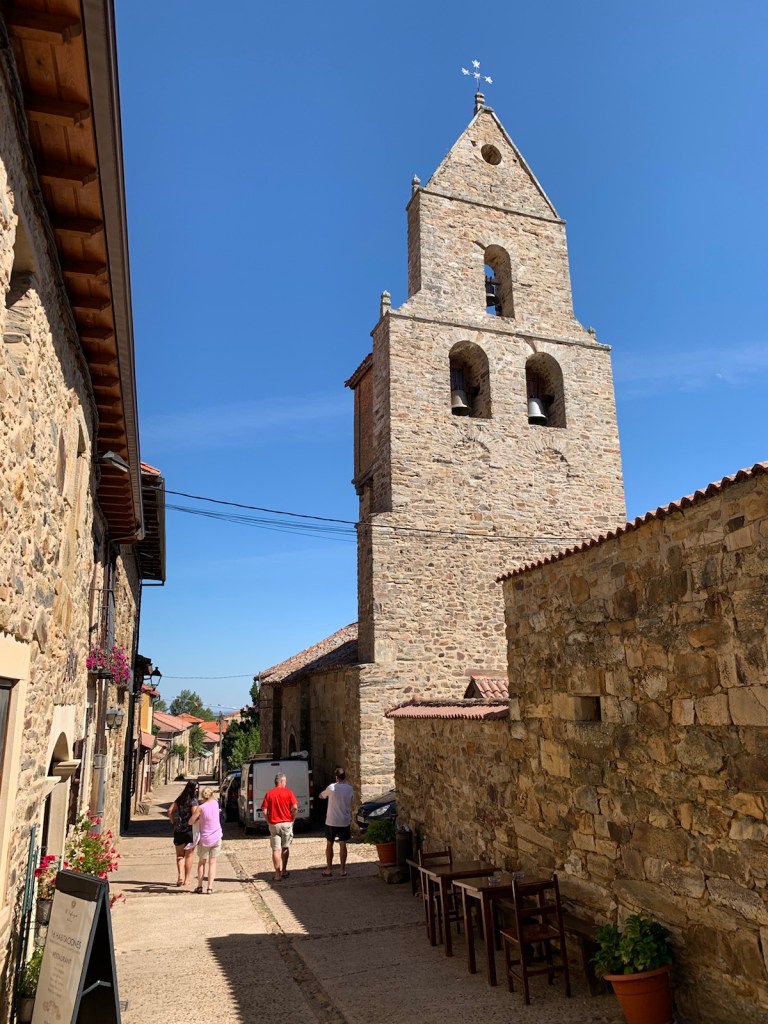
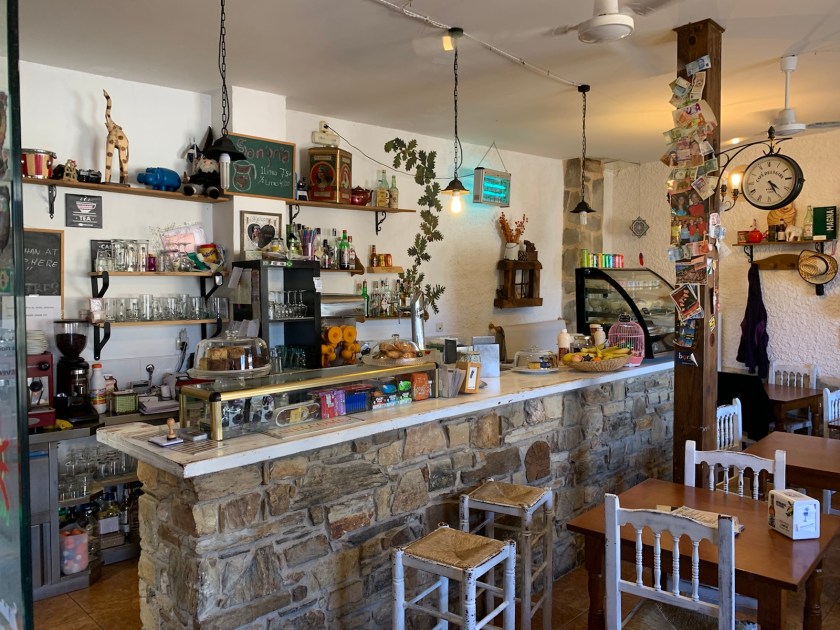
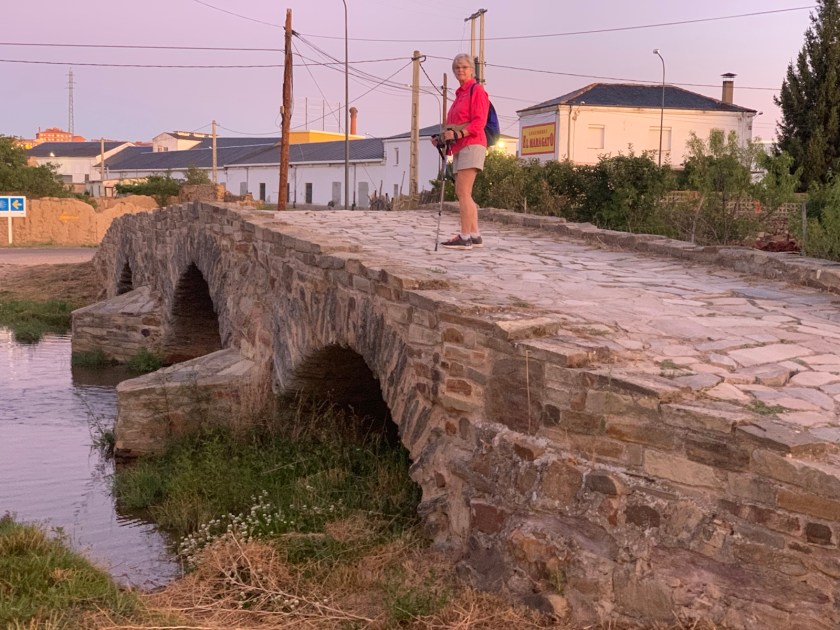 and shortly after crossed the railroad tracks via a very complex overpass.
  At the top we got a good view of the city.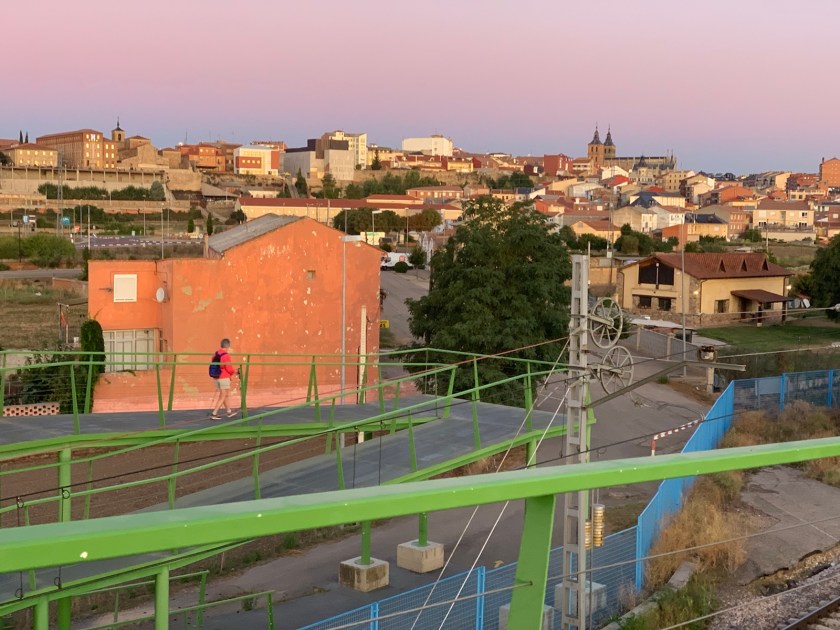
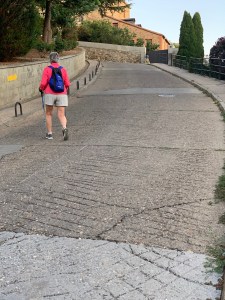 climbing a very steep road up into the 2000 year old city of Astorga.
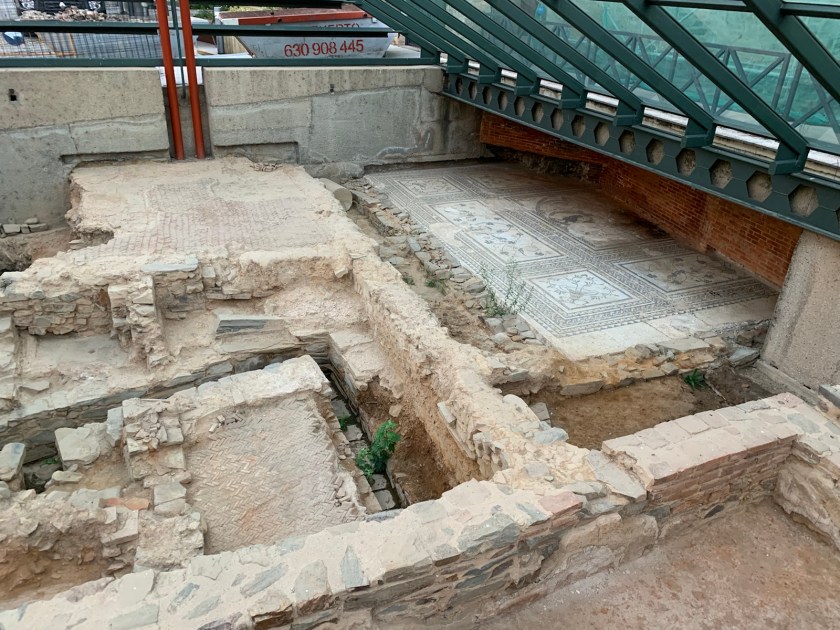 revealing fairly well preserved remains of a 2nd century Roman home.

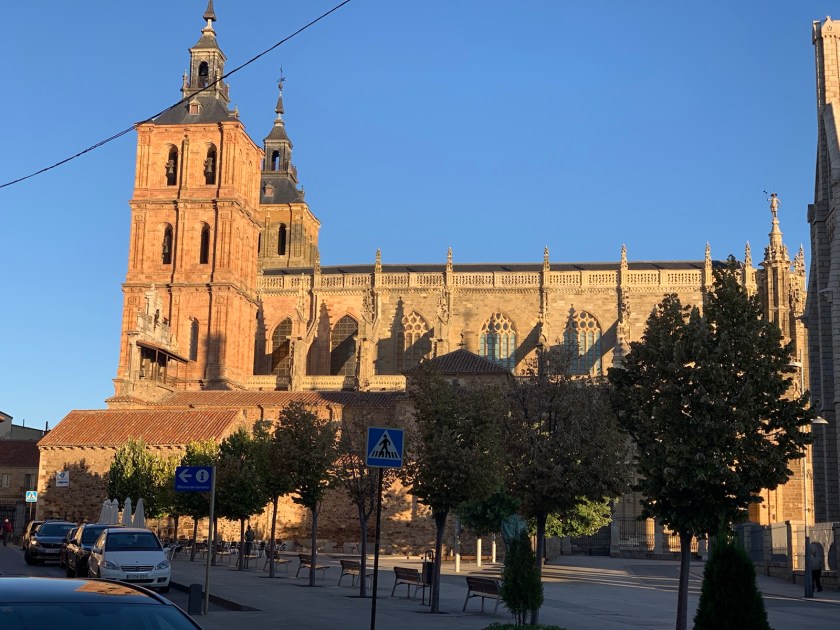 dwarfs the neaby buildings. It was locked tight this morning,
 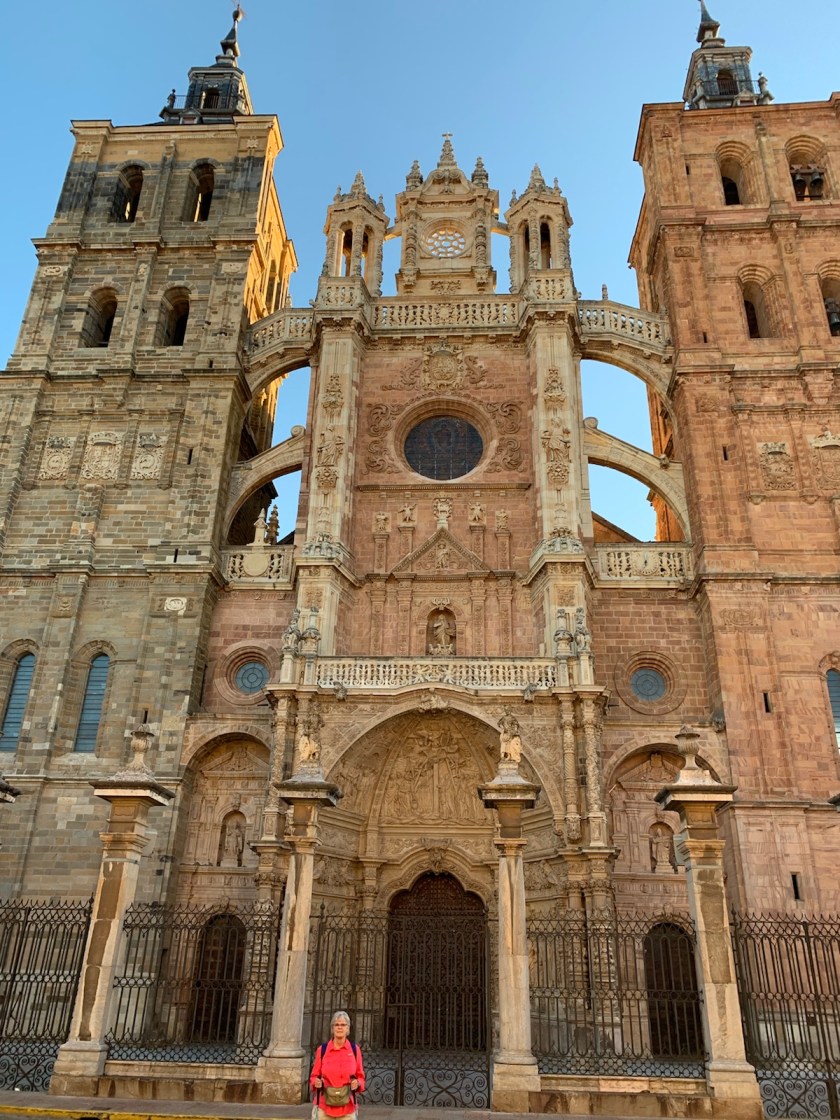 but the external details were impressive.
 The Palacio de Gaudí, was a palace for Archbishop Juan Bautista Grau Villespinós until his death, when it sat empty until serving as a military headquarters for the Falange movement.
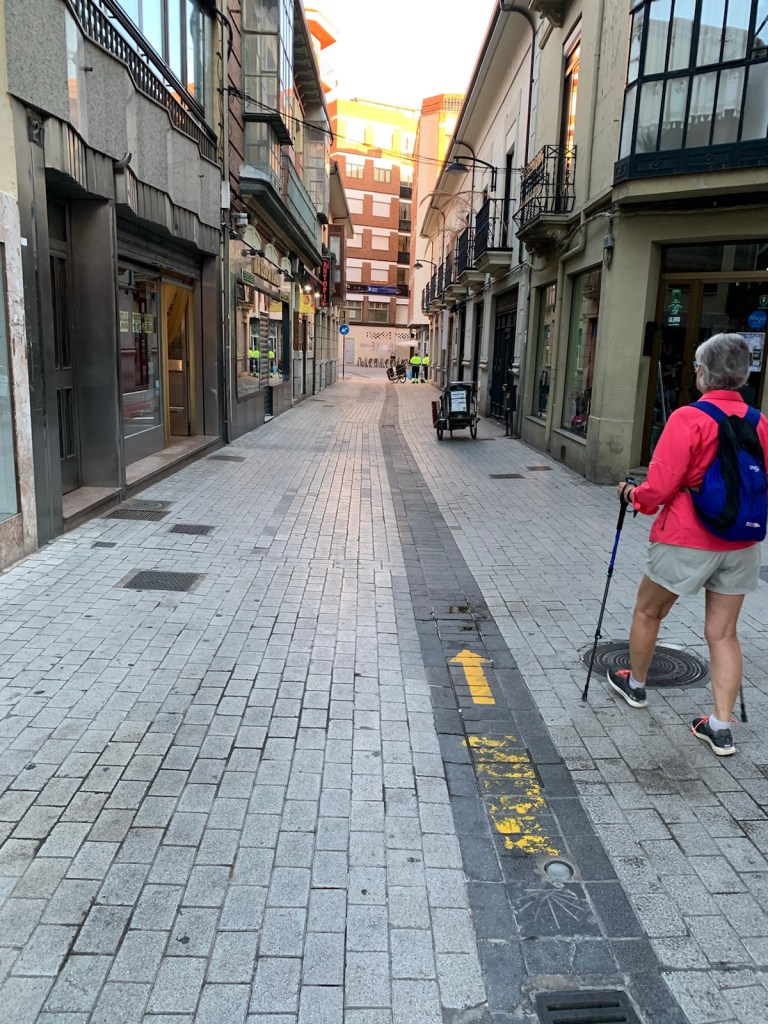 We continued our walk through the narrow streets and then without warning were out into the countryside
 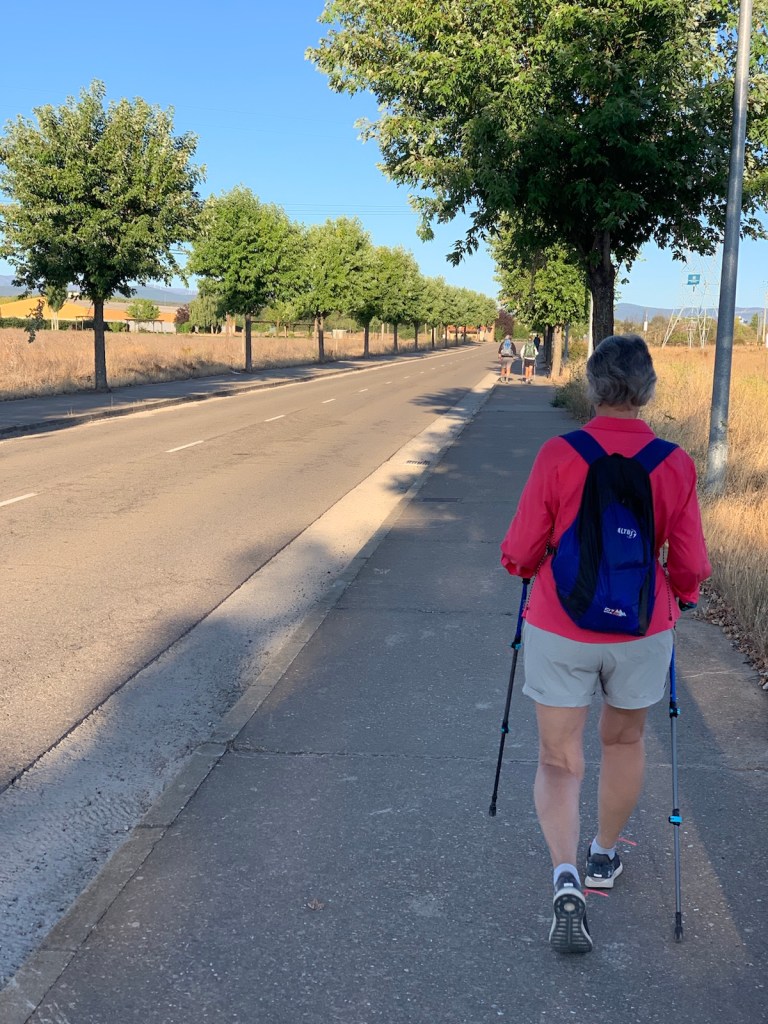 and began a gradual ascent toward the Irago Mountains.
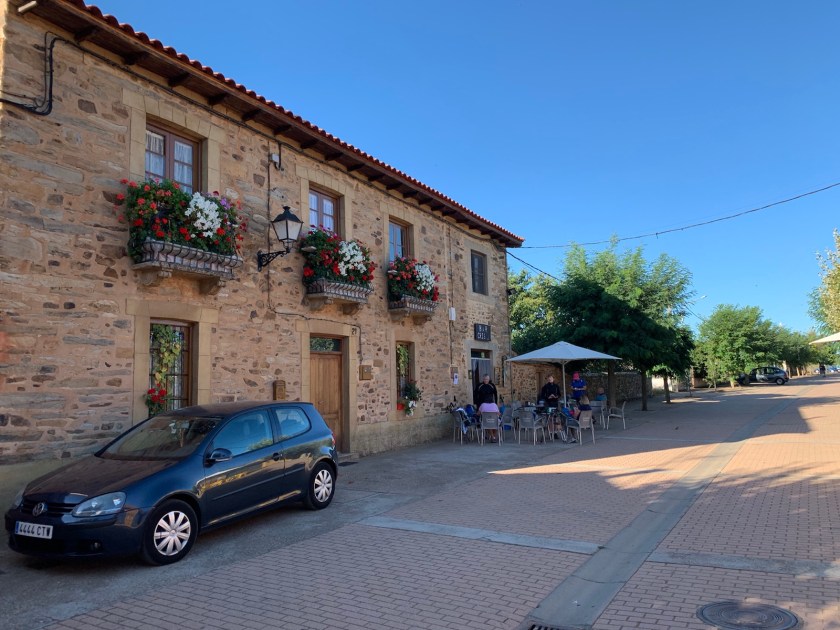
 and instead, began the gradual 3 mile climb into the, all but deserted, Santa Catalina de Somoza (pop. 30), where we stopped for the day at Albergue El Caminante.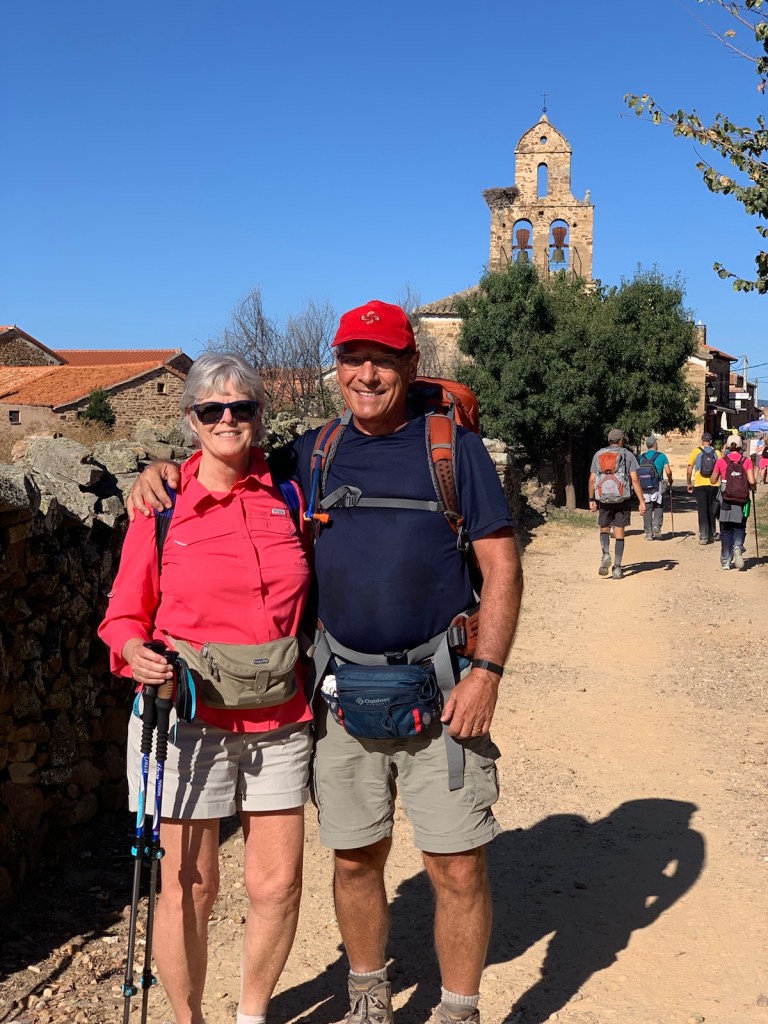
 Finally after prior unsuccessful visits in 2015 and 2017, we entered and sat reverently while she worked, then quietly left her to her duties and returned the few steps to El Caminante.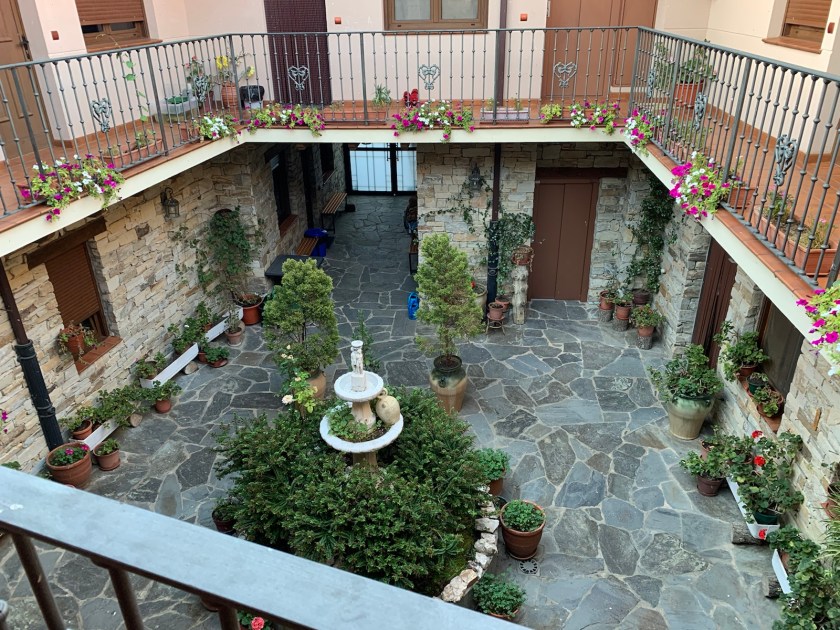
 Jimandi