Day 45- Villares de Órbigo to Astorga

  • Distance today:                        9.1 mi
  • Distance Camino 2017:     329.6 mi

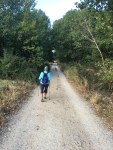
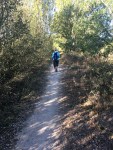
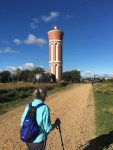
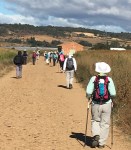
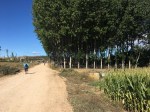
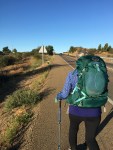
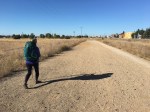
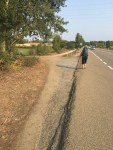
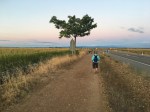
Today we left the meseta and begin to walk among rolling hills with more green trees and even mountains came into view, previewing the nature of our challenges for the coming days.
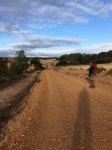
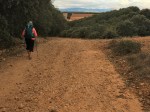
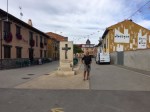
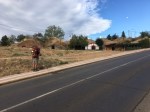
After walking for 6 miles in our new terrain and just outside San Justo de la Vega, we stopped at the Crucero de Santo Toribio. It is named for the 5th-century bishop of Astorga who was said to have fallen to his knees in despair at this spot, after being banished from his beloved city. We haven’t been able to determine why he was banished, but you’ll be the first to know if we find out. One clue is that he became a saint immediately after his death.
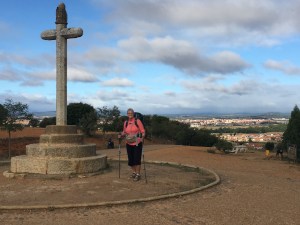
From the Crucero, we could see the spires of the Astorga Catedral.

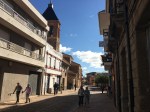
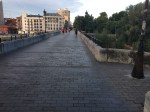
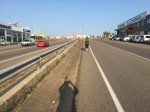
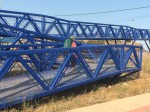
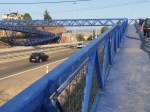
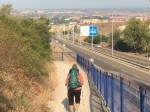
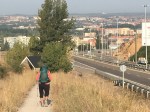
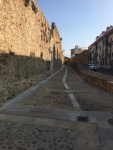
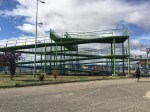
We left the rolling hills and packed clay path and walked onto the sidewalks of San Justo and on into Astorga, after crossing the railroad tracks via another high, zig-zag pedestrian bridge.

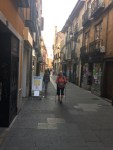
The final climb up a very steep hill into Astorga old city was tough, especially at the end of a 9+ mile walk.

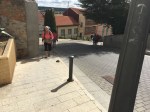
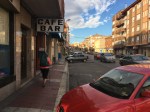
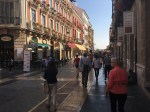
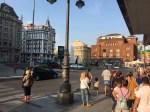
The Tuesday market completely jammed our walk from the Plaza San Francisco with a display of excavated Roman ruins
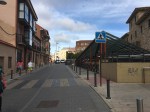
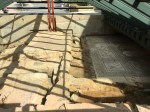
all the way to Plaza del Eduardo Castro.

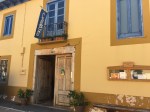
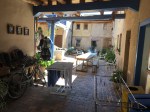
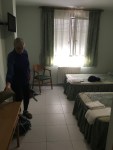
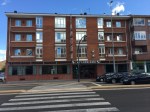
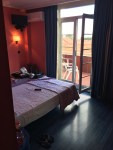
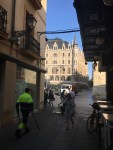
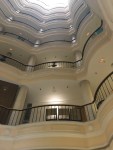
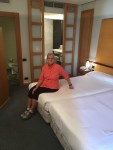
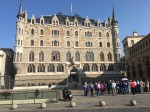
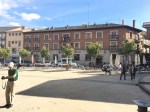
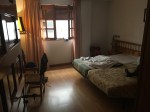
The Gaudi Hotel (65€) was located directly across the plaza from Palacio de Gaudi and diagonally across from the 15th century Santa María Catedral.
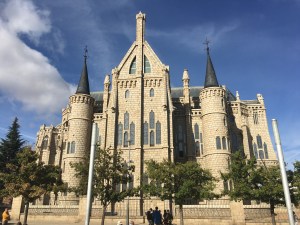
The Palacio de Gaudí, was a palace for Archbishop Juan Bautista Grau Villespinós until his death. It sat empty until serving as a military headquarters for the Falange movement. In 1963, it became a Camino Museum.
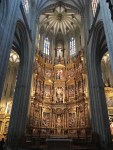
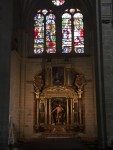
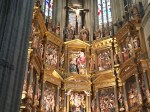
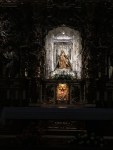
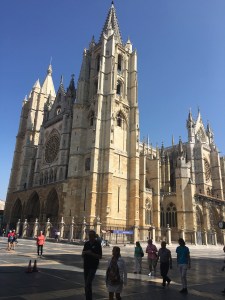
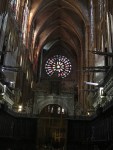
The Santa María Catedral was impressive and imposingly huge in the relatively small space it occupied on the plaza. Later in the day when it was open for visitors we took a tour inside.
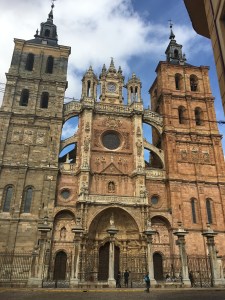
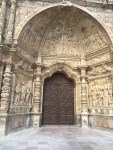
Astorga, (pop 12,078), first a Celtic settlement, developed into an important Roman city at the crossroads of the Via Trajana and the Vía de la Plata, as well as an important center for Christianity. According to legend, both St. James and St. Paul preached here. The bishopric of Astorga was one of the earliest Christian titles. The city passed to the Visigoths in the 5th century and was destroyed by the Muslims in 714, then reconquered by Ordoño I in the mid-9th century. After León was destroyed by Al-Mansur’s army, Astorga acted as the capital of the kingdom. The city flourished with the pilgrim trade and housed 21 pilgrim hospitals, the second most on the Camino Francés (after Burgos). One of these hosted Saint Francis of Assisi on his pilgrimage in 1214.
Day 44-Villadangos del Páramo to Villares de Órbigo

  • Distance today:                      8.8 mi
  • Distance Camino 2017:    320.5 mi

What a difference a day makes. We were beginning to have some negative feelings based on the walks before and after León.

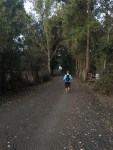
But this morning, even though we were again walking along N-120, the Camino started out with a walk in the woods, then a little later, found some more trees that sheltered us a bit from the traffic noise and even took us by some blackberries.

Our breakfast stop in San Martin del Camino was also positive with a beautifully decorated albergue, very pleasant owner and monstrous cafe con leches and tostatas for only 3€ each… oh, and a spotless bathroom.

We didn’t consider walking on asphalt today because of the high level of Monday morning traffic. So we stuck to the path, which also was variably pleasant.

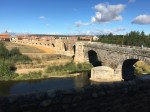
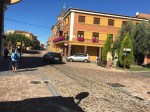
About 6 miles into our walk we came to Hospital del Órbigo (pop.1031), a lovely town with beautiful cobblestone and brick streets, well maintained buildings with colorfully filled window flower boxes especially in the old town section and perhaps the most impressive bridge we’ve seen.

We picked a bar with a good vantage point and stopped for an OJ while we admired the bridge.

The impressive 13th century Gothic bridge over the Río Órbigo is the site of a legendary medieval jousting competition. Don Suero de Quiñones, a wealthy Leonese knight, was rejected by the woman he loved. In his heartbreak, he locked his neck in an iron collar and swore he would not take it off until he had defeated 300 knights in jousting. The call went out, and knights from all over the kingdom came in the Holy Year of 1434. Quiñones succeeded in his quest, freeing him from the torment of love. He took off the collar and made a pilgrimage to Santiago where he left a bejeweled bracelet, which can still be seen in the cathedral museum. The bridge became known as El Paso Honroso “the Honorable Pass.”
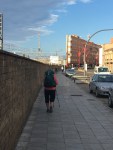
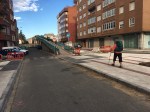
We returned to the Camino and as we walked out of town we were engulfed by 20-30 apparent tourists.

How could we tell? Well, they all were wearing clean, unwrinkled clothing. The men’s shirts and women’s blouses were colorful, smart casual at the least, their shoes were not dusty and they all had nice, new small day packs.

Jim surveiled (profiled) the group, identified and walked alongside the leader and opened a conversation. The leader was Alberto, an Italian, and the group was traveling by bus, walking sections of the Camino that held particular interest for the group. The were traveling for 30 days, had begun in Roncesvalles, skipped the entire meseta and were eventually targeting Santiago. Countries represented in the group were Italy, Great Britain, USA, Spain, Japan and China. When Alberto heard we were from South Carolina he immediately was concerned about our home and family due to Hurricanes Irma. We assured him that we were in contact with family and all were safe.

He wished us “Buen Camino” and the group continued on as we reached Villares de Órbigo and stopped at the Albergue Villares de Órbigo (25€) for the night.

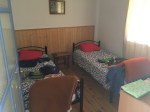
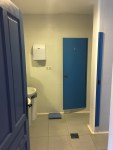
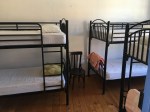
We occupy the only habitacion doble in the albergue. It has two bathrooms, men’s and womens with WC, showers and sinks.

Shortly after we arrived, checked in and began our chores, we met Ken, a retired Lutheran Minister from St Marks church in Williamsport, Pa! This is his second Camino and like us, he is going the full 500 miles this time after doing the Camino in parts his first time.

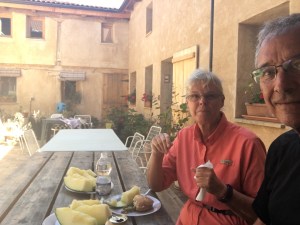
The albergue has a communal kitchen and so we shopped at the village “supermarket” for canned tuna, baguette, olives and mayonnaise and fixed our own tuna bocadillos for lunch. We also bought a large melon, which we shared with the other pilgrims in the albergue.

The albergue also has a centrifuge. Why? To ring out hand washed clothes. And it really works! Jim washed several items, used every muscle in his upper body to squeeze the water out and then got another pint of water out with the centrifuge. Needless to say, the clothes were dry in less than an hour.

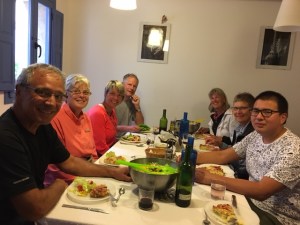
Our pilgrim dinner was prepared by our hostess and albergue owner, Christine, originally from Belgium. We had a nice pumpkin squash soup, a mixed salad, delicious tortillas and rice pudding for dessert… and delightful interaction with fellow pilgrims.


Day 43- Virgen del Camino to Villadangos del Páramo

  • Distance today:                    8.7 mi
  • Distance Camino 2017:    311.7 mi

Today was chilly and windy for the entire walk and we were thankful we had our warm clothing.

The best thing about our experience today was that we completed nine more miles of our journey. Otherwise there isn’t much to say and there wasn’t much to see.

The Camino followed N-120 and we switched back and forth between asphalt and dirt path picking the easiest way.

The two villages we walked through had a total of one bar which became our breakfast stop at 4.0 miles.

We got to our destination, Villadangos del Páramo (pop. 1140) at 10:30, checked in to our hotel, Libertad (45€), completed our chores and had lunch by 2:00.

There isn’t much to say about the village, the food or the one restaurant and one bar that were open.

We mostly rested and looked at all the hurricane info we could find. Thankfully, we confirmed that Linda’s mother, who lives in Irma’s path on the Florida west coast, is safely in a community shelter and seems to be reasonably satisfied with the temporary accommodations. Hopefully her home will not be severely damaged when the storm passes through tomorrow.

We’ll keep our fingers crossed and say an extra prayer for her and all the other folks enduring this devastating hurricane.

Day 42- León to La Virgen del Camino

  • Distance today:                       4.3 mi
  • Distance Camino 2017:        303 mi

We considered taking a rest day today in León but we’re both feeling strong. So we decided instead to keep moving but to take a short day. This will, in effect, also make tomorrow’s walk easier (12mi to 8mi).

We slept in this morning and didn’t leave our hotel until 8:30.

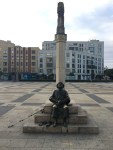
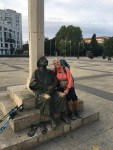
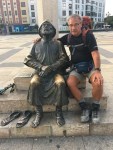
We walked directly to Plaza San Marcos via Grand Via de San Marcos where we took photos of ourselves sitting beside the pilgrim statue facing the Parador Hotel, formerly a 15th century pilgrim hostel.

We then exited the city, walking across the Río Bernesga via the Puente de San Marcos.

A few steps later we stopped for our standard breakfast of 2 cafe con leches and 2 tostatas, but for an incredibly cheap, 2.50€ total!

The rest of the walk today was totally on sidewalks through the edge of León, then Trobajo del Camino (pop.21,378), through residential areas, bodegas and along the Spanish version of a “motor mile” with every brand of automobile showroom you can imagine and finally into La Virgen del Camino (pop.4,820).

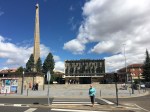
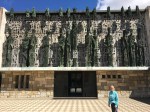
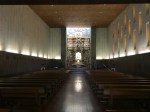
The existence of the town of La Virgen del Camino is centered around the Basílica de la Virgen del Camino. It’s is a modern church (1961) of artistic significance, unique along the Camino. The location stems from a legend that in 1505 the Virgin appeared to a shepherd here. The shepherd went to the bishop to build a hermitage on the spot, but the bishop was not convinced. The Virgin Mary told the shepherd to use a slingshot to throw a stone and build the shrine wherever the stone landed. The shepherd obeyed, and the small stone became a boulder, a miracle that convinced the bishop to build the church. Another legend says that a Christian was being held captive inside a strong box in North Africa in 1522. The Virgin Mary knew of this man’s plight and his desire to visit her church, so she miraculously transported him here, box, chains and all. The sacristy of the current church houses the box and chains. The church became a local pilgrimage site and was recently elevated to the rank of a minor basilica. The modern façade features the 12 disciples, and the interior includes the Baroque retablo from the former church.

Our hotel is La Villapaloma (45€) and we’ve been treated like royalty.

We were allowed to check in at 10:30 and were given a nice, spacious double room with private bath and amenities. Once inside our room, we saw there was not an obvious place to hang our wash, so Jim got the attention of one of the housekeeping staff. He asked if they had a clothesline for us to dry our hand washed clothes and they insisted that we move to a different room. So we returned to the lobby and 10 minutes later they escorted us to an equally nice room but with a large balcony with room for hanging out wet clothes to dry in the sun!

After completing our routine chores and ready for lunch, Jim asked a staff member if they served lunch and after some effort he surmised that they normally did not provide food, only bar and hotel, but they would gladly prepare us a light lunch and supper if we wanted. Jim explained that we didn’t want to inconvenience them and the only reason we asked was we wanted to give them the revenue instead of another restaurant. They understood, thanked him and confirmed it was ok if we went elsewhere for meals.

We walked a few blocks to a restaurant across from the Basílica de la Virgen del Camino, had lunch, then spent some nice moments in the unusual church, especially for the Camino.

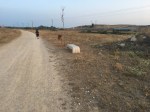
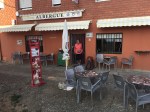
After a restful afternoon we walked across the street to a different bar and had a light supper before returning to our room for the day with less than 200 miles to Santiago!
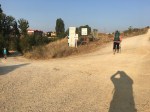
 

Day 41- Puente Villarente to León

  • Distance today:                      8.1 mi
  • Distance Camino 2017:    298.7 mi

It was chilly again this morning when we left Albergue San Pelayo but not cold enough for Linda to borrow Jim’s golf/trekking pole gloves like yesterday morning.

We walked a km on the sidewalks of Villarente until veering off onto a dirt path that worked its way between two León bound highways. We stopped at the village of Arcahueja to give some business to the only bar/albergue open at 8:30.

Over the next three miles we gradually climbed upward until we were able to see León and then crossed over N-601 on a most unusual bright blue pedestrian bridge.

Once over the bridge we walked a few 100 yards on a path again, crossed another pedestrian bridge over highways and then began walking on a sidewalk thru one residential area after another then thru the community of Puente Castro.

As we were about to cross the Río Torio into León we were welcomed by a contingent of civil guardia officers and given a nice map, directions to various landmarks and sleeping options if needed or directions to our hotel and finally offered a piece of hard candy. A really nice way for these two pilgrims to be introduced to León.

Another 2km walk on sidewalks following yellow arrows brought us to Plaza de Santo Domingo and our hotel Secotel Alfonso V (75€).

Today was a “working day” of sorts in addition to our normal routine. First, we needed to get more euros from an ATM. Second, we needed to collect our extra items from the hotel office which we mailed from Pamplona over a month ago. Third, we needed to inventory our mailed stuff along with our back pack stuff and decide what we needed to carry in our backpacks from here on to Santiago. Fourth, we needed to put the items that didn’t make the new backpack list into a box and take them to the post office (Correos) and mail them on to Santiago ahead of us. Finally, we needed to make reservations for our next two nights on the Camino.

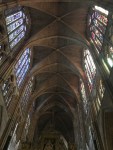
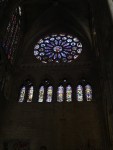
But first, we walked only a few blocks away from our hotel to visit the Catedral de Santa María of León, known for it’s magnificent stained glass windows from the 13th-15th century. Unlike many of the beautiful Catedrals and Iglesias we have visited along the Camino, this one doesn’t have an extraordinary retablo. Instead, especially on a day like today, the bright sunlight made the beautiful colored glass even more brilliant inside.
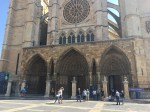
No matter where you looked, stained glass dominated this impressive gothic masterpiece begun in 1205 and completed in record time (a hundred years later).

León (pop.134,305) began as a Roman military encampment in 29BC and developed into a permanent settlement charged with protecting Galician gold on its journey to Rome. Visigoths took the city in 585, only to lose it to Muslim invaders in 712. The city was reconquered by Ordoño I around 850, who initiated a building boom and welcomed Mozárabic refugees (Christians living under Muslim rule). The city was leveled in 988 by Al-Mansur’s troops. Rebuilding began soon after, and León flourished as a wool industry center. In 1188, the city hosted the first Parliament in Europe under Alfonso IX and became wealthy enough to construct the astonishing cathedral.

We had our meals today in small restaurants away from the heavily tourist dominated spots and treated ourselves to ice cream dessert after dinner before returning to our room for the day.
Day 40- Reliegos to Puente Villarente

  • Distance today:                     7.8 mi
  • Distance Camino 2017:   290.6 mi

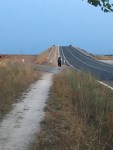
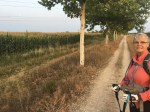
The initial three miles were similar to yesterday’s walk, a straight narrow path along a local road. It was 41 degrees when we left the hotel.

Breaking the monotony was one new bridge crossed an autovia under construction that appeared to go into Leon and a second older but still modern bridge crossed a national highway and canal just before we entered the outskirts of Mansilla de las Mulas (“small estates of the mules”).

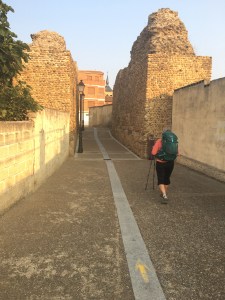
One of two medieval gates into Mansilla still standing

Once a Roman town and likely stopping point on the Via Trajana, the city was later fortified with walls in the 12th century and rebuilt in the subsequent two centuries. Today, more than half of the medieval walls remain, some as tall as 14m and as thick as 3m. It is possible to climb the stairway up into the rounded towers but climbing was not on the agenda this morning, but making an ATM stop to replenish our € supply was.

We walked past the Iglesia de Santa María which was the only church in Mansilla until 1220 when five churches were added, and Santa María has outlasted them all. A few steps later we easily found an ATM in a small plaza just before crossing a medieval bridge over the Río Esla to exit the town (pop.1950).

Immediately after we crossed the bridge, the widest Camino path so far and smooth with only a few sandal seeking pebbles paralleled the two lane, very busy N-601. Initially we had a nice barrier between us and the vehicles, than the path narrowed and got closer to the barrier, then the barrier disappeared and finally we were walking on the paved shoulder of N-601 with only a few feet between us and oncoming traffic including some REALLY BIG TRUCKS!

The Camino finally took a welcomed turn to the left, off the pavement into the woods.

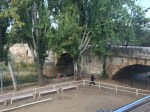
A few steps later we crossed a footbridge over the Río Porma and gasped when before us appeared the Puente Villarente with its massive 20 arches, also spanning the Río Porma and still in use. Originally built by the Romans it has been restored numerous times but 4 of the arches date back to medieval times.

We walked under an arch of the bridge then up onto main street of the town, Puente Villarente, (pop.342) after a relatively easy 8 mile walk.

Our albergue is San Pelayo (40€). Our double room with private bath is comfortable and has a window looking out over the enclosed garden area.  Doing our chores was extra easy because of the access to washing and drying facilities and we had it all to ourselves until late afternoon.

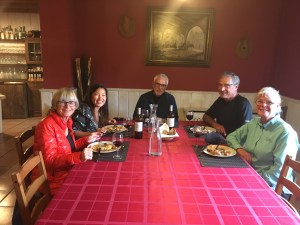
Our pilgrim dinner was in the albergue dining room and our dinner companions were Rita from Sweden, Sarah from Japan and Peter from Germany. The albergue owner and our hostess for dinner spoke French, making it much easier to communicate for check in and throughout the day.

We finished dinner at 9:00 and retired for the day.