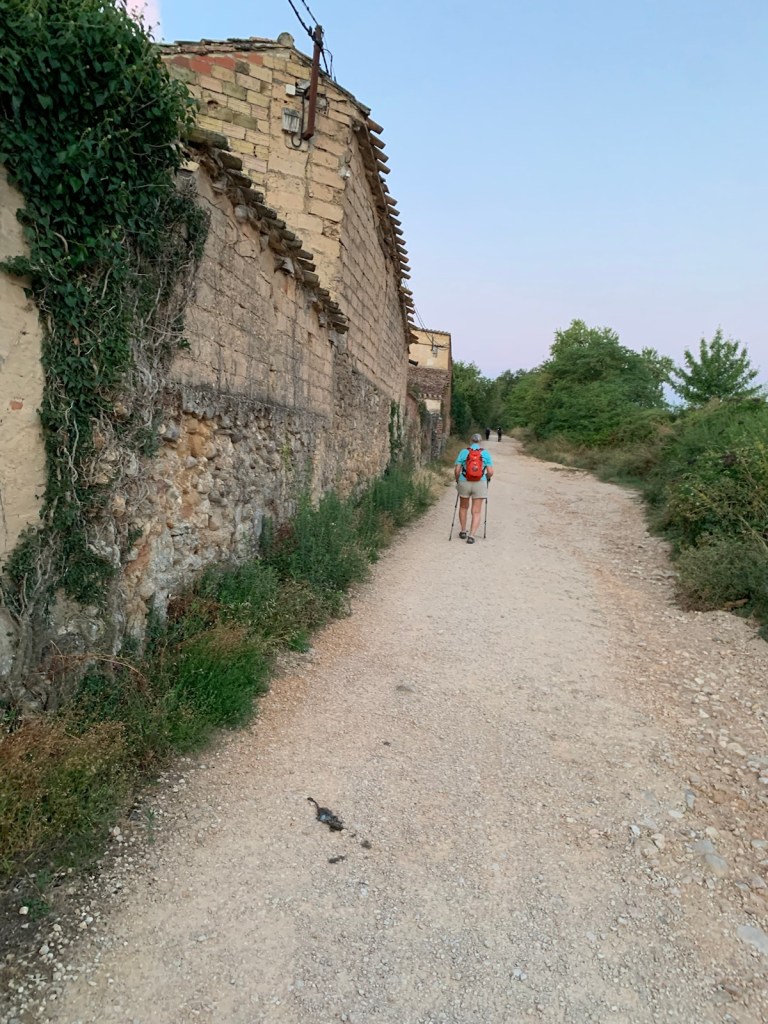
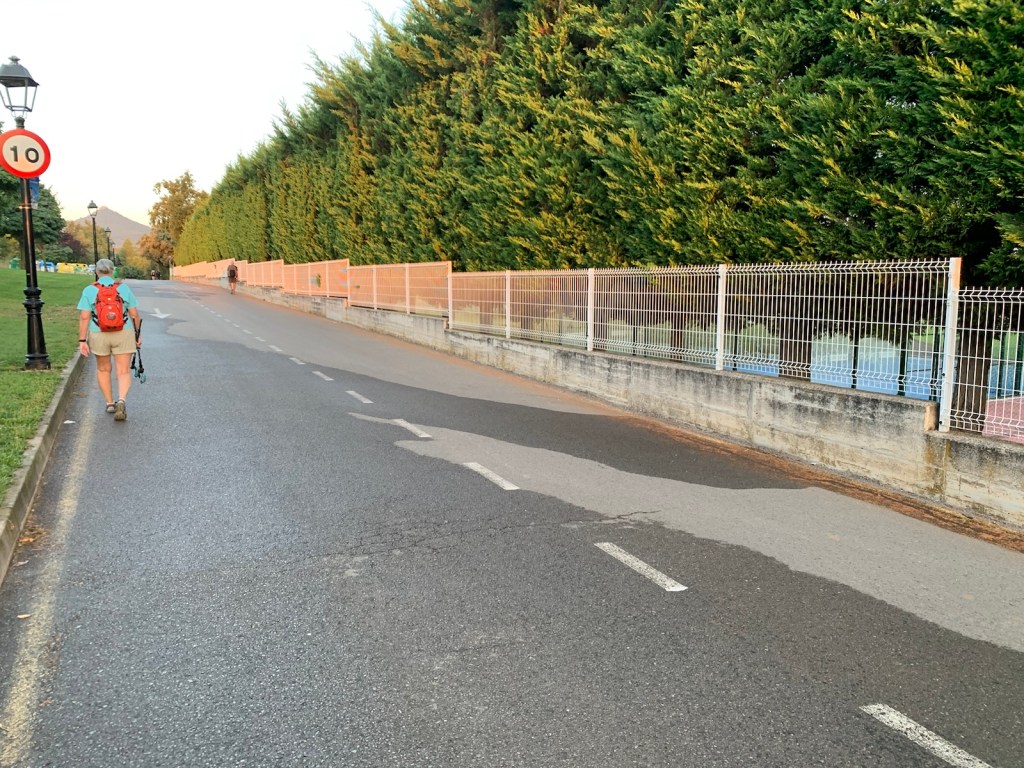
The forecast was for warmer weather today, so we started earlier, before first light. We walked for nearly 2 miles before getting clear of Estella and its suburbs.
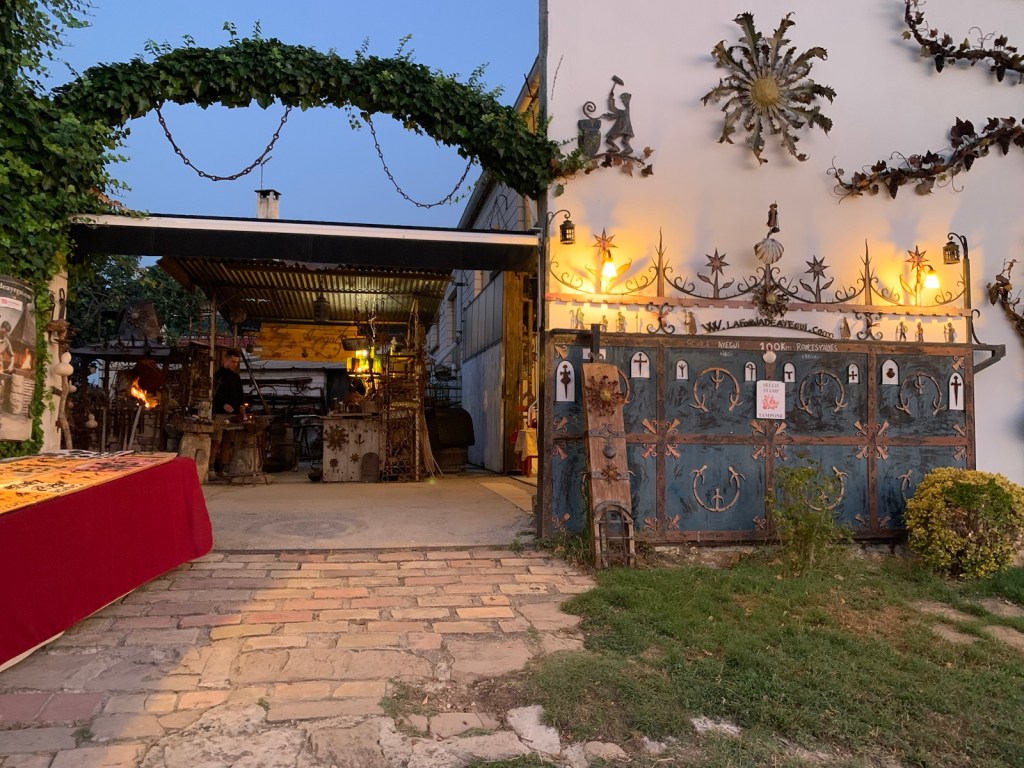
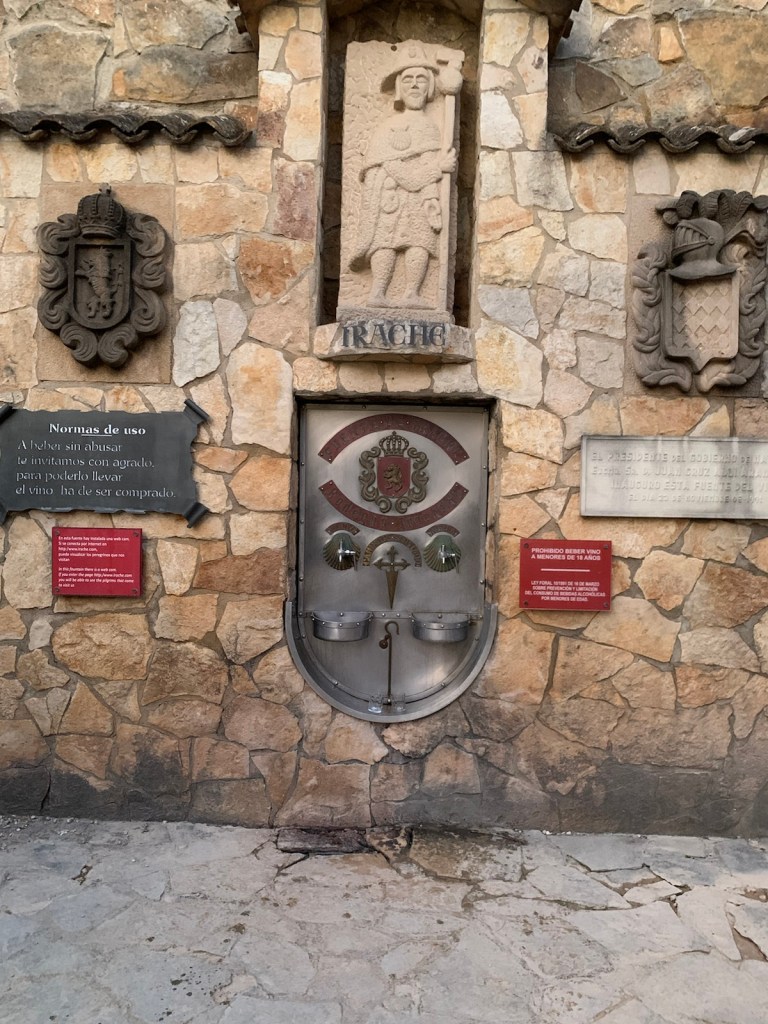
The gravel path took us past an interesting metal working vendor and his shop. Shortly after that, we reached the famous wine fountain, which is associated with the adjacent Irache Benedictine Monastery.
metal crafted Camino souvenirs metalworking artistry displayed on wall on the right and table on the left, as the artisan was hammering on anvil inside.Irache wine fountain
Continuing with some scenes along our walk…
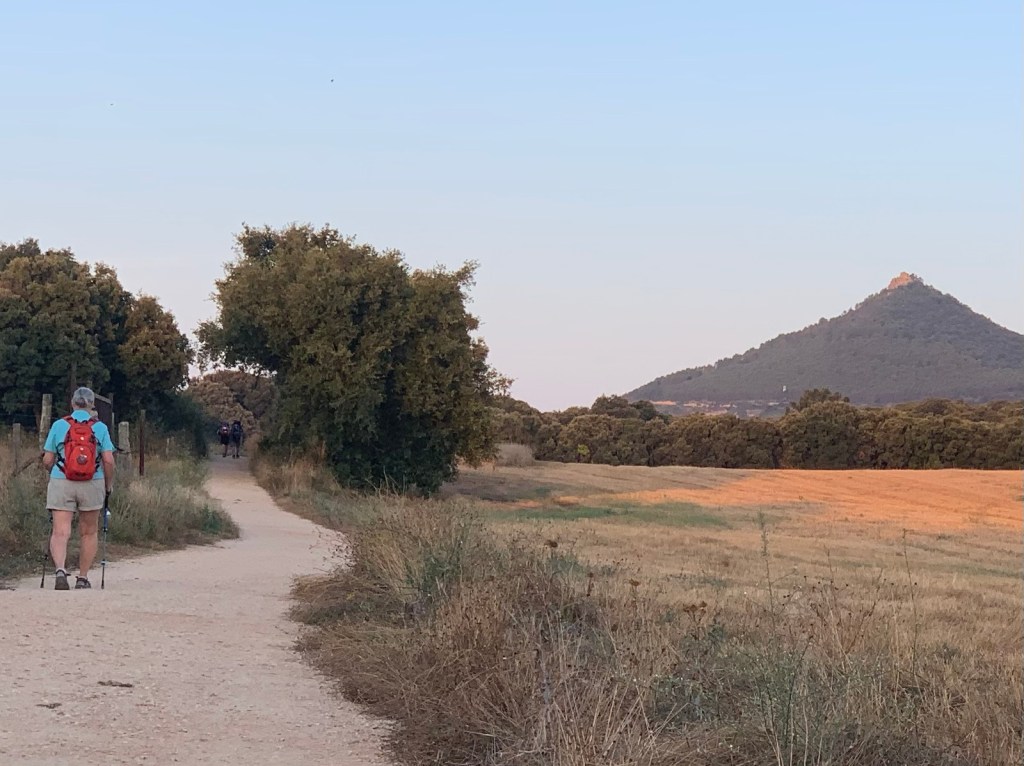
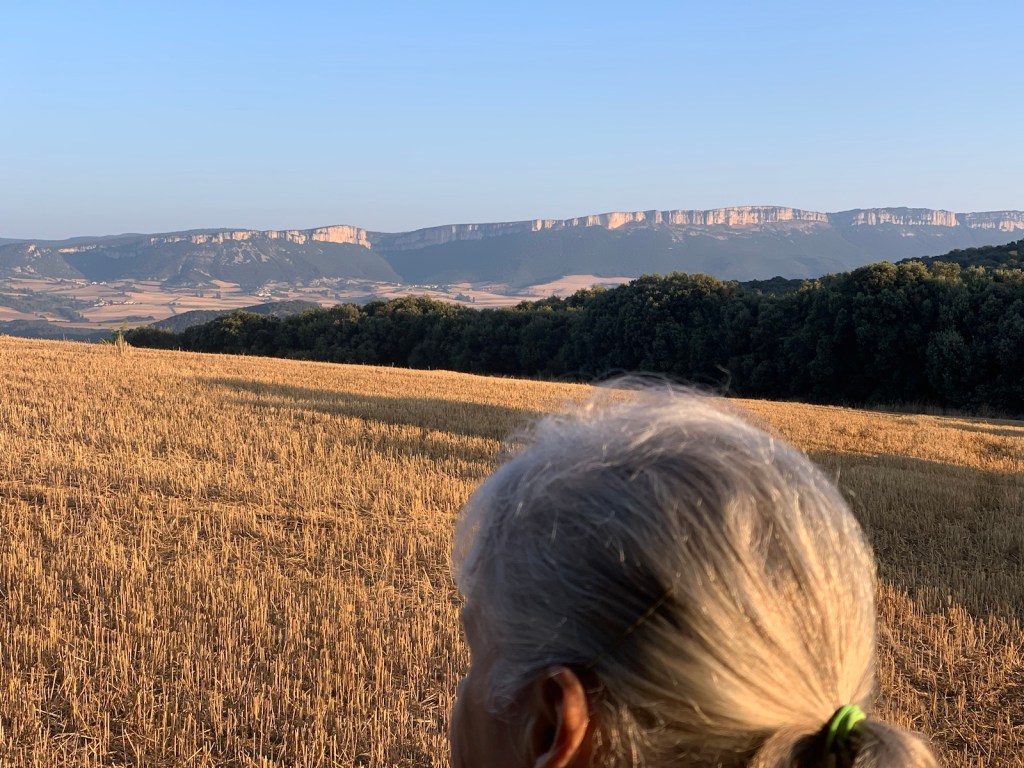
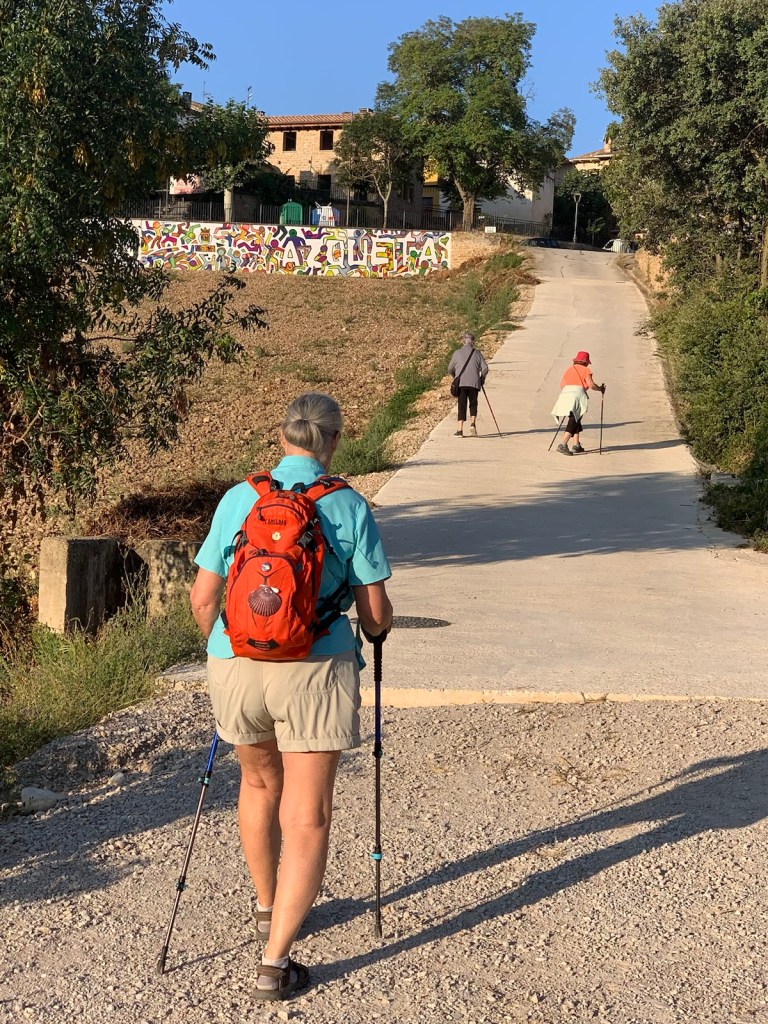
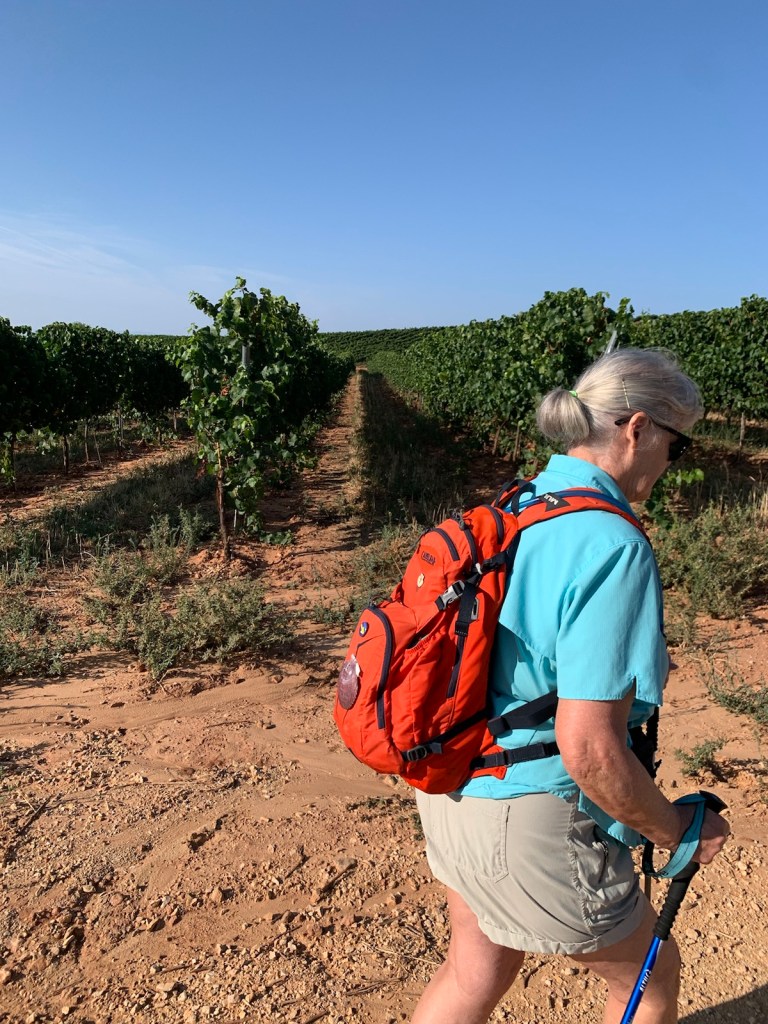
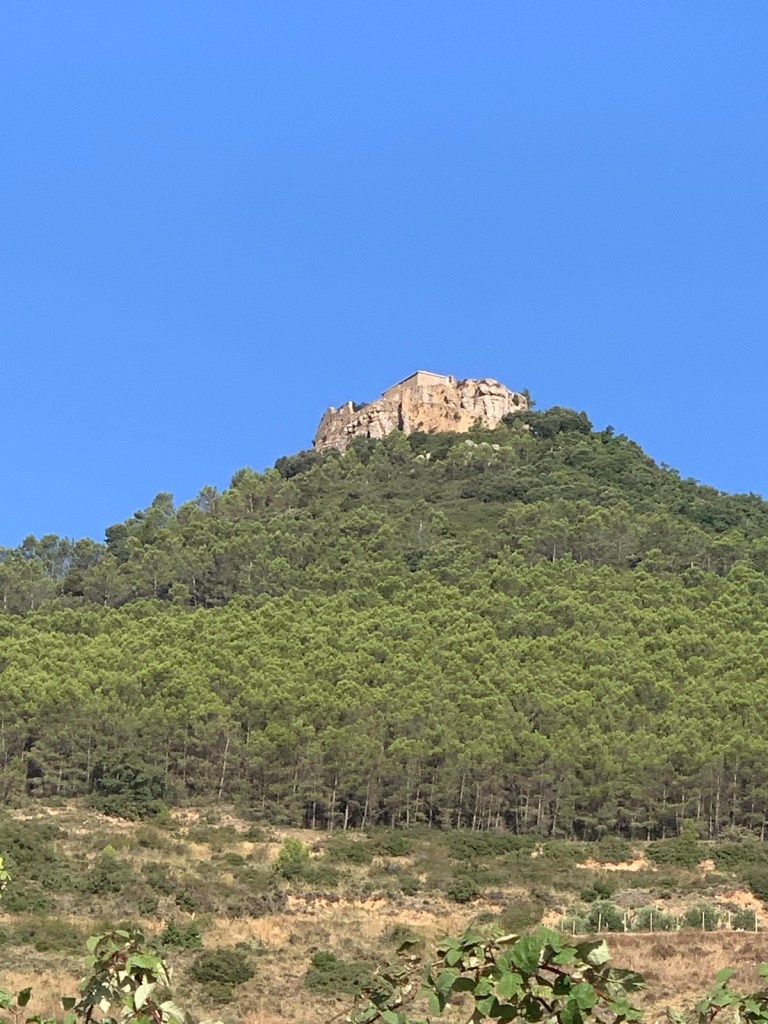
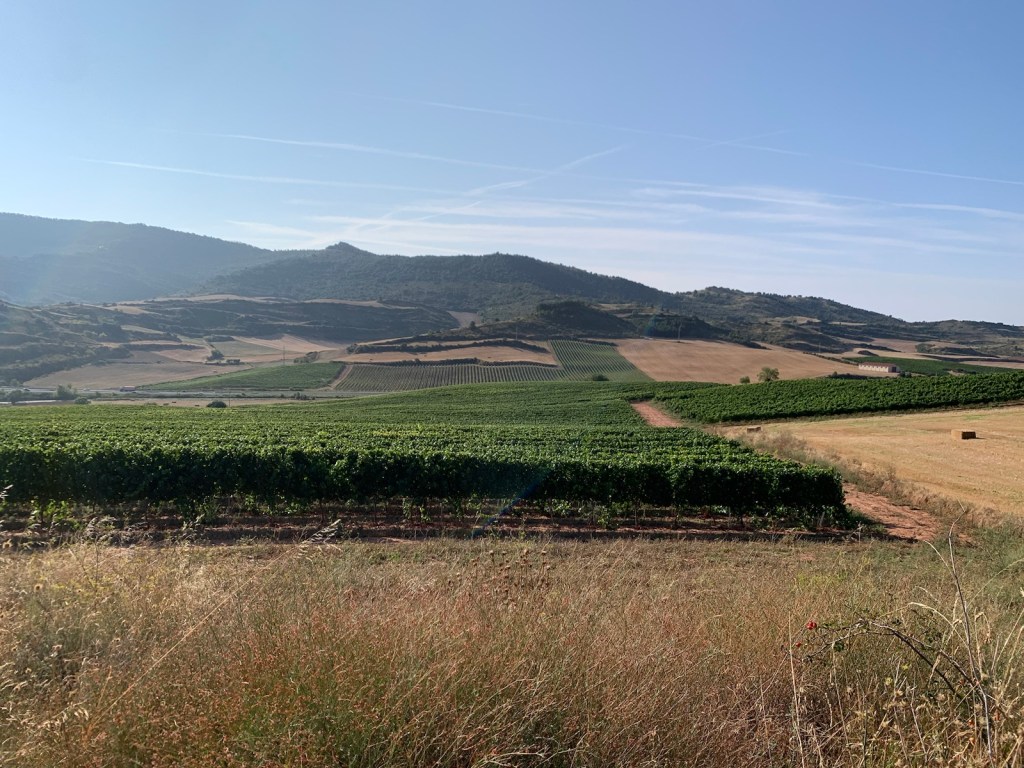
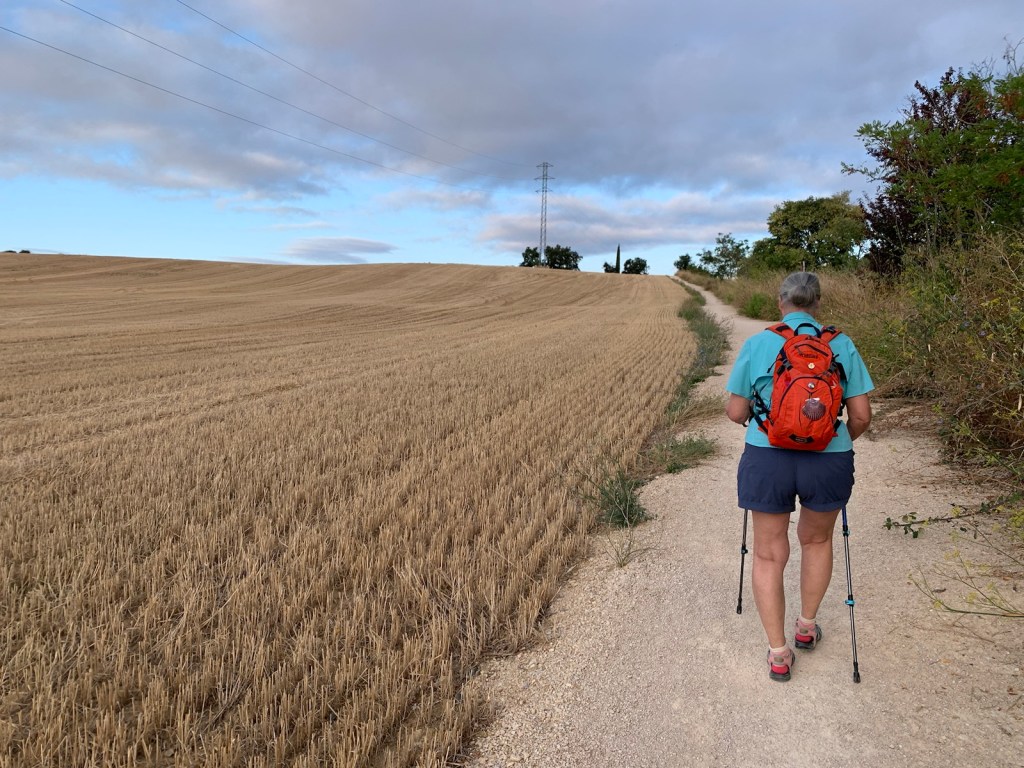
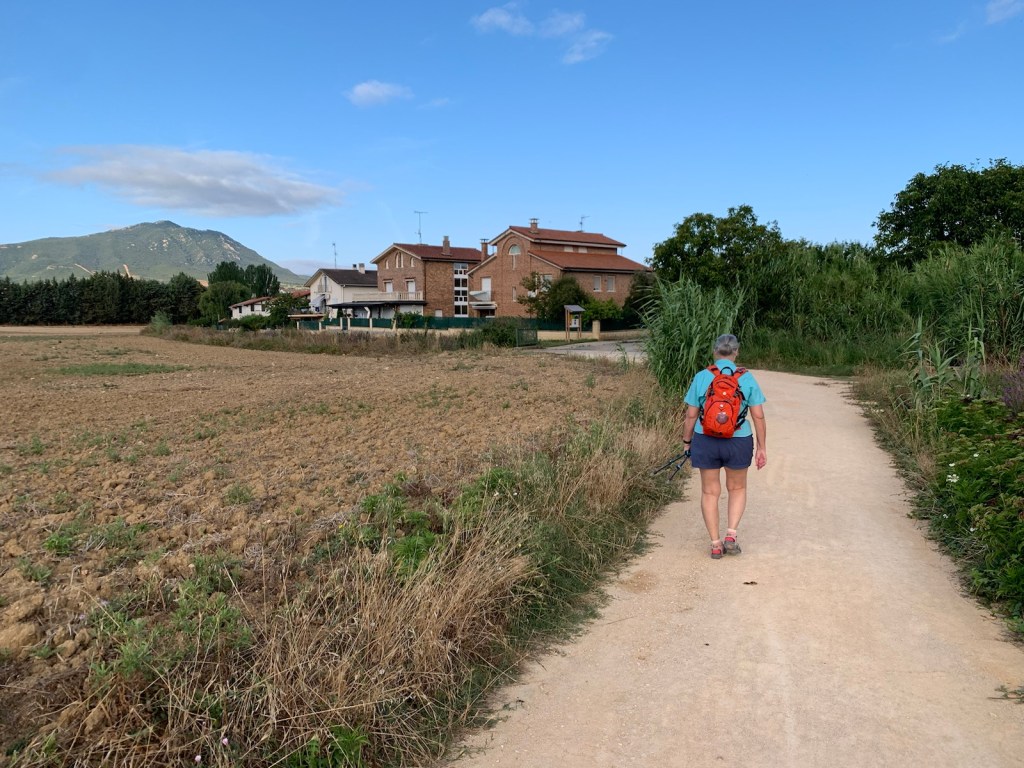
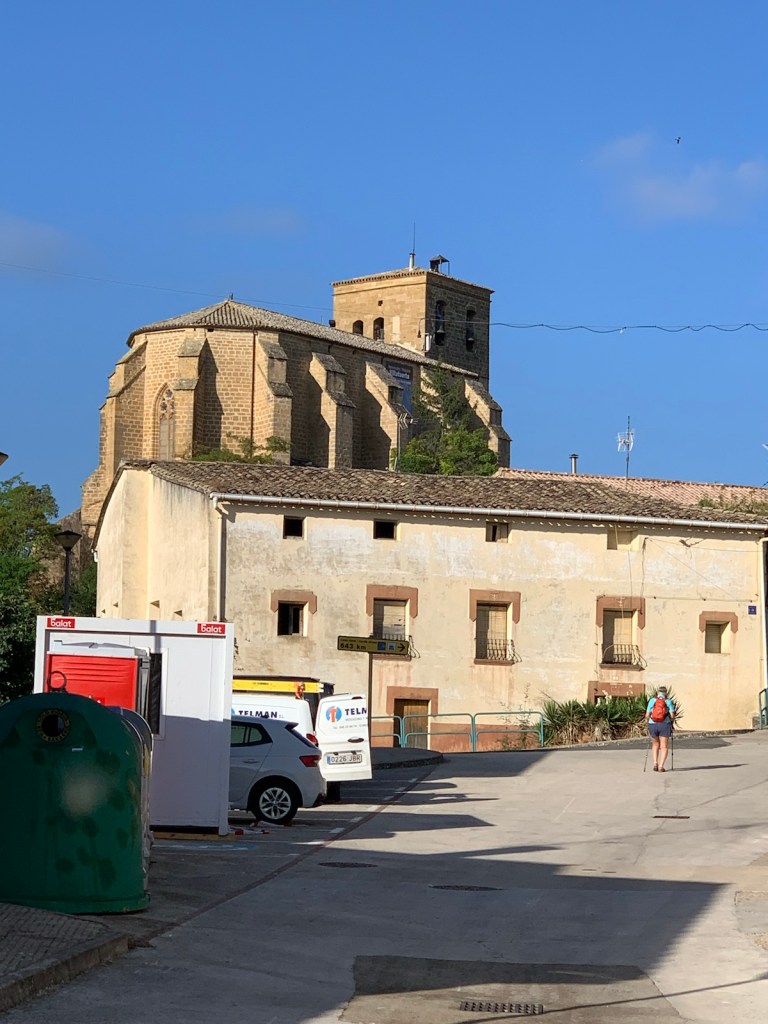
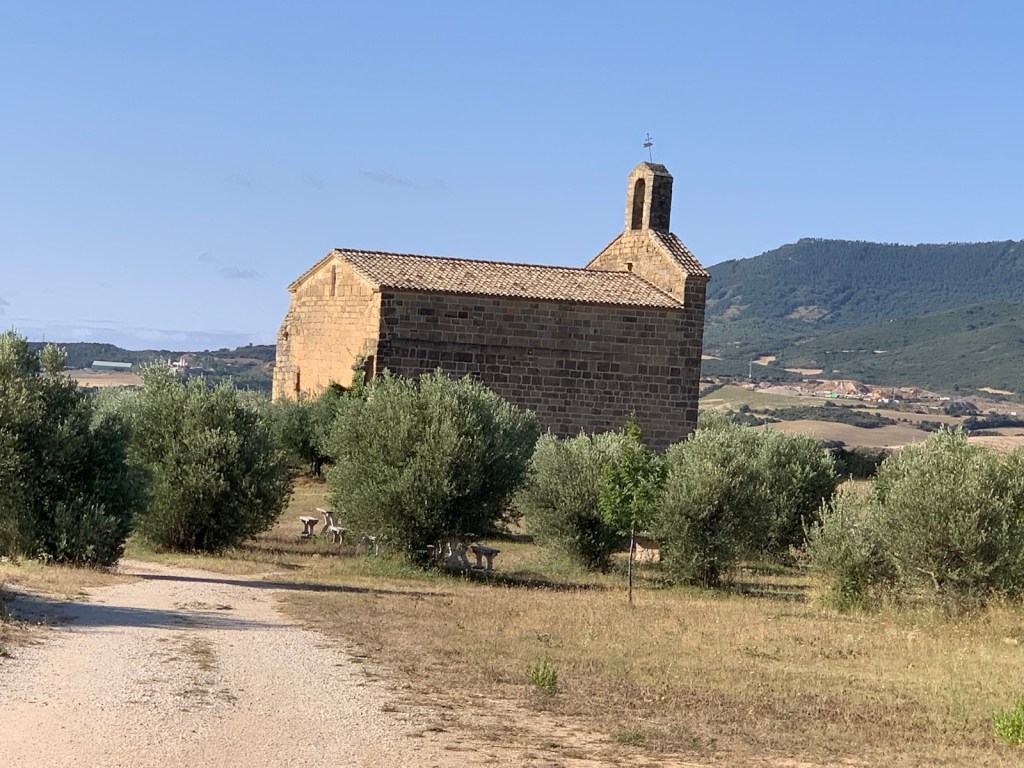
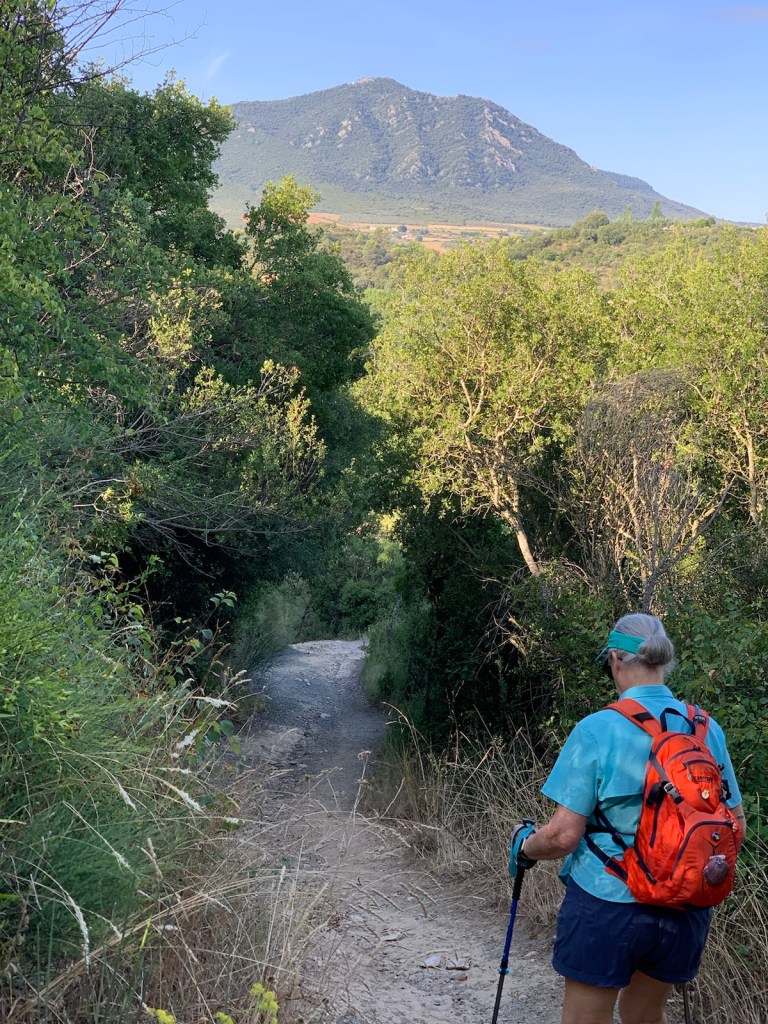
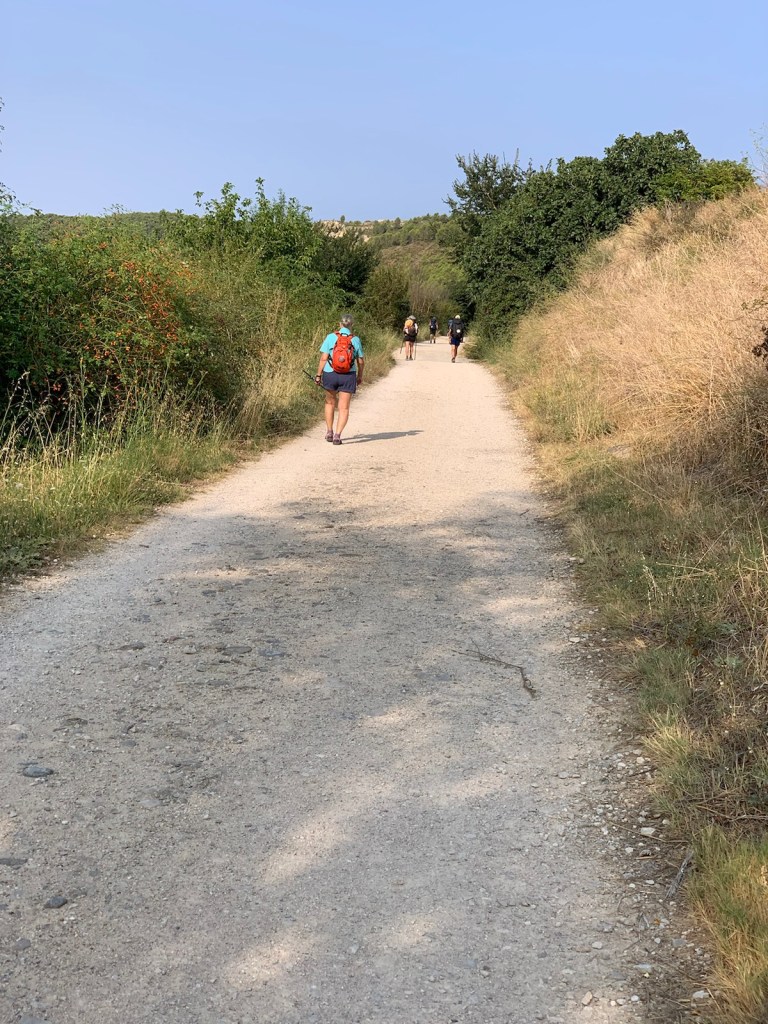
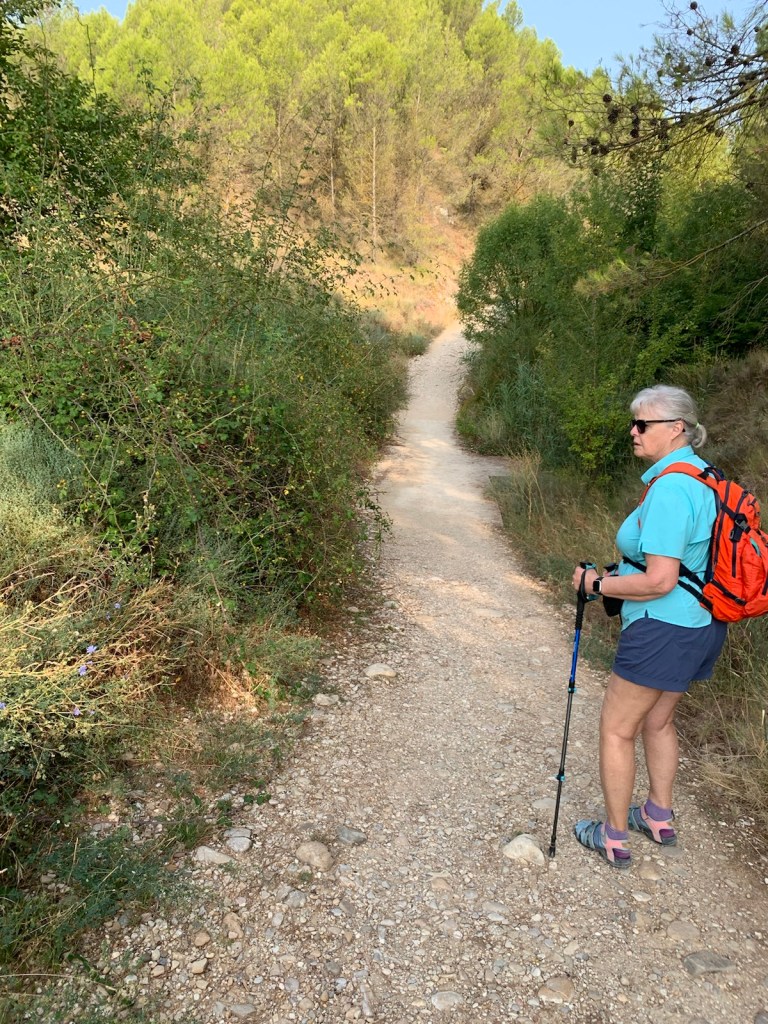
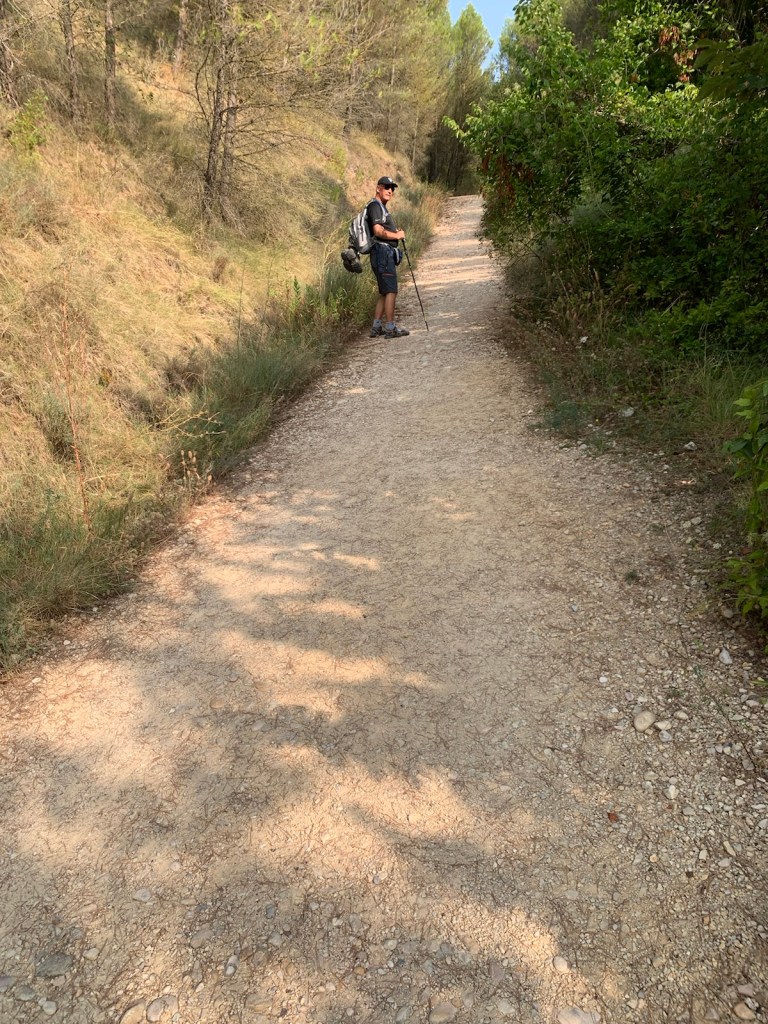
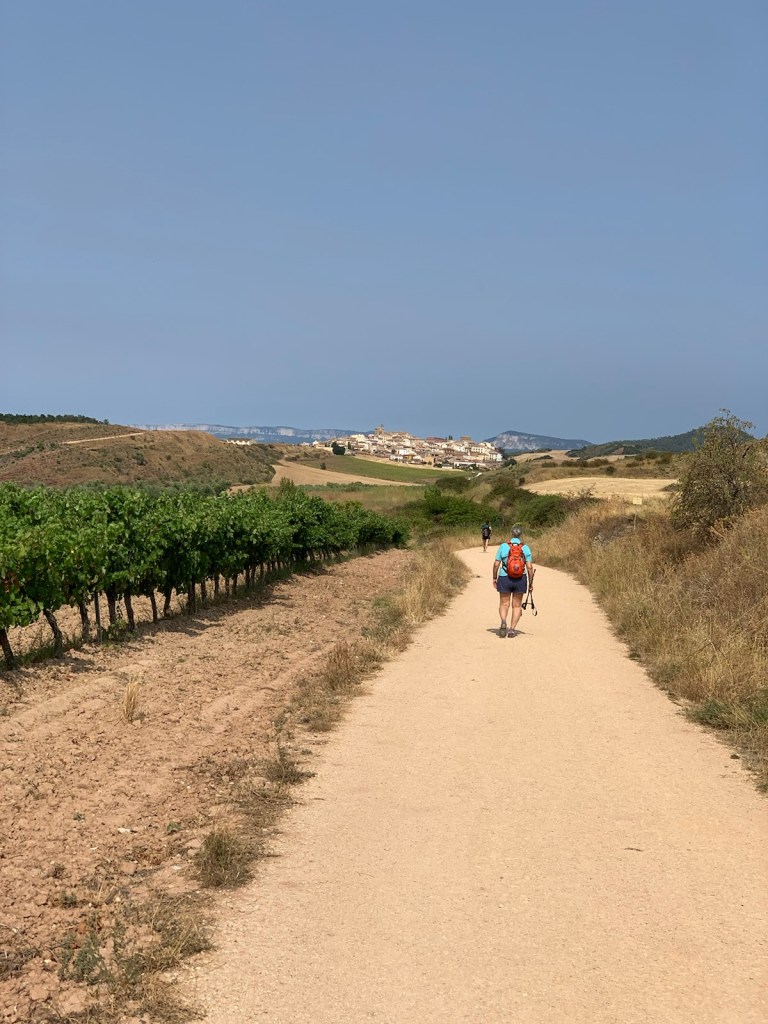
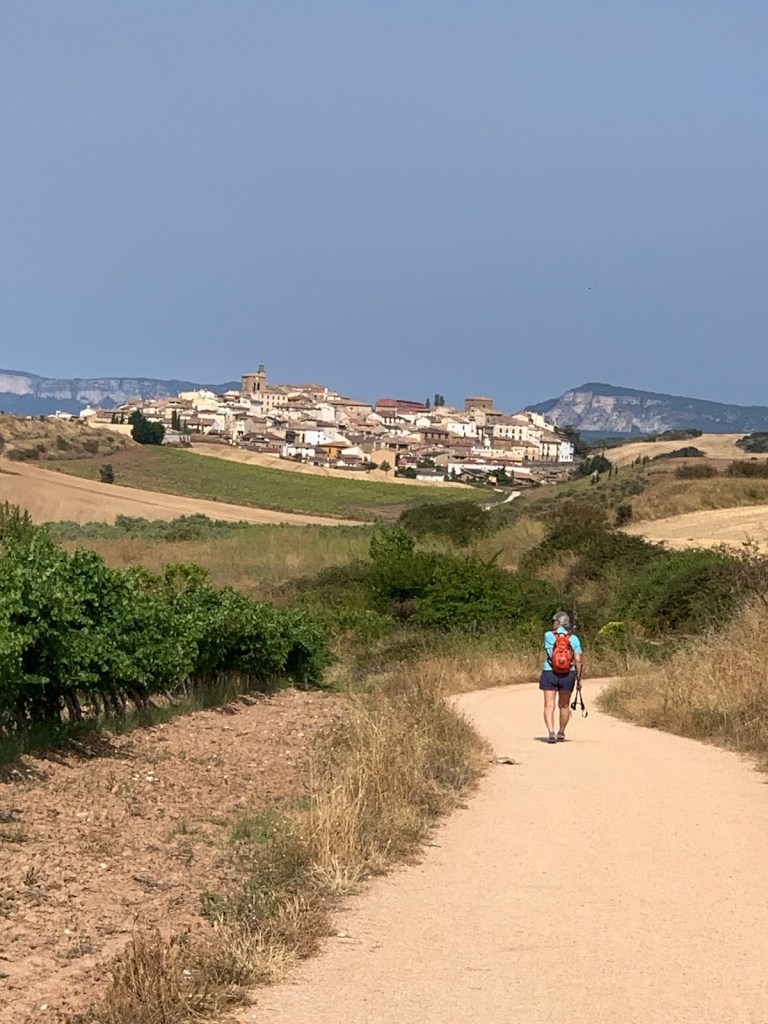
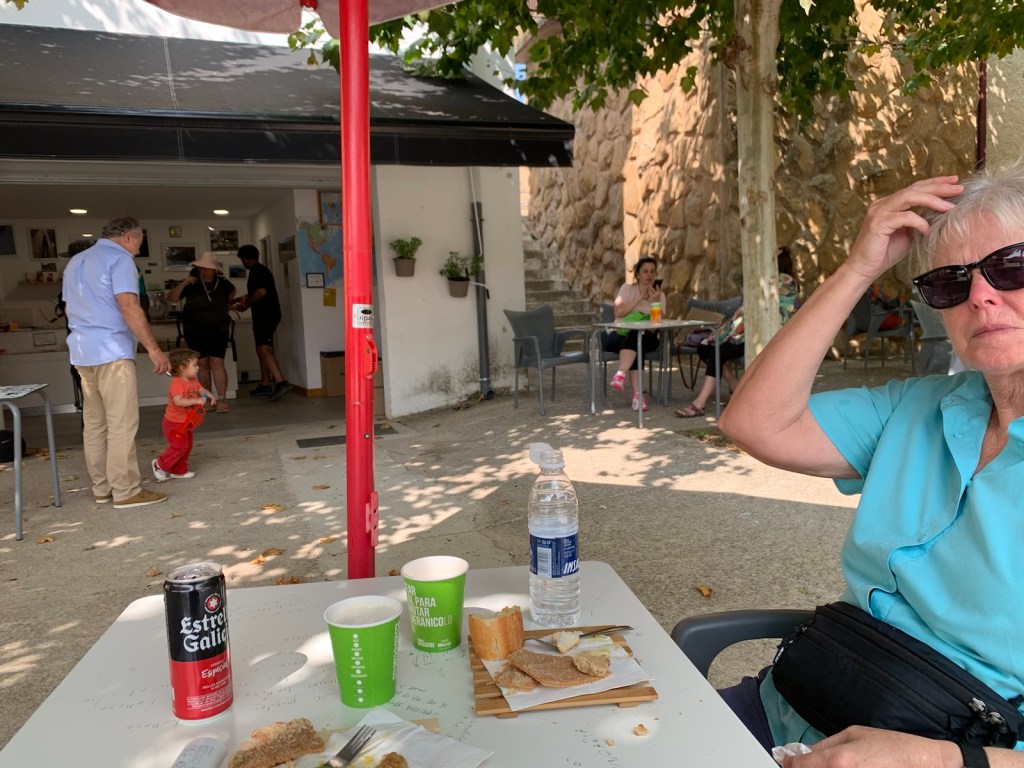
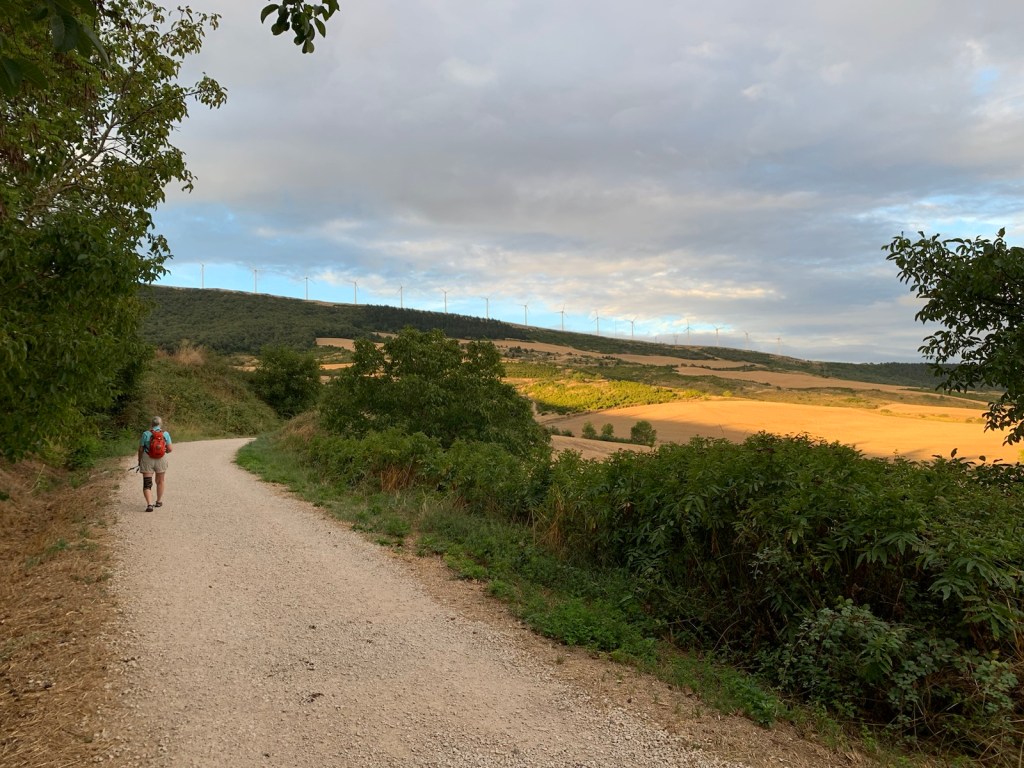
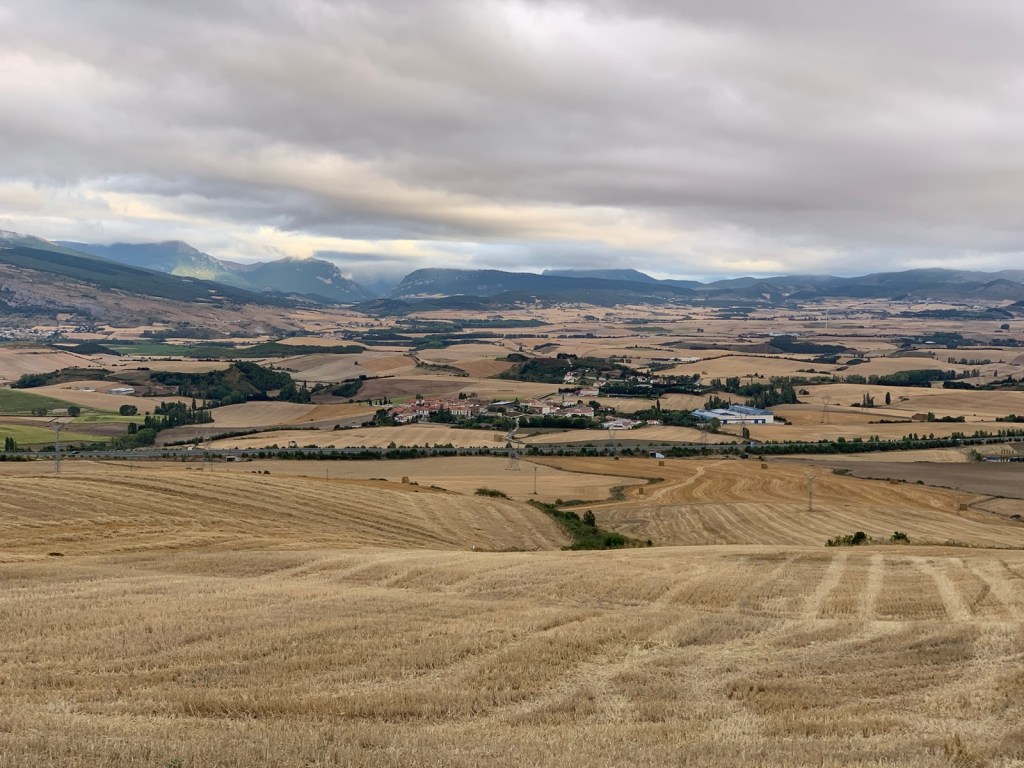
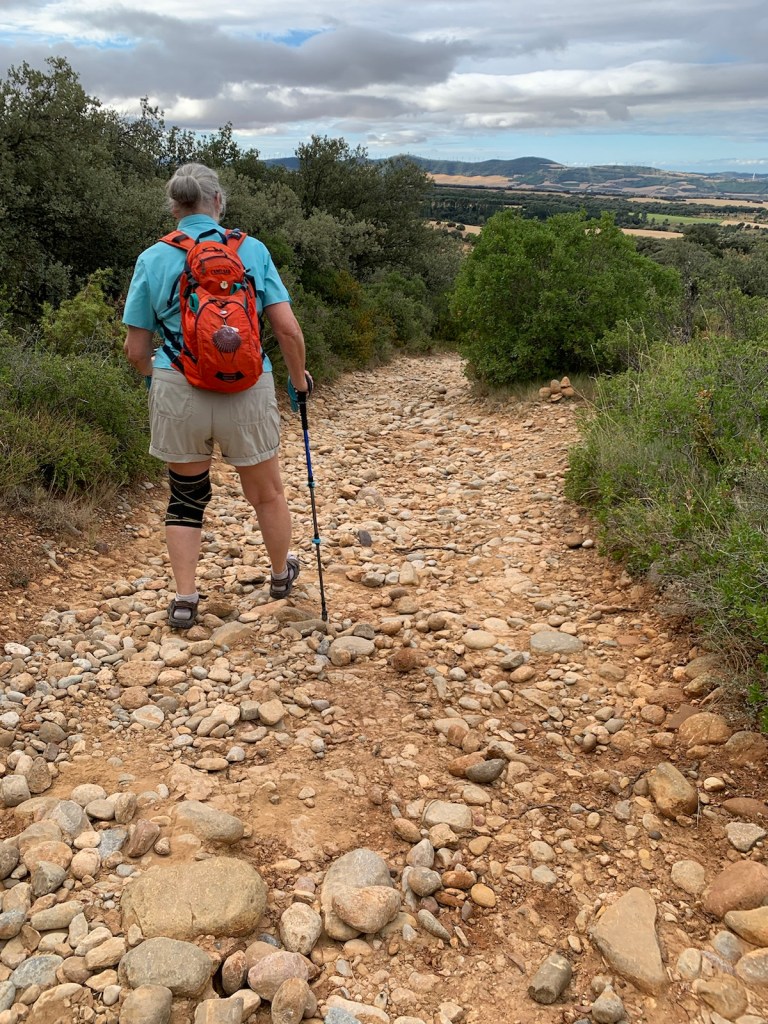
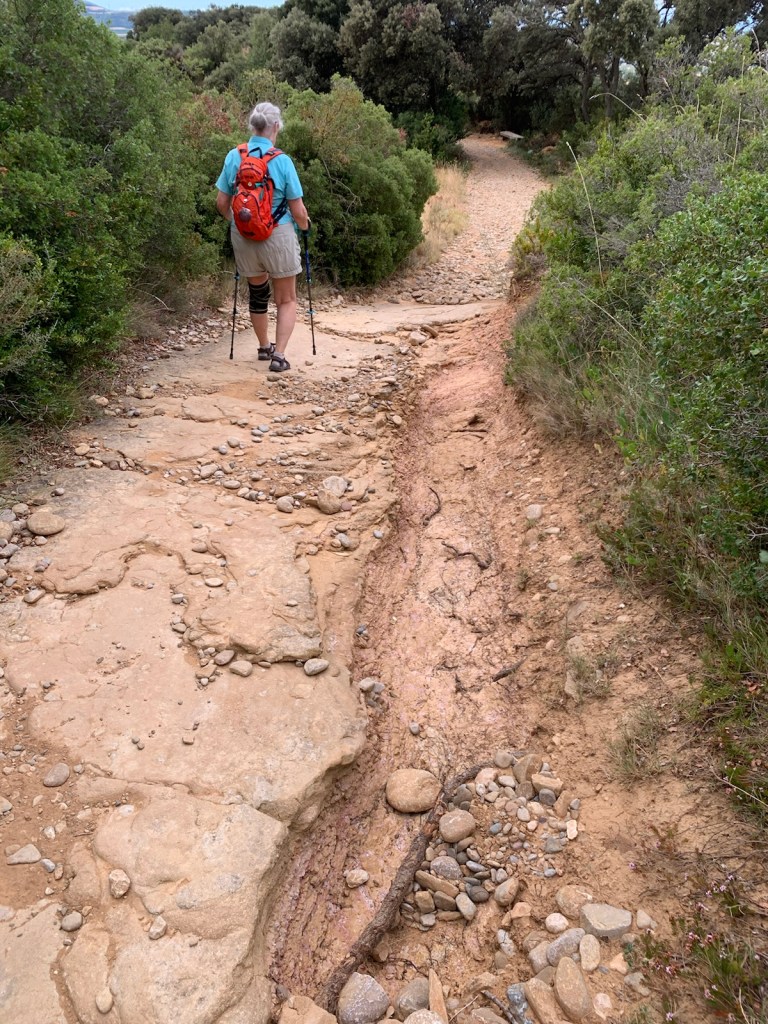
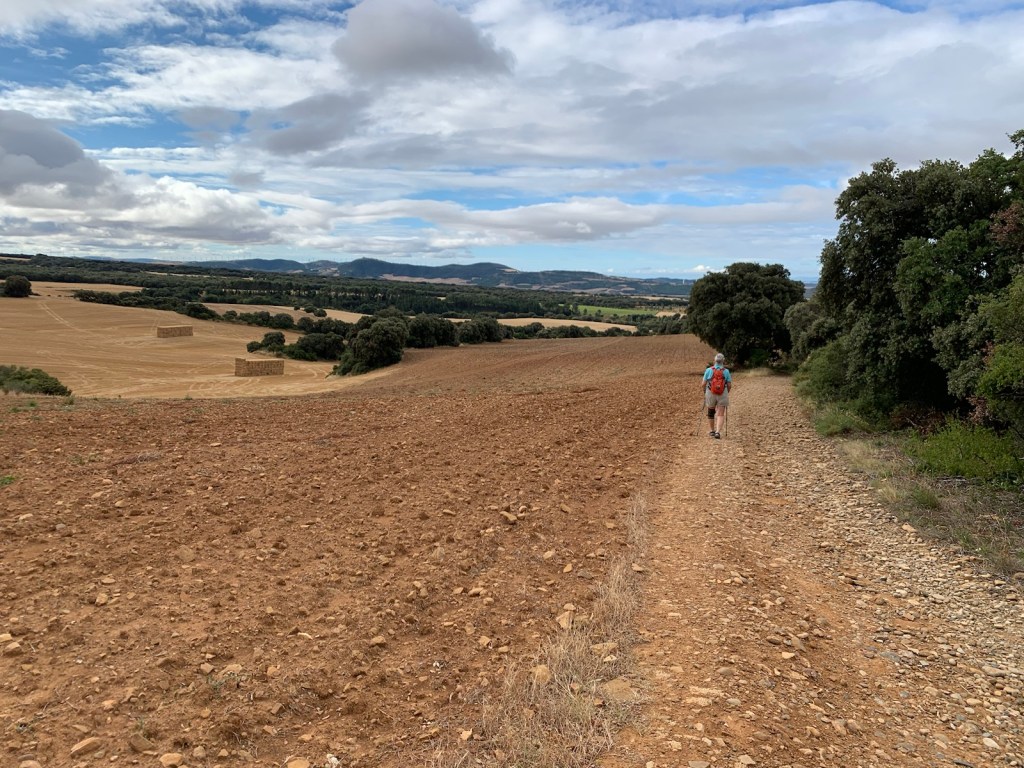
walled in vineyards of the monasteryhumongous Irache campgrounds and sports complex with multi-sport fields, courts and poolscontinuing toward “Monjardin”, 11th century castille in the distancewalking along grain fields with the unusual Sierra de Lóquiz mountain range in the distanceyounger pilgrims passing usone of the few downhill sections on today’s walkshort, steep ascent into hamlet of Azquetabreakfast in Azqueta with Castillo de San Esteban looming in backgroundA steep, rough, overgrown section of Camino just before Villamayor de Monjardin.the way began to level out a bit and we walked on the edge of some of the vineyards of the “Jardin”.and we got a closer, final look at the Castilloa partial view of the Jardin below
As we walked into the village, Linda commented that the entire way seemed uphill, but not terribly difficult. Jim’s Apple watch confirmed that we had a total elevation gain of 1053 ft. But because the gain was spread over most of the 6 miles, it did not feel challenging while we walked it.
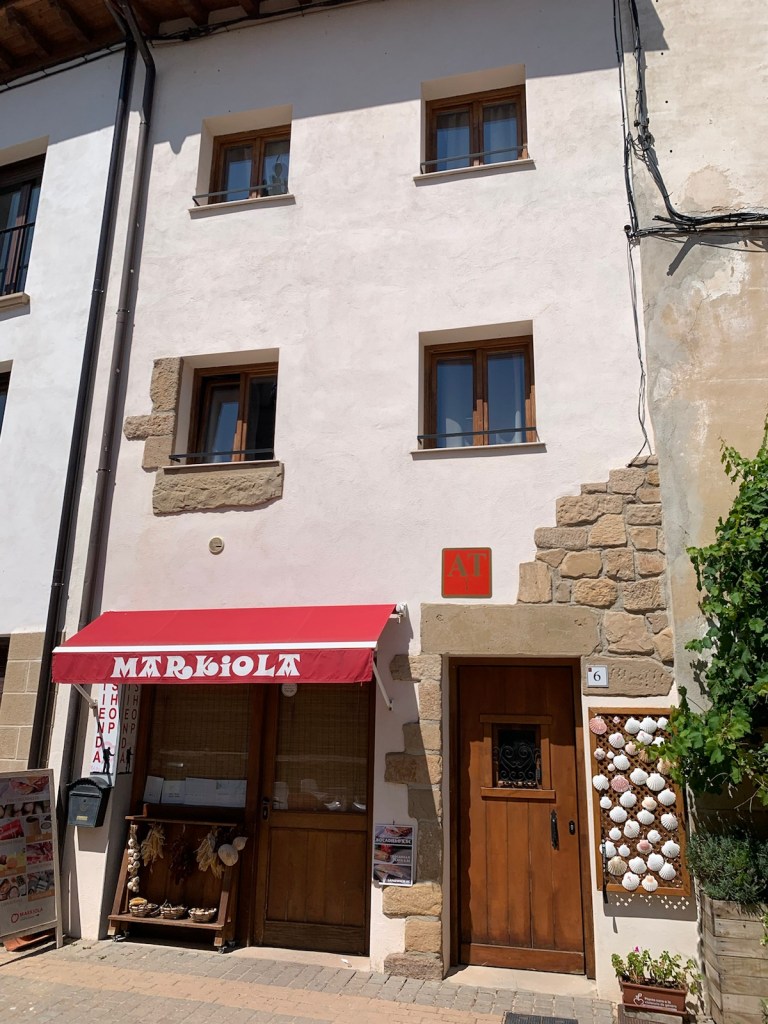
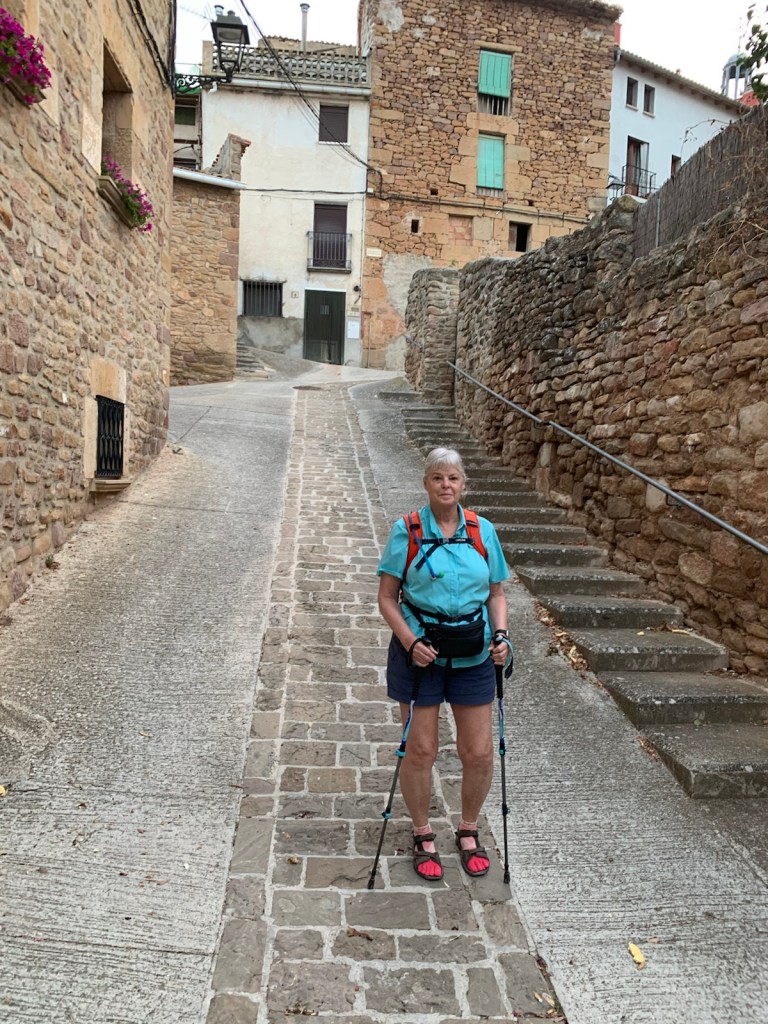
our lodging in Villamayor de Monjardin… our door on the right and our 4 windows and two floors above.
Markiola is a unique property and a hidden gem in the village of Villamayor de Monjardin. This is our 3rd time to stay here. We like it because it has everything we need in an overnight stay. This small village (pop.129) has very limited facilities and limited hours of operation. But Markiola has everything you need, including food/ supplies for lunch, dinner, breakfast and snacks for the “road” (Camino) without needing to go off of the property. Oh, and we have a small grocery store literally next door.
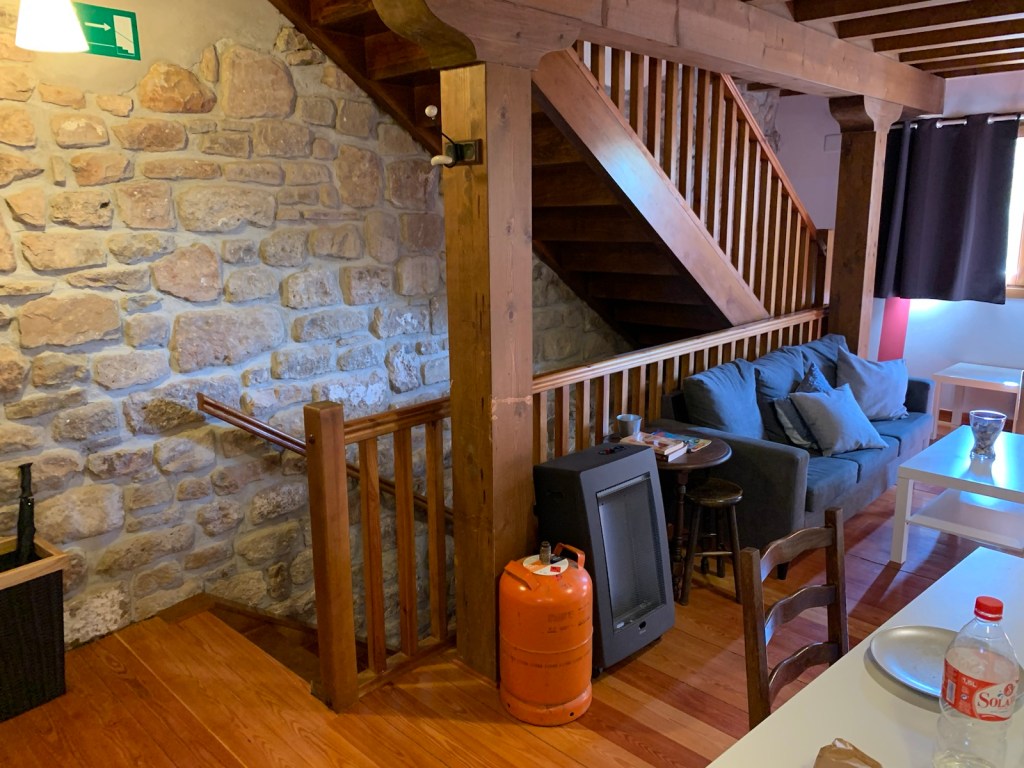
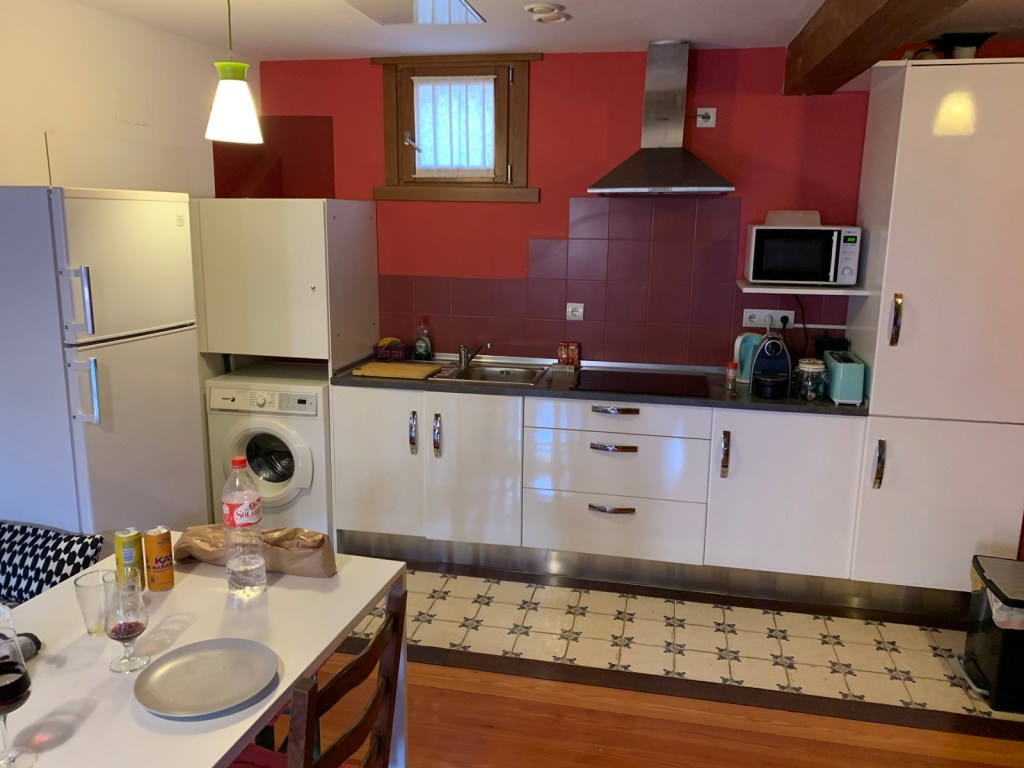
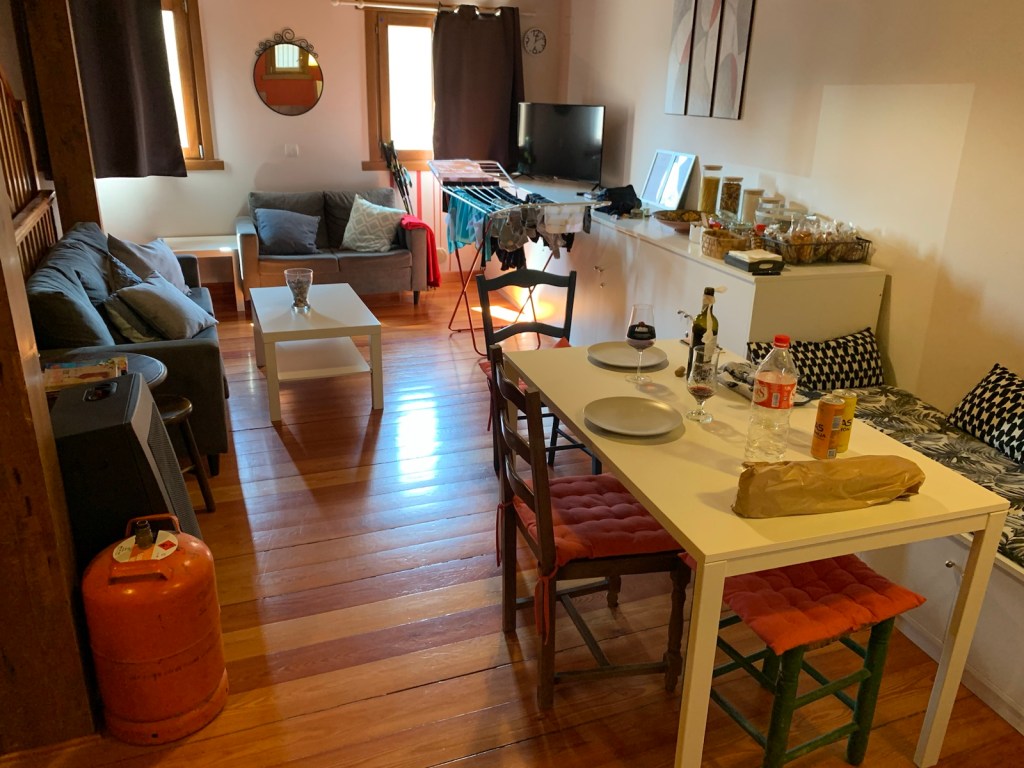
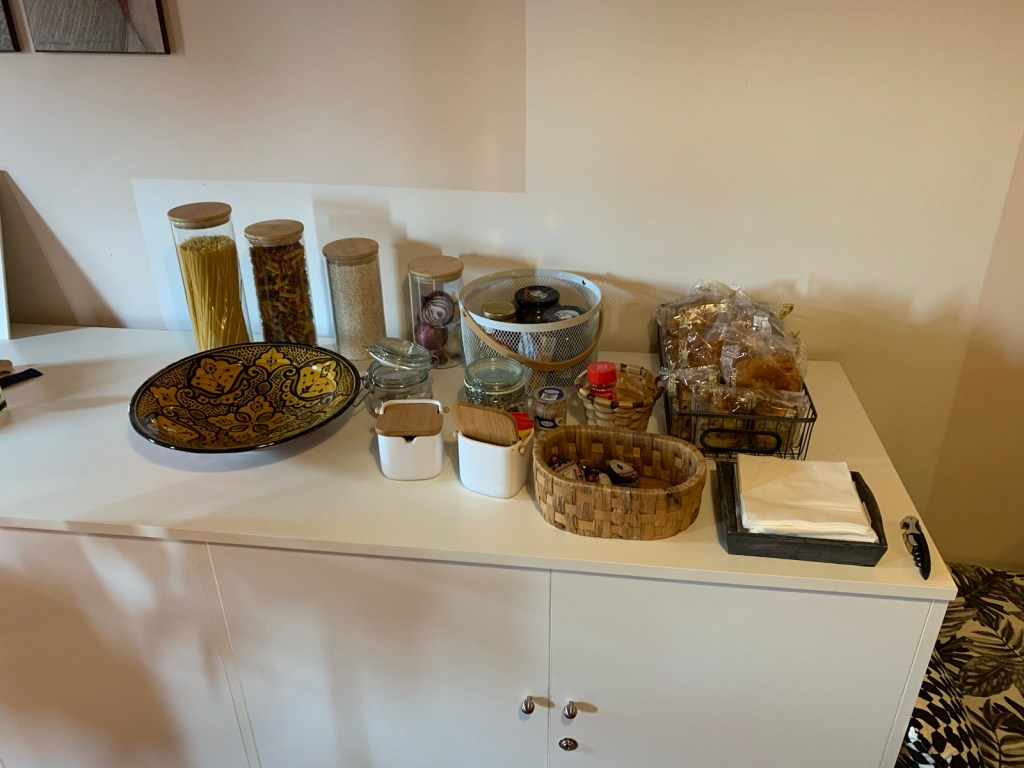
the main floor accessed from ground level front door and stairs to main bedroom and bathroom on second level. a full kitchen, a nice washing machine, well supplied fridge (fresh eggs, selection of sliced meats and cheese, drinks, bottle of Navarre wine, condiments and spreads, yogurt, milk, juice, etc.a spacious living and dining area and even room for portable clothes drying rack.a nice selection of snacks, pastas, canned beans, cocktail meats, coffees, teas, onions, rice, olive oils, vinegar, a fresh baguette, etc..
Today, because of our early start, we arrived at 10:00, two hours before our scheduled check in. The owner had emailed us the entry code for the front door, yesterday, so we tried it and got immediate access. The owner who also runs the only grocery/snack bar in the village, saw us entering the door and helped us with our packs (which were waiting for us just inside the door) and told us we could do the check in process later, when convenient.
In addition to resting and blogging, we prepared bocadillos for lunch, spaghetti for dinner, washed and dried clothes and prepared some snacks for the Camino, tomorrow morning.
We love everything about this place. A nice day on the Camino Frances.
Today was our 6th time to walk from Lorca to Estella. The sites along the way are rather mundane, the physical challenges are few and the focus is totally on the arrival to one of our favorite cities on the Camino… and less so on the journey.
joining the Camino dirt path as we left Lorcagrain fields and a few assorted vineyards and vegetable gardens dominated the scenery for the 2 miles walk leading to the next town of Villatuerta.The grain fields and farmland runs right up the residential streets of Villatuerta.
One highlight of the day was a return to our breakfast routine of cafe con leche and tostadas con mantequilla y marmalada. Yaa!’
Having a break-fast at a favorite spot in Villatuertaan impressive Romanesque bridge in the center of the villagethe Iglesia la Asunción towers above ghetto town… never been inside… doors always locked when passing through.Leaving Villatuerta, Ermita de San Miguel in distance on leftpassing the Ermita del San Martin on our way to Estella.downhill into a park, past some corralled horses and a farmuphill again through an industrial area and popular walking, jogging paved road leading into Estella.first building of Estella proper ahead walking through “old Estella”nearing our hotel located in center of old cityHostal Cristina (center)
We walked directly to our hotel, Pención Cristina. It was only 11:00, so we didn’t expect to be able to check in. But, alas, the door was opened for us and we checked in and were taken immediately to our comfortable room.
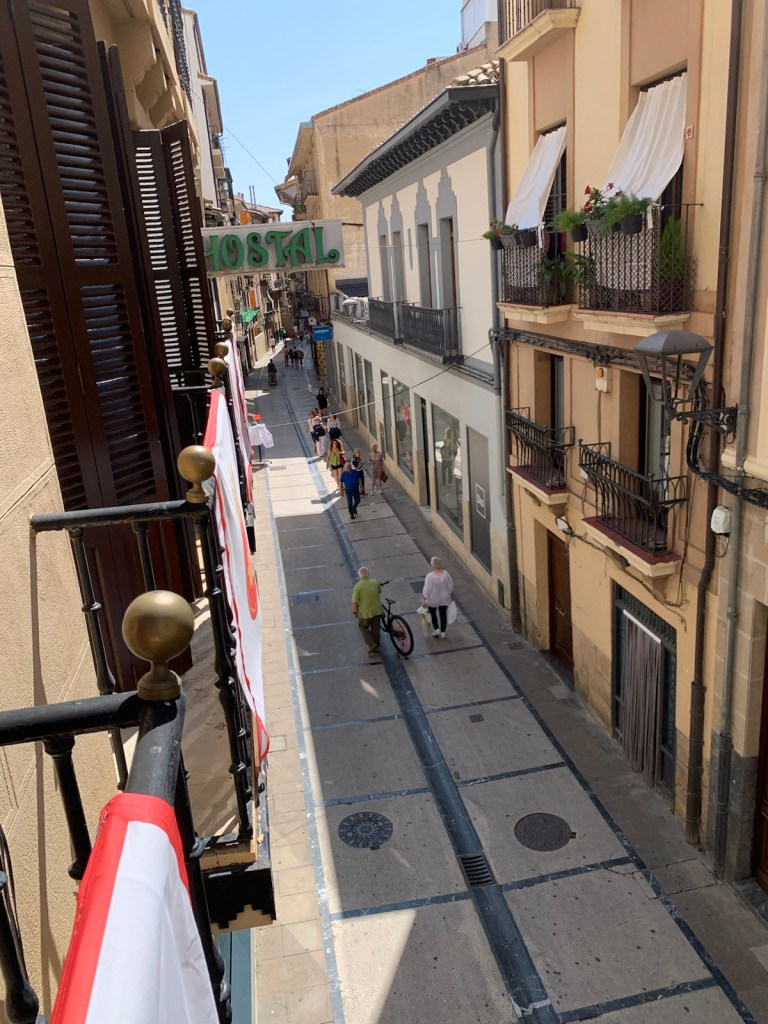
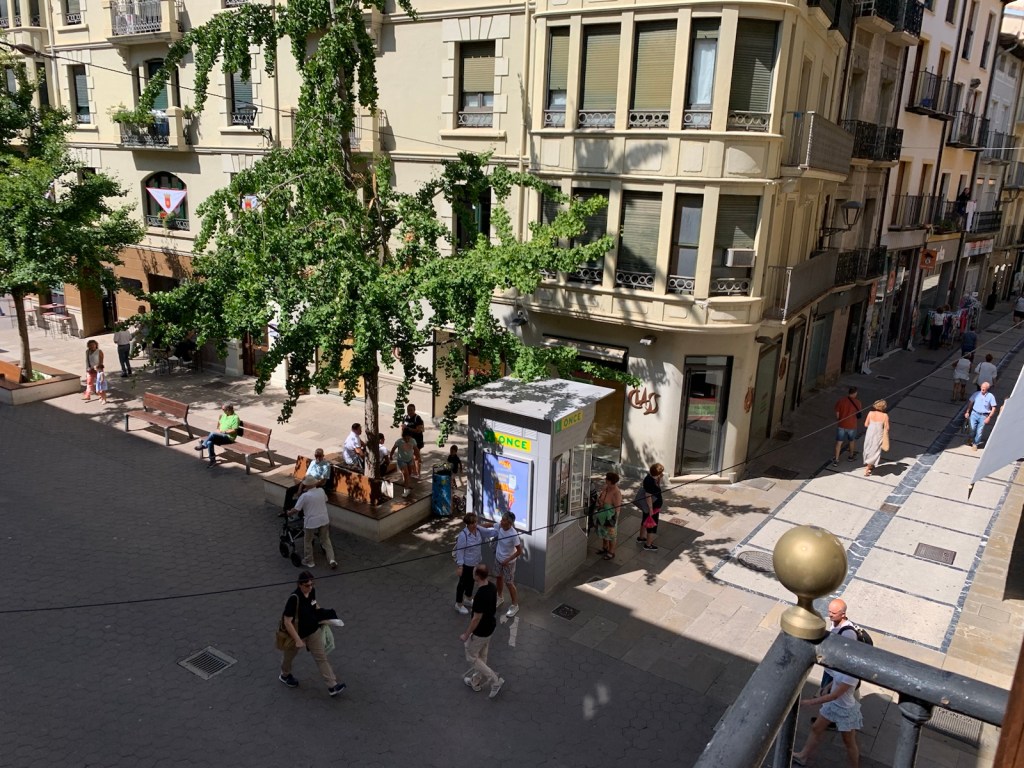
This is also the 6th time we have stayed at Hostal Cristina, located on the Plaza de los Fueros. Although a large stage was installed in the Plaza when we arrived, no major festivities appeared to be underway. In years past we have witnessed huge markets, annual festivals with period costumes, “gigantes” dancers, bull running, bands, parades, etc. all in the plaza viewed from our room balcony or out among the revelry.
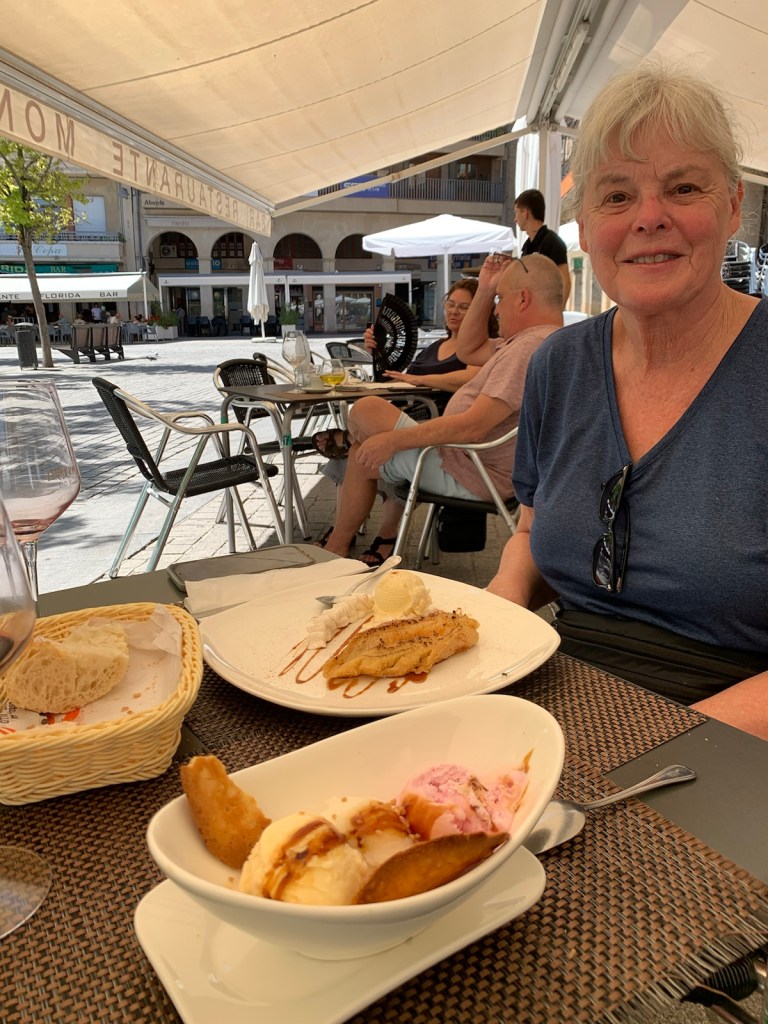
a view from one of the 3 balconies in our toomanother view from our roomcapping off a delicious lunch/dinner with dessert (french toast & ice cream (vanilla, strawberry and lemon sherbet)
So today, we had our meal for the day in the plaza from 2:00 – 3:30 and spent the rest of the day relaxing in our room, just enjoying being here and reminiscing our extraordinary past experiences here.
Estella is a very special place among our Camino adventures.
We left Albergue Maralotx and followed the maze-like streets exiting Zirauki (Basque)…
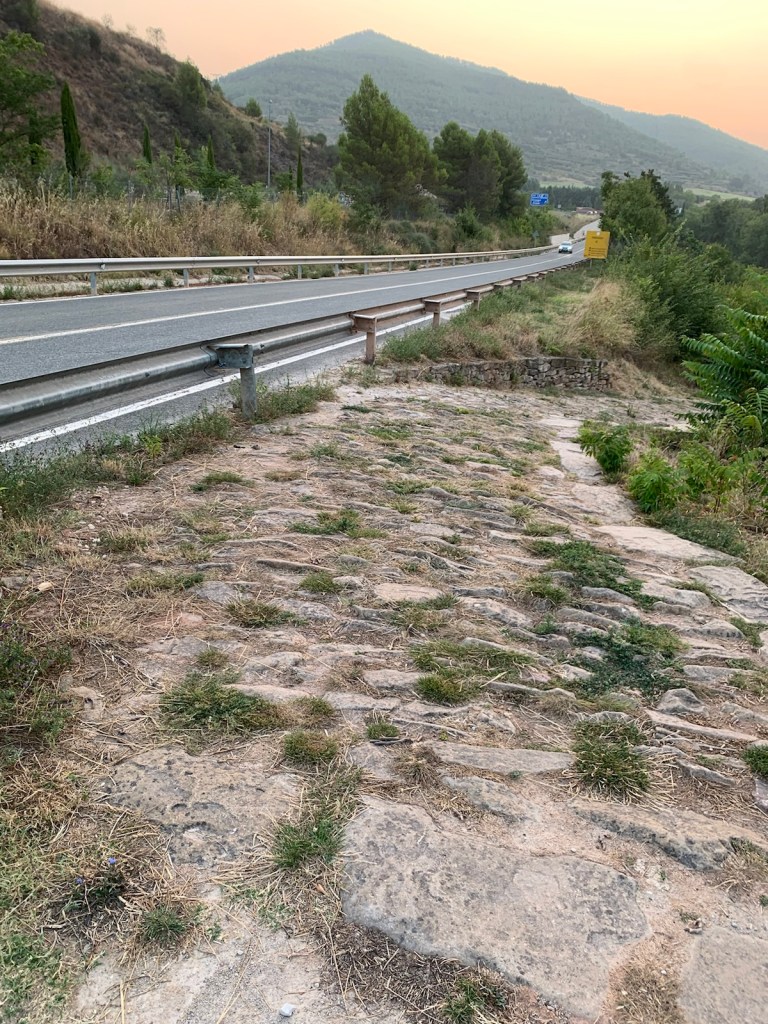
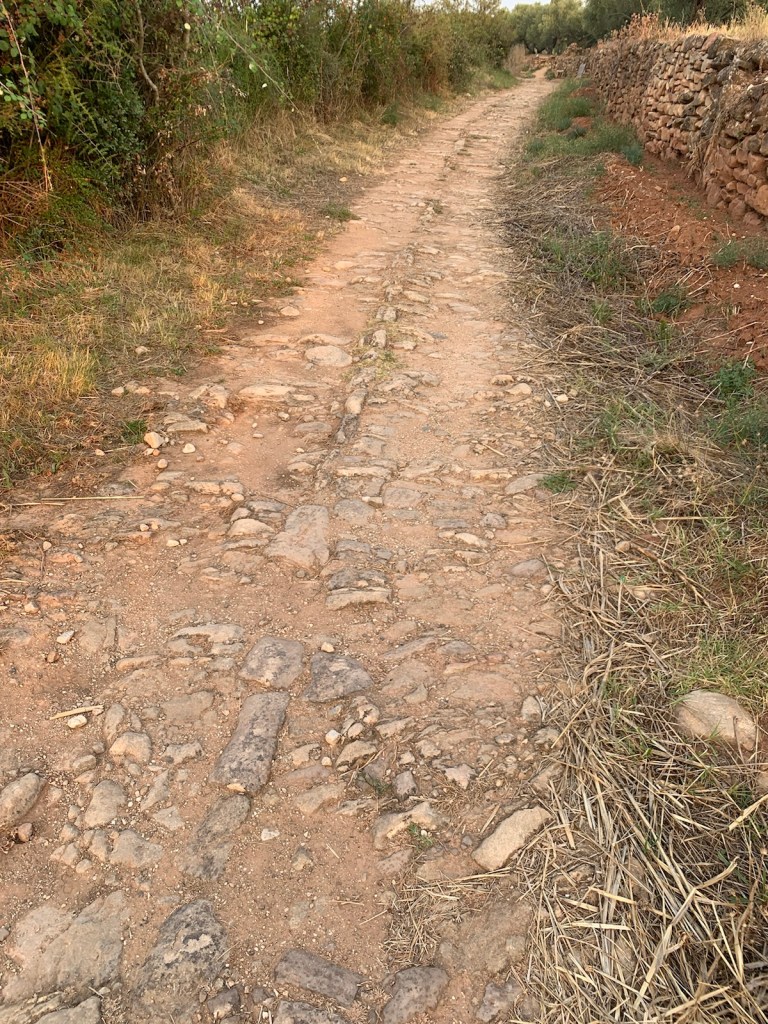
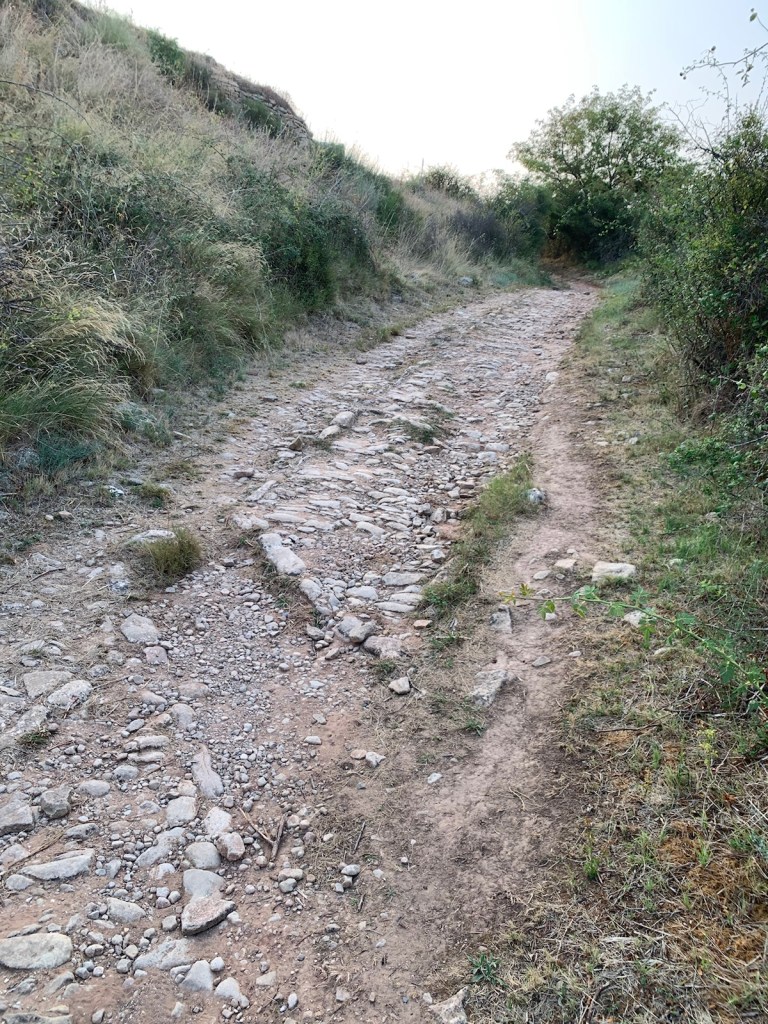
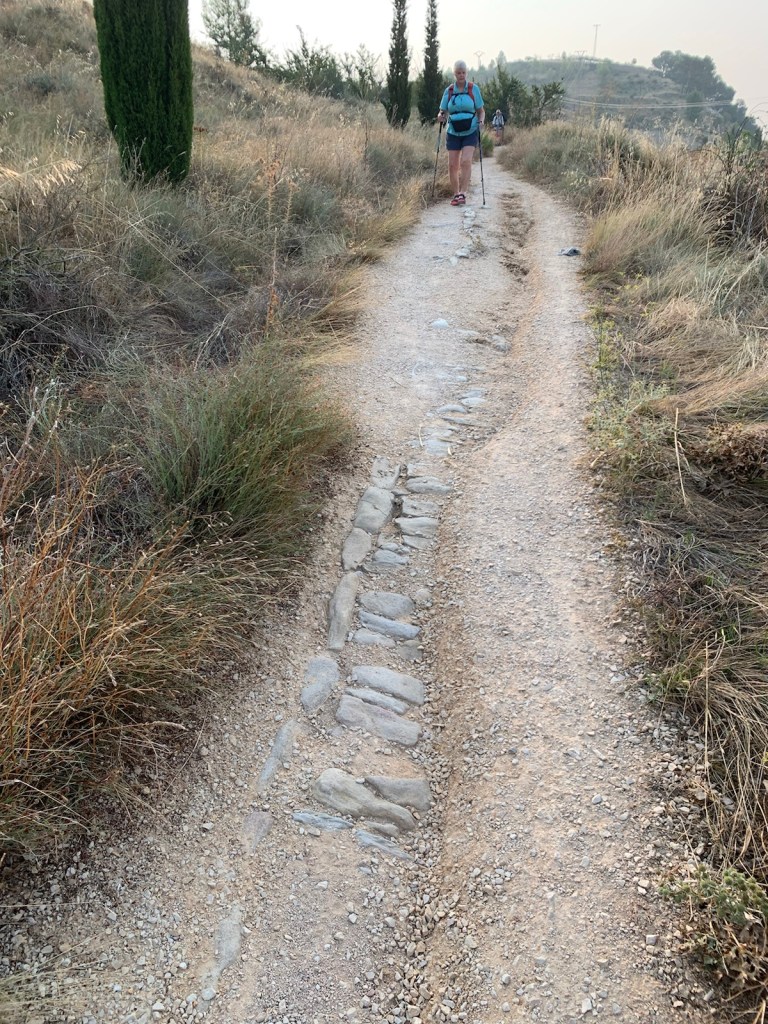
… and immediately joined a Roman road!
Roman road Roman bridgemodern highway (expected life … 10-20 years?) adjacent Roman road after 2000 years… better than some current roads around Greenville.
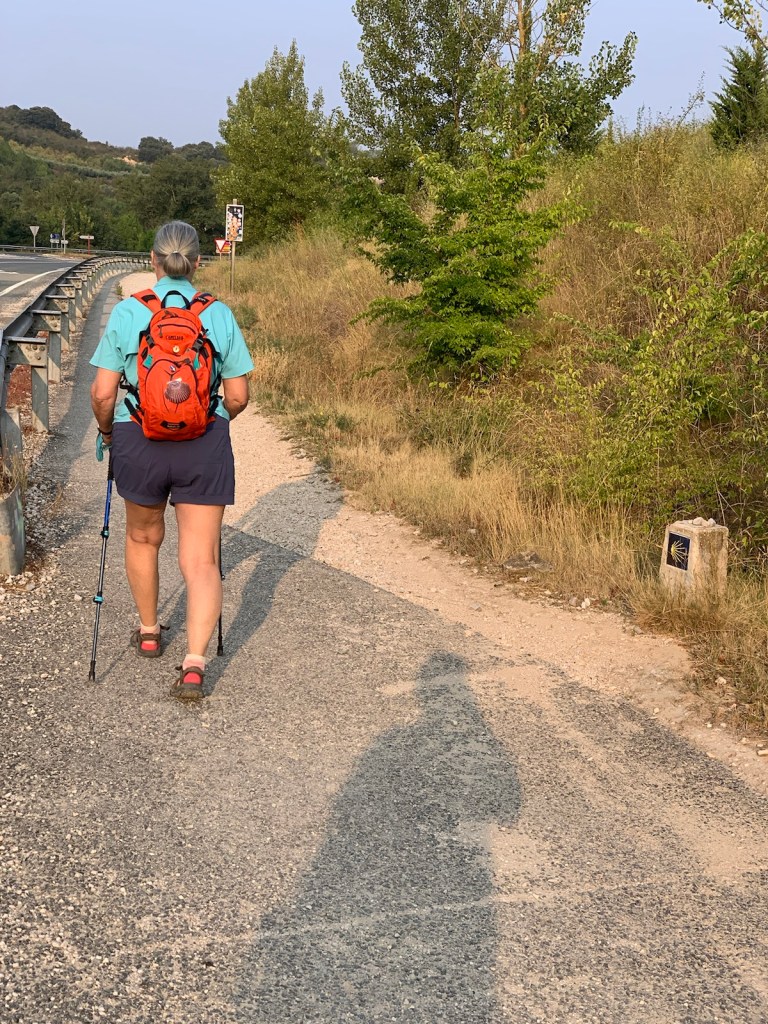
After crossing a major expressway, the Camino ran parallel to a gravel farm road winding through wheat fields, vineyards and an overgrown creek bed. This continued for nearly 2 miles.
Scattered along the way were short stretches of a Roman presence from over 2000 years ago. Much of the Camino Frances follows the same road built and used for several hundred years to transport precious metals and other goods from Northwestern Spain to Rome.
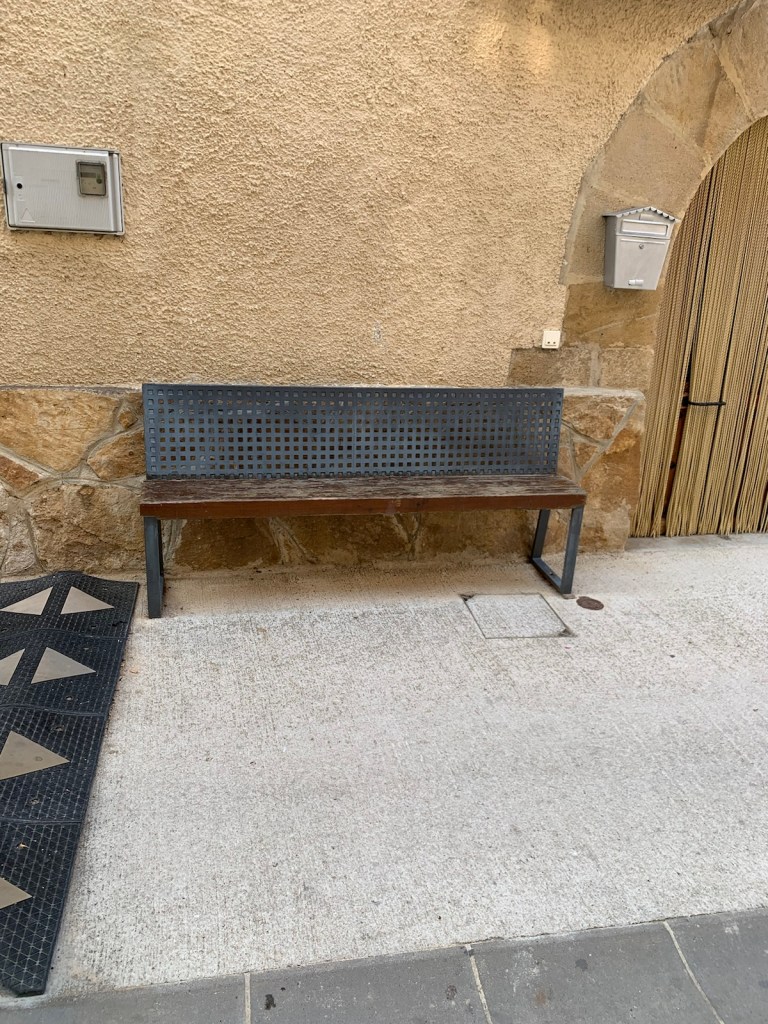
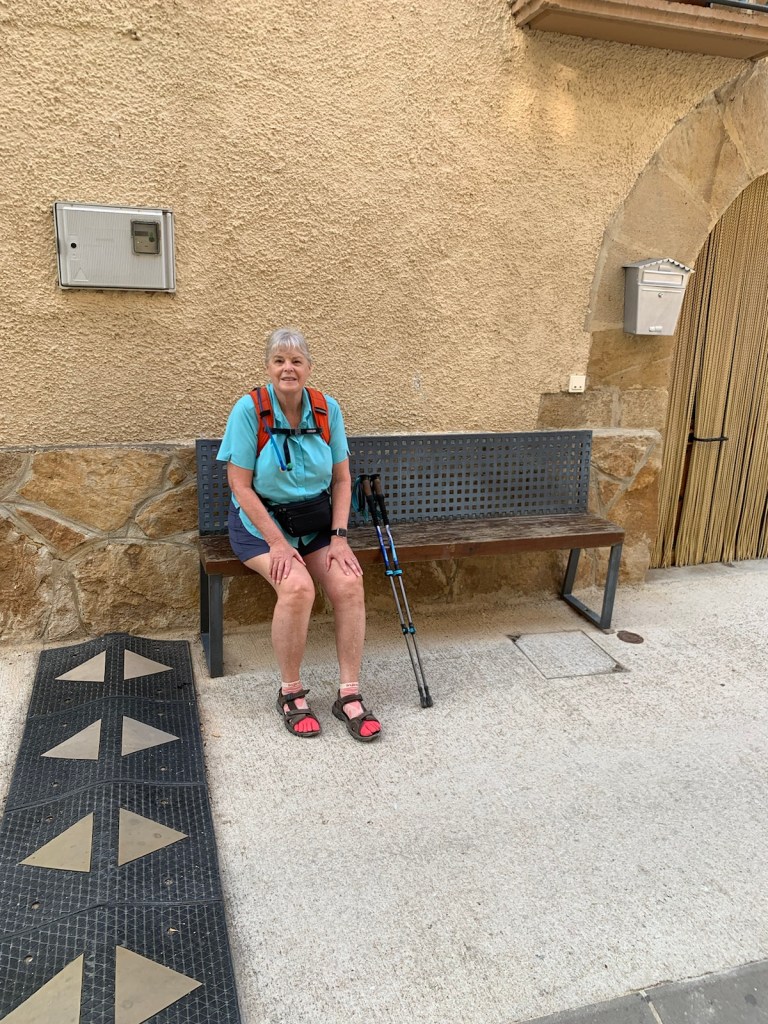
walking on farm road with camino path on rightanother Roman bridge, probably restored during last 2000 yearsremnants of Romansas we neared the village of Lorca, (pop. 125) the path paralleled a seconday paved highwayunusual present-day aquaducta steep concrete walkway up to LorcaThe Camino path became dirt again and descended down to a valley before becoming a steep path into Lorca… but, we noticed this paved road in Caminos past, but not taken, so decided to try it today…. wished we had tried it sooner!“Linda’s bench” on main street, Lorca… a welcome rest stop after a steep climb on every Camino thus far.… continuing a tradition established in 2014.
We opted to patronize a different bar from our usual for breakfast. And since we were arriving at Lorca too early (10:00) to checkin, we decided to kill an hour or so before walking on to our destination on the other end of main street.
But being already seated and committed, we were informed that tostadas were offered, but not with our usual butter and jelly (mantiquilla & marmalada) to go along with our cafe con leche. Unwilling to go elsewhere, we were now faced with a choice between two different condiment for our toast… tomato puree or olive oil. These two options are common in Spain, but up to now, we never wanted to forgo the toast with mantiquilla & marmalada for the unknown. However, today, faced with this unsettling dilemma, we went for the tomatoes. While the tomatoes on toast were not a disaster, we’ll continue our preference for M&M!
Our extended breakfast of: cafe con leche, tostadas with tomatoes, fresh squeezed OJ, and a packet of hazelnuts completed and an interesting conversation with a pilgrim from Florida, we proceeded on to Casa Nahia, our bed & breakfast for the night.
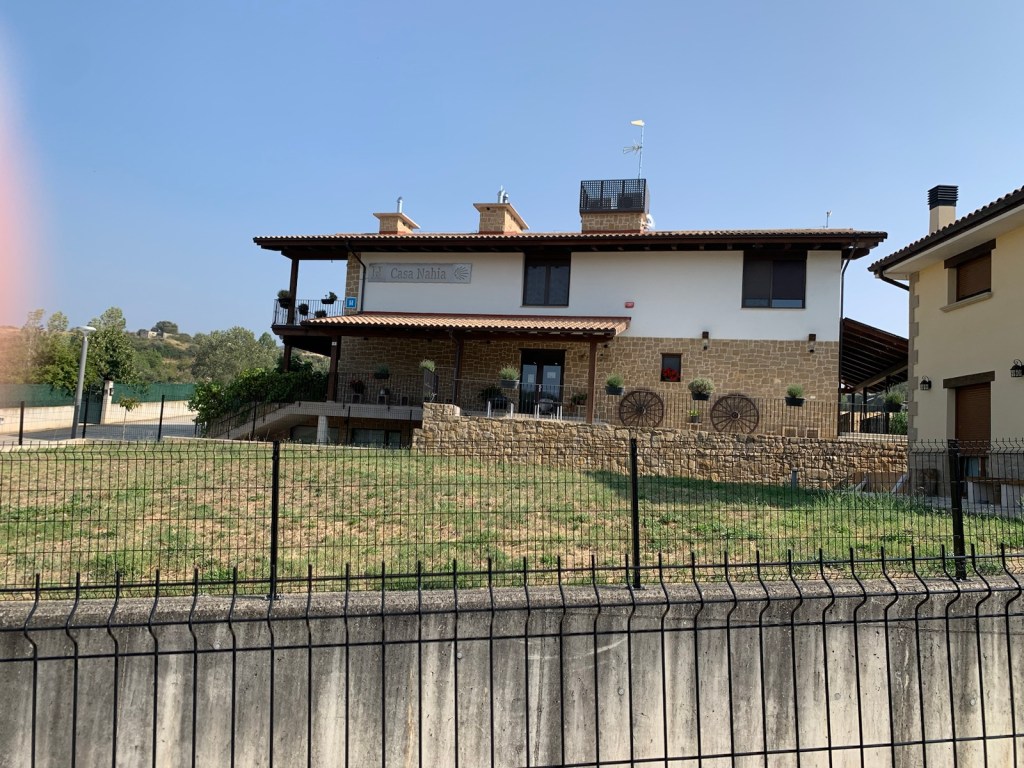
walking down Lorca main streetCasa Nahaiour roomcommunity kitchendining area and panoramic view
We prepared our own pizza for lunch, then relaxed the rest of the afternoon.
A traditional dinner was prepared by Raol, the owner. First course was a white bean soup with soft fresh made bread rolls. Second course was a turkey stew with homemade fried potatoes and stewed red peppers. Dessert was a strawberry yogurt.
We were the only guests for dinner, so we settled our account for the day and retired to our comfortable room for the evening at 7:30.
Tomorrow will be another short day (5 miles) walking into one of our favorite Camino towns, Estella.
Iglesia San Juan Bautista as we left Obaños this morning
According to a 14 Century legend, Duke William (Guillermo) of Aquitane and his sister Felicia undertook the Camino de Santiago. On the return journey, Felicia was overwhelmed with piety and went to become a hermit in a nearby residence rather than returning to her life of luxury. Her brother tracked her down and tried to convince her to return to her court duties. When she refused, he became enraged and stabbed her to death. He was then overcome by remorse and walked to Santiago again and returned to Óbanos to mourn his sister for the rest of his life. He built a hermitage on Arnotegui (a southern hilltop) to serve pilgrims and the poor. Guillermo’s silver-covered skull is kept in Iglesia San Juan Bautista. The town puts on a play called The Mystery of Óbanos every year, retelling the legend with a cast of most of the 800 villagers!
We got back into our favored routine this morning by walking a little over a mile then stopping in Puenta la Reina for a routine cafe con leche and dos tostatos
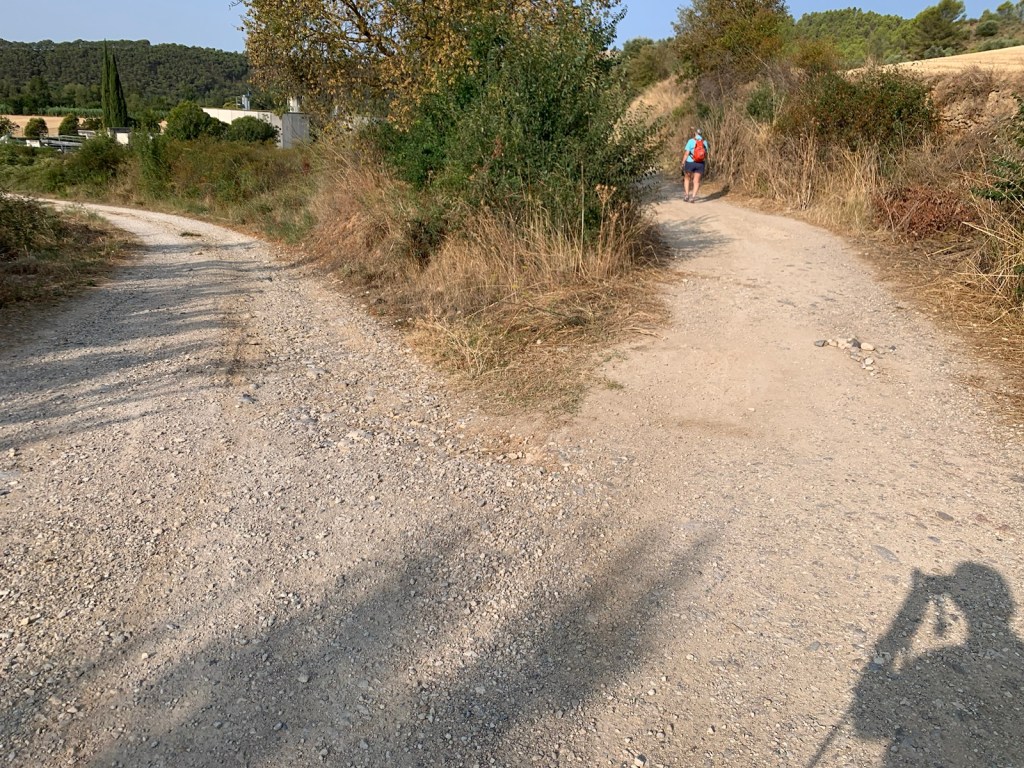
The hermitage built by Guillermo, seen from our walk out of Obaños, where he served pilgrims and the poor until his death.Hermitage in top right cornerleaving Obaños and heading toward Puenta la Reina (in the distance)Entering the old section of Puenta la Reina.approaching Iglesia de San PedroEntrance to Iglesia de San PedroThe Puenta la Reina, built in 11th Century by King Sancho el Fuente’s wife… so pilgrims and other travelers on the Roman route could avoid expensive ferrymen and treacherous boat rides.walking across the 1000 year old bridgeleaving Puenta la ReinaPilgrims must stay alert or get lost… no mark on this fork on the way, with only clue being the arrow made of stones by pilgrims on the right.
About a hour and nearly 3 miles past Puenta la Reina, we began a trek up the side of a mountain. We covered 3/4 mile while climbing 300 feet. (7.5% average slope) shown in following 5 photos.
starting up the mountaintwo cyclists passed us near the top of the mountain: one struggling to keep moving and the other giving up and walking his wheels instead.Linda reaching the top (with forced smile)Looking back on Mañeru, the only bar/albergue in the hamlet was not open until 2:00 p.m. , so we didn’t bother with photos.leaving Mañeru we could see Cirauqui two miles aheadThis view of Cirauqui is among our top 5 favorites on the Camino Frances.
This will be our first opportunity to stay in Zirauki (Basque). There is only one place to stay, Albergue Marslotx, and on all our previous Caminos, it has been fully occupied.
We walked into Cirauqui at 11:45 and stopped at a snack bar for a light lunch and to pass the time until our 1:00 p.m. checkin.
Our room was ready at 1:00 and we were pleased with the welcoming host, unique decor, cleanliness, and excellent view from the balcony.
We did chores, rested and spent a leisurely afternoon recovering well from our walk.
At 7:00 we joined other pilgrims in the albergue dining room for a traditional dinner of mixed salad, garbonzo bean and mushroom stew, local Navarre wine and custard for dessert.
We shared a table with a delightful couple from Leon, France, who were walking their first camino and were only going as far as Burgos. Their English was limited, both our Spanish was even more limited and so our conversations were in French and went surprisingly well, as far as we can tell.
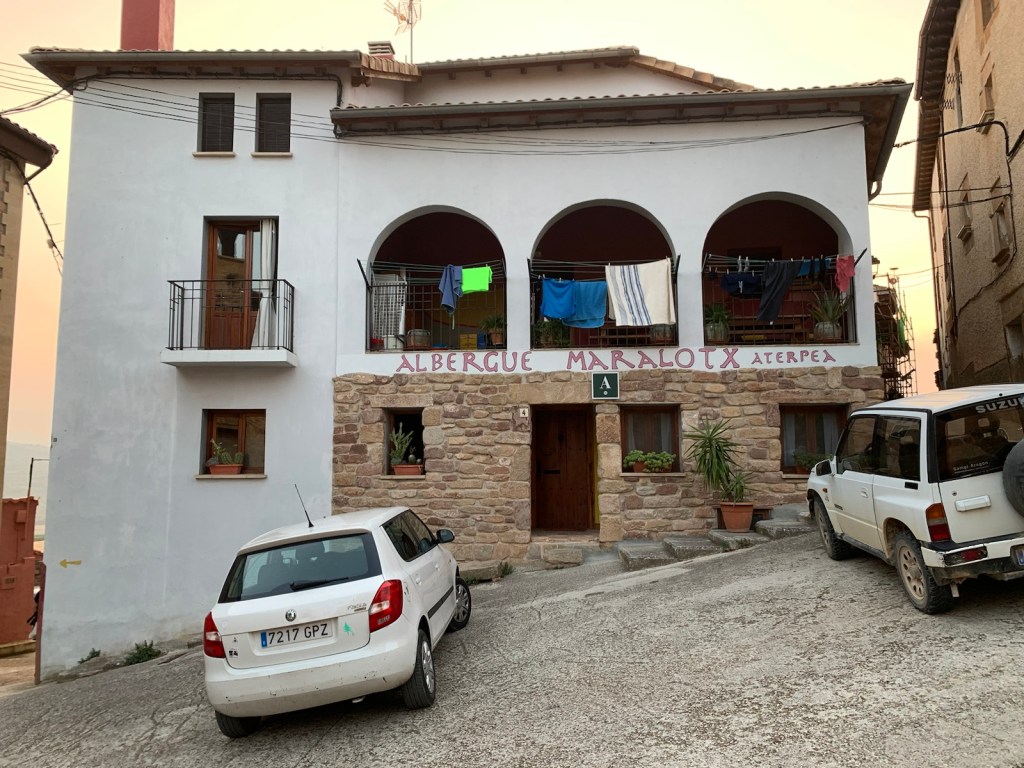
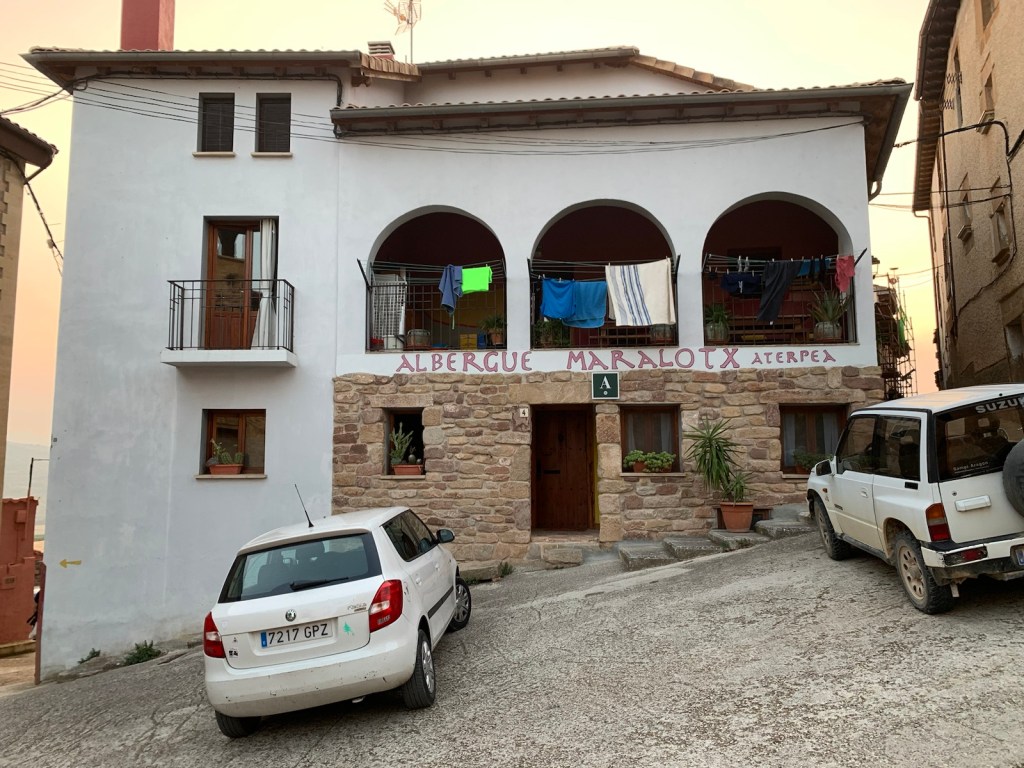
the Albergue Maralotx pilgrims dinnerOutside view of Maralotx Albergue
After dinner we retired to our room, finished the blog post and called it a day. We seem to getting a little bit stronger with each day.
From our hotel, a 10 minute taxi ride took us to the outskirts of Pamplona and the village of Zaraguiqui. At the only bar, we chatted with a pilgrim from Ireland, who was running, not walking, the Camino. After buying a banana to tie us over until breakfast in Uterga, we began walking.
Today’s initial challenge was a 1.5 mile walk climbing 500 ft (average grade of 6%) to the Alto del Perdon.
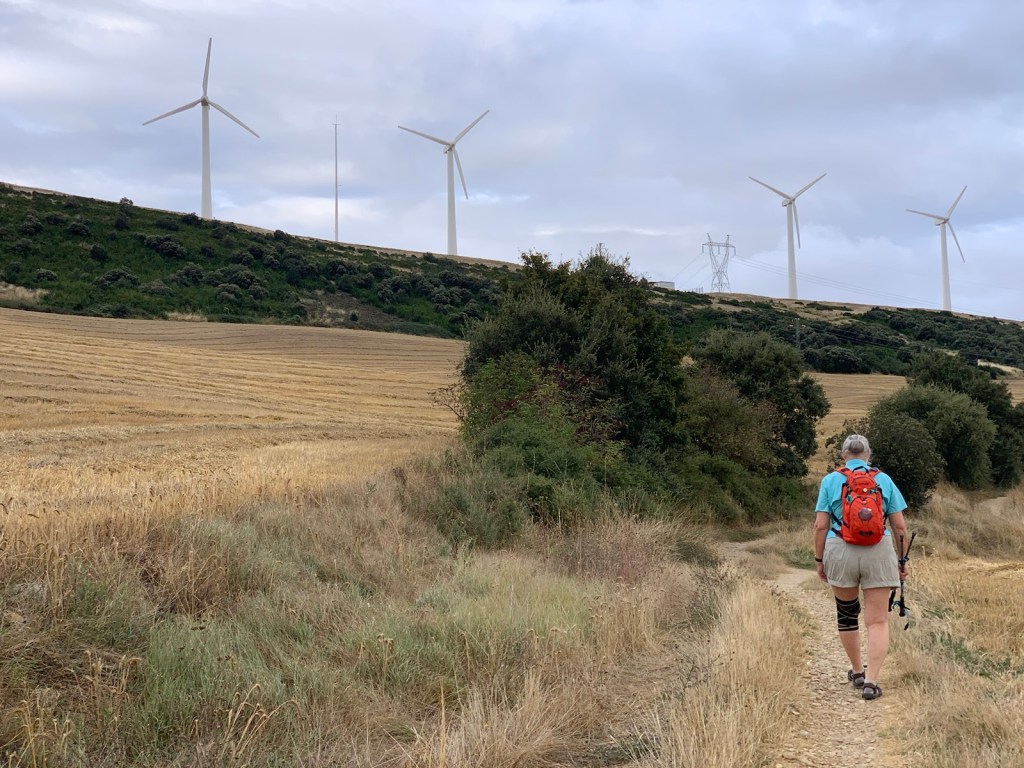
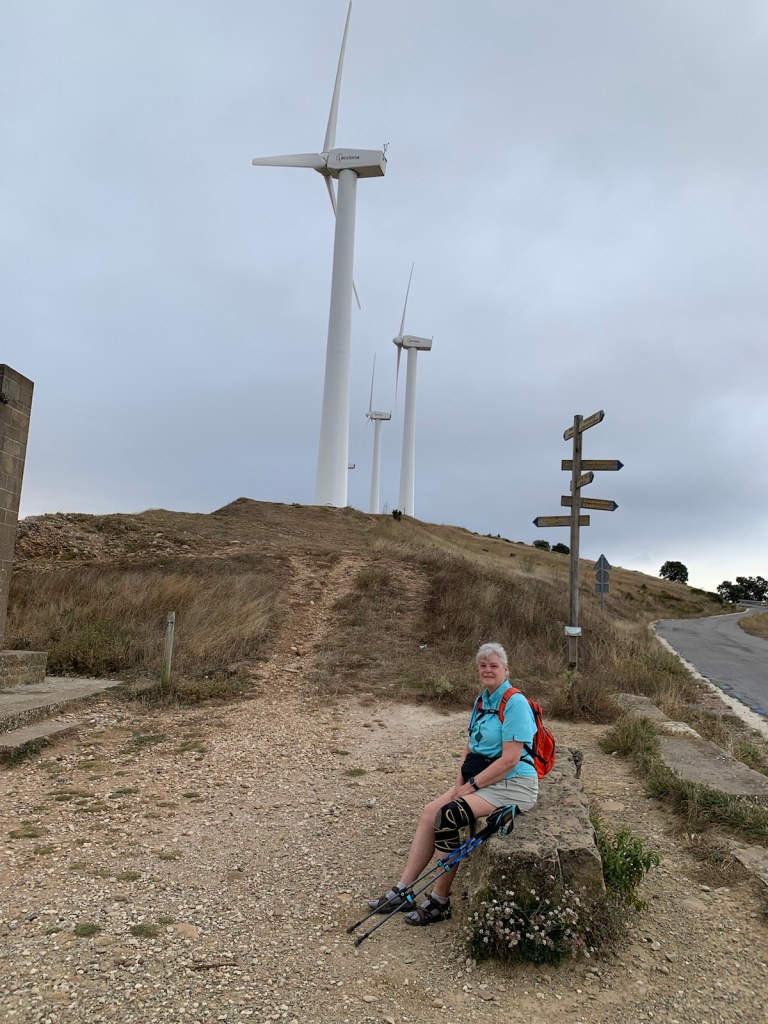
leaving Zaraguiqui, Alto del Perdon in backgroundthe view back toward Pamplonastill climbingnear the topJim arriving at the Alto Del Perdon w/Linda close behind)… 60 minutes to walk up the 1.5 miles.our first full view of the Pilgrim Sculptures at the Alto del Perdon with wind turbines lining the ridge (right)catching our breath before heading down the other sideBeginning the descent from Alto del Perdon
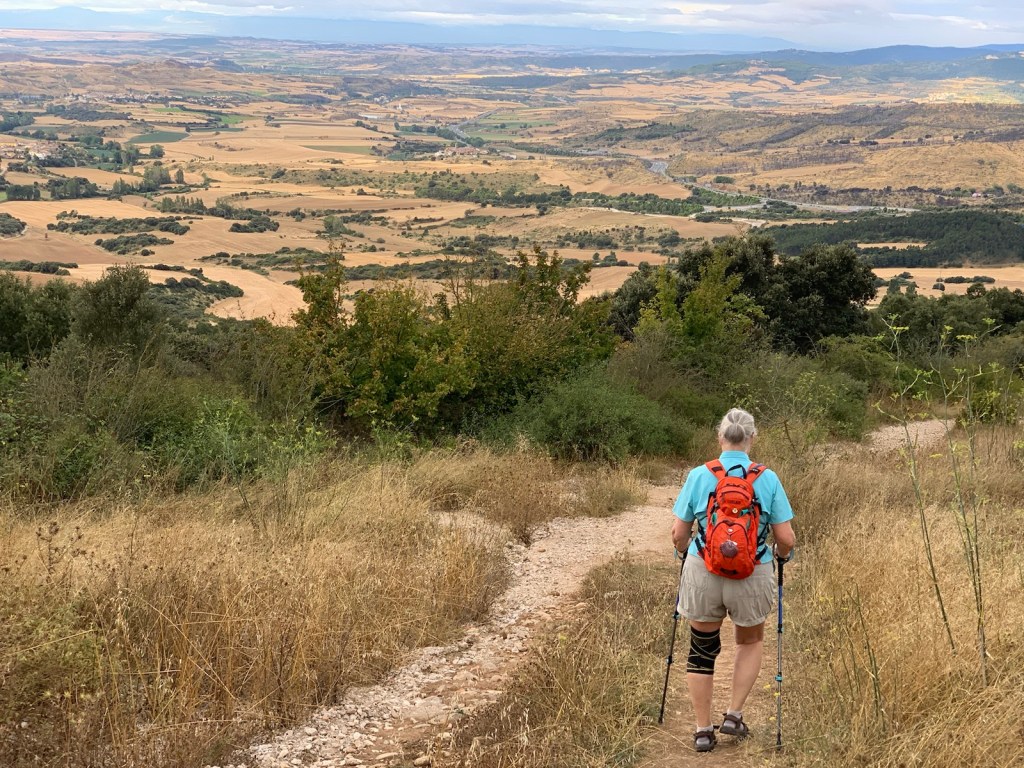
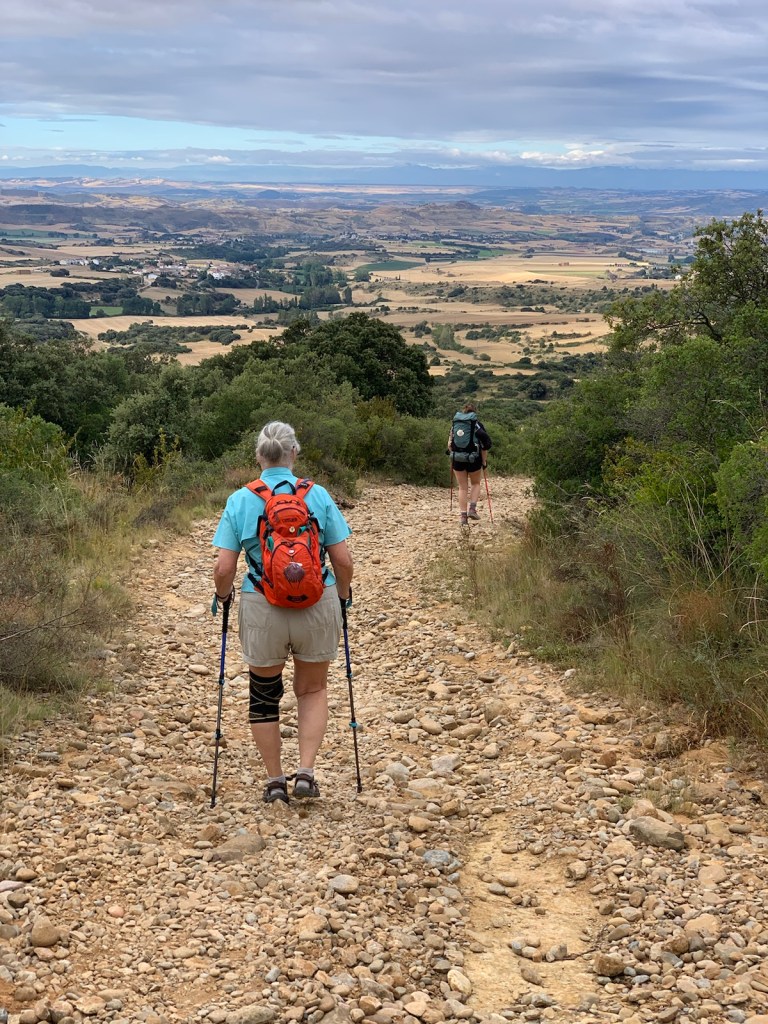
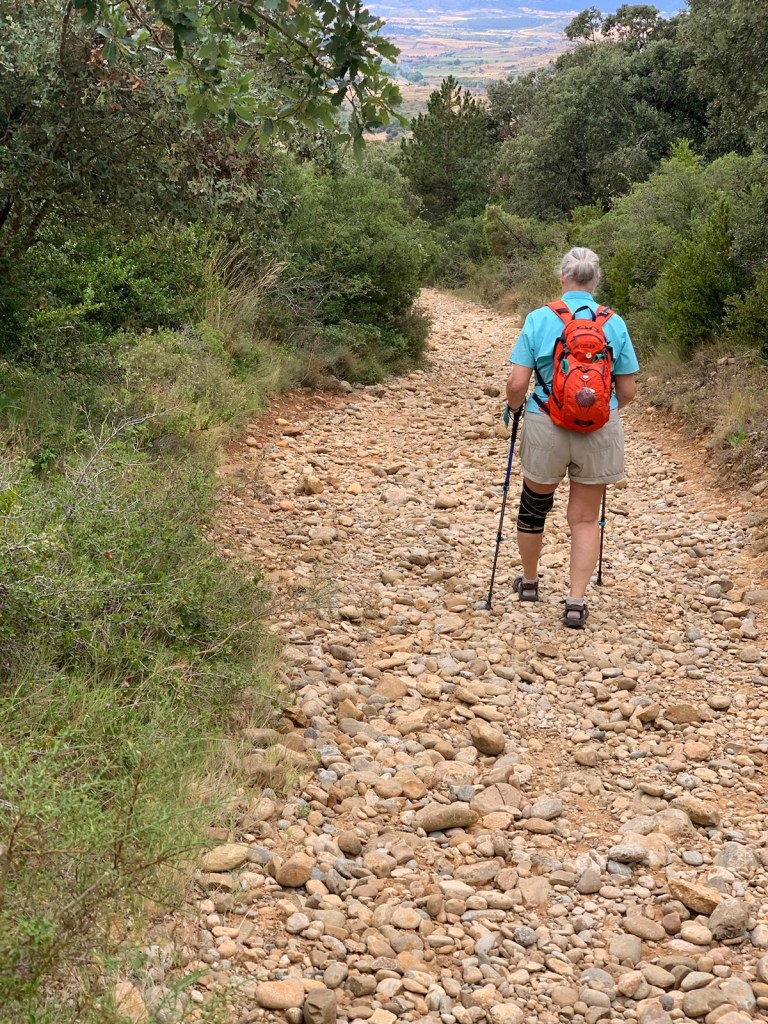
The next few photos were taken of the terrain down the mountain. The loose rocks presented a challenge for maintaining stable footing. Several 20-something pilgrims passed us, seemingly undaunted, but for our nearly 80 year old bones, joints and muscles… it was an injury in the making. Consequently, we slowed our pace, watched every step and relied on our trekking poles to minimize slipping… and made it safely down the mountain nearly a hour later.
The end in sight!Finally, back on to a more normal walking surface in the valley.moving on with the Alto del Perdon in the background
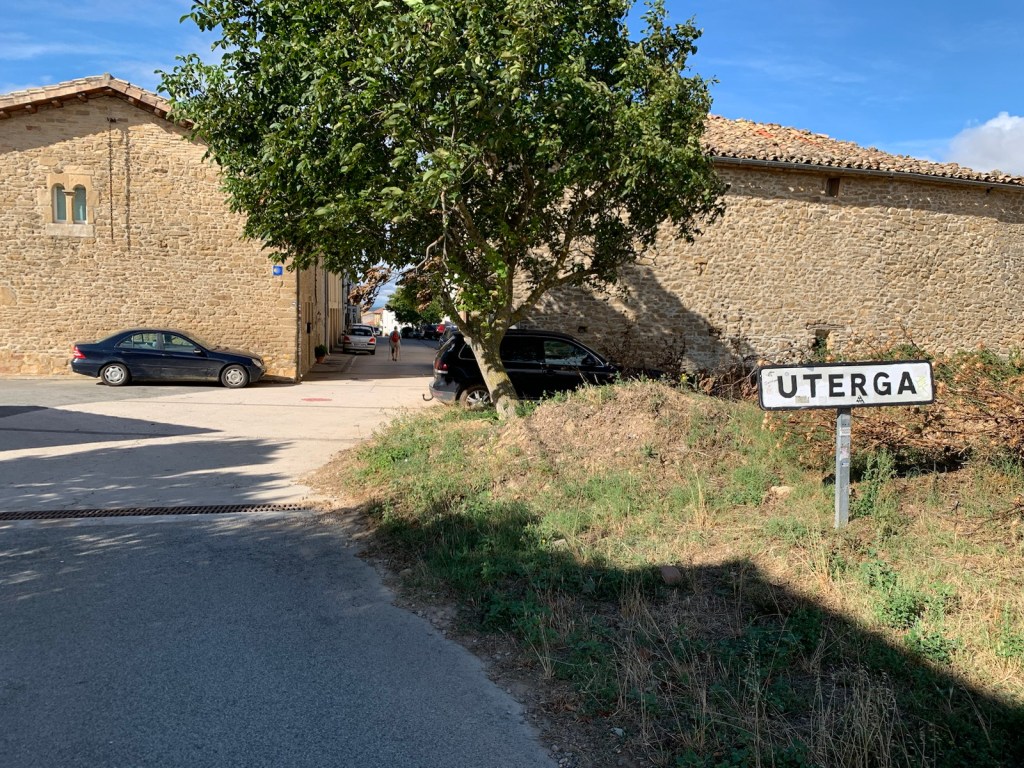
We reached Uterga a little over 4 miles and 3 hours into our walk. This village has served as a breakfast stop for all of our Caminos. It has a nice selection of food choices, clean restrooms and comfortable indoor and ourdoor seating… a real oasis after a tough walk.
But tragically, this morning it was closed for the weekend fiesta (staff must have been sleeping off the Saturday evening late celebrations. (Jim was so disappointed, he forgot to snap a photo of the locked bar/albergue gate). So we walked on, not hopeful that we would get a break before Obaños, our destination for the day.
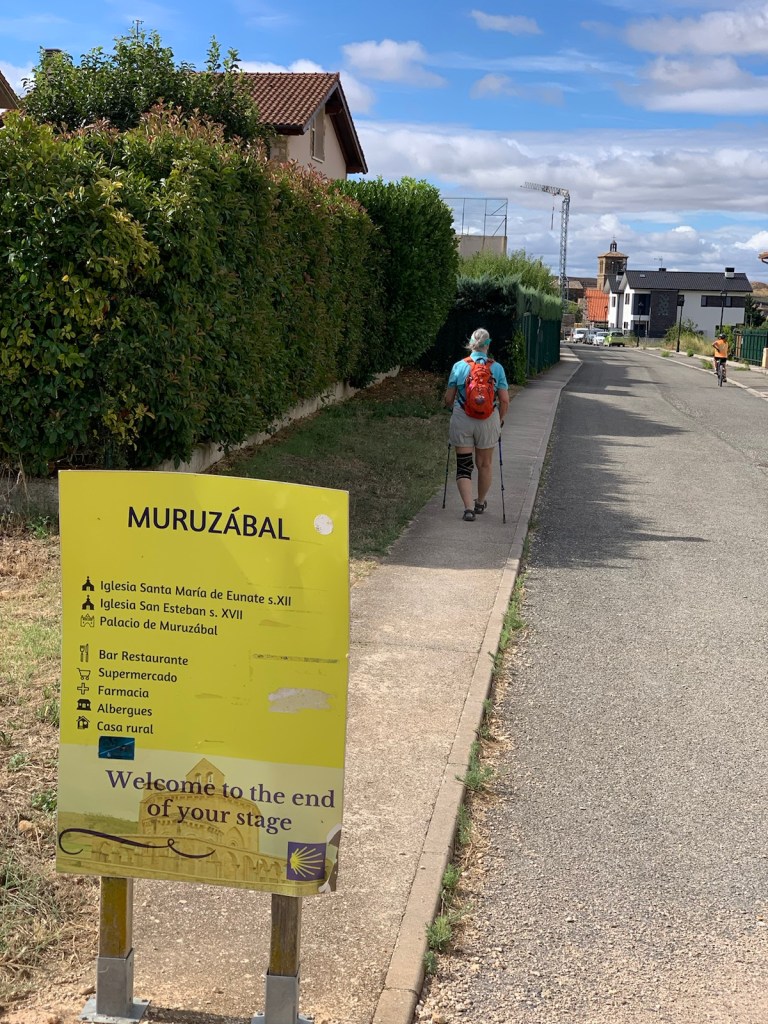
on the way to Muruzábal
On our walk into Zubiri a couple of days ago, Jim developed as issue with the “pinkie” on his left foot. Being seasoned pilgrims, we know the importance of keeping toenails closely trimmed. A too-long toenail can irritate an adjacent toe, causing a blister or break the skin, either one resulting an uncomfortable camino
A too-long toenail can also create a problem when walking downhill by repeatedly jamming into the end of one’s boot or shoe. The result can be a painful process of ultimately loosing the toenail and possible infection. Or it can cause a blister to form under the toenail, which is also difficult to treat and painful until corrected.
Jim failed to trim the left edge of the toenail on his left foot and on the last mile into Zubiri, his oversight, resulted in a jammed pinkie toenail the created a blister under the nail and a potentially lost nail.
Seasoned pilgrims obviously can get careless with their feet and this one is paying for it with nagging pain with every step.
After treating the “injury” and wearing sandals (open toe) on our rest day in Pamplona, Jim started today wearing his boots. All initially went well, until, on the way down from Alto de Perdon, the injury became irritated and started to get uncomfortable. This morning, Jim added his sandals to his day pack, as we left the hotel… just in case.
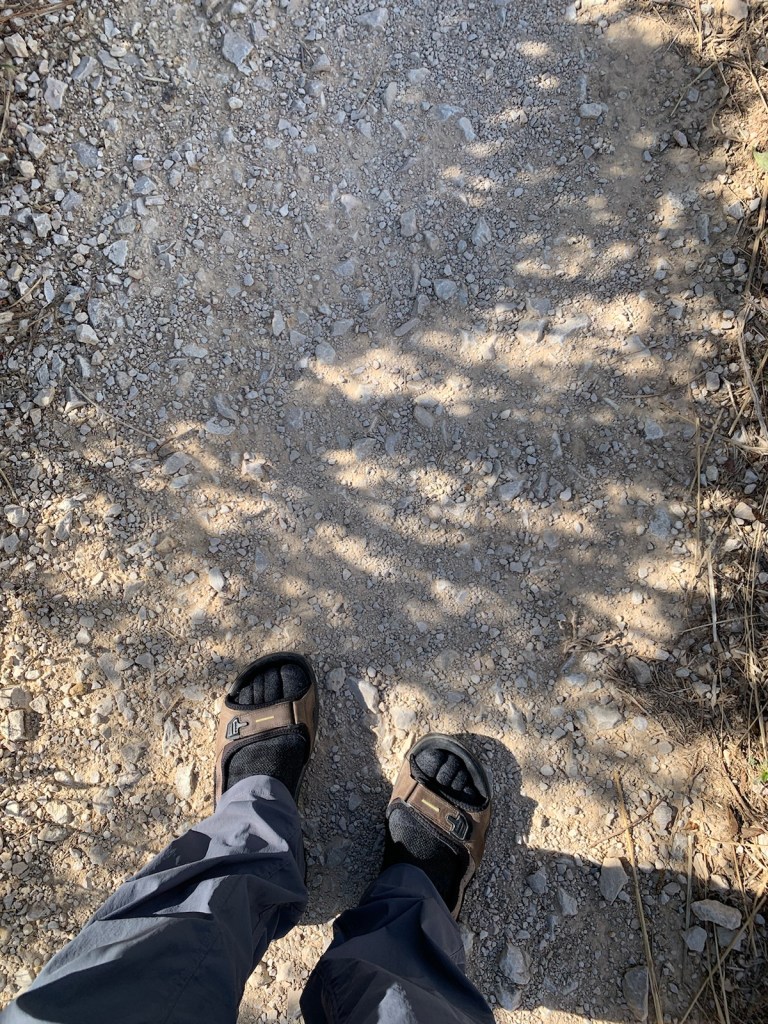
So, when we got to Uterga this morning, Jim switched to his sandals and got relief for the painful pinkie.
Jim wore his sandals for the last 3 miles of our walk into Obaños.
The sign going into Muruzábal claims that plenty of services are available, but our previous 5 walks through this small village have yielded nothing open. So our expectations for a bar for anything to eat or drink and restrooms were very low.
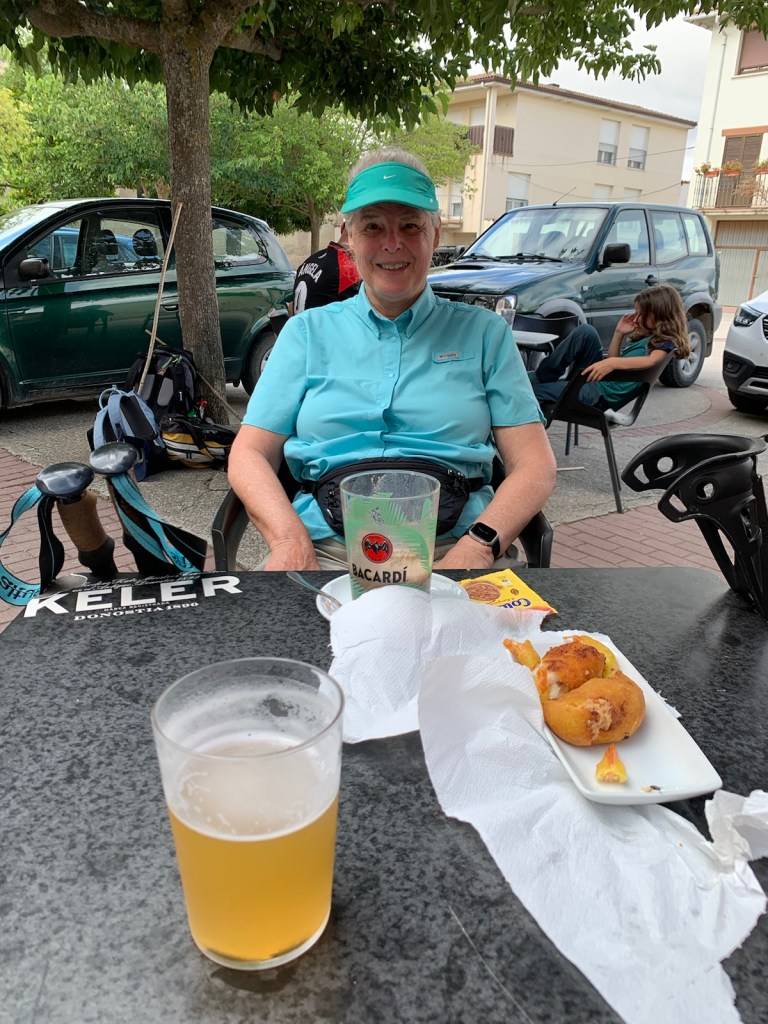
But, today, halfway down the last street in the village we observed some local residents sitting outside a small building and apparently drinking and eating. And alas, we were rewarded with beverages, some leftover pintxos on the counter, and restrooms.
A “breakfast” of sorts, at 11:30, finallyLooking back, way back at Alto del Perdon from the entrance of ObañosEntrance to Obaños, top of hill on the rightwaiting for our room to be cleaned☹️our double room… private bathroom across the hall…. we stayed in this room in 2014.Common sitting area adjacent to the dining area…all, just outside our room.
At 7:00 p.m. we were treated to a homemade dinner prepared by Elena, our host. Before becoming the owner of Casa Raichu, Elena owned a bakery.
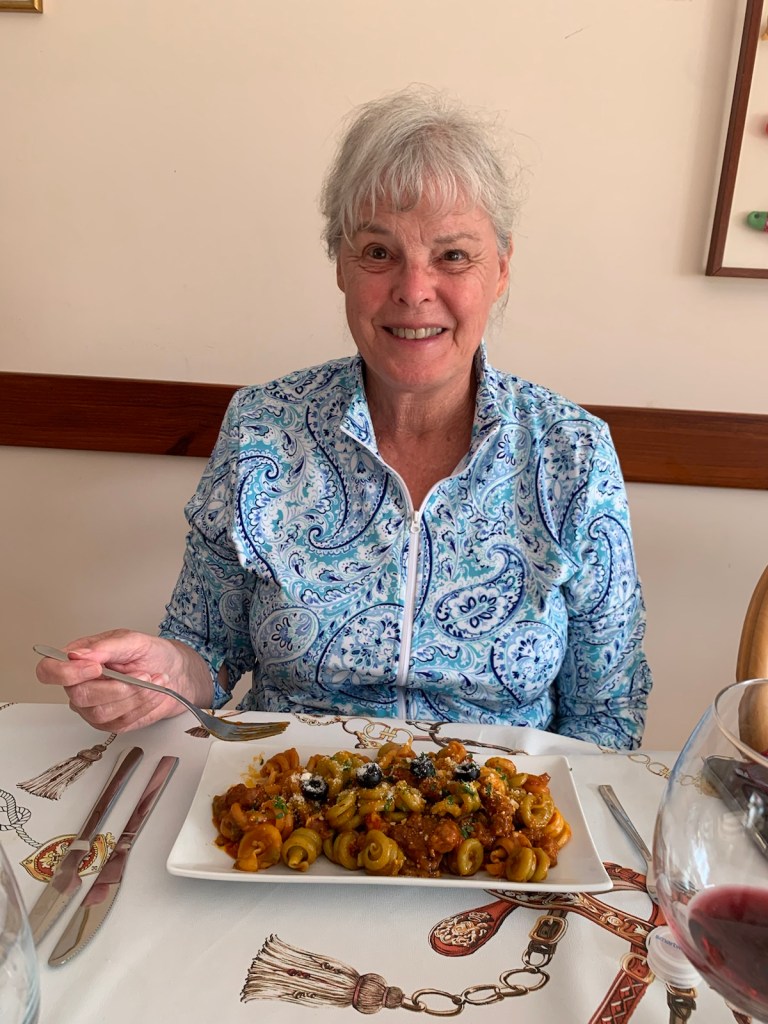
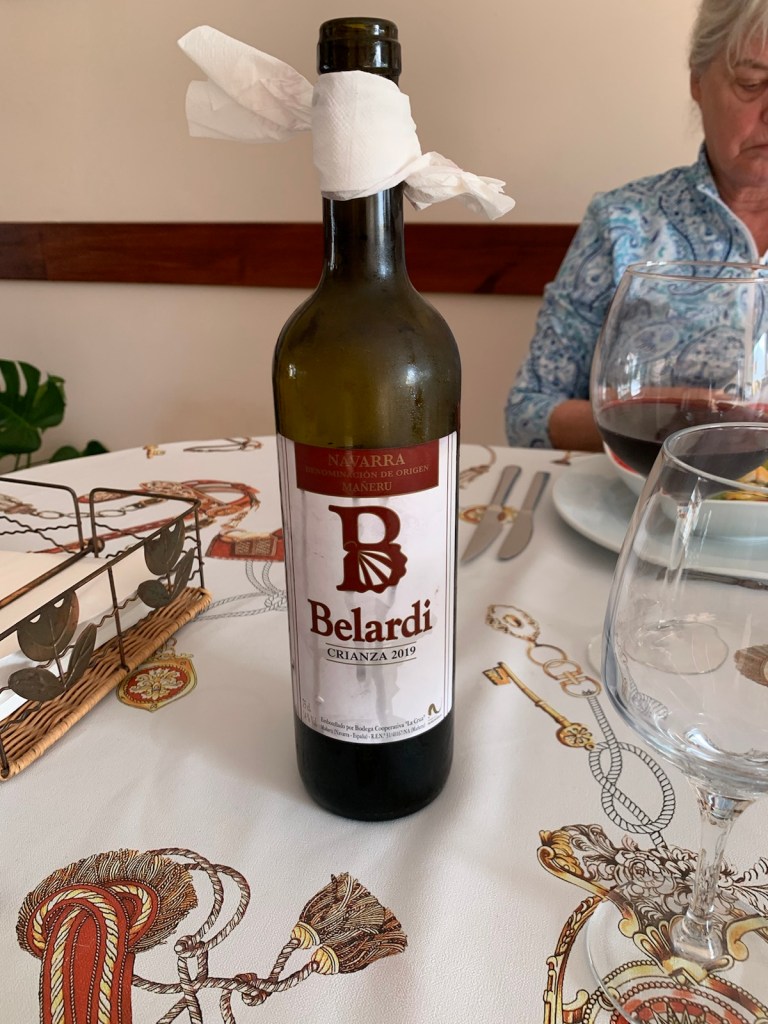
Tasty ensalad mixta with fresh greens, tomatoes, hard boiled eggs, and oranges, seasoned with olive oil and sea salt.Our main course was a pasta dish, with a brown sauce, cheese infused chorizo, sliced black olives, seasoned further with fresh graded parmigiana.Our wine was a Navarre blend of Garancha, Tempranilla and Cabernet from a winery in Mañeru, on the Camino just 5 miles from Obaños.
A peach, pineapple and whipped cream dessert was finished with a hot menthe tea. Our total meal including wine was 15€. Our clothing was washed, dried and folded for 10€.
We concluded dinner and the evening with kudos for Elena and shared European hugs.
Our favorite location on the Camino Frances, (and perhaps, the planet), Pamplona boasts an outstanding history from a medieval Cathedral and fortified churches to its role as a stronghold with fortified city walls from the 16th century. It is and has been the political and governmental center of the Navarre region of Spain for nearly a thousand years.
We normally stay and hang out in the old city. While rich with history, architecture, and parks, it has an unlimited range of merchants and other service providers to meet the needs of visitors and residents alike. Its range of pintxo bars and restaurants provide a culinary cornucopia to satisfy any palate and pocketbook.
What makes it uniquely special for us is its overall warm, welcoming and laid-back atmosphere which appeals to and attracts residents, pilgrims, tourists and revelers (San Fermin festivities), alike.
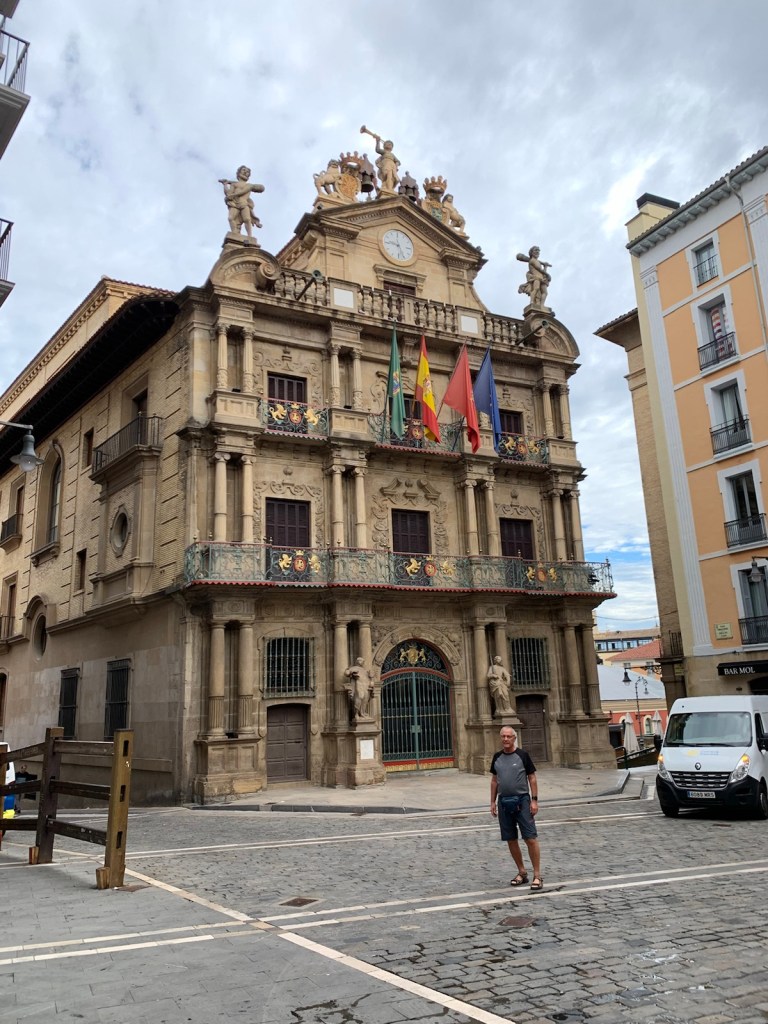
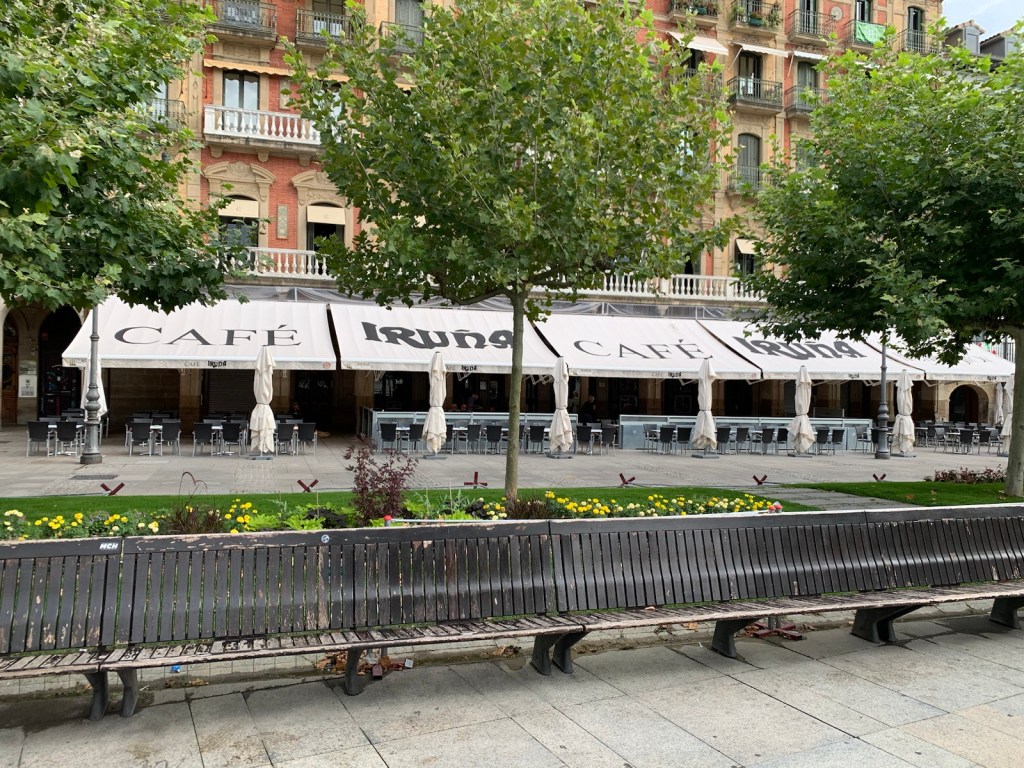
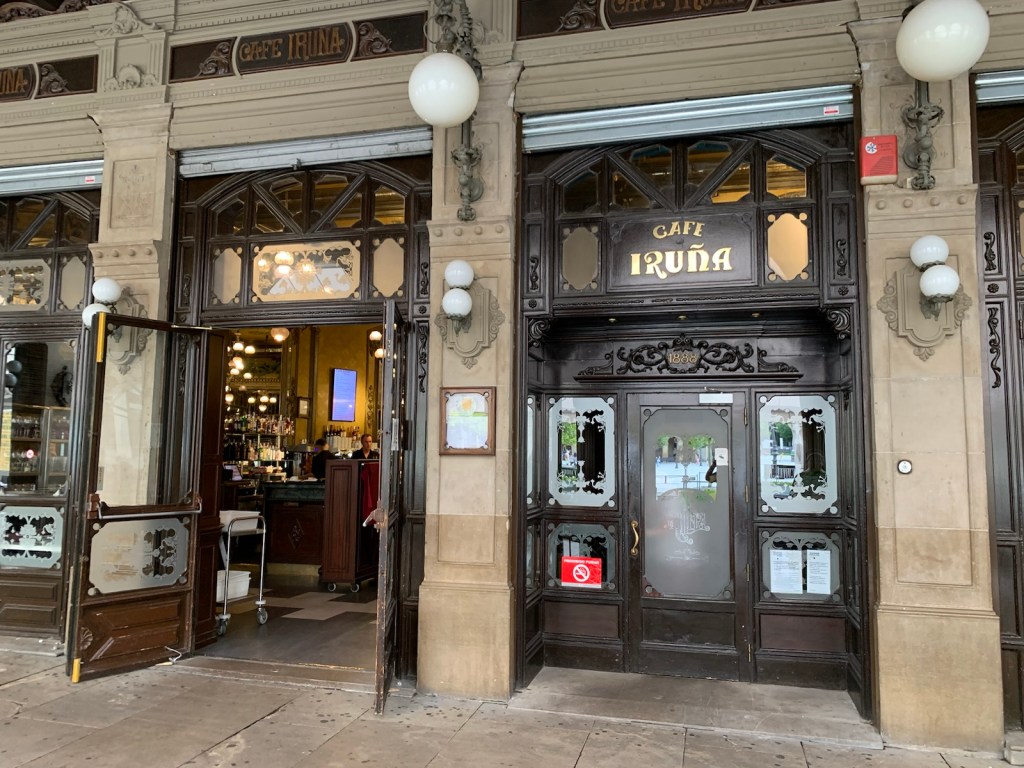
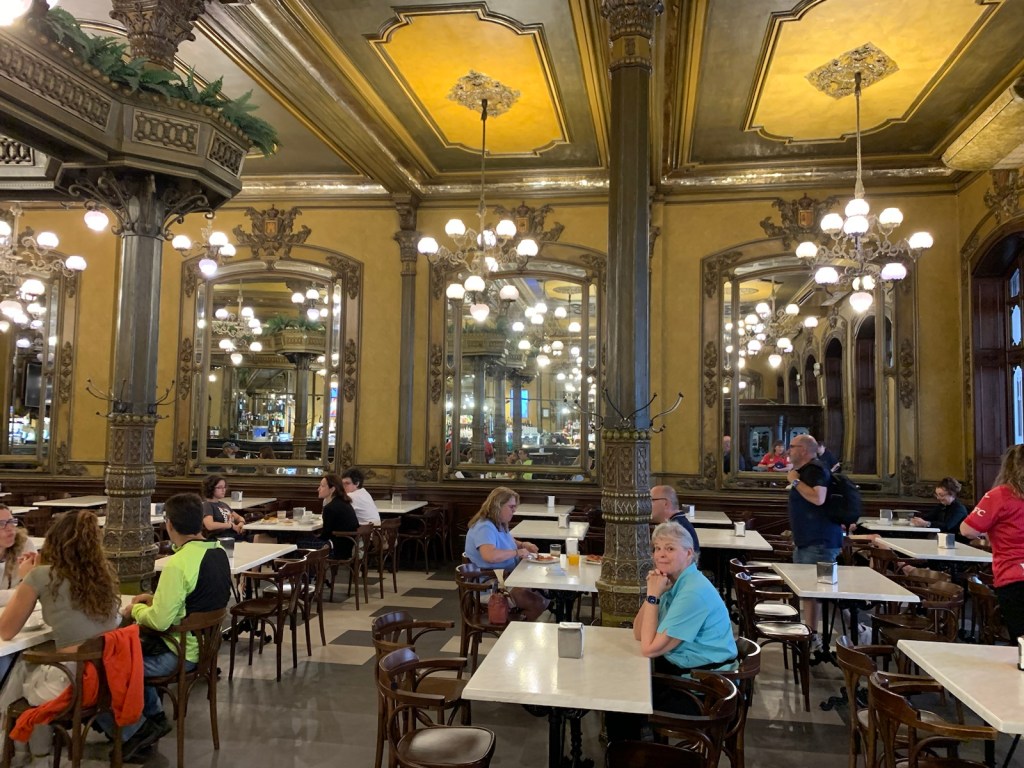
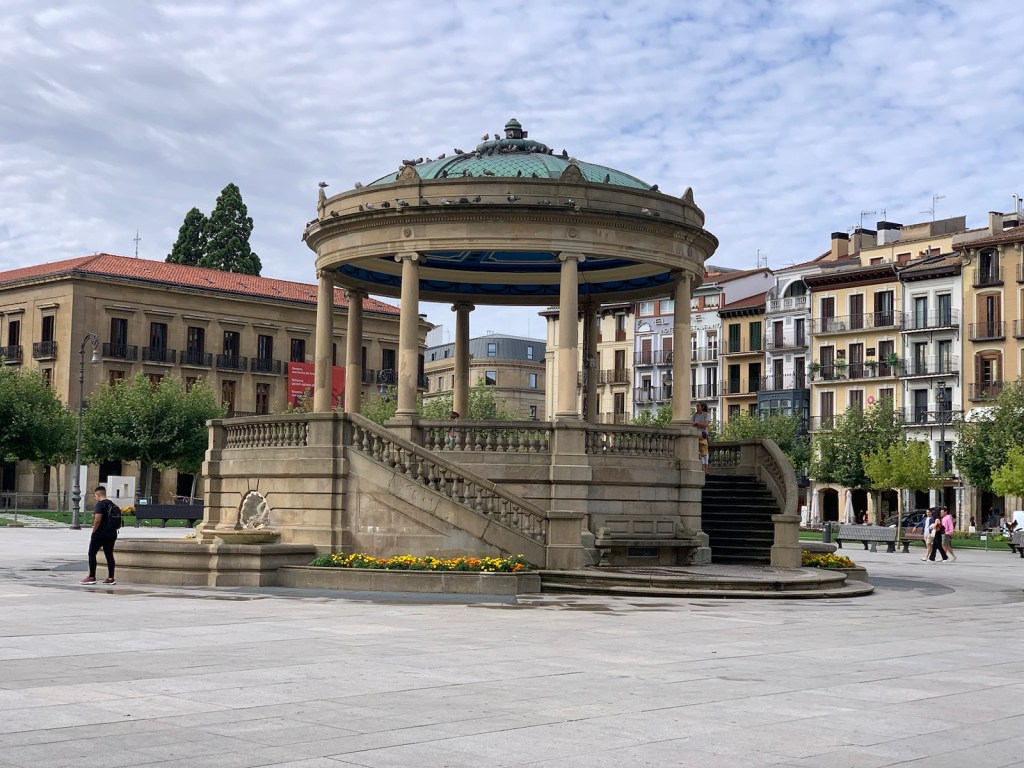
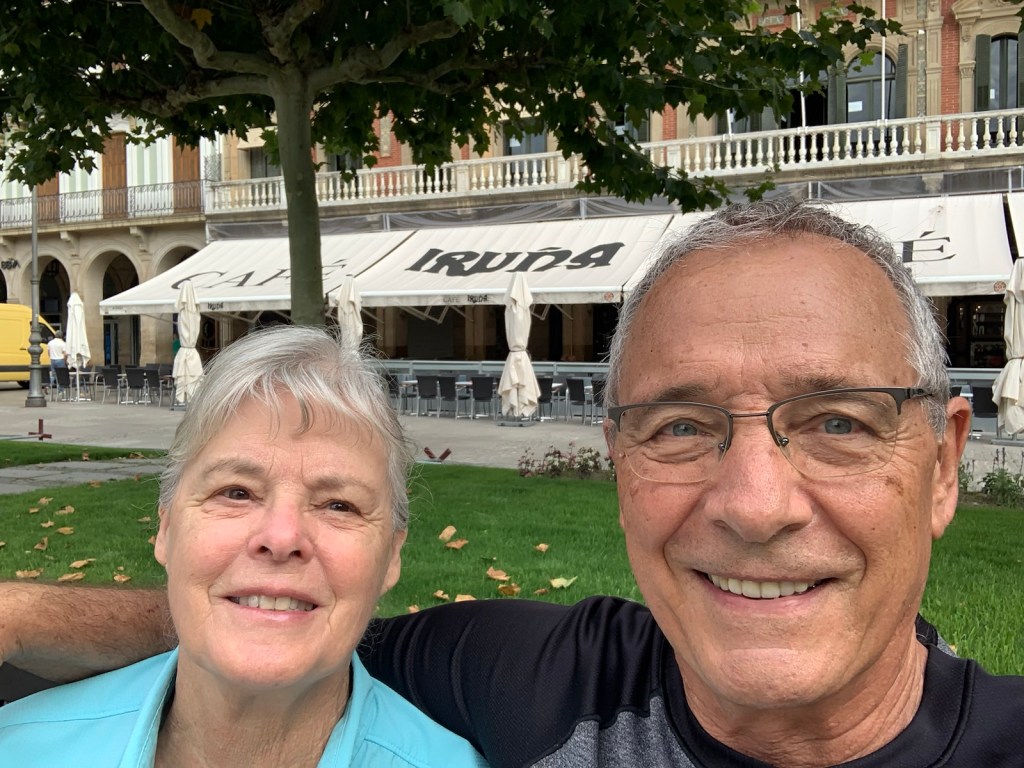
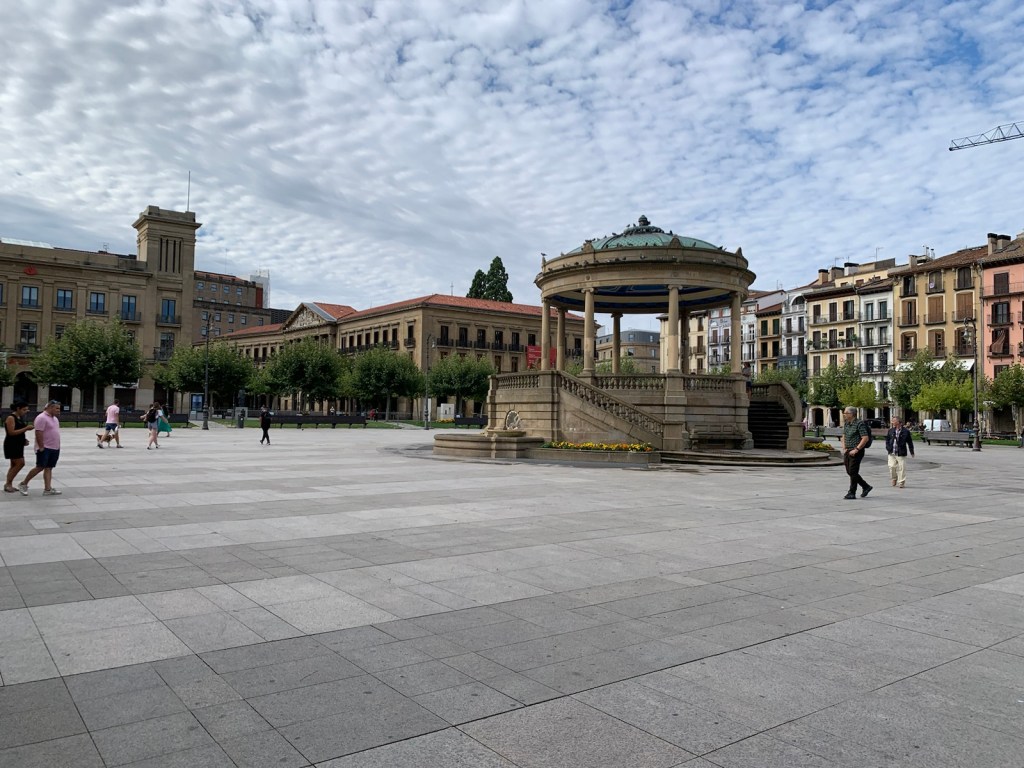
City HallCafe Iruña, founded in 1888, was a regular haunt of Ernest Hemingway and is the setting for a large part of his novel, Fiesta: The Sun Also Rises.Cafe Iruña marked the symbolic arrival of electricity to the cityPicturesque architecture adjacent to Cafe IruñaGazebo located in the center of Plaza del Castillo.we perched on a bench in front of the Cafe Iruña after breakfast this morning to relax and observe the activity and scenery of the Plaza.our view from the bench
Most of the day was spent in our room, prepping for tomorrow’s walk, blogging, reading and napping. In the late afternoon, we returned to a favorite bar overlooking City Hall and had lunch/dinner.
Linda and I shared an order of a local version of lasagna, featuring iberian ham and cheese rather than beef or veggies. We also shared an order of traditional paella with a generous assortment of seafoods. our wine was none other than a very nice Navarre tinto wine.
Totally sated and only slightly sore from our walk into Zubiri, we retired to our room and finalized preparations for tomorrow until our 9:00 bedtime.






























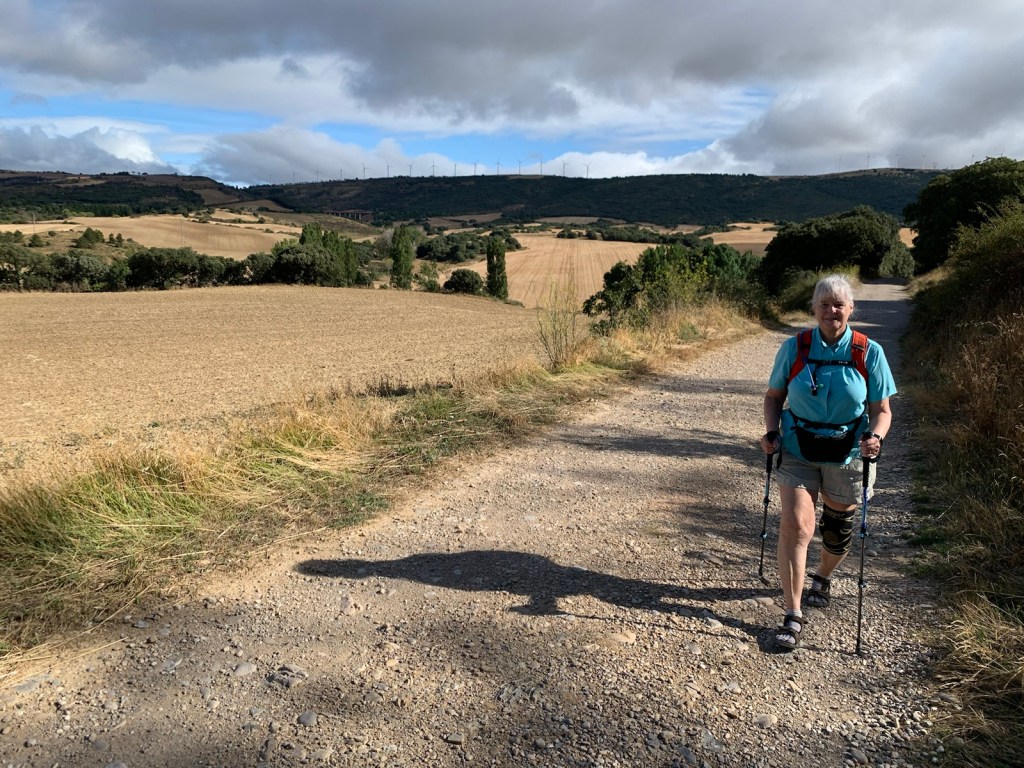








 Jimandi