
The alarm was set for 8:00 to give us time to: (1) get ready (2) have breakfast and (3) walk the half mile from the hotel to the train station for our 10:49 train to Madrid. Out of habit we woke up at 6:45.
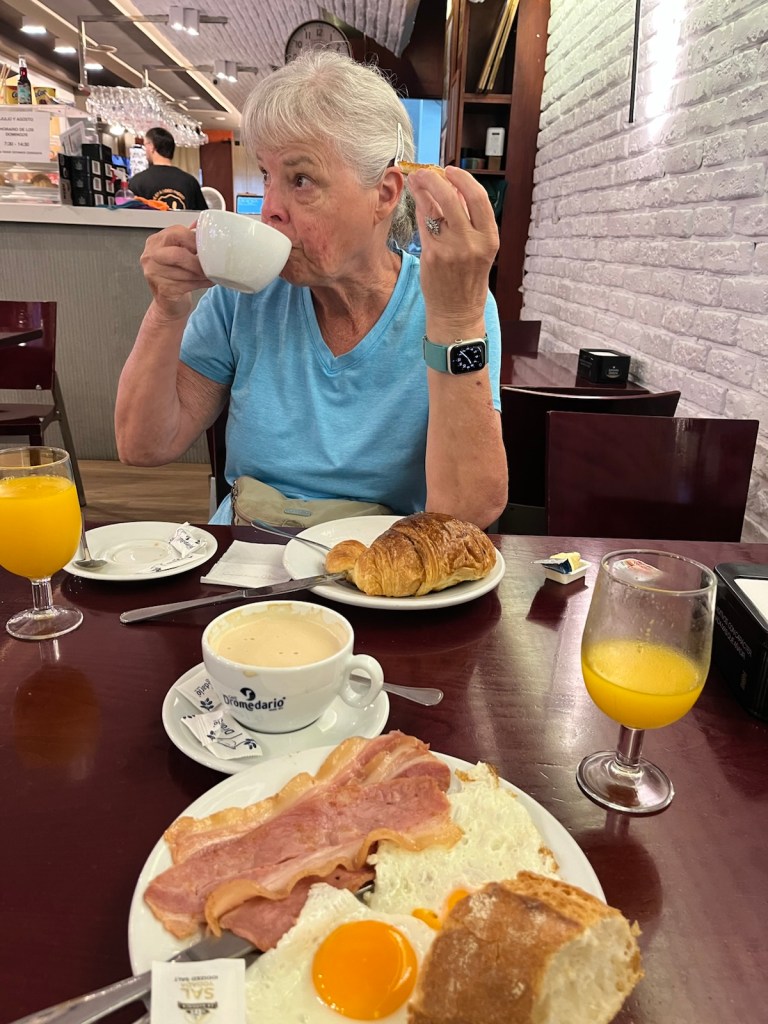
Transitioning from the Camino back to the real world is a challenge in many ways. One is how to move our stuff.
After our 3rd Camino in 2019, we began using a transport service to move most of our stuff from accommodation to accommodation and carrying only those things we might need during the course of the daily walk in a smaller, lighter day pack.
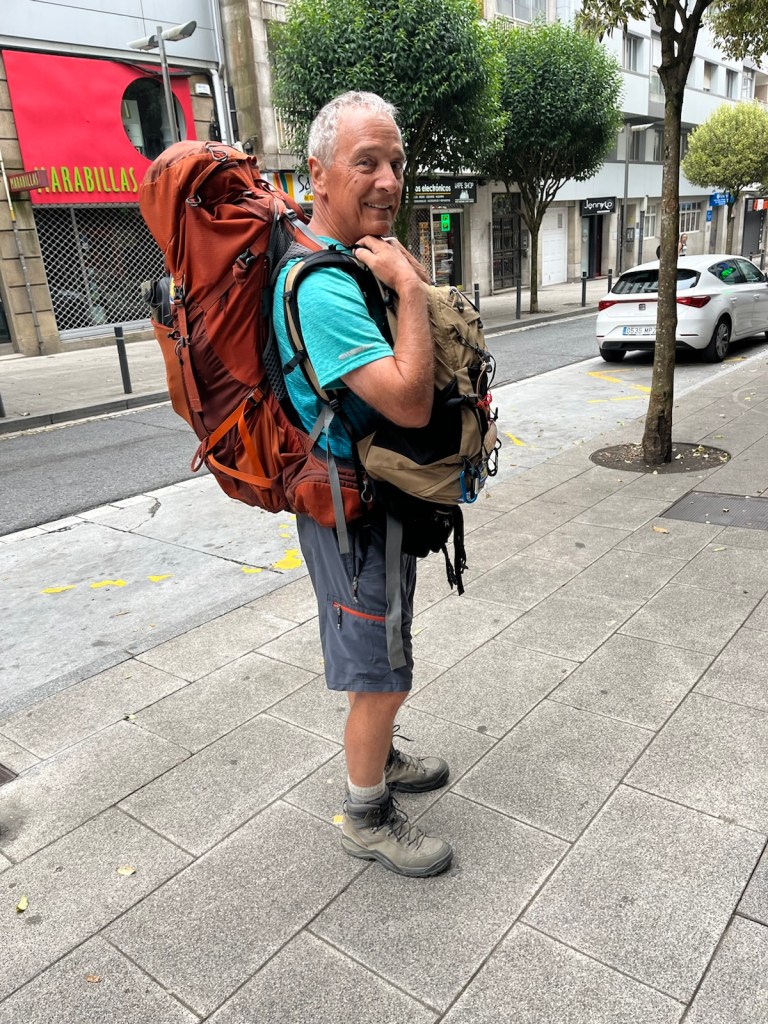
Transitioning to and from the Camino requires that we carry both packs for a short time/distance. We’ve tried several ways to do this, but the way we did today has worked well for the last several Caminos.
One obvious solution is to not take as much stuff. We’ve made progress in that direction but obviously not enough. It’s a balance between traveling lighter and being prepared for unforeseen situations. Jim is probably worse at wanting to be prepared, especially when being away from home for 50+ days, away from normal support systems.


We found a seat in the waiting area of Santiago Compostela Estación de Tren. About 30 minutes before our departing time, an announcement in Spanish and then in clear English, directed us to enter the cue for scanning our tickets and going through security. We placed both back packs and fanny packs on a conveyor through a scanning machine and retrieved them a few seconds later, much like our domestic security processes. We put our backpacks back on and only a few steps away, carefully rode the escalator down to the train passenger loading platform.
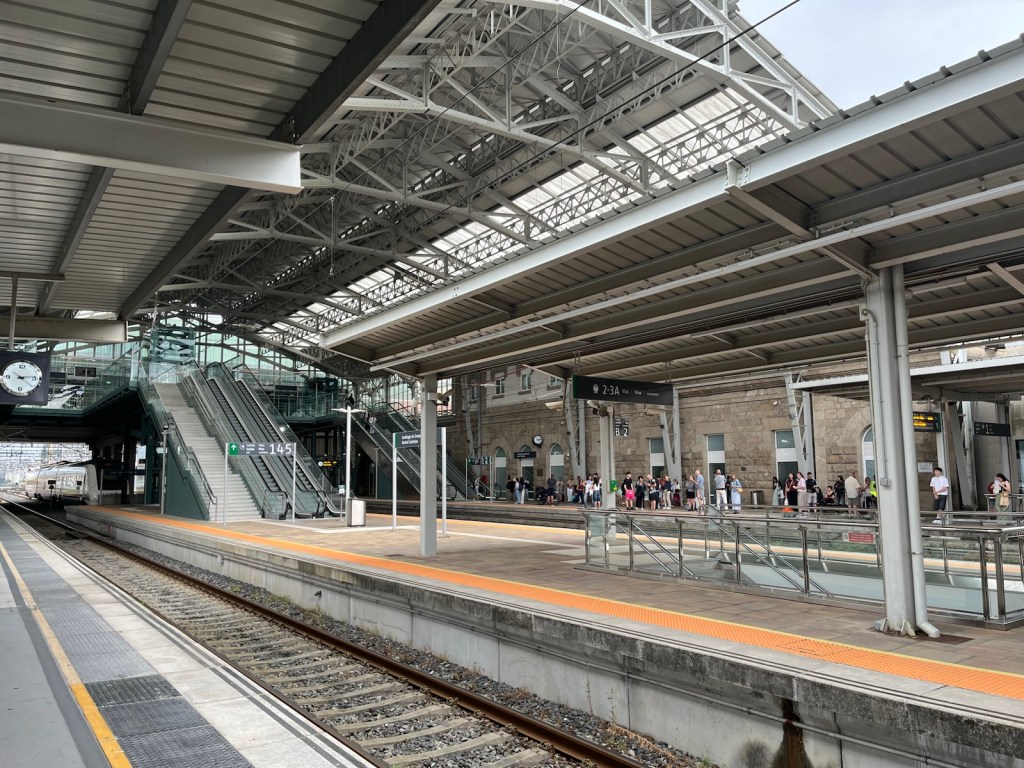
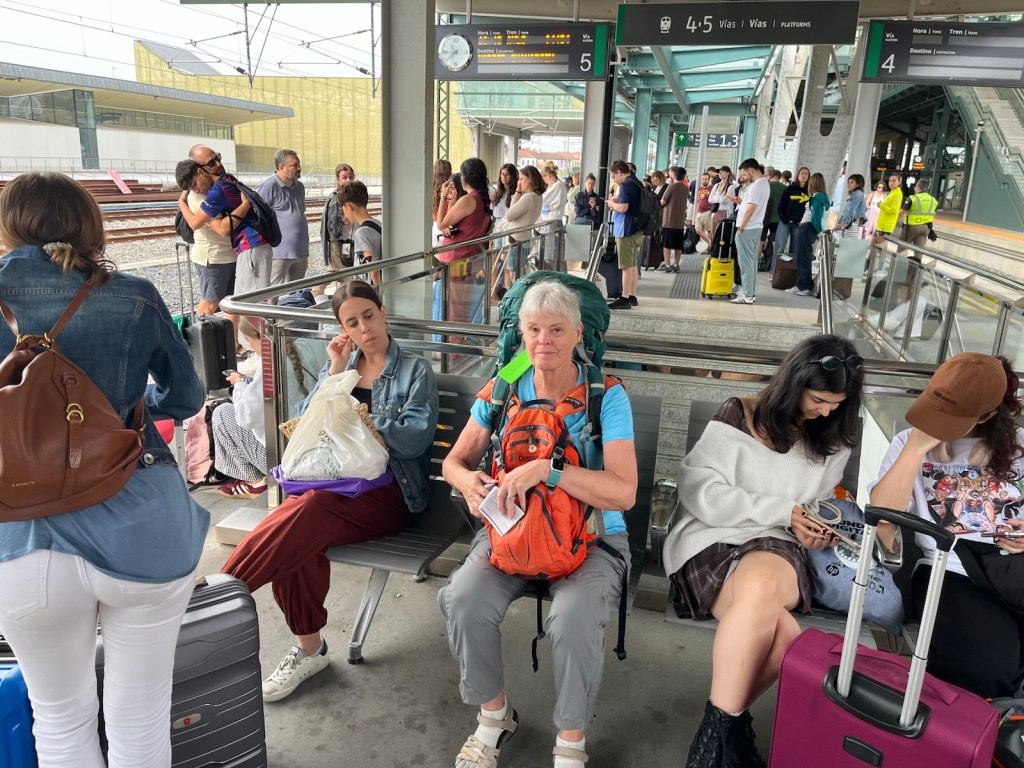
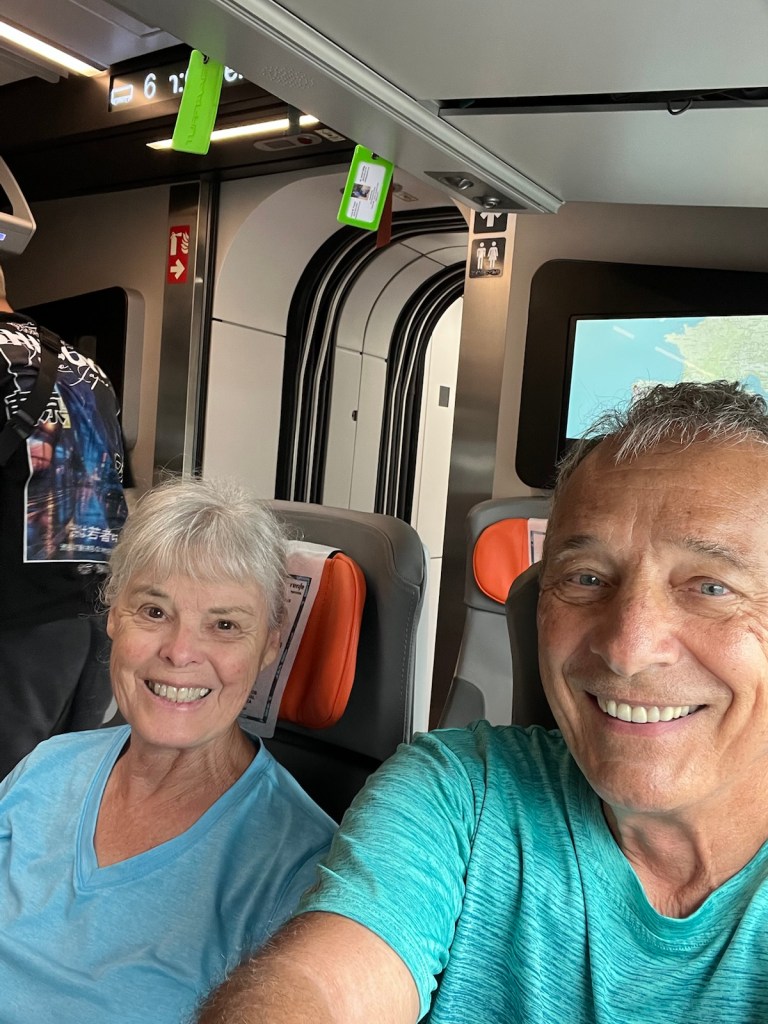
The trip from Santiago to Madrid took abour 3.5 hours (10:49 – 2:14). It was direct with 5 quick stops and traveling at speeds approaching 300km/hr (180 mph) in between stops.
It’s amazing at how smooth the ride is at that speed. It’s much smoother than on airplane flights. Restrooms and snack food are much more readily accessible than on air flights. And seating space and comfort is superior to air travel… all at a much lower cost. It’s too bad that similar options do not exist in the United States.

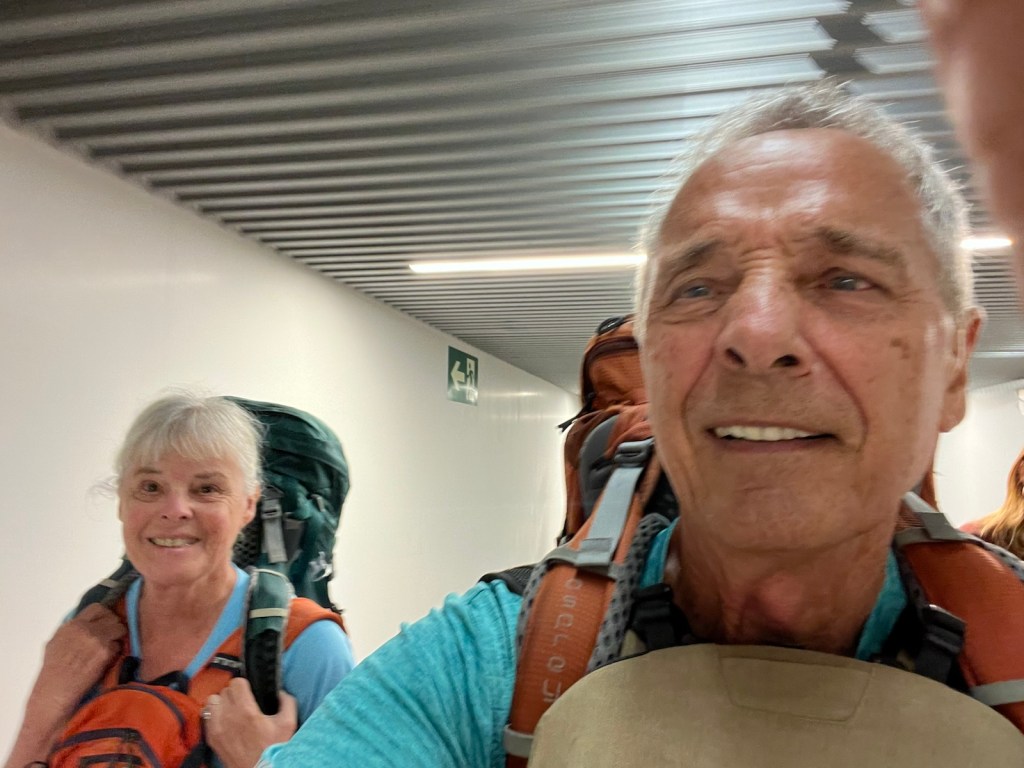
We de-trained on time and missed a turn making our way to the taxi area that only cost us 5 minutes or so of extra walking.
Before we arrived in Madrid, Jim had taken a screenshot on his iPhone of the webpage describing the name and address if our hostal. When our driver, who was from Iraq and spoke only his native language and Spanish (sort of), seemed confused about our destination, Jim showed him the screenshot, he nodded and we were off.
The short ride to our hotel of 15 minutes was a record… and the €26 fare reflected it.
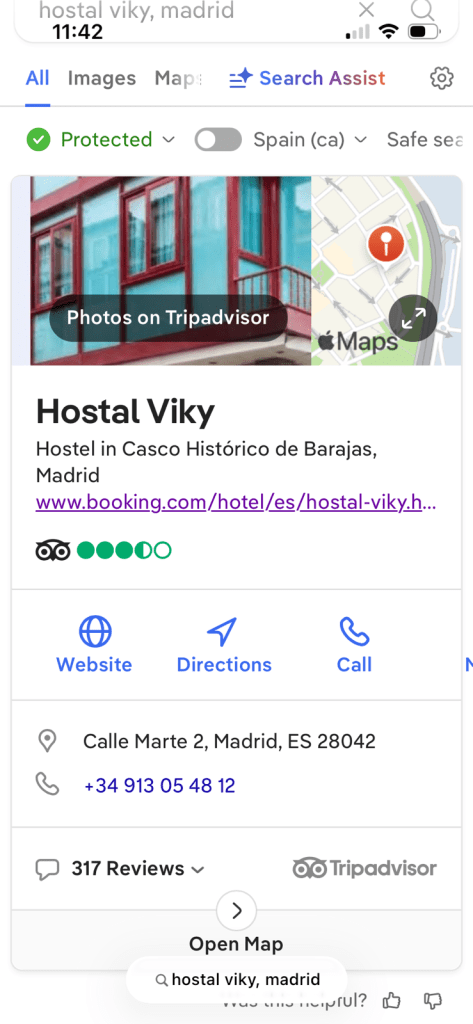
Check in went easy and after a few minutes to get familiar with our room and test the wifi, we set out to find a place to get our main meal.

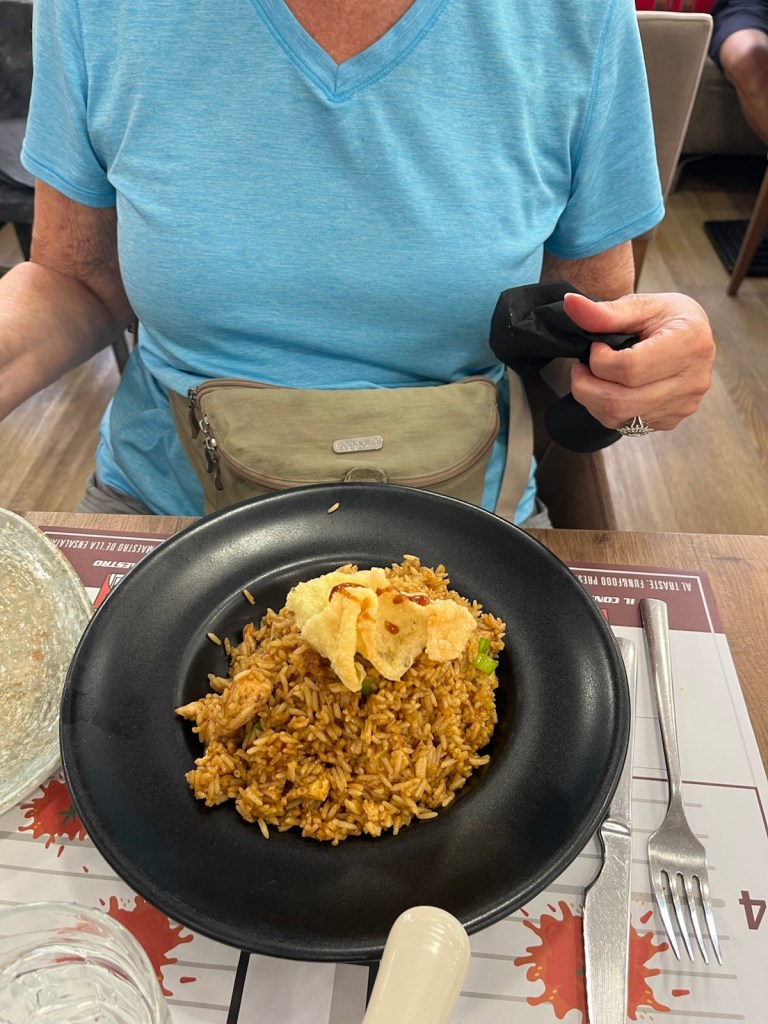
A ten minute walk in the very small town of Barajas led us to the nearest restaurant open on this Sunday afternoon. It featured a blend of Spanish and Peruvian cuisine… indicated by its name, “Cocinaperuana”.


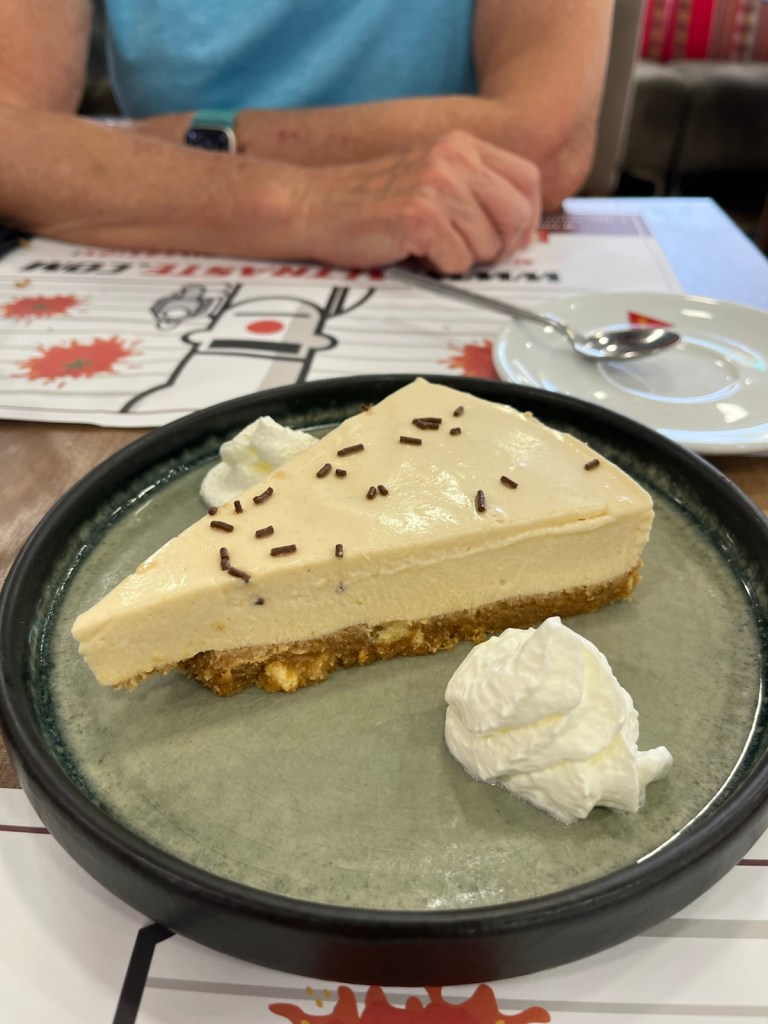
We walked back to our room, got showers and rearranged our stuff which became our backpacks secured in the reusable IKEA duffles (which traveled Camino2026 with us) to be checked on our flight home and our daypacks, now serving as our carryons.
Our hostal will provide free transport to MAD airport at 9:00 in the morning, so we set our alarm accordingly and called it a day.


I have really enjoyed reading along with you, Linda and Jim! You are both an inspiration to me. I hope that I will be walking Caminos and carrying my heavy pack just as you are when I reach my 80s also. I look forward to your next adventure! Kind regards, Jennifer
LikeLike