
Walked today: 8.1 mi. Camino’26: 45 mi.
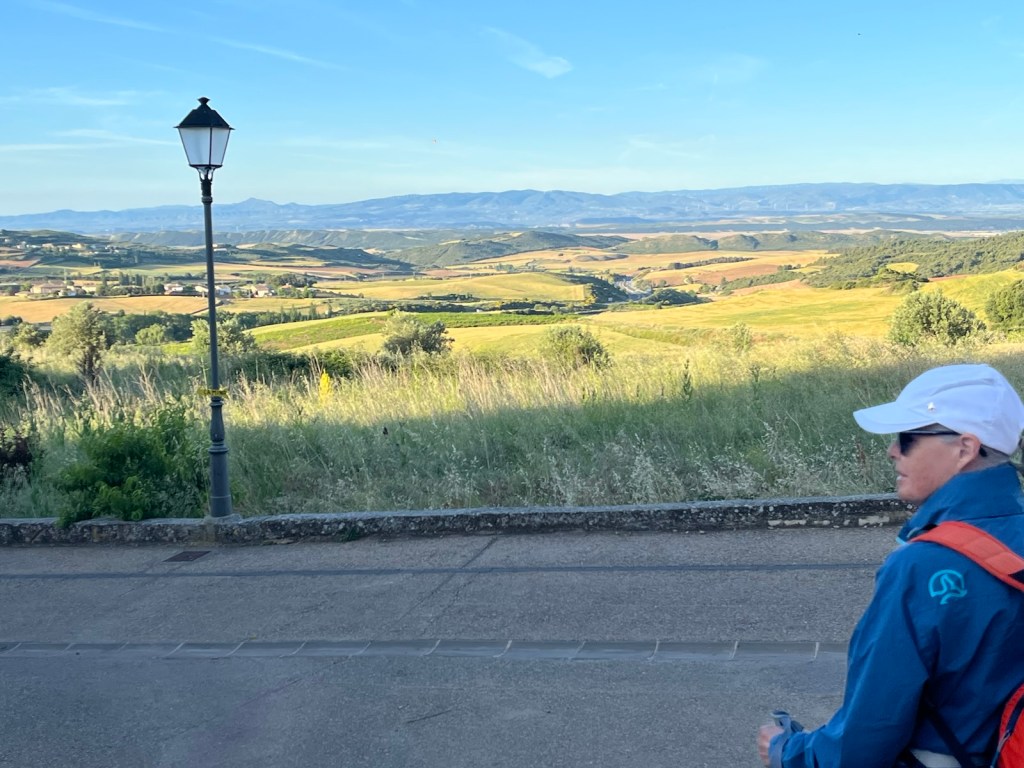
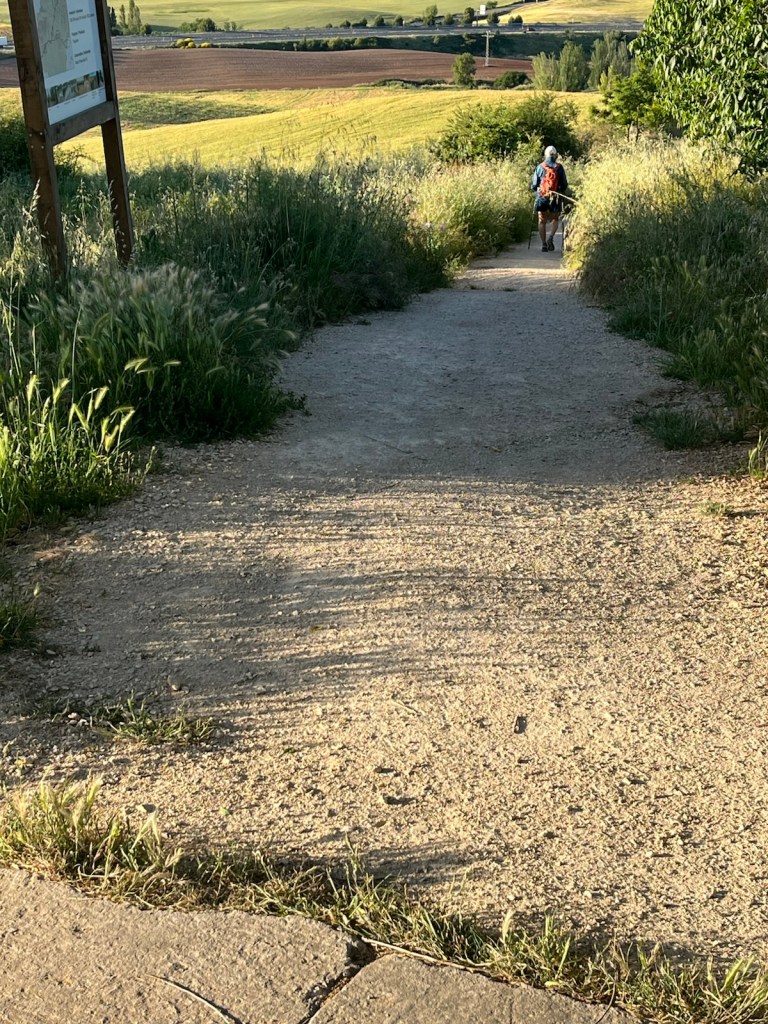
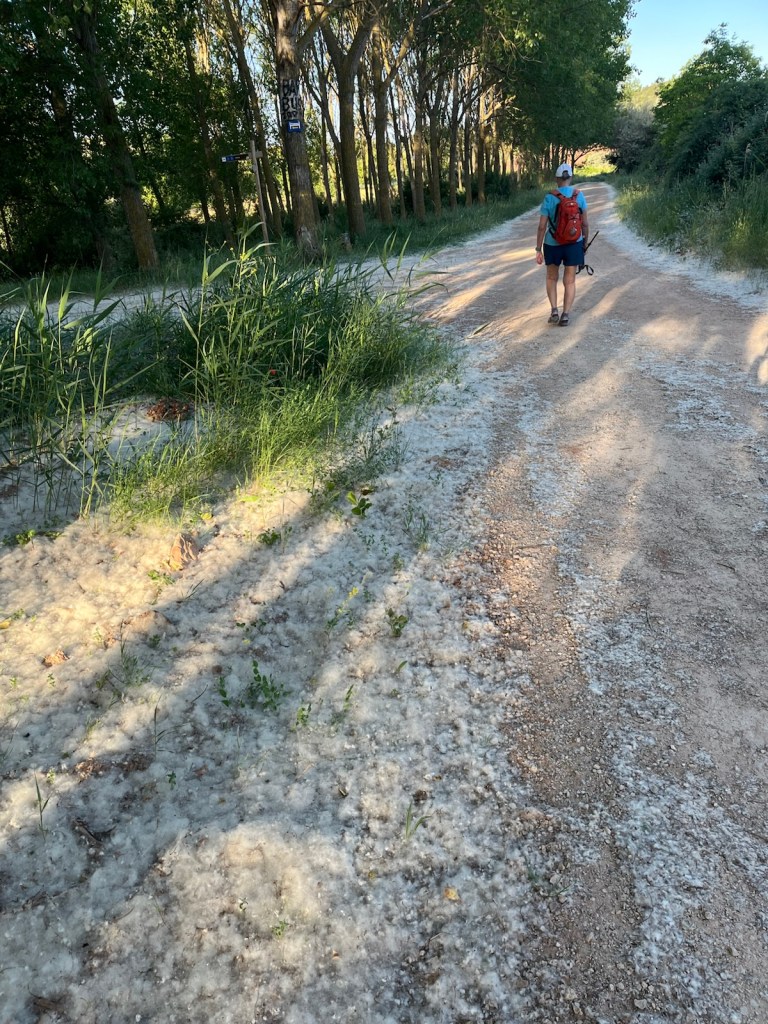
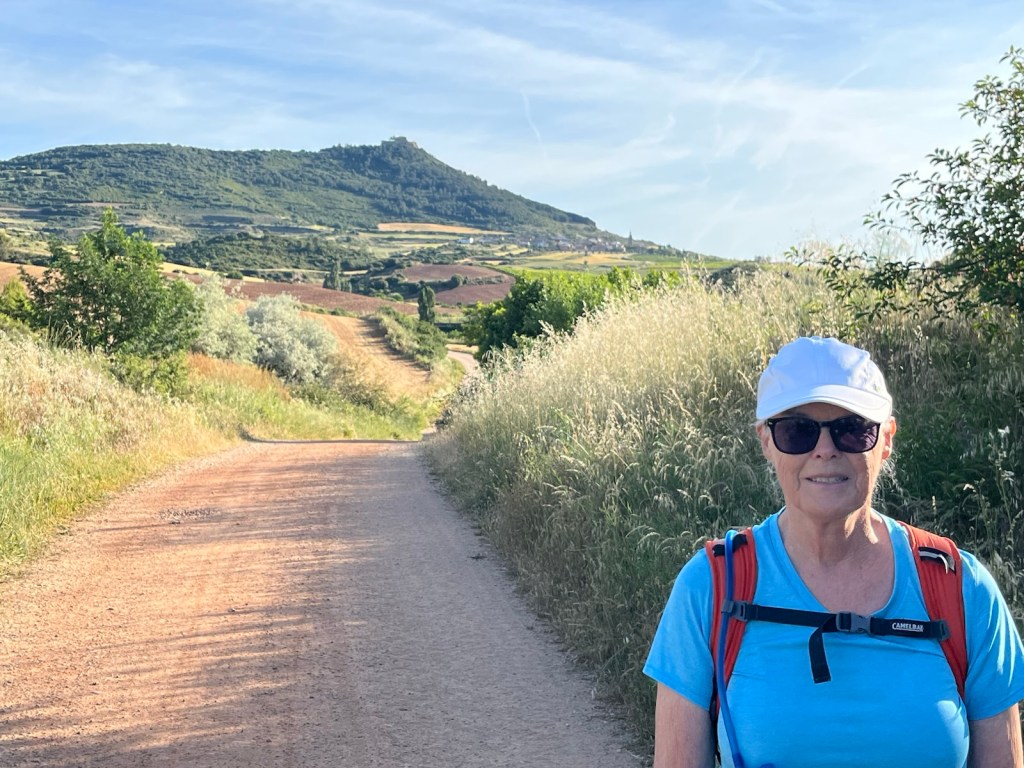
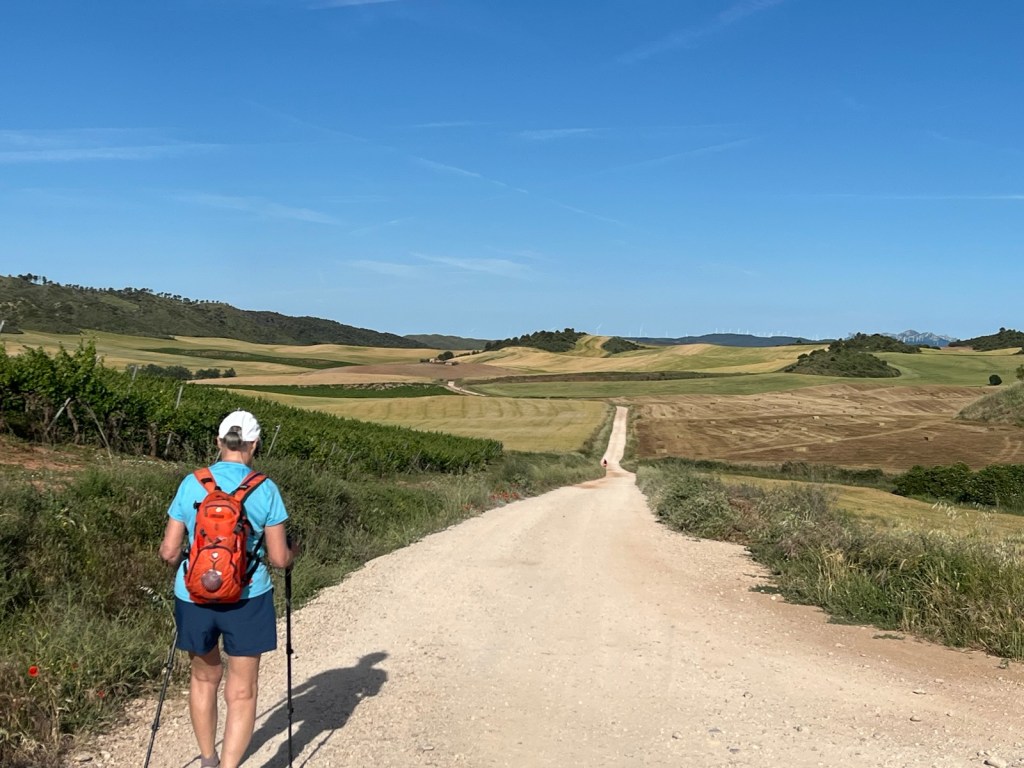
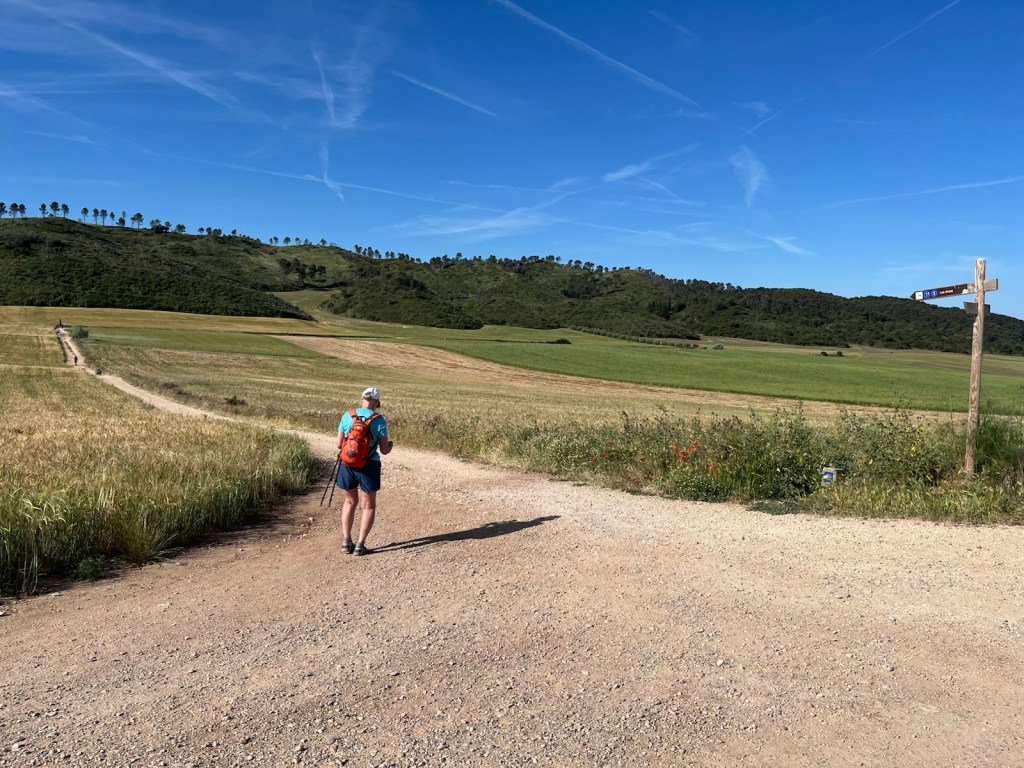
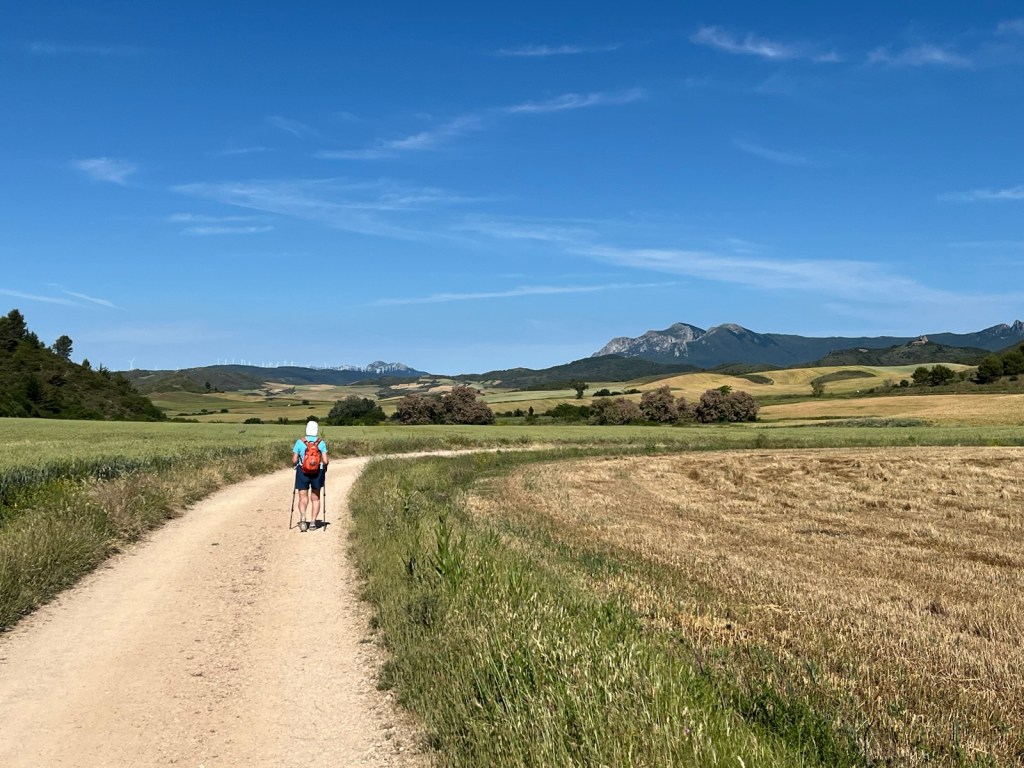
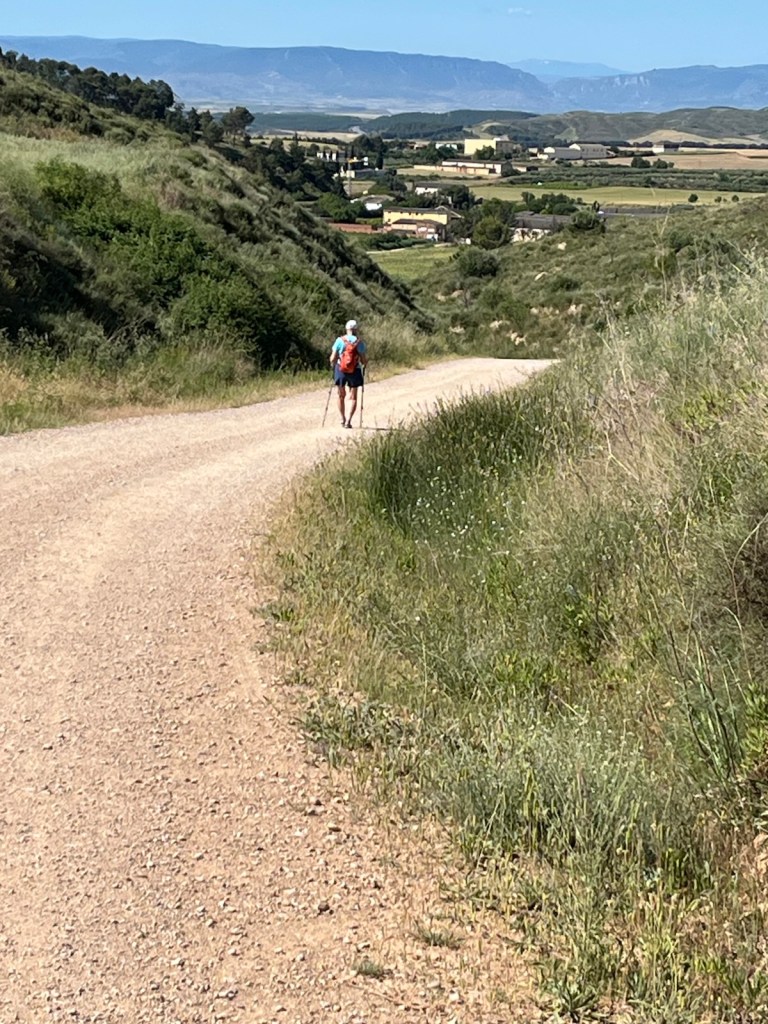
Most of today’s walk was through a valley of grain fields and some scattered vineyards and olive orchards and a small field of asparagus near the end.
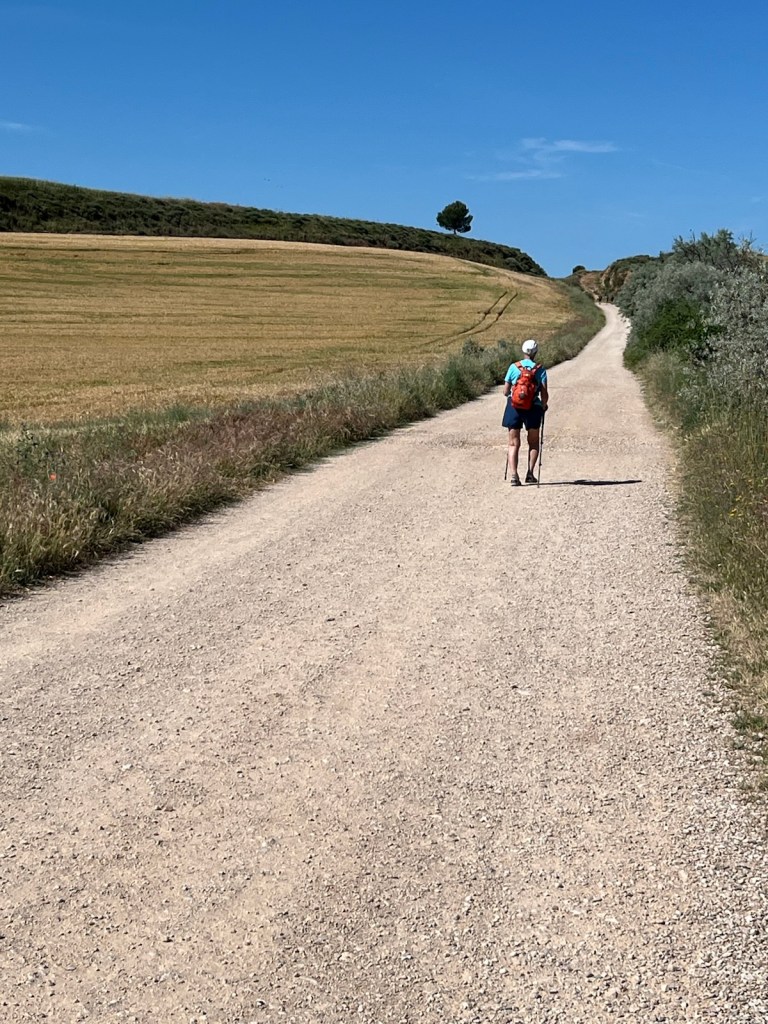
Although the scenery was beautiful at first, it went on and on, seemingly forever by the time we got within a mile of Los Arcos.
A lack of shade and the monotony of the long, straight paths has always made this section a challenge for us. And for each of our previous caminos, we dragged ourselves the final mile or so to the Los Arcos village square where we collapsed into a terrace chair and ordered breakfast at a nearby bar. Today, our 8th effort was no different.
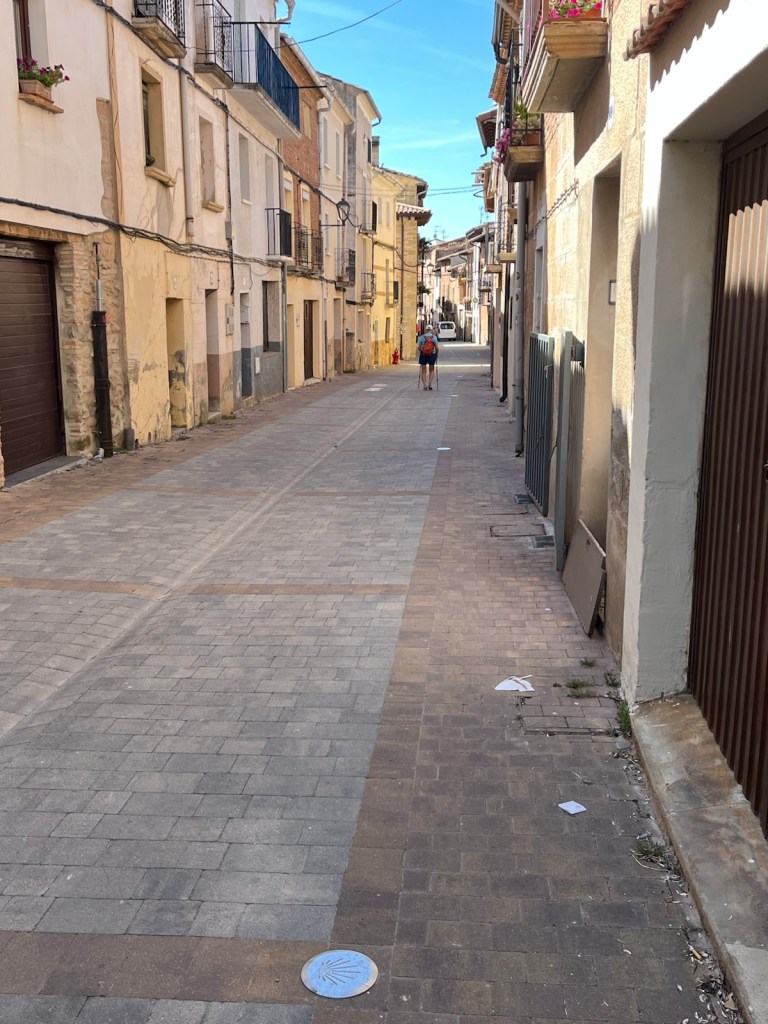
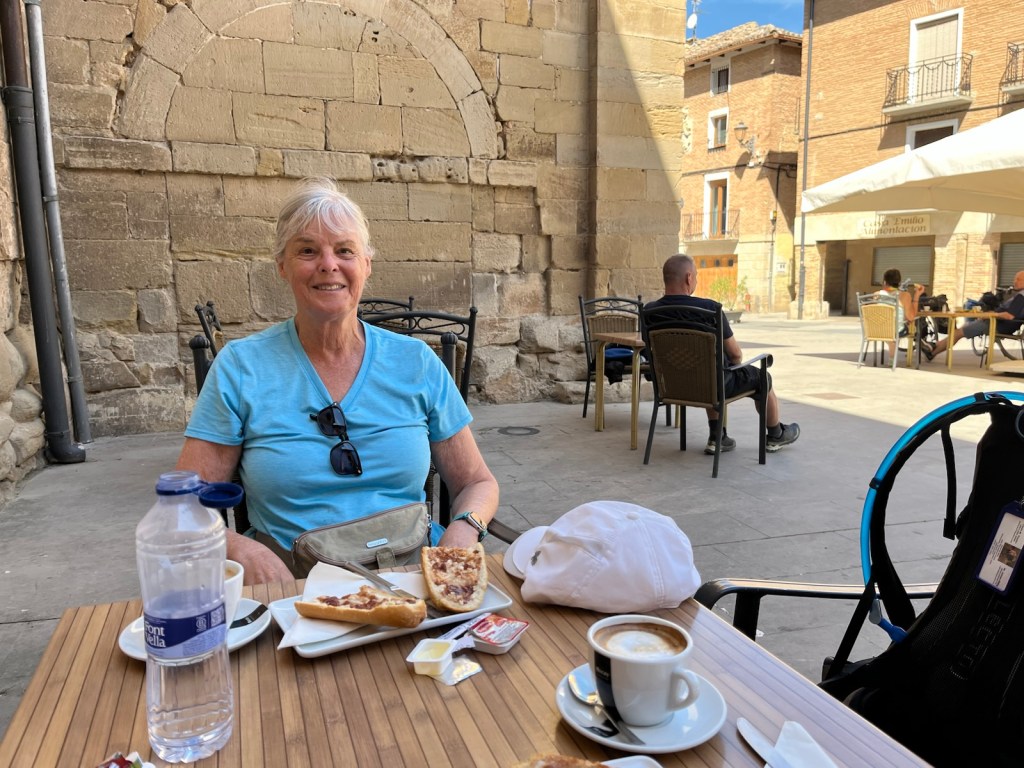
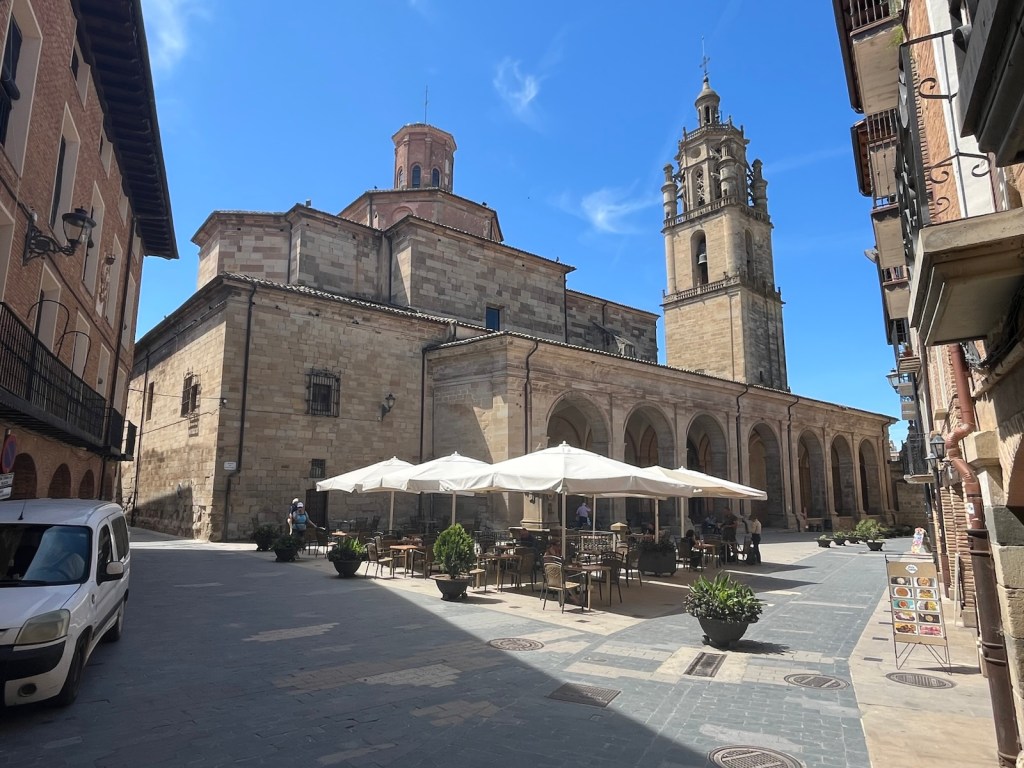
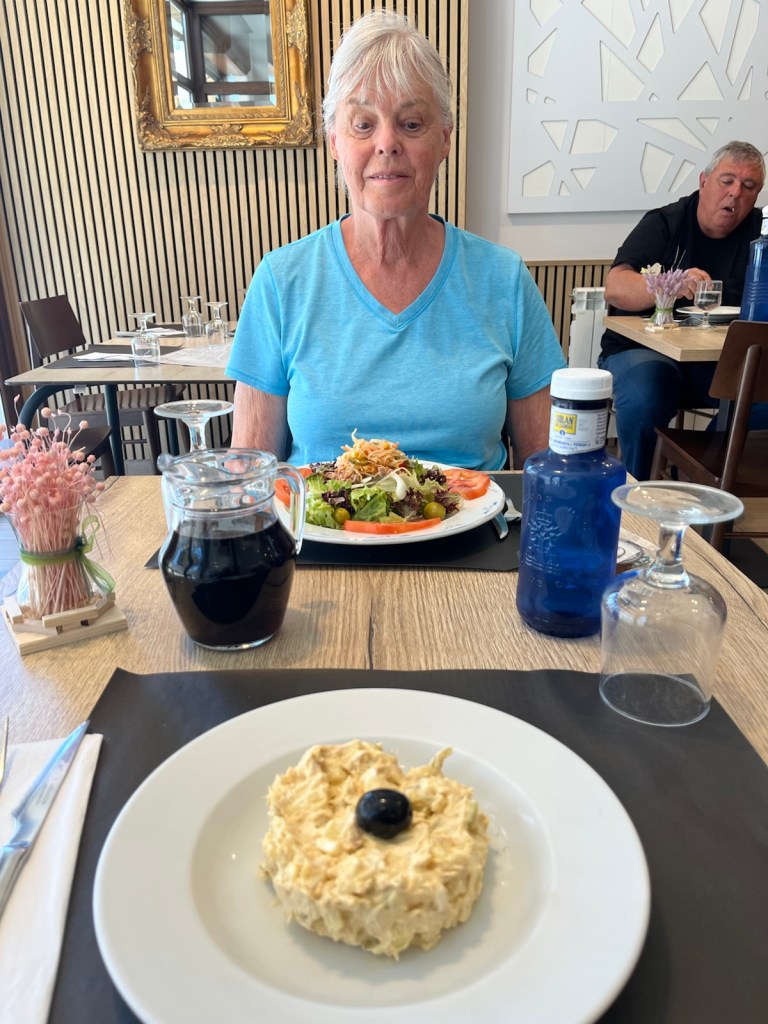
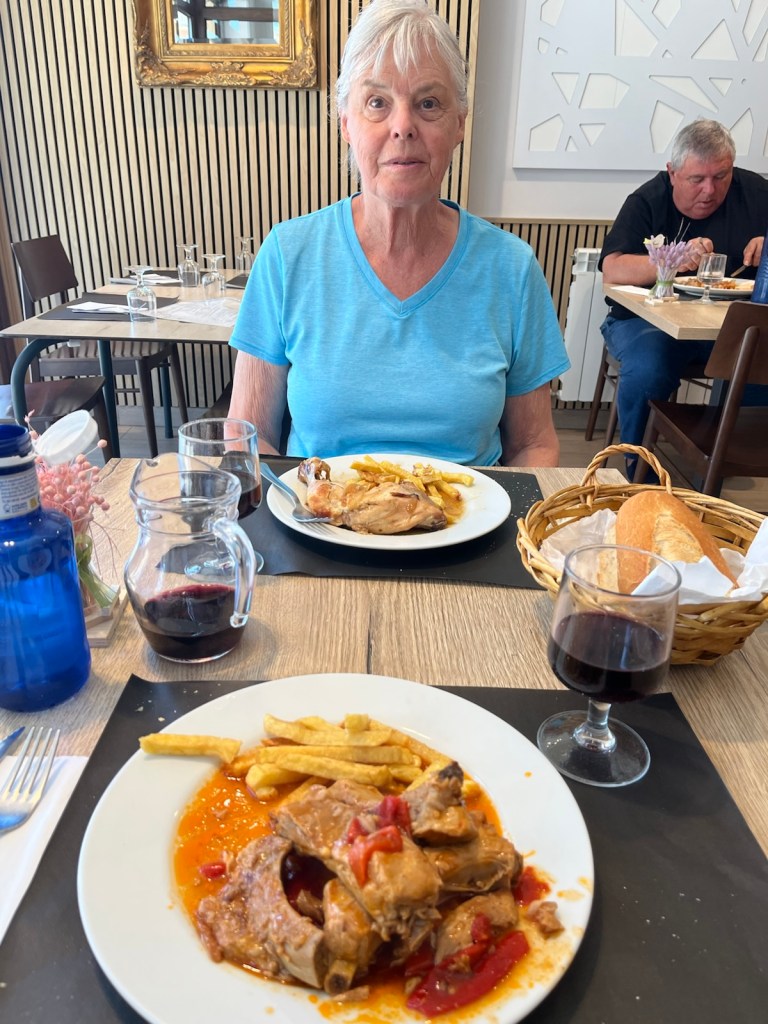
We had our main meal at our favorite restaurant in Los Arcos, Restaurant MAVI.
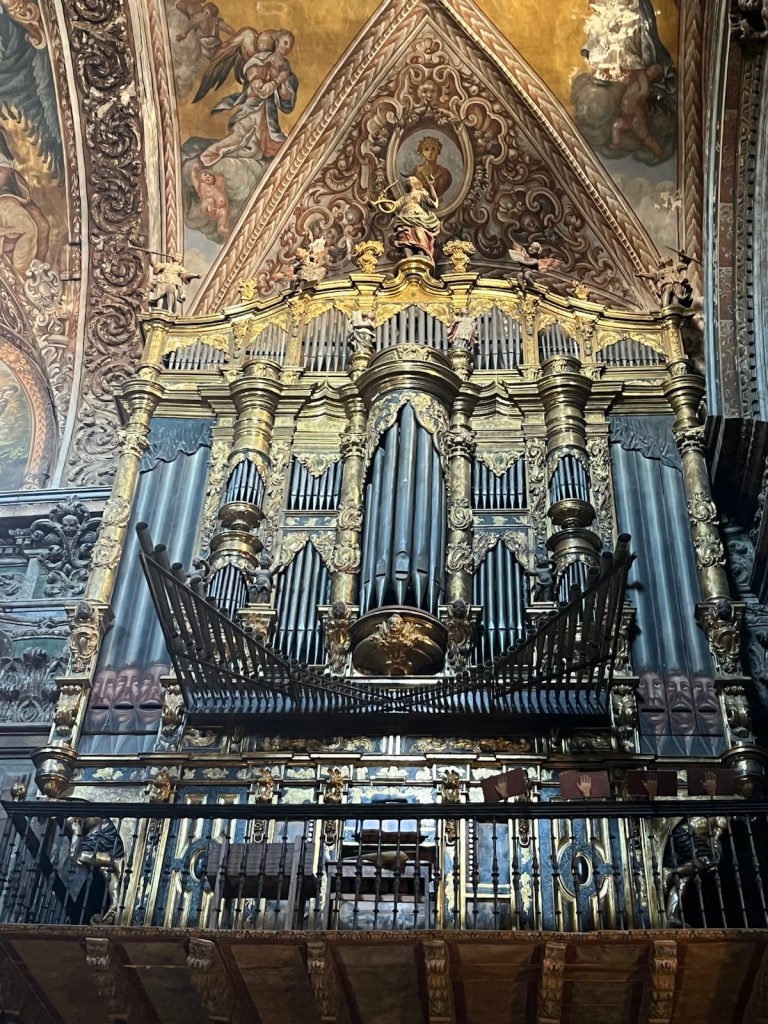
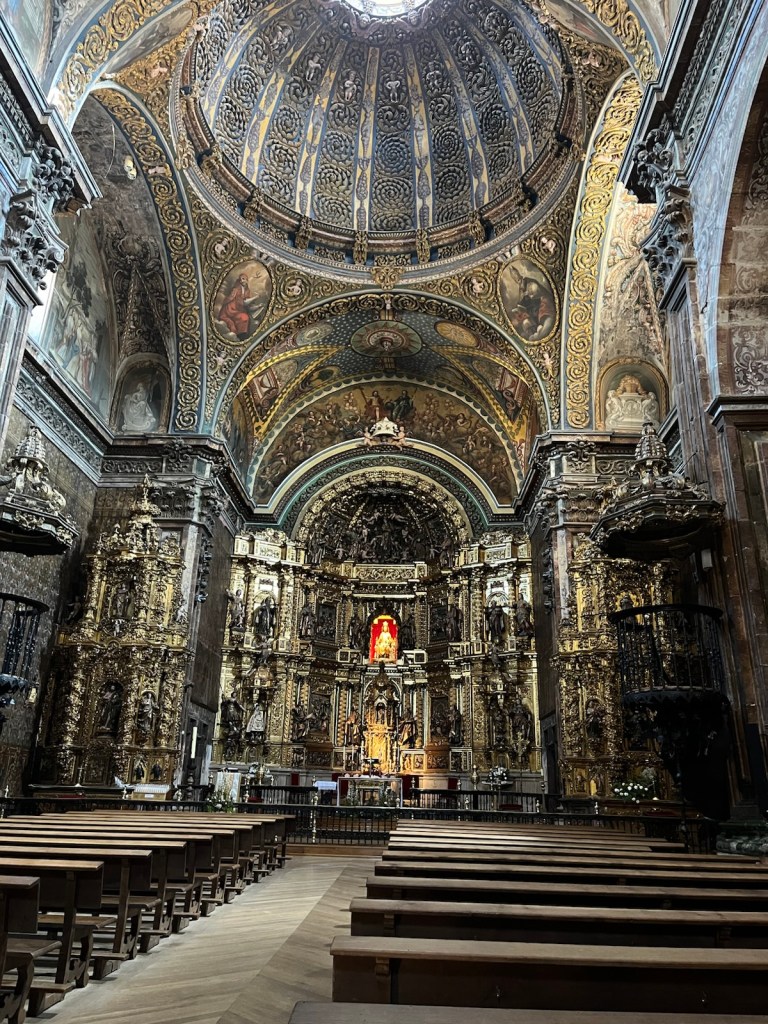
Inspite of the difficult walk into Los Arcos, it’s a favorite because of the church, the restaurant and its interesting history.
At the crossroads of two ancient trade routes, Los Arcos was once a Roman City (Curnonium). It’s current name originates from a battle in 914 when three Sanchos ( kings of Navarra, Castilla and Aragon) fought over the town. The Navarran army won with the help of their excellent archers, therefore the coat of arms of the city contains bows (arcos) and arrows.
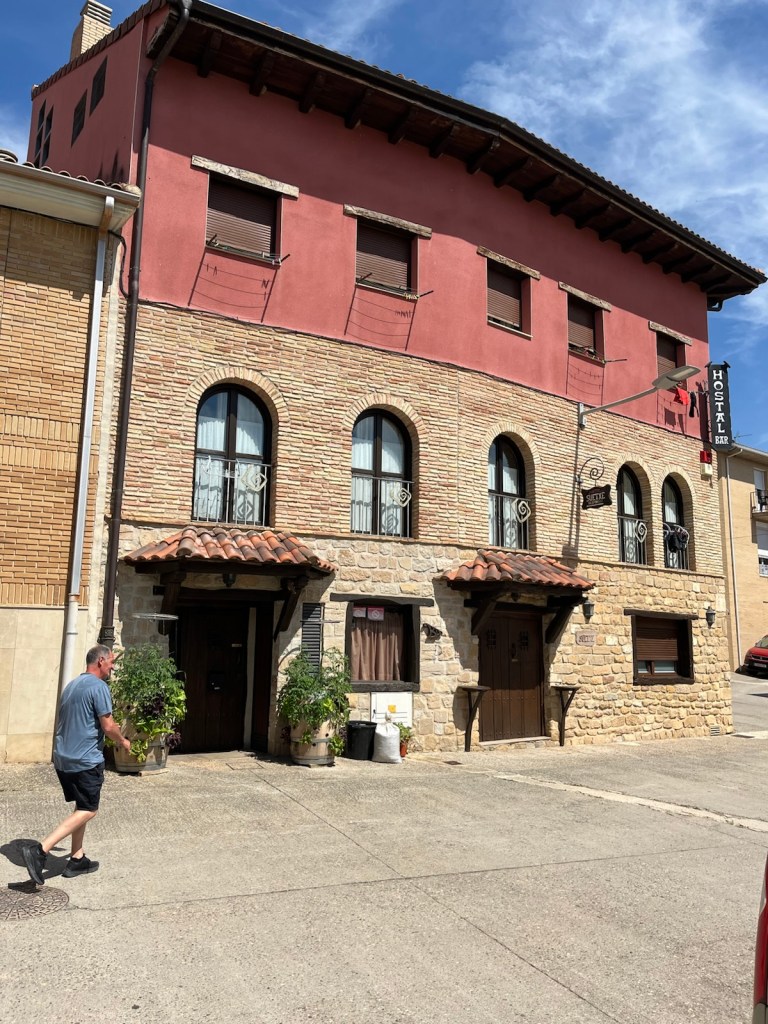
After a tasty meal, we retired to our room at Hostal Suexte, did daily chores, napped and blogged, until bedtime.

