Cacabelos to Villafranca del Bierzo

Walked today: 6.3 mi. Camino2023: 226 mi
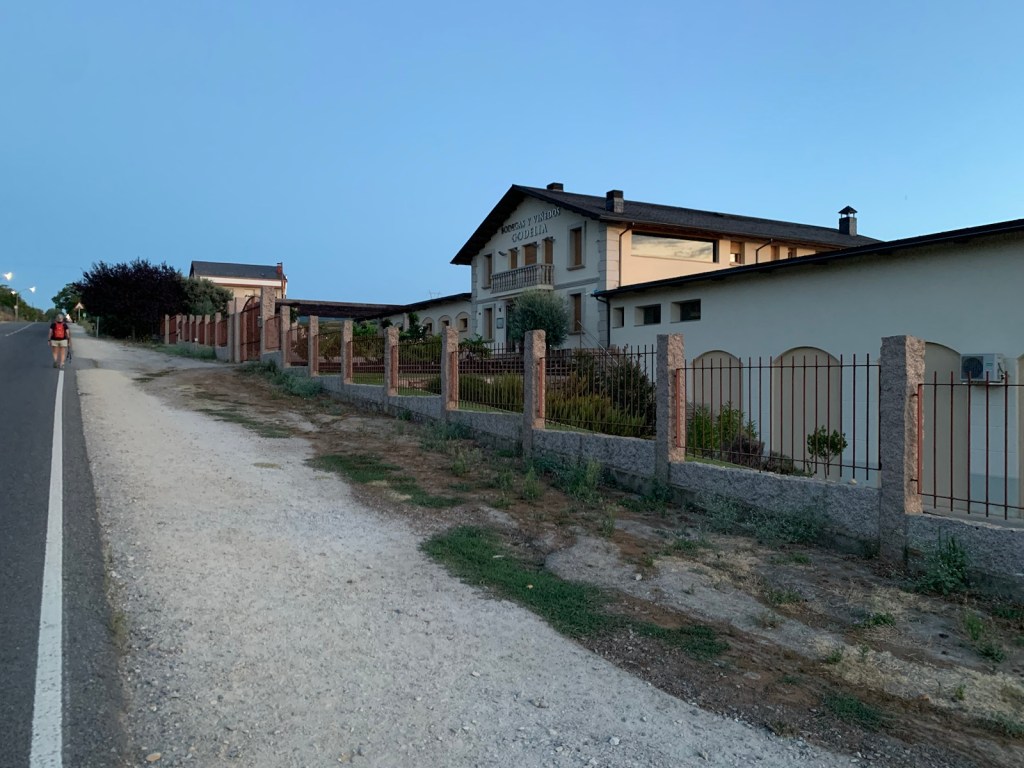
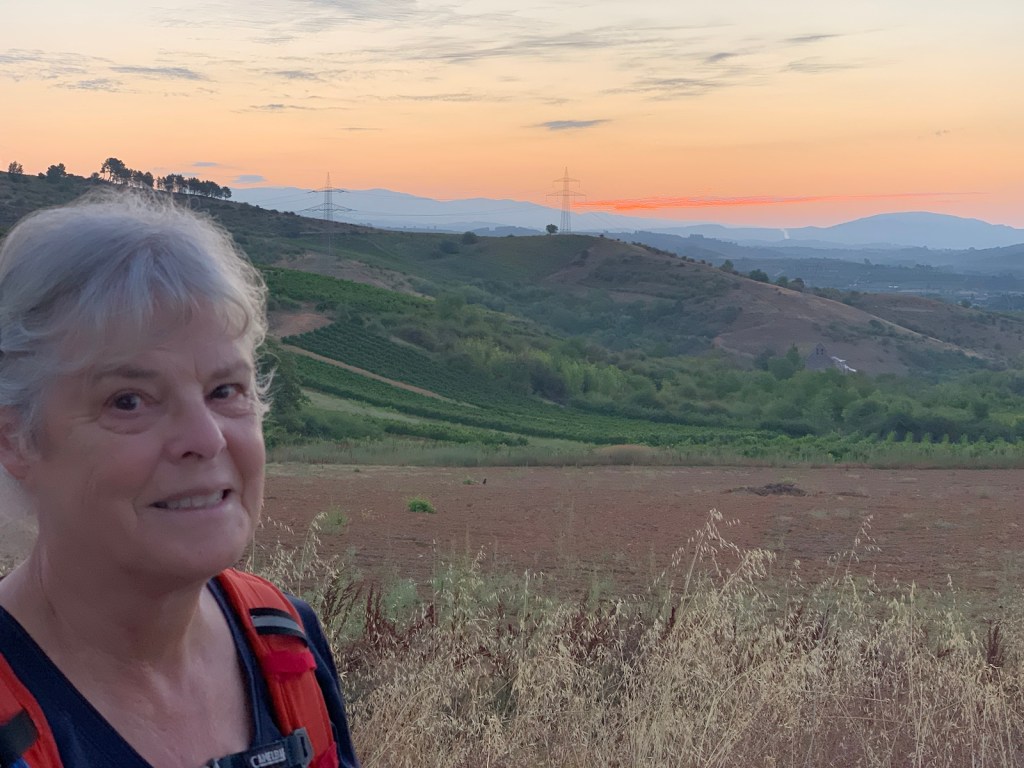
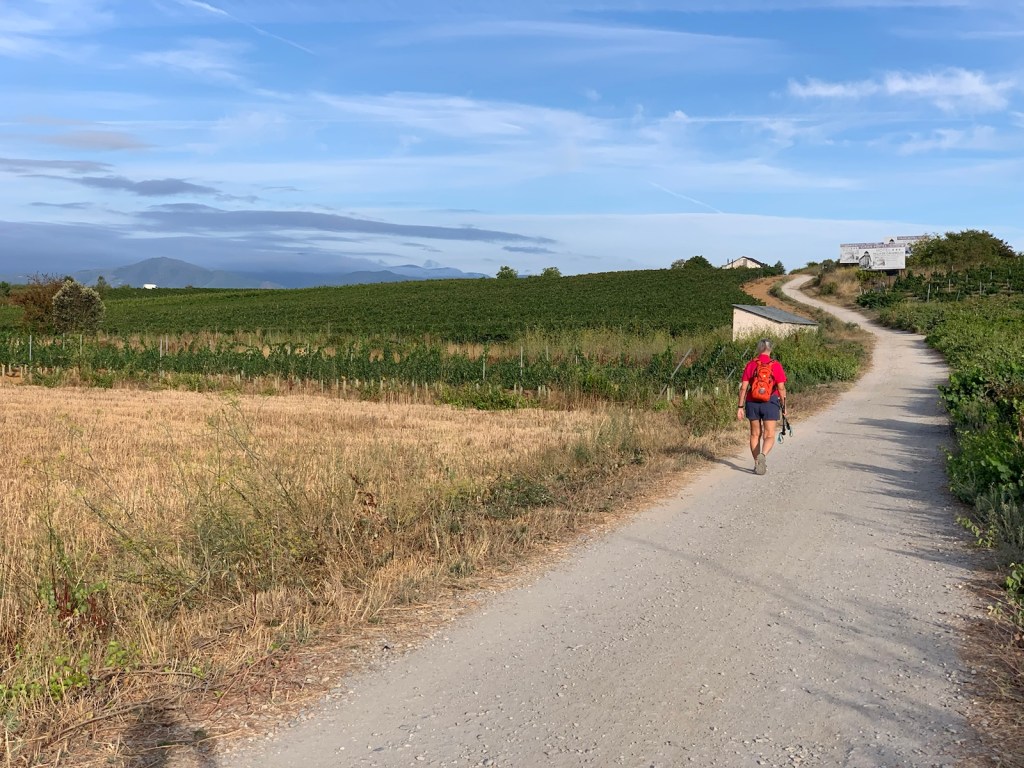
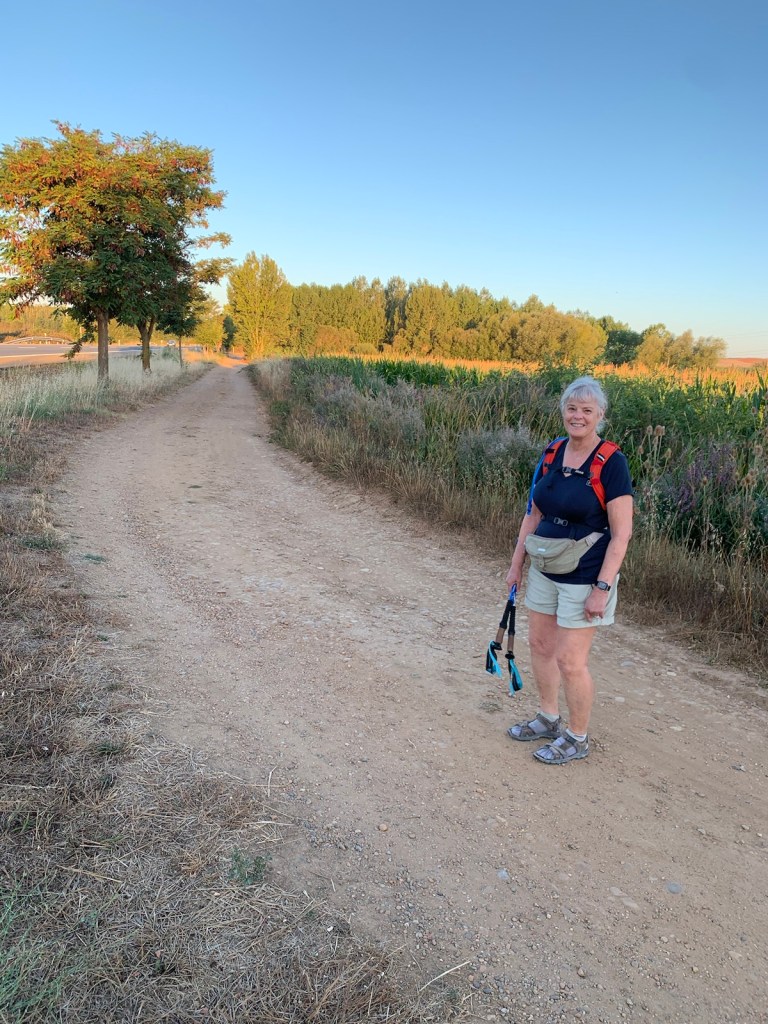
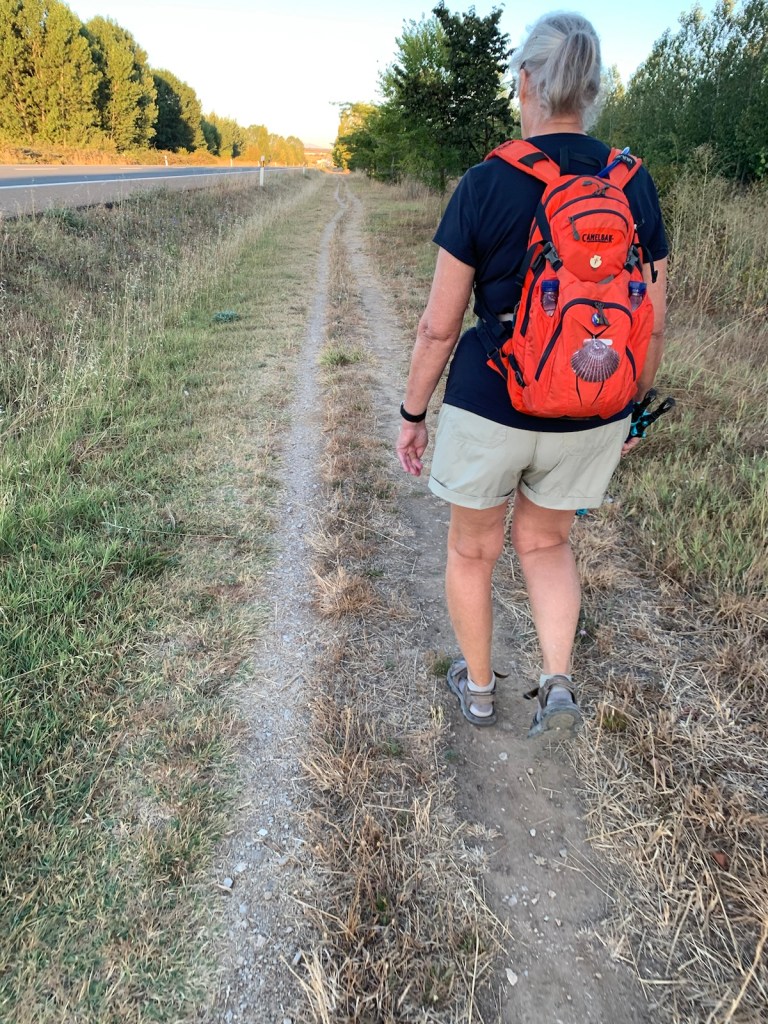
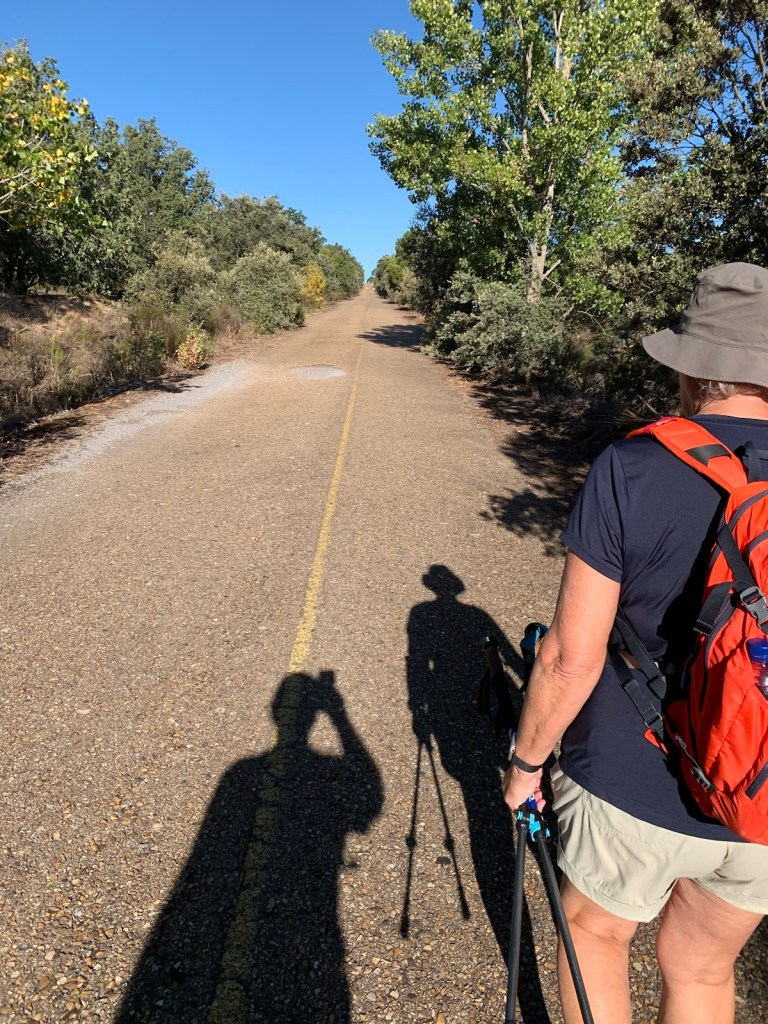
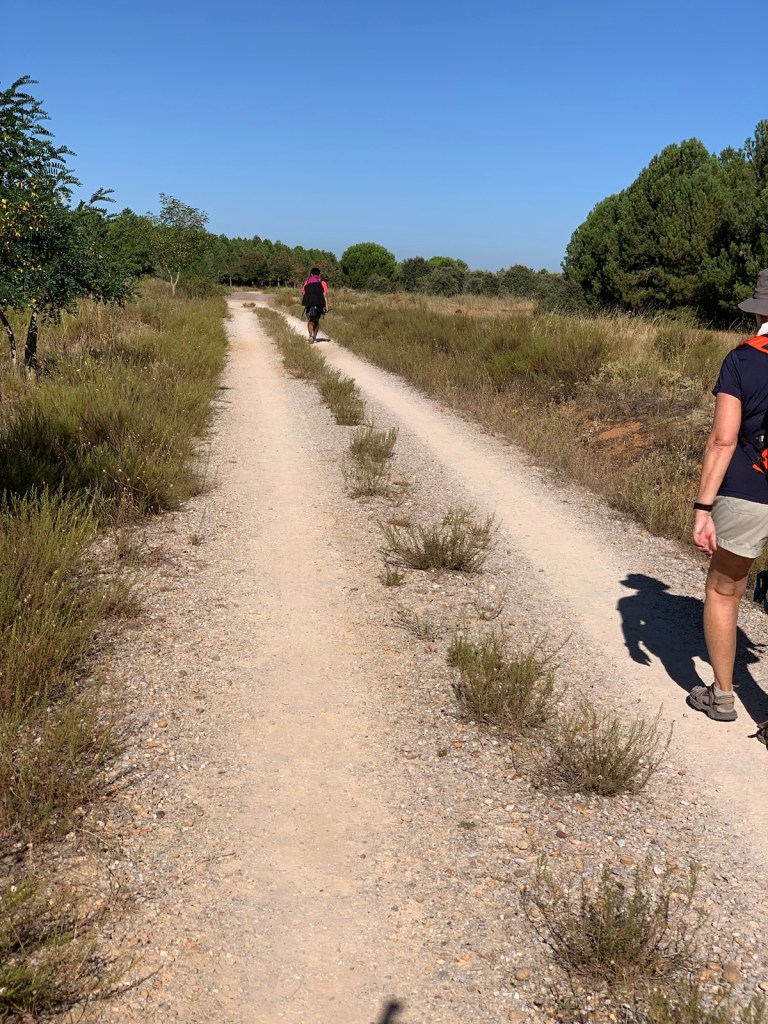
As day was breaking, we walked past this large winery with nearby vineyards on the way out of Cacabelos.
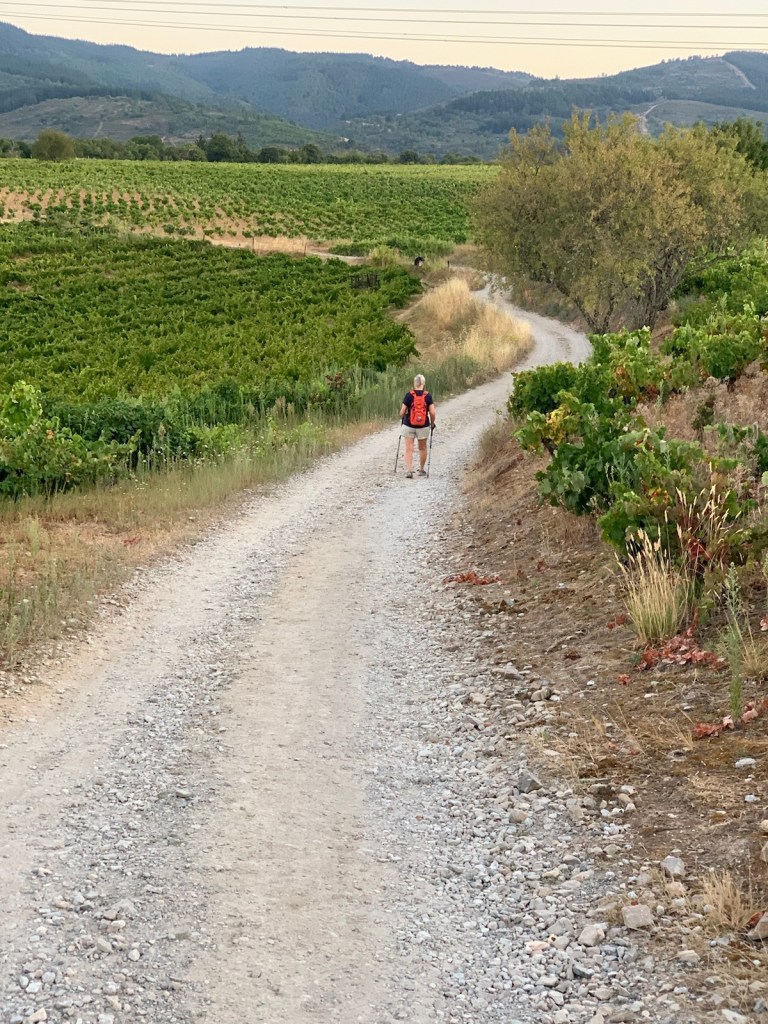
we left the road and began walking through the vineyards
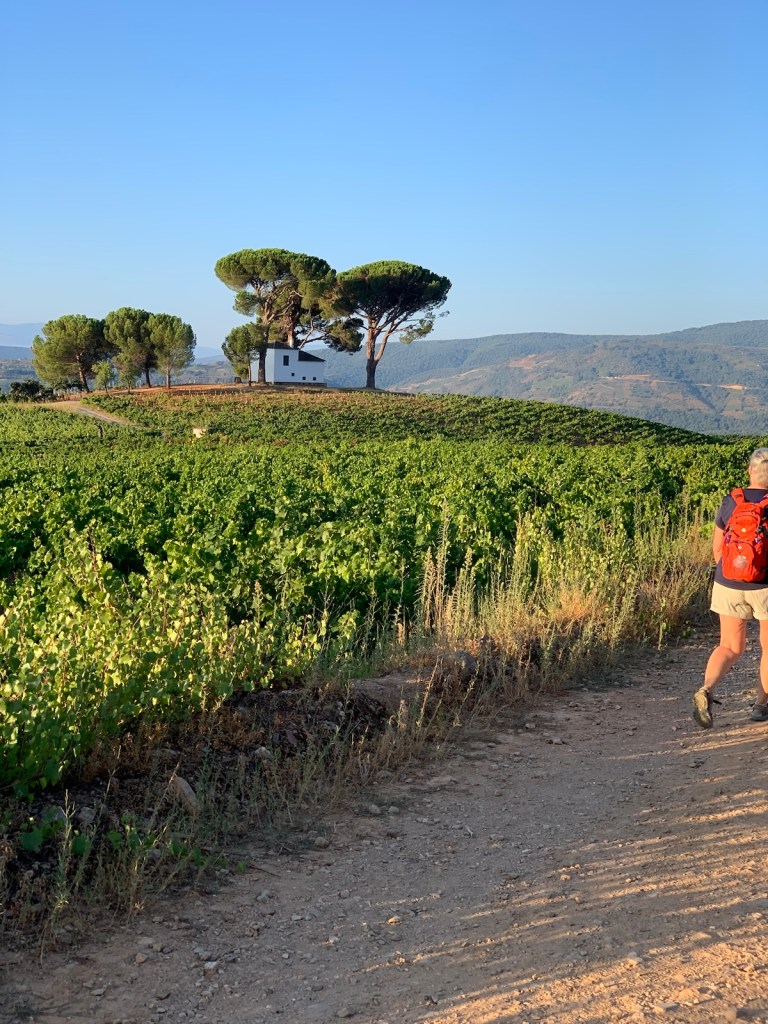
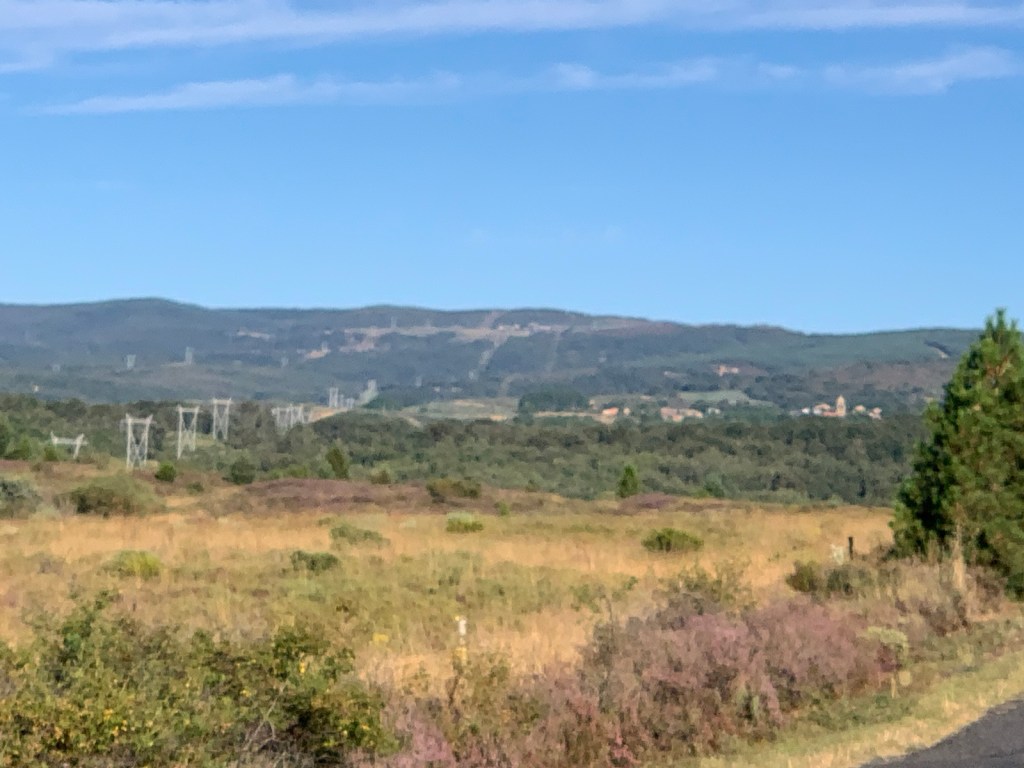
…. Villafranca del Bierzo (our goal for today) and the mountains (our goal for the next several days) were off in the distance.
vineyards all around

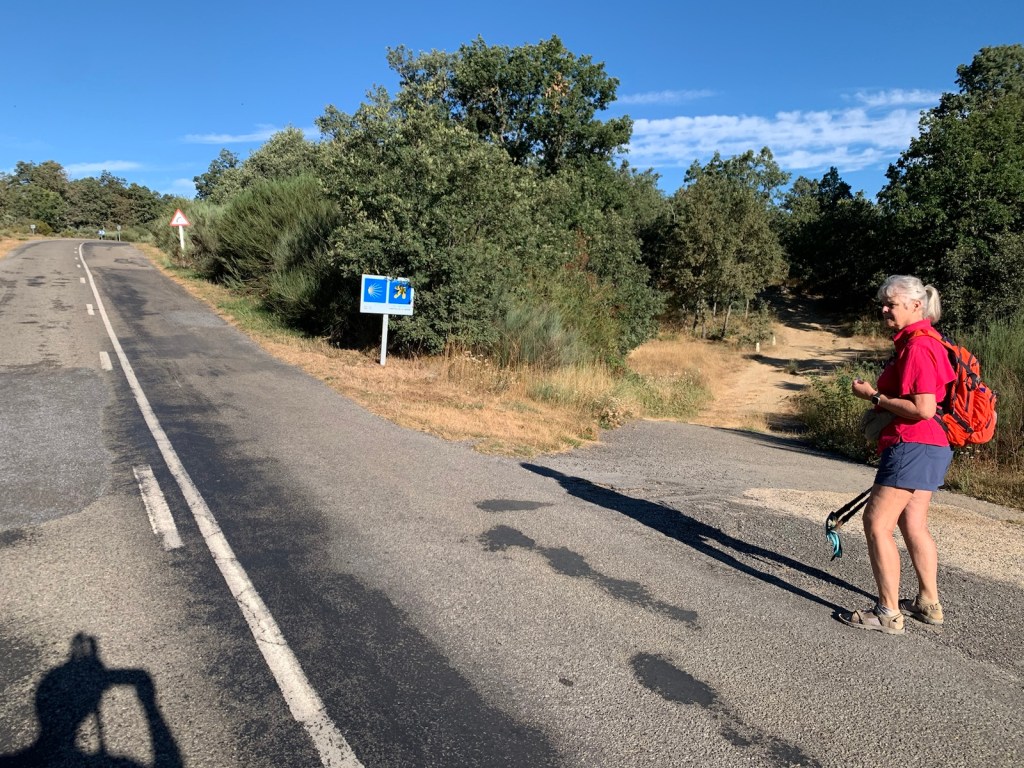
We made a right turn off the main road and the pavement continued a few hundred yards, before we took another left into a dirt road that headed into the vineyards.

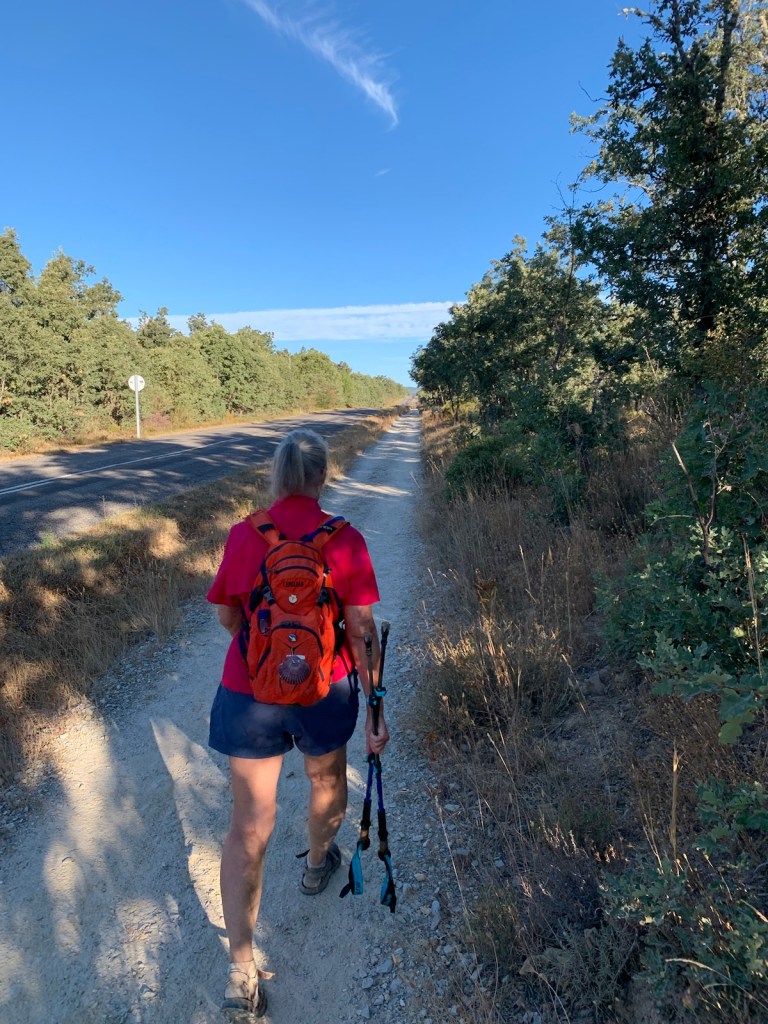
In our previous Caminos, we’ve taken the recommended route that is 75% pavement and somewhat risky with small or no shoulders along the way.

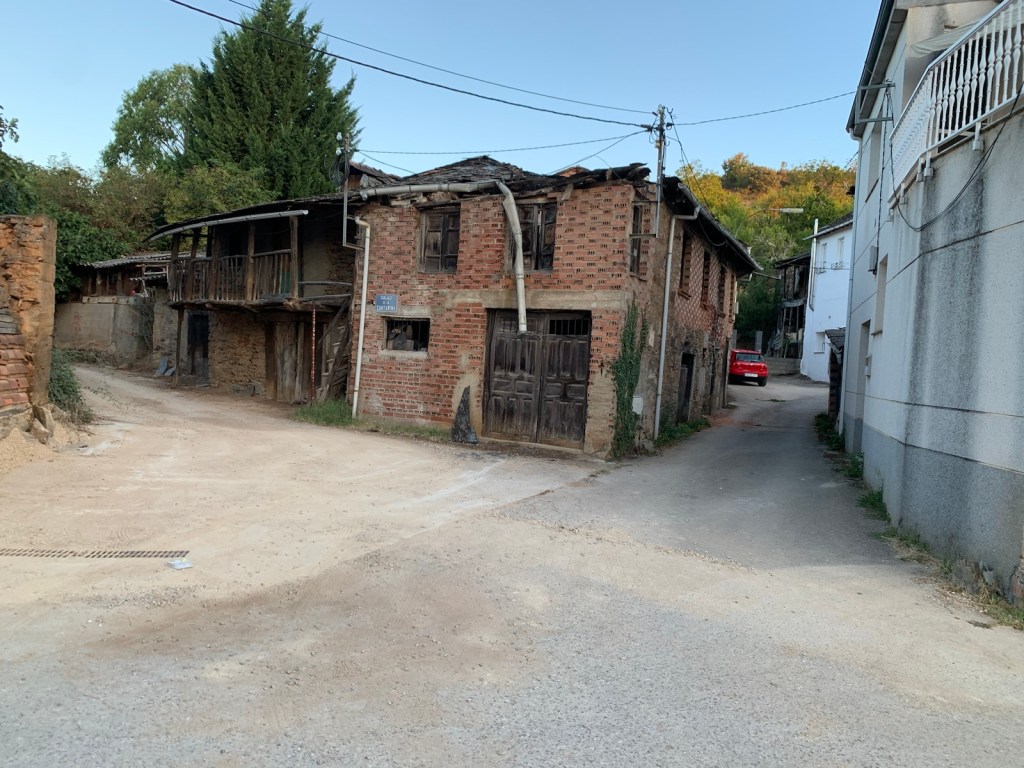
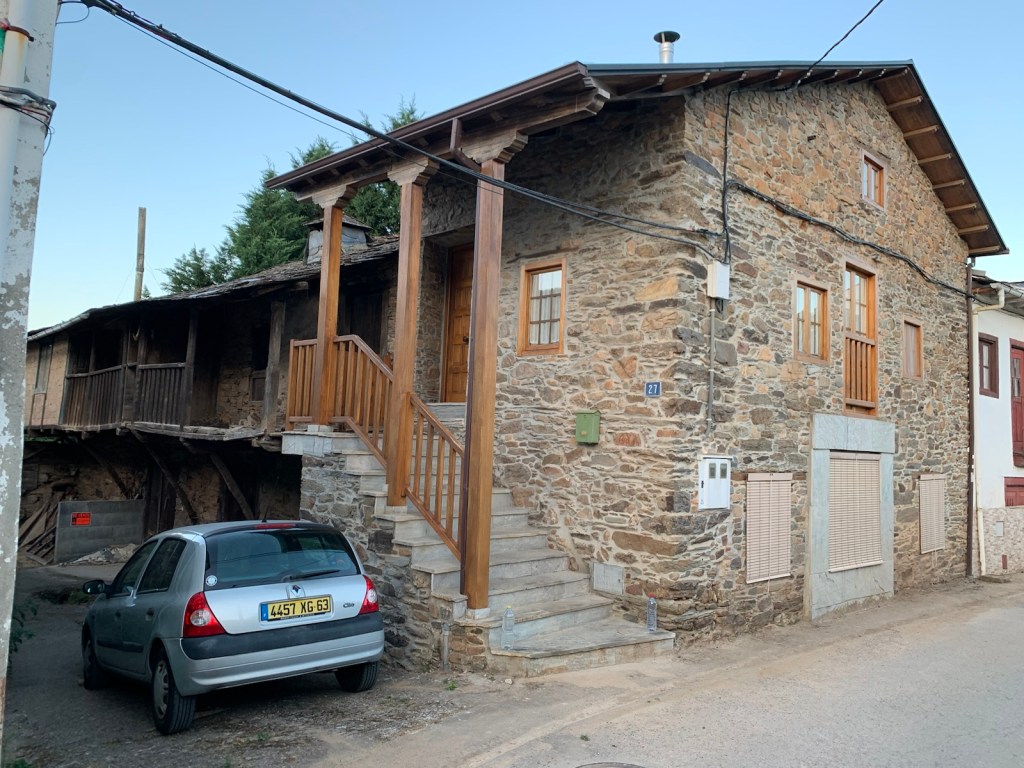
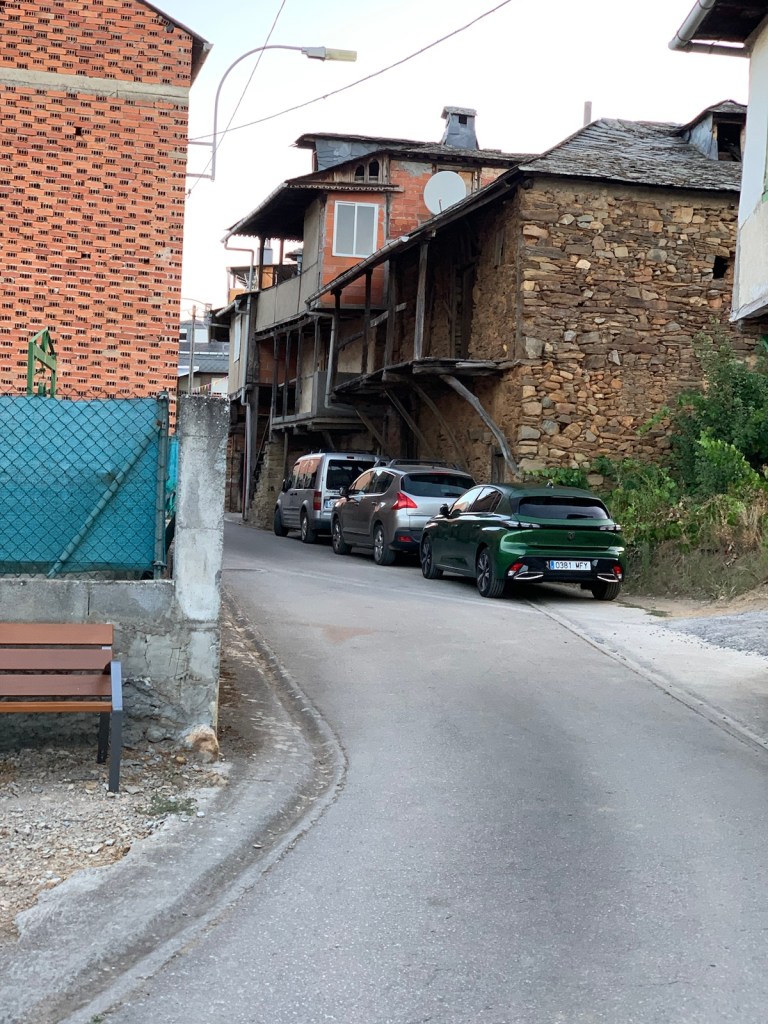
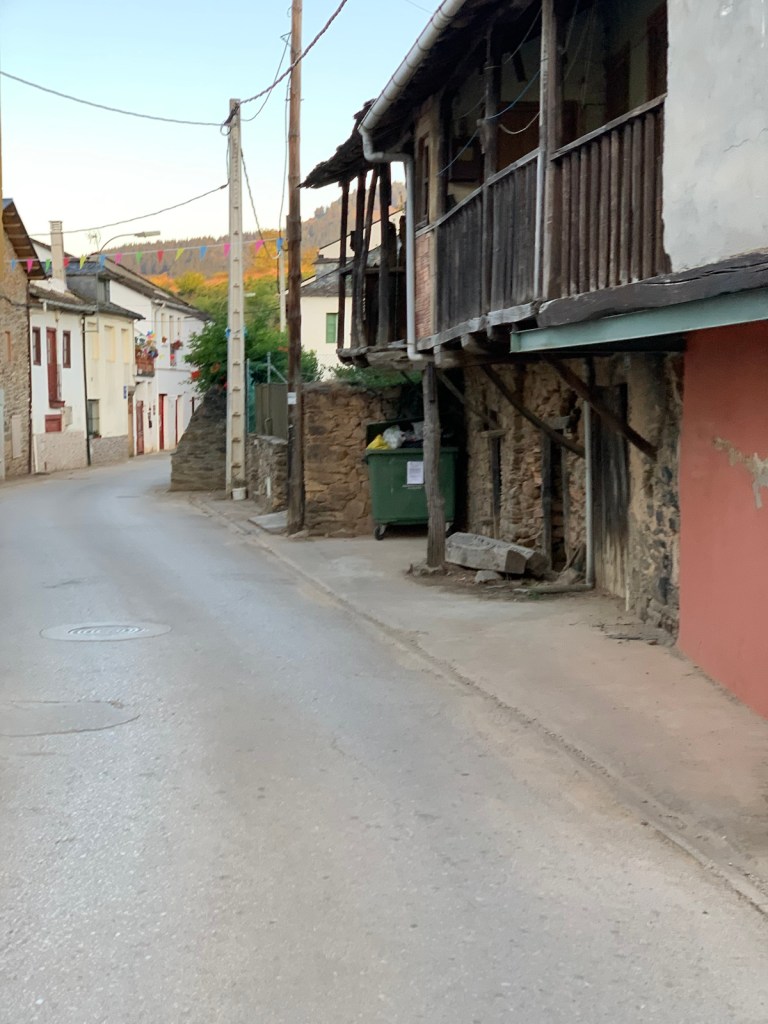
Today, just to be different, we took the alternate route through the vineyards which was slightly longer but definitely more interesting and less boring than the road. It took us through the village of Valtuille de Arriba, (pop. 82), which had some restored homes but the majority if the buildings were in various states of ruin. A couple of the houses had been about 50% renovated, while the other half of the house was still in ruins.
some partial reno on a residence
ruinous structures in town center
this house was in bad shape
another half-renovated residence
structures barely standing
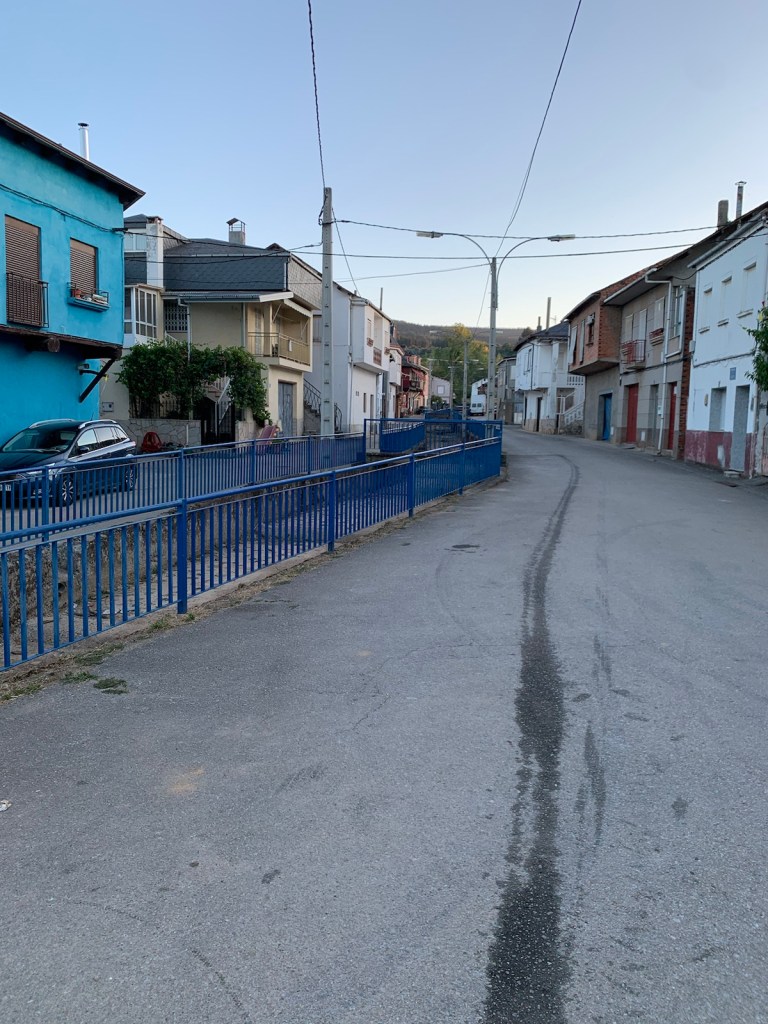
town center
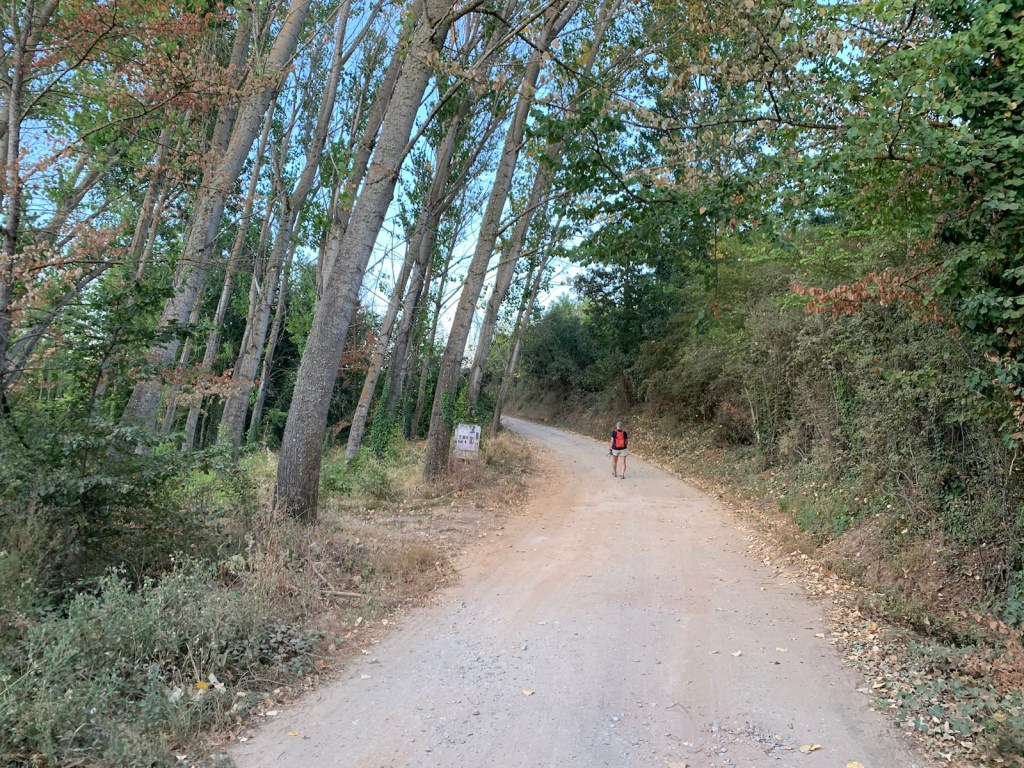
walking out of the village into a gathering of strangely leaning trees
pretty vineyard scenery
more pretty scenery
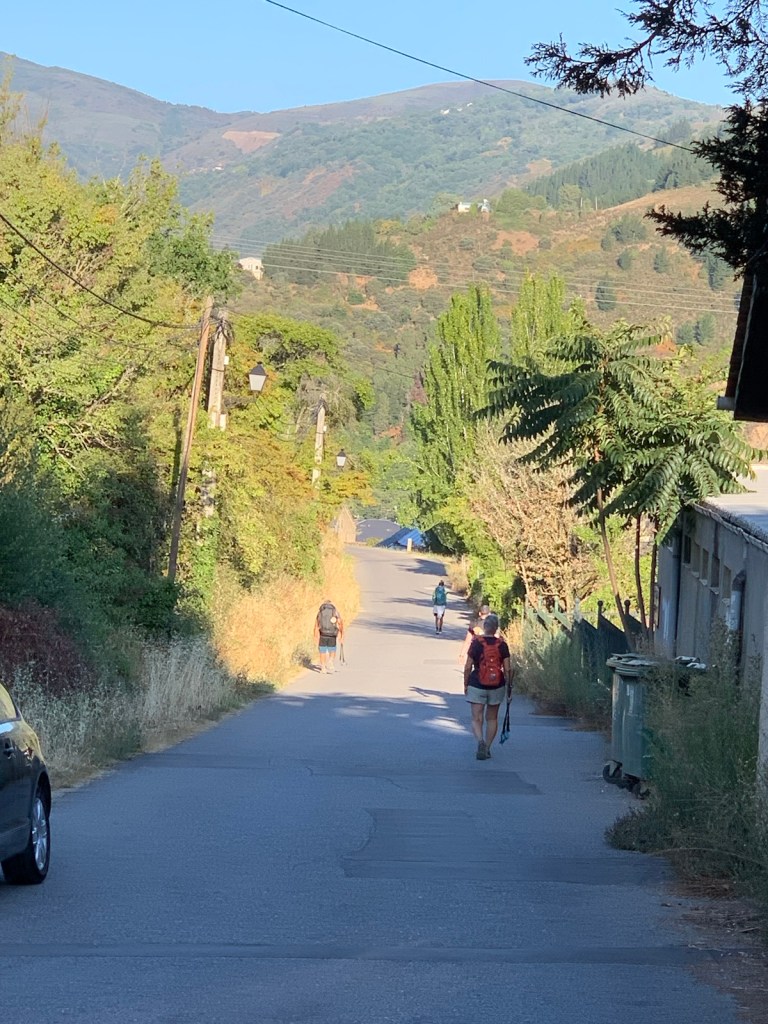
the dirt path became a narrow paved road passing some homes and small farms/vineyards on the way into Villafranca del Bierzo
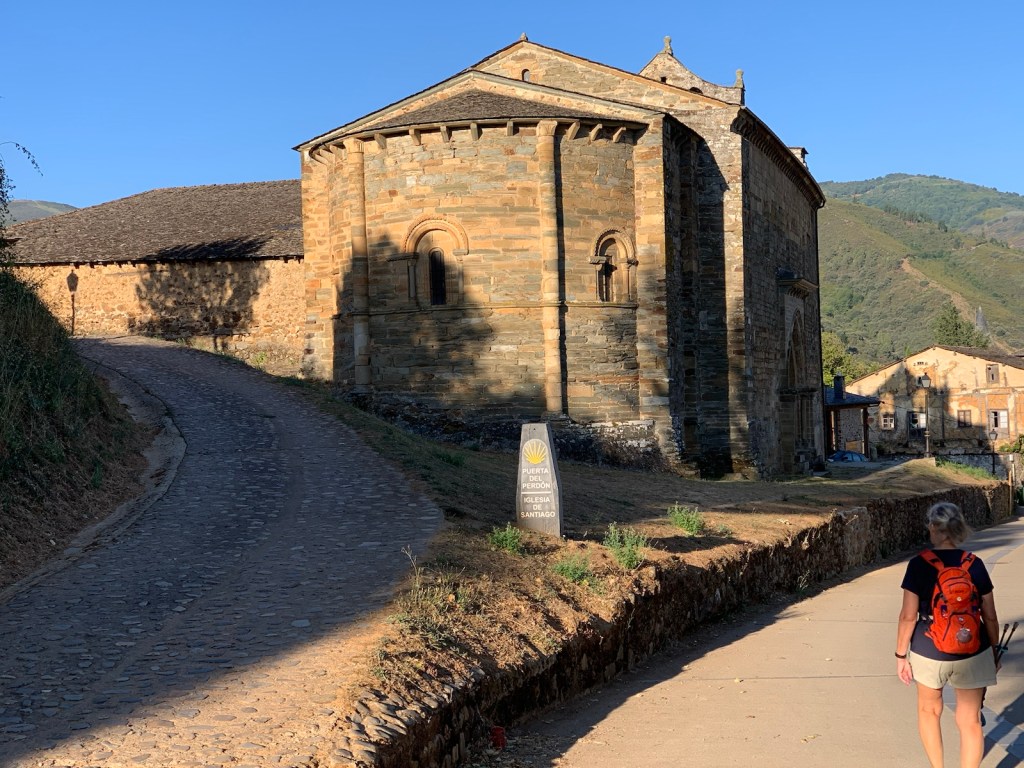
the Iglesia de Santiago

As we entered the town we faced the Iglesia de Santiago with its Puerta del Perdón, a doorway for pilgrims who were too sick to continue to Santiago. They could walk through the door in lieu of completing the pilgrimage and receive the same indulgences.
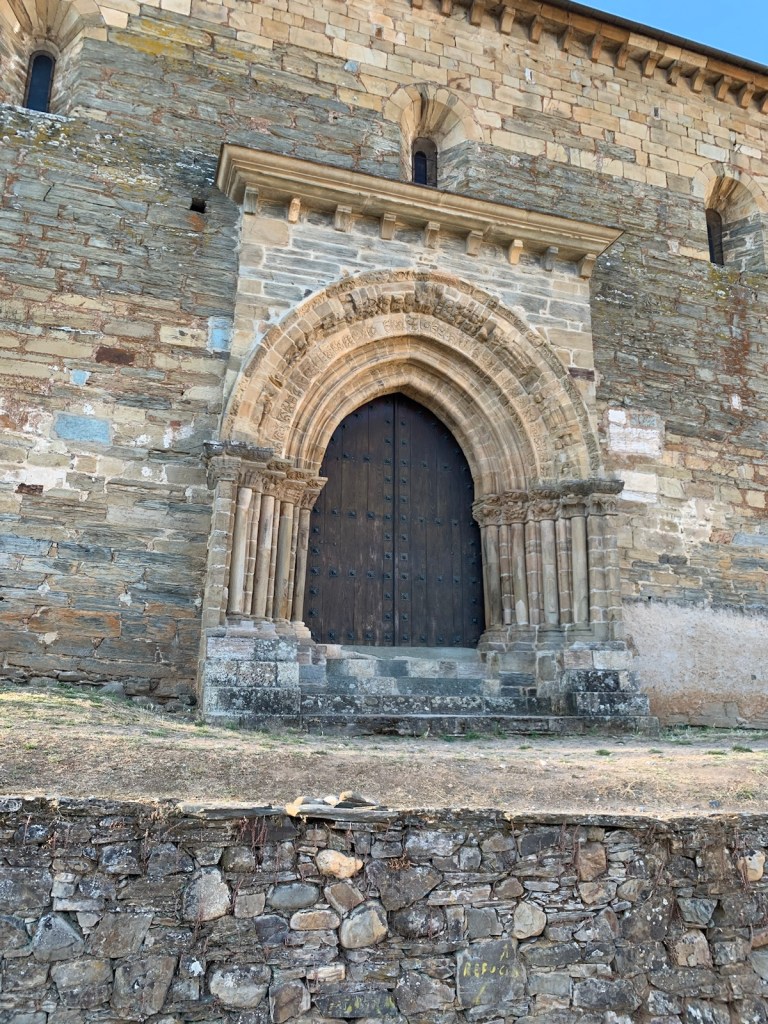
Puerta del Perdón
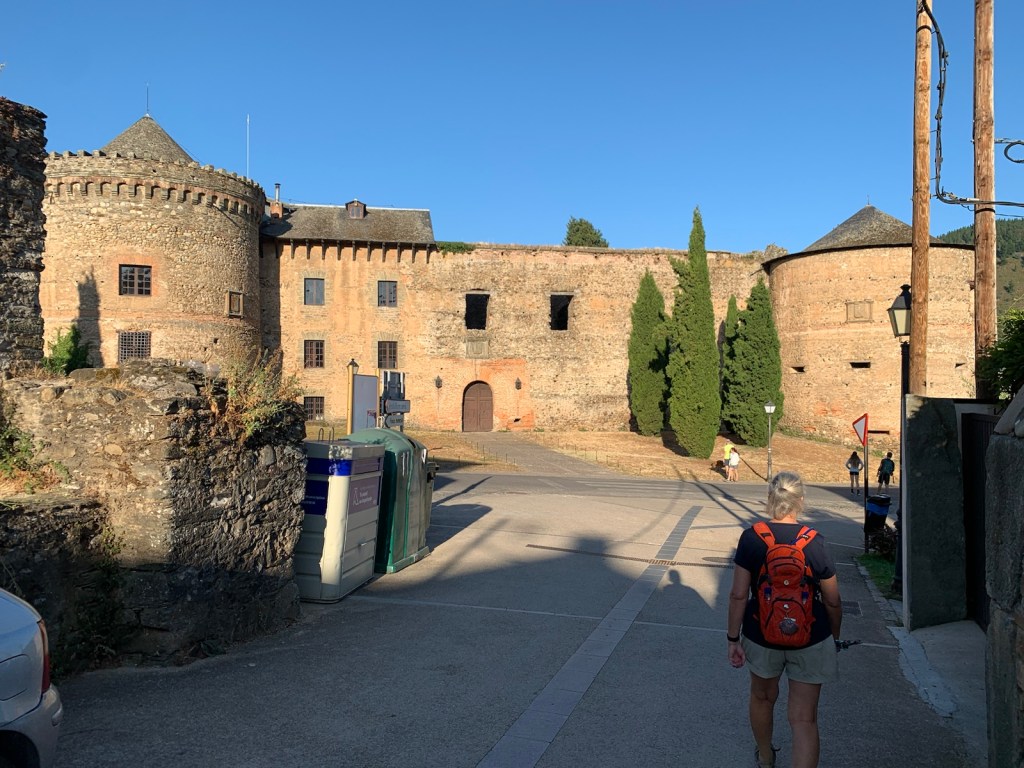
the Castillo

The Villafranca del Bierzo Castle was built in 1515 over the remains of a previous fortification. Its first owner was Don Pedro Alvarez de Toledo (second marques of Villafranca) and since 1850 by Don Joaquin Caro y Alvarez.

More of a fortified-palance than a castle, it was ransacked in 1809 by the English and in 1815 and 1819 by the French during the Independence War.

It’s under private ownership, not open to the public and we’ve never seen the inside.

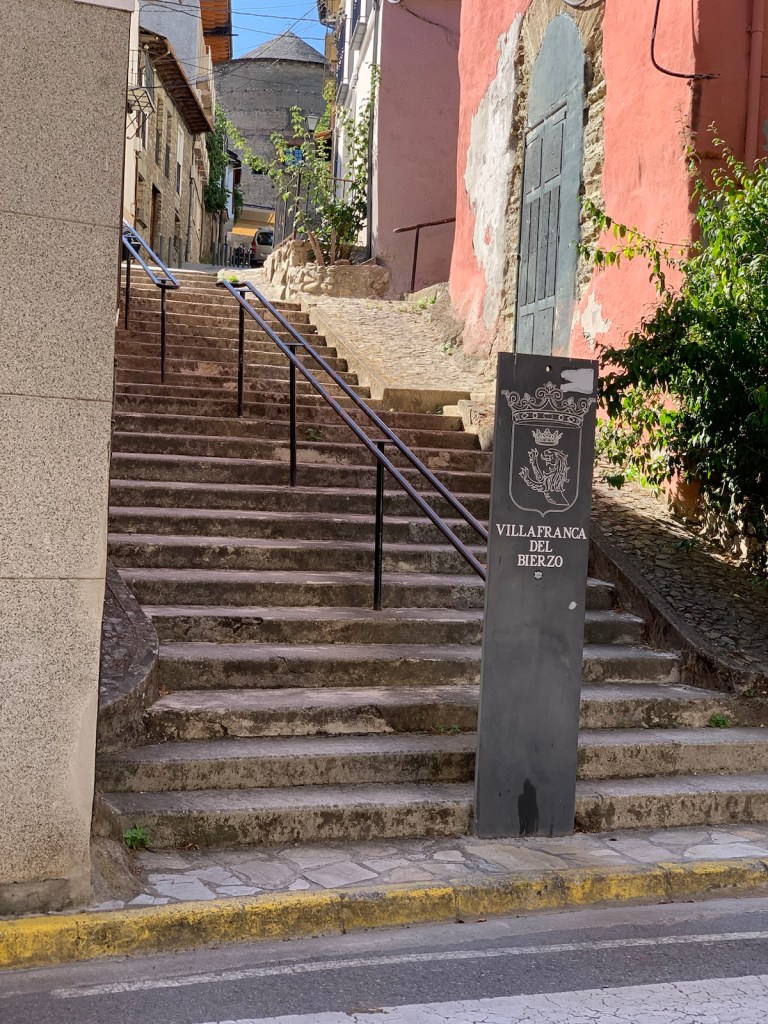
The streets and steps into Villafranca del Bierzo mid-town are very steep. Jim did a little dance after missing a step near the bottom of this run and amazingly remained on his feet the final steps into the street without incident… but he was clearly much more cautious the rest if the day.
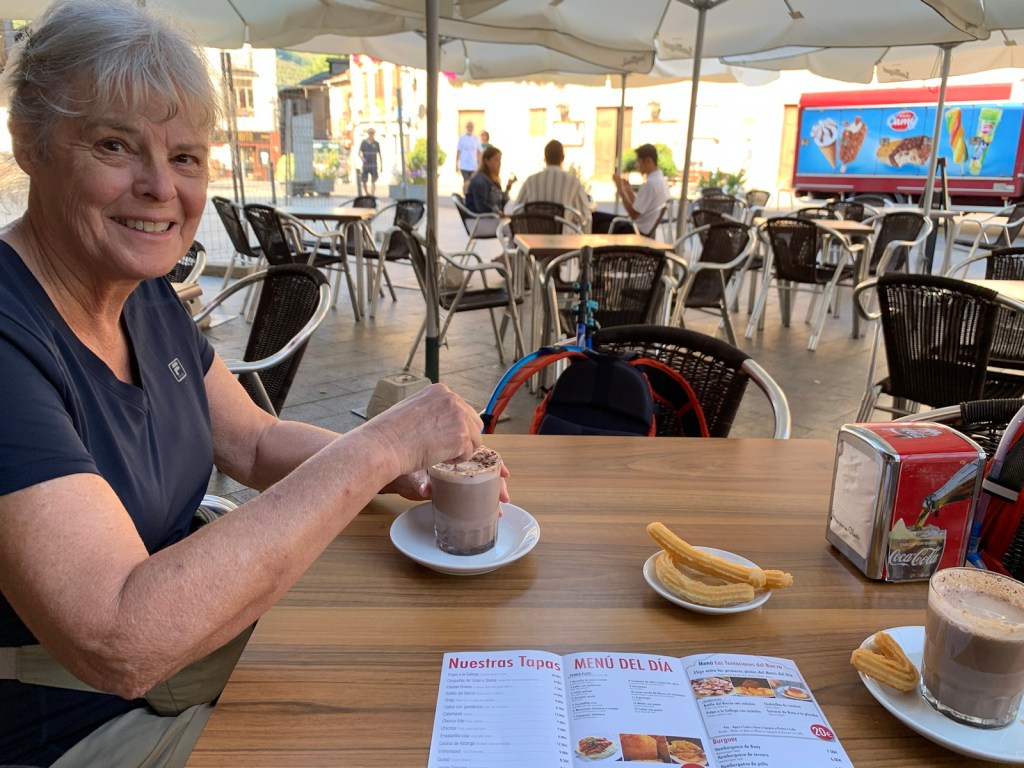
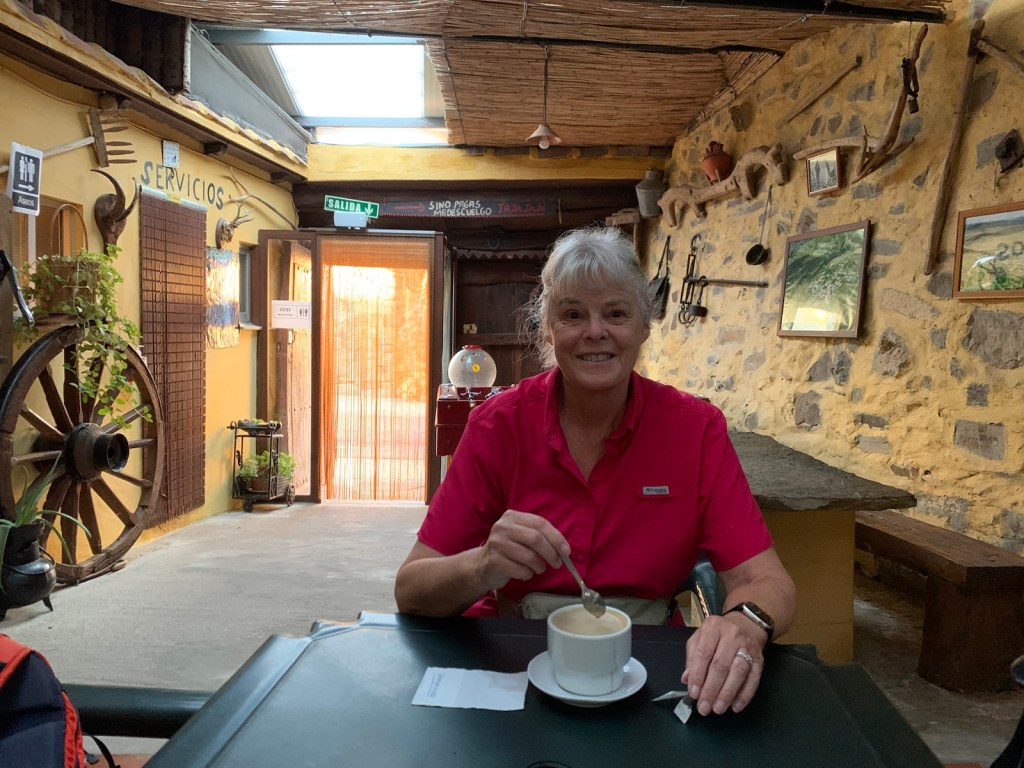
our second breakfast, while waiting for checkin
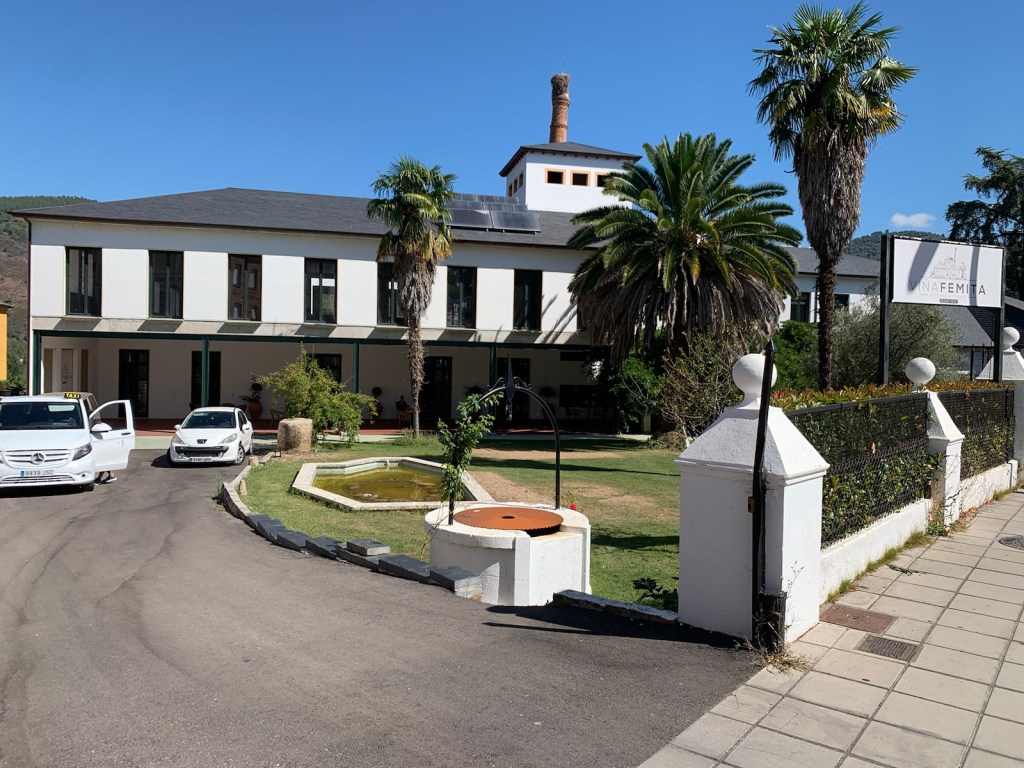
our albergue
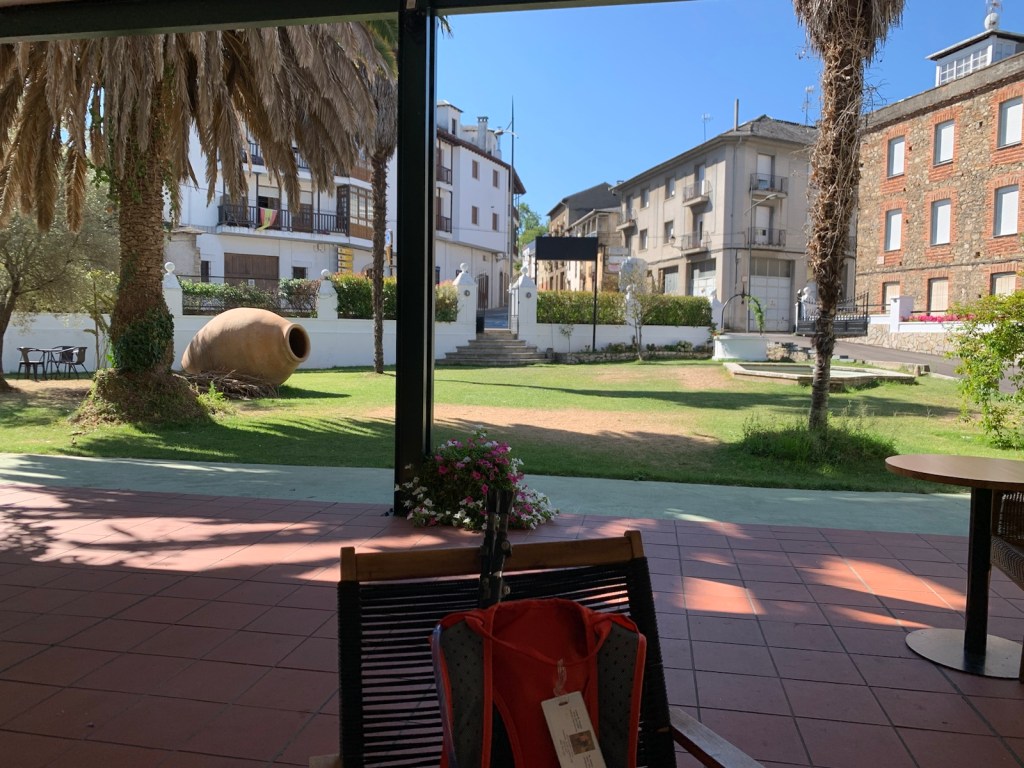
view of the street from our final waiting spot to checkin
Linda waiting

We finally checked in to Viña Femita at 1:00.
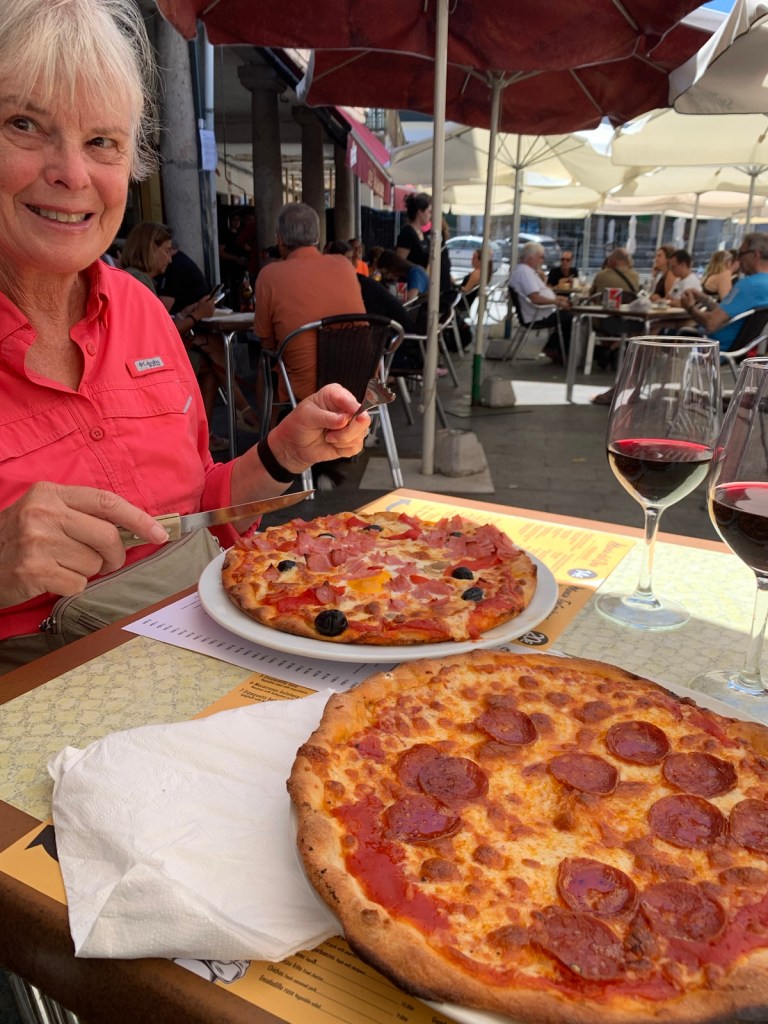
had our best pizzas of the Camino today with a glass of Mencia wine.

Tonight we had a light dinner, cooked by the Juan’s mother. Viña Femita was built on the site of the family home, which burned when Juan was a child. In it’s place, Juan has built a very nice albergue/hotel… and is continuing to add to it, including a new section of 7 additional rooms which should be open for guests in the next month.

Jim and Juan

Juan’s dad grows Mencia grapes in his vineyards and produces some very nice red wine, as evidenced by the bottle Linda and I had with tonight’s dinner.

Our dinner wine (Mencia)

You’ll notice from the photo, the bottle has no label. It was selected from Juan’s collection especially for us.

We had a delicious vegetable soup and Jim had a portion of very tender breaded fried chicken breast. It was more than we should have eaten after our late lunch pizza, but we’ll get a chance to walk it off tomorrow on the way up into the mountains.

It was a nice ending for a delightful day in Villafranca del Bierzo for Camino2023.

Ponferrada to Cacabelos

Walked today: 6.3 mi. Camino2023: 219 mi
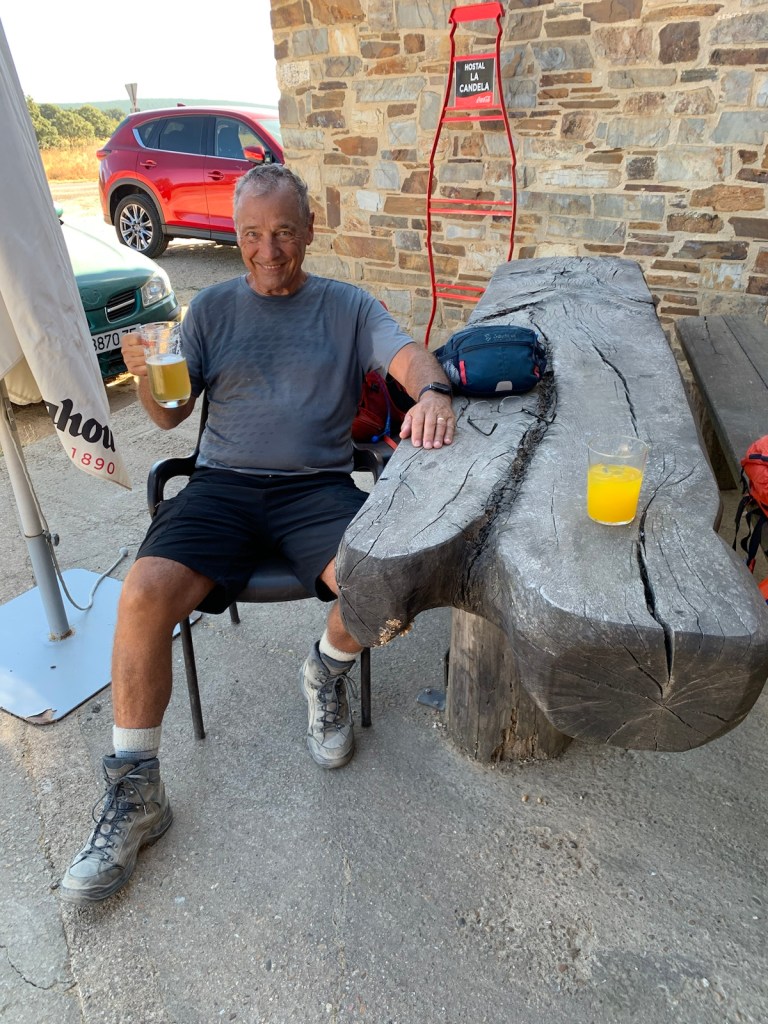
We continued on city/suburb sidewalks for the first half of today’s walk
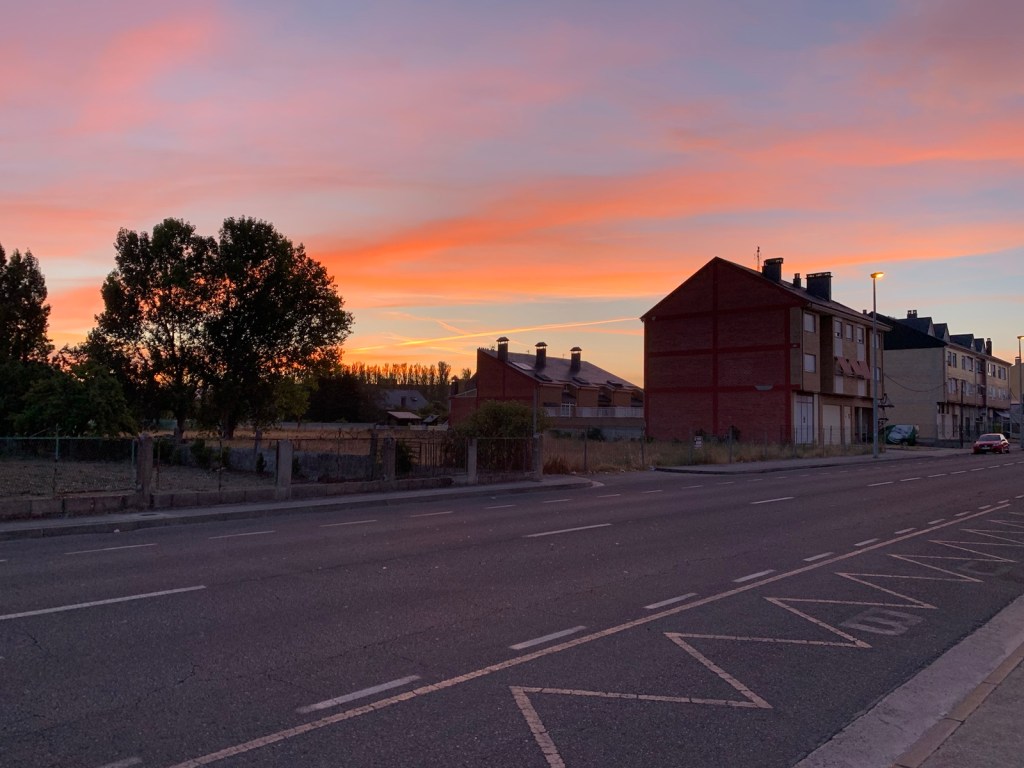
the pretty sky behind us… almost forgot to look.
As we walked through a town called Bierzo this morning, Jim said, ” I’ve never owned a tractor, never needed a tractor, but if I ever did want a tractor it would be this one!”
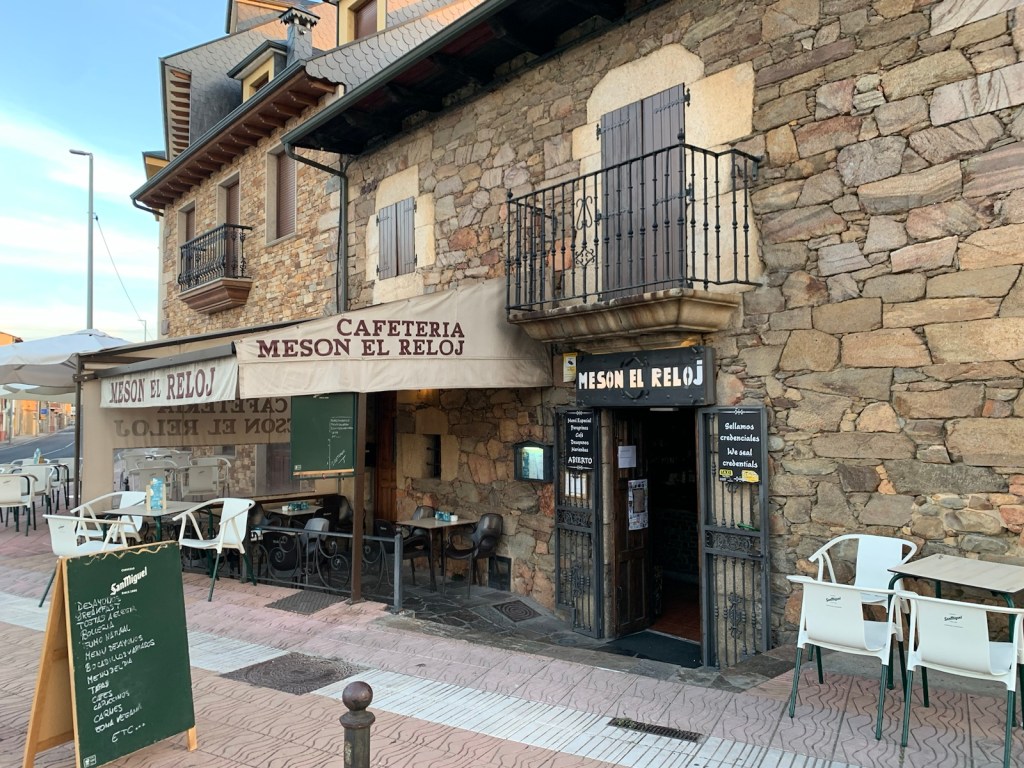
We nearly panicked when the sidewalk and building began to run out and our usual breakfast stops were all closed. And then, this one, which has always been closed, was OPEN!
the tostados and jam was especially good
don’t need to know Spanish to tell this is a hardware store.
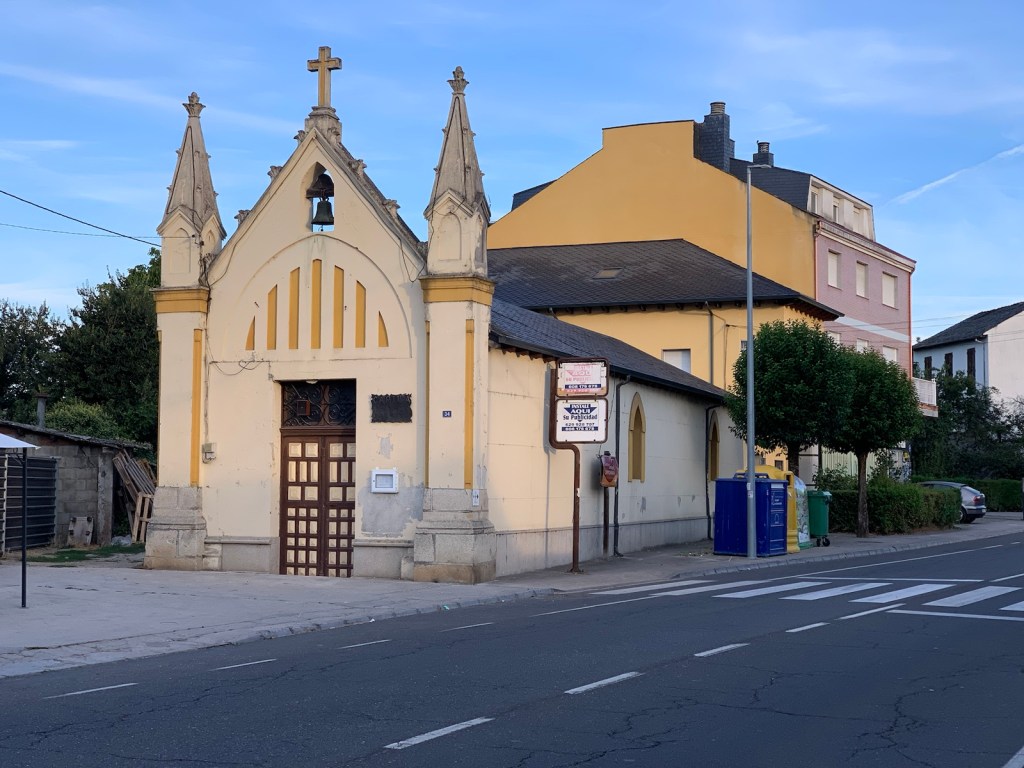
strange location for this cute little church
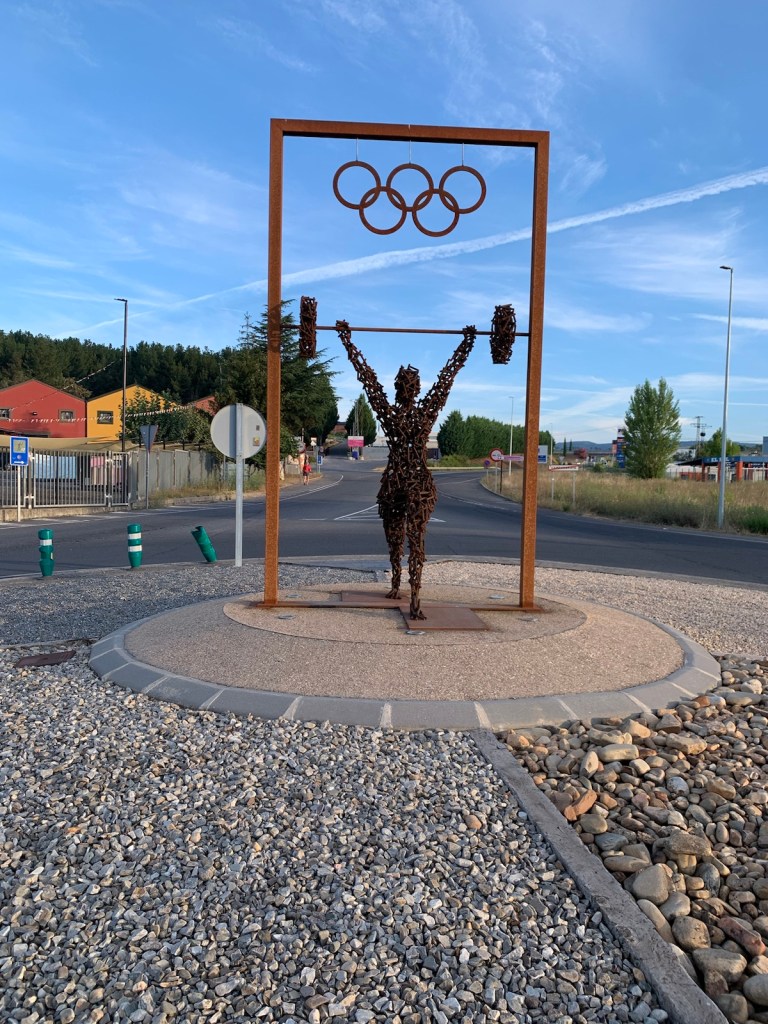
As we left Camponaraya, we walked past this statue honoring Lydia Valentín Pérez, Women’s Olympic Weightlifter from this part of Spain.
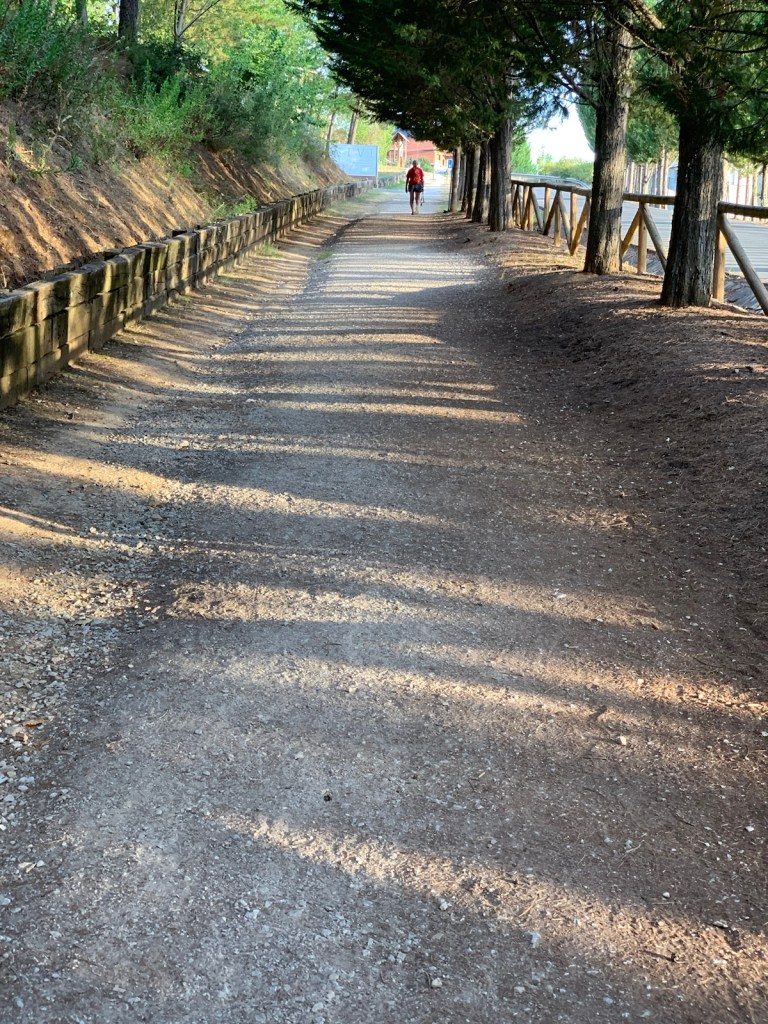
and now a break from all those sidewalks!
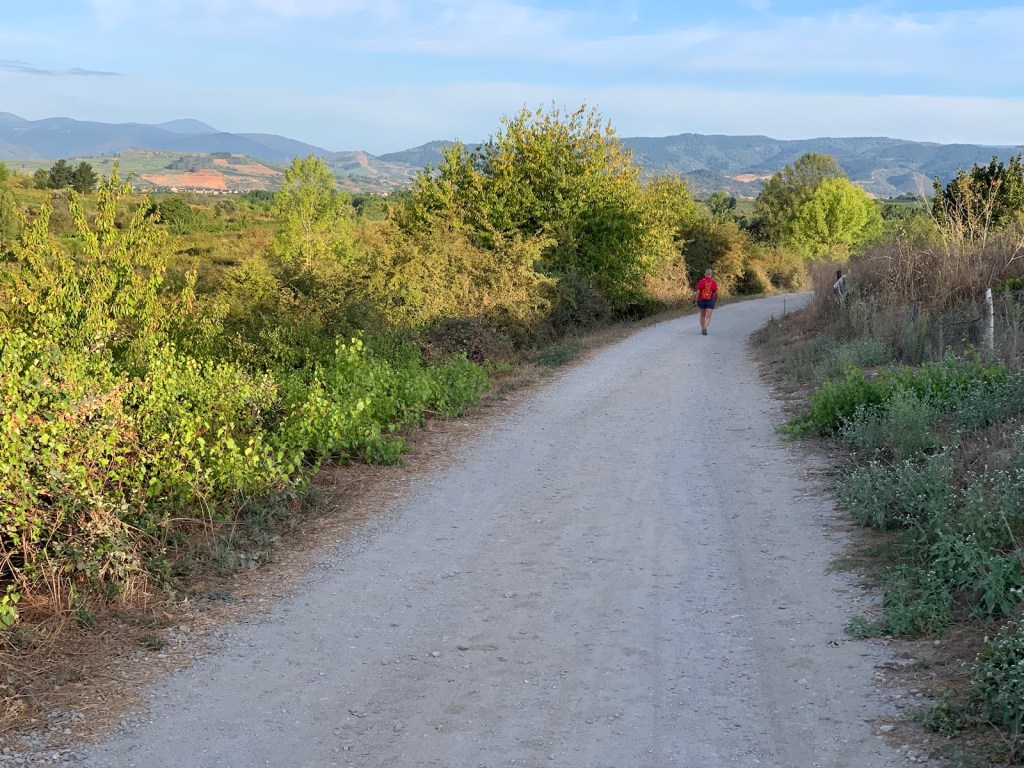
heading out into the vineyards and toward the mountains
the path wound among the vineyards and an occasional forest
the gravel path and the cool morning air made it a relatively easy walk.
the paved road or pathway, pilgrims choice, into Cacabelos.

On the way into Cacabelos, we stopped at a bar for a glass of fresh squeezed OJ and chatted briefly with Susie, a nice young lady from Ireland, currently living in Oxford, England. She was walking on to Trabadelo, another 10 miles to go. She asked for some ideas about places to stay the next few days and we offered some suggestions and she was soon on her way again.

We finished our juice and walked on into town center to our home for the rest of the day. ly Once again, we were able to check-in early to our hotel room when we arrived at 10:30!

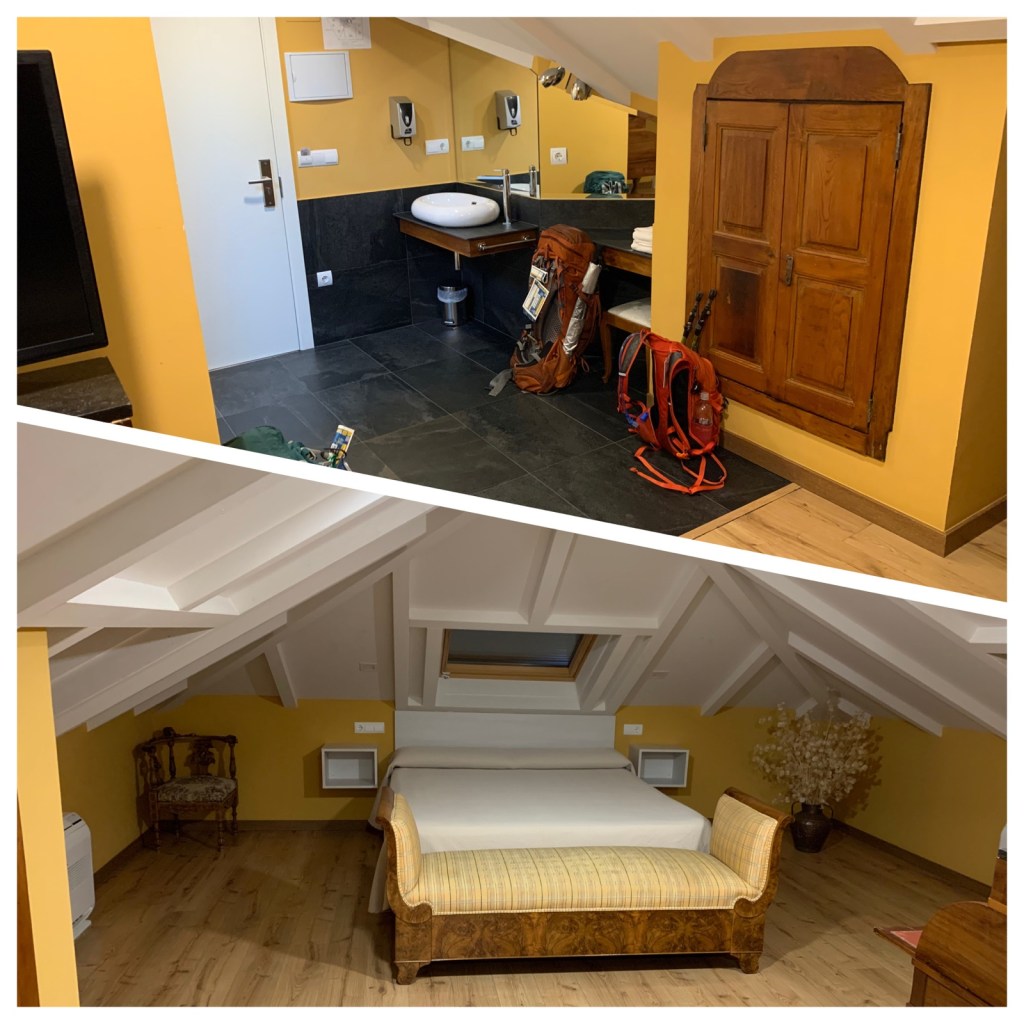
our unusual, but very comfortable room
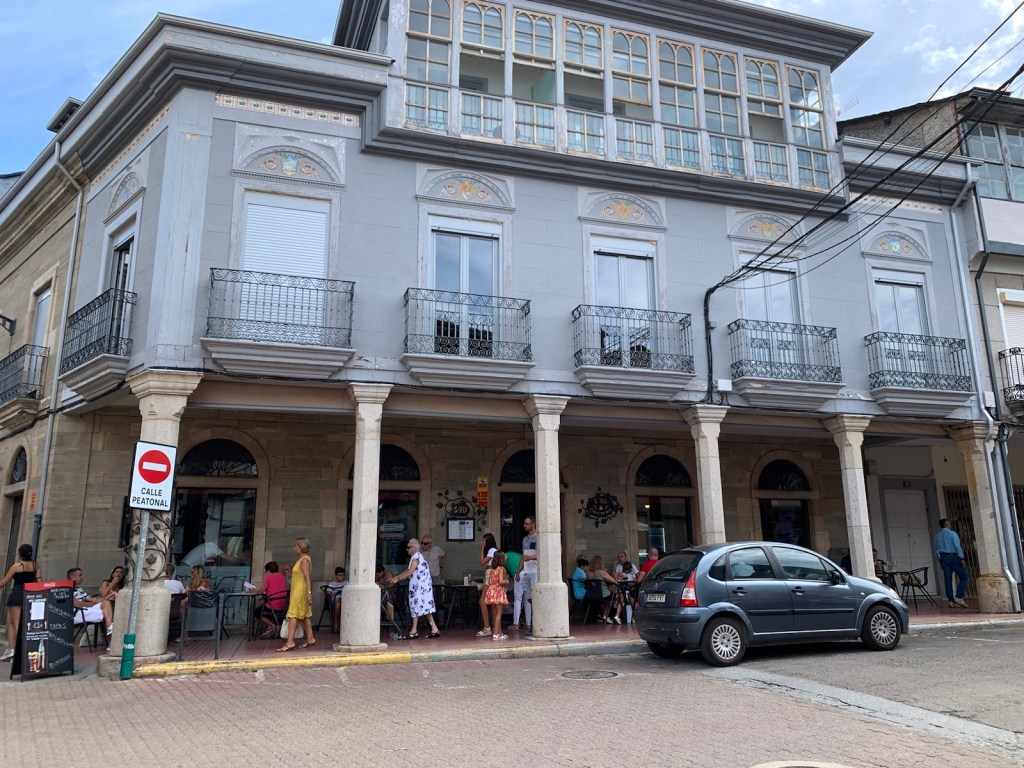
our hotel , Siglo XIX, in Cacabelos.

We followed our routine, had lunch in the hotel restaurant and had a leisurely afternoon blogging, reading and napping.

Molinaseca to Ponferrada

Walked today: 6.5 mi Camino2023: 213 mi

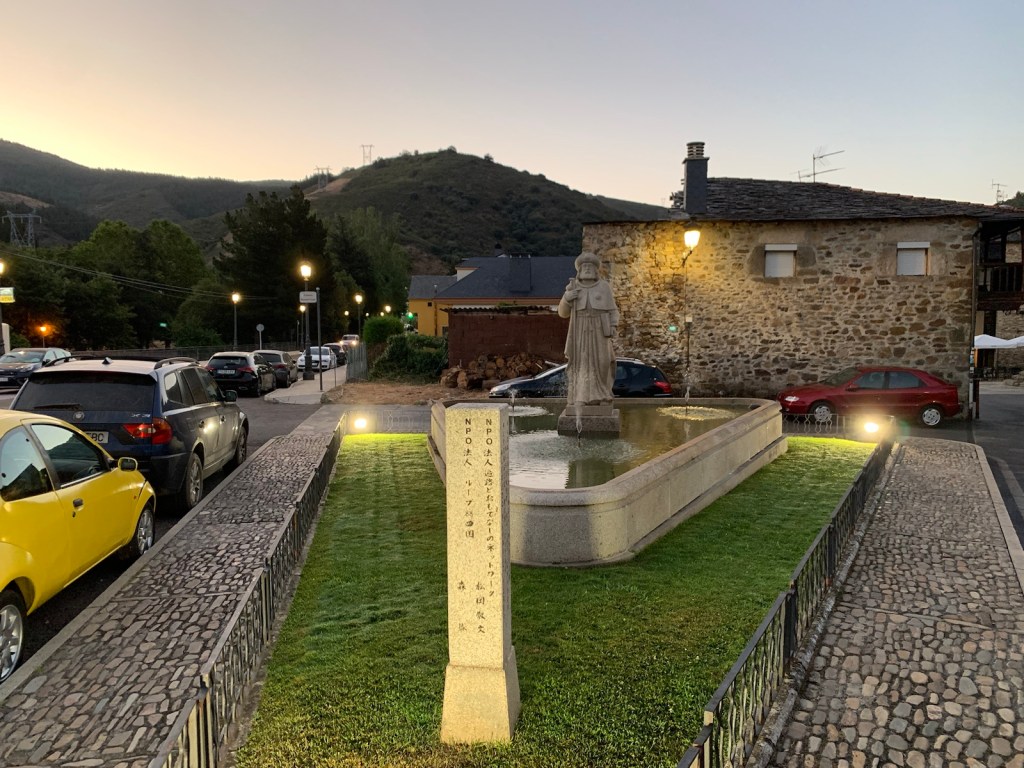
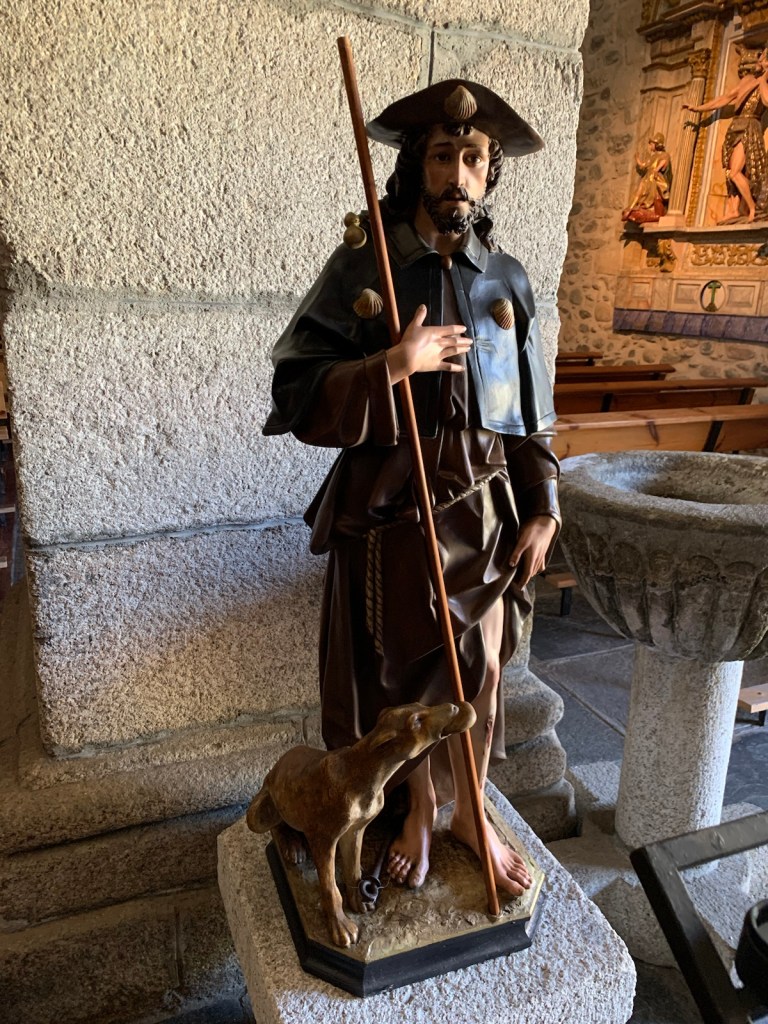
Looking back as we walked past the Pilgrim statue on our way out of Molinasaca.

Today we walked the entire way on sidewalks! It was a pleasant walk, before the sun got too high in the sky and even then, we were able to find shade if we picked the sidewalk on the correct side of the street.

sidewalk leaving Molinaseca
sidewalk between Molinaseca and Ponferrada
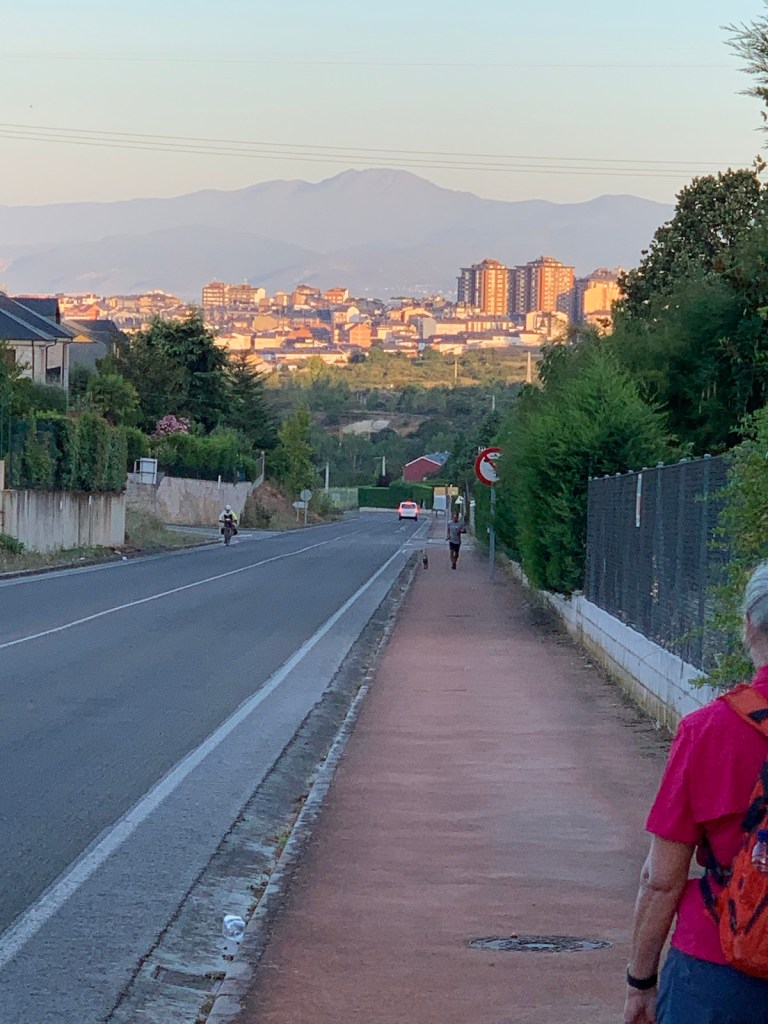
sidewalk leading into Ponferrada (in background)

Ponferrada started off as a Celtic settlement, followed by a Roman mining town. The city was destroyed first by the Visigoths and then Muslim invaders. After the Reconquista, Bishop Osmundo of Astorga commissioned a pilgrim bridge here, which was unusually constructed with steel beams, giving the city its modern name. Ponferrada was a booming pilgrimage town, with diverse merchants including Franks and Jews, who were protected during a 15th-century restriction that called for segregating communities. The railroad came to the city in 1882 and in the 1940s the town grew with the coal industry.

walking past Templar Castle just prior to walking over the steel reinforced bridge.

The Templar Castile was built in the 13th century over a destroyed Visigoth fort, which was built over a Roman fort, which was built over a pre-Roman castro. Soon after its completion, the Templars were banished.

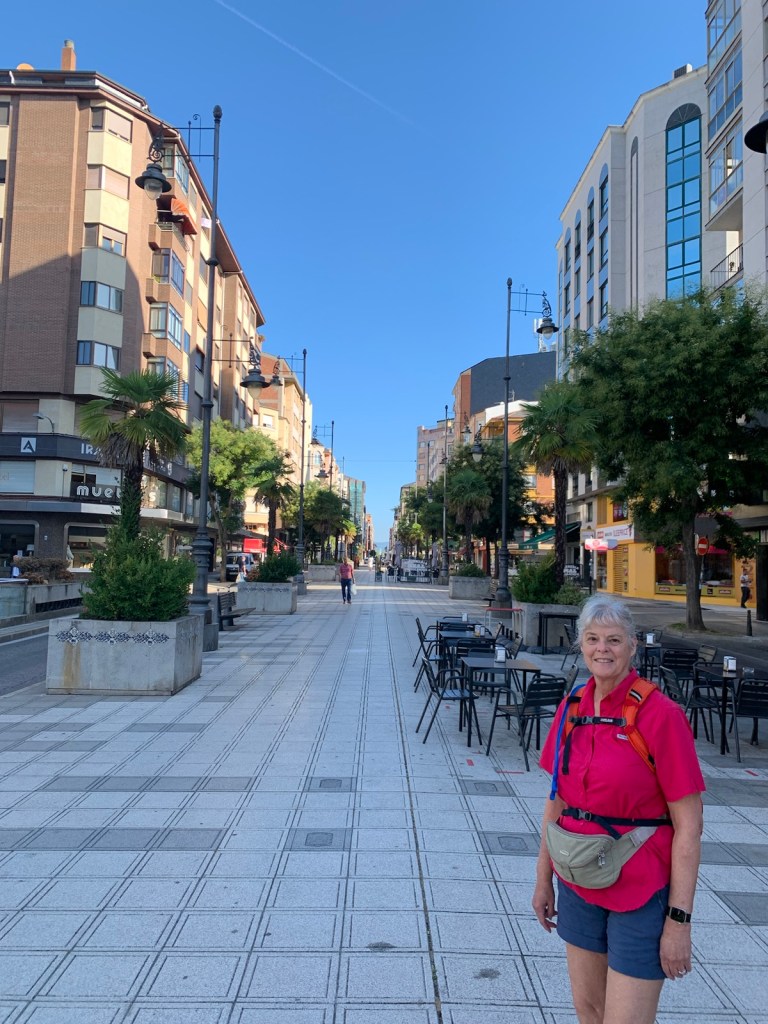
Downtown Ponferrada is modern and features beautiful walkways in the center as well as on both sides.
looking back as we began to leave town center with mountains surrounding Ponferrada in background.
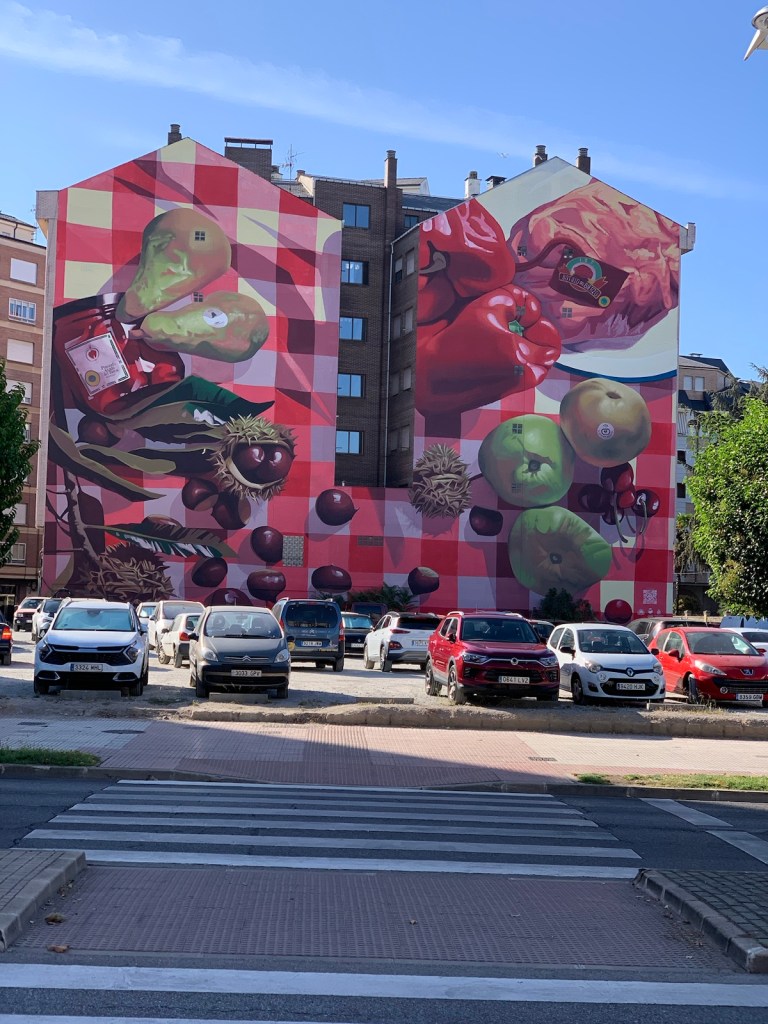
another example of Spanish exterior wall murals, here on two adjacent building adding color to an otherwise drab parking lot.
side walk leaving Ponferrada
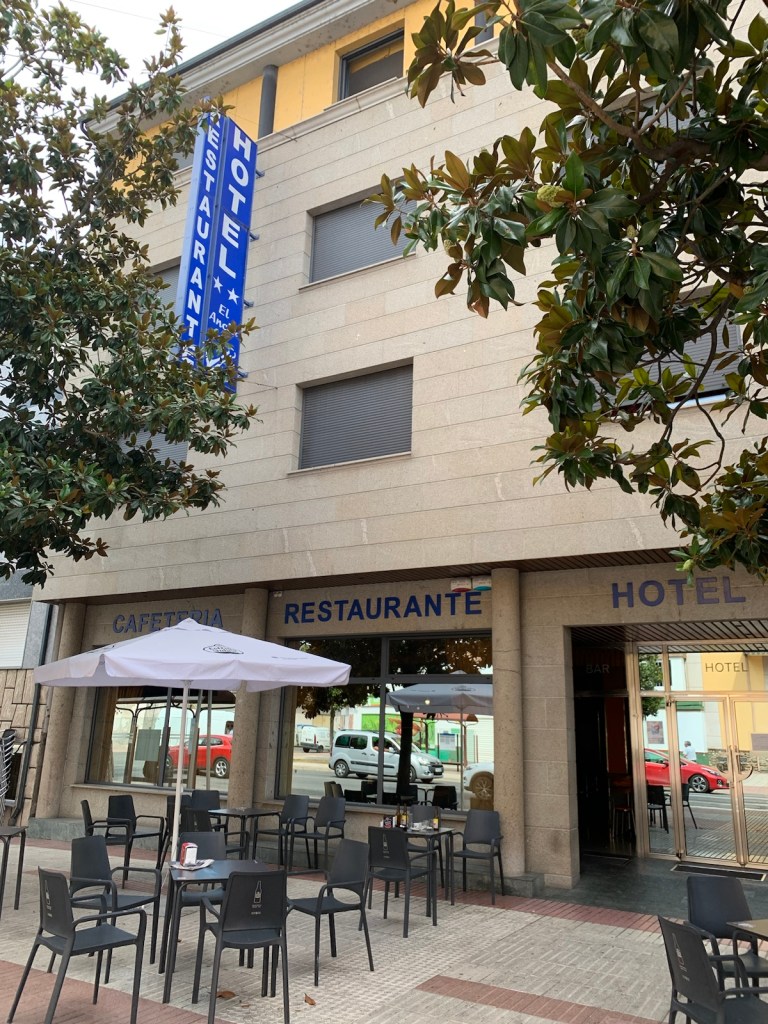
our hotel in the Ponferrada surburb of Cuatro Vientos
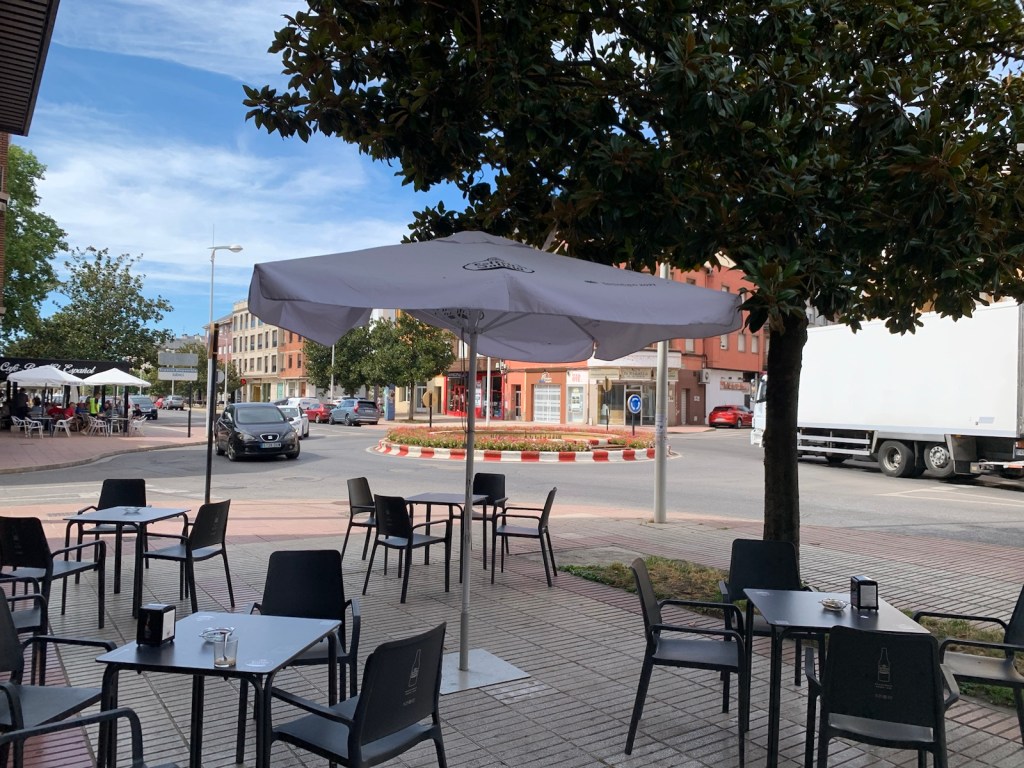
our hotel is located on a busy intersection (circle)
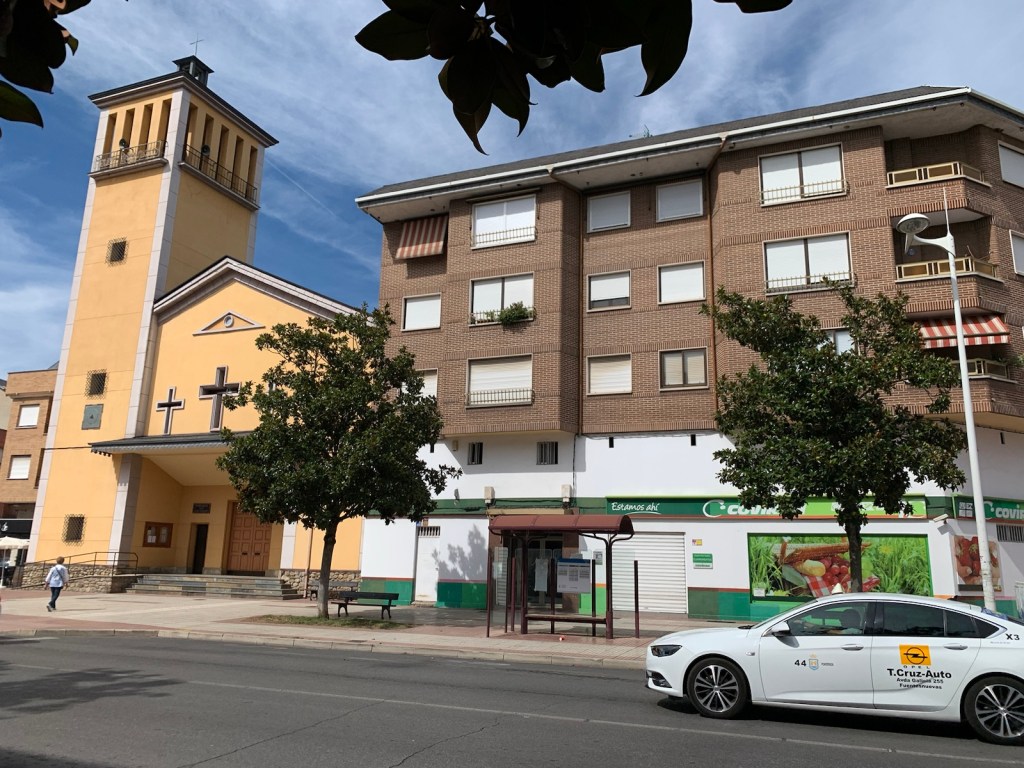
our view across the street: a modern church and a supermarket.

Our room (48€) was ready when we arrived at this small hotel at 10:42. Our transported backpacks arrived a hour later. We had our main meal in the hotel “comidor” (dining room). With the exception of Jim doing some shopping for snacks and bottled water in the supermarket across the street. we spent the rest of the day doing our usual routine.

Santa Catalina de Somoza to Molinaseca

Walked today: 7.2 mi. Camino2023: 206 mi

Nice breakfast left for us this morning by our Via Avis hosts and their sweet farewell note.

We were overwhelmed this morning by the very nice breakfast prepared for us as we departed early this morning, before breakfast. It was so thoughtful and typical of the hospitality of our hosts.

We failed to mention in yesterday’s blog that we arrived at Via Avis at 10:00 am and rang the doorbell, fully expecting to be turned away, as with most other properties, until the standard checkin time of 2:00. We were instead greeted cheerfully by Daina and welcomed inside and taken to our room.

Throughout the day, whenever we had a question about something, like, is there a place to hang out clothes to dry, Daina or Carlos would respond cheerfully, taking care of our needs, like we were a house guest, not just someone passing through.

Our less than 24 hour encounter with this delightful couple will be among our fondest, positive experiences of all of our Caminos.

the initial few miles from Santa Catalina to Rabanal del Camino looked like this.
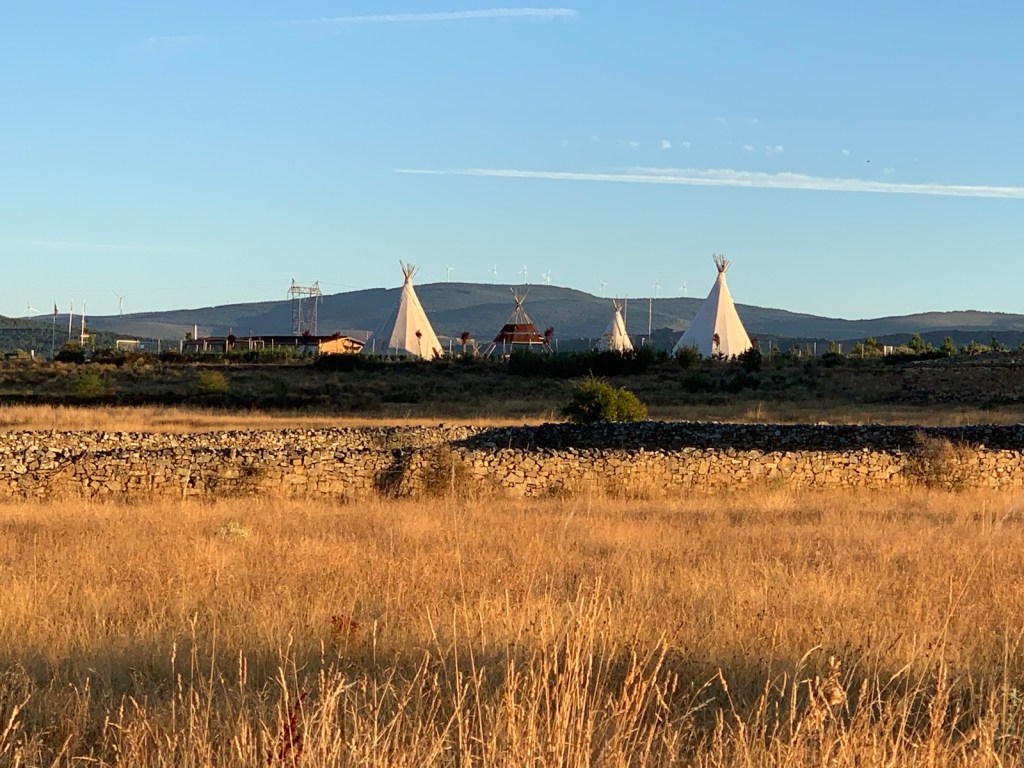
Albergue ” Indian Way” off to the right at entry to Ganzo, pop. 30.
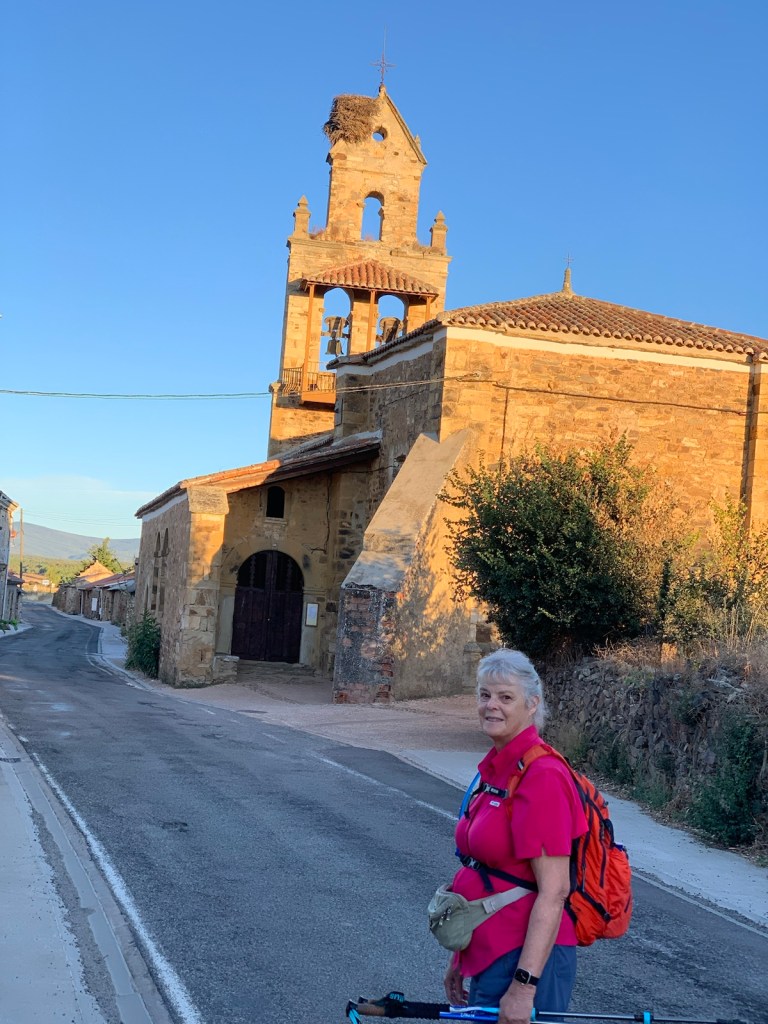
Iglesia Santiago at village center in Ganzo (never been inside! door always locked)
having breakfast at only open bar in Ganzo.
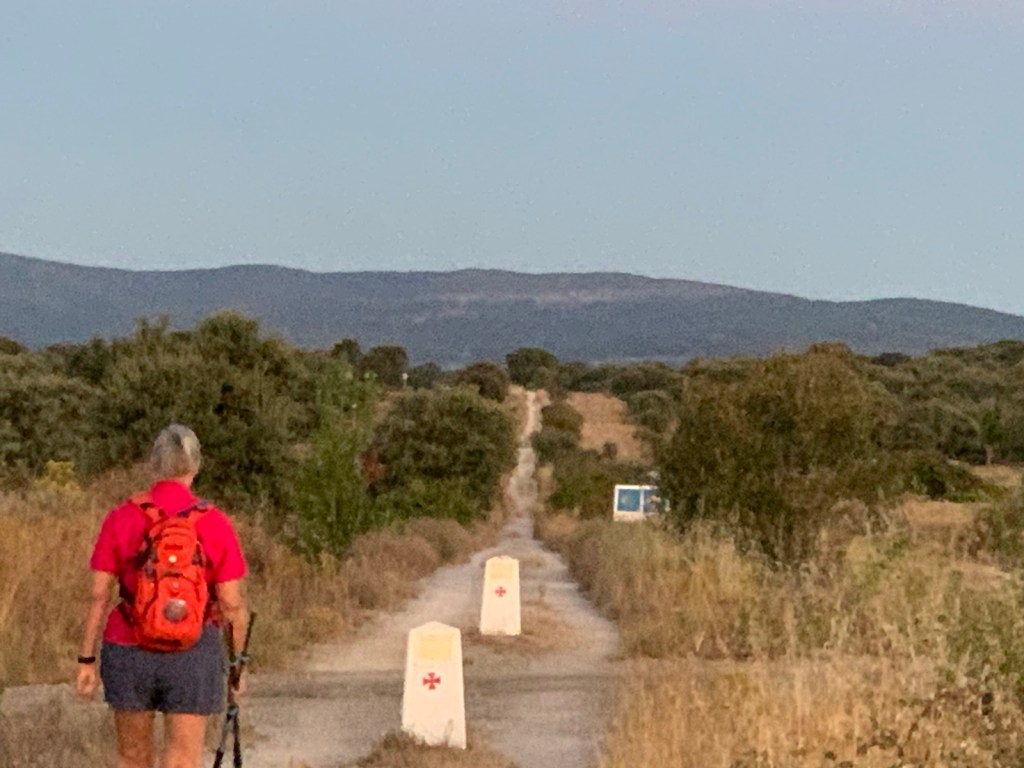
Camino parallel to the road from Ganzo to Rabanal del Camino.
Foncebadon near the top of mountain in background… Rabanal at mid-right at church steeple.
Decision time: go right through the rocks, roots and steep (up and down) path through the forest Camino OR go left on the parallel, more gradual inclined paved road with little or no traffic (bikes or cars)
The road 2 votes, the Camino path through the forest 0 votes
final mile into Rabanal del Camino
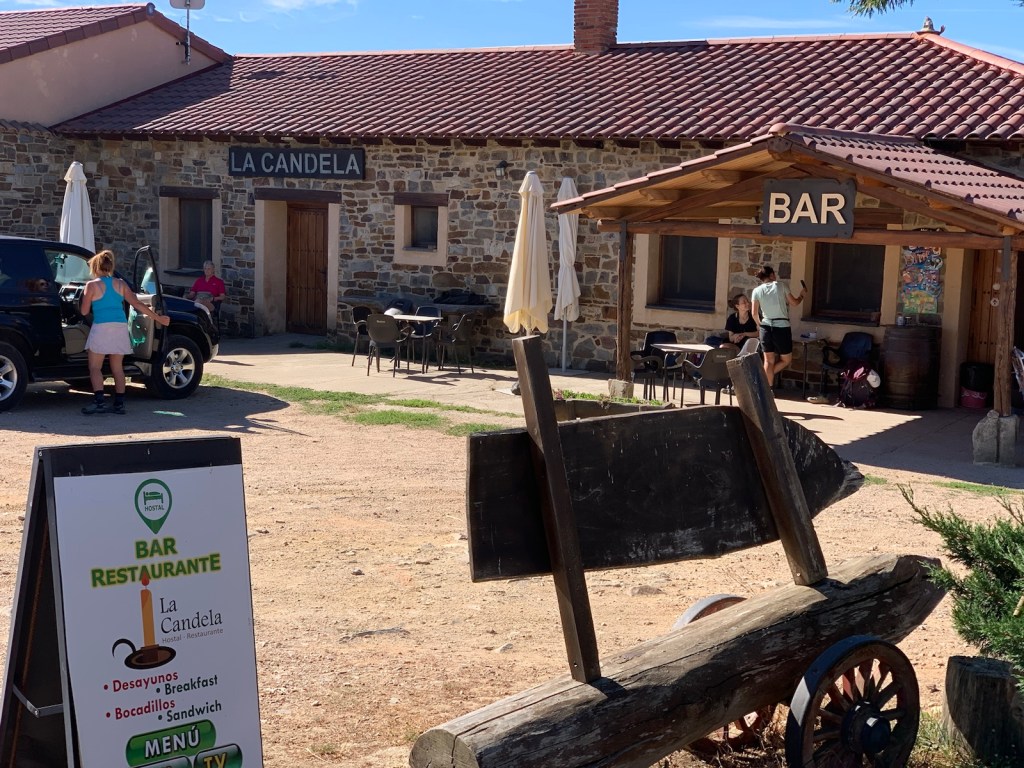
We stopped at this bar/albergue just outside of Rabanal
waiting for our taxi just outside of Rabanal del Camino

After walking the 7 plus miles to Rabanal, we asked the barkeep to call a taxi (only two cars serve this area) to take us up, over and down the mountain into Molinaseca, our lodging place for the night. The first taxi service was totally booked for the day but the other one could pick us up in 30 minutes.

The ride up to Cruz Ferro and the incredibly beautiful 7 mile section along the mountain ridge on this clear morning was as we remembered from our three previous walks in 2015 and 2017 and 2019.

Admittedly, we didn’t miss some of the treacherous downhill sections into El Acebo and later into Molinaseca which we have avoided via taxi since 2019.

Had we been able to reserve a place to stay at Foncebadón that matched our Camino2023 plan, we could have walked the ridge again, but it was not to be. But thankfully the memories and some incredible photos of those prior walks will be forever ingrained among our Camino experiences.

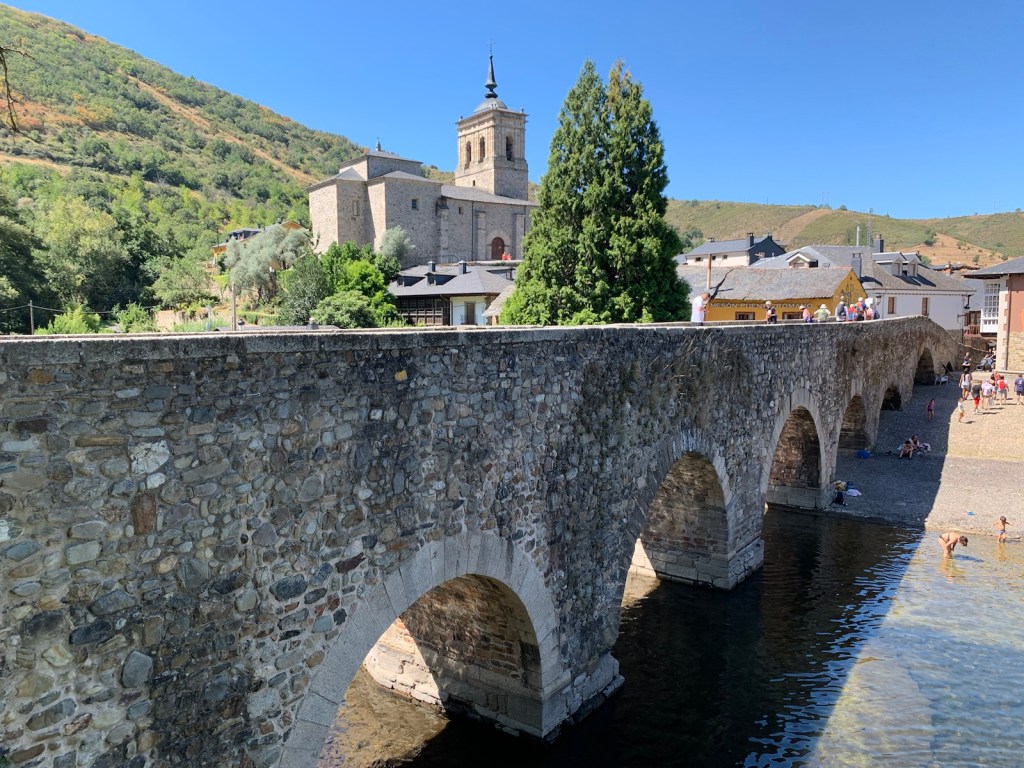
The medieval Puente del Peregrino crossing into Molinaseca over the Rio Meruela … note swimmers cooling off from hot summer sun.
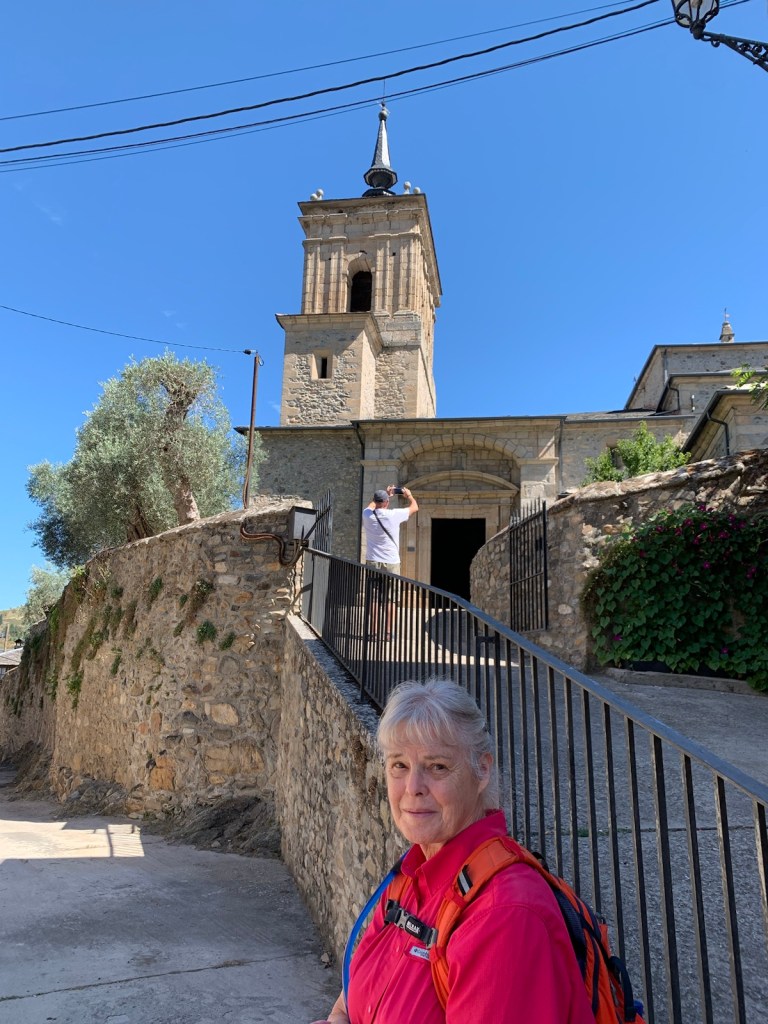
Iglesia de San Nicolas de Bari (Santa Claus)
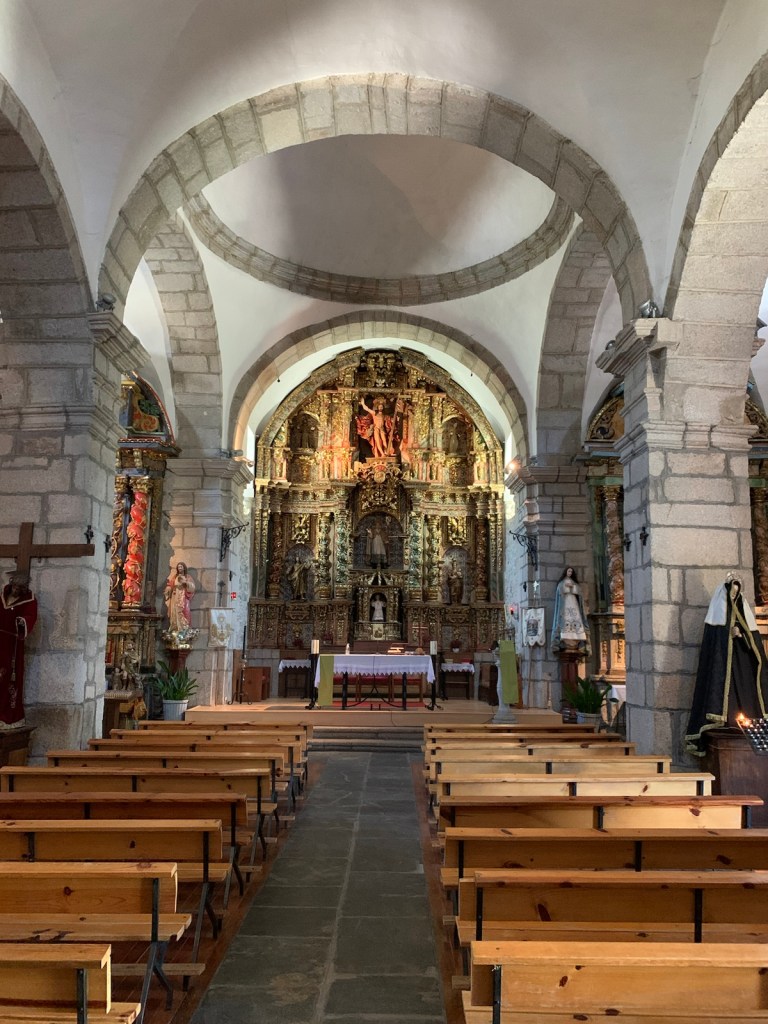
the interior of Iglesia de San Nicolas
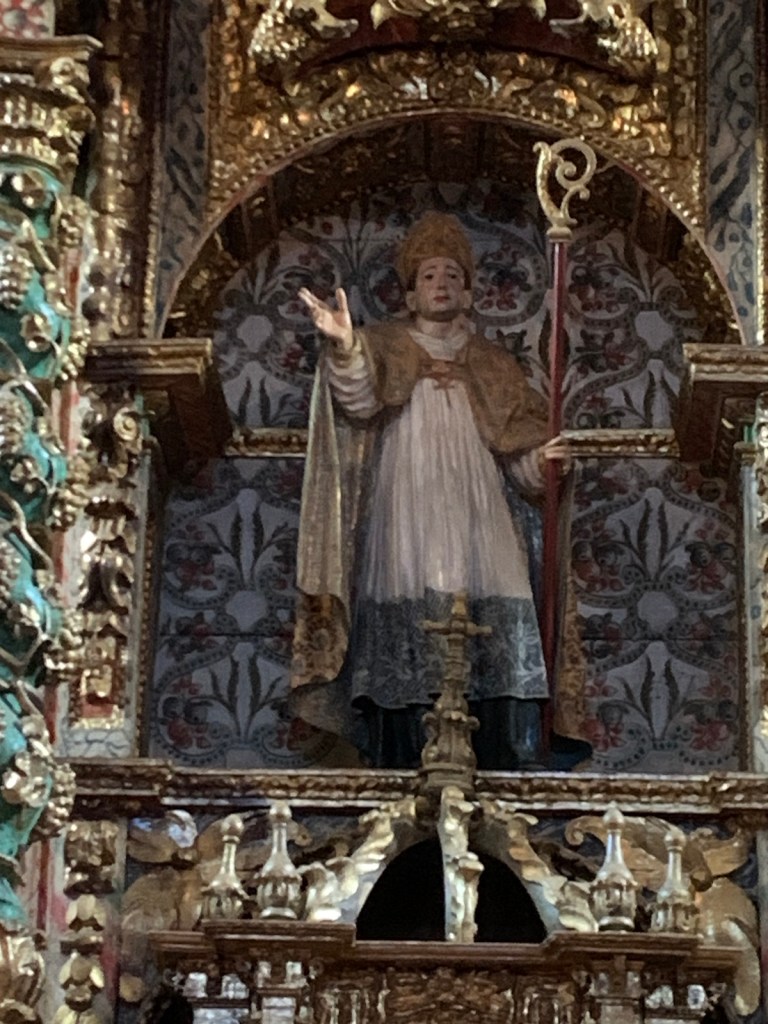
the statue of San Nicolas on the retablo (altarpiece)
statue of Santiago just after a church worker had finished polishing it
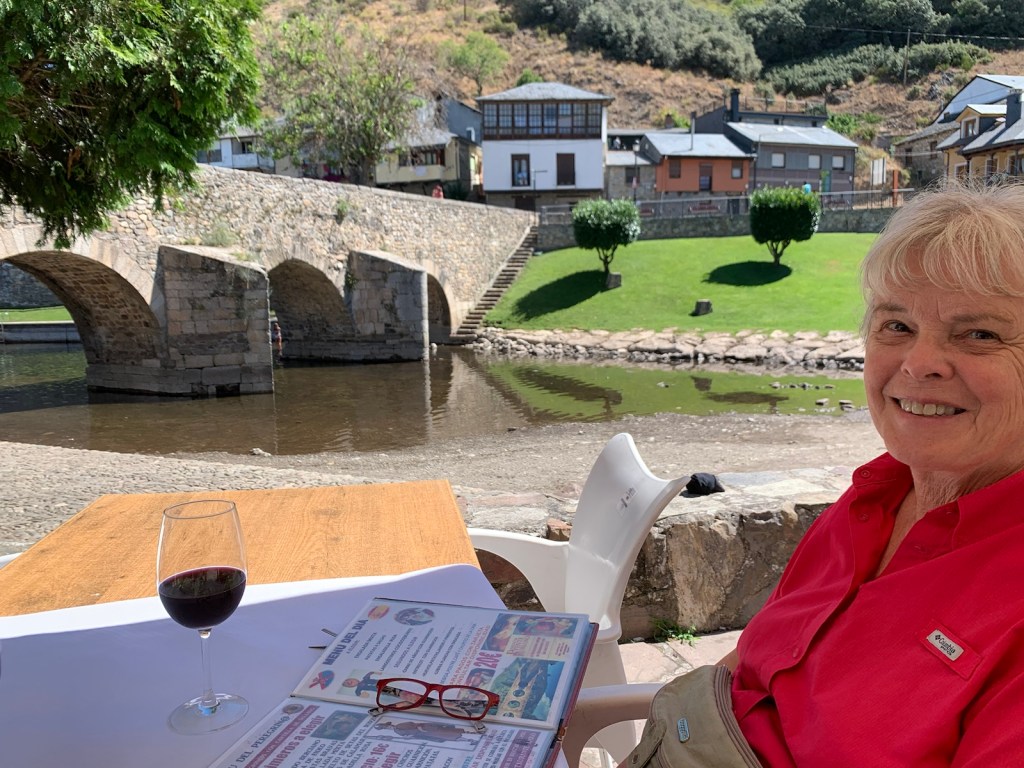
Enjoying the shade, cool breeze and view while perusing the menu for lunch
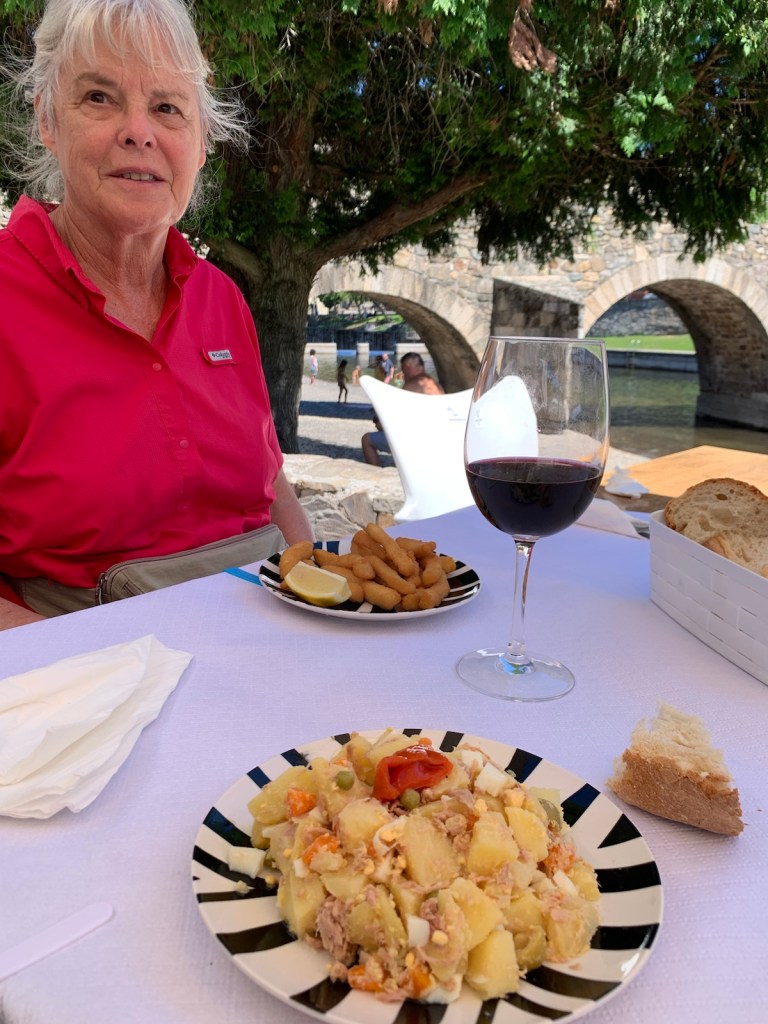
1st course: Calamari for Linda, Ensalada Rusa for Jim

Astorga to Santa Catalina de Somoza

Walked today: 5.86 mi. Camino2023: 199 mi

Wall murals are a frequent occurrence along the Camino and a really interesting way to celebrate the history or humanity or anything characteristic of a community.
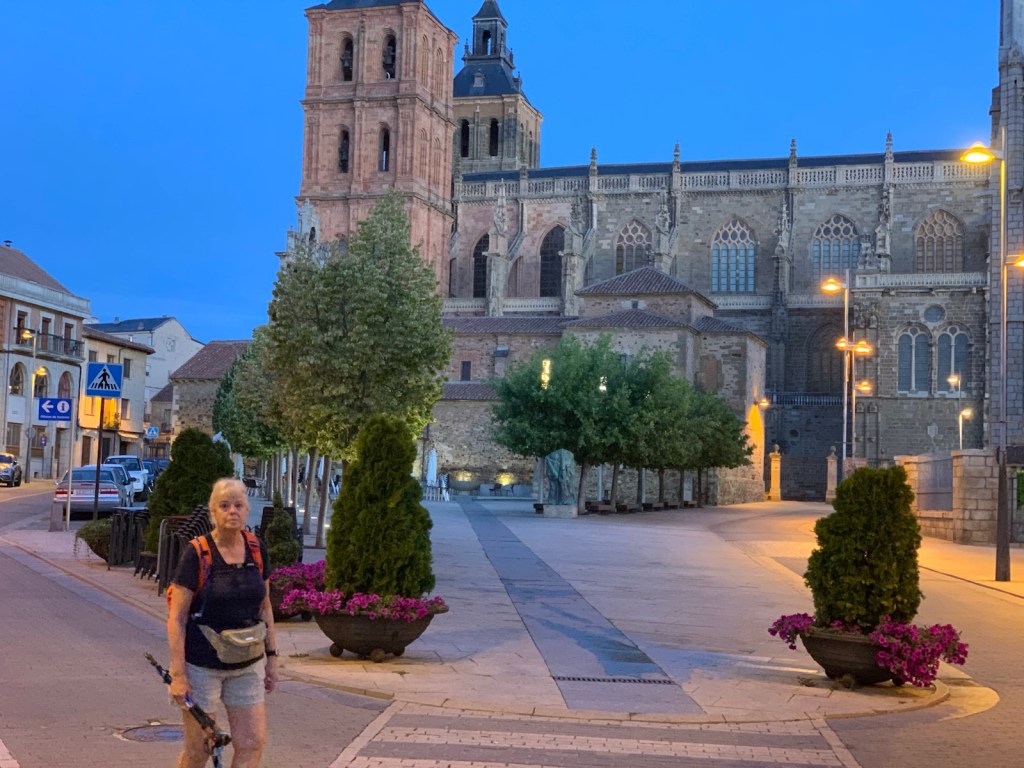
side view of the Catedral de Astorga, built in 1394 on the site of a mosque.
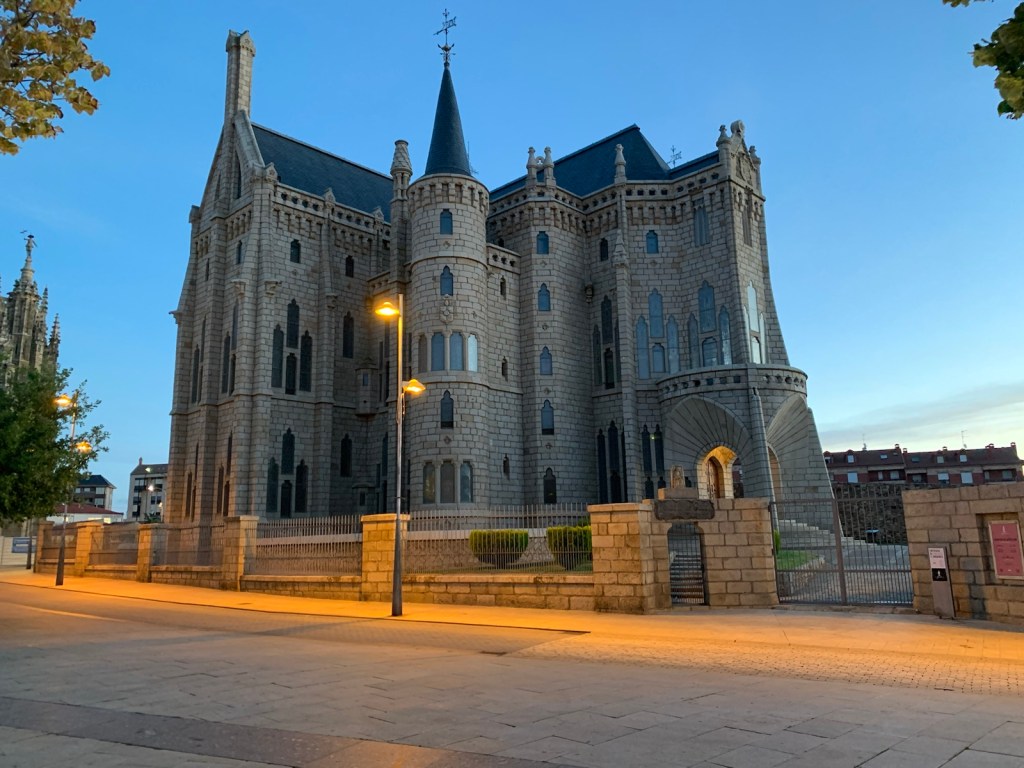
The Episcopal Palace, one of only 3 buildings designed by Antoni Gaudi outside of Catalonia. Originally intended as a bishop’s residence it currently is a museum of religious art, dedicated to the Way of Santiago.
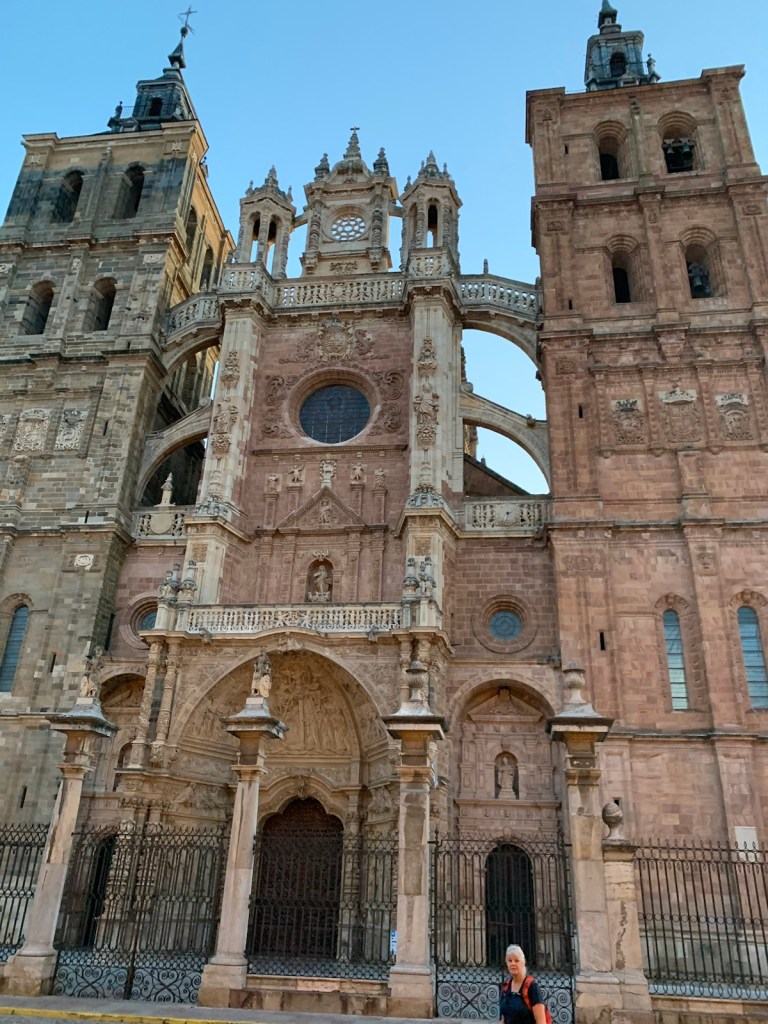
the front of the Catedral de Santa María de Astorga.
a more modern church we passed on our way out of Astorga

Right after walking past the church, our pilgrim friends from Australia, last seen 5 days ago, walked past us and said in passing they were walking 38km today! We wished them “Buen Camino”. We’re thankfully doing only 10km.

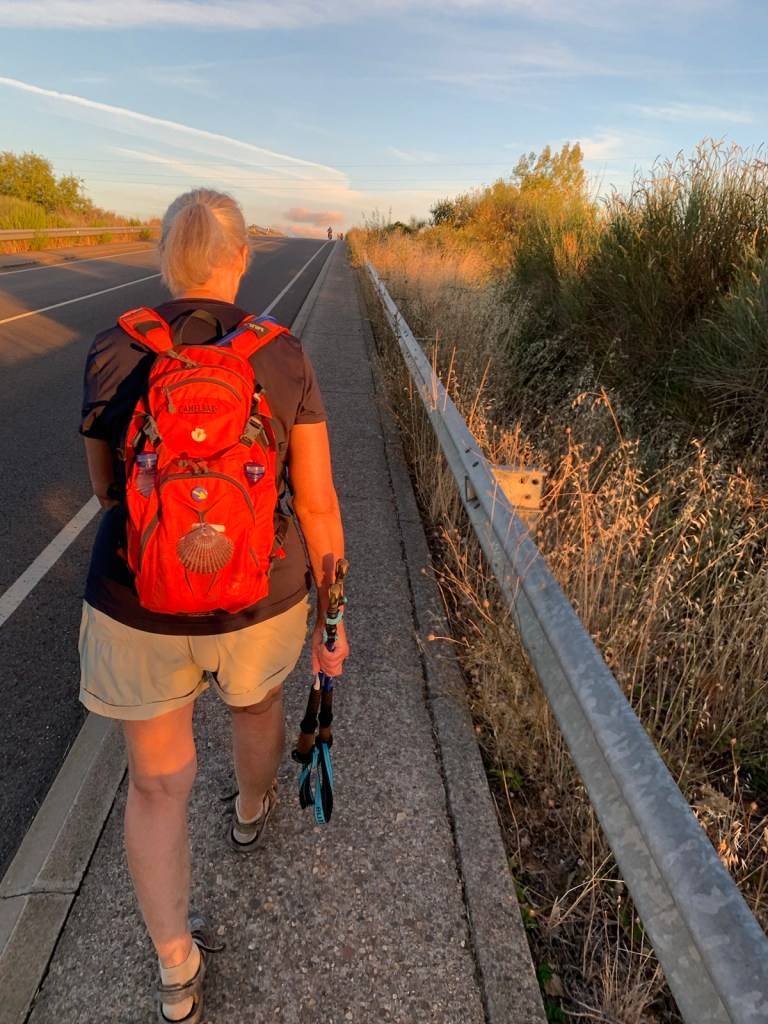
After walking on sidewalks through and nearly a mile after Astorga, we’re crossing a autovia here, still on pavement/sidewalk.
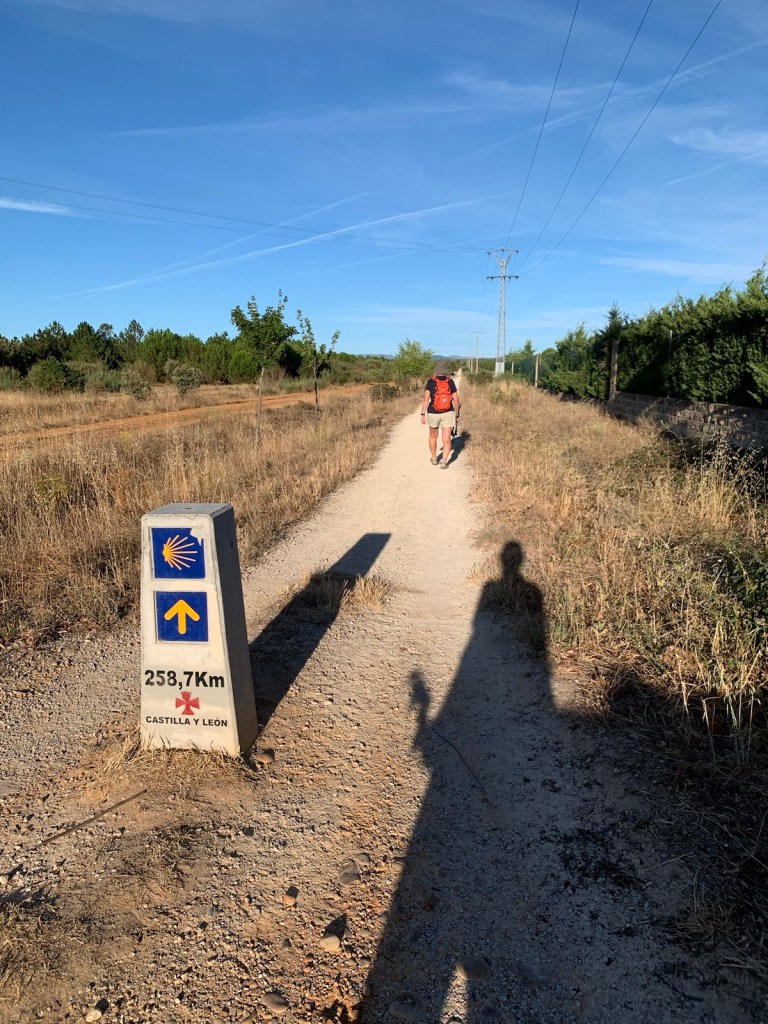
We finally left the pavement onto a gravel path and shortly entered the outskirts of a Maragatos village.
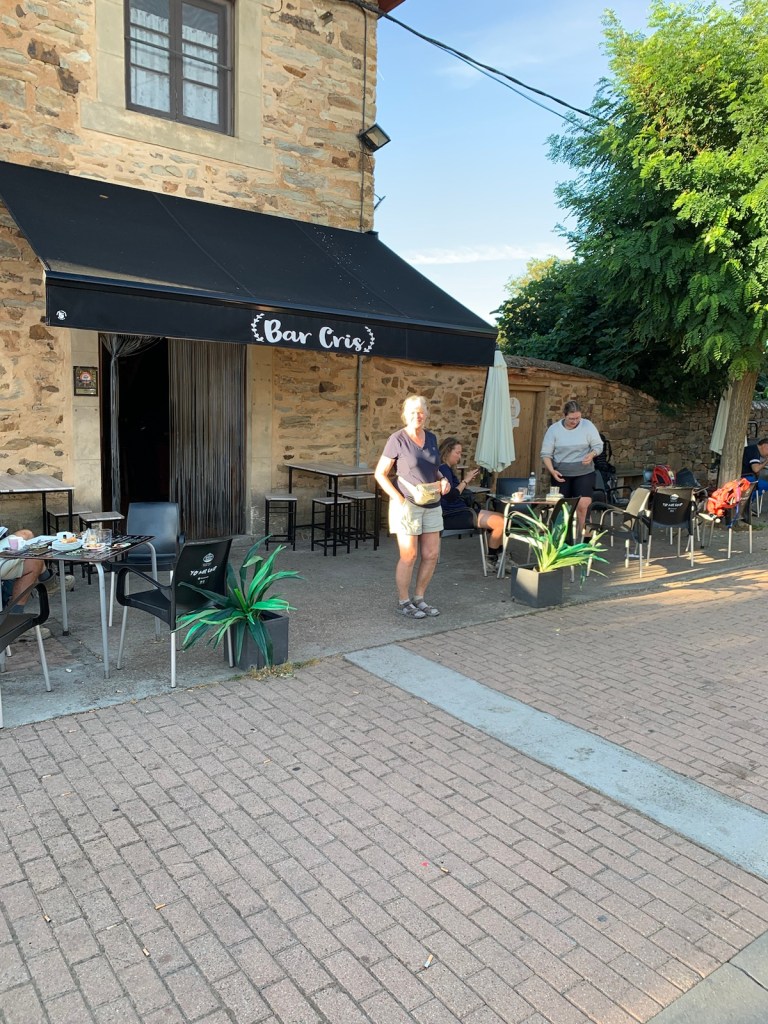
Just finishing breakfast at “Bar Cris” in the Maragato village of Murias de Rechivaldo.

The Maragatos are an ethnic group of about 4,000 people who are believed to be the last Moorish people in Spain. They were descended from the Berbers of North Africa who crossed into the Iberian peninsula with the first Moorish incursions in the early eighth century. They were first recorded in this area in the 10th century. They used mules to transport fish to Madrid and ferry the Spanish monarch’s gold from place to place. In the 1830s, one British traveller, Richard Ford, compared their insularity to that of the Jews and the gypsies. Like the Jews, they are renowned as traders and businessmen and their success has historically prompted jealousy.

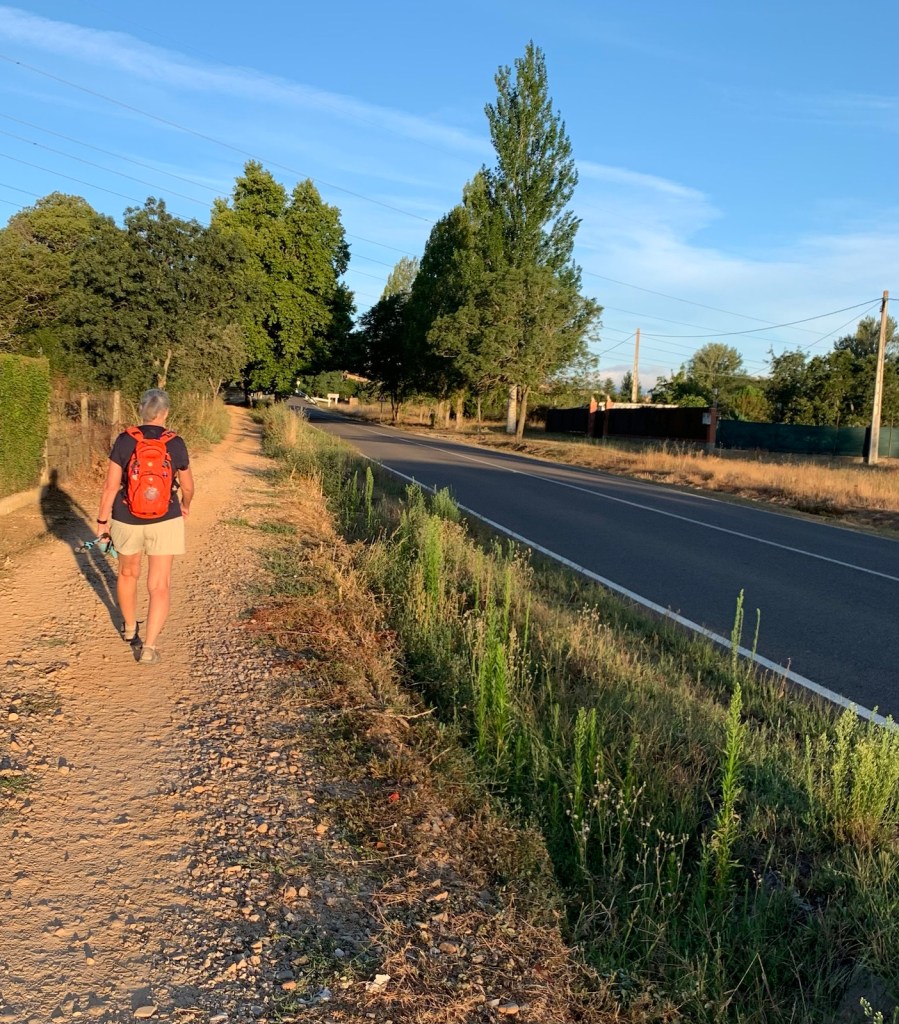
back on the gravel path to Santa Catalina de Somoza
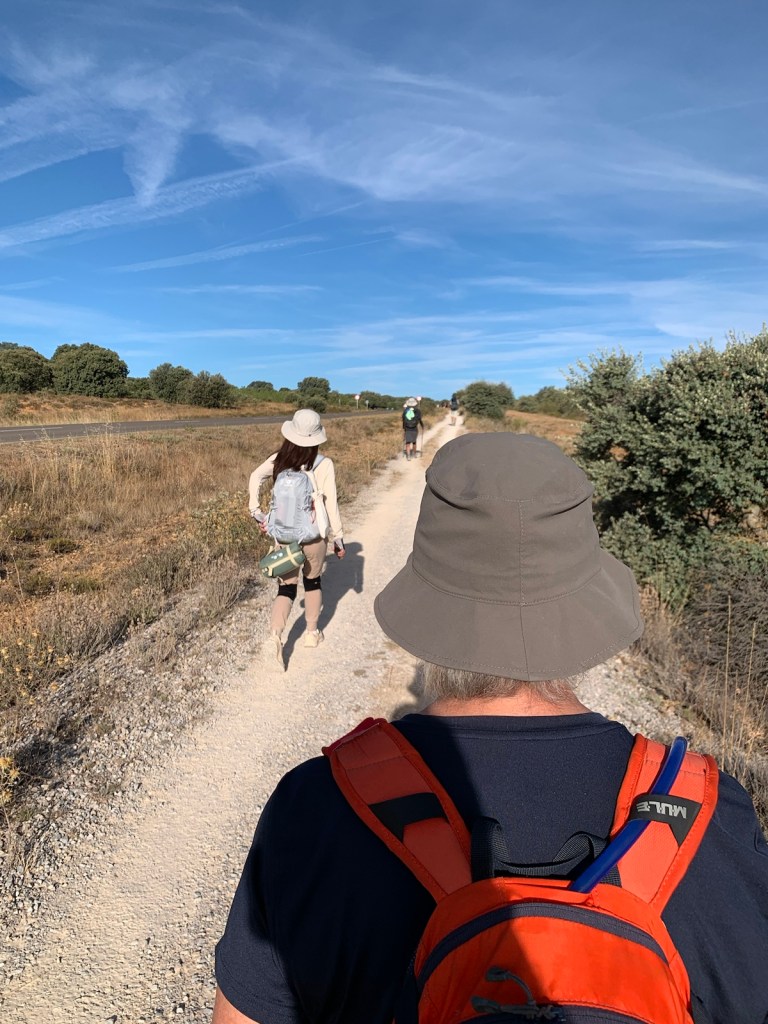
being passed by a family of 5 from South Korea. We first met them in Belorado and have been “hopscotching” with them since.
great shot at entrance of Santa Catalina de Somoza, courtesy of our South Korean pilgrim friends
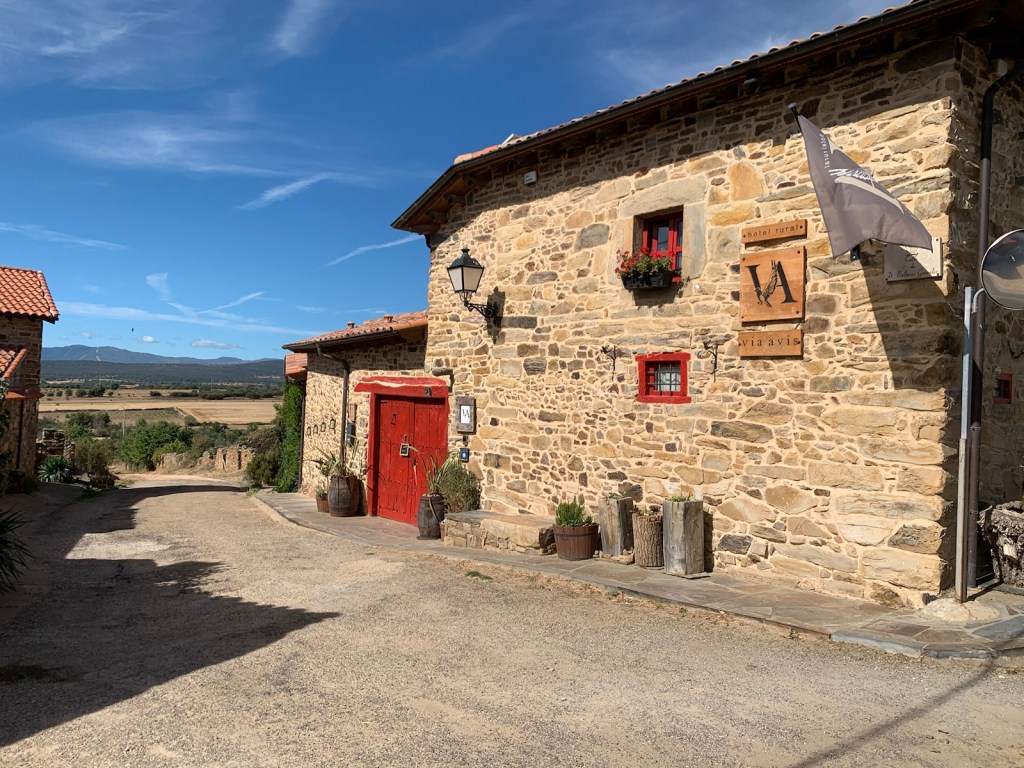
our residence on the Camino for today in Santa Catalina de Somoza: Via Avis
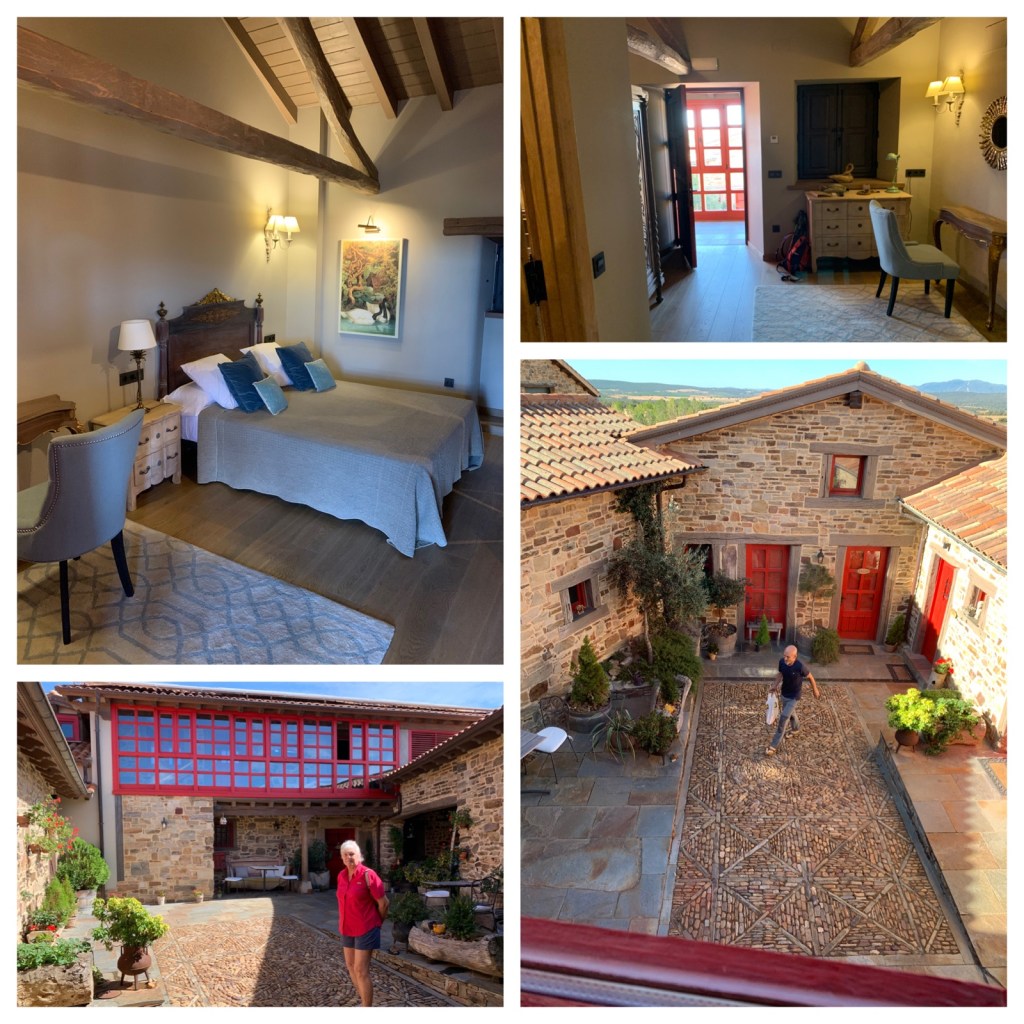
our room and courtyard for Via Avis
The Salon, common area for guests with comfortable seating and views of nearby valley and mountains.
just off the reception area, a common seating area for guests and a still operative wood oven for warmth. A buffet breakfast is a special offering for guests.
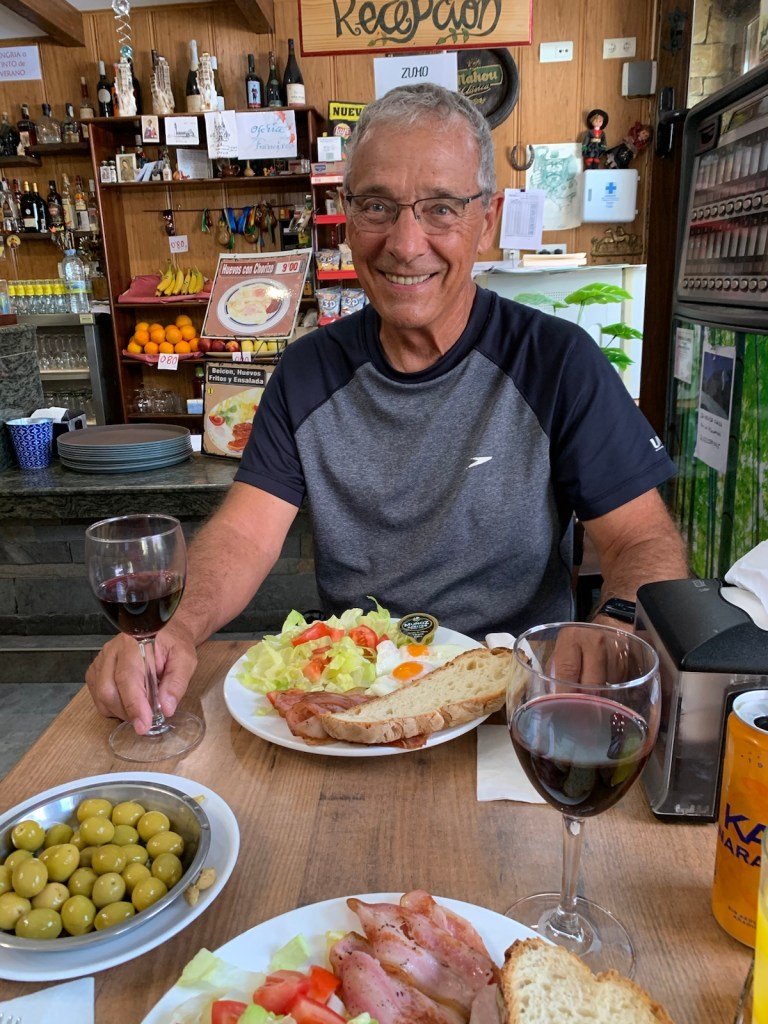
Lunch/dinner is not available at Via Avis, so we walked to a nearby albergue where we have stayed twice and eaten frequently for our main meal: Eggs, bacon, salad, olives, wine and fresh bread.

Via Avis was opened 6 years ago by a couple: Daina, from Lithuania and Carlos, from Spain. They converted the ruins of a very historic house into an extraordinary B&B located in what is otherwise a struggling Maragato village of 90 inhabitants.

According to oral traditions, the original town was abandoned and likely destroyed due to an epidemic many years ago, with the surviving residents returning to rebuild it from the ground up. The house was originally built by professional stonemasons for an unknown but likely important person.

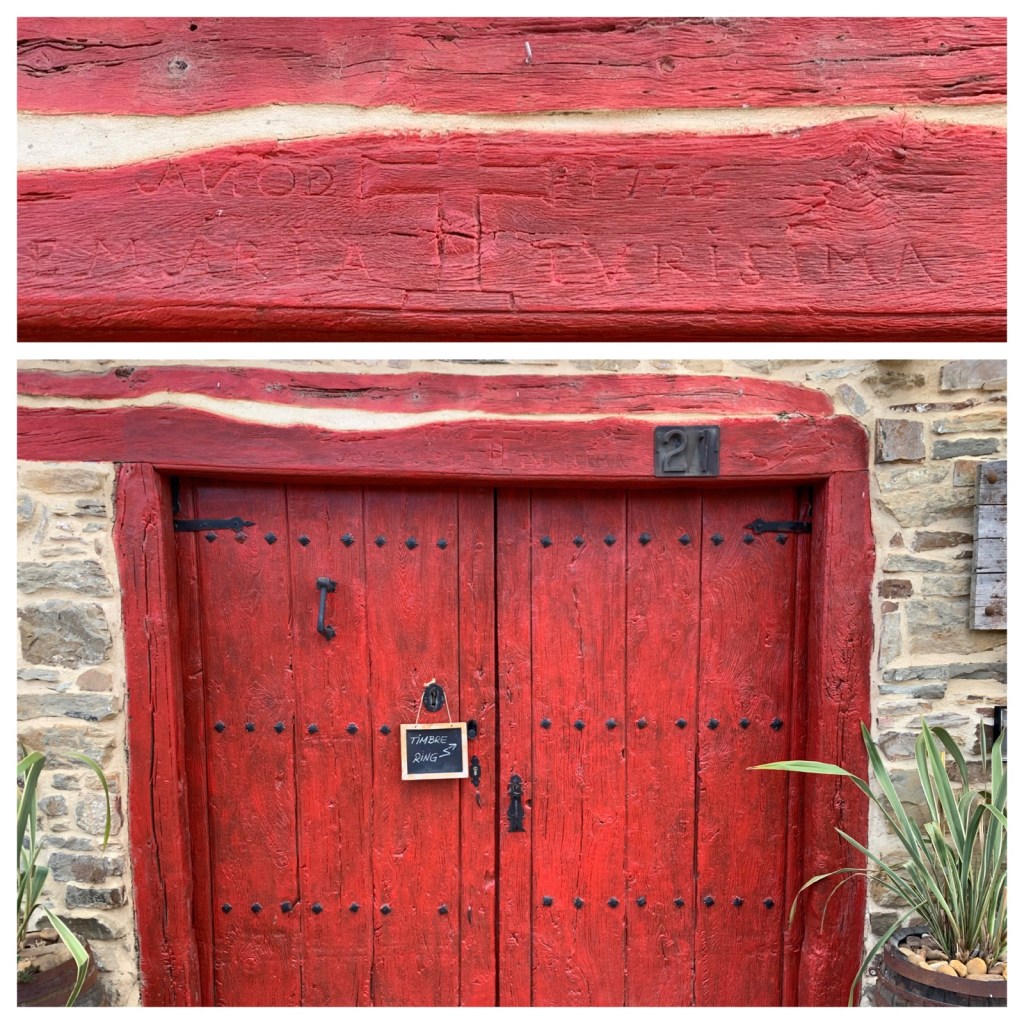
There is an inscription over the original door, dated 1776, proclaiming that the inhabitants were Christians, to avoid persecution or being expelled as were Muslim or Jews of that era.

The house was last occupied in the 19th century by the president of the local town council. Also, according to local tradition, when Napoleon over ran Astorga and subsequently occupied the town in the 19th century, he seized the house and used it as a temporary troops headquarters.

Totally fascinated but exhausted from all the historical research, Jim decided to end his blogging for the day.

León to Astorga

Walked today: 8.5 mi Camino2023: 193mi

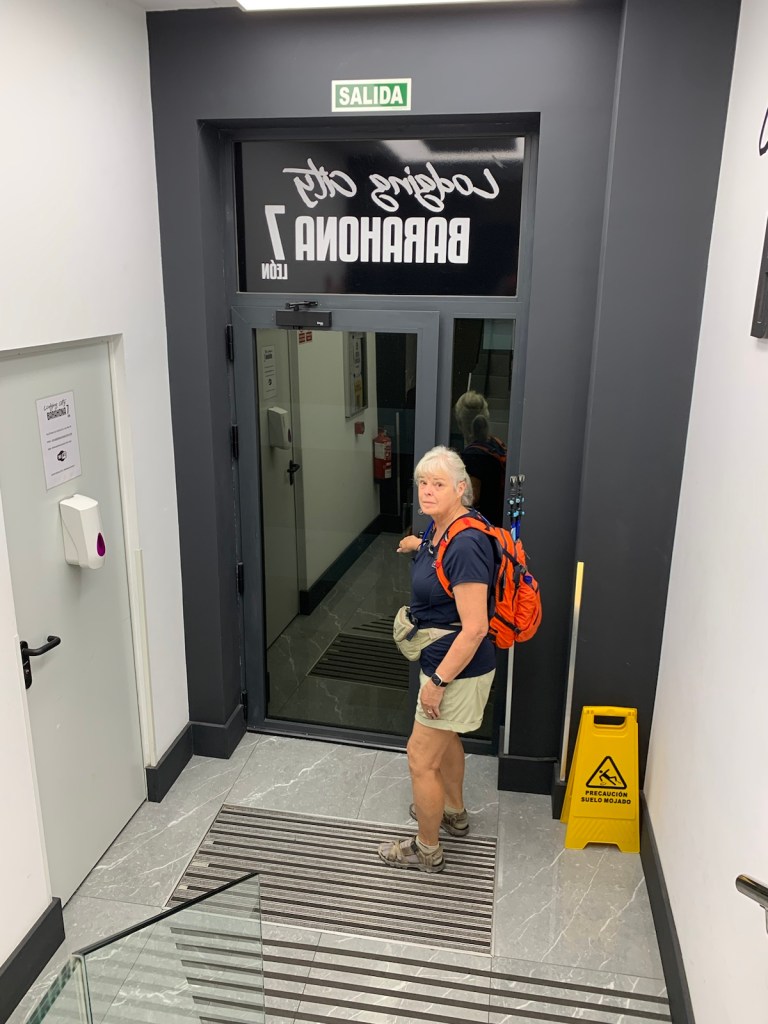
walking out the door of our hotel at 4:55 a.m.

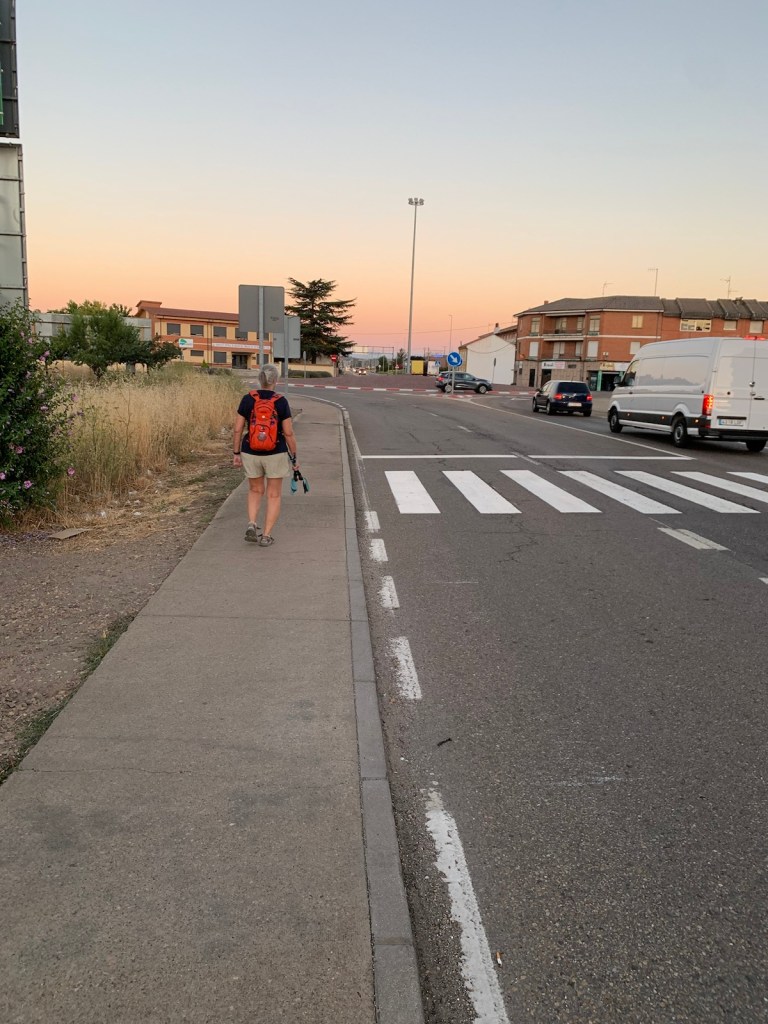
After a reasonably good night’s sleep that ended at 4:00 a.m., we were sitting at the bus station at 5:15. The rest of León was still sleeping based on the absence of residential lights, moving vehicles (less than 10, including scooters) and people (including no pilgrims) along our 20 minute walk to the bus station.

first activity at the bus station at 5:20… bus unloading/reloading then departing

At 5:52 our bus arrived, we boarded at 5:54 and at 6:00, our 6:00 bus pulled out of the station. The driver never shut off his engine.

We arrived at Hospital de Orbigo at 6:35, got our packs from the luggage compartment and walked across the highway to a hotel/gas station/restaurant at Hospital del Orbigo.

Only the gas station was open but the attendant said the restaurant would open at 7:00. So we waited until 7:00 and miraculously the lights went on and the door was opened at 7:00! We spent the next half hour having breakfast and then were on our way to Astorga.

Taking the bus this morning allowed us to skip about 30 miles of mostly industrial and walking-along-the-road Camino. This also cut out about 4 days of greater than 8 miles walking that were not that interesting, were sections we had previously walked multiple times and most importantly, let us still make progress toward Santiago to arrive by the end of August.

When we decided to walk Camino2023, our previously planned trips before and after allocated only 51 days to walk from SJPDP to Santiago. By skipping selected sections like today, we should be able to get to Santiago on schedule.

As we began walking, it was only first light, but headlamps were not required.

just after our breakfast stop
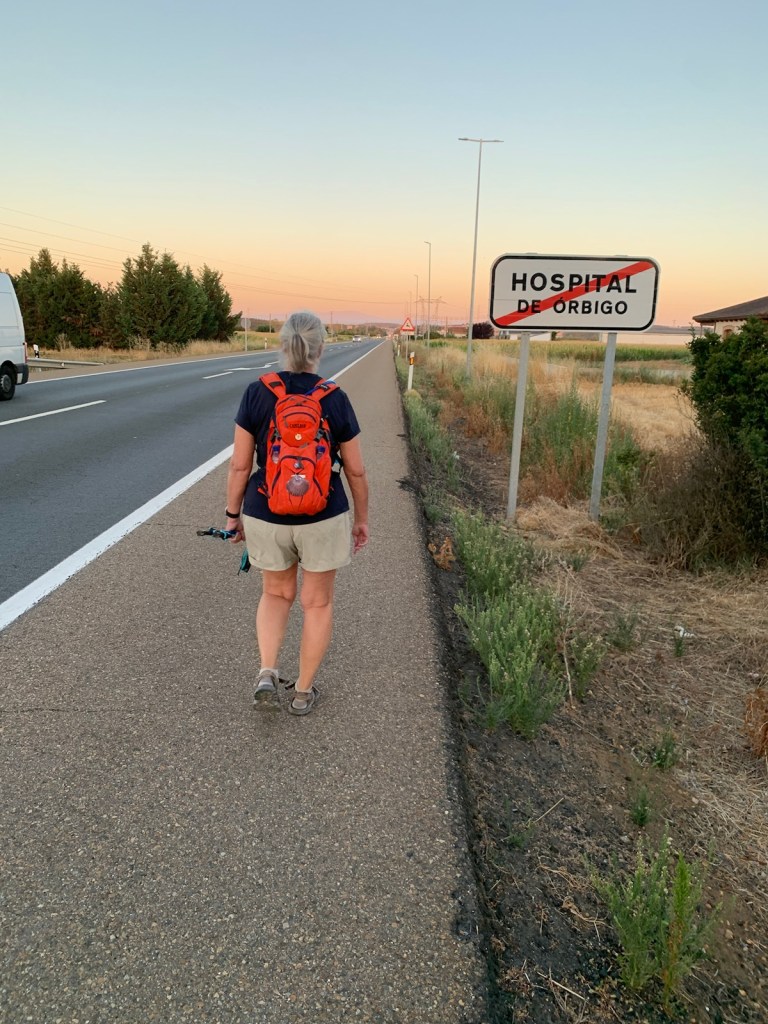
…walking on the shoulder as we left Hospital de Orbigo. Our route along the highway is two miles shorter than the traditional Camino route and offers a rest stop at the halfway point whereas the traditional route has no services for the entire walk into San Justo de la Vega.
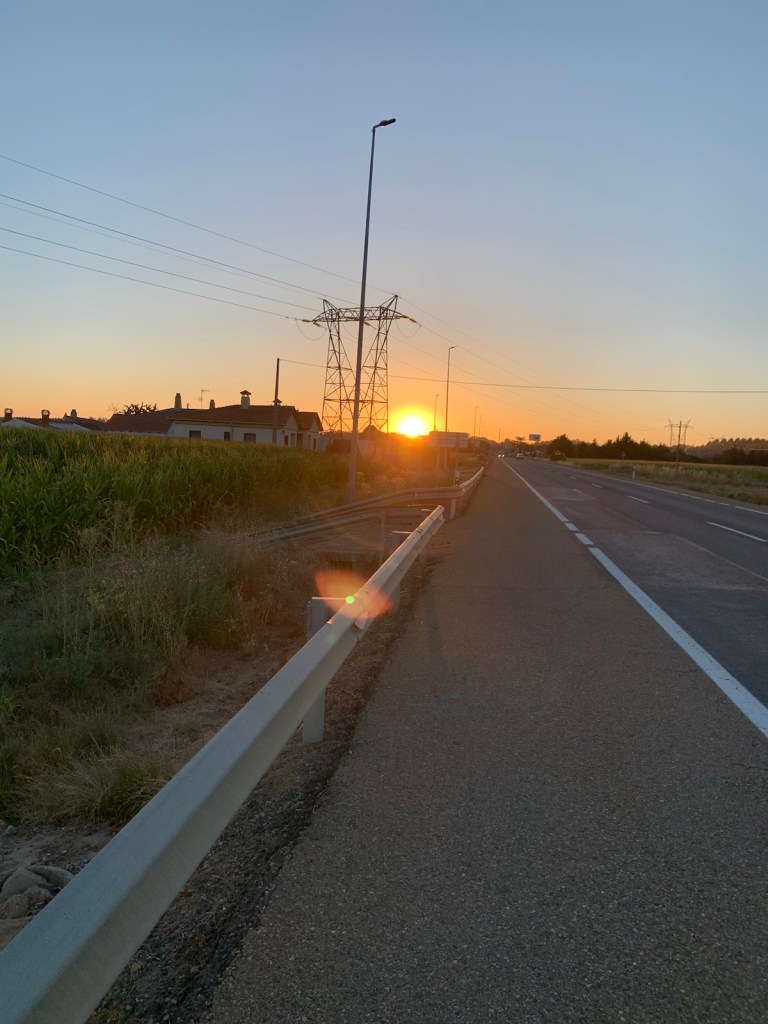
Approximately 10 miles via N-120 to Astorga. The sun was brilliant at sunrise, predicting a quickly warming morning walk.
looking back at the source of the orange tint on everything before us
after about a mile, we got a break from walking on the road shoulder
this is clearly a path less traveled
the middle 4 miles of our walk was on a frontage road, that gave us more breathing room from the traffic and also offered a rest stop at a gas station/bar at the half way point.
a mile of so before reaching San Justo del la Vega, the now gravel path took a turn away from the highway.
Crucero de Santo Toribio is named for the 5th-century bishop of Astorga who was said to have fallen to his knees at this spot when he was banished from his beloved city.
walking down into San Justo de la Vega, Astorga in the distance

We stopped in San Justo … at Hostal Juli, familiar from our previous stays in 2015 & 2017, for some OJ and to get a break from the sun. The combination of the 4am start, the 8 plus mile walk and the heat had taken its toll and we decided we’d had enough. A bus would be along in another hour, a taxi could pick us up in 5 minutes. Taxi was 9€, bus was 4€. It wasn’t necessary to take a vote.

Our taxi dropped us off a few steps from our hotel and we checked at the desk for availability of our room. As expected, we’d need to wait another 90 minutes. It was noon and so we went ahead and checked in, then left to find some food, as eateries were closing already and all would be shut down by 1:00 until 7-8pm!

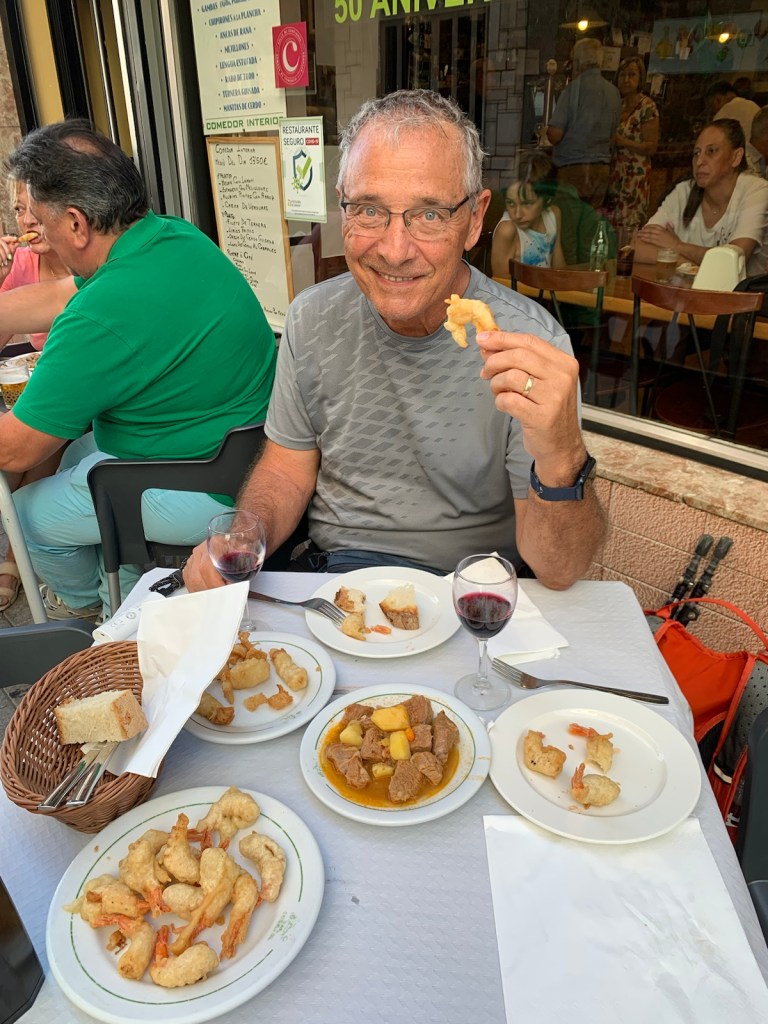
Getting an early lunch at Cubasol, before it closes at 1:00. We had good food here in 2022. Today: A collection of tapas and raciones of tempura shrimp and calamari and veal stew… something different for a main meal… delicious and filling.

We returned to our hotel and got into our room at 1:30 and crashed for the rest of the afternoon. Nice room, plenty of space for our stuff, comfortable beds and chairs, good shower, amenities and the best view of a very busy plaza in Astorga.

the view of Astorga city hall from our room balcony
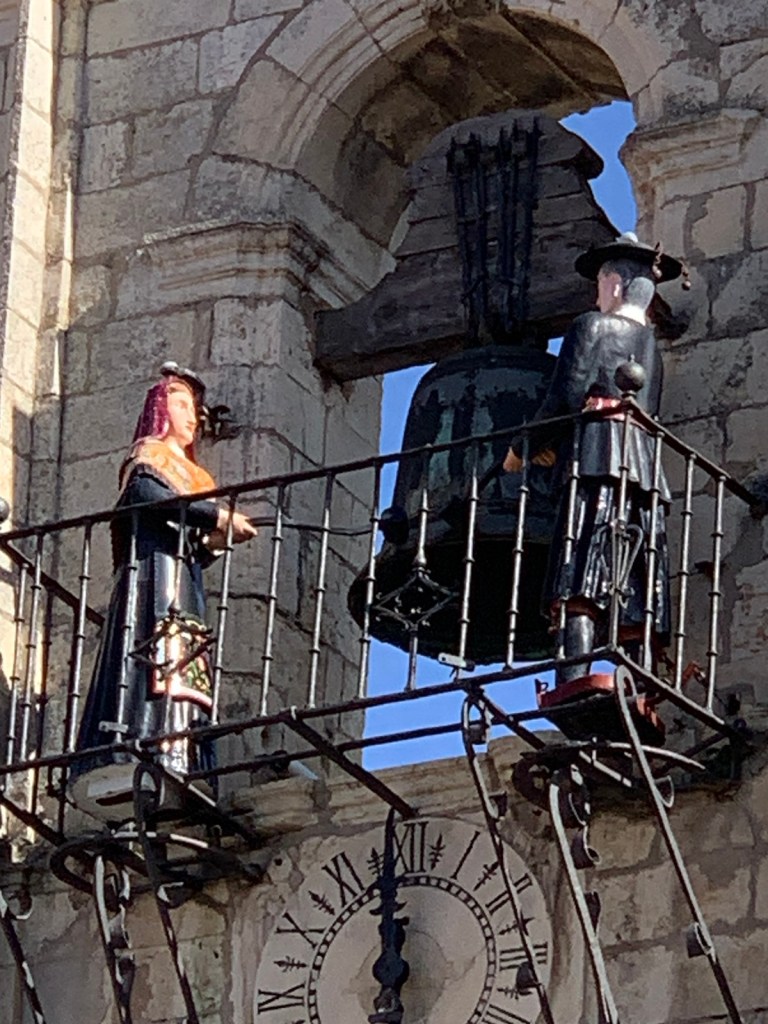
close-up of the bell ringers… reminiscent of similar scenes in Bern, Switzerland and elsewhere.
The bell ringers in action,