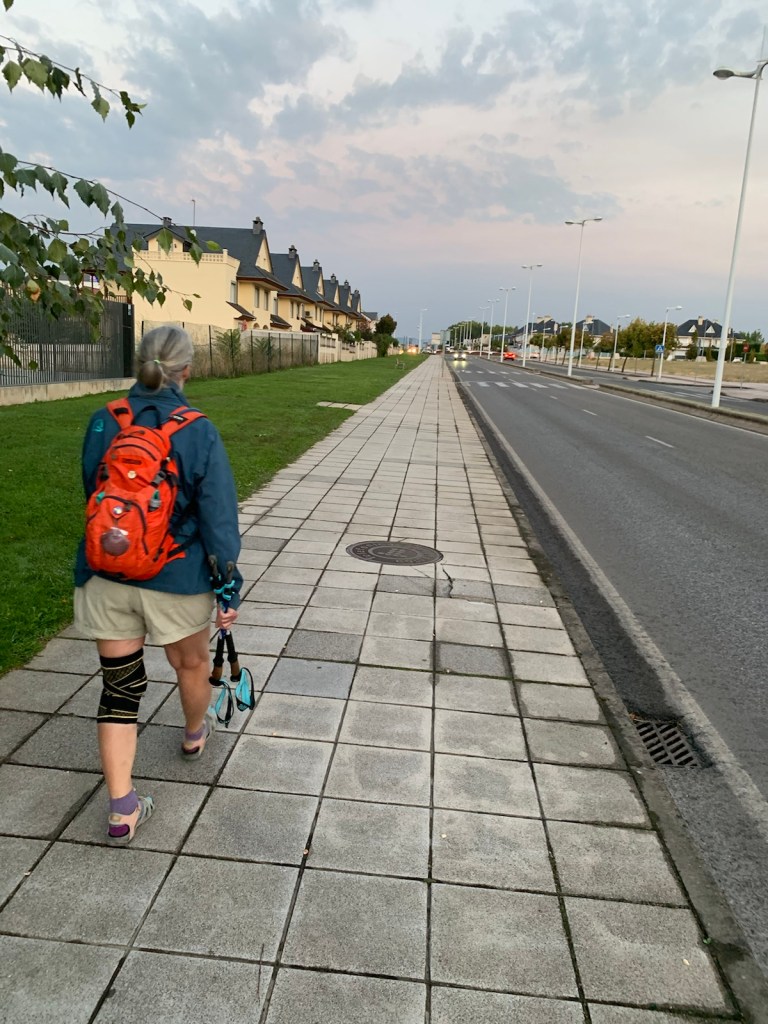
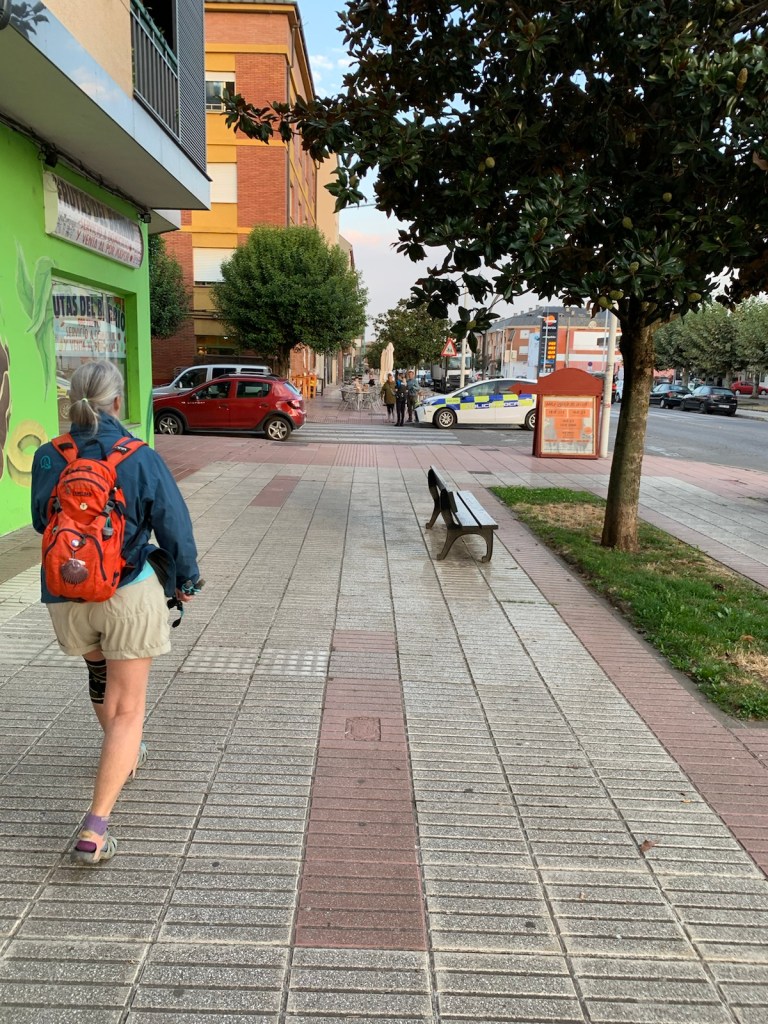
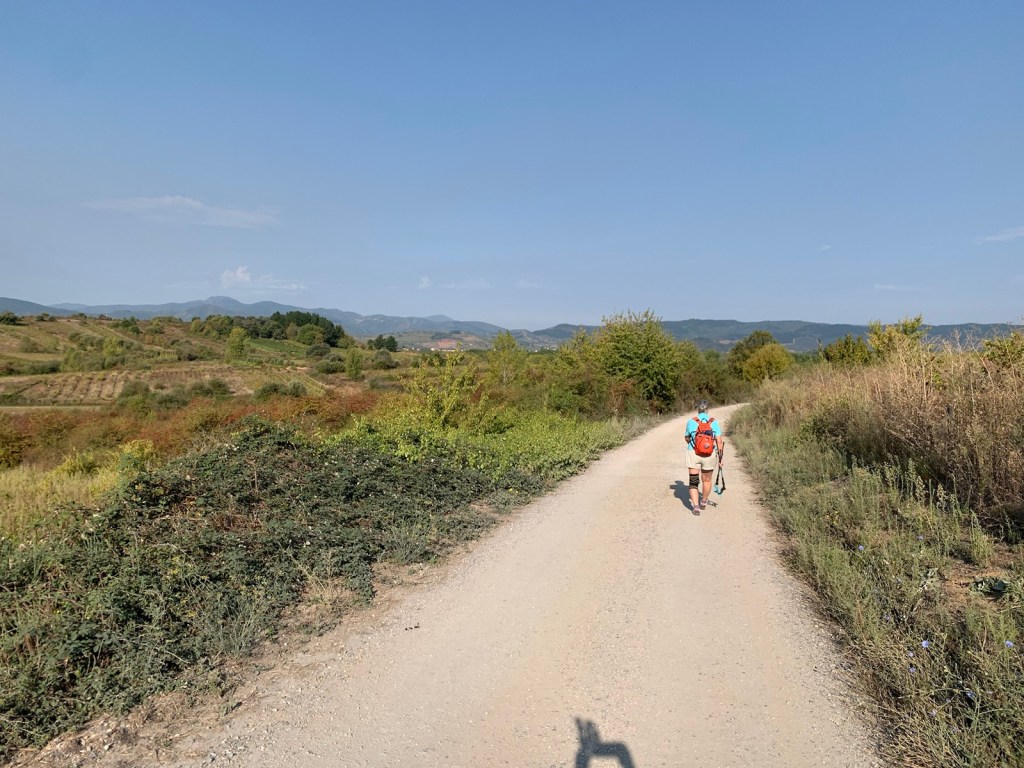
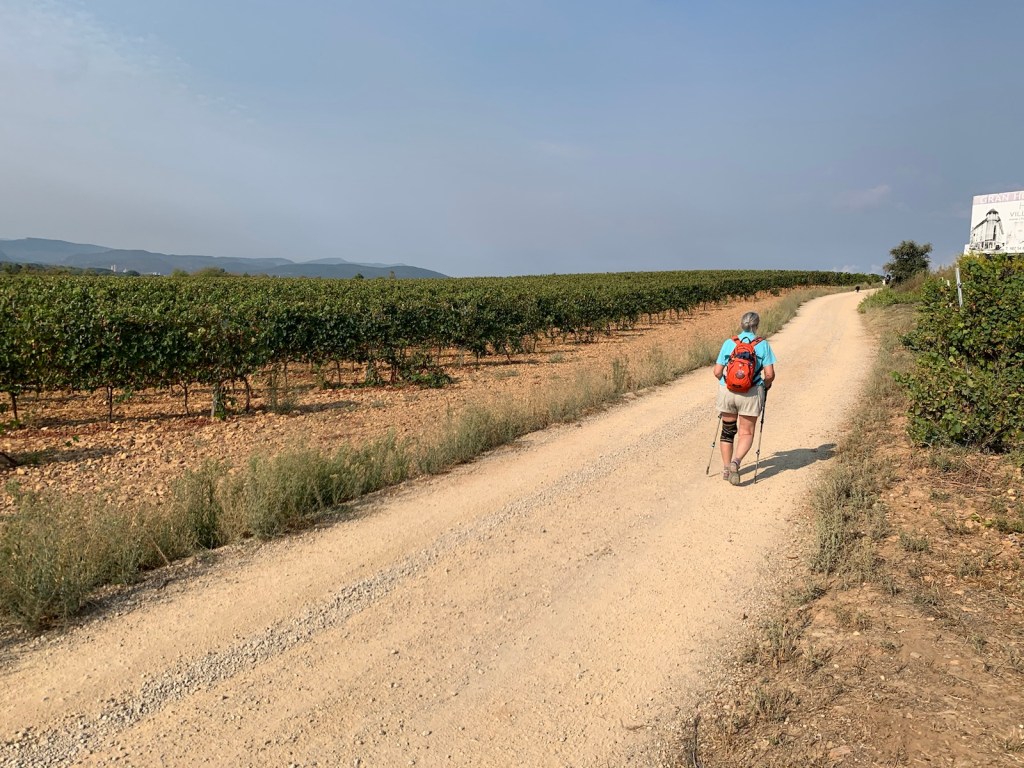
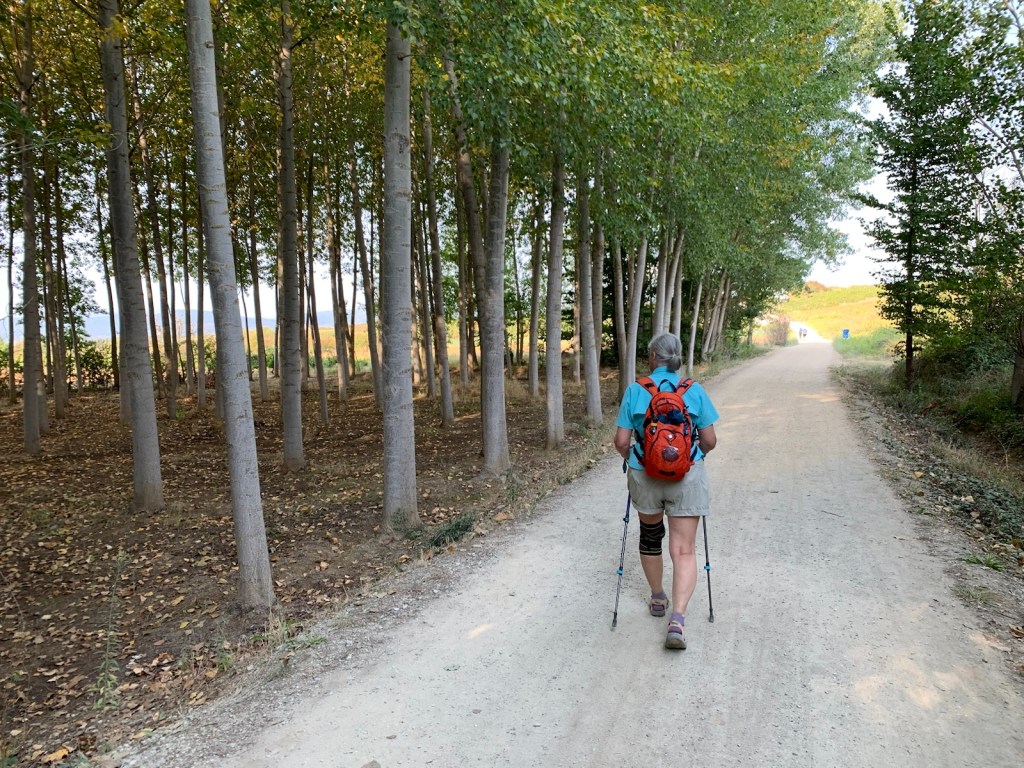
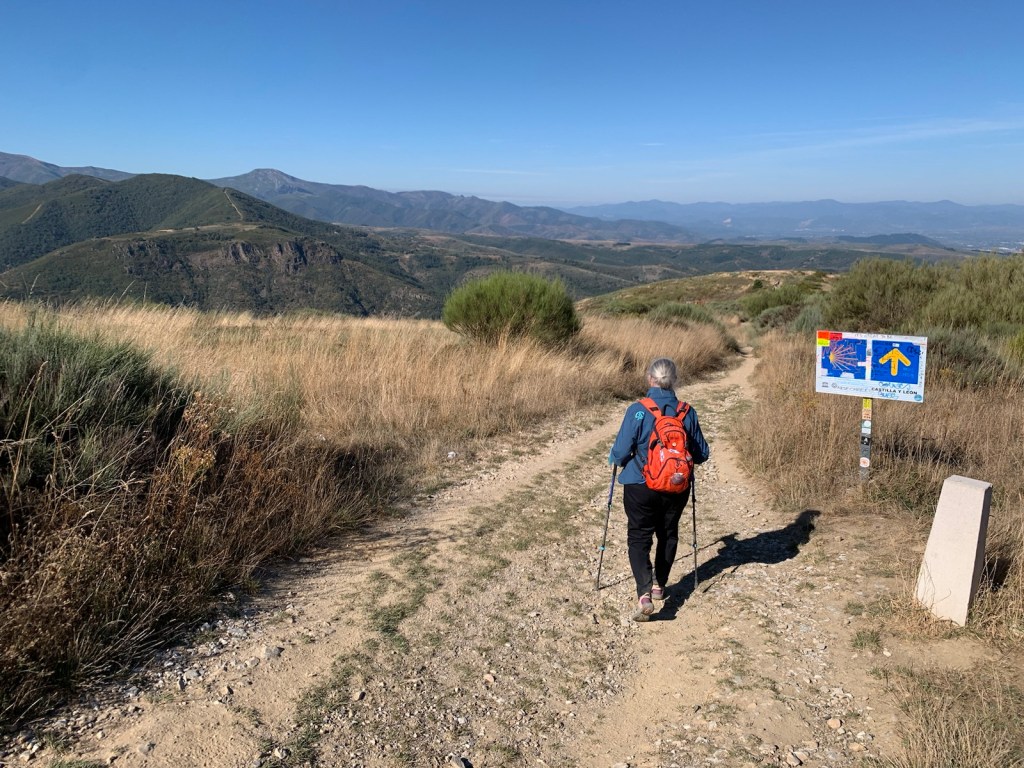
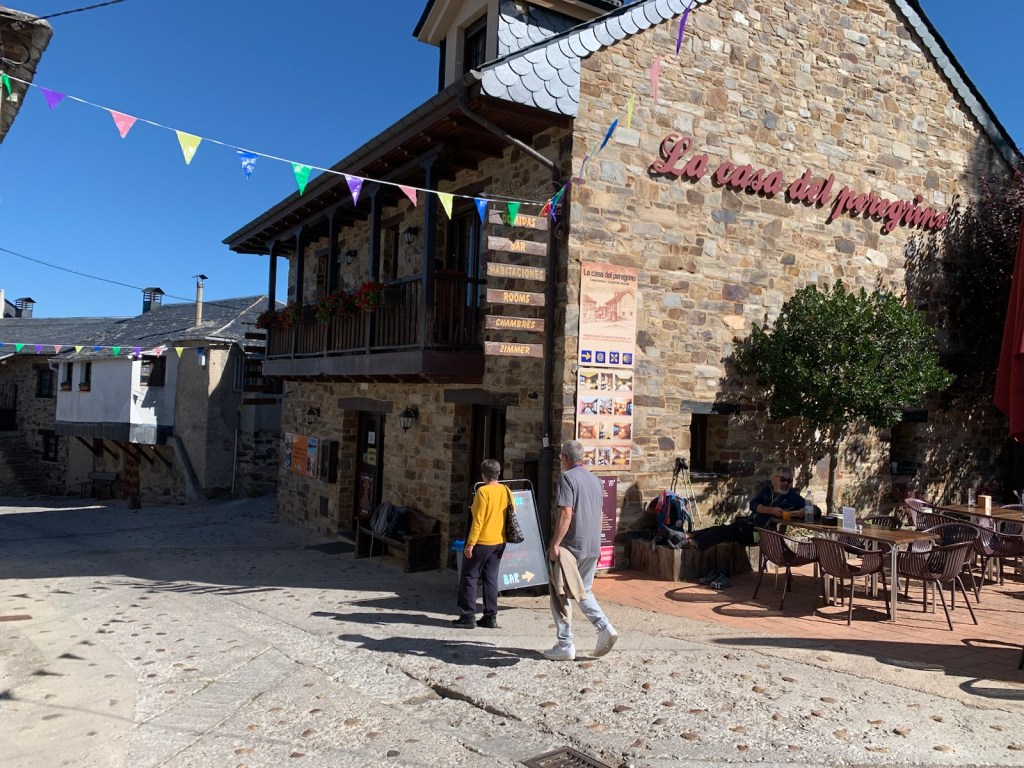
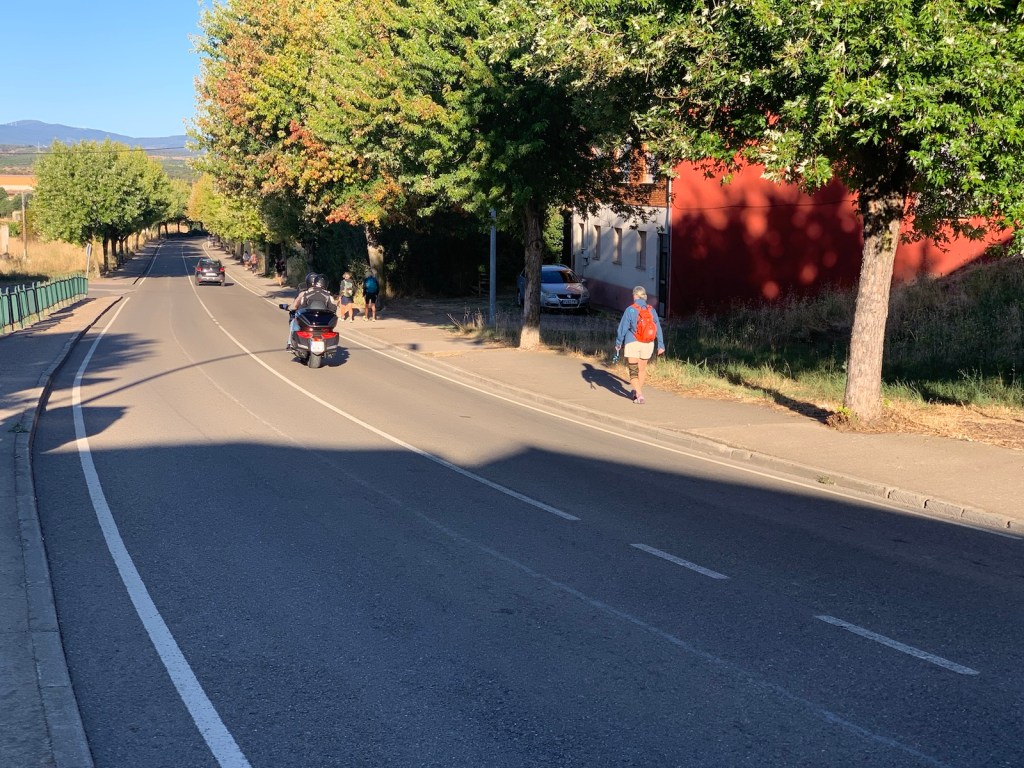
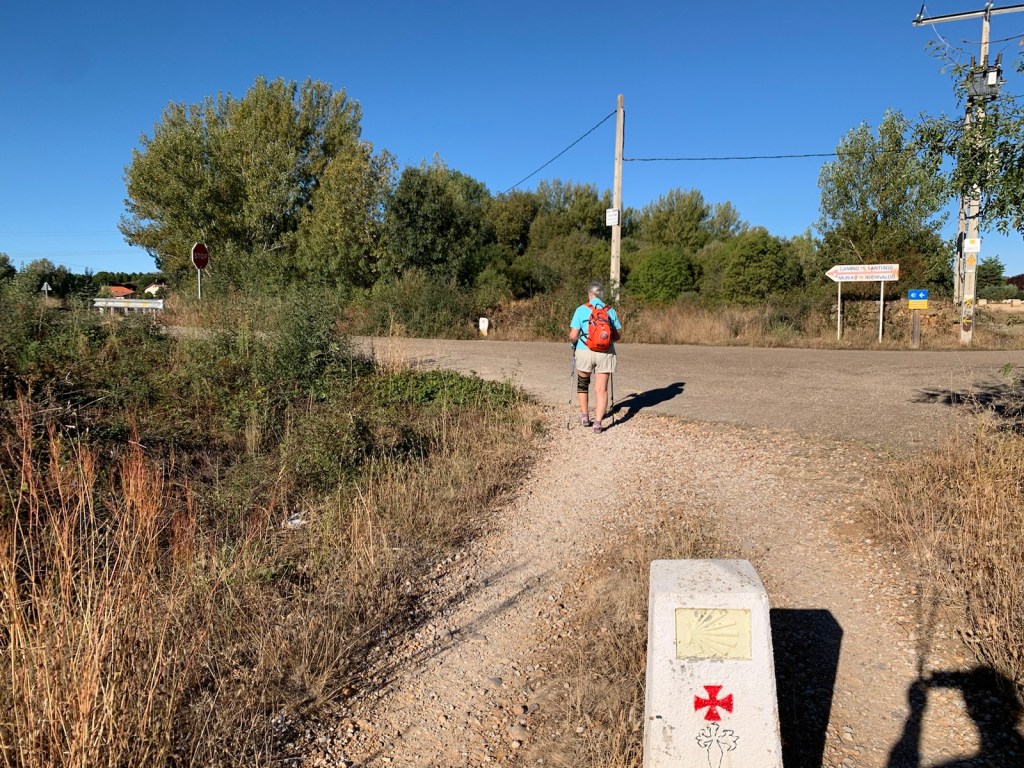
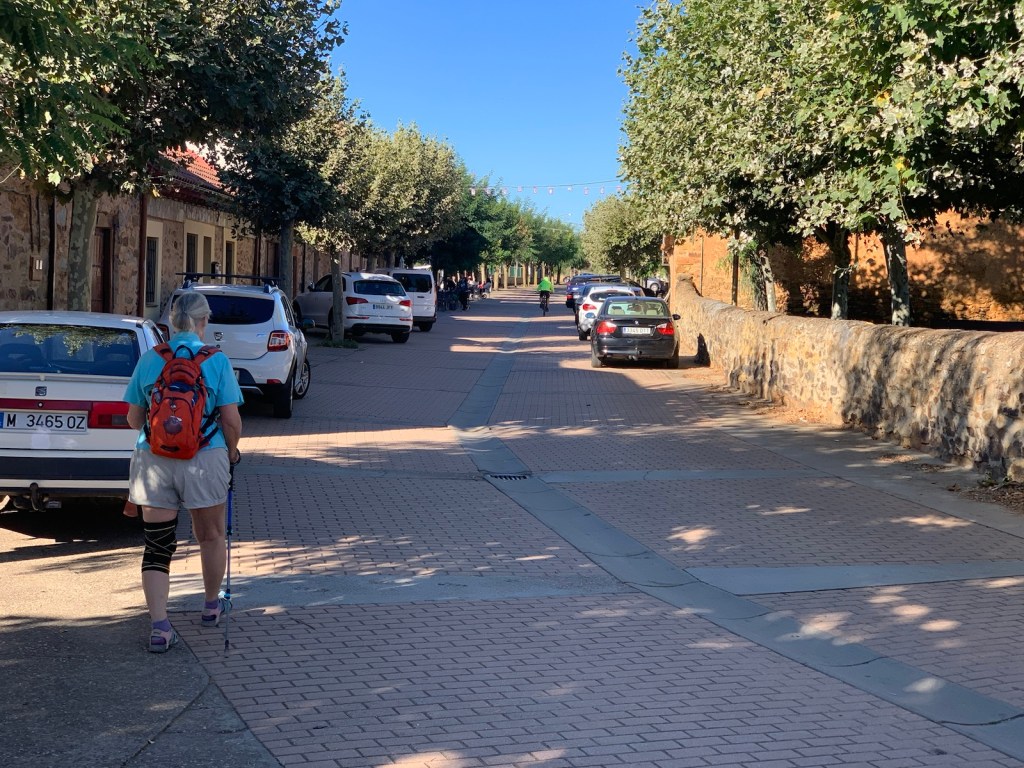
Today’s walk was just what we needed. The first half was on flat, mostly wide city sidewalks with plenty of places to stop for a break. The second half was back on the dirt path, through mostly vineyards and an occasional shady group of trees or gently, undemanding rolling hills.
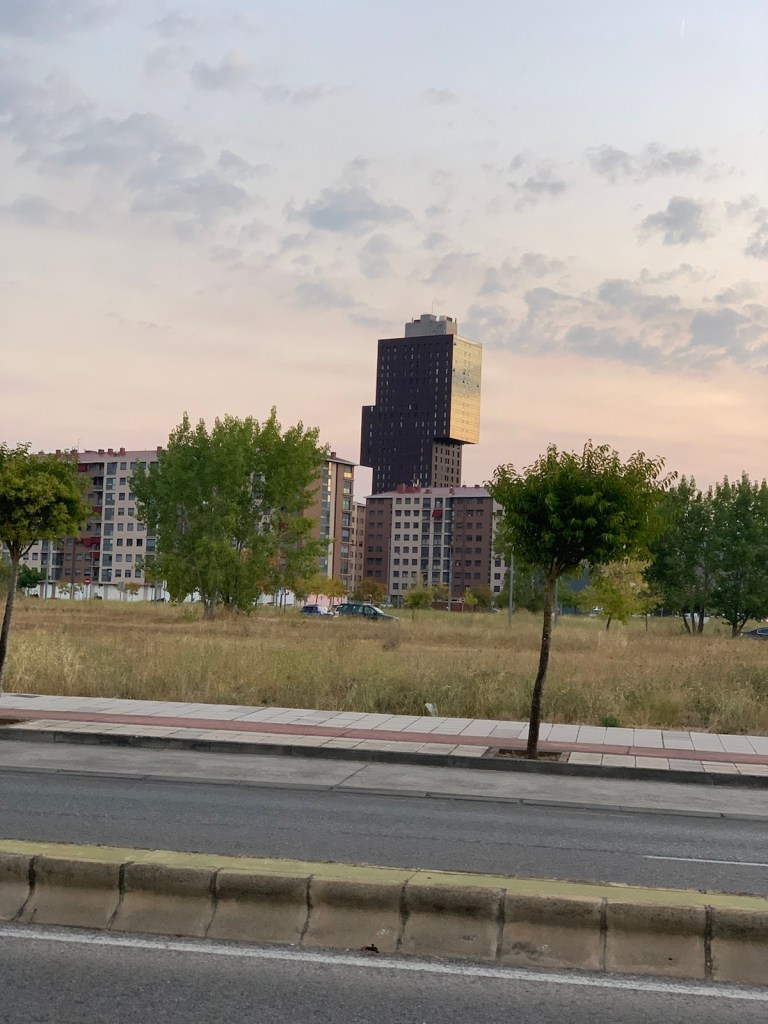
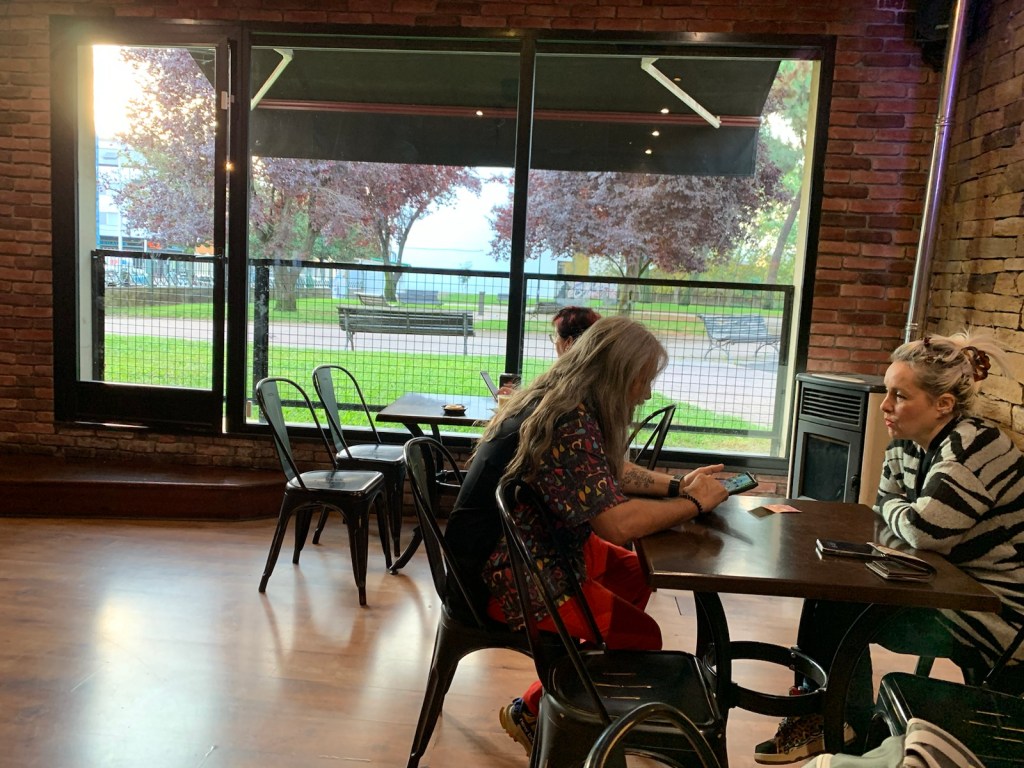
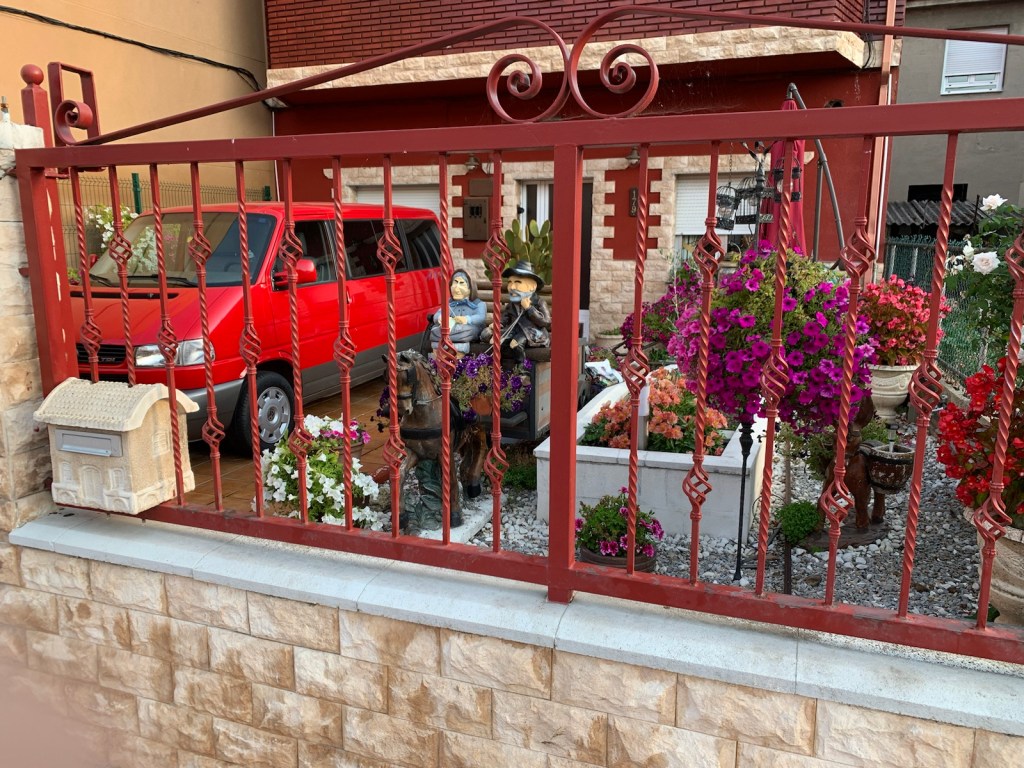
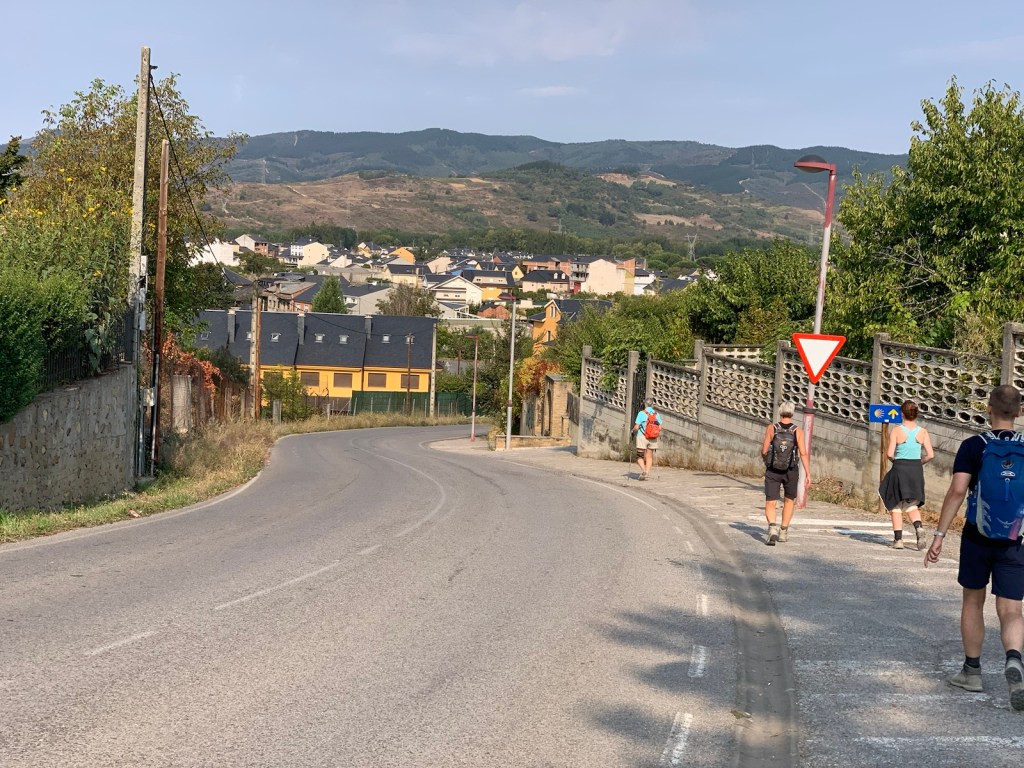
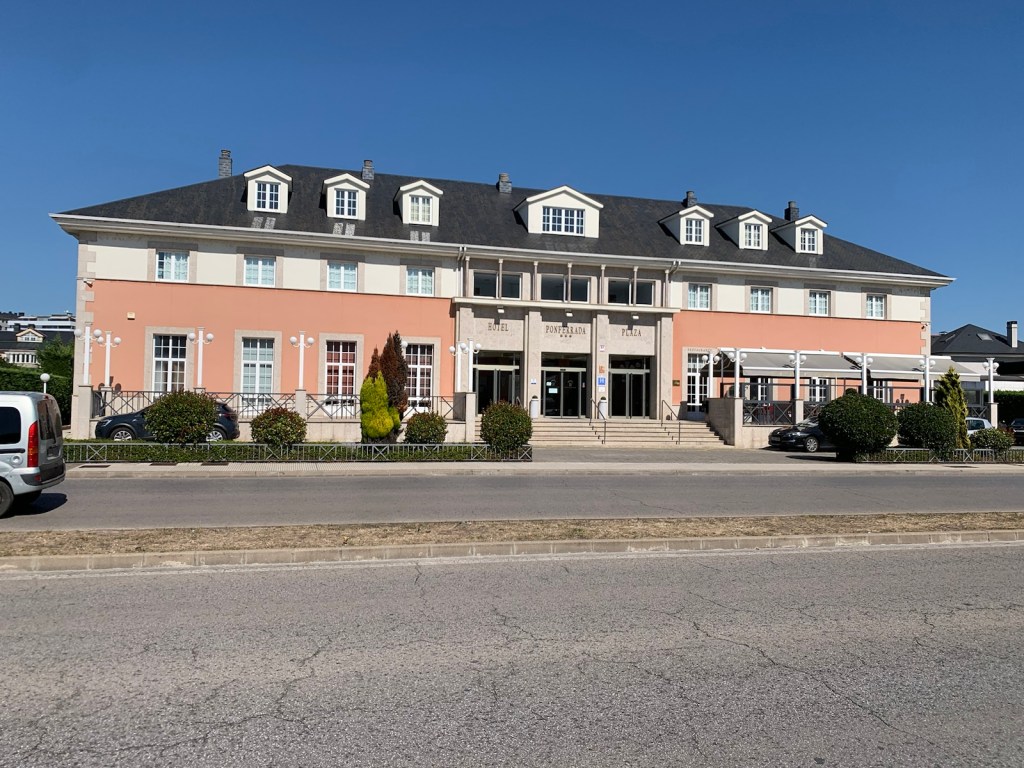
shortly after leaving our hotel in a modern section of PonferradapWe wondered if the architect or construction contractor was changed at mid-project on this unusual building just outside of Ponferrada center.our first breakfast stop was a bar next door to a park Nice wide, level sidewalksa second stop at a popular neighborhood barsidewalks narrowed some as we entered CamponarayaIntetesting house in this Bierzo communitya third stop before leaving Camponaraya walking by a Bierzo wine cooperative as we left Camponaraya looking back, thankfully on the mountains we crossed yesterdaysidewalks gone, back on the dirt pathWe walked through vineyards for most of the second half of our walk
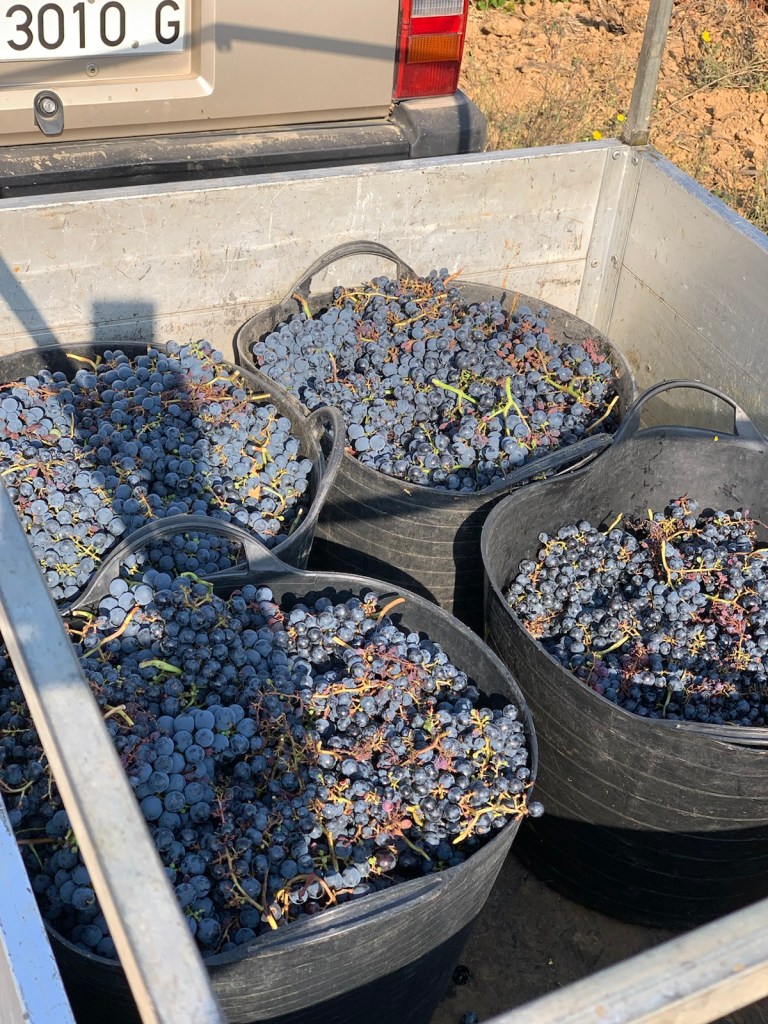
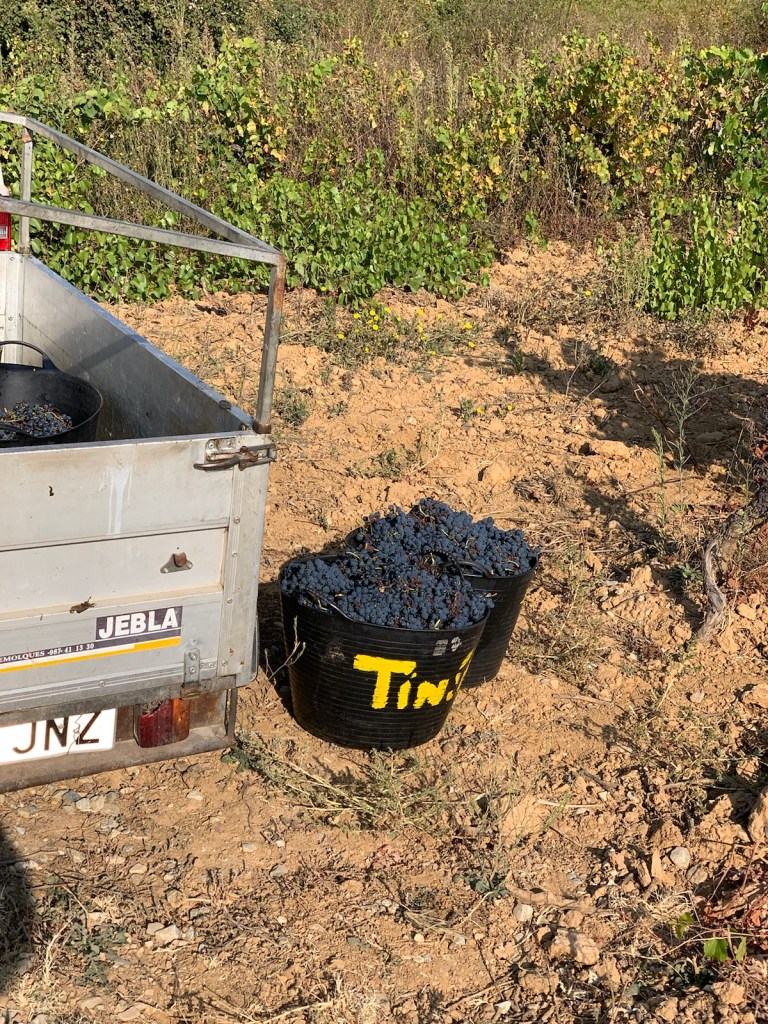
Most of the vineyards have been harvested by now, but an occasional bunch of grapes could be seen among the vines. We observed several groups of three or four people apparently looking for “missed” grapes and we passed a small vehicle with evidence of their “bounty”. We wondered if it was a common practice for the large vineyard owners to allow locals to come behind and retrieve any unharvested grapes for personal use.
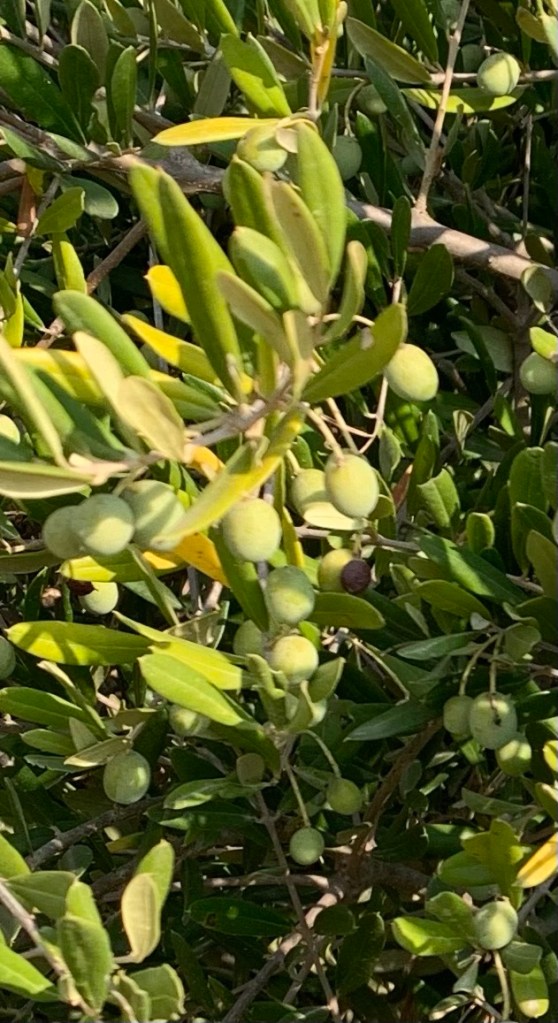
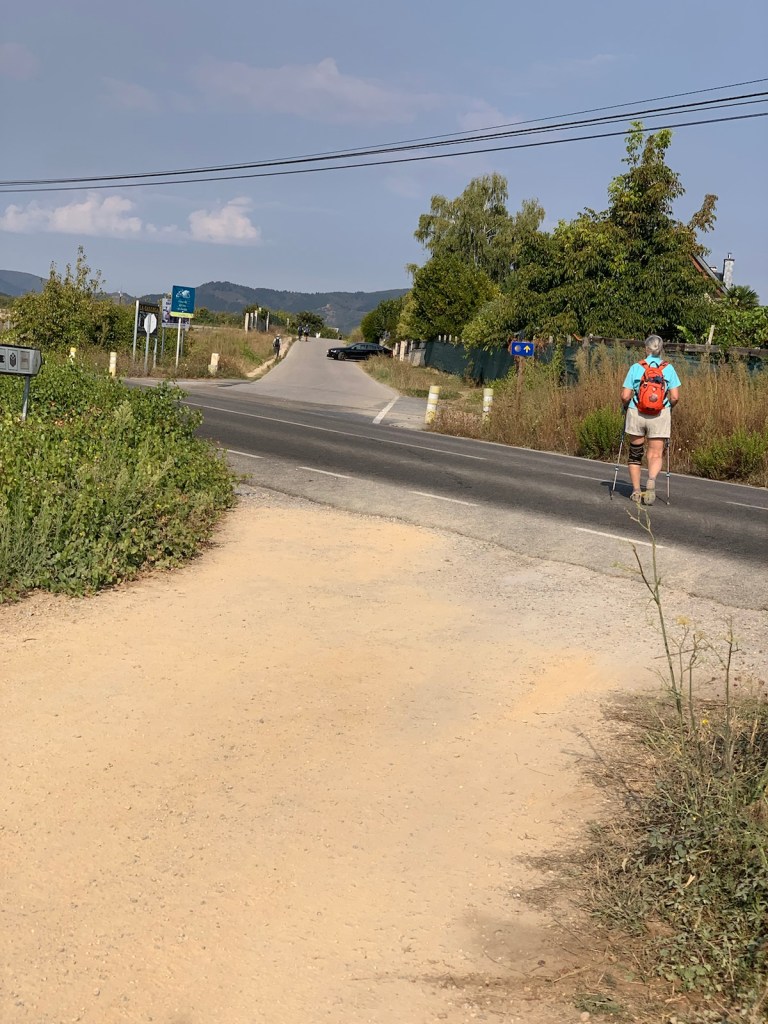
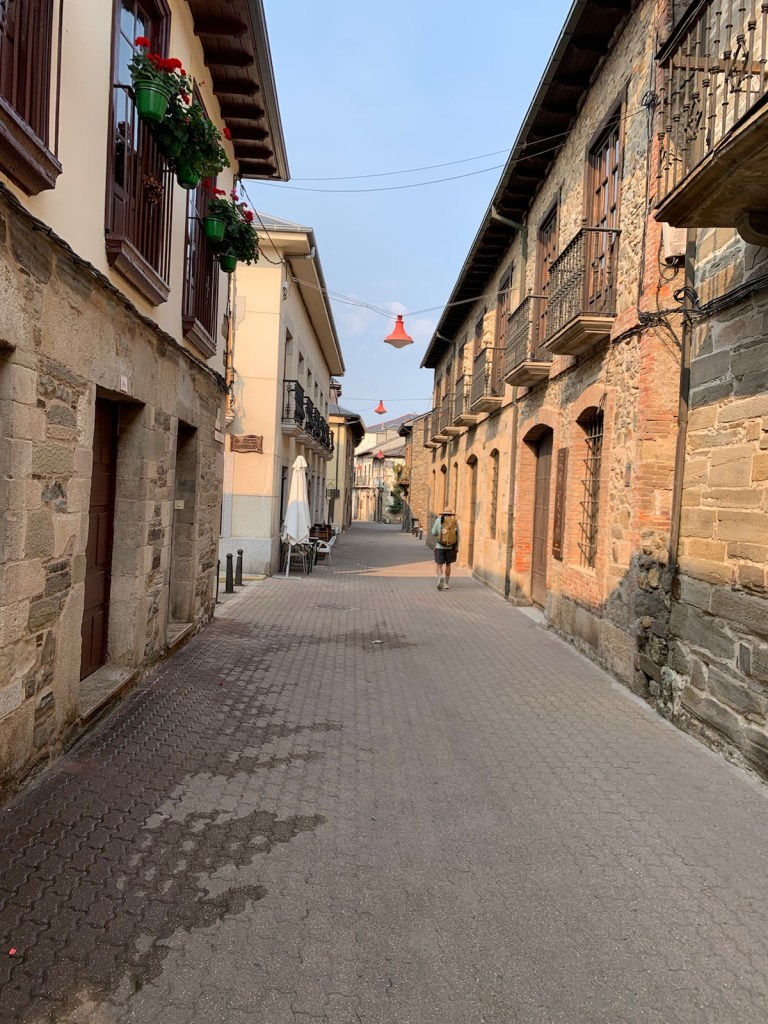
“missed” grapes collected by 4 guys this morningthese two tubs of grapes probably will need to go in another vehiclenice, shady stroll breaking the monotony of the vineyardsWe walked by a small grove of olive trees but unlike the grapes, it appears they are not yet ready for harvest.Dirt path ending as we take the paved road into Cacabelos Cacabelos aheadTypical buildings on the Camino in Cacabelos
We checked in to La Gallaga albergue shortly after noon. We’ve stayed here twice before and while we waited for our packs to arrive, had pizza for our main meal.
Once the packs arrived, we gathered all our dirty clothes and took advantage of the washer and dryer facilities in addition to following our other routine chores for the day.
Today was a good recovery day, even though our distance walked was similar to yesterday.
Rain is in the forecast for the next few days, adding some variety to our prep for tomorrow. And we crossed the 200 mile mark today! Time sure flies on the Camino.
Today was surprisingly our most difficult of Camino2024.
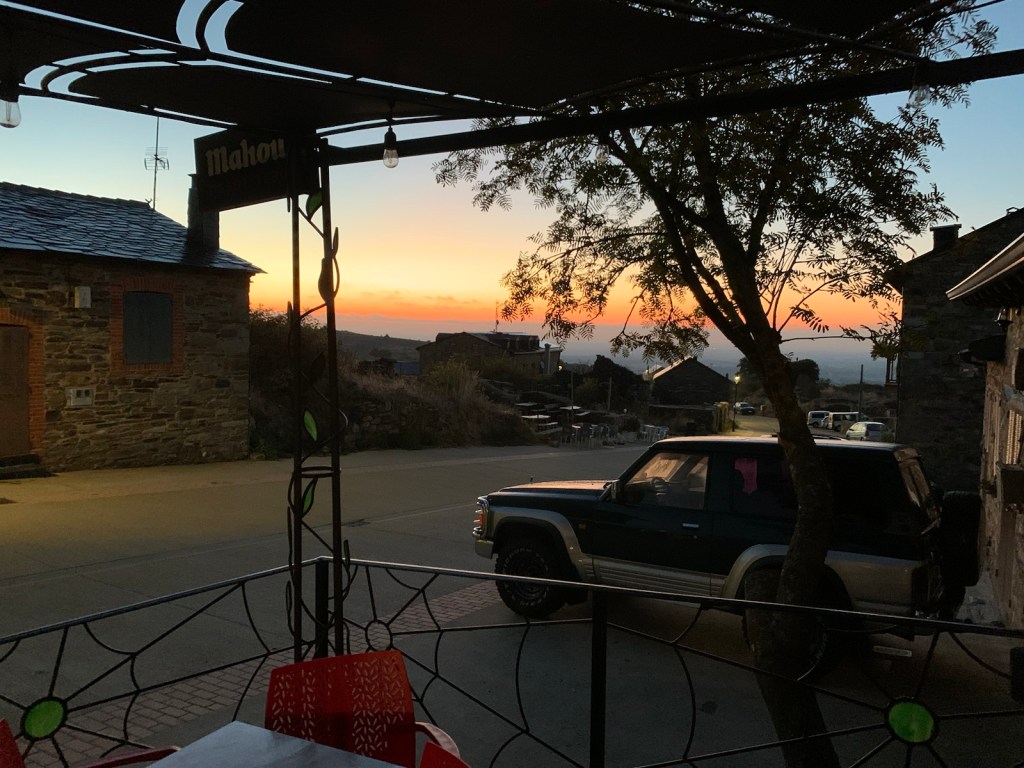
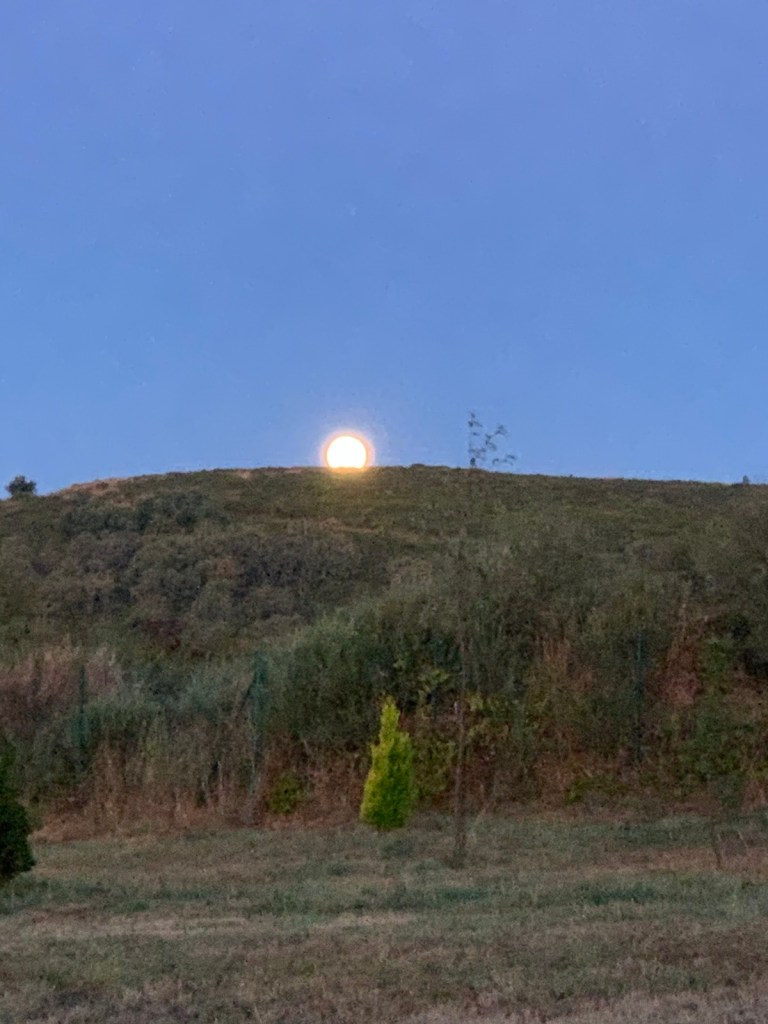
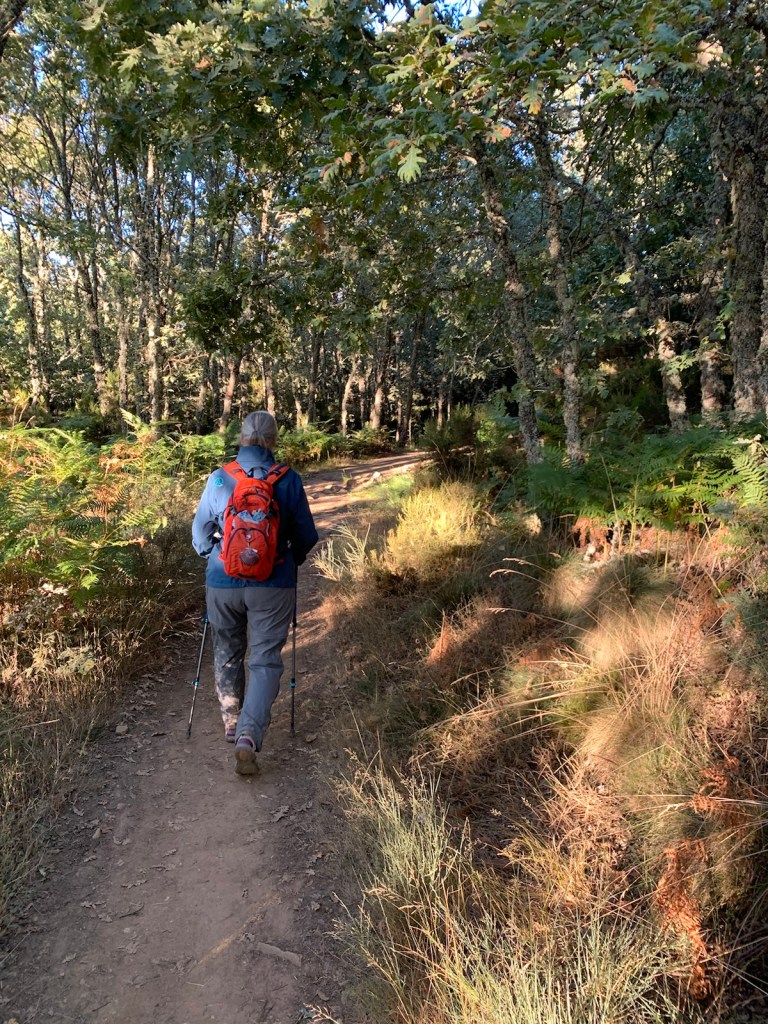
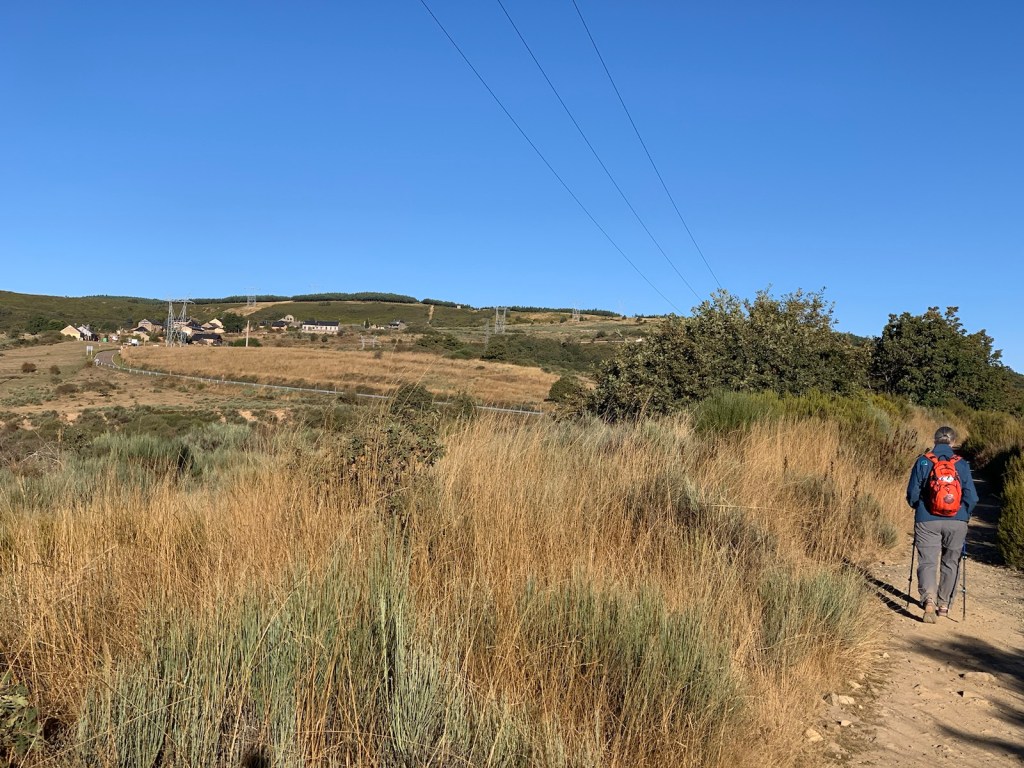
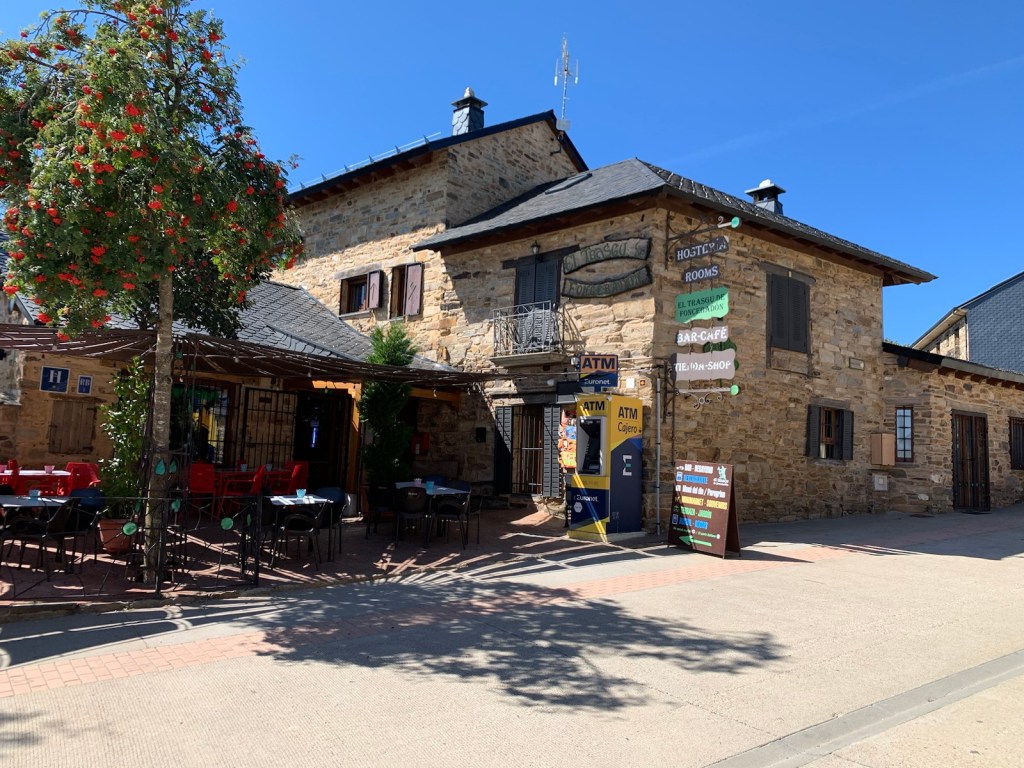
Sunrise this morning in Foncebadón A full moon setting, viewed from El Trasgu in Foncebadón this morninglooking back at Foncebadónpassing some of the Foncebadón buildings awaiting revitalization.Our last look at Foncebadón on the way to Cruz de Ferro
When we left Foncebadón this morning we were looking forward to seeing the Cruz de Ferro again and to taking in some beautiful mountain scenery.
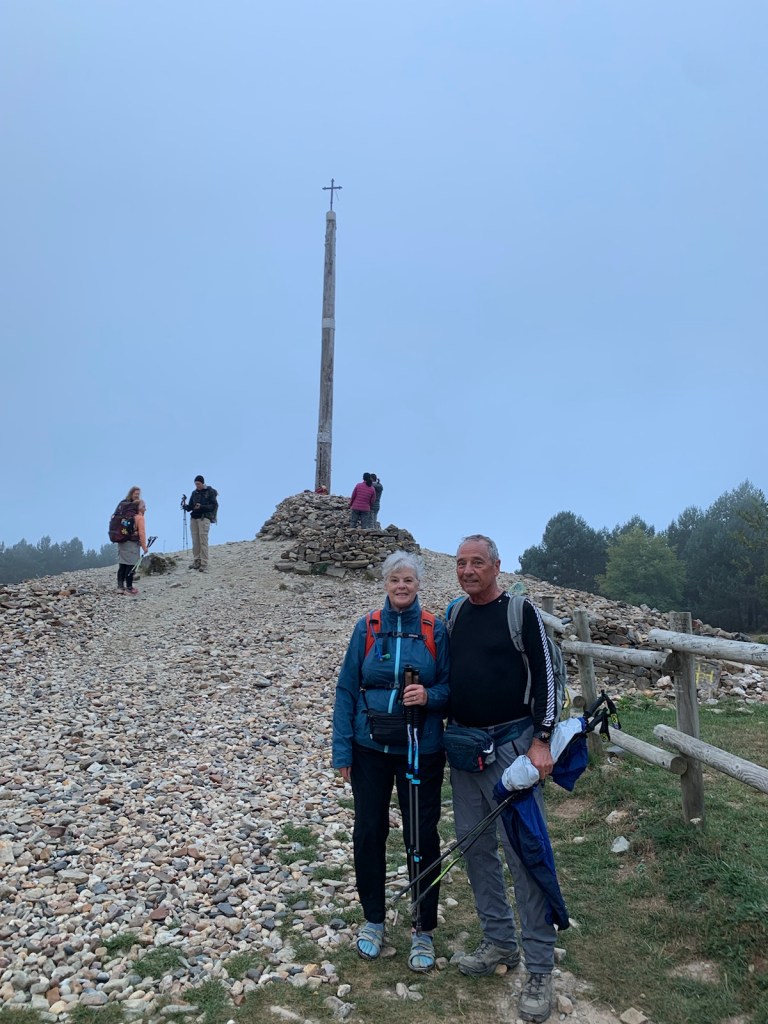
The “gentle” climb to Cruz de FerroOur first glimpse of Cruz de Ferropilgrims approaching Cruz de Ferro with their token stones and prayersWe made it!
The walk to Cruz de Ferro went as expected and we did see some beautiful scenery. But shortly after leaving the “Cruz” and for the remaining 6 miles, we spent most of the time looking at our feet.
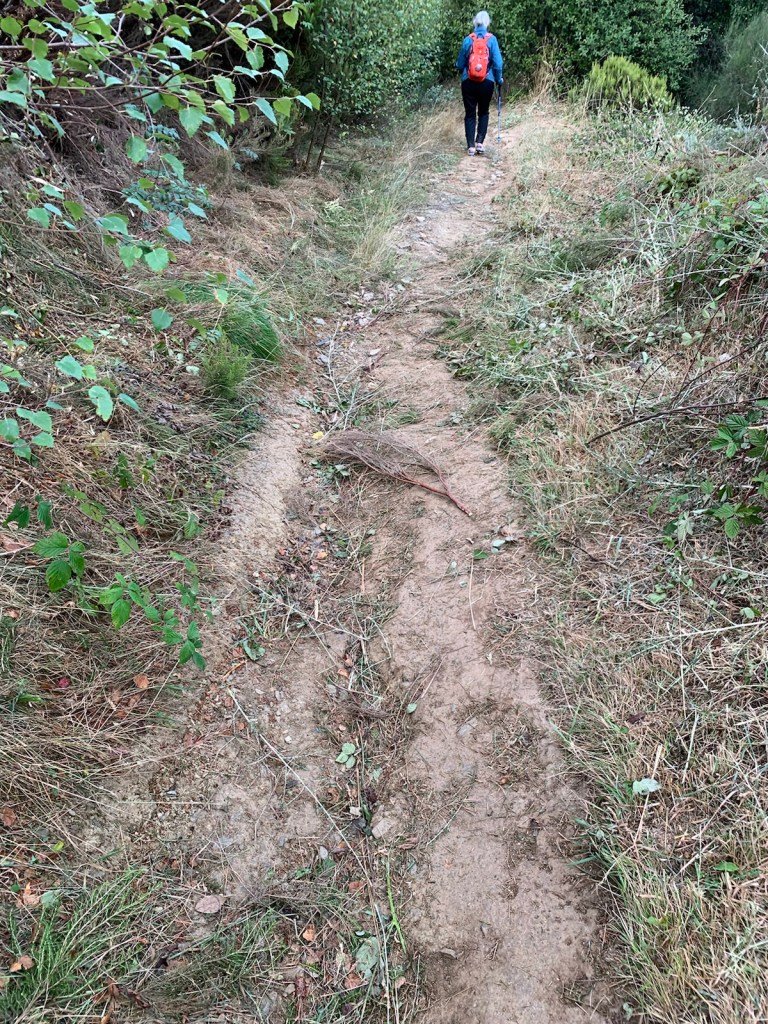
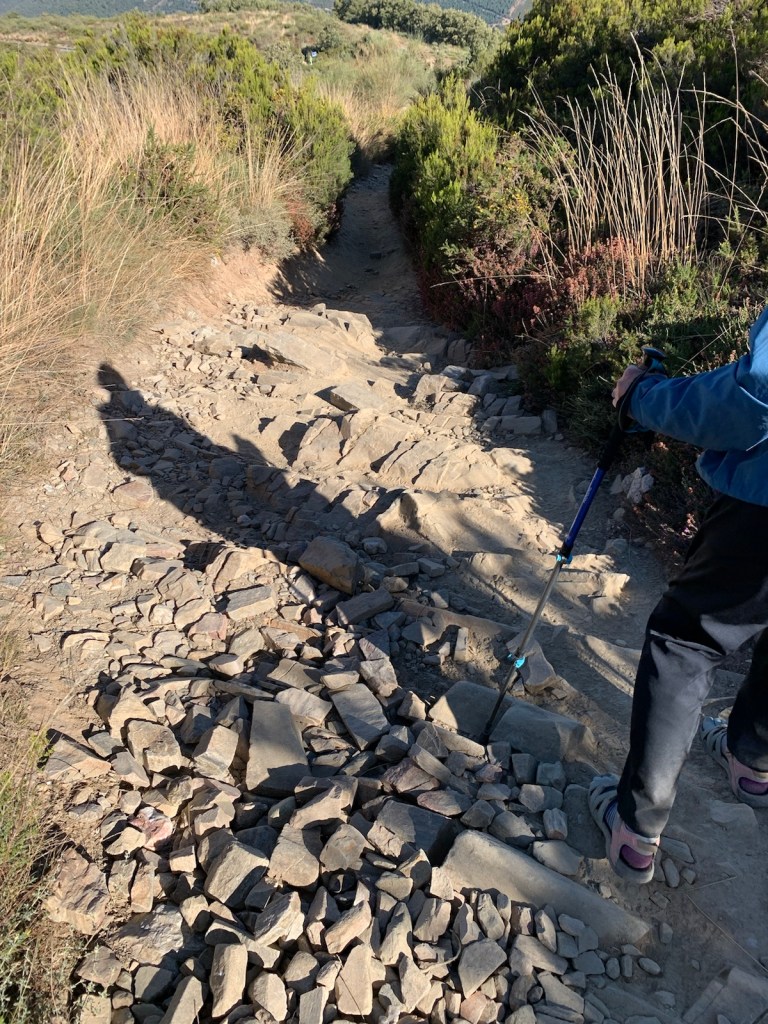
leaving Cruz de Ferro on a relatively “manicured” pathThe recent trimming of the path was nice, but the “trimmings” covered deep gullies in the “path”, which was more like a wash, making for treacherous footing.
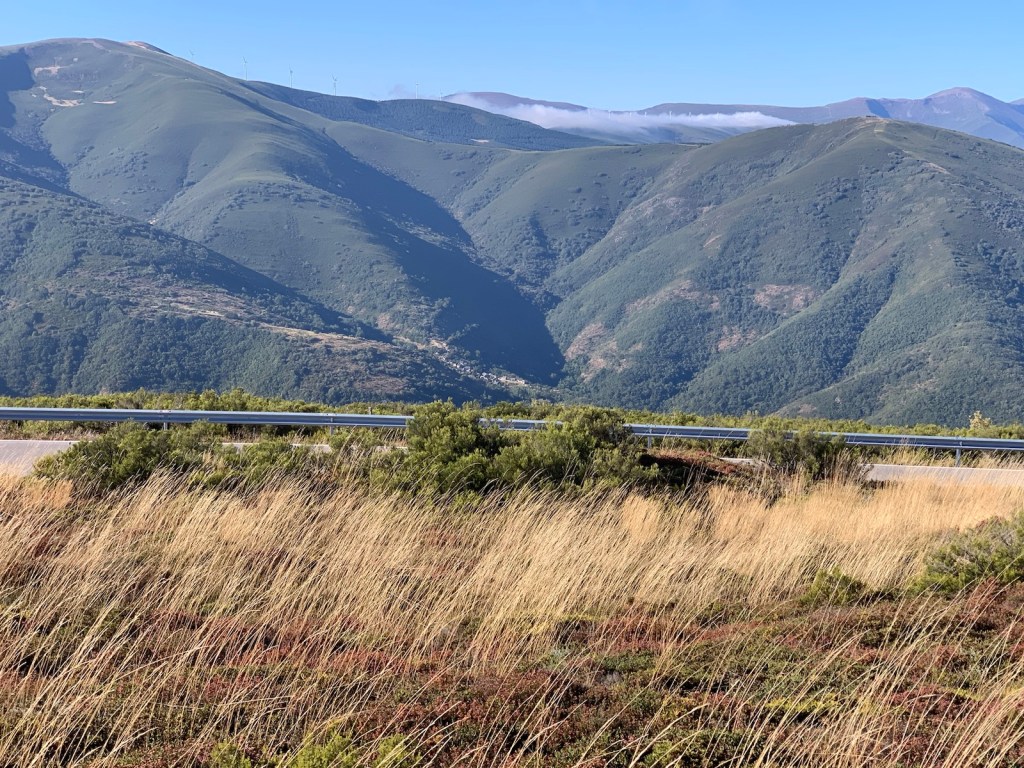
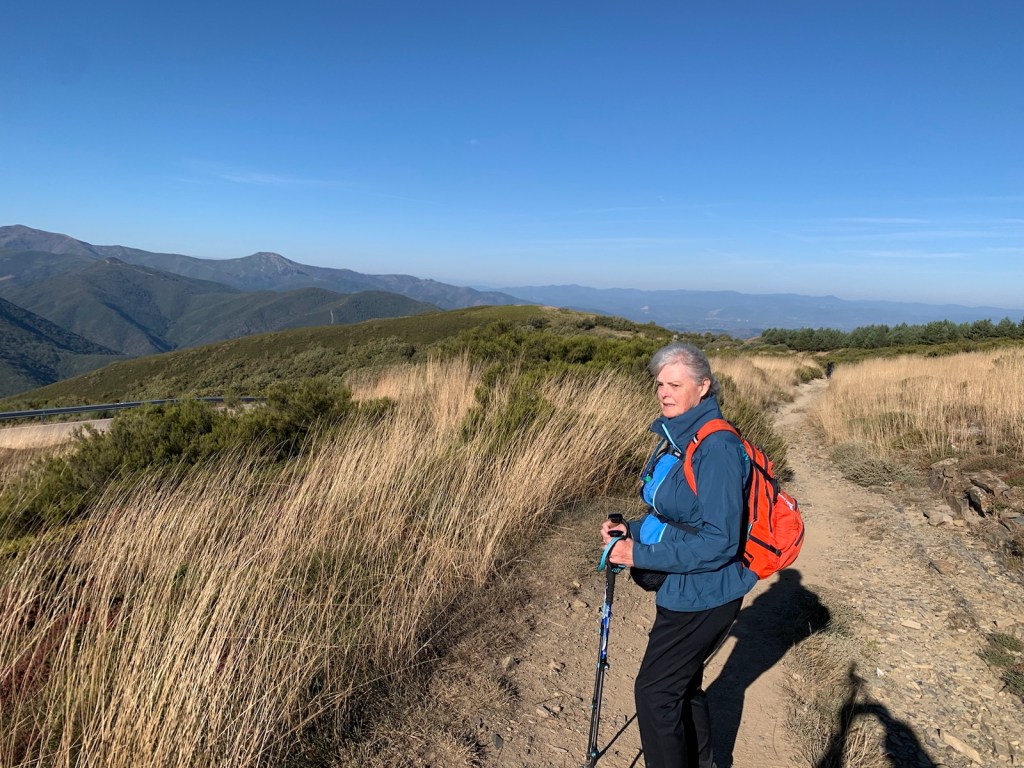
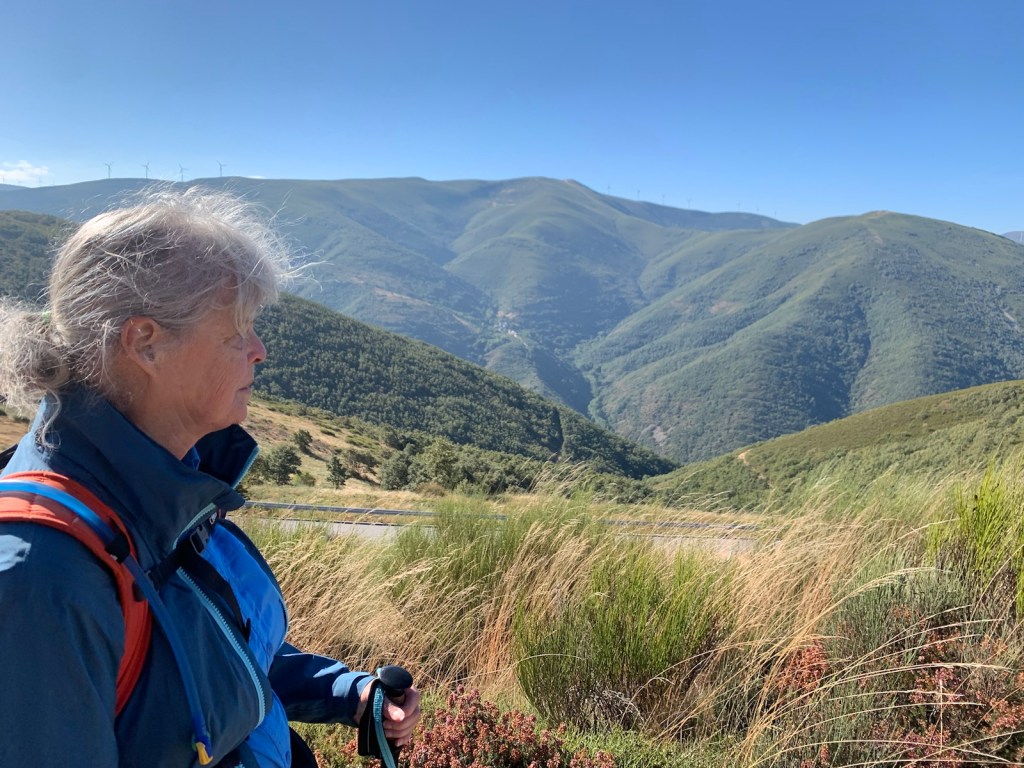
We reached the ridge that would lead to El Acebo (pop. 37), the end of our walk for the day. As the Clouds dissipated from a persistent morning sun, a beautiful cloudless blue sky emerged revealing the mountains and valleys along this section of the Camino.
Our first breathtaking view of today’s mountain scenery.Approaching Manjarín, a modern day Templar “outpost”.
This enigmatic little spot features a most unusual albergue, administrated by Tomás who considers himself a modern-day Templar, last of his order. Drinks and snacks are normally available as well as a none-too-private outhouse.
Thomas was nowhere to be seen and his outpost was “locked up tight”.Scenery peeking through the clouds
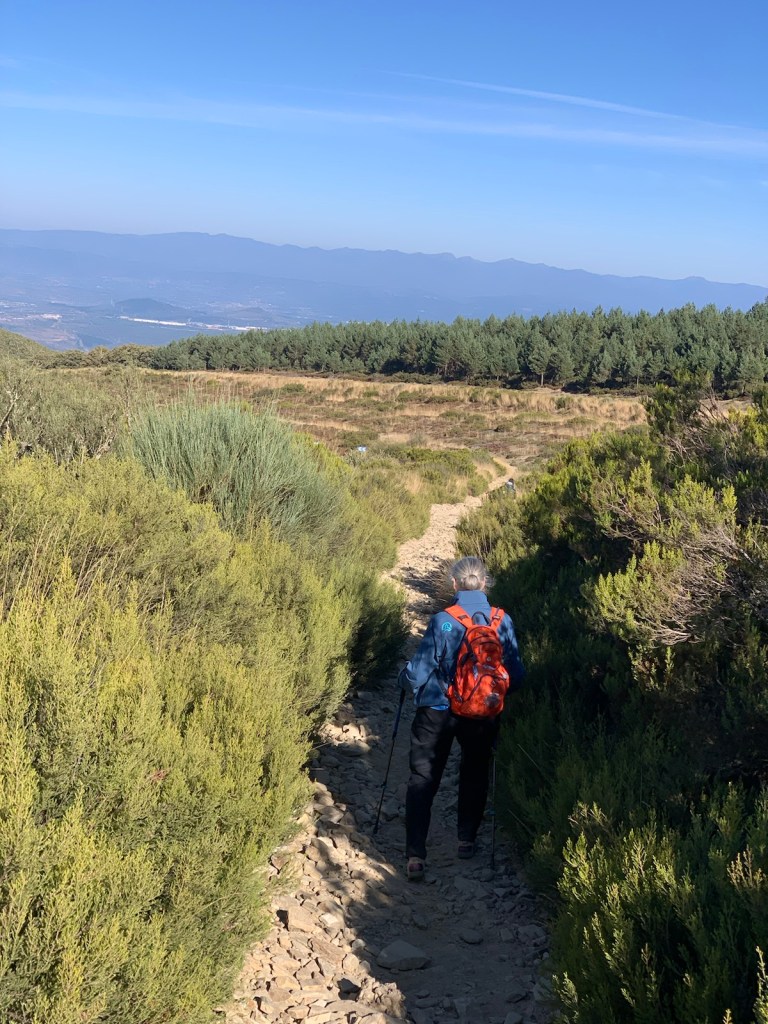
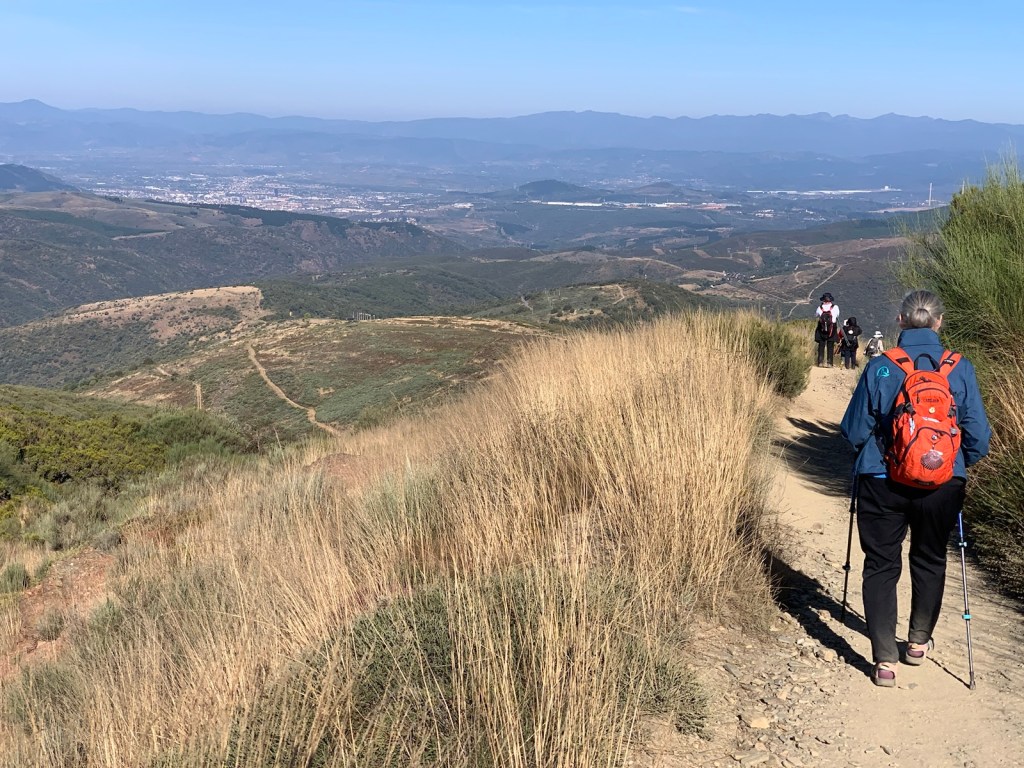
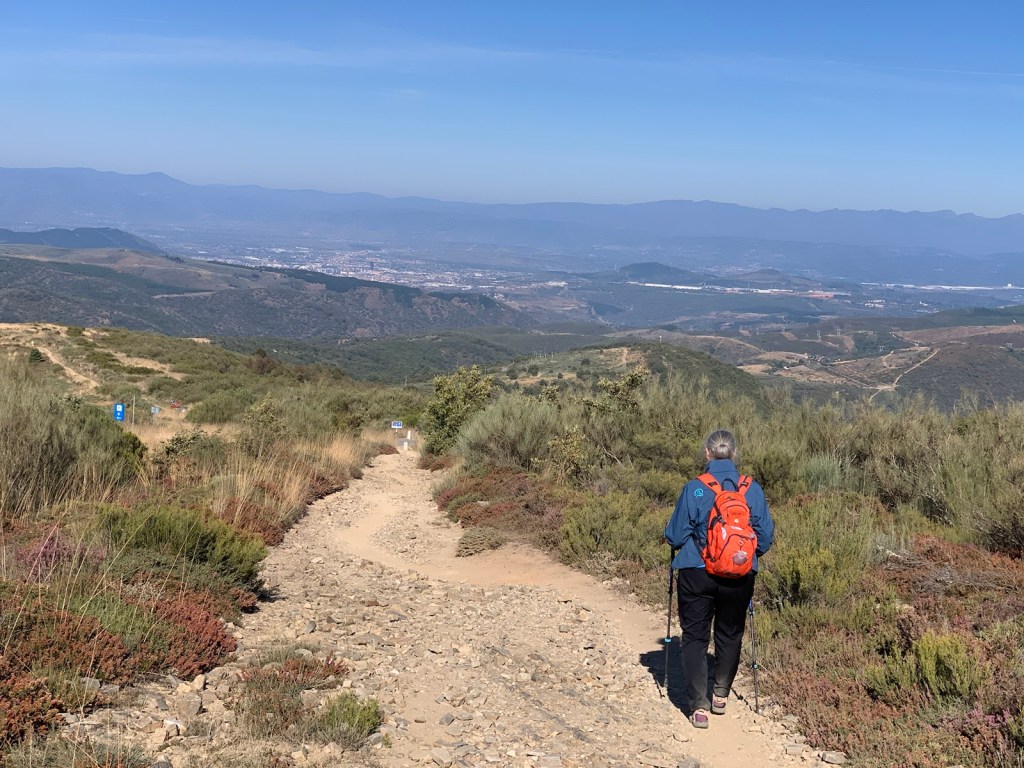
While the scenery was awesome, for the entire walk, the path was overgrown in places, rendering poles useless and blocking the view.
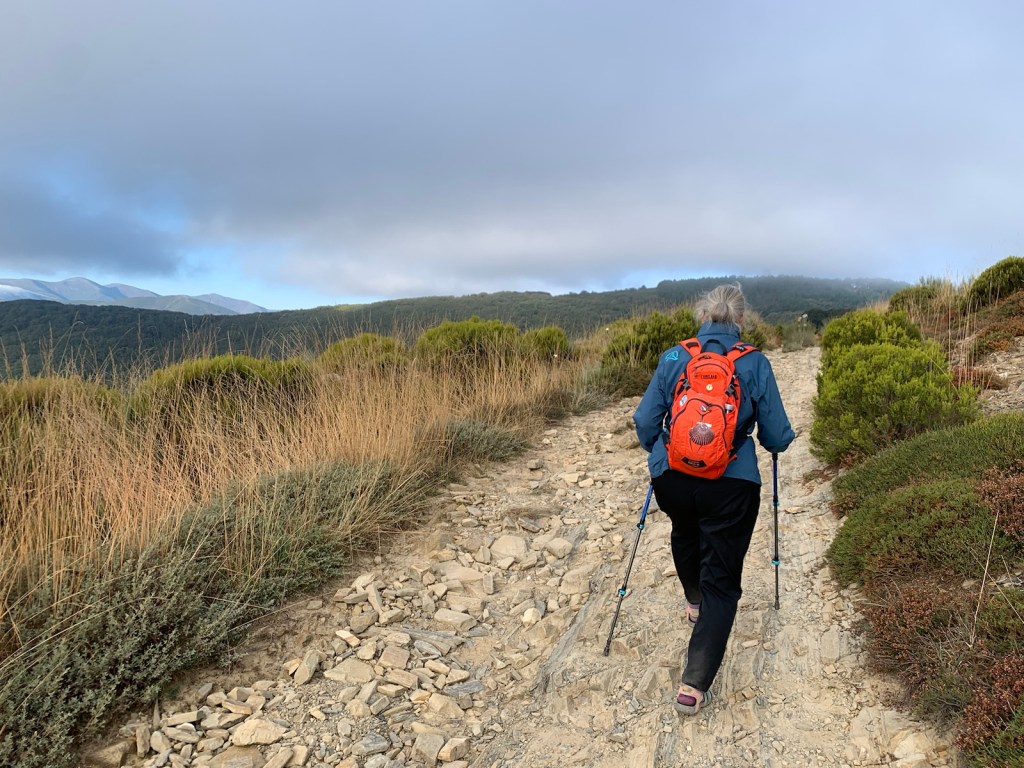
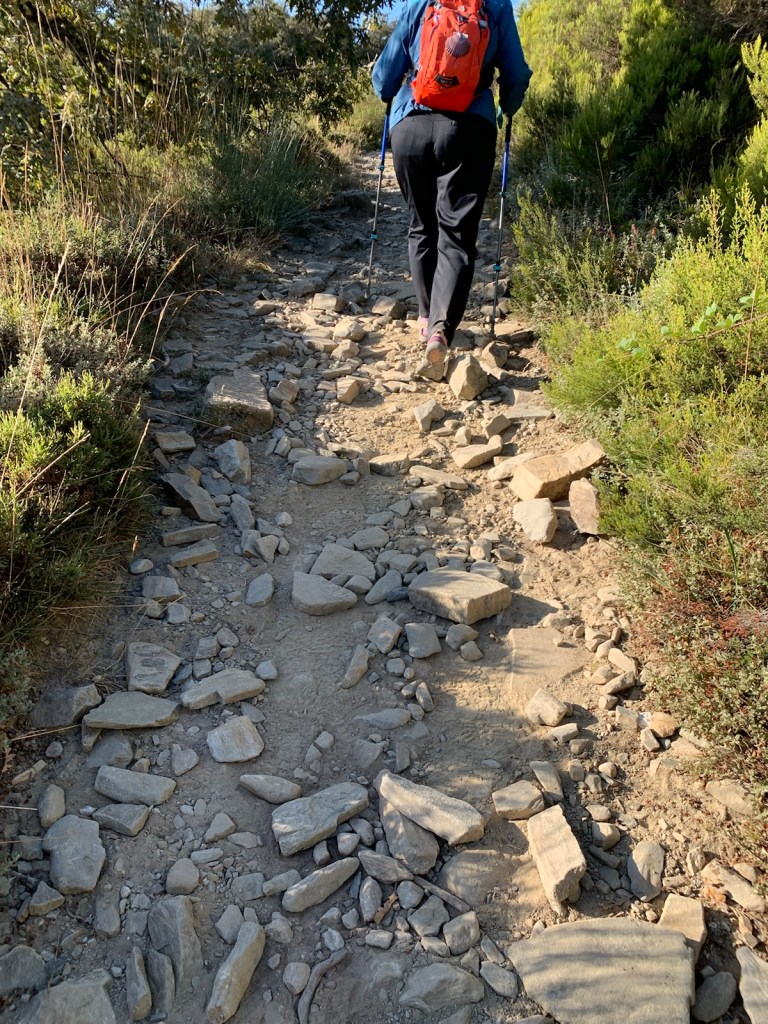
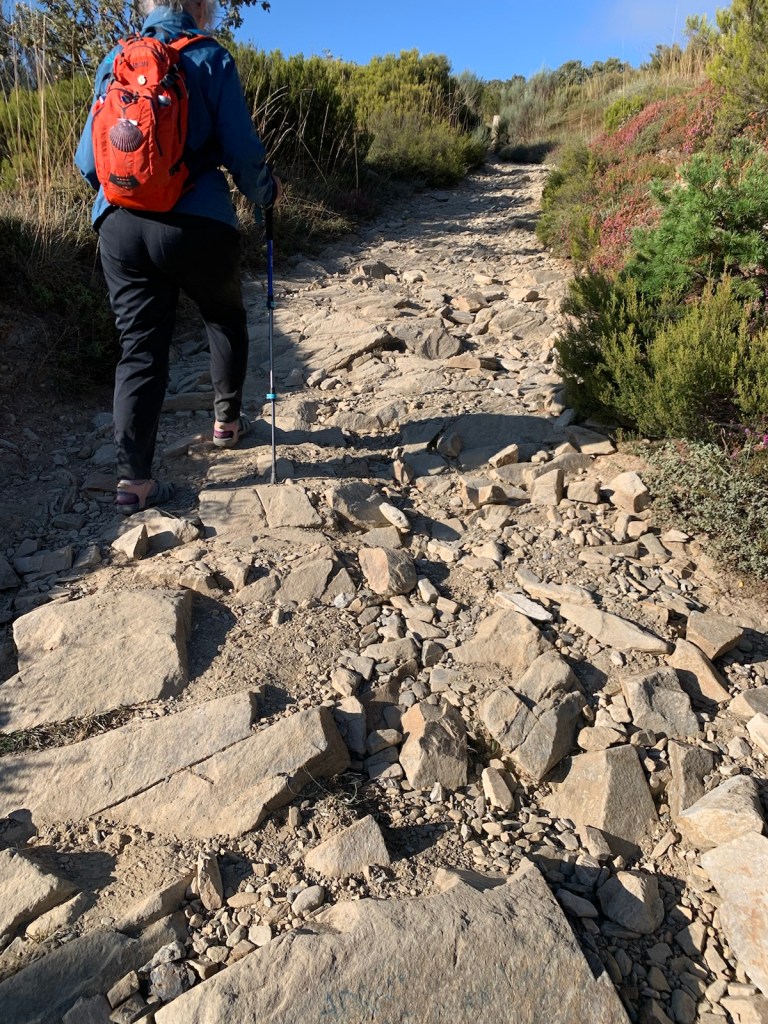
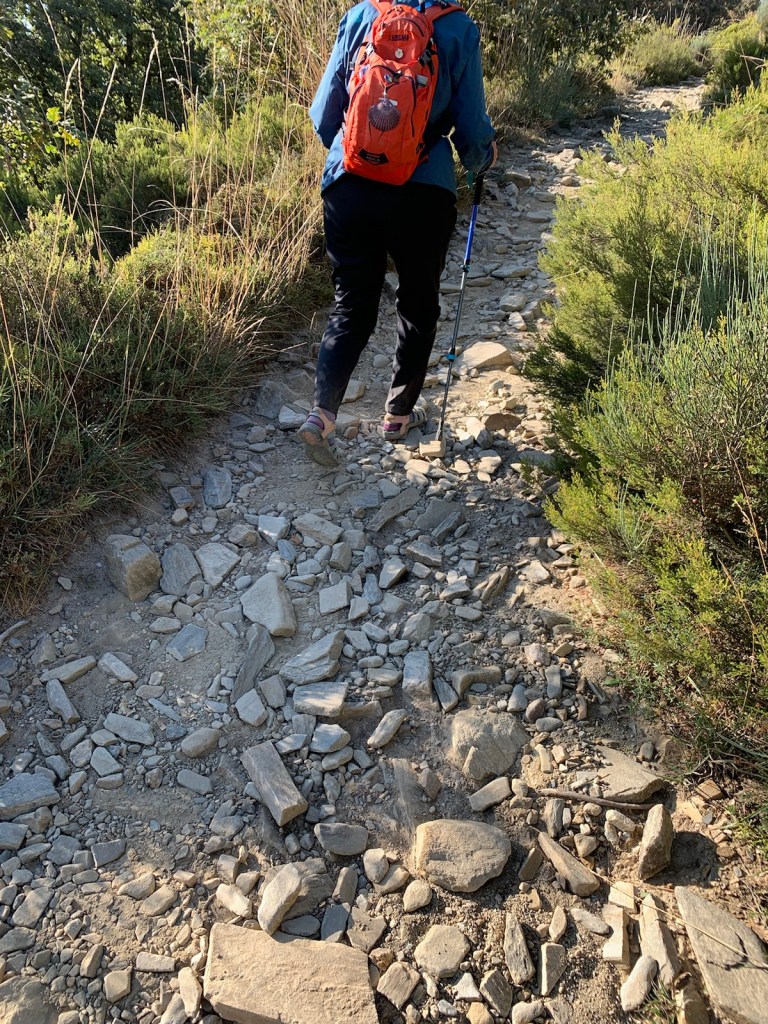
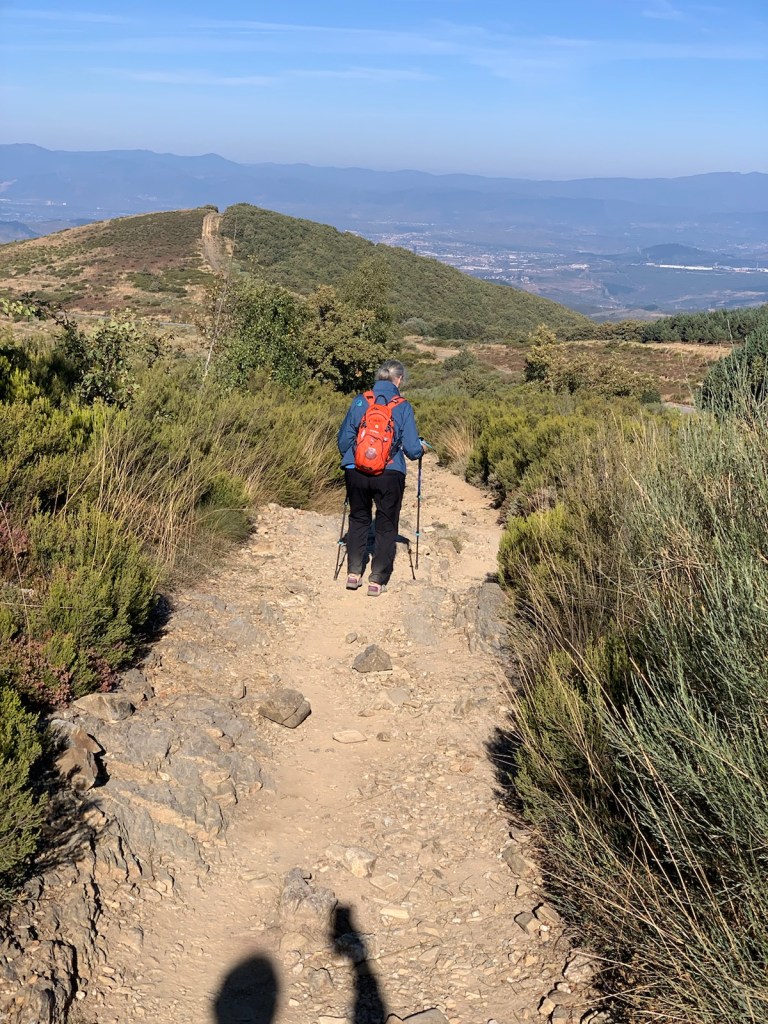
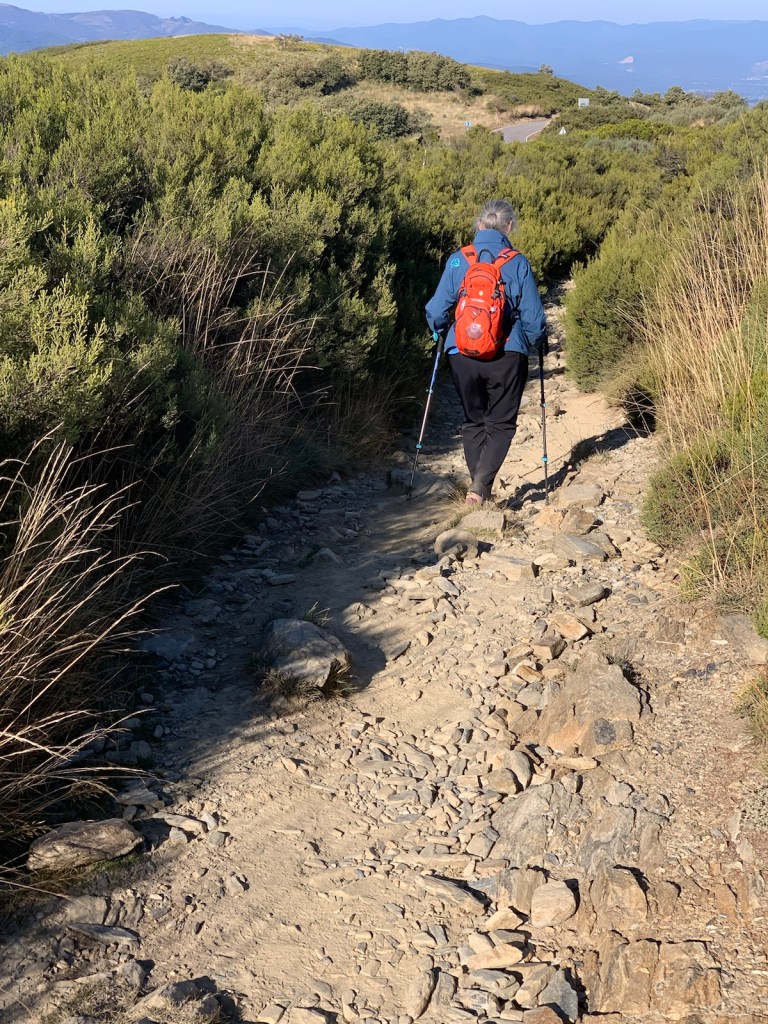
Trying to enjoy the views became hazardous when, without warning, a steep ascent, or descent, while short would be dominated by loose stones, some quite large and sharp edged shale, challenging any attempt at establishing firm footing.
Many pilgrims will ignore the footing issues we refer to. They pass us, sometimes nearly running up or down in areas that slow us up. All are much younger than we and others take Camino ending risks, we are unwilling to take.
We both have minor knee issues that we strive to keep that way, by being more careful. Linda wears sandals on the Camino to prevent blisters, a choice that had yielded good results for all of our Caminos. But sandals make it more of a challenge to deal with loose stones and uneven surfaces like we experienced today.
Further, because of our approach, our leg muscles are more tense and work harder as we walk more carefully, increasing the level of fatigue of a walk like today.
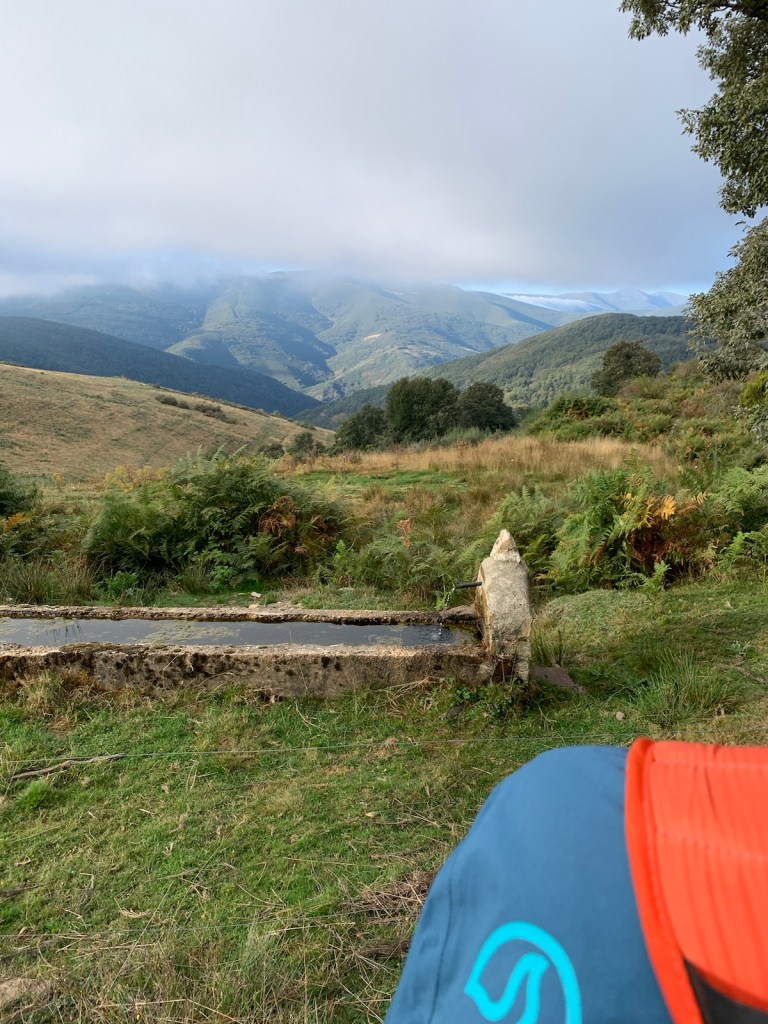
The following are the views and some of the terrain that made today a challenge for us.
We stopped here for OJ and to call a taxi
Bottom line, we finished today’s walk without injury. It didn’t kill us, so we’ll probably be stronger as a result. And the relief we felt when the taxi arrived in El Acebo to allow us to skip the treacherous walk into Molinasaca and the monotonous walk from there to Ponferrada was a suitable reward for today’s performance.
Our hostal in Ponferrada.
And tomorrow’s 7 mile walk on relatively flat, foot friendly surfaces should be a “piece of cake”.
Leaving our hostal, the path was level for the first time since entering Rabanal yesterday. However, in just a few minutes, that same path began a steep ascent of nearly 1000 ft. that continued for the entire 3 mile walk to Foncebadon, near the high point of the Camino Frances at 4918 ft.
A few minutes into the walk we looked back at sun rise, which was beginning to warm the 42F morning air.
From the very beginning of our Camino Frances experiences, we have sensed the mystery and the spiritual presence that exists here. After looking back at the sunrise, we looked forward and up into the beaufiful blue sky and saw this….
…. then this…
…. then this…
… and once again on the Camino France, we sensed a presence and a special feeling that reminded us of one of the reasons we keep coming back.
The following photos show the terrain and scenery of our 3 mile walk:
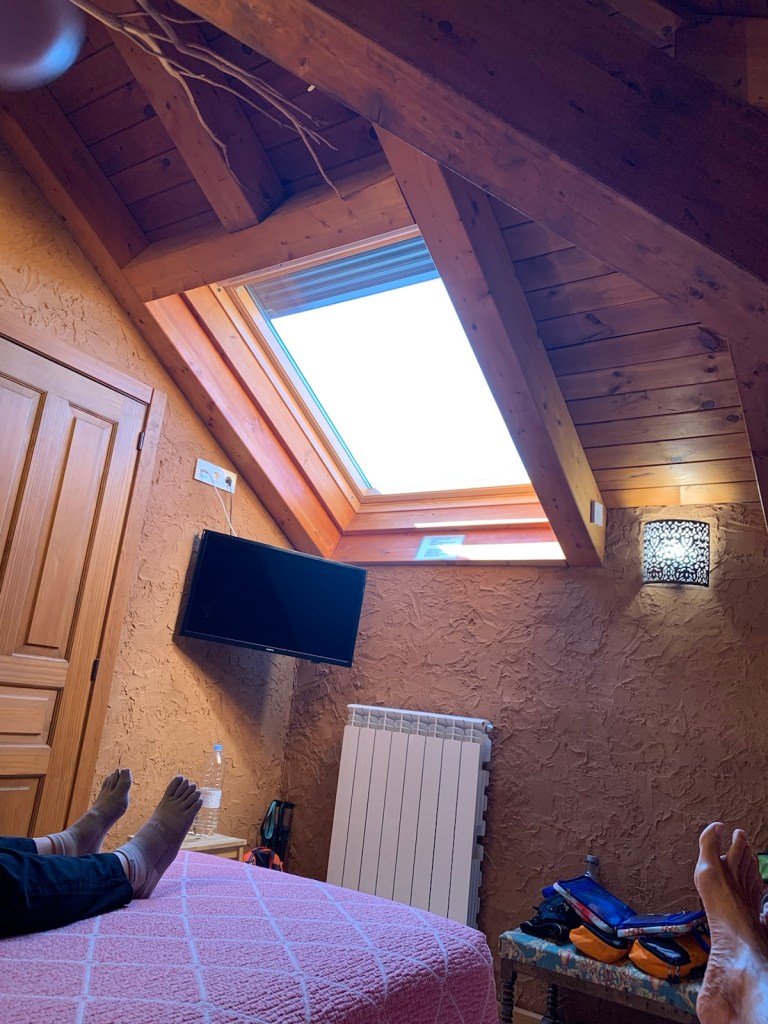
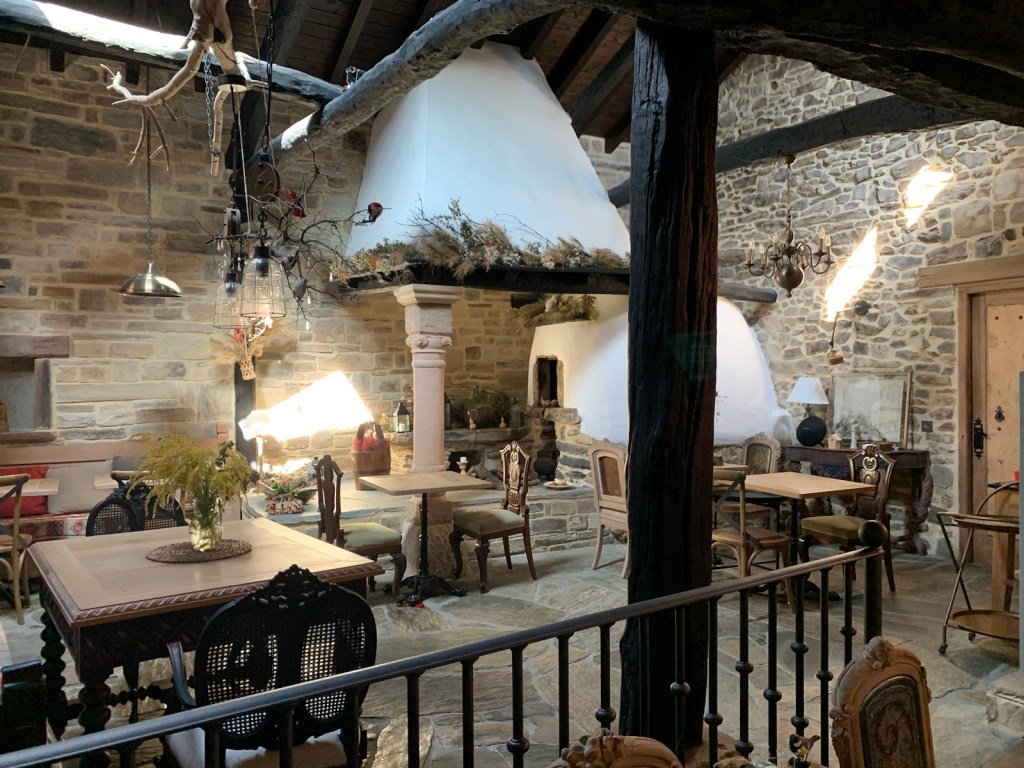
This was our first sighting of FoncebadónPencion Trasgu, our home for today and tonightBeautifully decorated and furnished for all our needsThis skylight kept our room naturally warm all day and into the nights, in spite of the cool air and prevailing wind which kept it chilly all day at this mile-.high location.
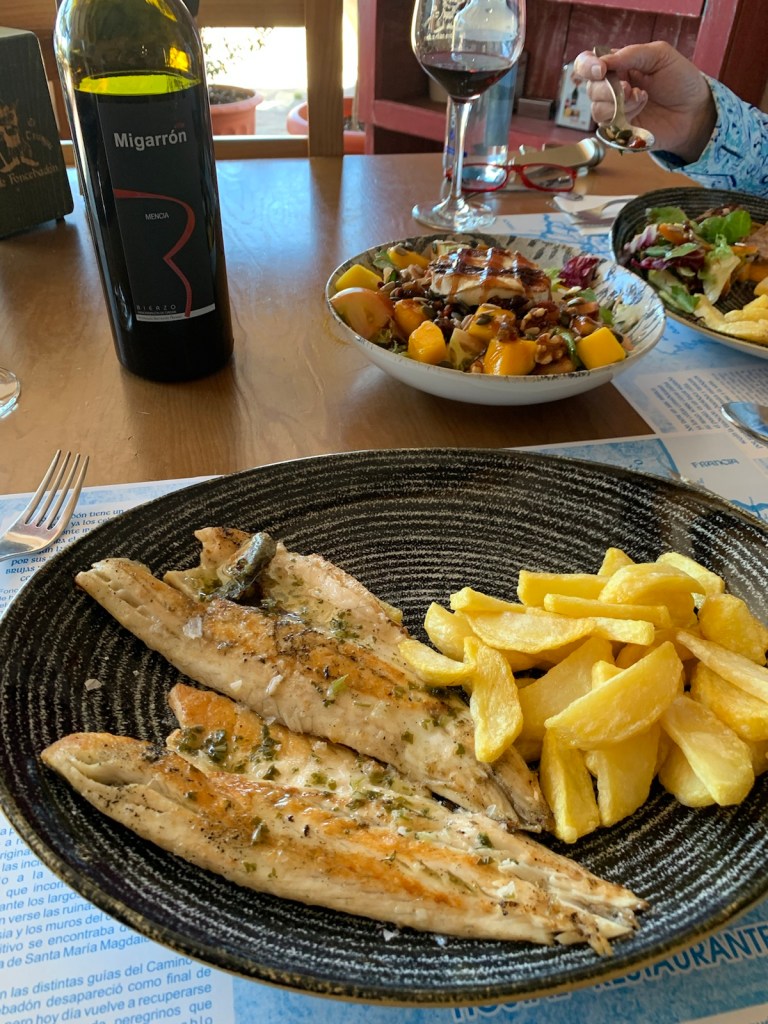
The food of El Trasgu’s Italian owner and chef comes highly recommended, so we gave it our test. It exceeded all of our expectations.
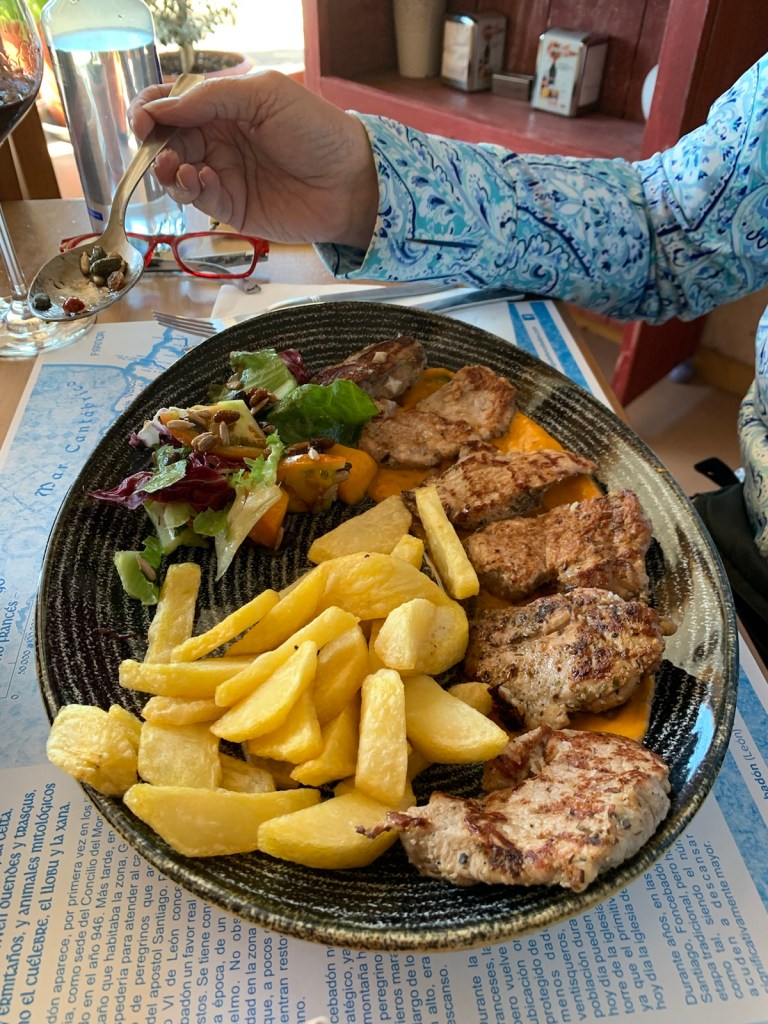
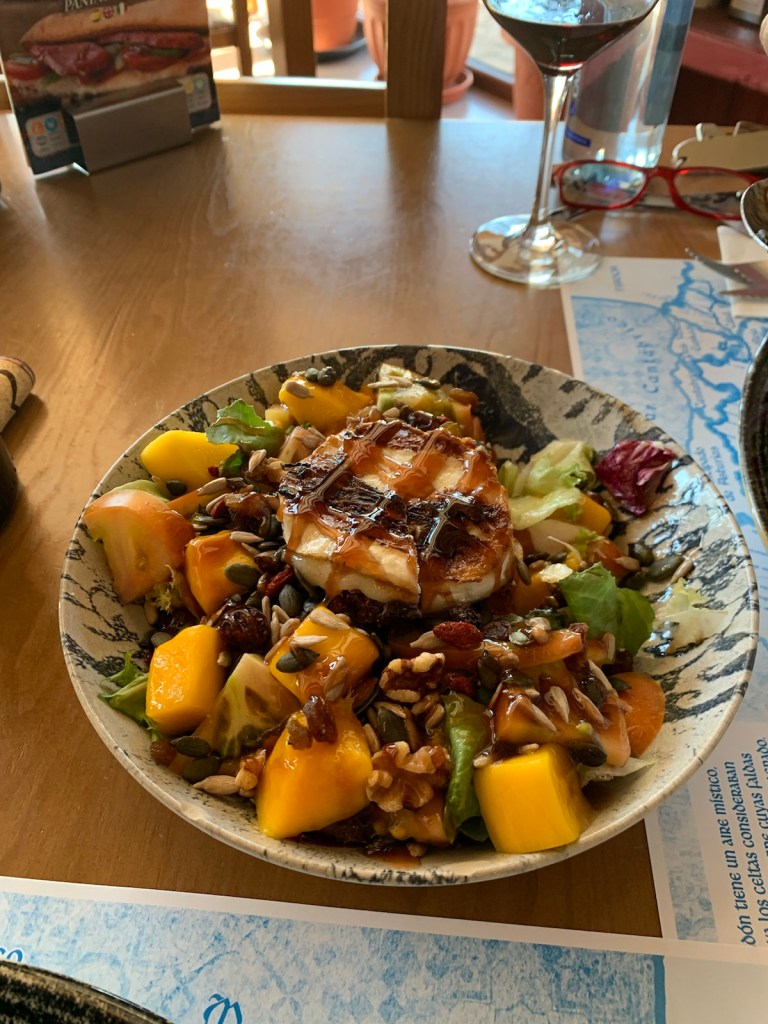
Sea bass for JimPork tenderloin medallions for LindaA unique salad which we shared: fresh greens, mango, tomatoes, walnuts, sunflower seeds, dressed with a sumptuous vinaigrette and topped with a toasted round of goat cheese.Our Bierzo wine was a very nice 2022 Mencia red. Last year in this region, we had a 2019 that paired well with Beef Cheek stew and ensalada rusa. Today the 2022 vintage paired well with sea bass, pork tenderloin medallions and a goat cheese salad.
Today was a really nice day. The walk was an uphill challenge but not too long to be overwhelming. We experienced a very nice accommodation in this hamlet of only 8 permanent residents. And it became an additional, notable culinary experience for us on the Camino Frances and especially, Camino 2024.
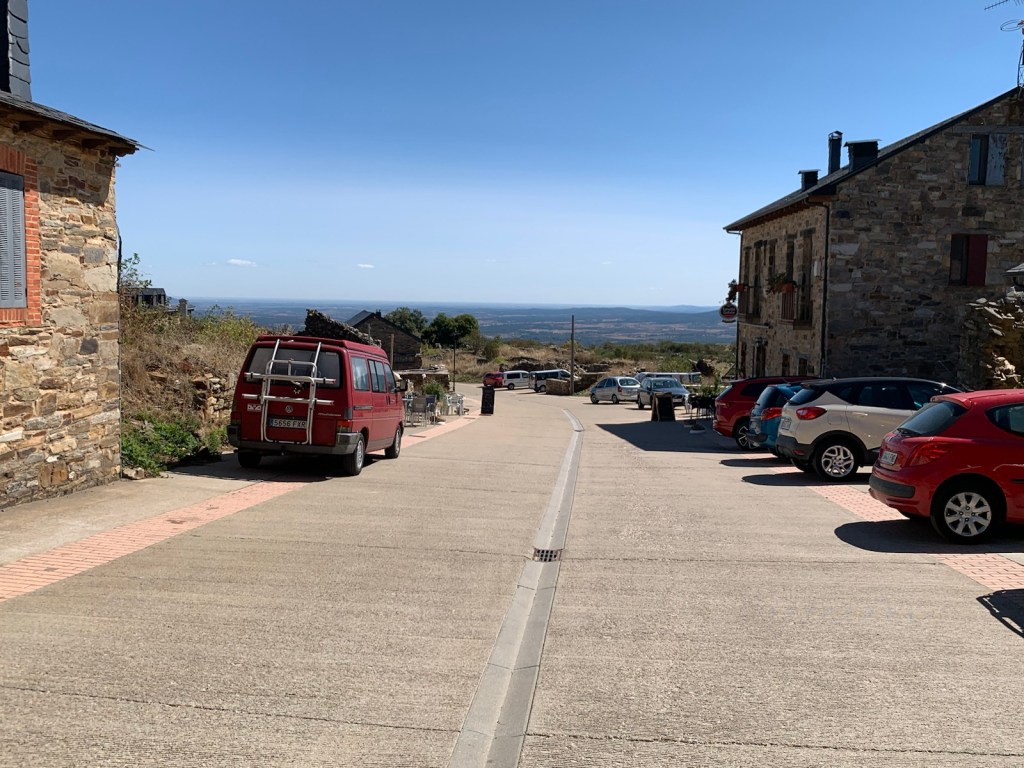
The view this afternoon from the recently paved street in front of Pencion El Trasgu looking back from the top of the Camino.
We opted to eat breakfast at Via Avis this morning. We normally walk first, then combine breakfast with a rest stop after putting a couple miles behind us.
Jim having cafe con leche and tostados, Via Avis style.Carlos, busy at work after preparing our breakfast
However, we were, after all, staying at a B&B and we had already paid for both of the “B’s” plus, we also wanted to wish Carlos a proper goodbye.
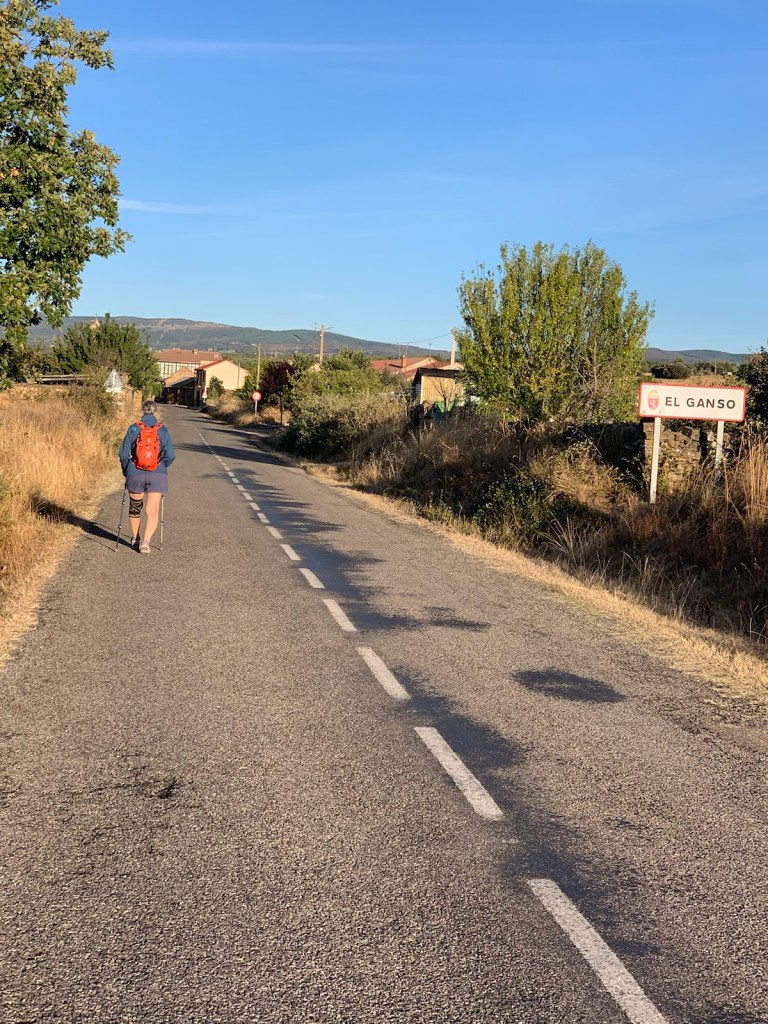
Leaving Santa Catalina after breakfastWe began the walk on a very straight dirt path.We continued on the path for about 2.5 miles to Ganzo.Ganzo just ahead,
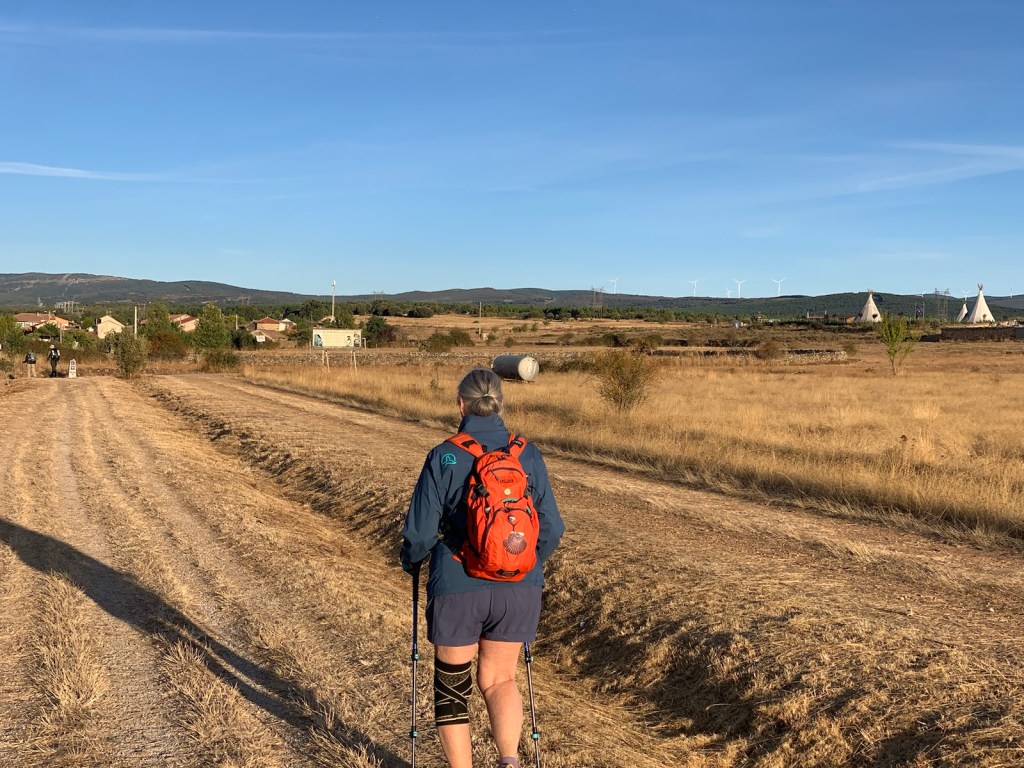
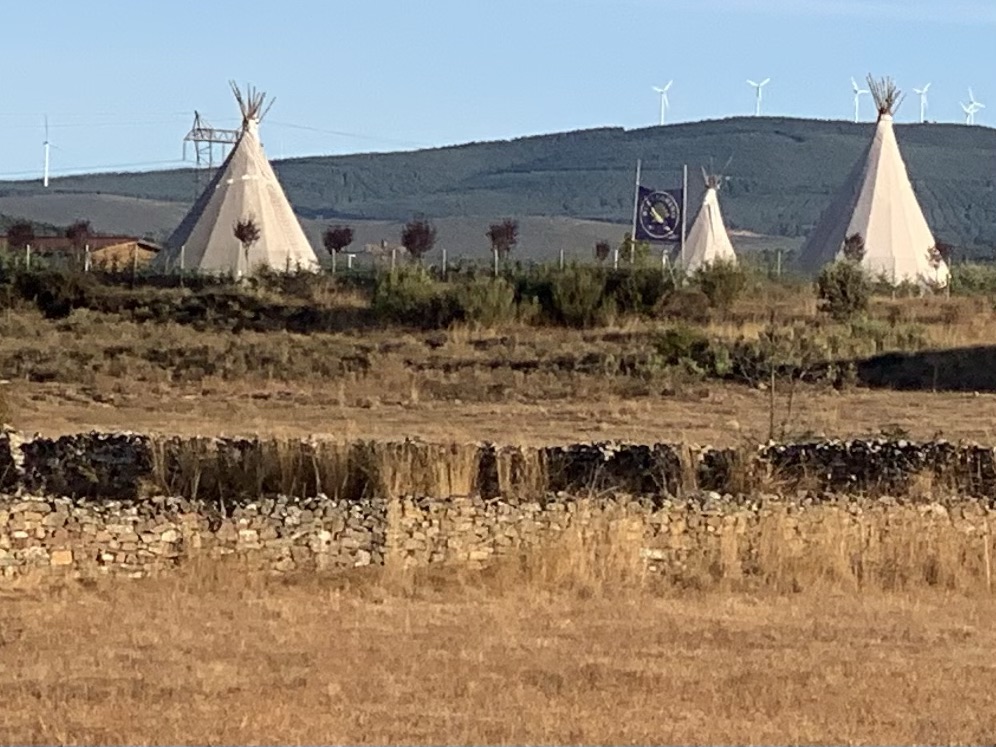
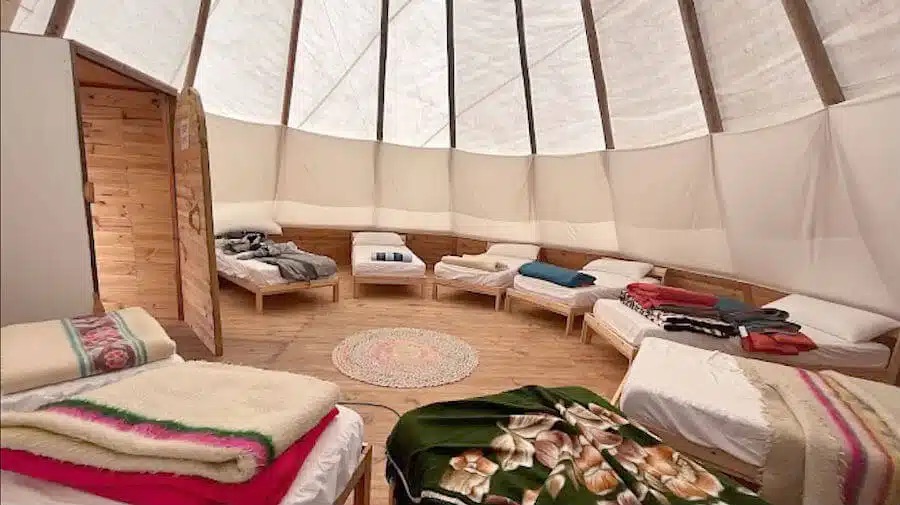
Just before Ganzo is an unusual albergue called The American Indian Way. We’ve only seen it from a distance as we walked by in the past but Jim found a photo of the accommodations on the albergue’s website.
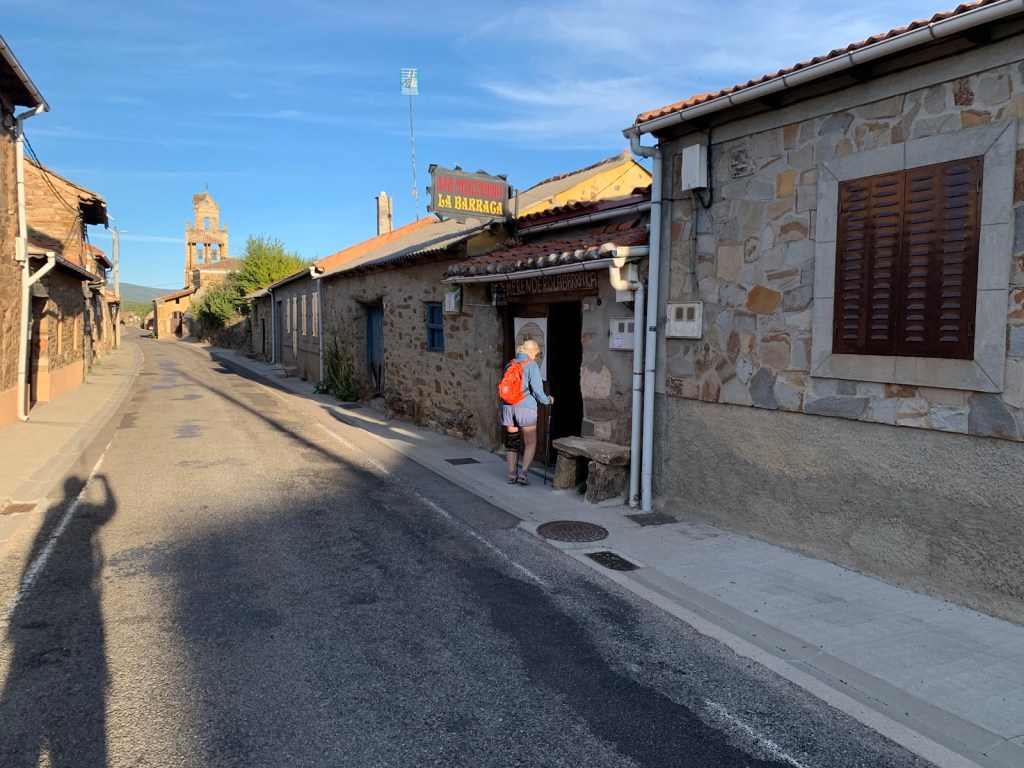
iphone zoom photo of Indian WayWhat’s inside the Teepee’sWalking into Ganzo (pop. 30)We stopped at a popular bar in Ganzo for a rest stop and Colacao.The interior of Merendero la BarragaWe rejoined the dirt path after GanzoThe path went on….… and on …… and on.We finally could see the church steeple in Rabanal del Camino, still several miles in the distance. The village in the top left corner is our destination for tomorrow, Foncebadon.
With a mile and a half to go, we decided to take the road. Both routes were quite steep, but the dirt path had a more difficult walking surface.
After a steep half-mile we enjoyed this downhill section as we approached Rabanal. A favorite rest stop for us, just before RabanalAgua for Linda, cervesa for Jim after a seven mile walk.
The main street in Rabanal (pop. 73) is steep from beginning to end. There are several types of places to stay: albergues, hostels, and even tents along the main street through the village … and several eateries.
This “albergue” offers a tent instead of a bed.Passing the Iglesia Santa María de la Asunciónanother look at the Iglesia Santa María de la Asuncióninterior of Iglesia Santa María de la Asunción
On the way to our hostal, which was the last accommodation before leaving the village, we scanned menus on the few eateries available and their hours. We arrived at our hostal at noon and were able to checkin immediately.
Our home for the afternoon and evening
We took a few minutes to recover from the walk and then discovered we have a terrace off of our room… it had the ambiance of a barber shop.
Our terrace and potentially on-site barber shop
Before getting on with our chores, we decided to get lunch/dinner. By coincidence, our hostal dining room had the best menu and timing, so we walked downstairs and had the menu of the day.
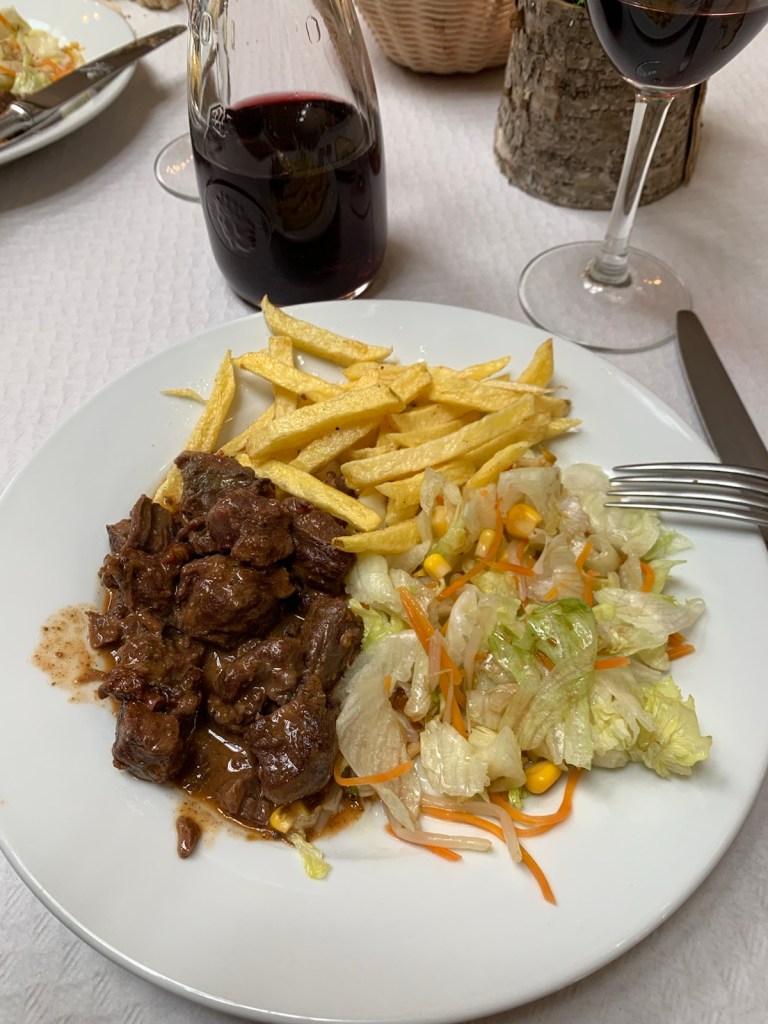
First course: Linda: Rissoto with mushrooms , Jim: Melon (Honeydew) GaspachoSecond course: Pork cheeks for both
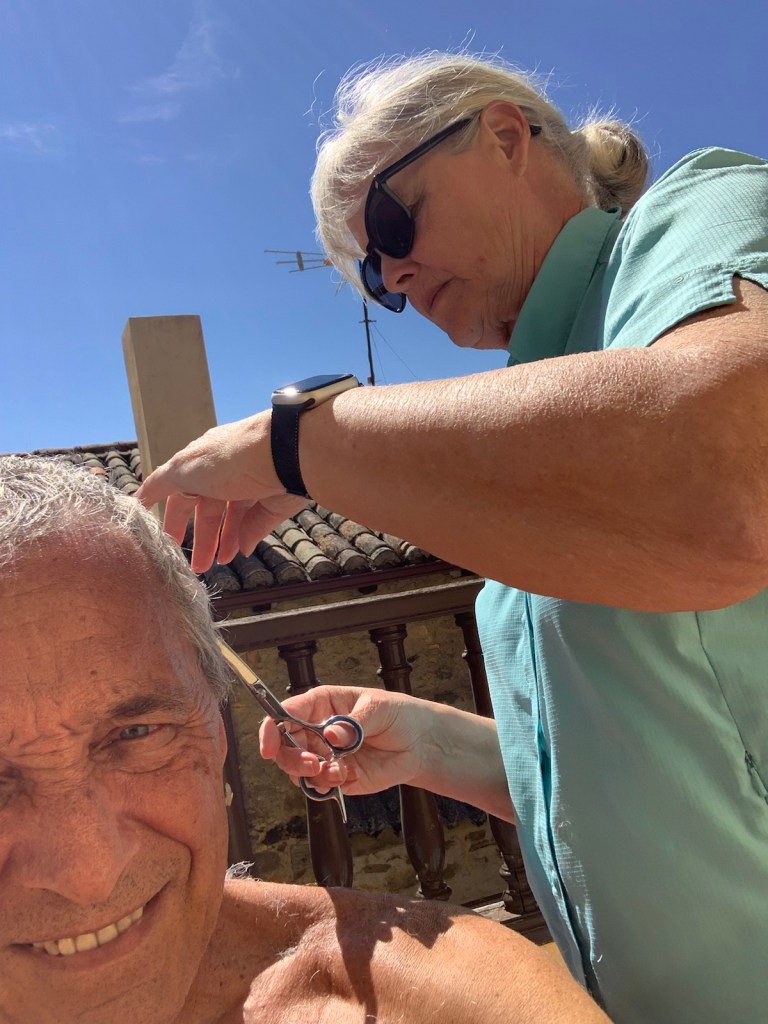
After our meal we returned to our room to embark on the afternoon’s duties. The barber shop was open and the barber was in.
Linda doing her thing to help Jim become less scruffy.
Our afternoon routines, napping, blogging and reading consumed the rest of the day.
We’re looking forward to the next two days as they will be different from our last several Caminos that passed through this area.
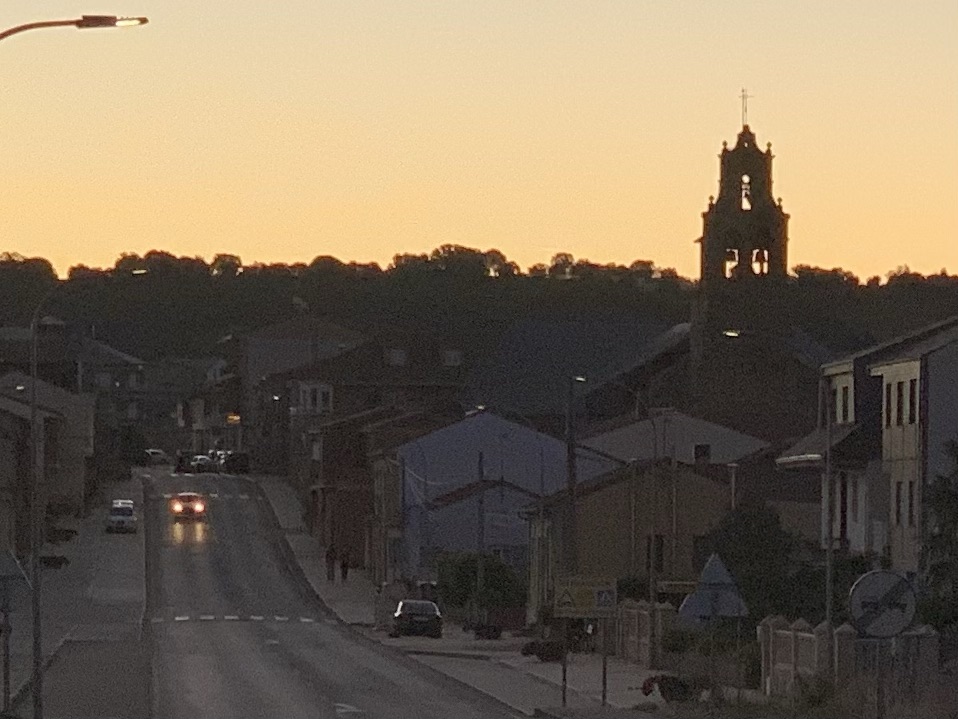
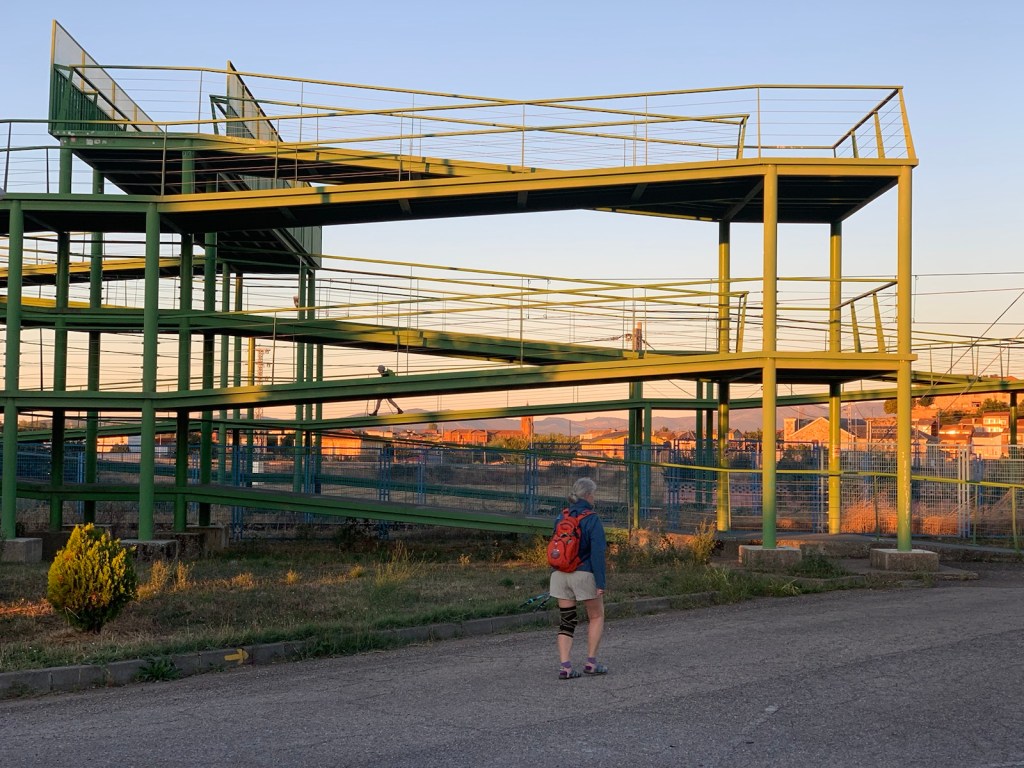
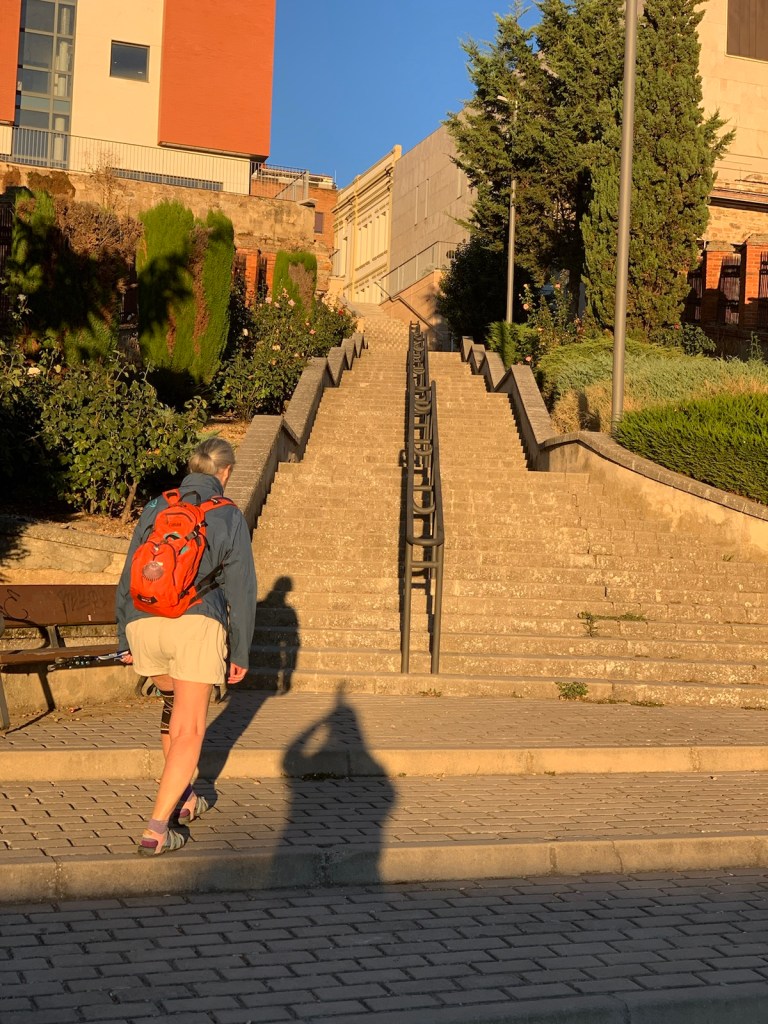
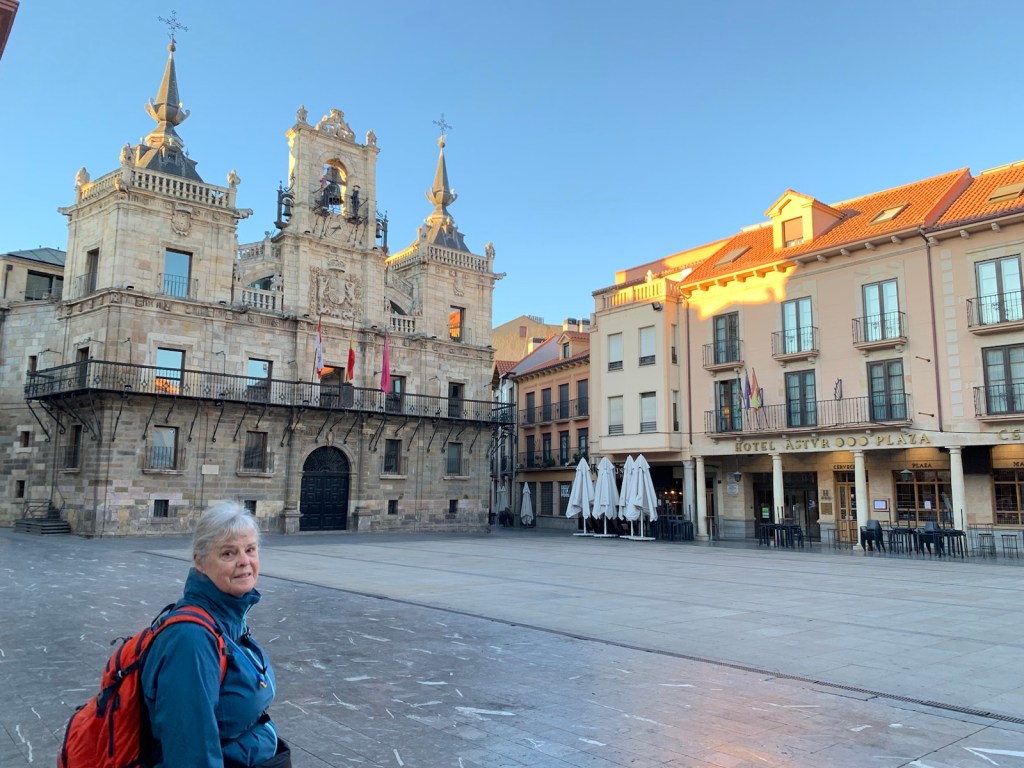
Leaving San Justa this morning at daybreak.An interesting church in San Justa, mixing the old with the new.Nice silhouette of Iglesia de San Justa against first light.Elaborate footbridge over the train tracks into Astorga.Astorga is situated on a hill, so you need to climb the hill to get to it… we took the steps instead of the road into the city.The steps emptied into this nice plaza with city hall on the left and Hostal Astur on the right. We’ve stayed in the Astur twice on previous Caminos.We stopped for breakfast and a rest on the plaza after our initial 2+ mile walk.
Astorga is a pleasant city with interesting and varied historical buildings, just the right size to not be too overwhelming with main sites confined to the small Old City. First a Celtic settlement, Astorga developed into an important Roman city at the crossroads of the Via Trajana and the Vía de la Plata, as well as an important center for Christianity. According to legend, both St. James and St. Paul preached here. The bishopric of Astorga was one of the earliest Christian titles. The city passed to the Visigoths in the 5th century and was destroyed by the Muslims in 714, then reconquered by Ordoño I in the mid-9th century. After León was destroyed by Al-Mansur’s army, Astorga acted as the capital of the kingdom. The city flourished with the pilgrim trade and housed 21 pilgrim hospitals, the second most on the Camino Francés (after Burgos). One of these hosted Saint Francis of Assisi on his pilgrimage in 1214.
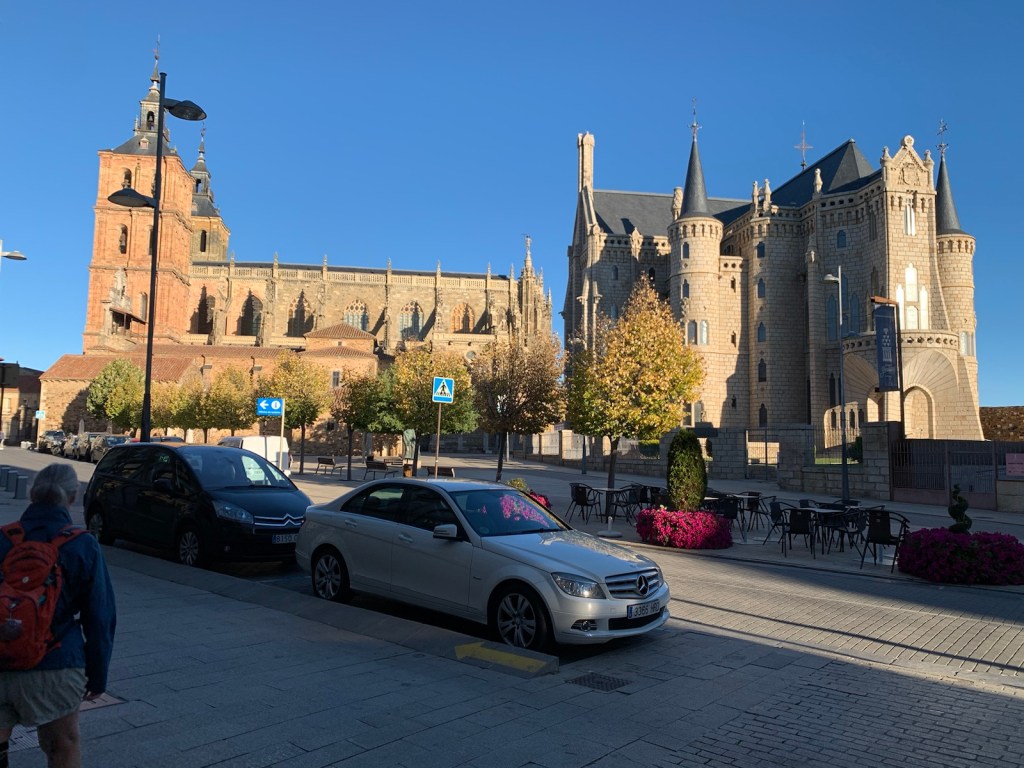
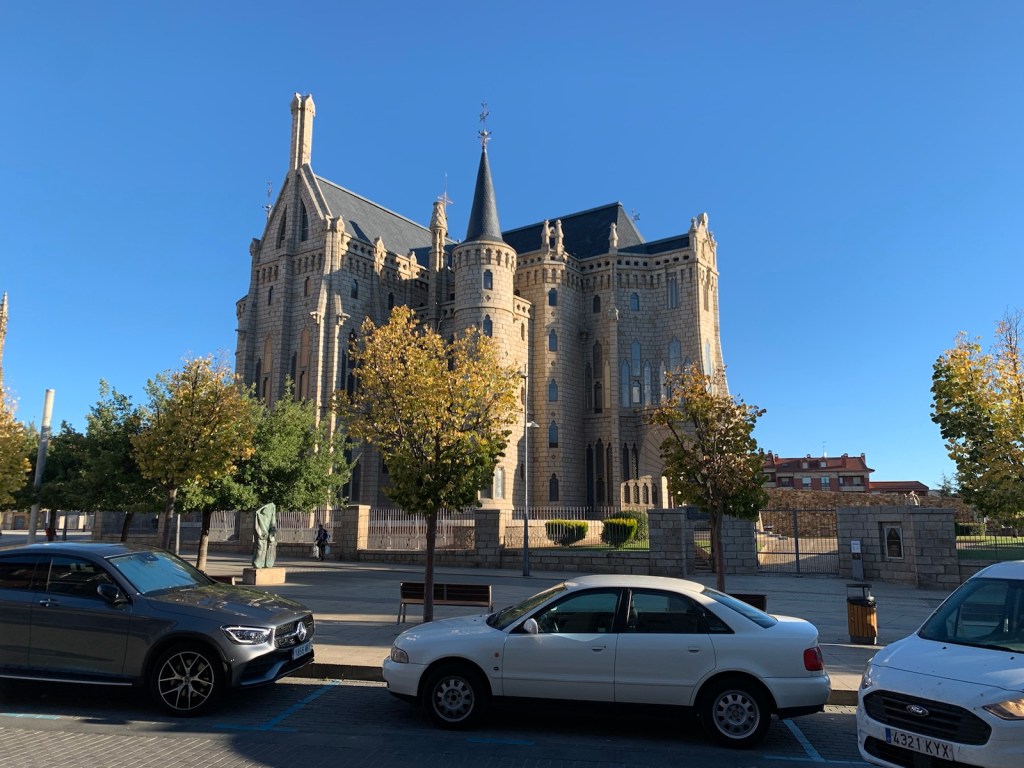
On our way through Astorga we walked past the Gaudi Palace and the CatedralGaudi Palace
The Palacio de Gaudí, was a palace for Archbishop Juan Bautista Grau Villespinós until his death, when it sat empty until serving as a military headquarters for the Falange movement. In 1963, it housed the Museo de los Caminos with an impressive collection of religious art associated with the Camino.
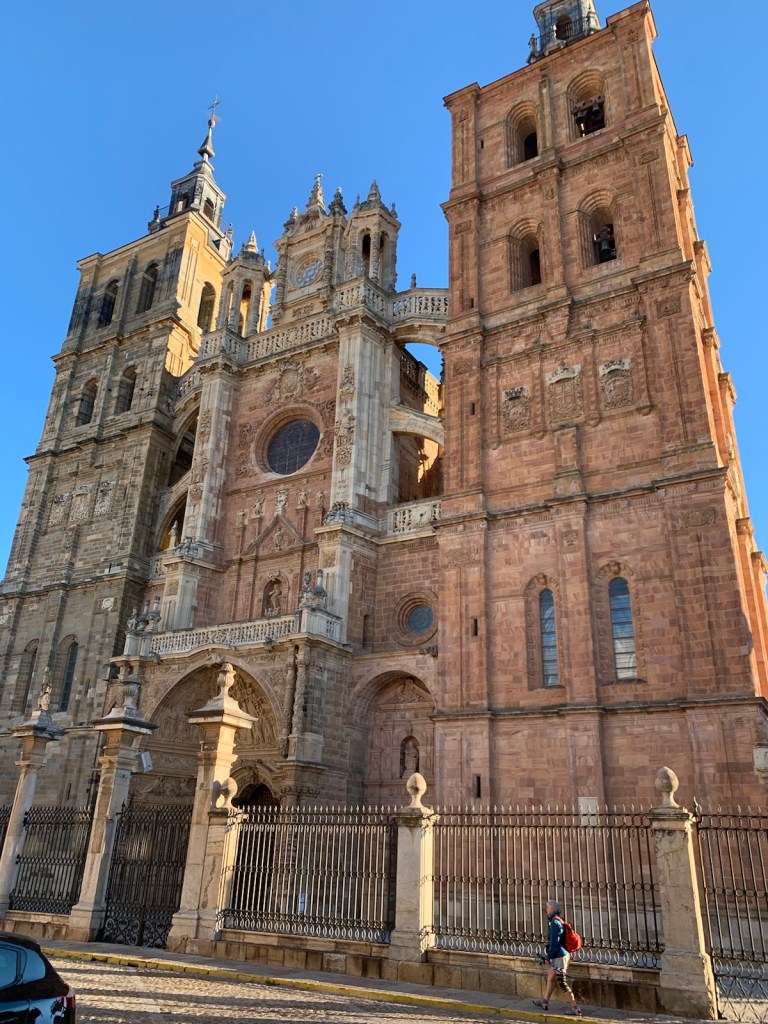
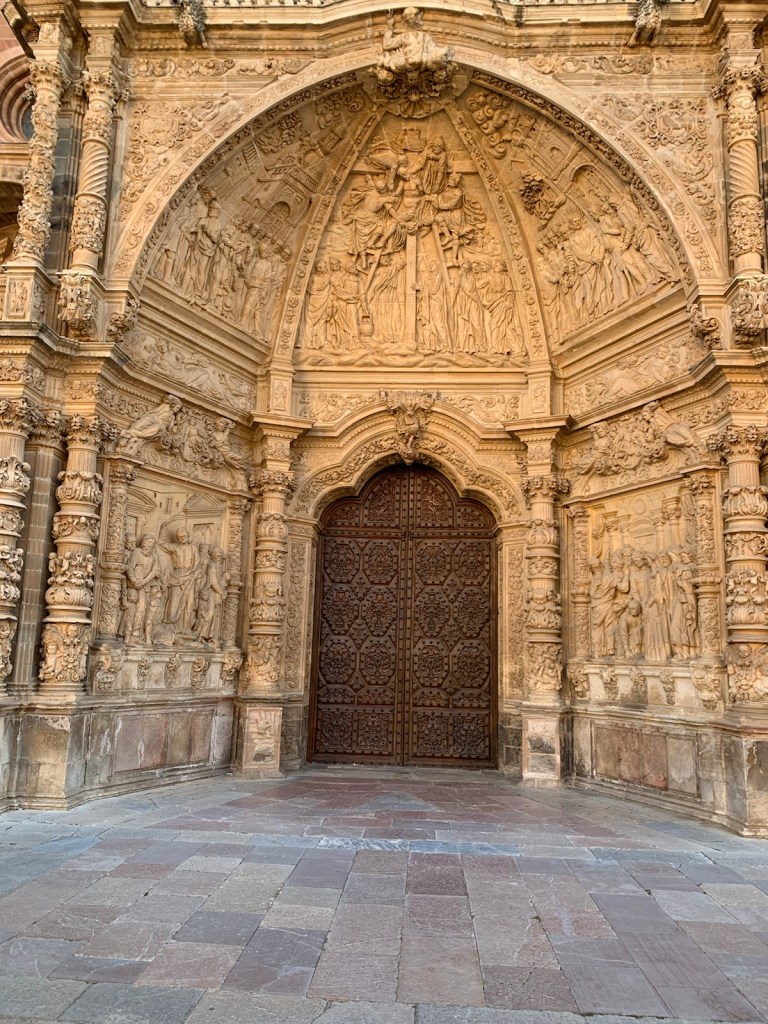
The imposing 15th Century Santa María Cathedral of Astorgathe front door of the Catedral
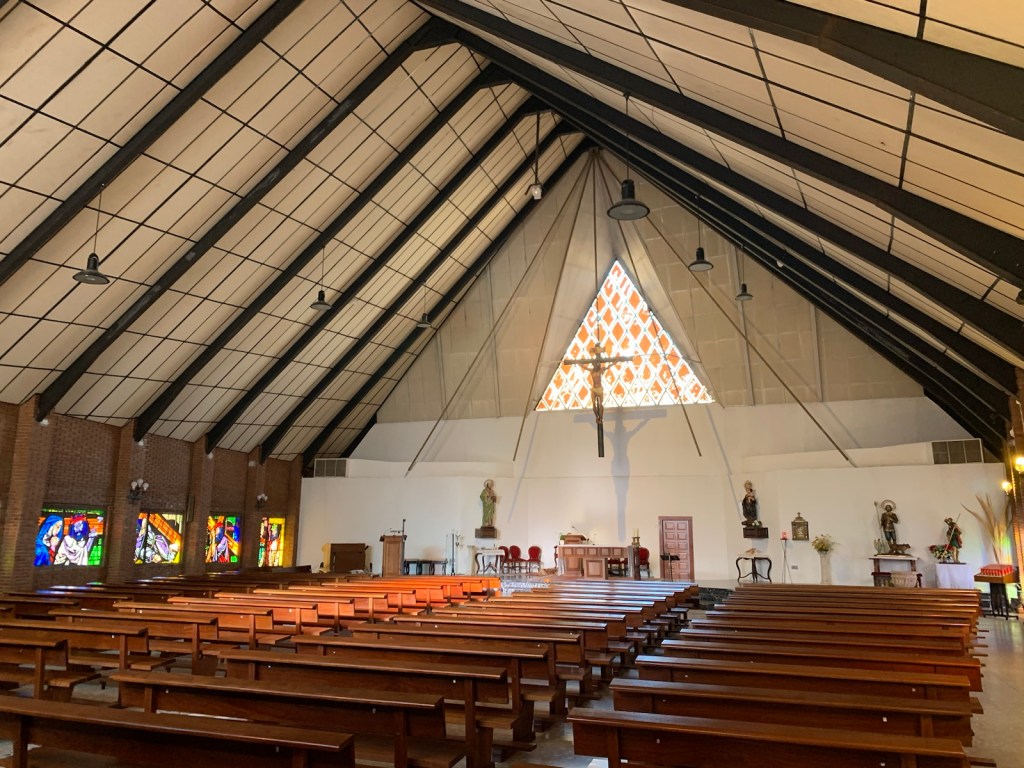
Just before leaving the city we passed another small church covered with Camino and other religious mosaics. We couldn’t find the name of the church anywhere on the site or elsewhere. The interior included a large number of colorful stained glass windows and an otherwise subdued sanctuary design. It reminded us of the Helsinki Rock Church in Finland.
Church exterior with unusual mosaicsChurch Intetior
We walked out of Astorga on a sidewalk that continued for half a mile or so, crossed an expressway then continued on a dirt path to the Maragato village of Murias de Rechivaldo where we stopped at a popular bar (“Cris”) for a Colacao.
leaving Astorgaleaving the dirt path and entering Murias de Rechivaldoapproaching “Bar Cris” in Murias de Rechivaldo time for a Colacao break
We continued our walk on to Santa Catalina along a straight, dirt path for the next 2.5 miles on a gradual uphill grade, working our way into the Cantabrian Mountains.
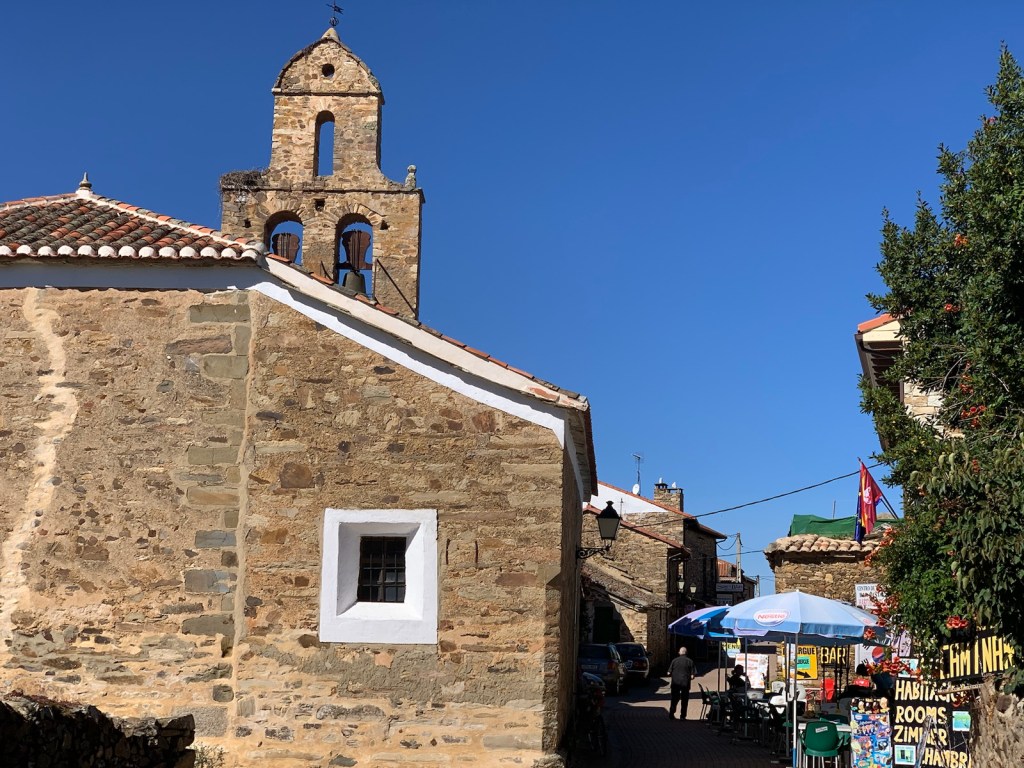
leaving for the path to Santa Catalinathe path to Santa Catalinathe path to Santa Catalina, a mile laterjust outside Santa Catalina de Somozathe new walkway into Santa CatalinaIglesia de Santa María and the main street of Santa Catalina
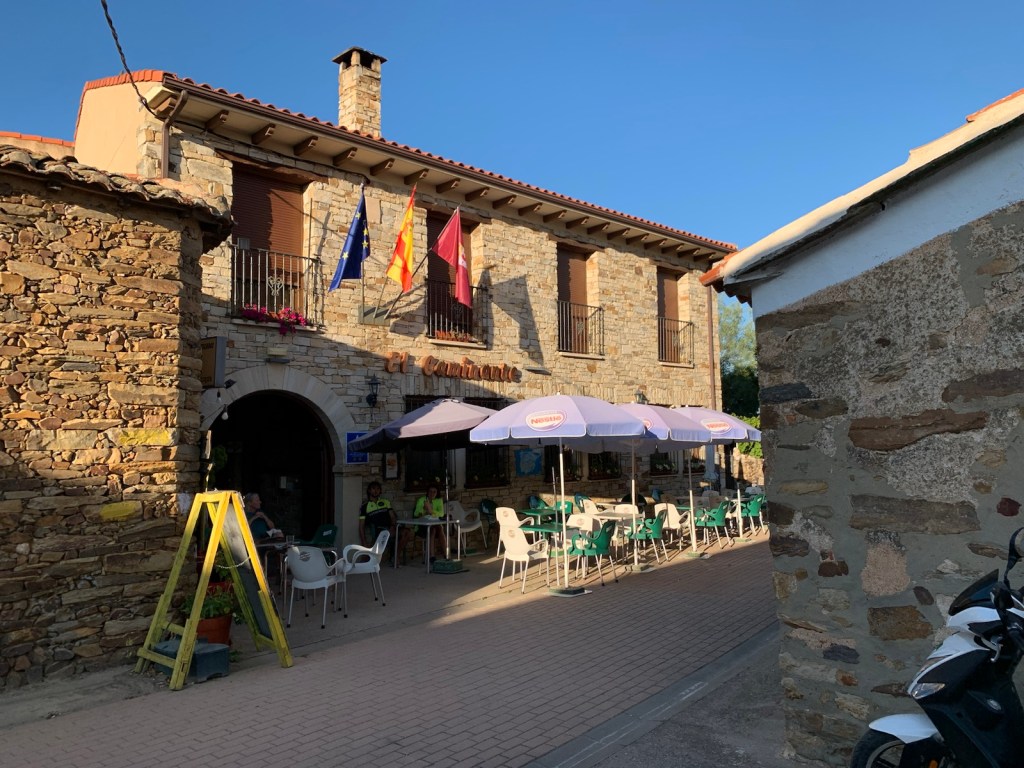
We arrived in Santa Catalina de Somoza (pop.60) before check in time, so we stopped for a seat and refreshment at the first of two bars, El Caminante, in the village.
We’ve stayed in Santa Catalina in all 6 of our Caminos.
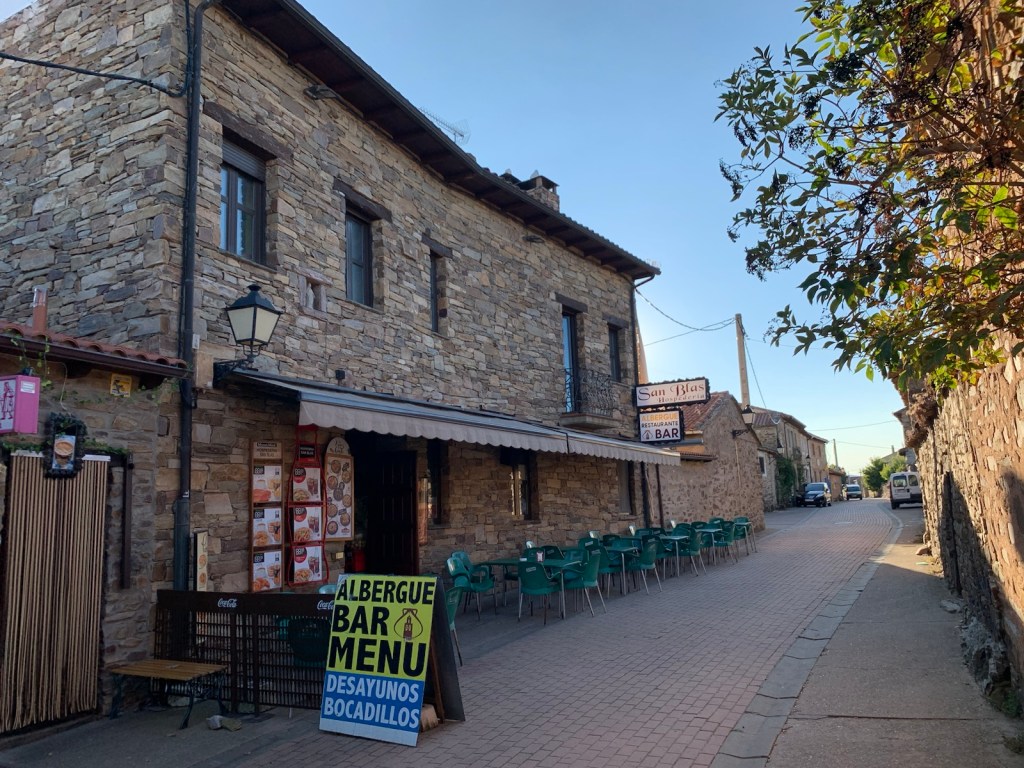
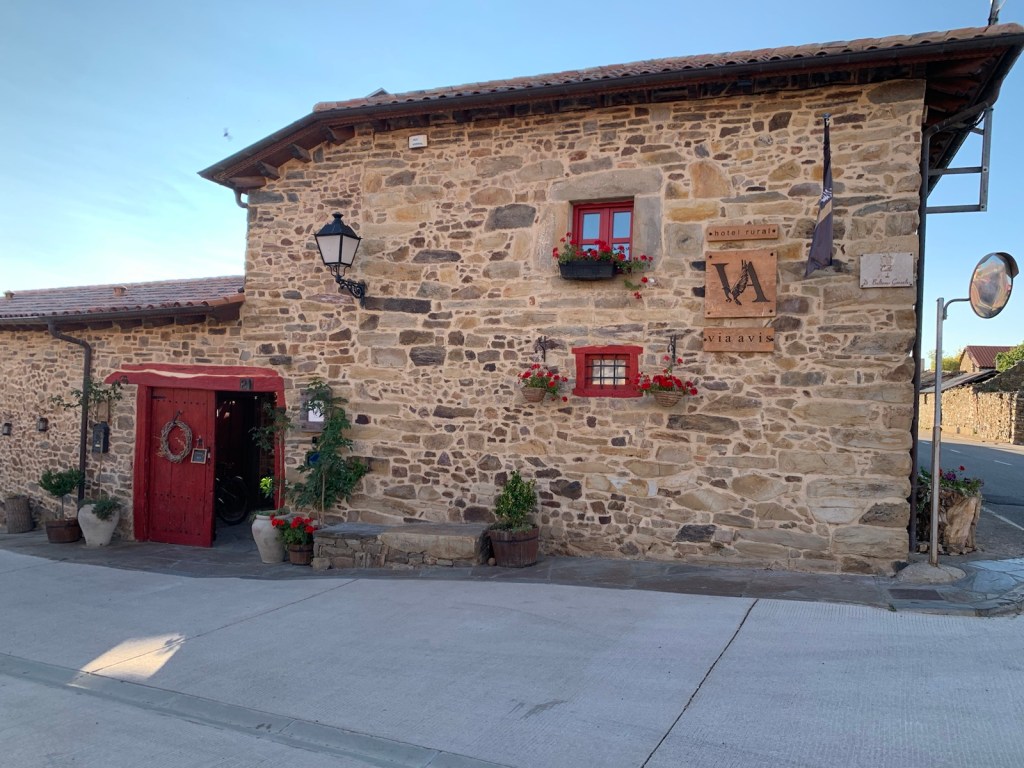
El Caminante – stayed here 2017 & 2019San Blas – stayed here in 2015 & 2022Casa Rural Via Avis – stayed here 2023 & 2024
We checked in to Via Avis and were recognized and welcomed by Carlos the owner. Carlos is from Spain and his wife, Daina, from Lithuania, run Via Avis. They are a charming couple that we got to know during our visit last year.
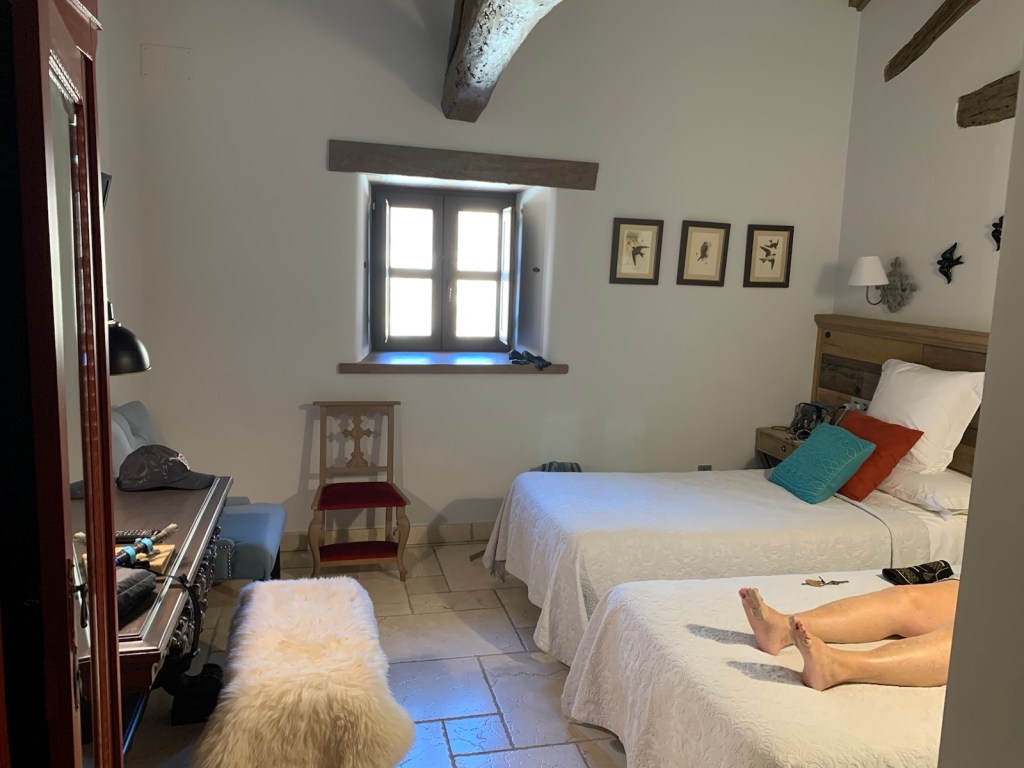
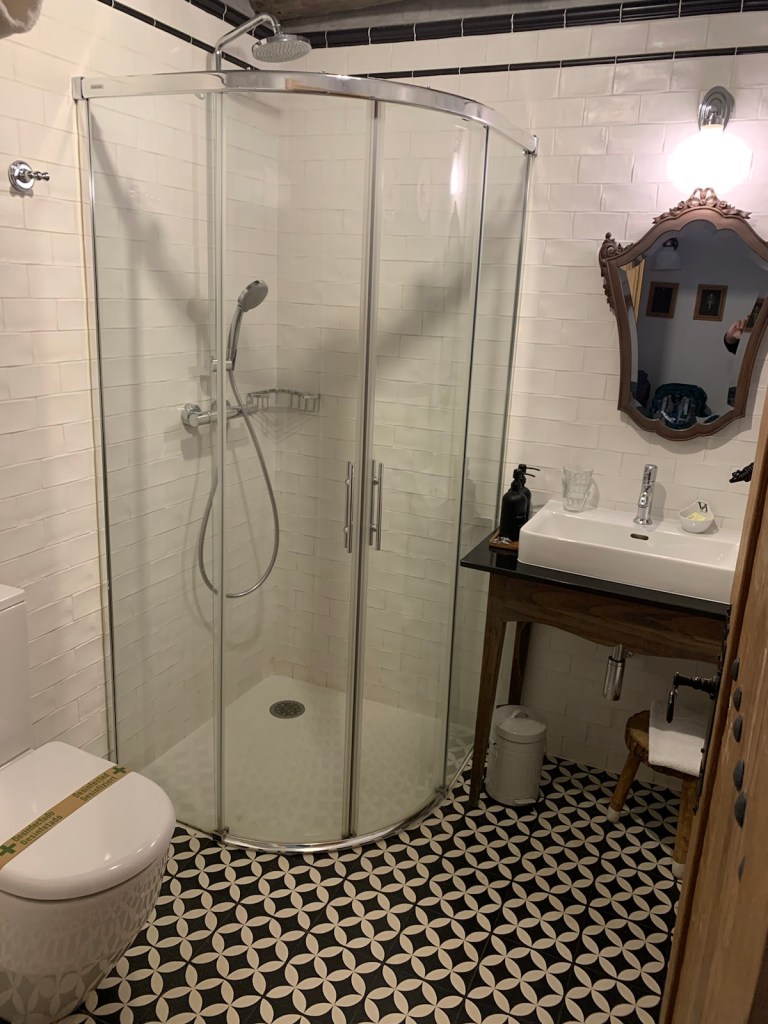
Courtyard of Via Avis, Reception is red door on right, our room is red door on the leftVia Avis Reception and breakfast dining areaVia Avis – our roomVia Avis – our bathroom
After getting settled, hand washing and hanging out clothes, we got lunch/dinner at San Blas, then retired to Via Avis for reading, blogging and napping.
We finished another long walk unscathed and are looking forward to another challenge as we climb higher into the Cantabrians.
The walk to the bus station only took 15 minutes, giving us plenty of time to get oriented by finding our “dársenas” (boarding dock), inspect the bus station restrooms and relax with a cafe con leche and croissant before boarding time.
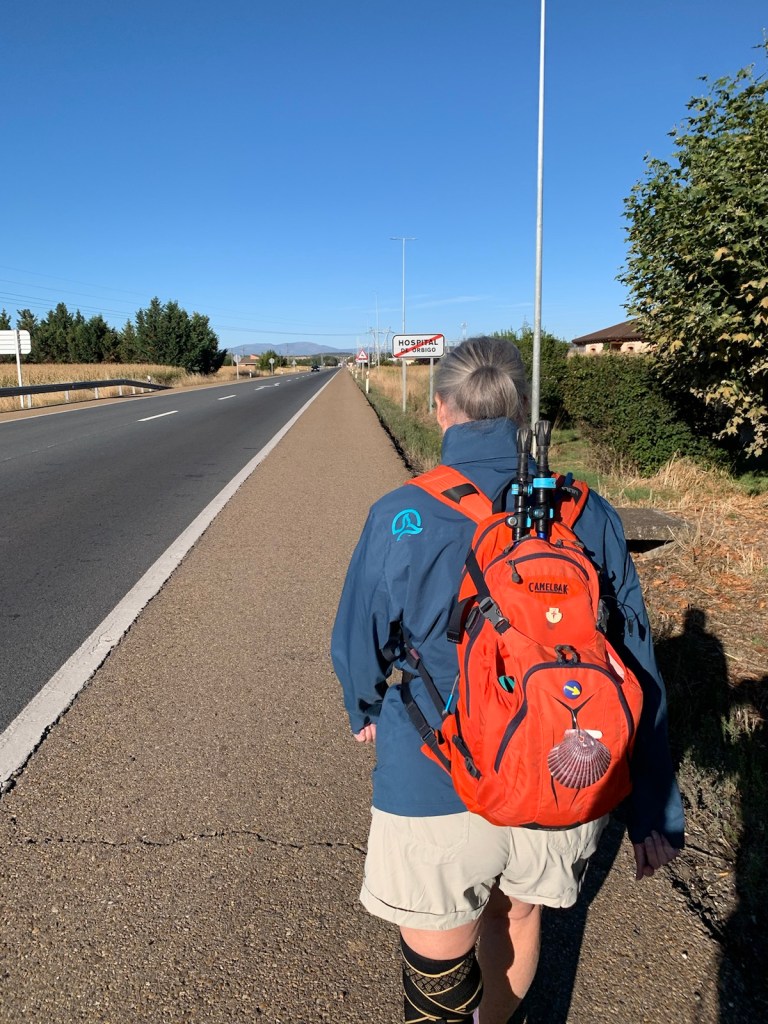
We boarded the ALSA bus at 9:00 and 39 minutes later, disembarked, collected our packs and began today’s walk at Hospital de Orbigo. Our one-way tickets were 3.70€ each.
Blogger’s note: Since our first couple of Caminos, we have used the bus to get us clear of the city and industrial areas that extend nearly 7 miles from Leon center to Virgin de Camino. The next 10 miles pass through uninteresting villages with limited services with the Camino path on or very close to a very busy secondary highway. In our opinion, Hospital de Órbigo is the first town of any significance related to the history and culture of the Camino that occurs after León.
If walking your first Camino, then walking the area we are skipping today is part of the Camino experience and we suggest you do it all, at least the first time.
For us, it has added little to our experience and actually detracts from it, after walking it a couple of times.
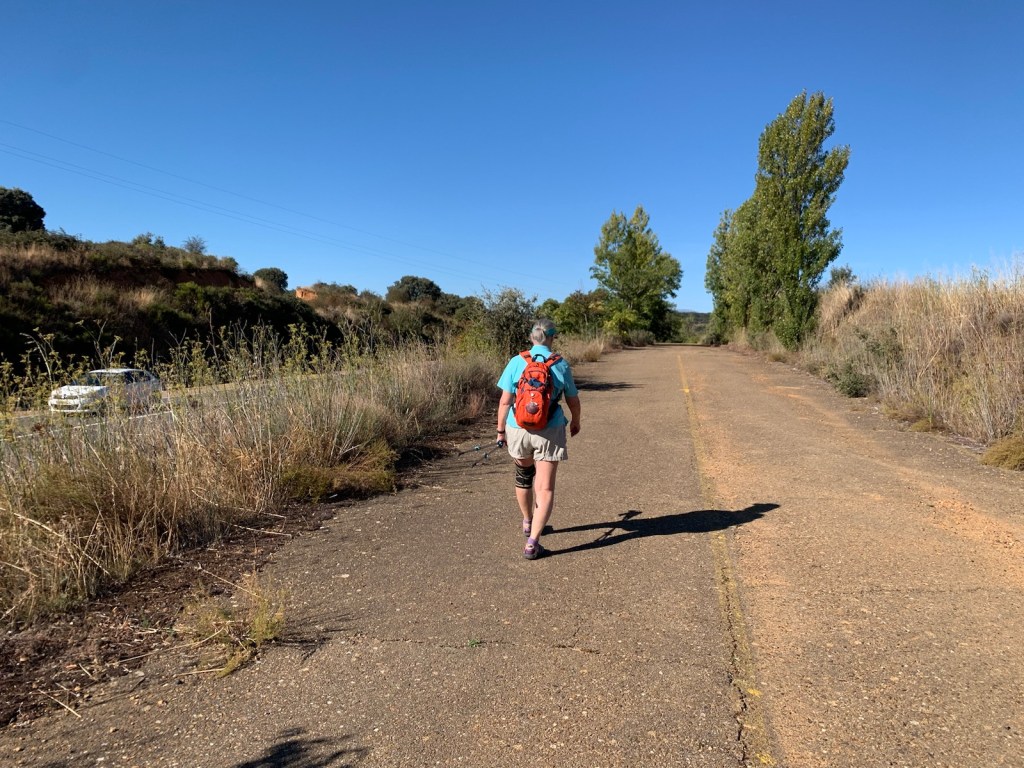
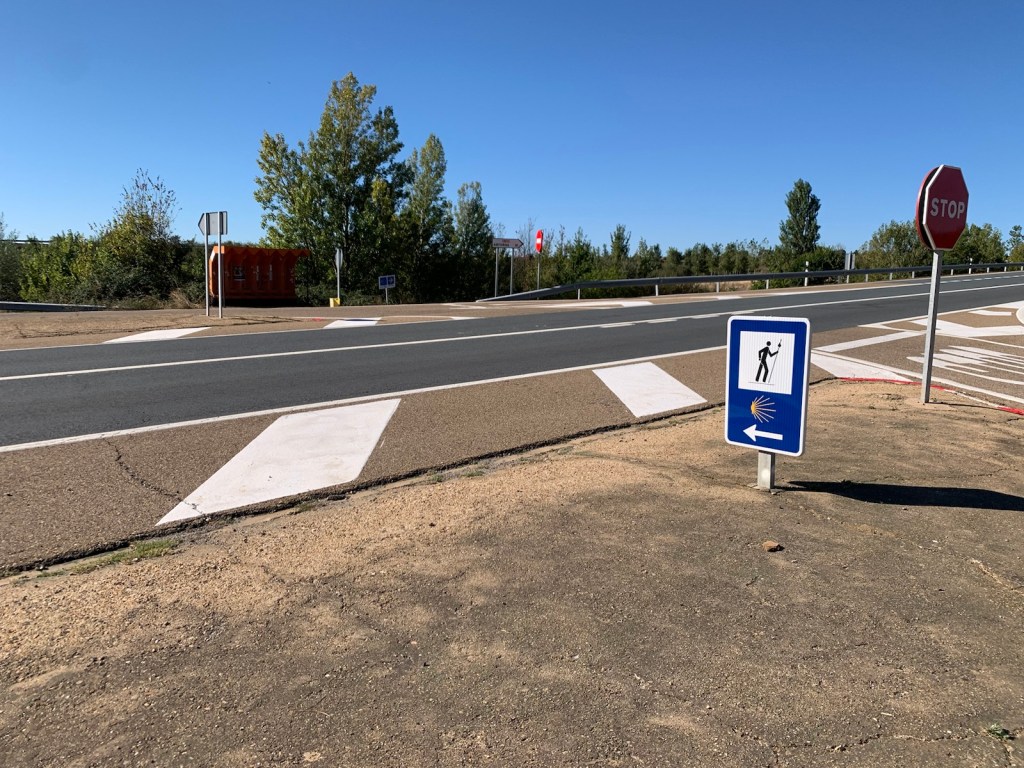
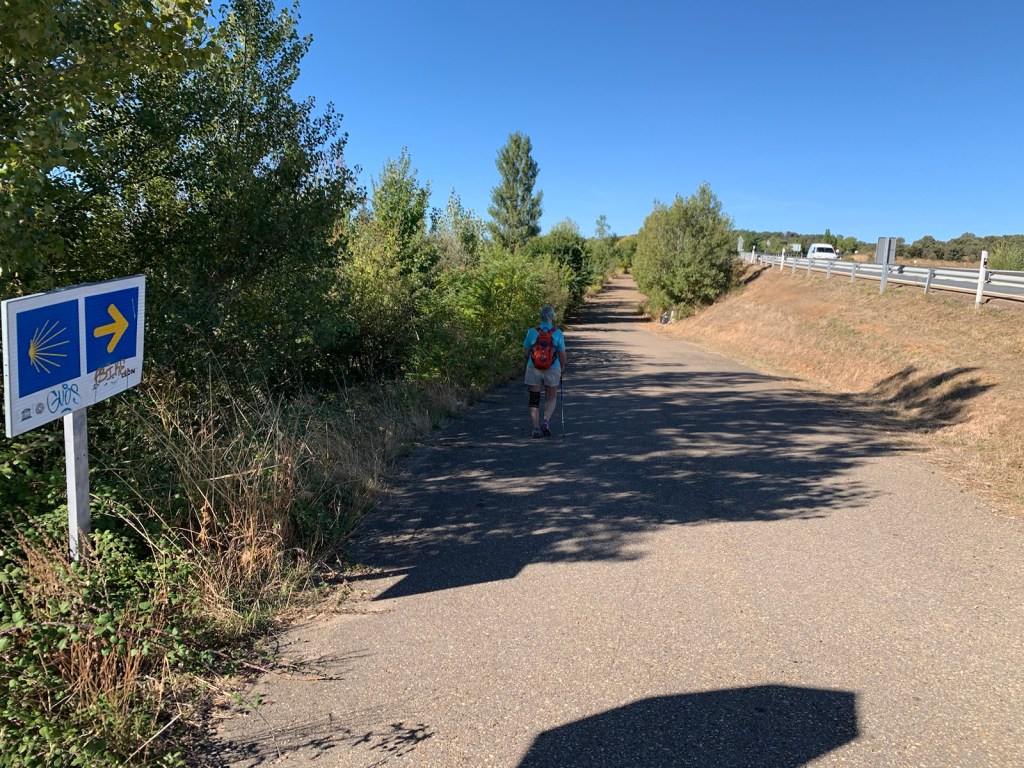
Today we chose to walk along N-120 to San Justa de la Vega. The official route is through the hilly countryside with no services for about 6 miles. The alternative route we are taking today is about the same distance but offers a rest stop at the half-way point that we prefer.
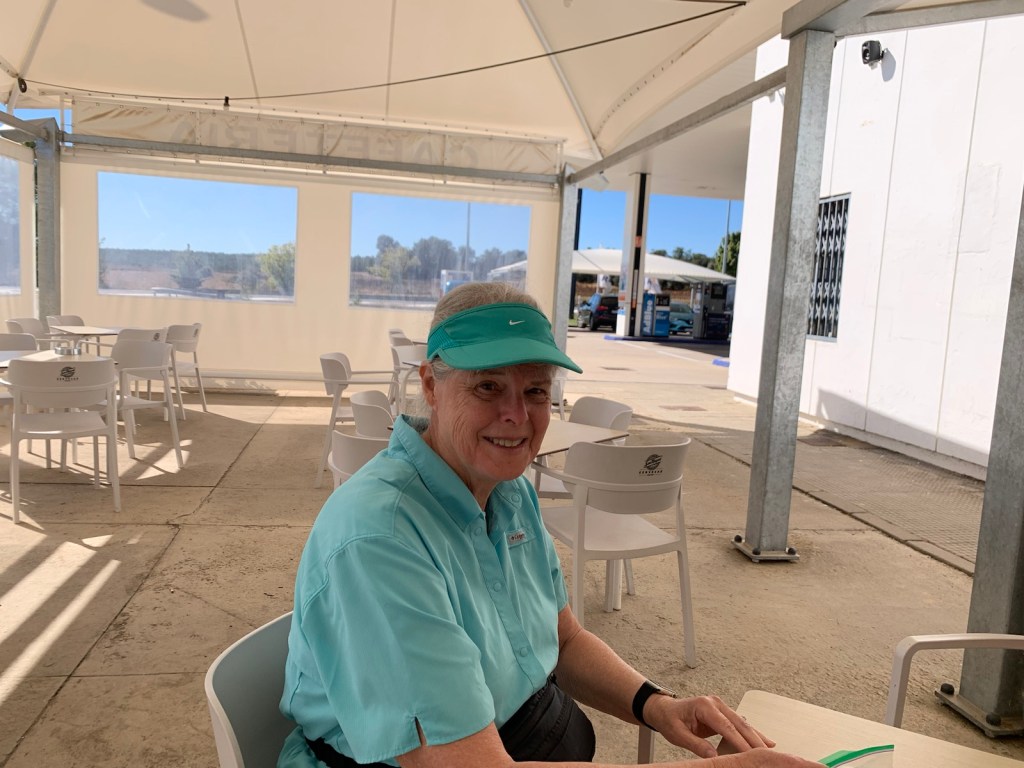
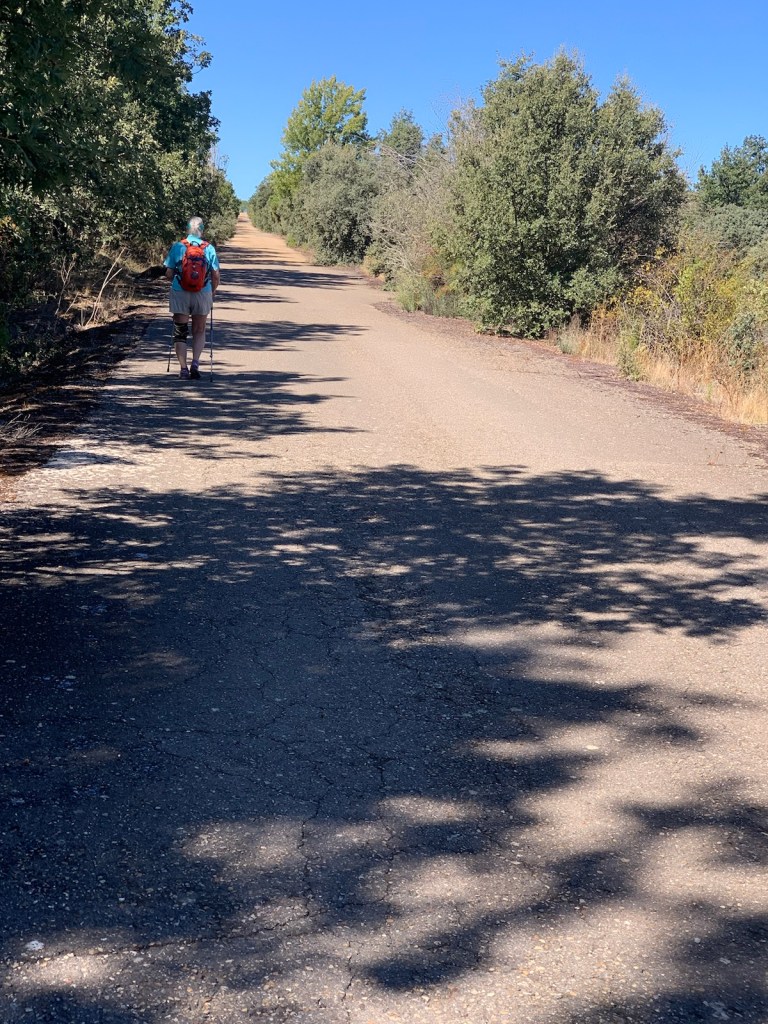
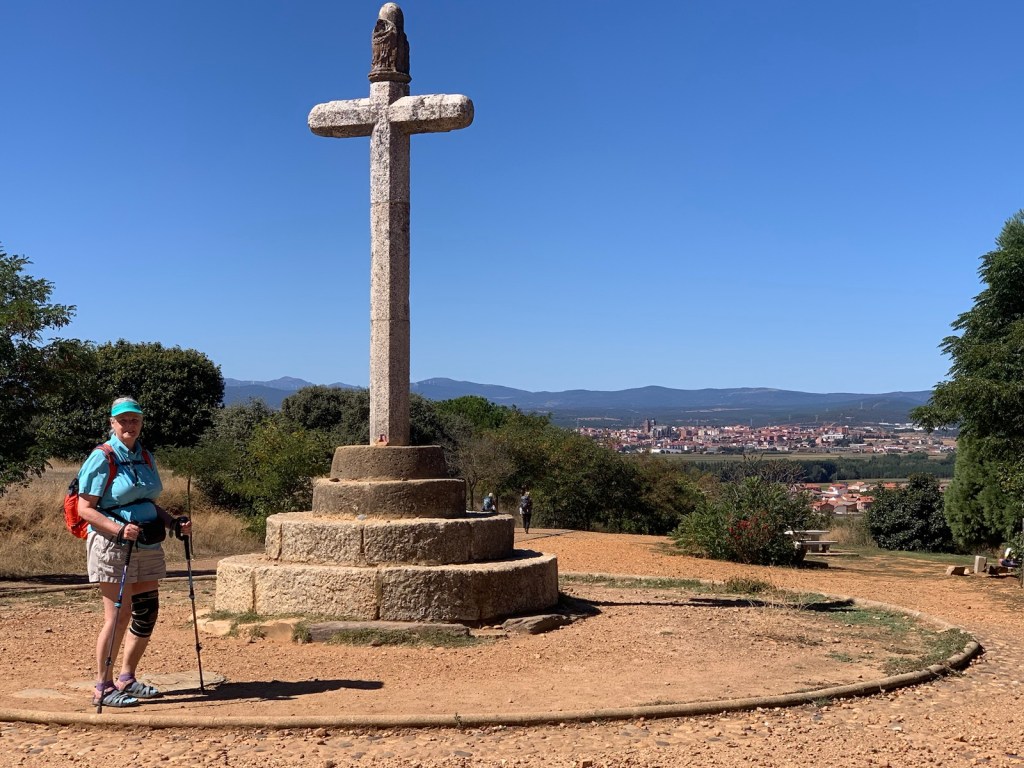
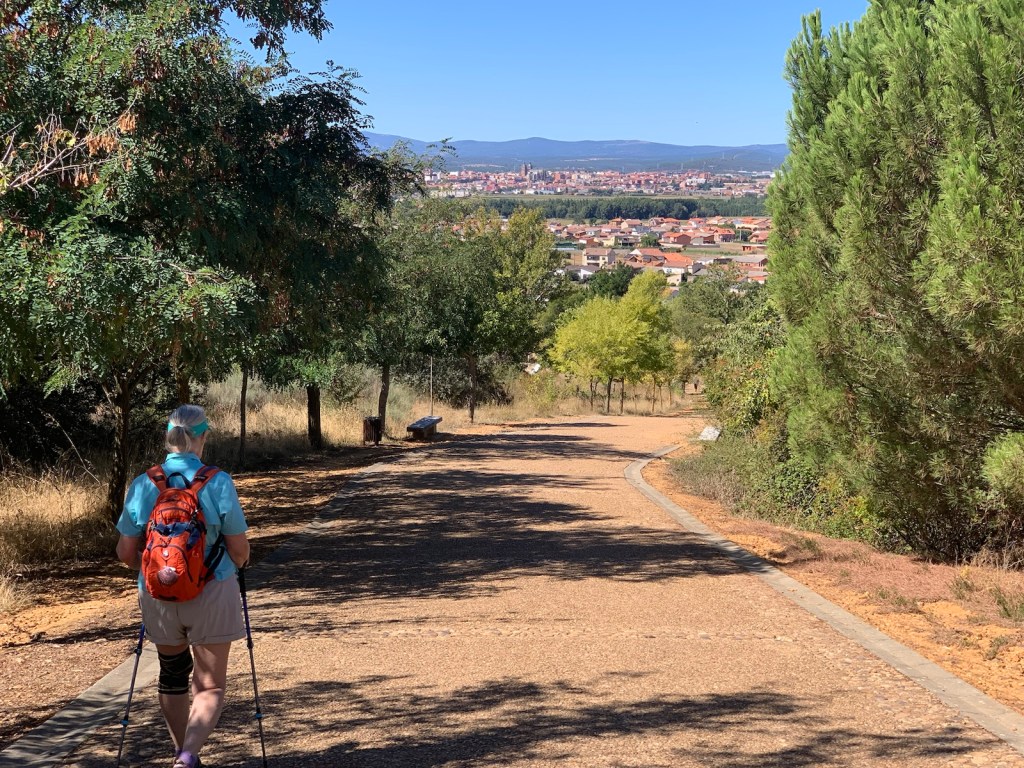
Just after the bus dropped us off and beginning the walk along N-120.Given the choice we chose the path for this mile long sectionThe path narrowed but is was still quite walkable.We walked along an abandoned section of the old highway, which felt safer.old road getting ready to run out Crossing over the other side of N-120 to the old highway, now running parallel but on the left side for roughly 2 miles.Here, we began walking on the left side of N-120After a little over 4 miles, we stopped at a service station for OJ, rest rooms and a welcomed off-our-feet break.continuing on after the service station breakThe Crucero de Santo Toribio over looking Astorga.Walking down along the cobbled path from the cross into San Justa de la Vega with Astorga a couple of miles in the background and the mountains.A hydrating pilgrim statue as we walked into San Justa. Linda gets her water from her hydration pack… avoiding “potable water” fountains for drinking.Our simple but comfortable room in Hostal Juli
Today was our first real test after struggling with the after effects of an intestinal bug Jim came down with on the 7th, then shared with Linda a couple of days later. While Jim’s system seemed to be stable after about a week, Linda was running a couple days behind Jim, seemingly due to her timing. She’s pretty much clear of the bug symptoms today.
After being able to manage today’s relatively long walk, we’re finally feeling like we are back to normal and can return to enjoying Camino 2024 even more.
Based on today’s performance, we also don’t believe we lost the conditioning we had built on Camino2024 prior to getting sick.





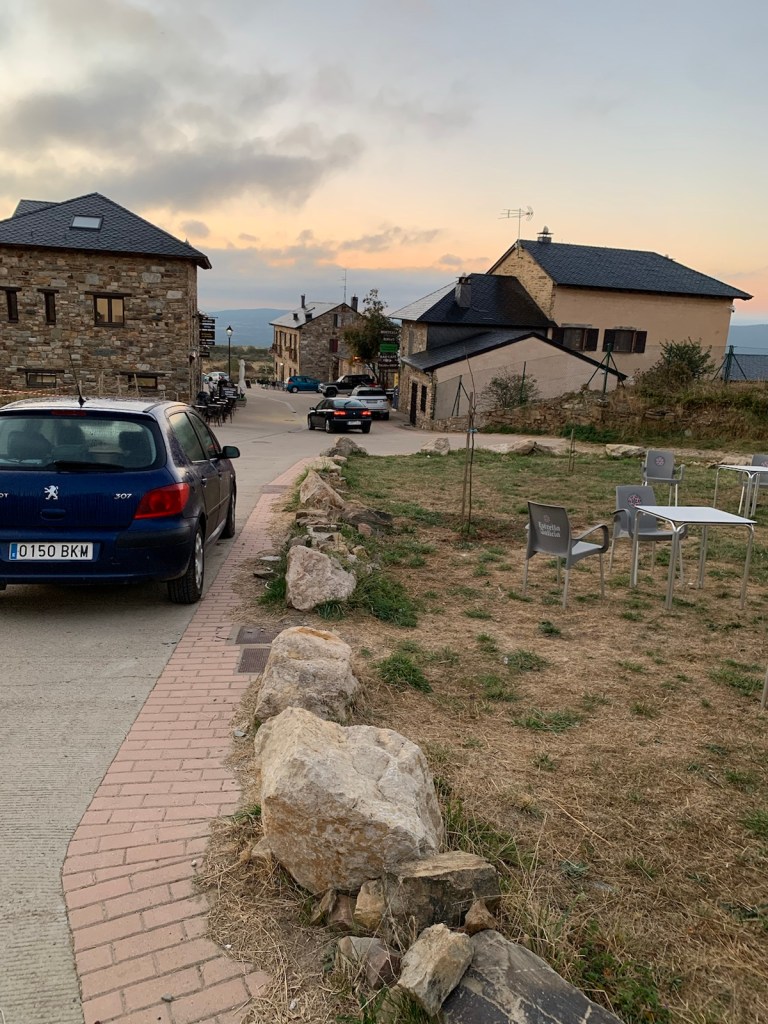


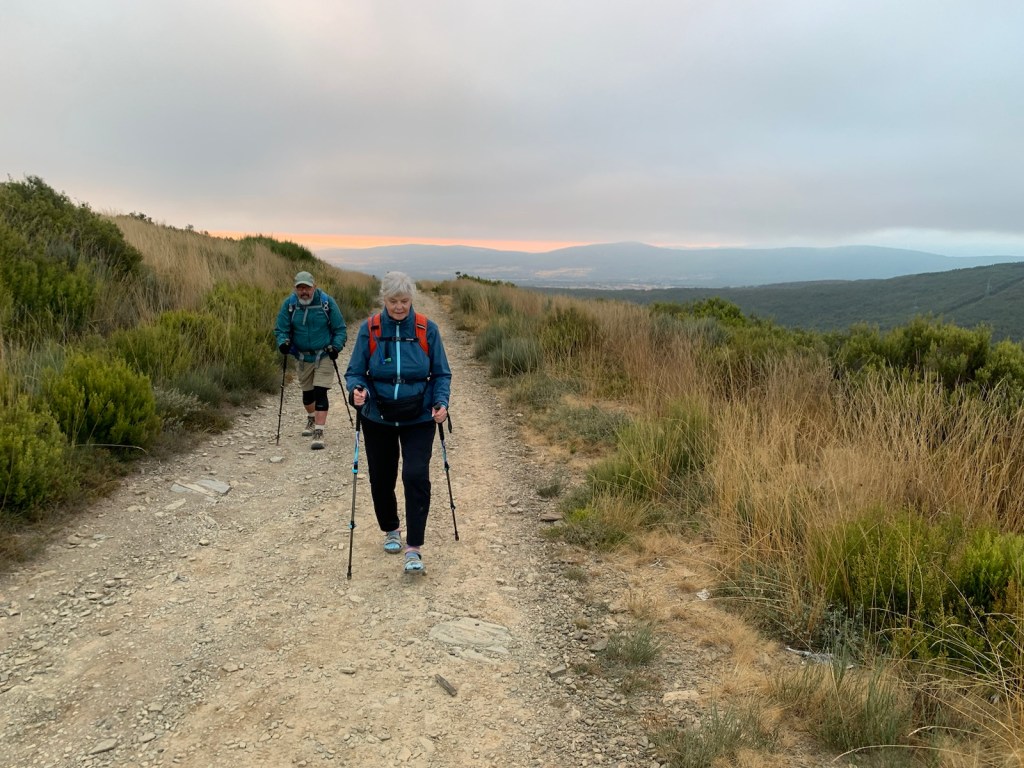
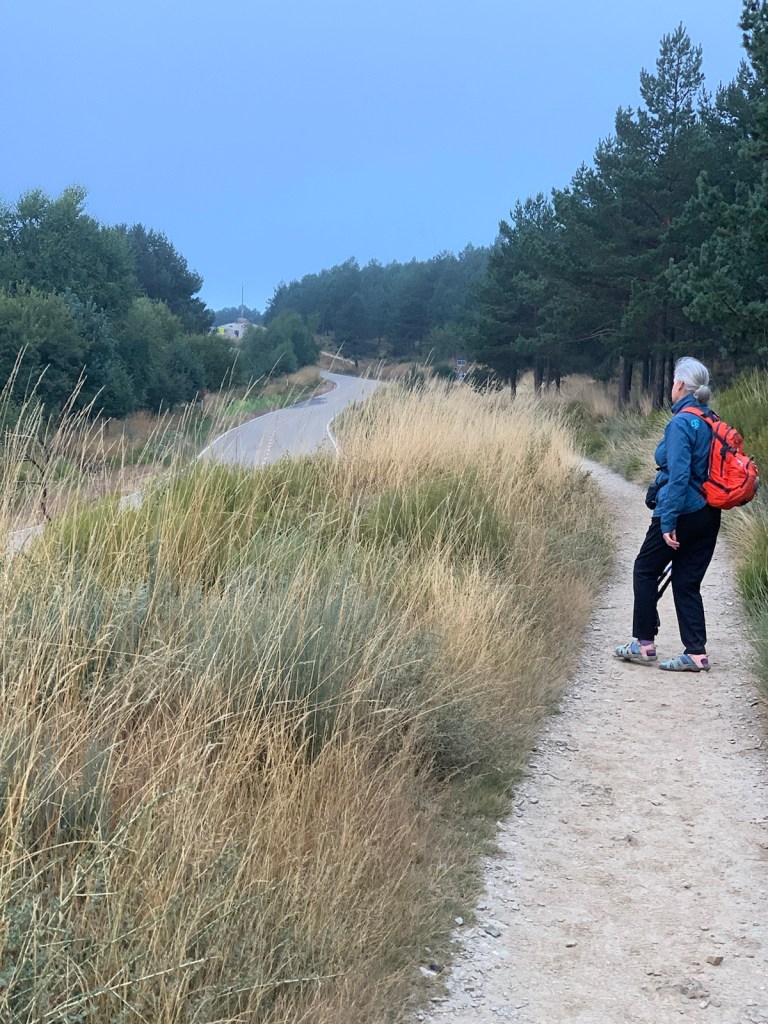
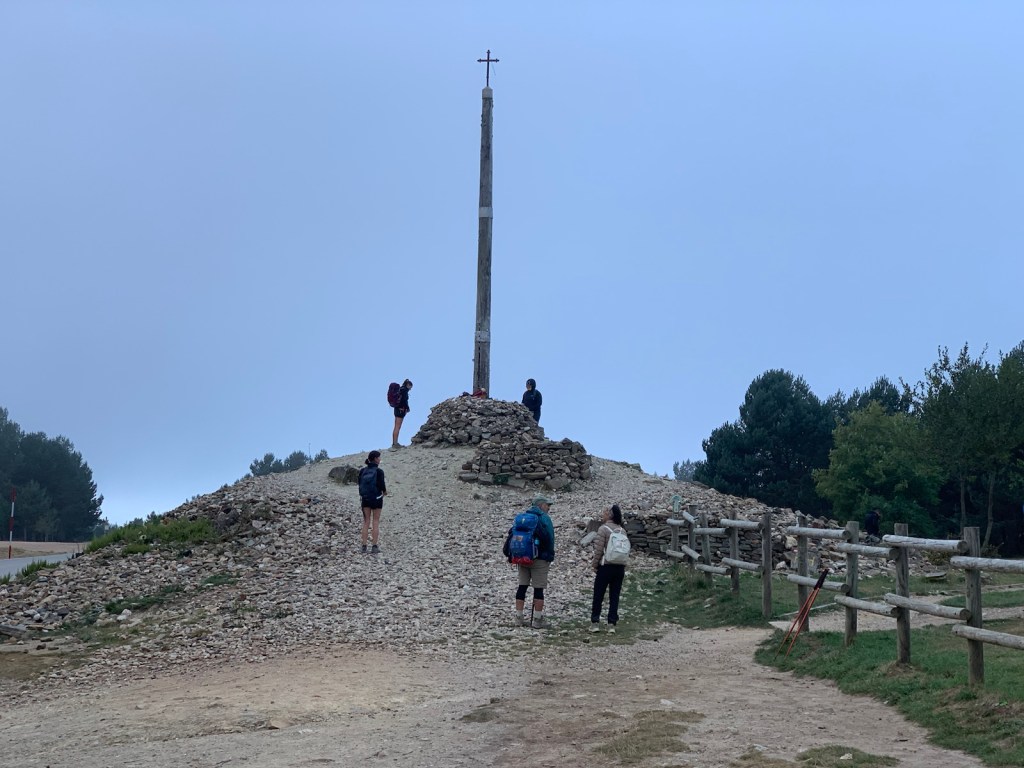















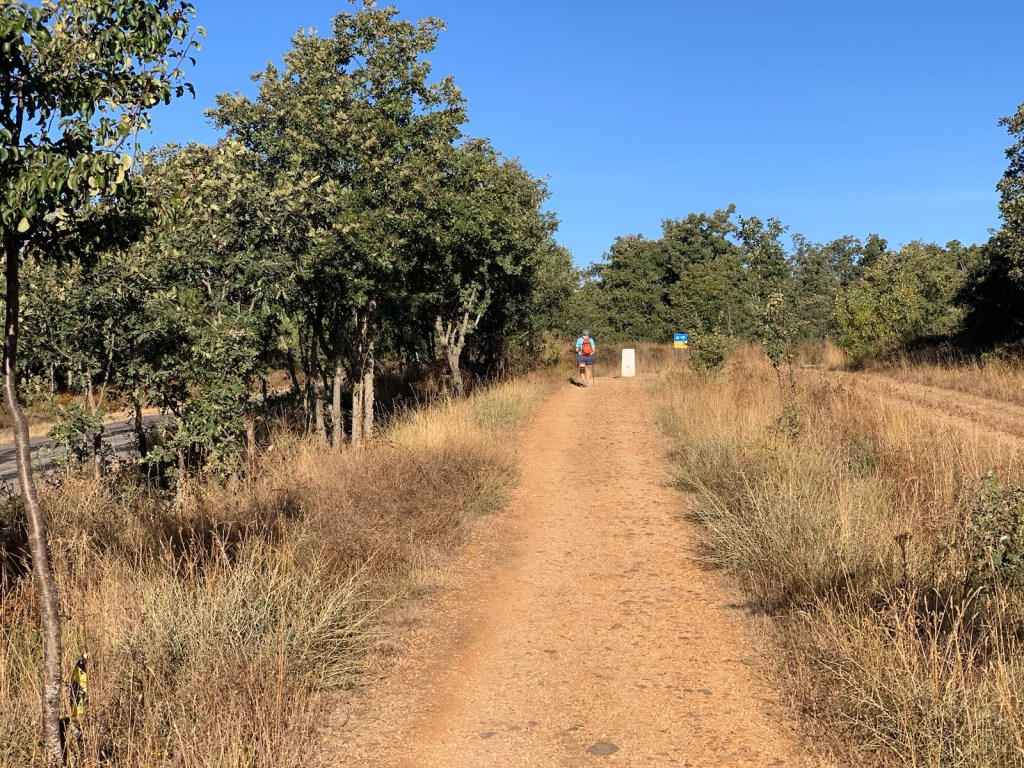

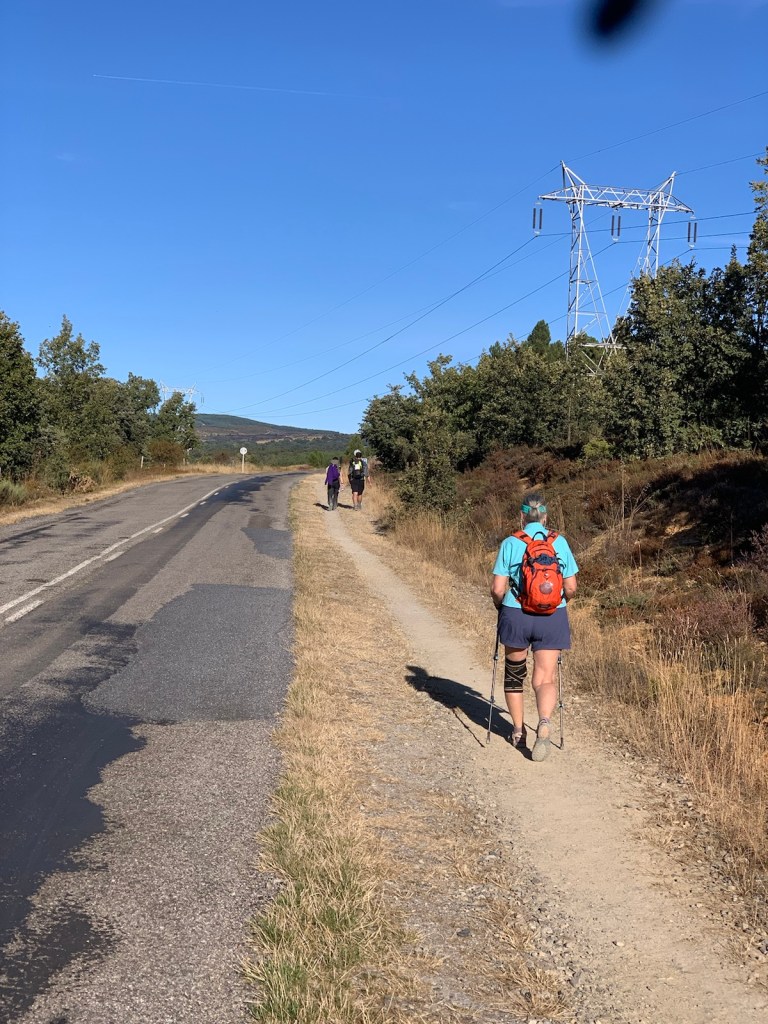
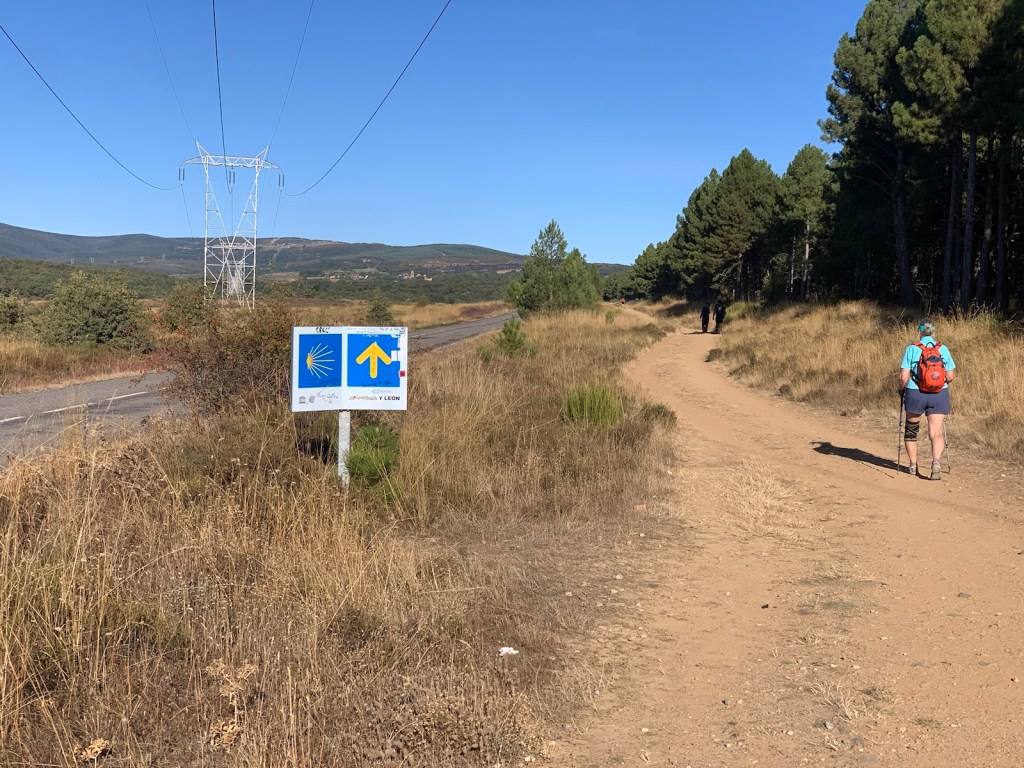


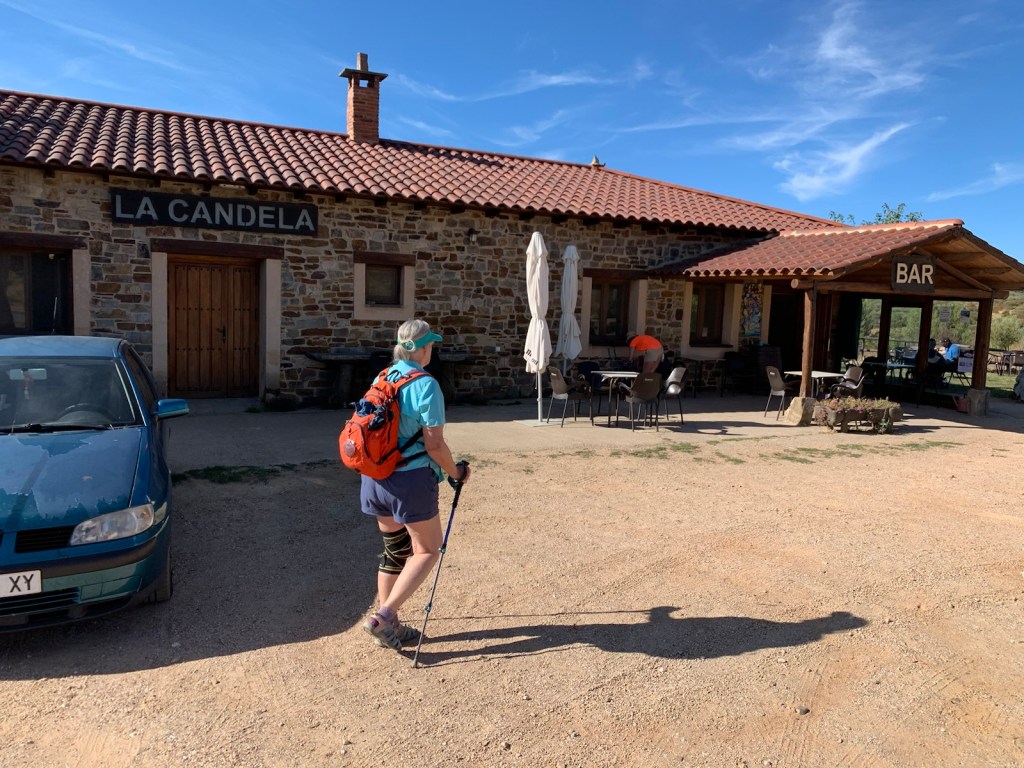















 Jimandi