Getting to Pamplona

A brief 10 minute ride to GSP, check-in (5 minutes) and TSA pre-check (3minutes) got us to two somewhat comfortable seats near gate A2 by 9:00 a.m.

Our reward for conforming to airline/airport guidelines for international flights and avoiding the potential crowd on this Memorial Day weekend was a long wait until our 12:37 (on time) flight to CLT.

The 23 minute flight from GSP to CLT was on schedule and smooth, in spite of the low cloud ceiling.
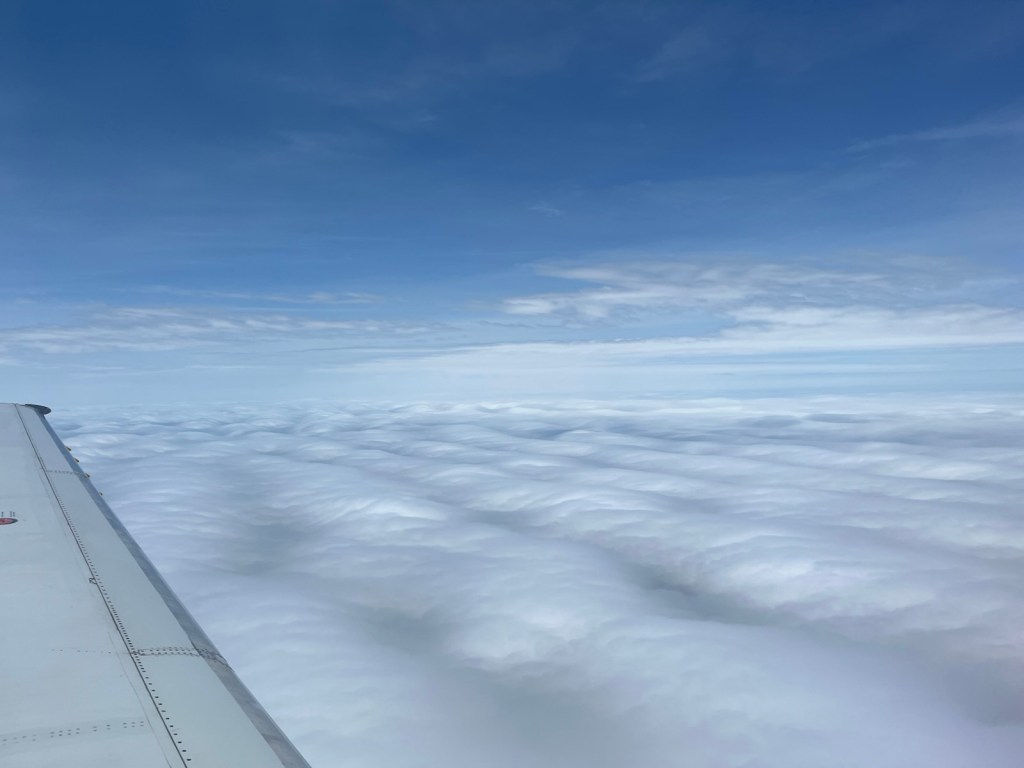
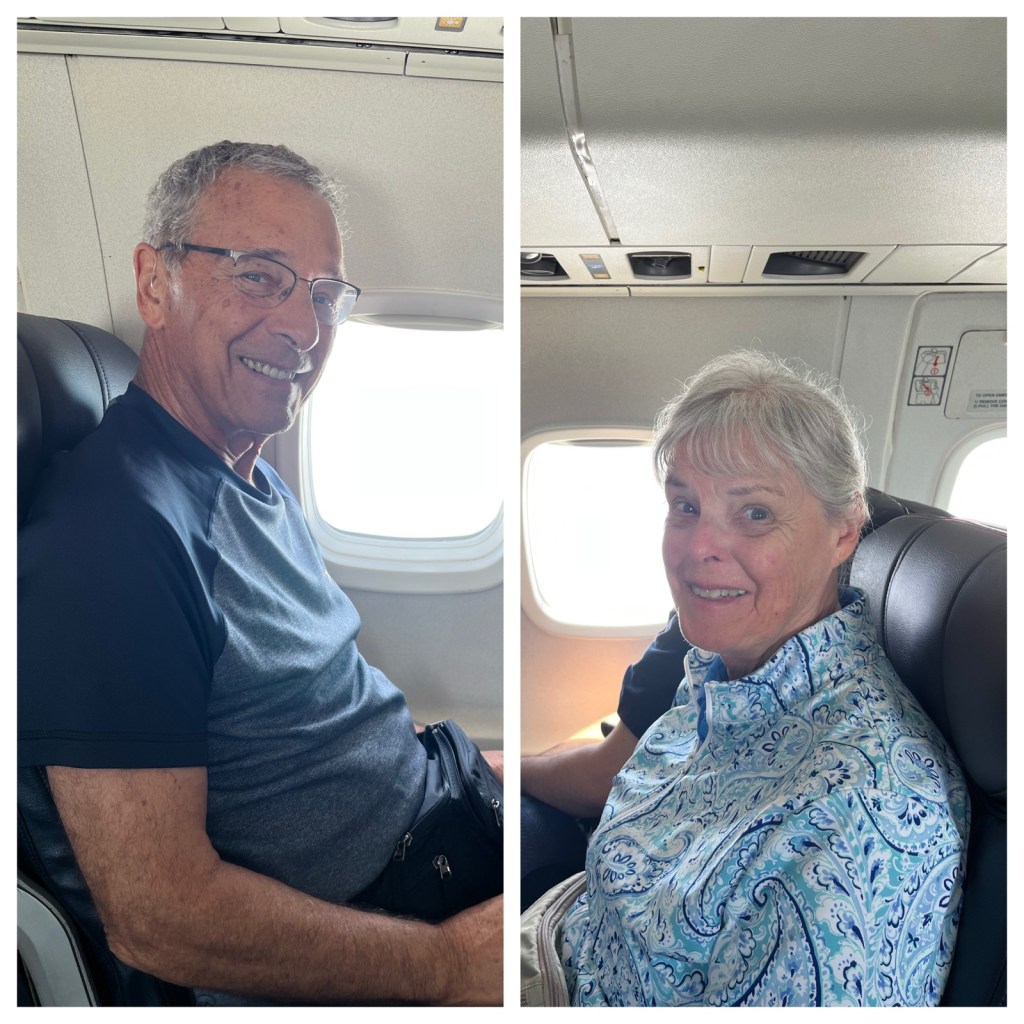
Interesting cloud formations at 7000 ft on the way to CLT.
“Off we go into the wild blue yonder …”

We touched down at 1:02 and after 28 minutes of taxiing among the suburbs of CLT, we finally arrived at our assigned gate and deplaned at 1:34!!

The walk from E8 (somewhere in NC) to D5 took a mere 10 minutes, where we found two vacant seats and settled in for the wait for Flight 748 to Madrid scheduled to depart at 3:35.

We boarded on time, but were delayed about a half-hour to correct a mechanical issue.

Every seat on the plane was occupied, the meals (dinner & breakfast) were palatable and free, even for the economy section. The 7-hour plus flight was smooth and uneventful.
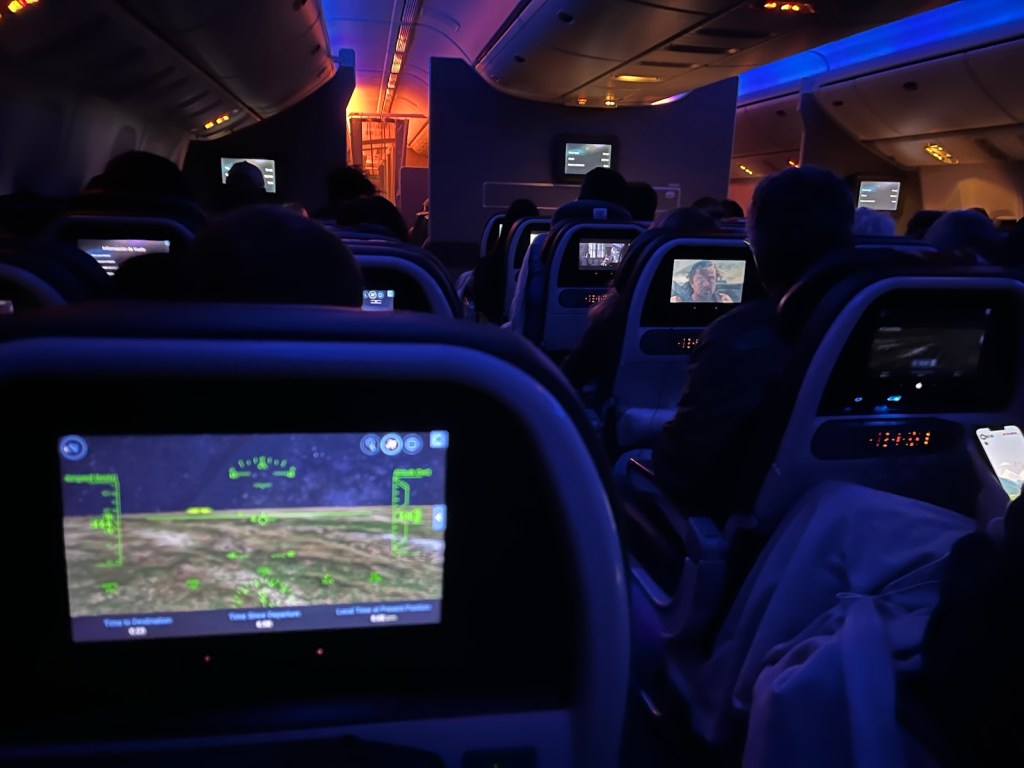
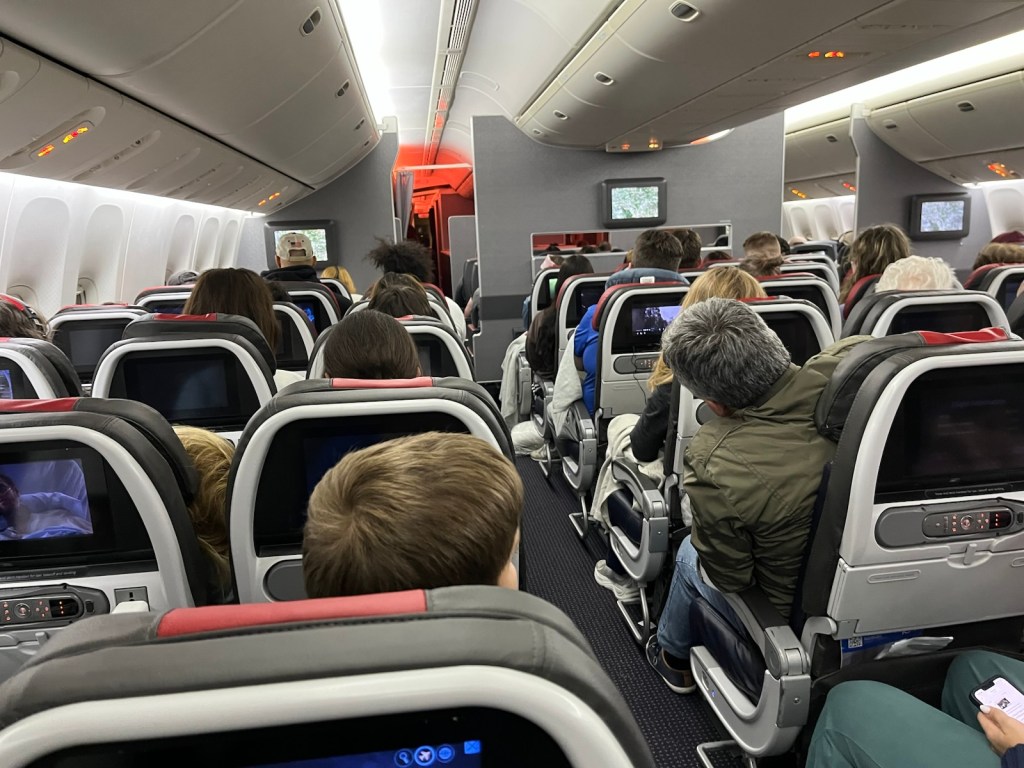
The view from our seats during sleepy time.
Wake up time for breakfast just before touchdown in Madrid.
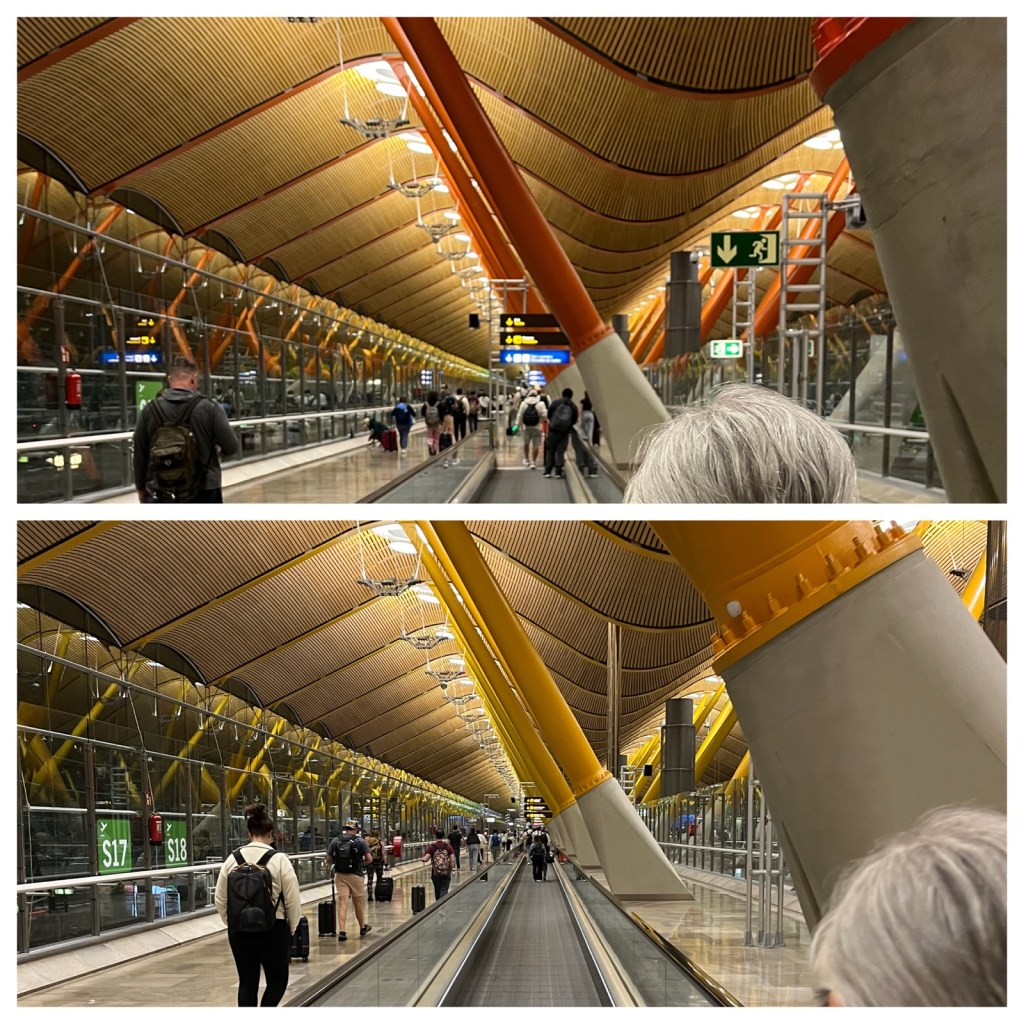
The seemingly, never-ending walk from deplaning to border control.

After deplaning we walked for 10-15 minutes in order to join a very long queue for customs/border control. We both completed the new EES (Entry/Exit System) registration consisting of: passport number, full name, face photograph, 4-finger prints. We also input the dates of our visit for monitoring visa overstays. Jim registered via automated kiosk and Linda had to register manually via a live border/customs patrol agent after the kiosk didn’t like her finger prints capture.

On our next visit to the Schengen Area, the EES system should speed up the time spent waiting to clear customs/border control… since we will already be in the EES and there will be many more kiosks available to clear us through than the current staffing of customs/border control officers.

After clearing customs we boarded the MAD subway to the baggage claim section of Terminal 4. We were relieved and then, ecstatic, when we found both of our backpacks waiting in the baggage claim area… allowing Camino2026 to continue.
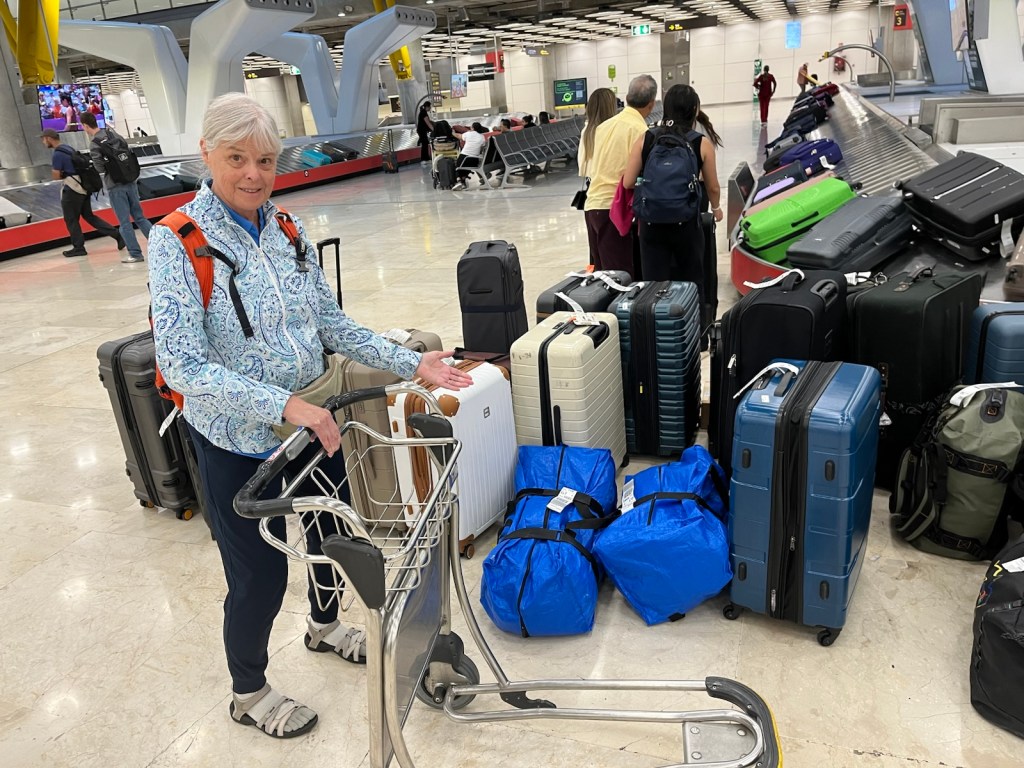
eureka!

We found a cart, loaded our beautiful, brilliantly blue IKEA wrapped parcels, found an elevator to go up two levels to locate an Iberian counter to obtain our boarding passes and check our bags on the 12:20 flight to Pamplona.

All went well at Iberian allowing us to proceed through the airport security check, which also occurred without incident.
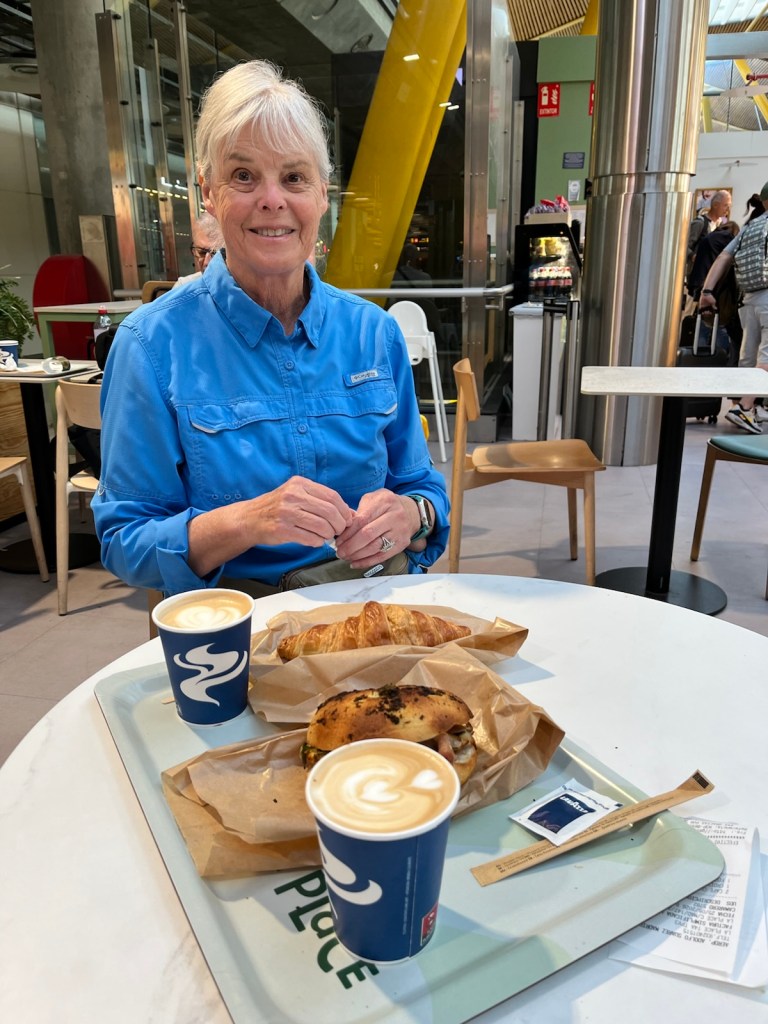
First cafe-con-leche of Camino2026

The next 3 hours were spent chillin, having our first cafe-con-leche of Camino2026 and people watching until boarding the next-to-final leg of our journey to the starting point of Camino2026.
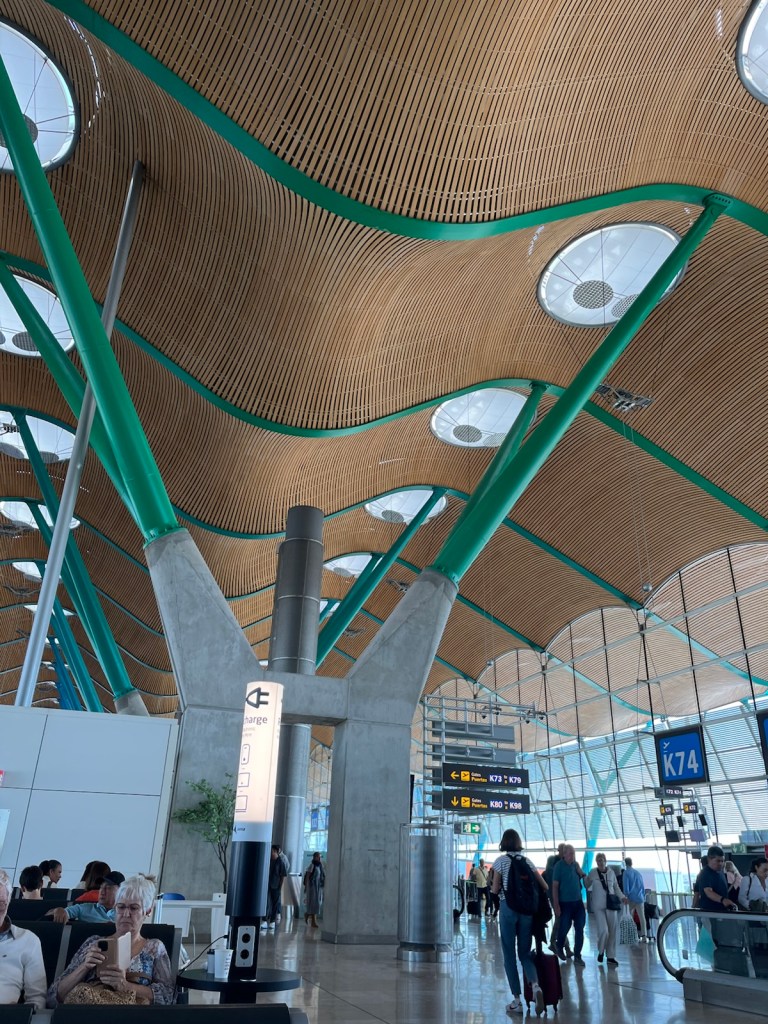
Our chillin’, people watchin’ vantage point.

We boarded the Iberian flight on time and a little more than an hour later deplaned at Pamplona regional airport, quickly collected our backpacks and selected from a long line of taxis awaiting our arrival to take us the final 10 minutes to our Hotel on the edge of the old town. The Hotel Yoldi checkin process was fast and seamless.

So, we safely completed the more than 5000 mile trip from our home in Greenville to the northeastern province of Navarre, crossing 5 time zones in less than 24 hours to reach the starting point of Camino2026 in Pamplona, Spain. Buen Camino!
Preparations

We originally planned for Camino2026 to begin on May 1. However, on November 6, 2025, our grandson, Mac, shared that he and Anna had become engaged and asked that we save May 22 for their planned wedding.

So, we tentatively set May 24 as our departure date for Camino2026 and decided to start our walk in Pamplona as we did in 2025.

And, because of the ever increasing popularity of the Camino Frances, we decided to reserve each night’s lodging before leaving for Spain. Subsequently, we began the tedious process on November 18, 2025 with our first contact being via email with a hard-to-get albergue in the small village of Cirauqui.

Once we successfully secured this first reservation, we plugged it into our tentative itinerary (a spreadsheet based on Camino2025) and proceeded to fill-in other accommodations, giving priority to the hard-to-book ones. We completed the last of the 49 total bookings on April 18. We used (1)Booking.com, (2) email, (3) Whatapp and (4) available property websites to secure the reservations.

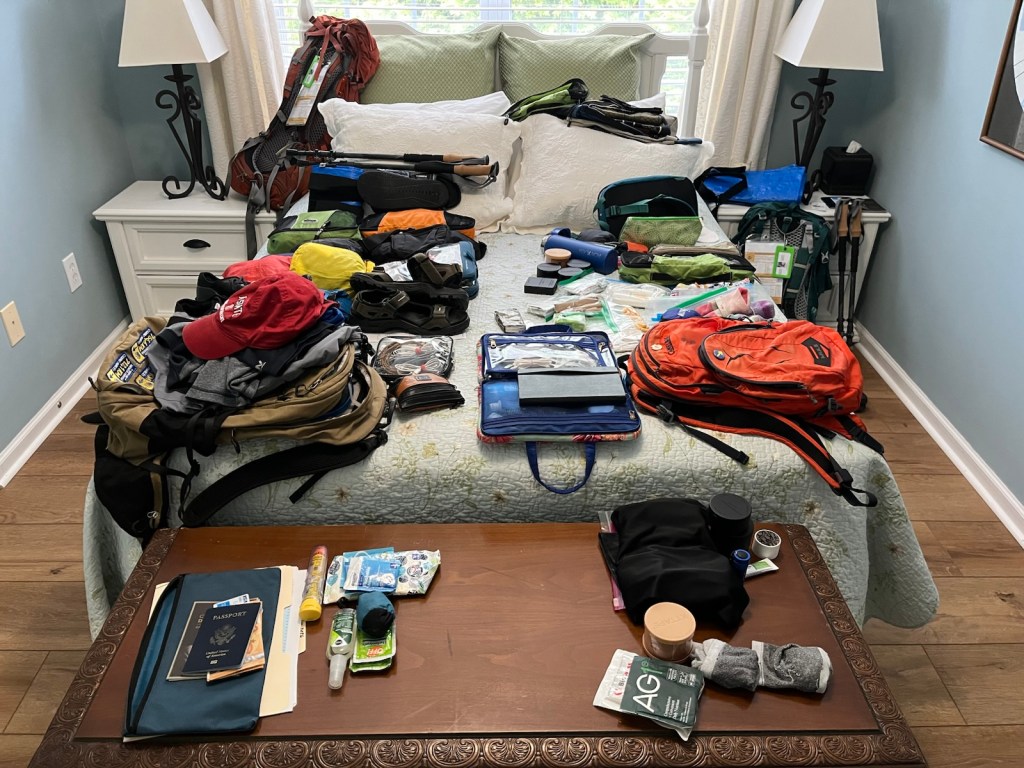
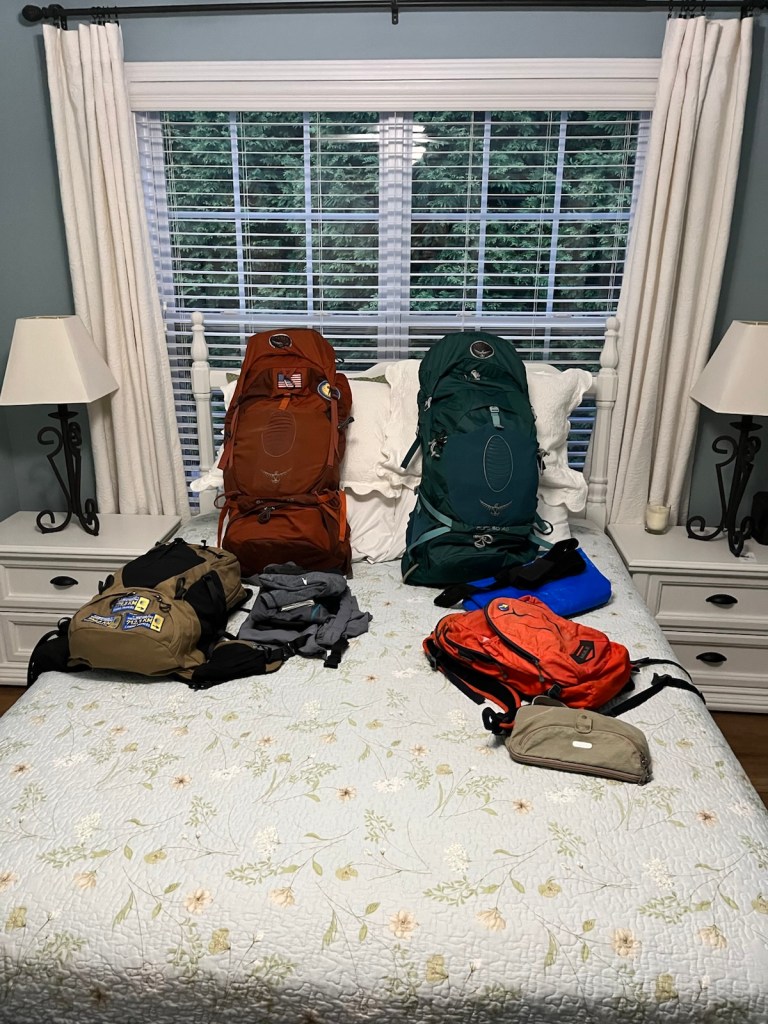
In parallel with our booking process, we began gathering the items we would each need for our 7-week trek and displayed them on our guest bedroom bed. We added to and subtracted from our respective collections until we were satisfied we were each left with only “essentials”.

Jim’s stuff on the left side and Linda’s on the right.

On May 11, we packed our respective backpacks and flight carryons/ daypacks to verify that there was room for everything and that it was comfortably transportable.

Backpacks, daypacks and fanny packs ready for trekking.

Last year, we used Correos, the Spanish postal service, to transport our backpacks to and from each daily destinations. The service was very reliable and much less expensive than the other transport services we used on previous caminos. However, once in Spain, it was difficult to pay at their website, requiring a visit to a major office in Pamplona, delaying our walk to our next destination. We also struggled finding someone to print our itinerary from the Correos website for the bag tags and then looking for materials for securely attaching the tags to our backpacks.

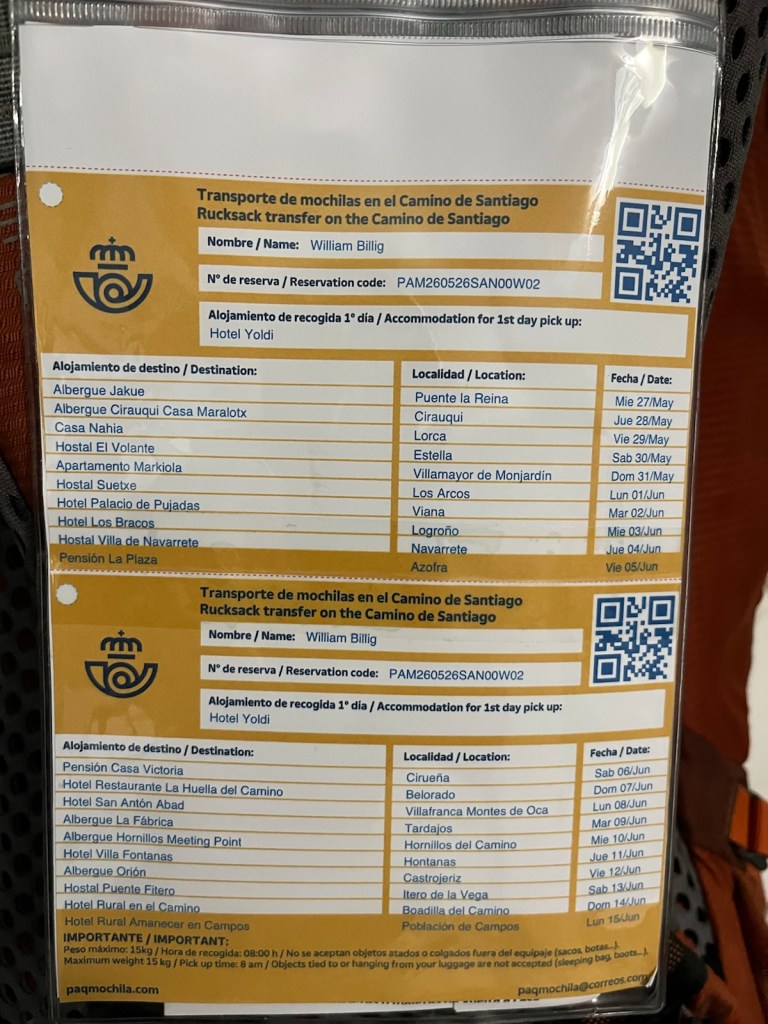
So, with the Camino 2026 itinerary completed and each night’s lodging reserved, we were able to do all the “front end” prep work for backpack (mochila) transport from the comfort of our home, benefiting from a superior internet signal, color printer and “golf bag name tags”, easily purchased from Amazon.

Our ” professionally made” backpack transport tags up close. It contains our ID in text and scan code, along with the dates for pick-up and delivery at each municipality & property for our entire itinerary.
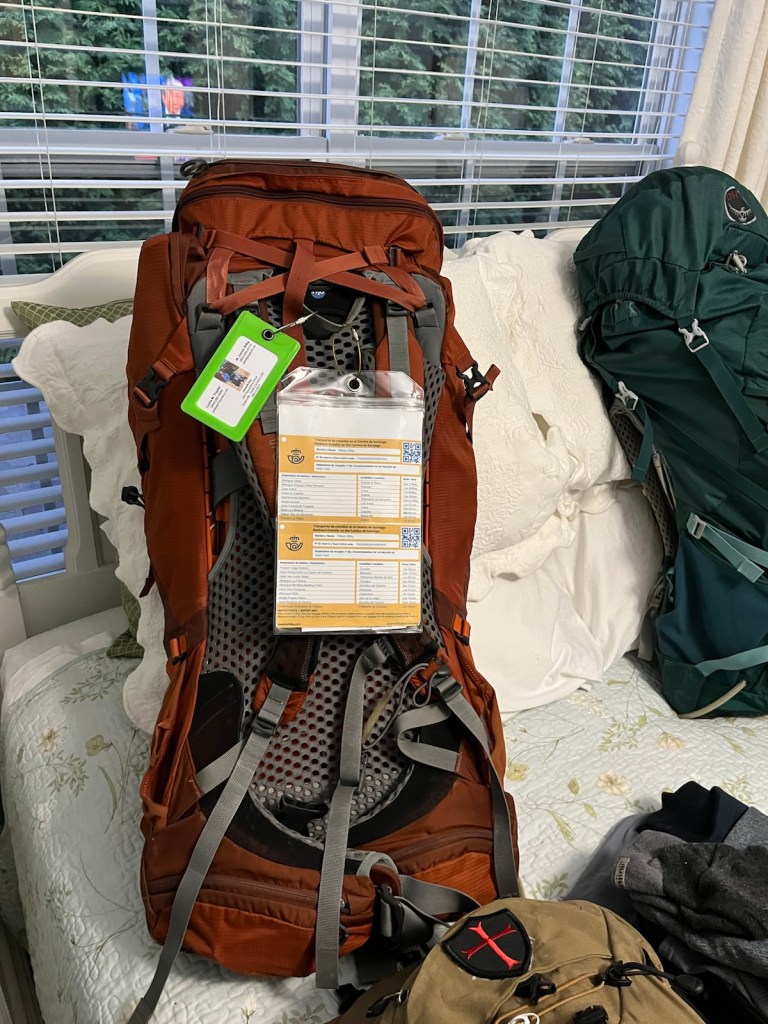
Tag with itinerary for Correos attached to Jim’s backpack (mochila).

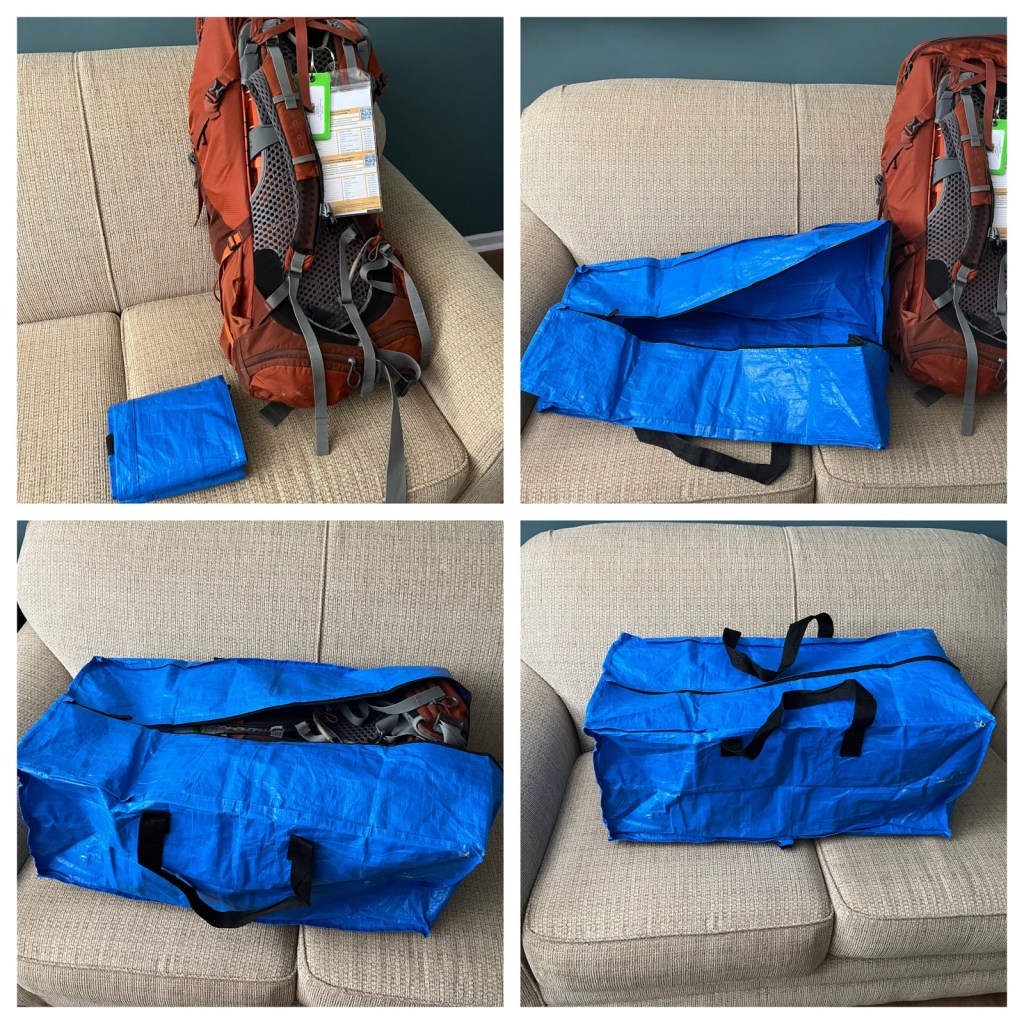
Finally, since we need to take trekking poles, scissors and a pocket swiss-army knife with us, carrying them in our fanny pack or carryon pack is not an option given TSA regulations for our flights. Thus, we put these items into our backpacks, which we check. To keep our checked backpacks dry and safe from handling and/or mishandling by airline and airport handlers and automated equipment… we found a lightweight (11oz), inexpensive ($5.00) plastic, zippered duffle bag at IKEA. It’s called FRAKTA.

The folded FRAKTA shown with Jim’s backpack before and after preparing for checking on our flights.

We expected the FRAKTA to be disposable, but it has held up now for 3 caminos going to and from Spain. It appears to be able to make the journey for Camino2026 too. Once we arrive in Spain, we fold it and stuff it in the section between the back support and hydration bladder and accept the added weight. But with its low cost it could be discarded once in Spain to save the extra 11oz weight to carry. By using the transport service, weight is no longer an issue for us.

Larry, our generous friend, neighbor and ardent follower of our blog, has offered to give us a ride to GSP on Sunday morning, so unless we’ve forgotten something, we’re ready to embark on Camino 2026.