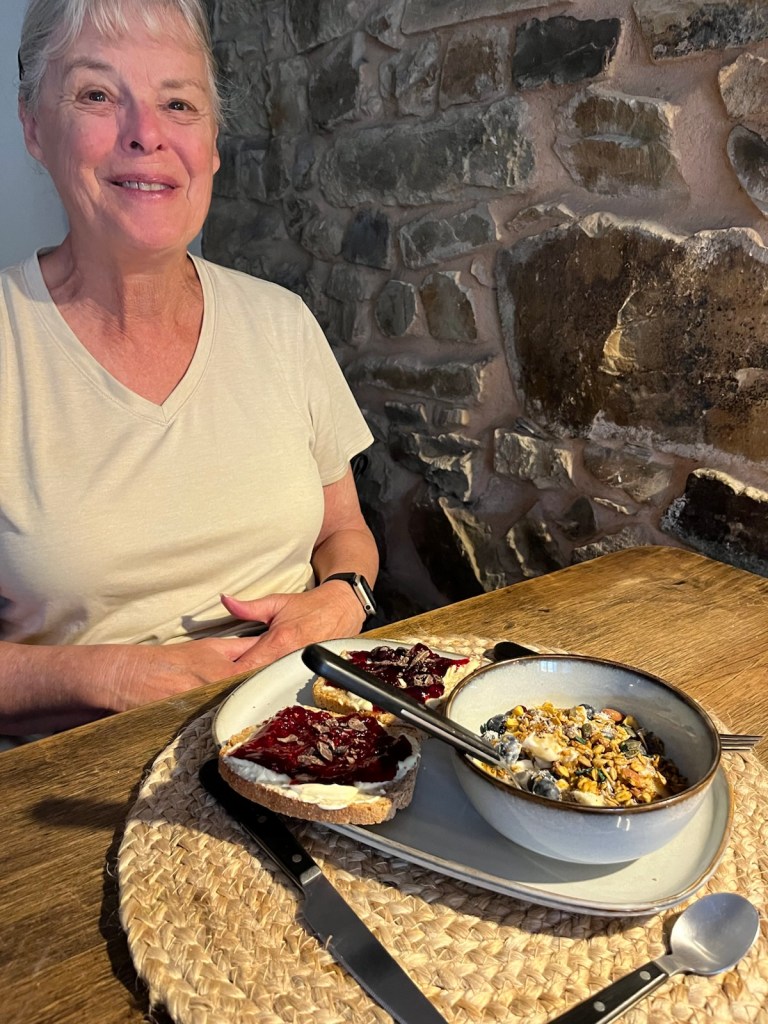
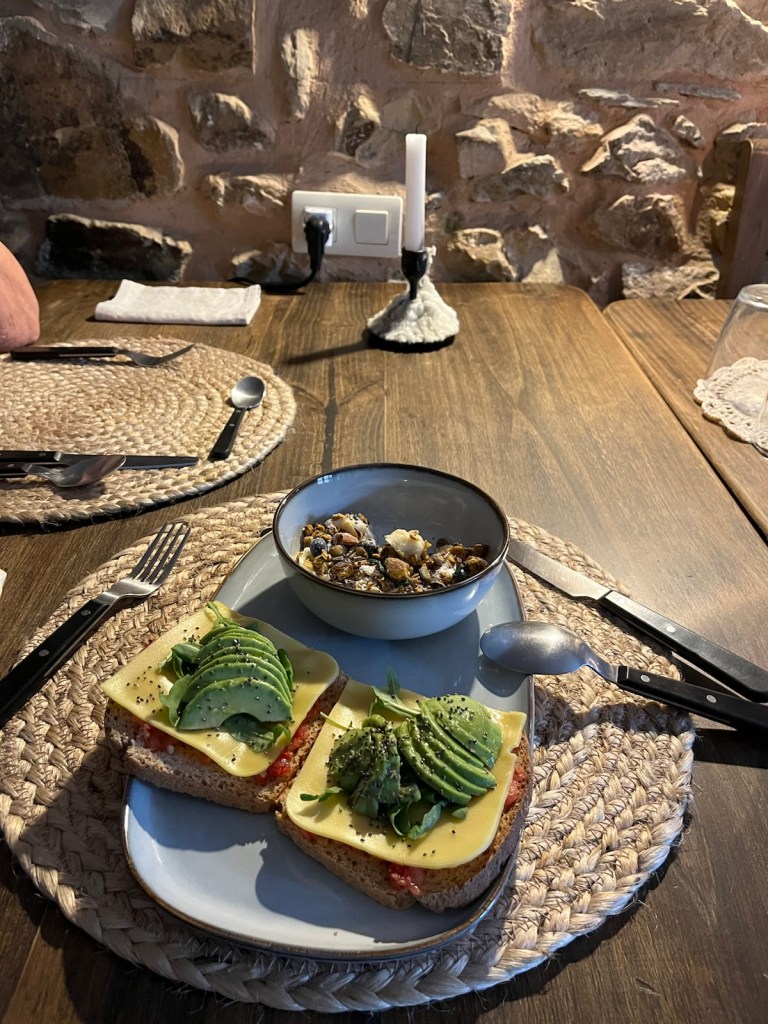
The Pilgrim Stone B&B is a “vegan” B&B so rather than walk before breakfast we had a Vegan B before beginning our walk.
Linda had a homemade granola with greek yogurt and toast with a light cream spread, topped with black cherry jam and our usual cafe con leche.Jim also had the yogurt and granola mixture also but his toast had s thin layer of crushed tomatoes and oliver oil, covered with a slice of cheese and sliced avocado on top.
It was our first vegan breakfast, we think, and we were pleasantly surprised. Jim may go for the tomatoes with toast at a future breakfast instead of the usual mantequilla and marmalade combination… or not.
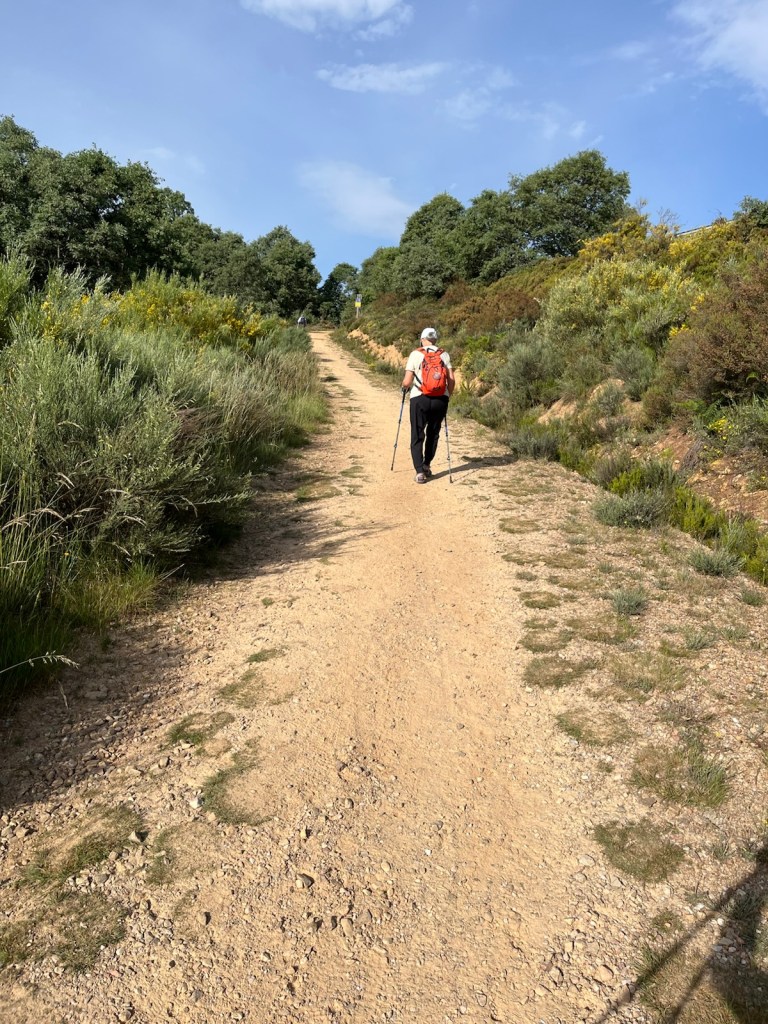
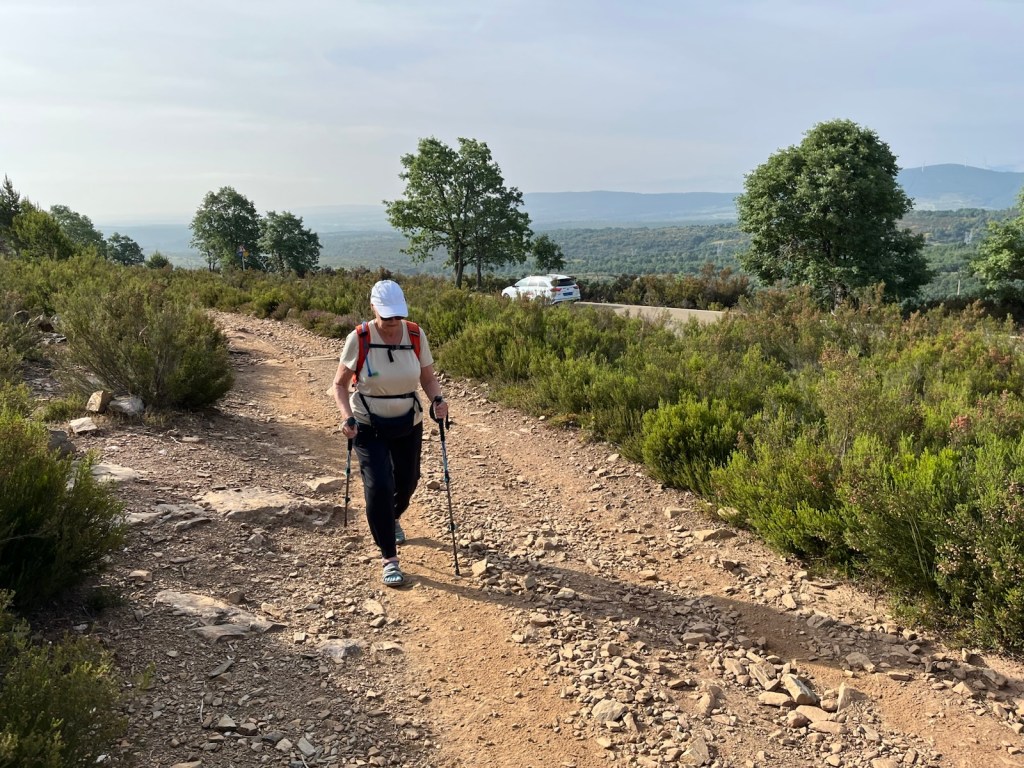
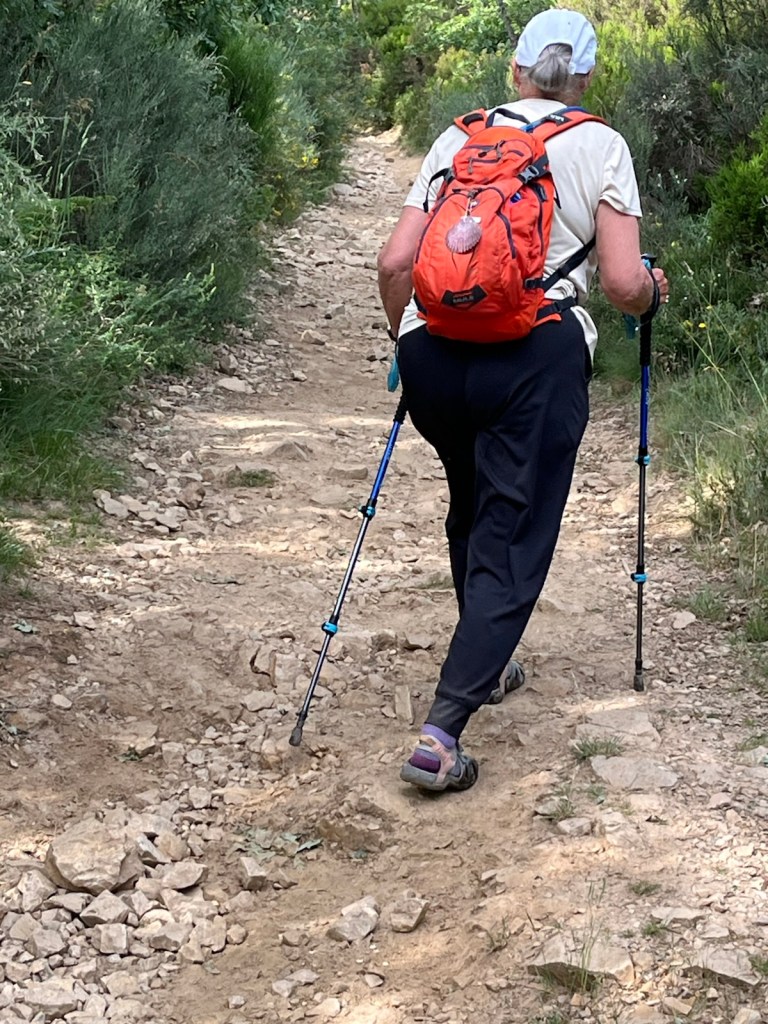
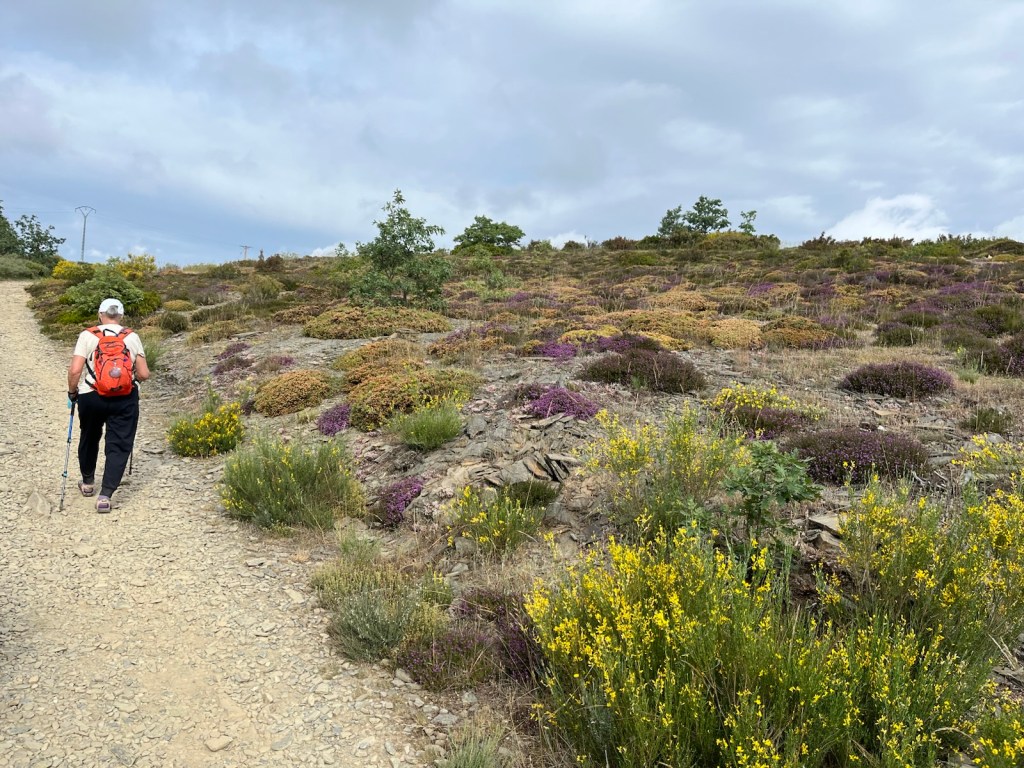
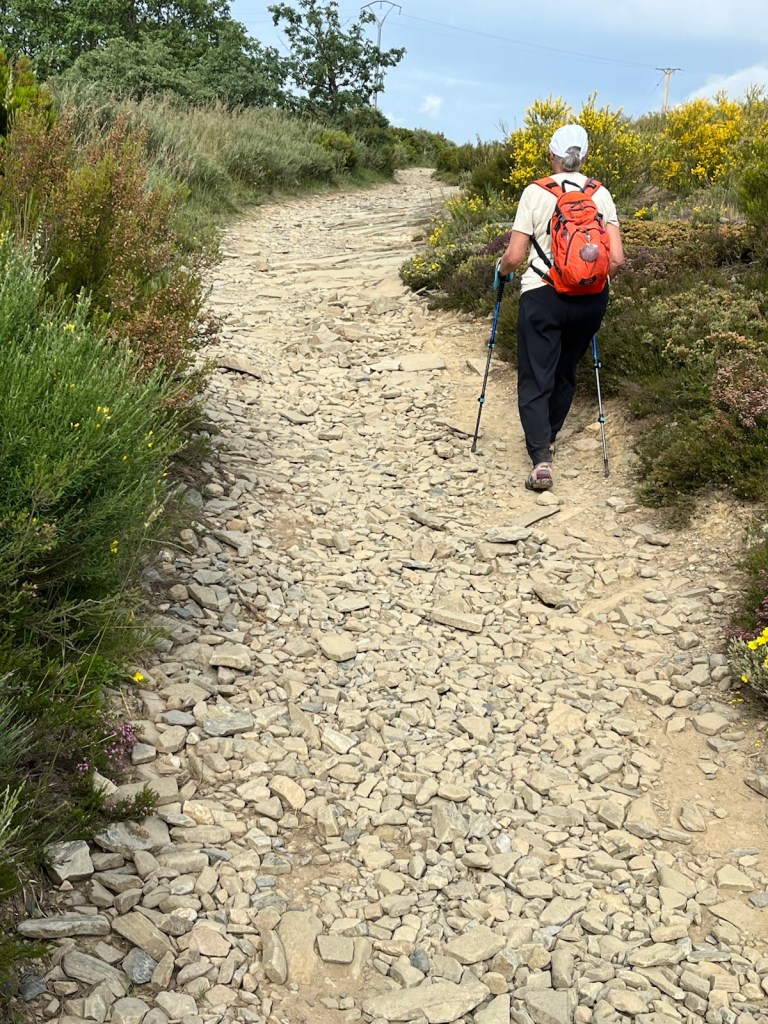
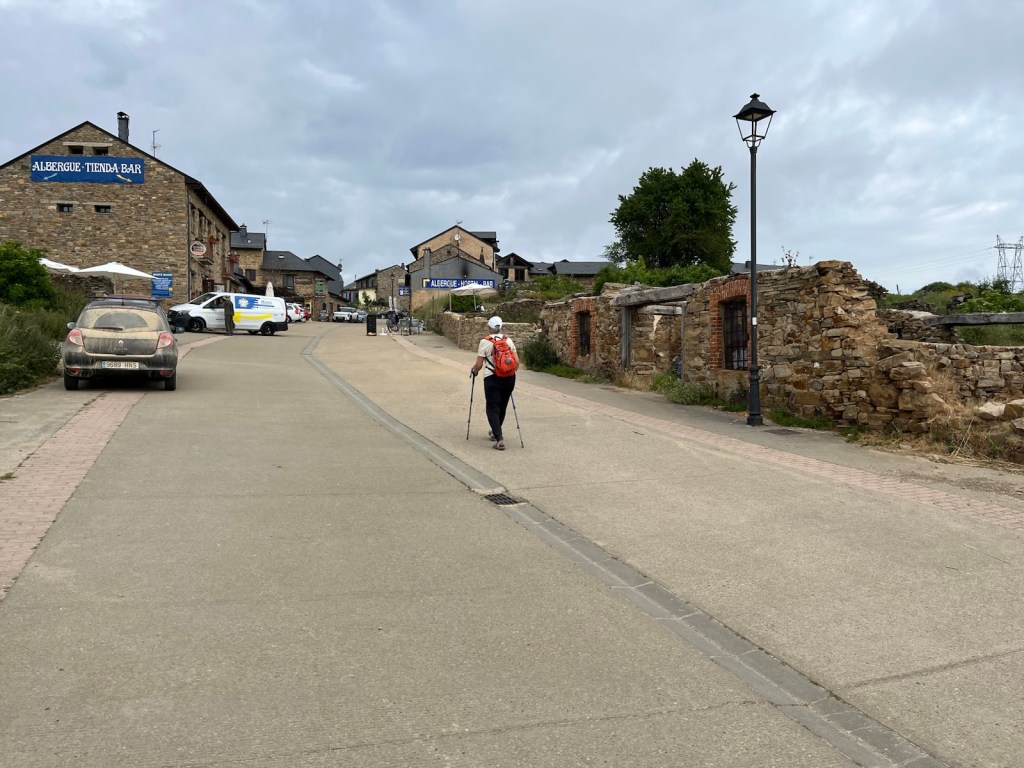
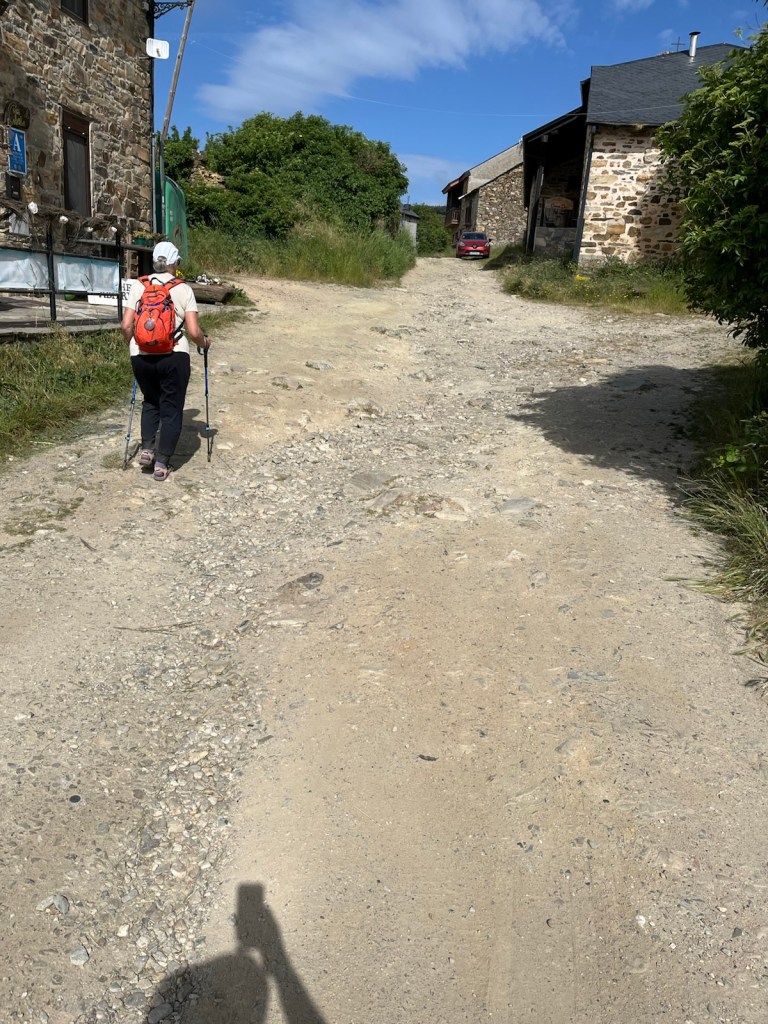
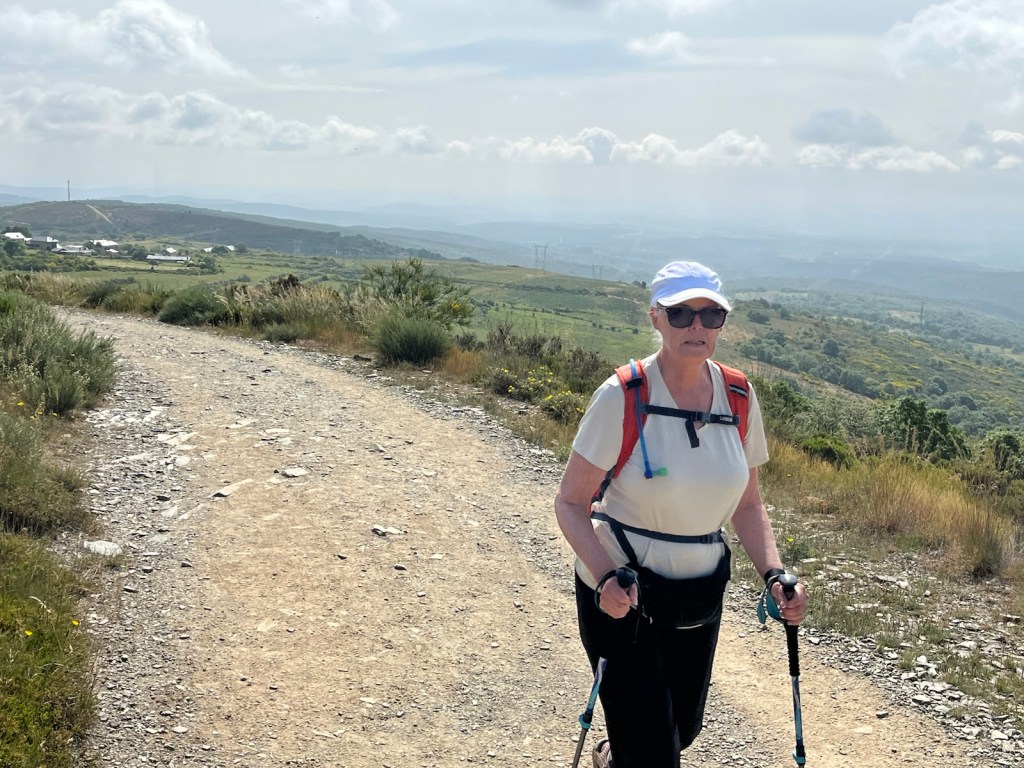
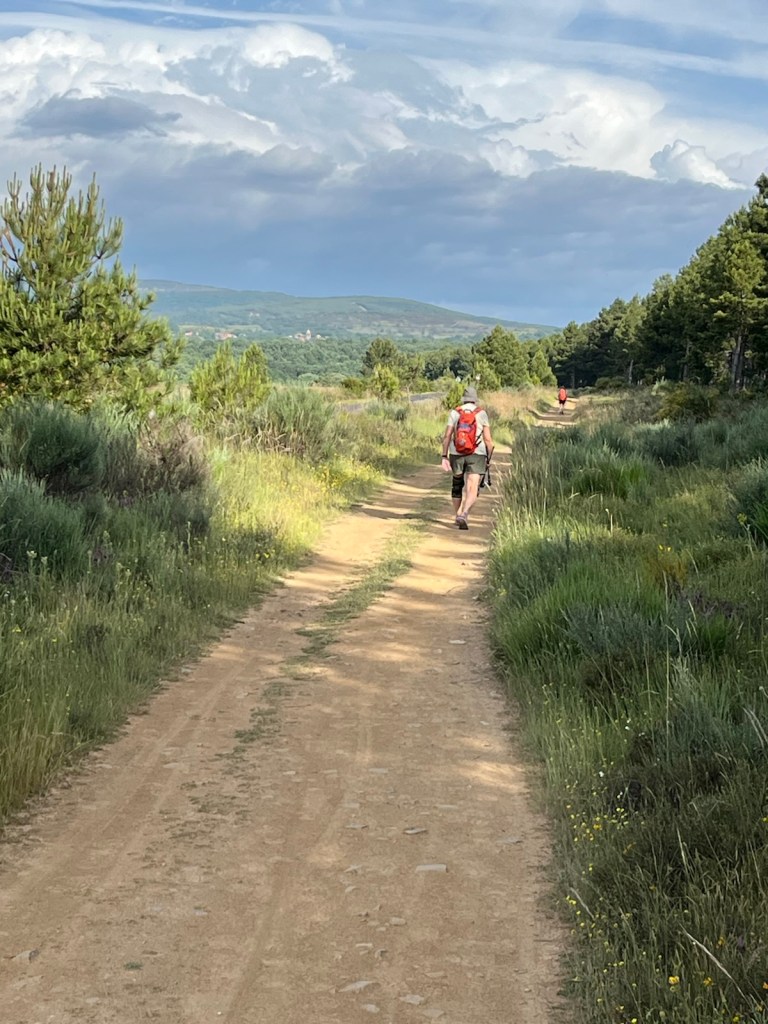
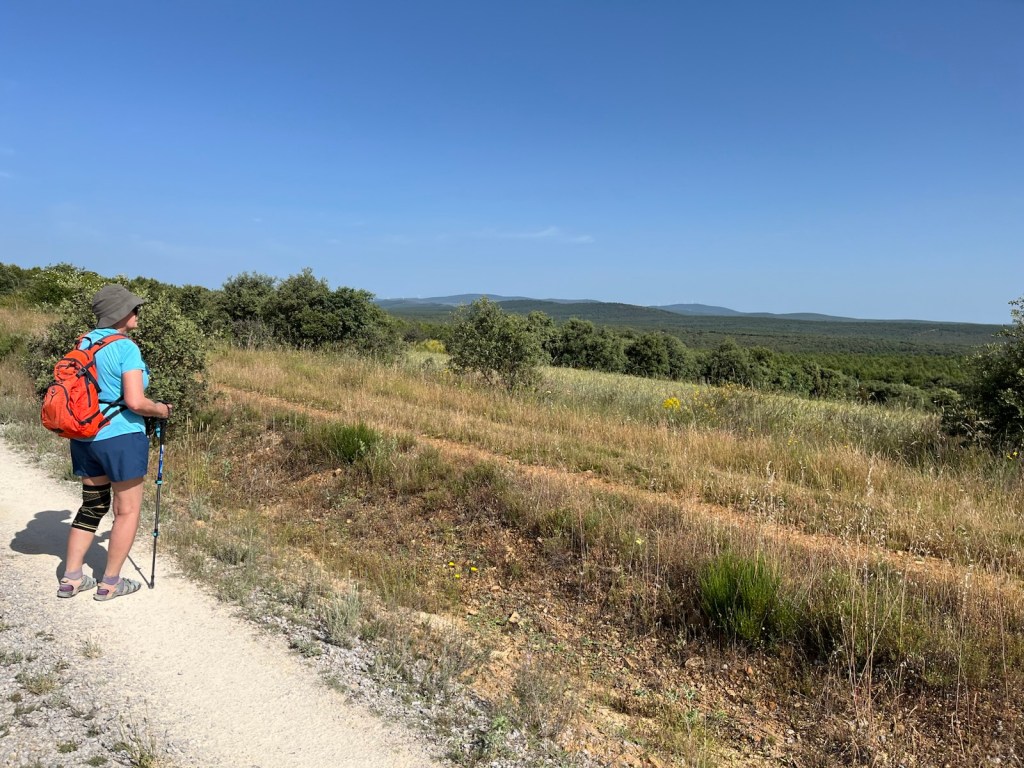
The mosaic of stone and brick streets of Rabanal became the familiar dirt path as we left the village (pop.74)Some really fine looking cattle wished us buen Camino as we headed up the mountain from our elevation of 3770 ft.The walk was not difficult at first with good footing and a gradual incline,The path got steeper and rockier Breaks in the trees gave us periodic looks at the scenery below and made us more aware of the ascent.More rocks and steeperThe higher altitude was revealed by the lack of trees and more frequent tundra and stone.One final push…… and Foncebadon finally appeared.Walking into Foncebadon (pop. 26), elevation 4690 ft.
We arrived in Foncebadon at 10:30, tired but not quite finished our walk.
We got a table in perhaps the best restaurant on the Camino, Albergue/Restaurant, El Trasgu. We stayed here in 2024 and savored the delicious dishes preparef by the owner/Italian cook/former pilgrim. We ordered and drank a tall glass of OJ while we rested and regained our strength.
Jim checked across the street at La Posada del Druida, also a nice property, where we will be staying tonight as Trasgu was sold out, when we made our reservations in February. Checkin was no sooner than 1:00.
Next we checked for when the cocina ( kitchen) was open today for meals and learned that today it would only be open from 1:00 -2:00!!!
We asked if we’d need a reservation and the owner said no, we would have a table.
So, at 11:00, we took on the final leg of today’s walk… to continue on to the Cruz de Ferro.
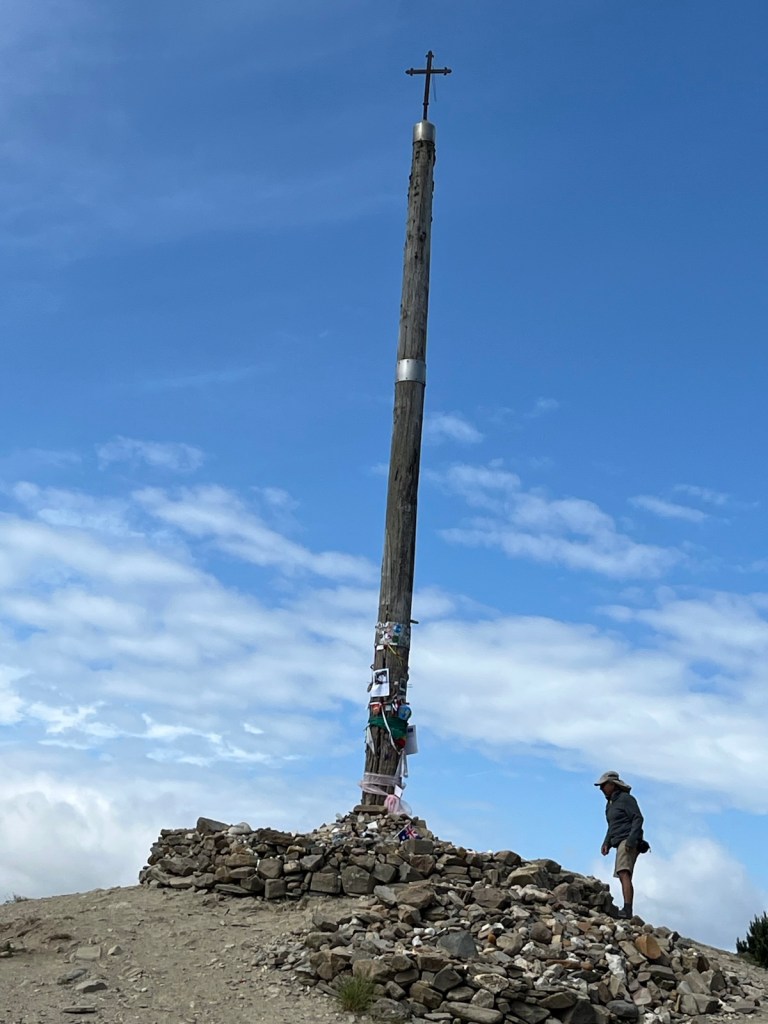
Cruz de Ferro occupies the highest point on the entire Camino Francés. The site consists of a tall wooden pole topped with an iron cross. This is said to be an ancient monument, first erected by the ancient Celts, then dedicated by the Romans to their god Mercury (protector of travelers) and later crowned by the cross and renamed as a Christian site by the 9th-century hermit Guacelmo. For centuries, pilgrims have brought a stone to the place (either from home or the flatlands below) to represent their burden. The stone and the burden are left here, leaving the pilgrim lighter (literally and figuratively) for the journey ahead. Today all sorts of symbolic items are left behind, and some stones bear written messages.
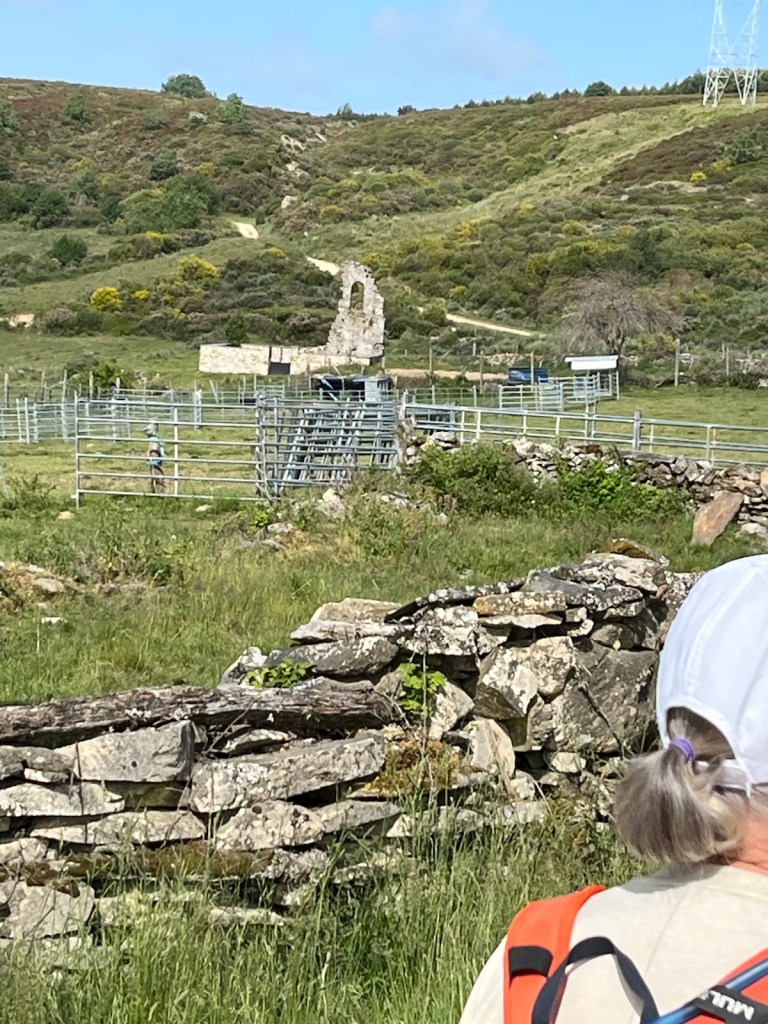
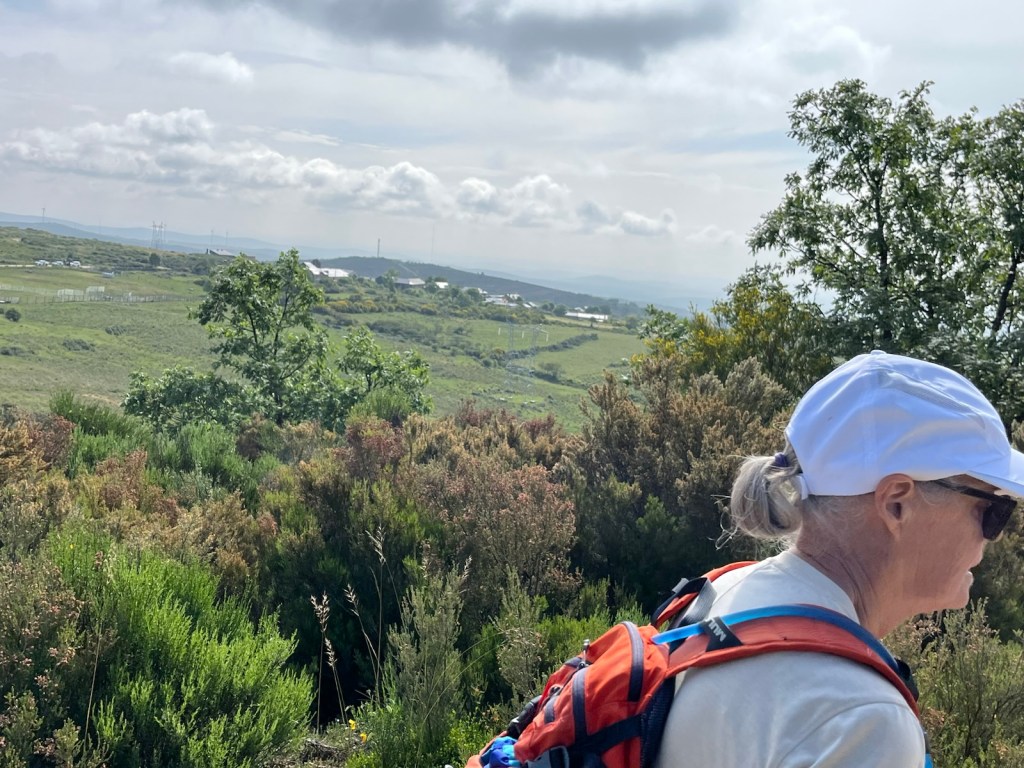
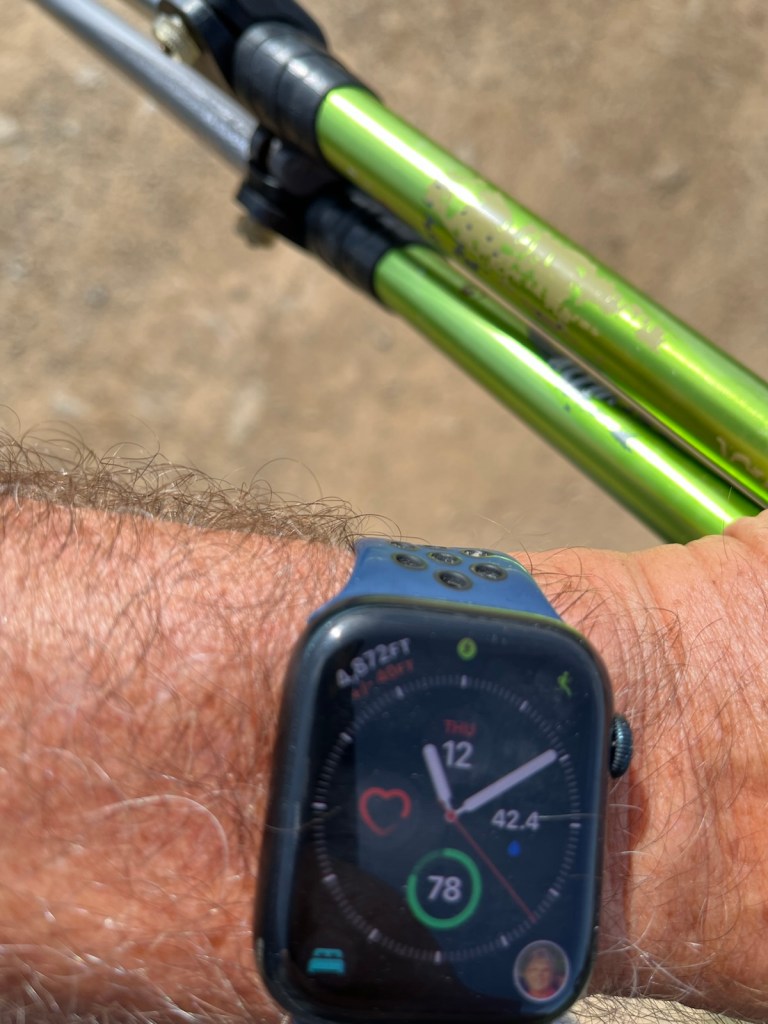
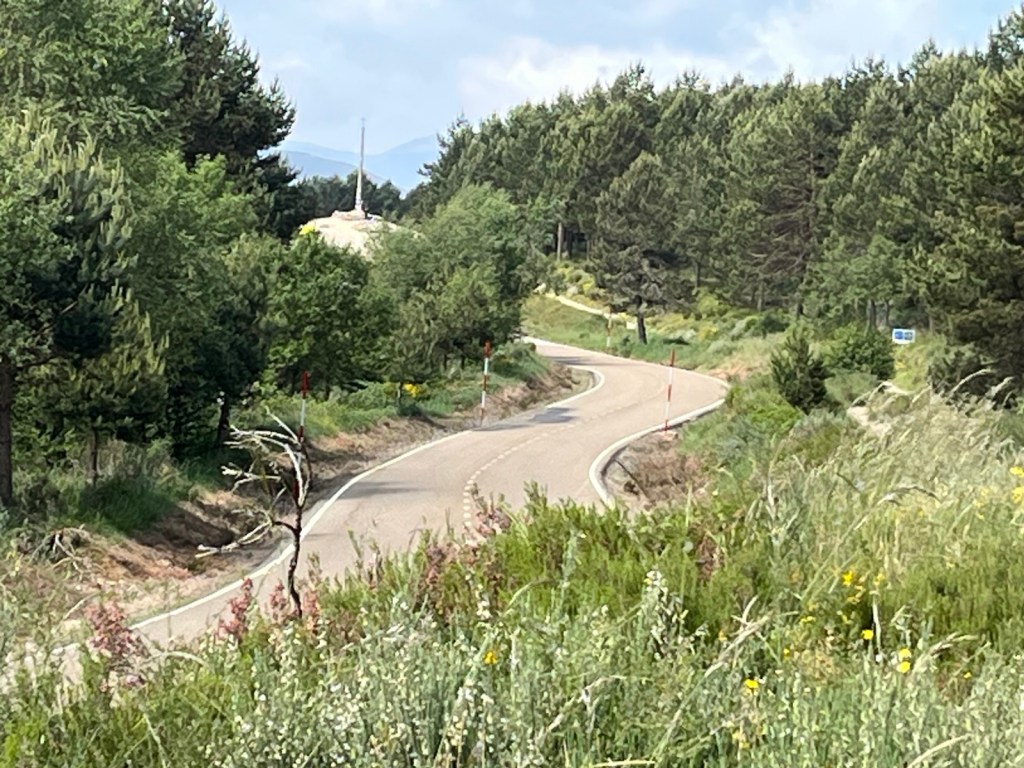
The paved road ends abruptly at the edge of the recently developed part of the village and reverts to the eroded dirt path.The steep path leading up the mountain can be seen as we passed the ruins of church.Looking back on Foncebadon as we continue up the mountain.…. still climbing…… near the high point.,.Jim checking elevation on watch : 4872 ftOur first view of the Cruz de Ferro.The Cruz de Ferro, elevation: 4934 ft.
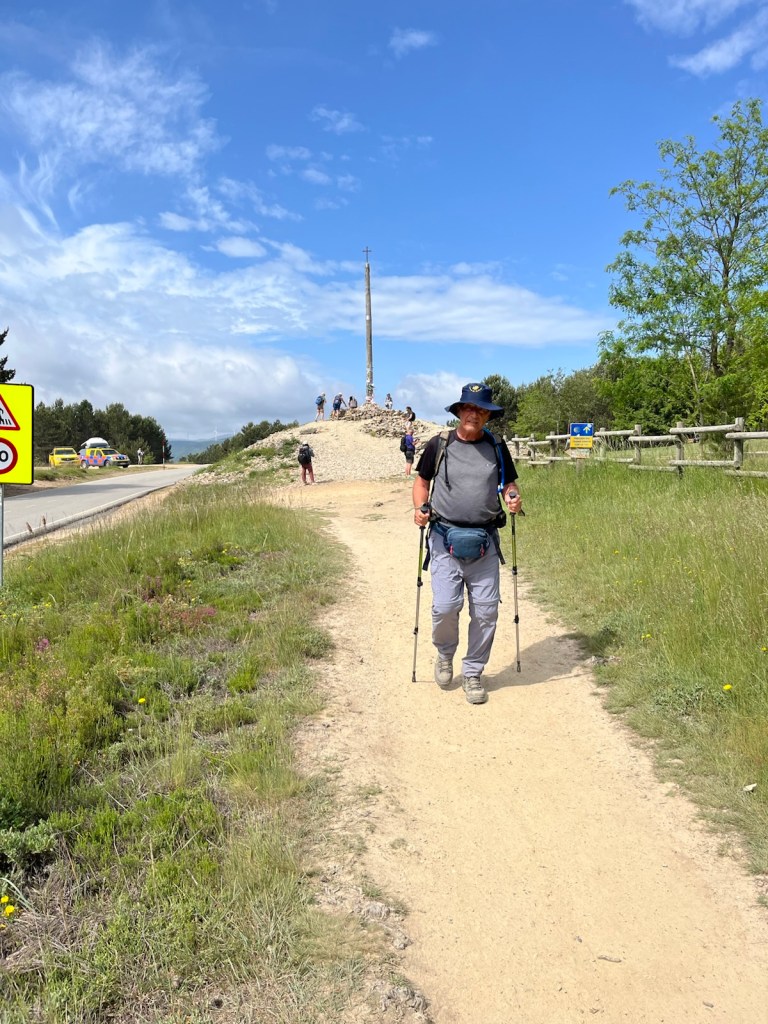
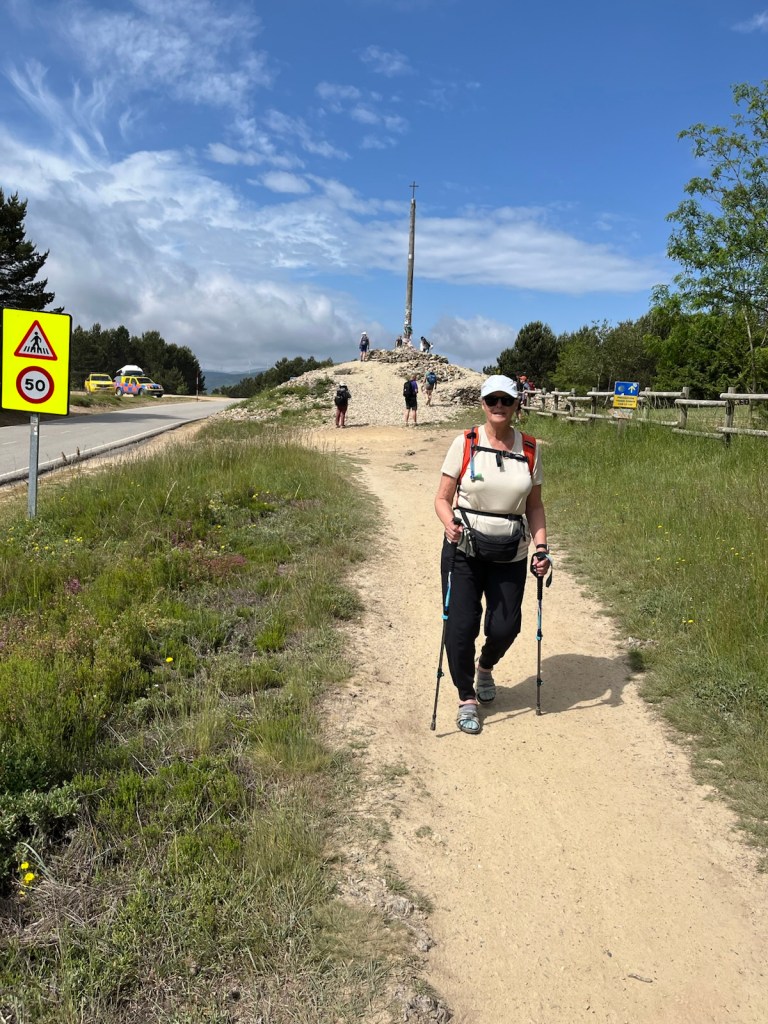
We arrived at the Cruz de Ferro (Iron Cross) after walking 1.4 miles from Foncebadon. After taking a few photos for ourselves and a nice couple from Norway walking their first Camino, we began the walk back down to Foncebadon.
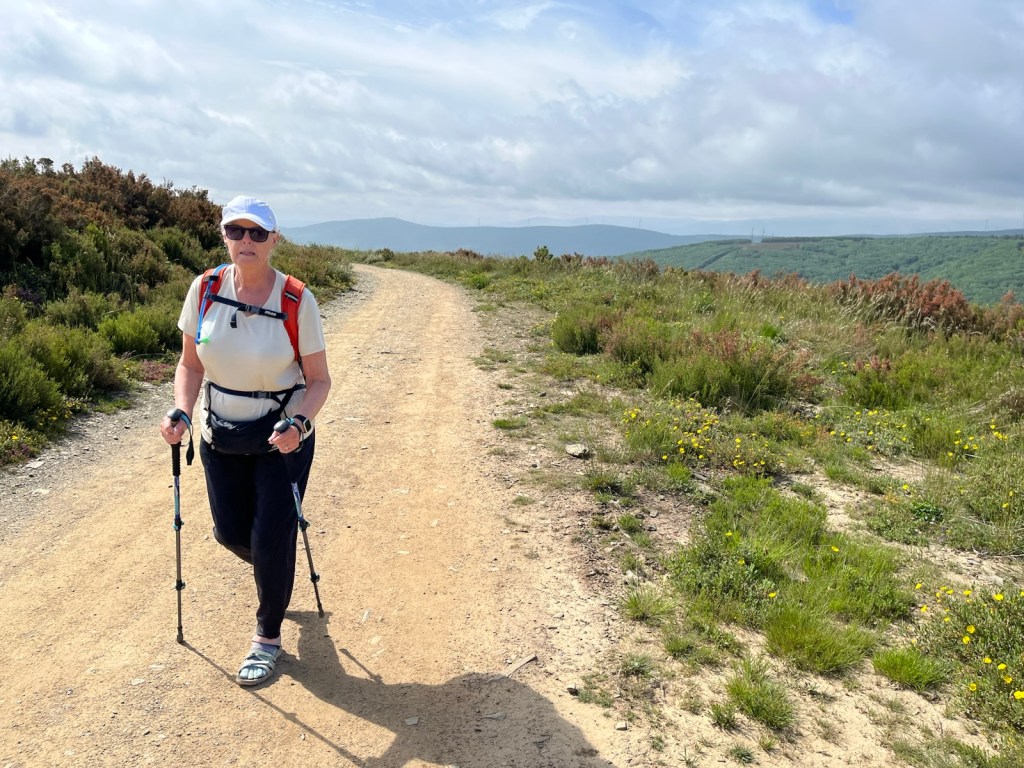
Jim heading back to Foncebadon.Linda on the return to Foncebadon.
The walk back took about 30 minutes, getting us back to El Trasgu for lunch in plenty of time.
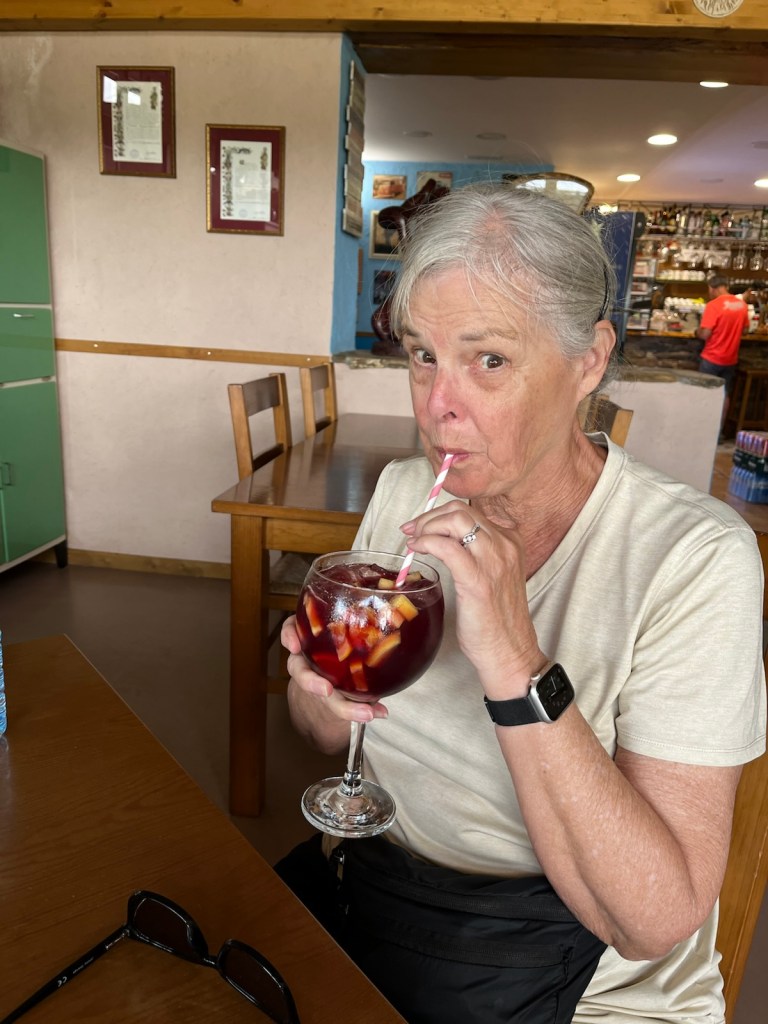
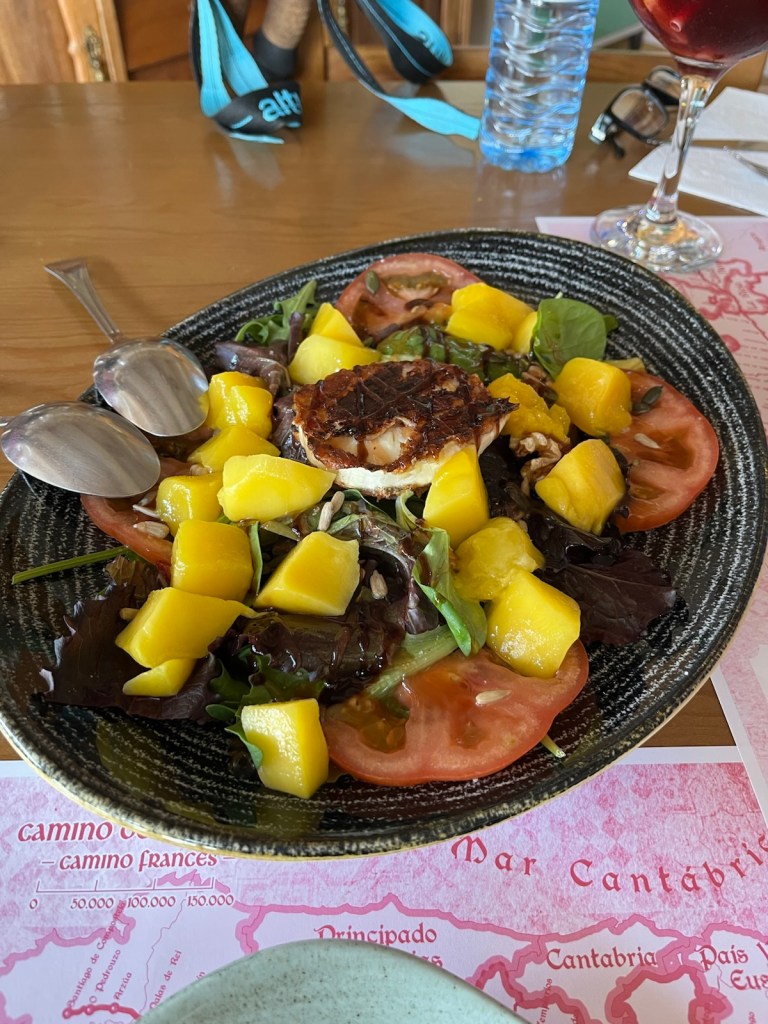
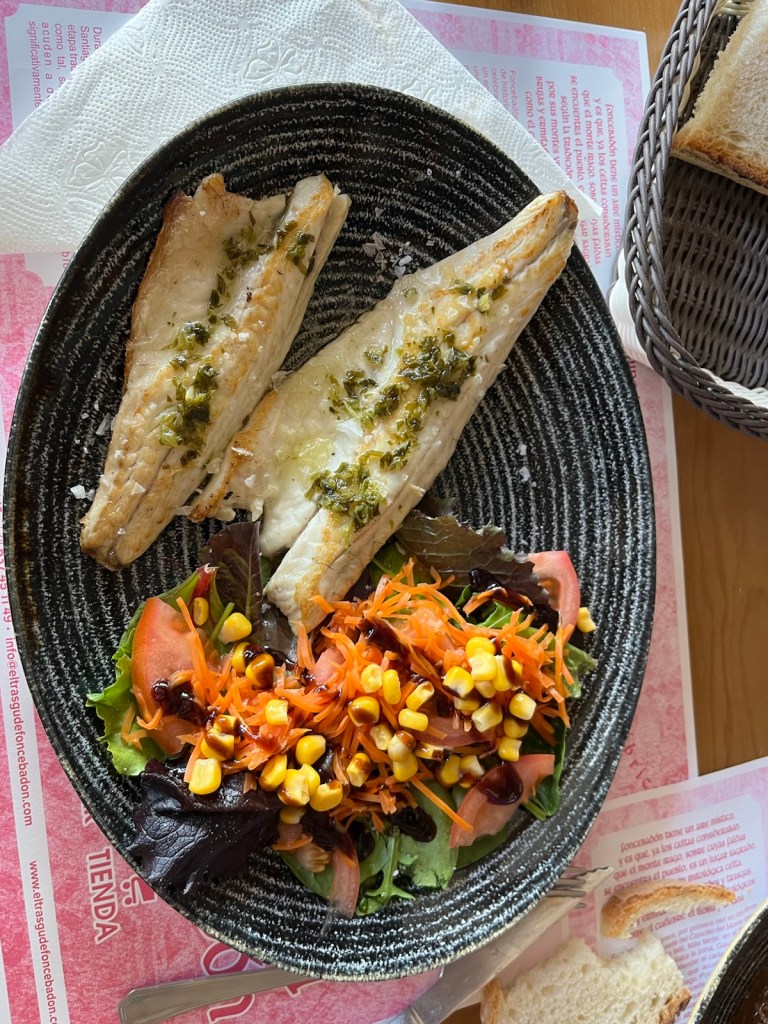
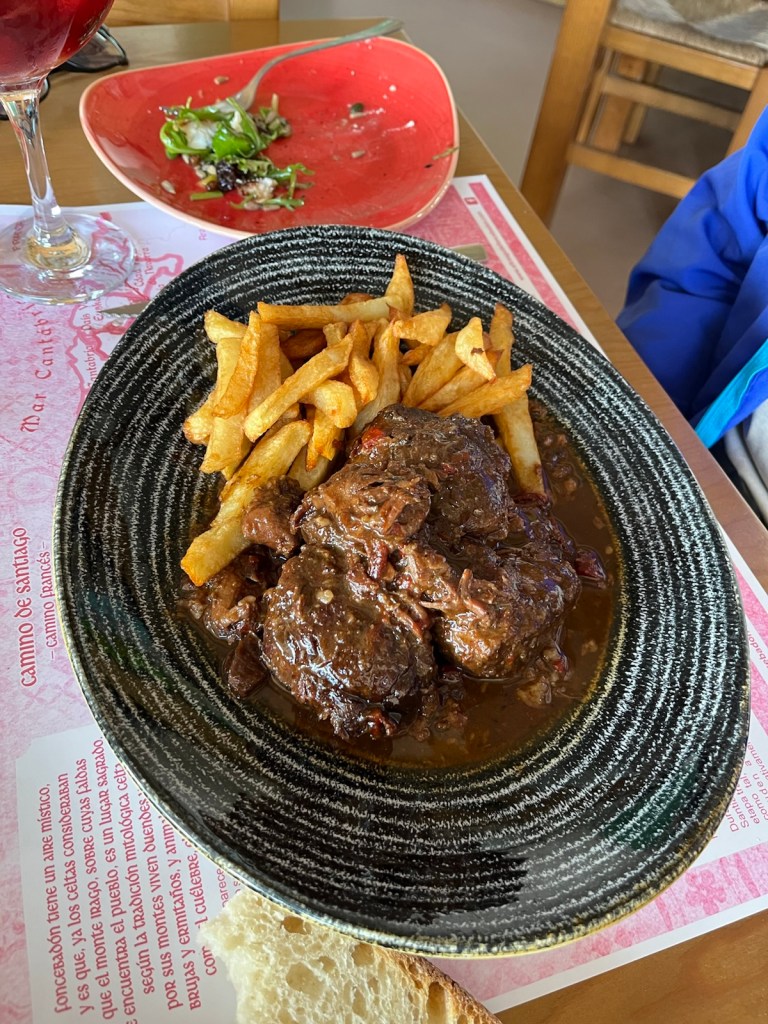
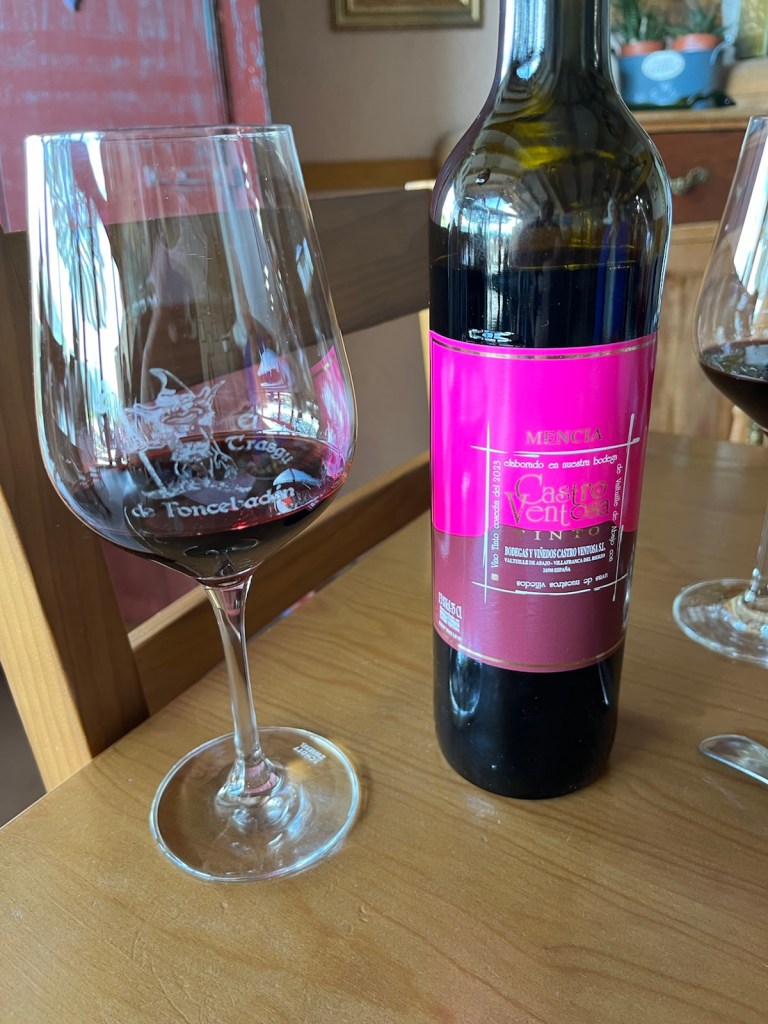
We rewarded ourselves for a tough walk today with a glass of sangria!We shared a delicious salad.We also shared a perfectly prepared (no bones) and savory sea bass fillet.And, we shared a melt-in-your-mouth slow cooked pork cheeks in a wine sauce,Our wine is a Mencía from a vineyard we will walk through a couple days from now. It paired perfectly with the salad, sea bass and the pork cheeks!
After lunch, we walked across the street to La Posada del Druida, checked in, and took the rest of the day off!!
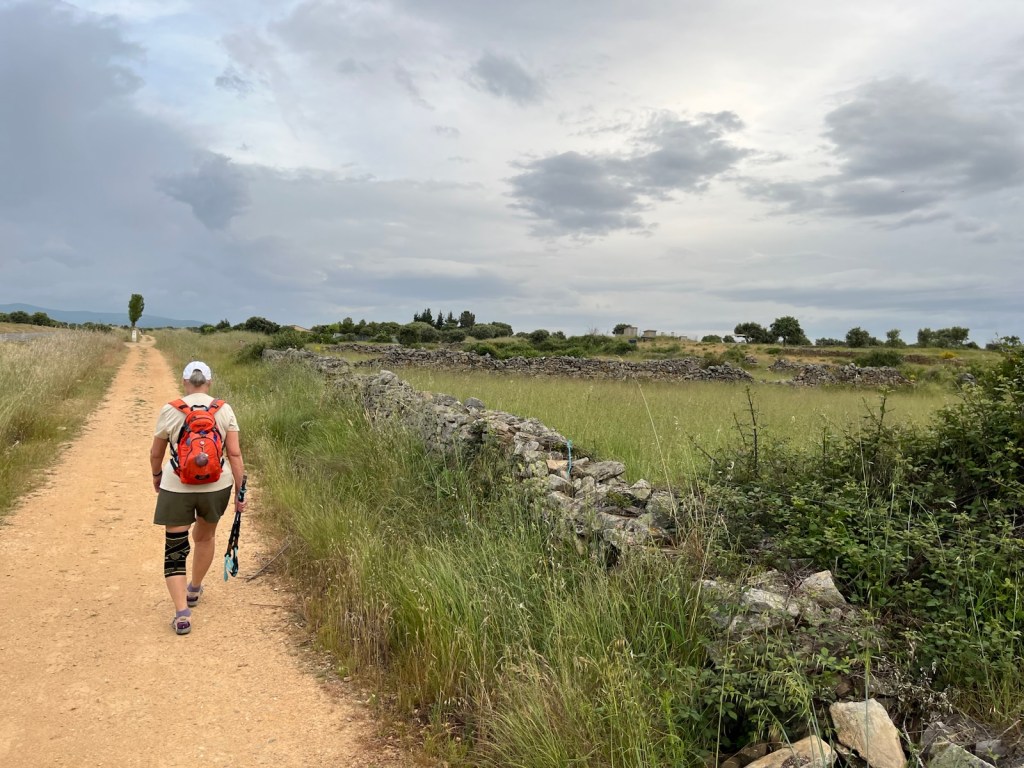
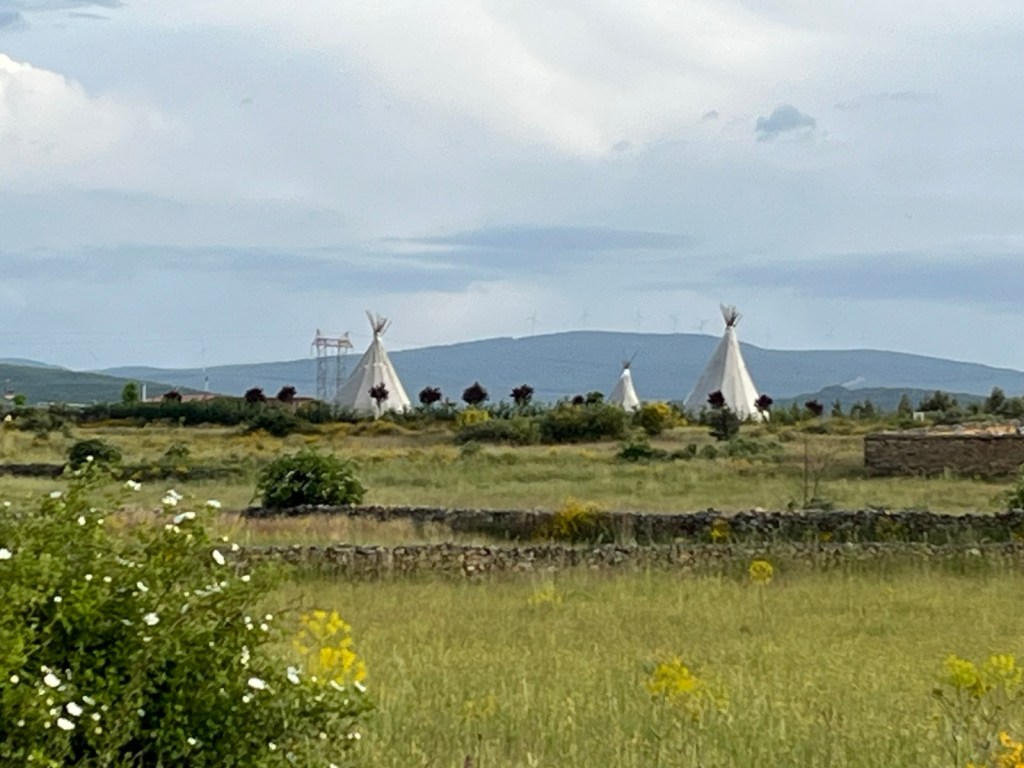
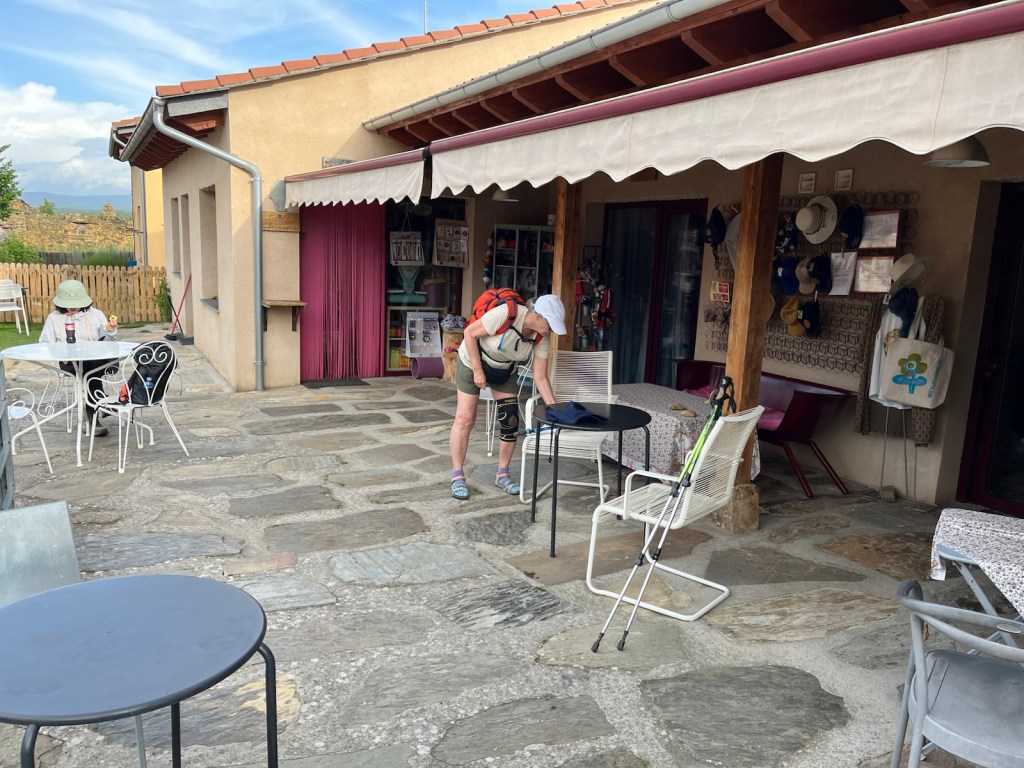
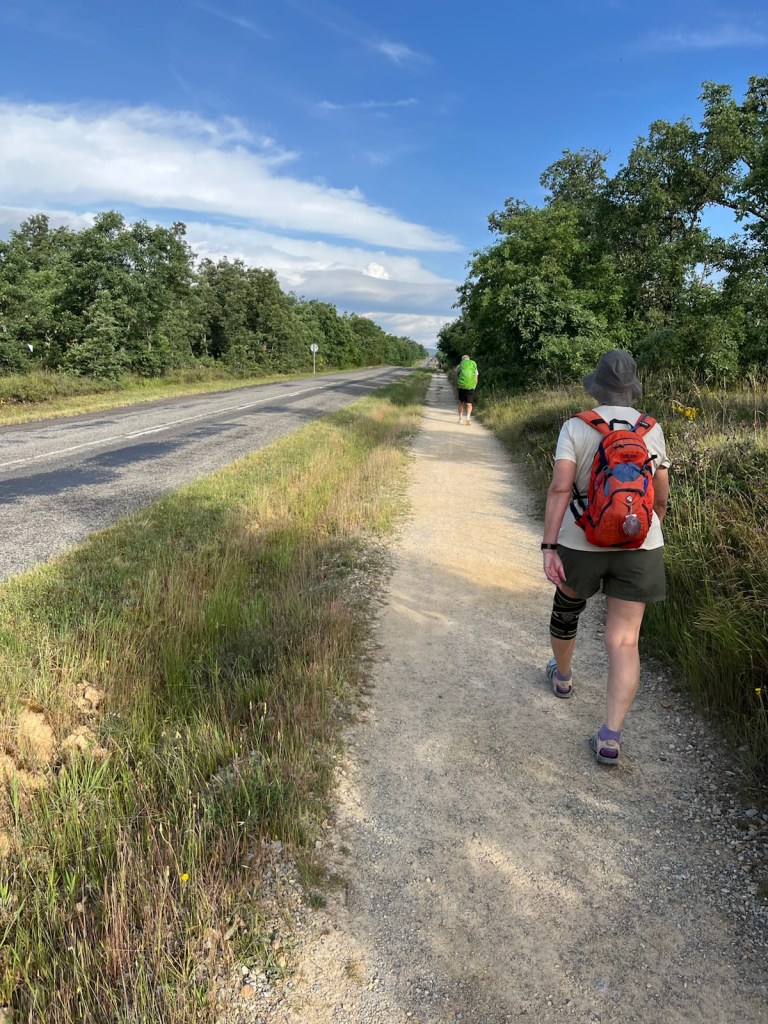
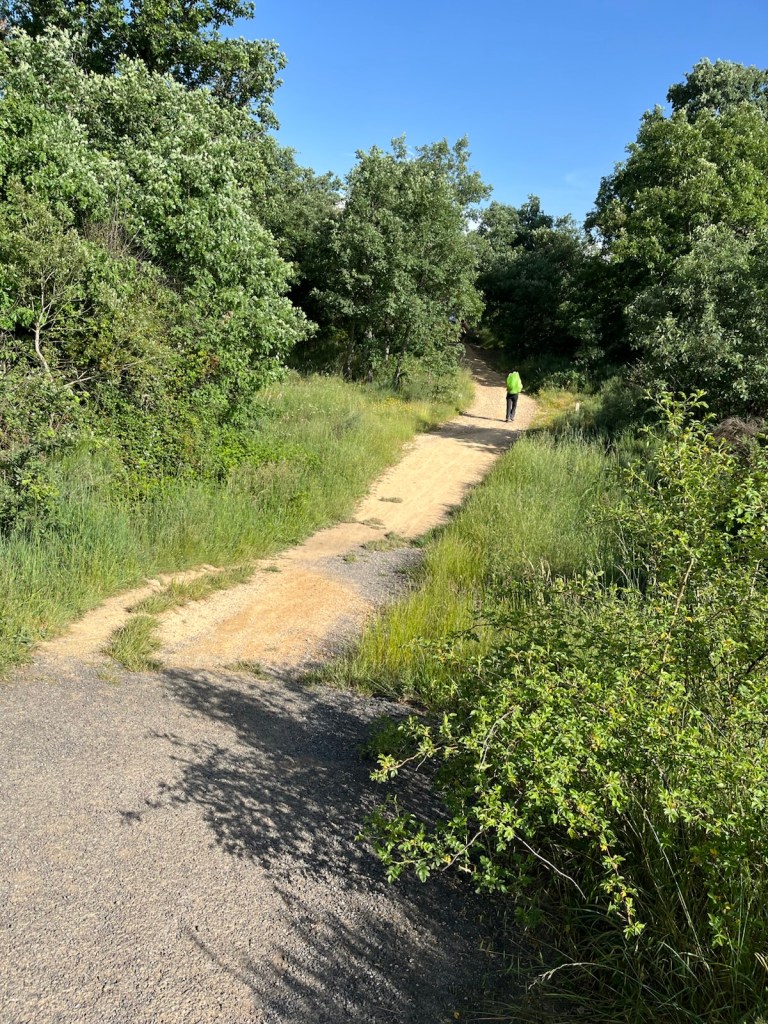
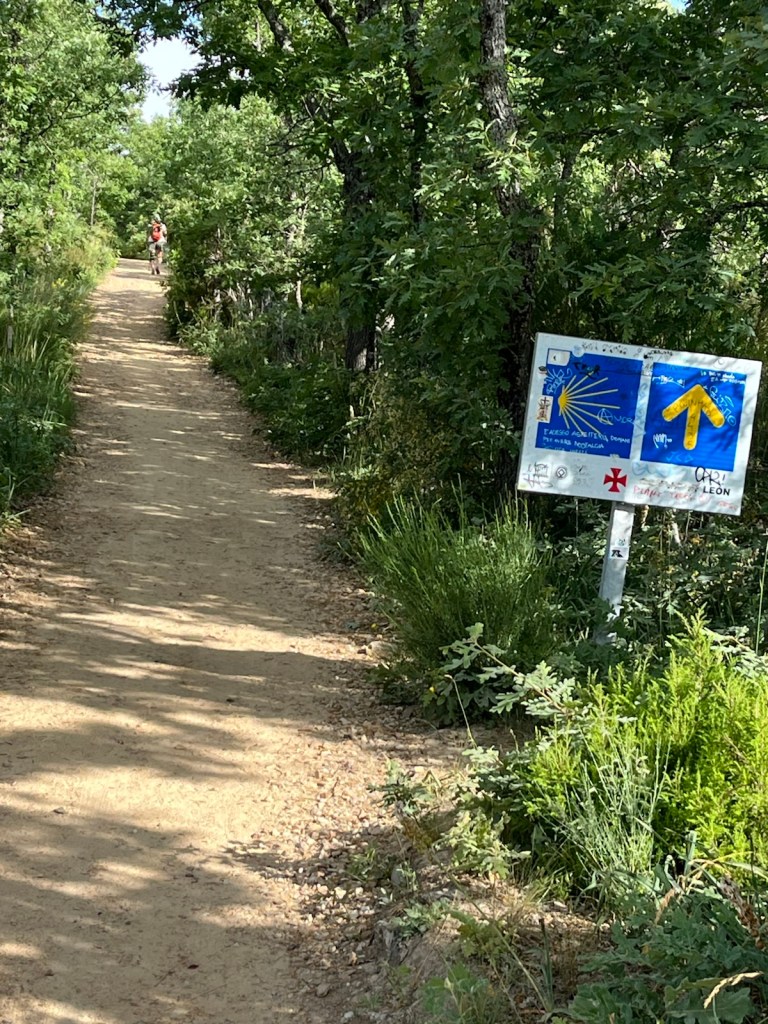
Daina prepared a breakfast for us (before the normal time) plus gave us several “to go” items to take with us. She then gave us a goodbye and “see you next year” hug and sent us on our way.As we left the village we also left the pavement and rejoined the dirt path.El Ganso, (pop.30) our first and only stop along today’s walk came at the 2+ mile mark. The Meson Cowboy albergue appeared to still be operational with its huge Teepee bungalows.The only sign of life in the village was the small shop that serves coffee & tea and other pilgrim essentials and offers restroom facilities. We bought a few items to add to the local economy and continued on.Leaving the main road as we left Ganso, we rejoined the dirt path.The walk looked pretty much the same most of the way to Rabanal.Still walking along the road.Rabanal in the distance and the road on our left, barely hidden by the brush.Finally a change of scenery as the path heads into the forest for a mile or so.We usually take the road at this point, but today, to gain a little shade, we stayed on the path until it returned to the roadside just outside of Rabanal.Rabanal is just around the corner.
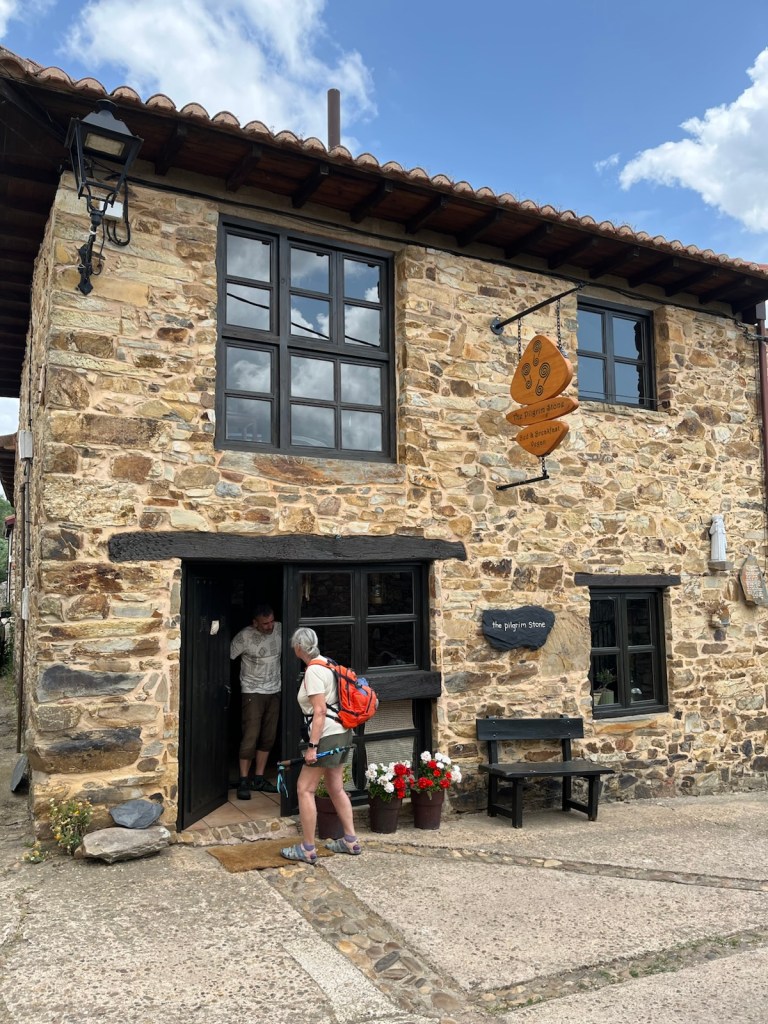
We arrived at 10:30, stopped by Pilgrim Stone and confirmed our checkin time of 1:00. With very limited options to fill the time, we walked to the end of the village, adding another 1/4 mile to our walk and perched outside a familiar hotel/restaurant until they opened their dining room for lunch.
We chatted with a young lady who was also waiting nearby. She was on an electric bike and was waiting for her partner to catch up. She was from Barcelona and said that her trip from SJPDP to Santiago by bike would only take 2 weeks!
We also chatted with a couple from Monterey, California. It was their first Camino, they both were 60 had just recently retired and had an open ended date for their return home after reaching Santiago. The conversation carried over into having lunch together and sharing Camino experiences. We said our goodbyes and will likely cross paths again between here and Santiago.
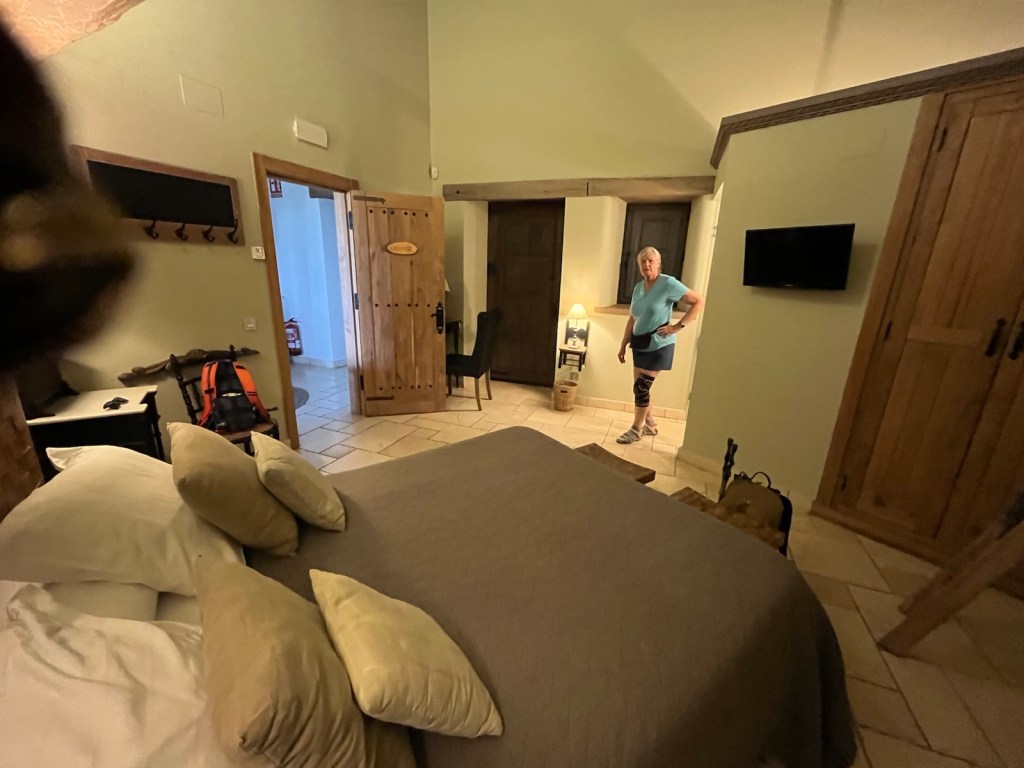
Linda entering the front door of our B&B accommodation for the night.Getting settled in our room at Pilgrim Stone B&B.
We checked in at 2:00 p.m. and spent a relaxing afternoon and evening.
The walk between Santa Catalina and Rabanal, especially in the summer, has typically been a grueling one for us. But today, partially because of the cooler weather, it seemed much easier for us than before. Go figure. Each day on the Camino is always different, to one degree or another for different reasons.
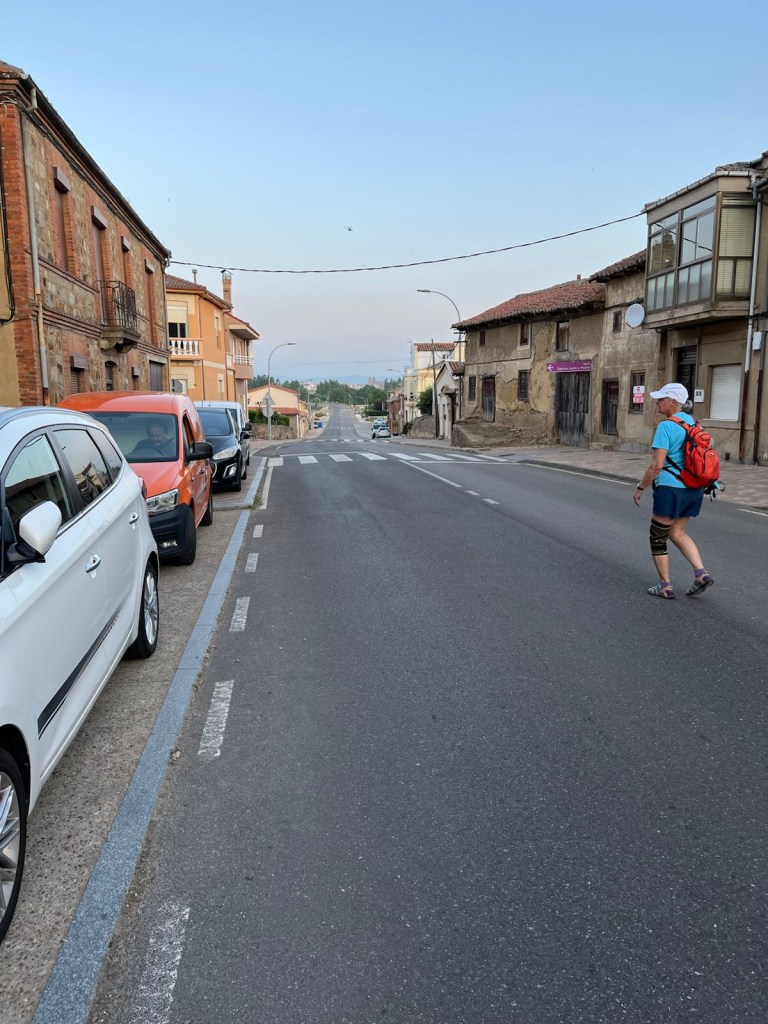
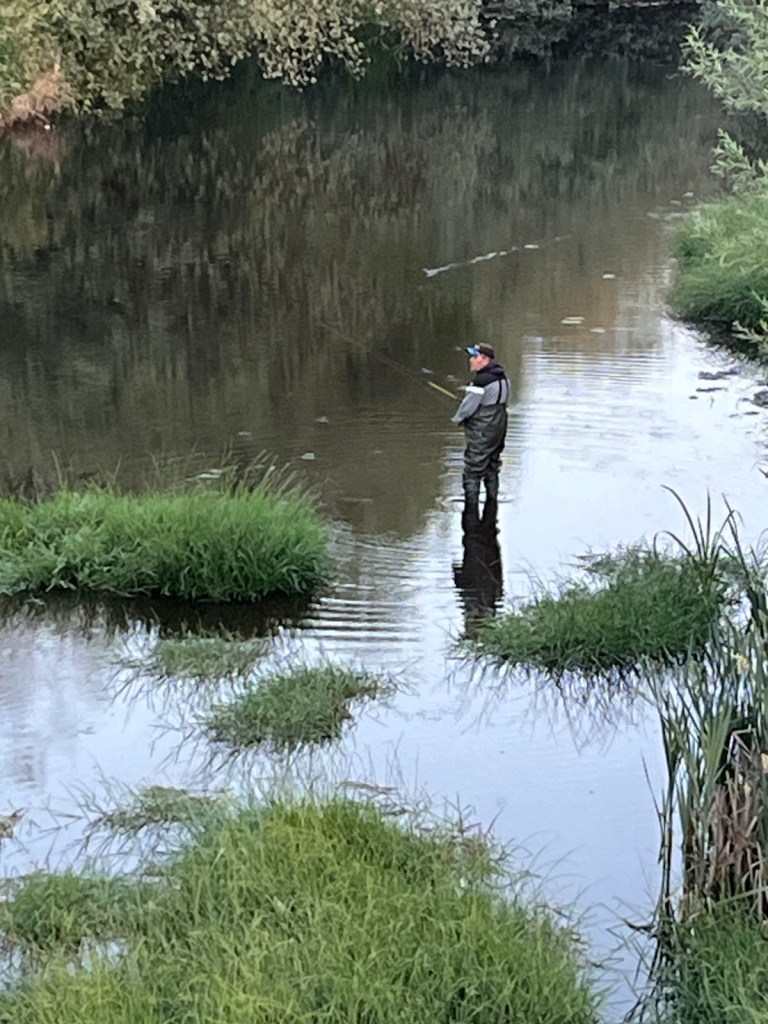
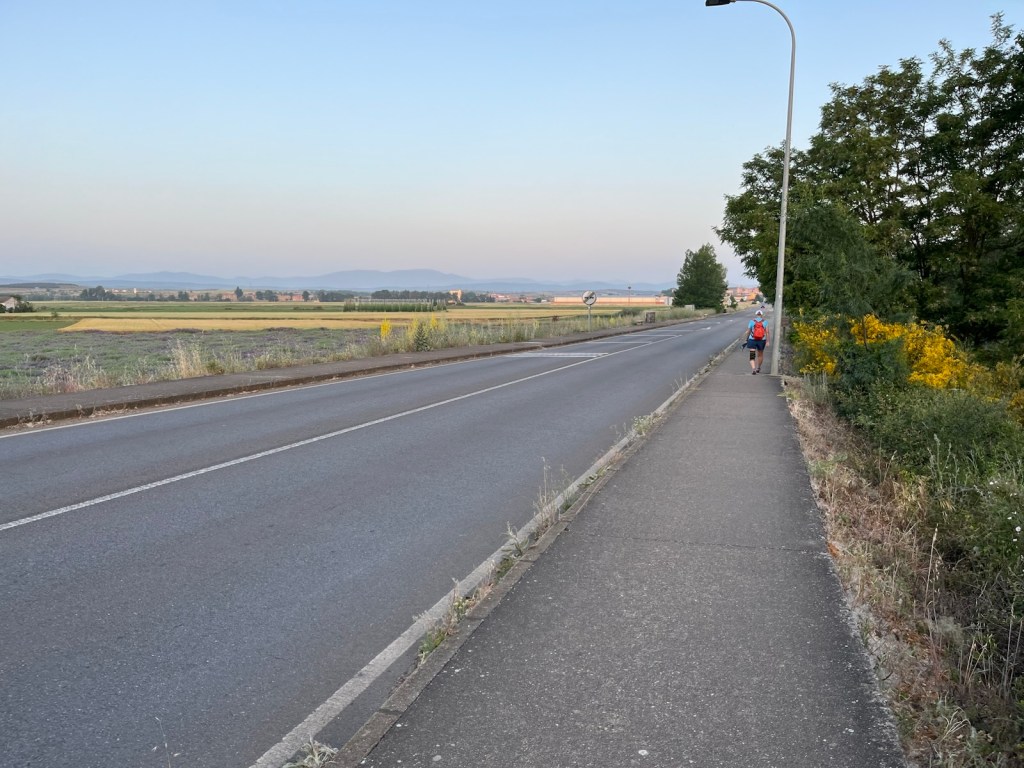
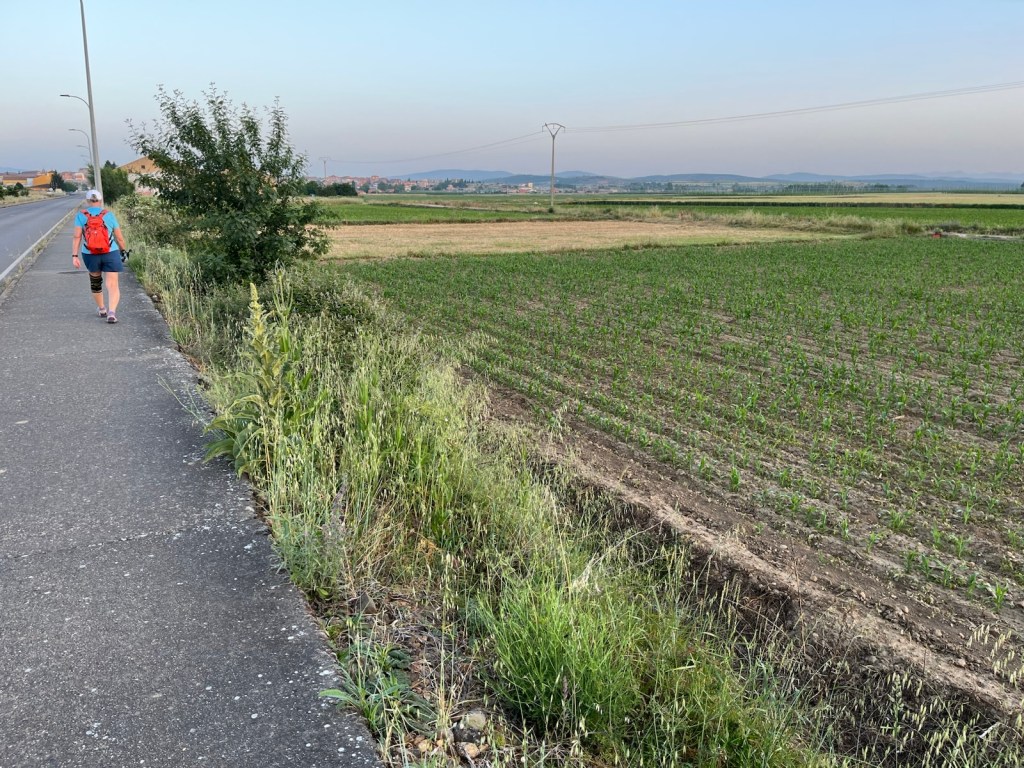
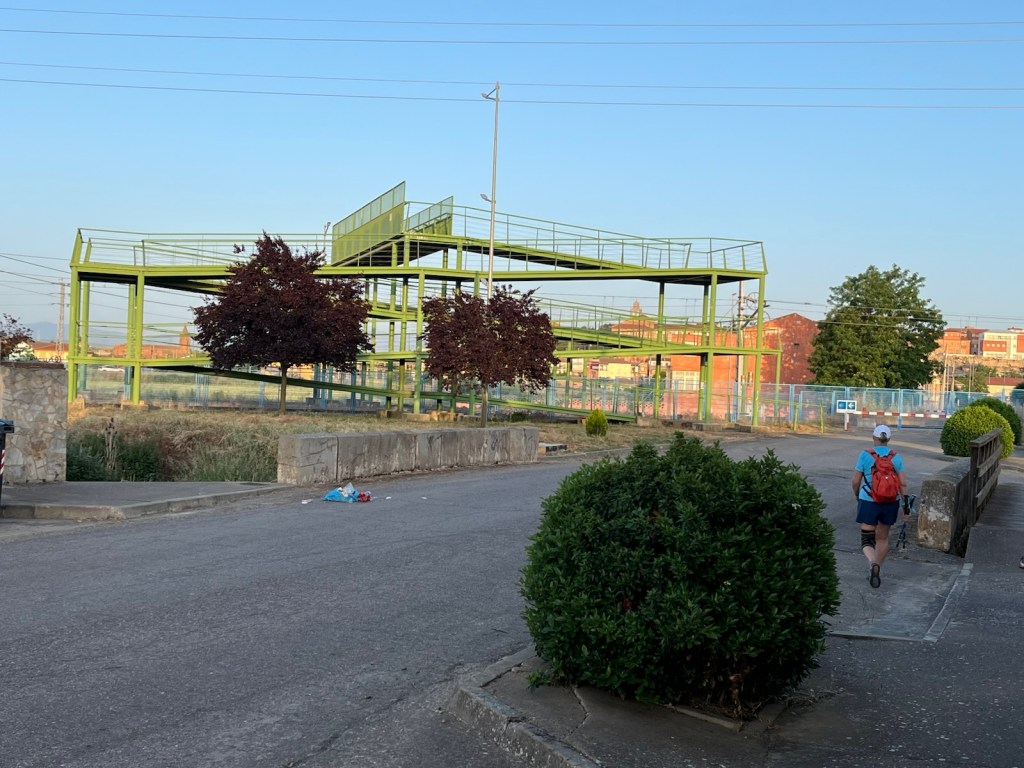
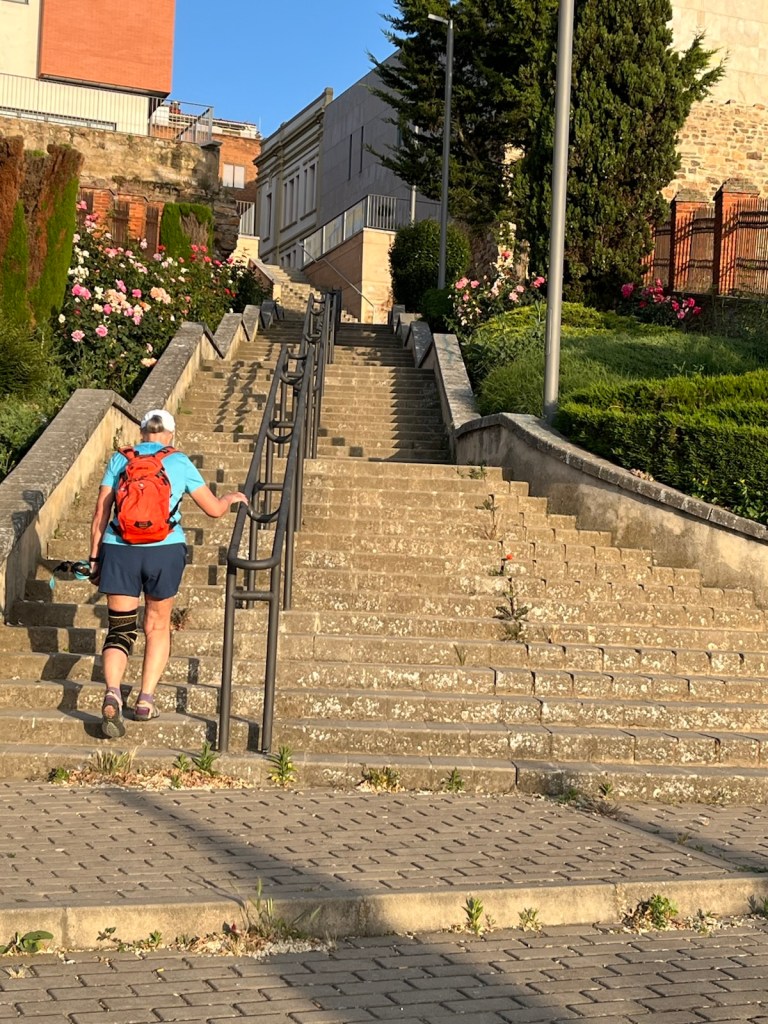
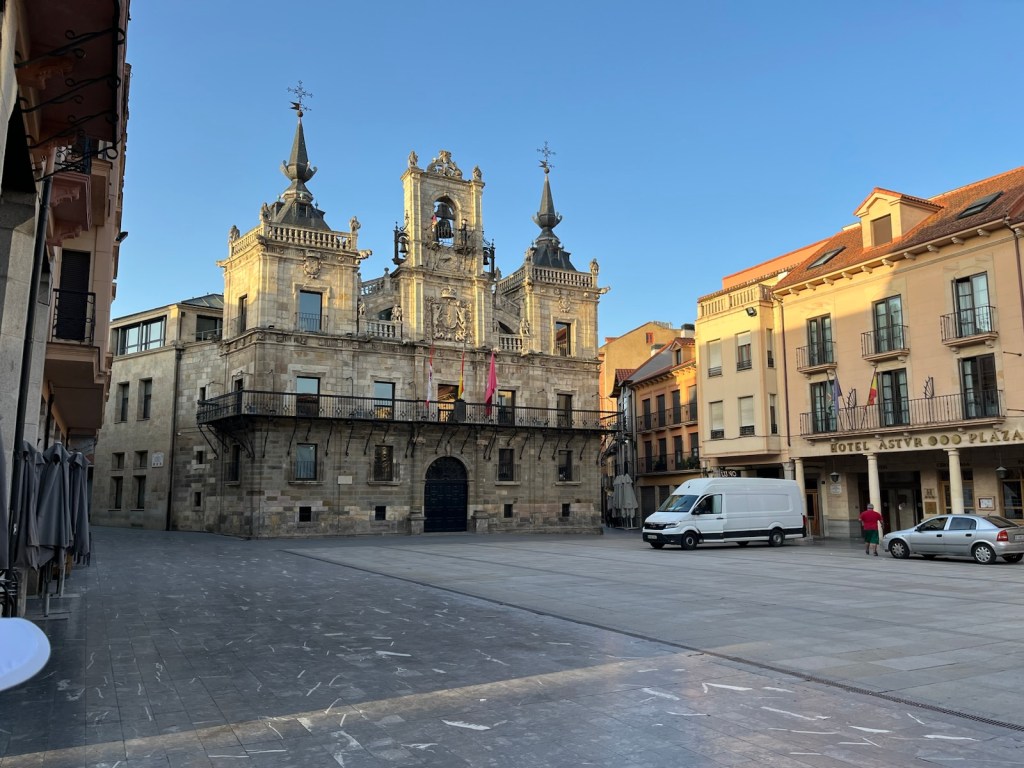
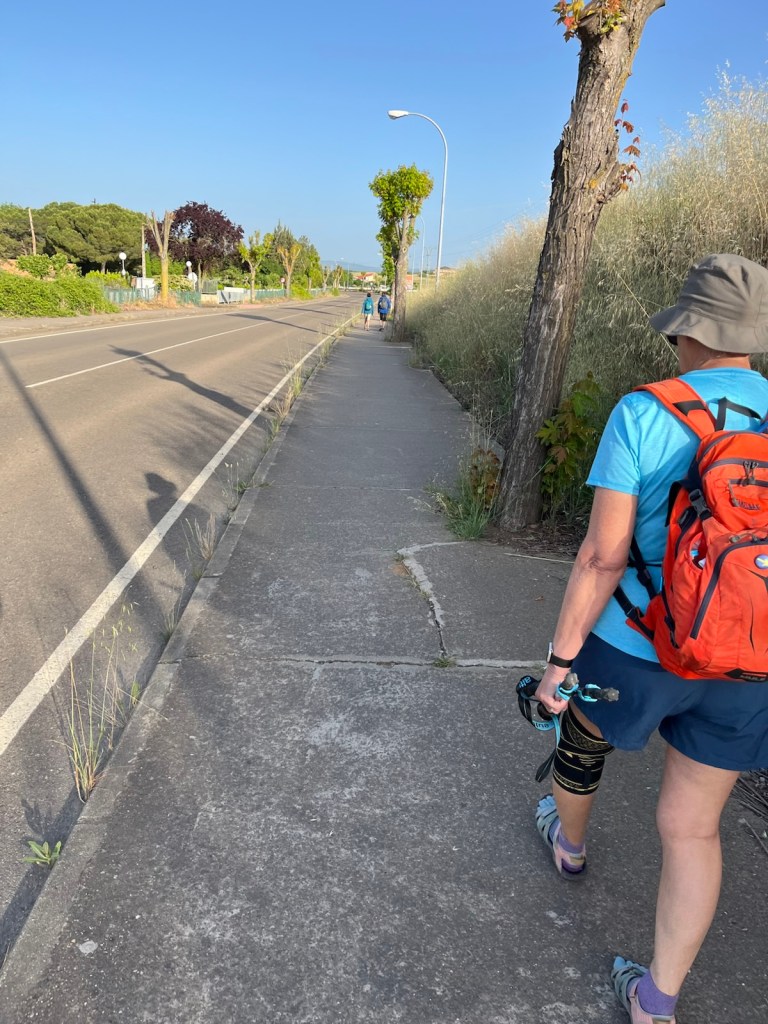
We left San Justo this morning at 6:50a.m.Trout fisherman waiting for a bite as we crossed over the Rio Tuerte.The sidewalk version of the Camino between San Justo de las Vega and Astorga.This field was filled with 5-6 ft high corn when we walked by last year in September.Up ahead is structure for pilgrims and others to get safely over the train tracks.A steep road or steps are the two options for entering the old city of Astorga… we chose the steps.Astorga town hall in the Plaza Espana
Astorga is a pleasant city with interesting and varied historical buildings, just the right size to not be too overwhelming with main sites confined to the small Old City. First a Celtic settlement, Astorga developed into an important Roman city at the crossroads of the Via Trajana and the Vía de la Plata, as well as an important center for Christianity. According to legend, both St. James and St. Paul preached here. The bishopric of Astorga was one of the earliest Christian titles. The city passed to the Visigoths in the 5th century and was destroyed by the Muslims in 714, then reconquered by Ordoño I in the mid-9th century. After León was destroyed by Al-Mansur’s army, Astorga acted as the capital of the kingdom.
The city flourished with the pilgrim trade and housed 21 pilgrim hospitals, the second most on the Camino Francés (after Burgos). One of these hosted Saint Francis of Assisi on his pilgrimage in 1214.
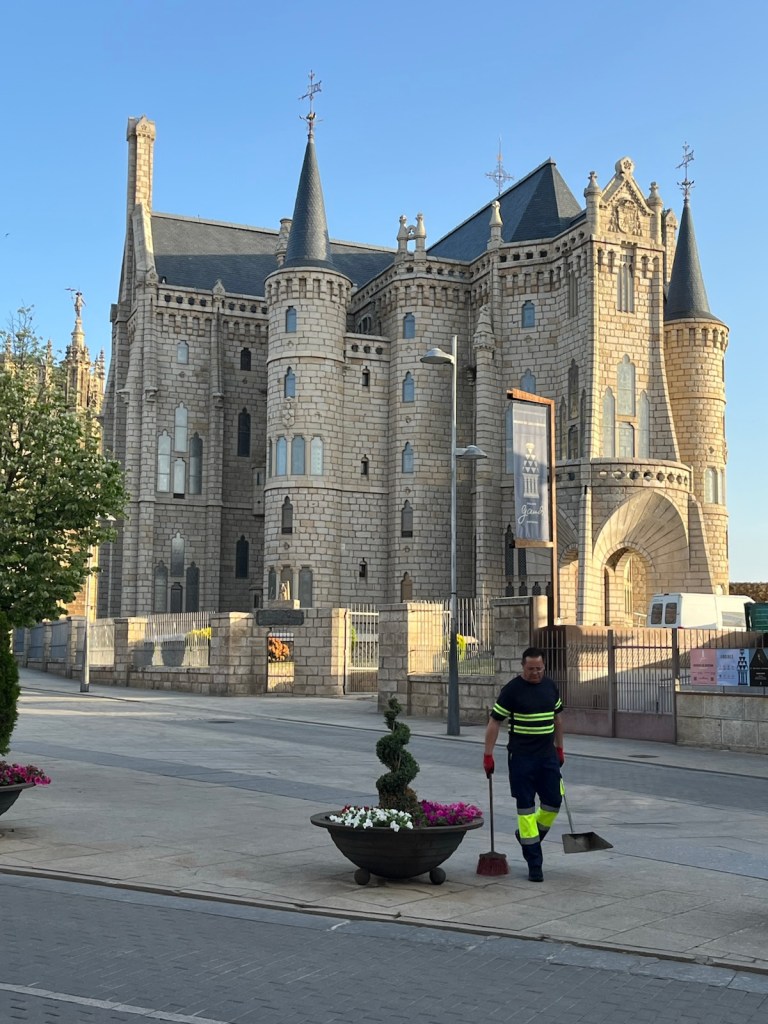
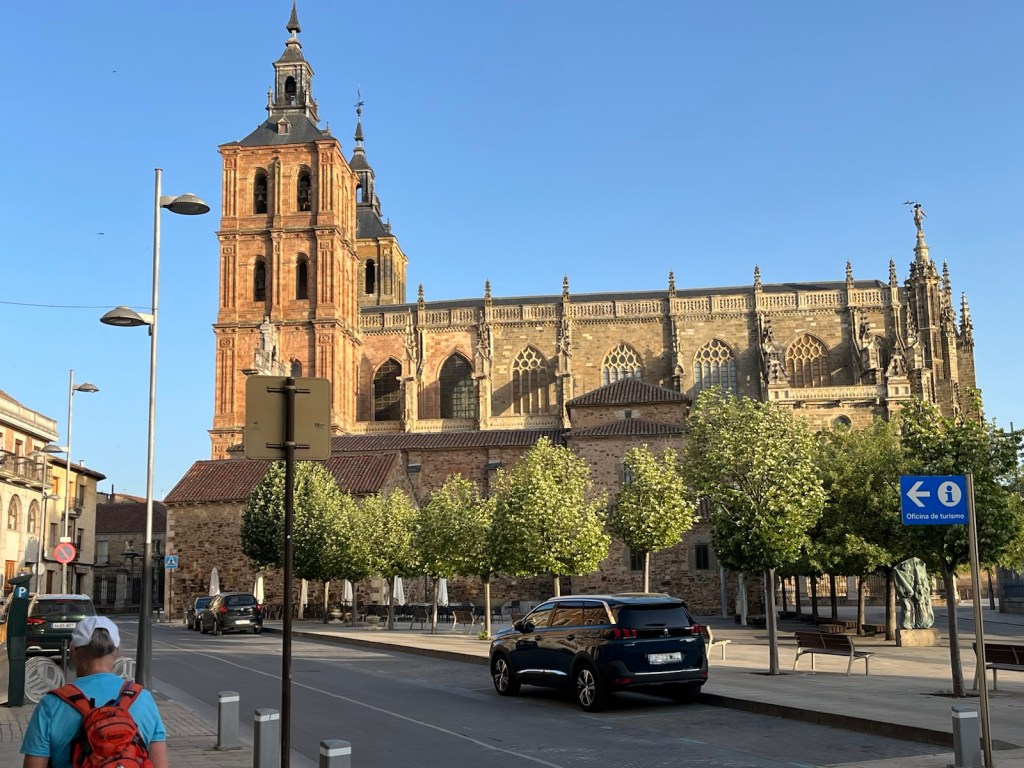
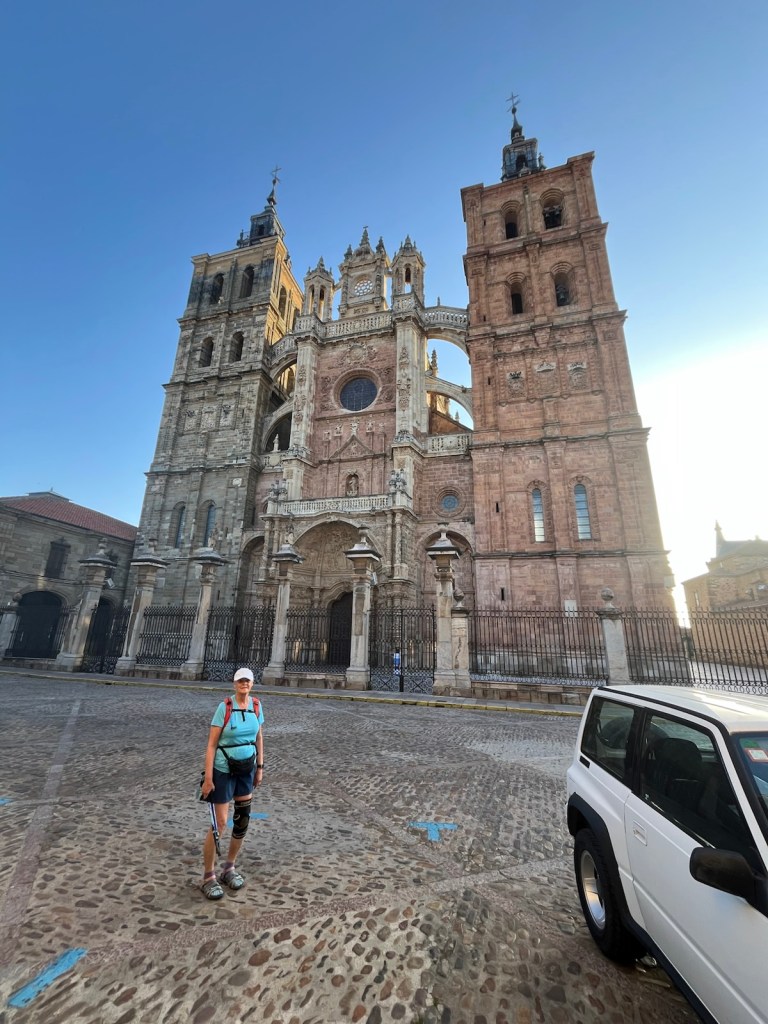
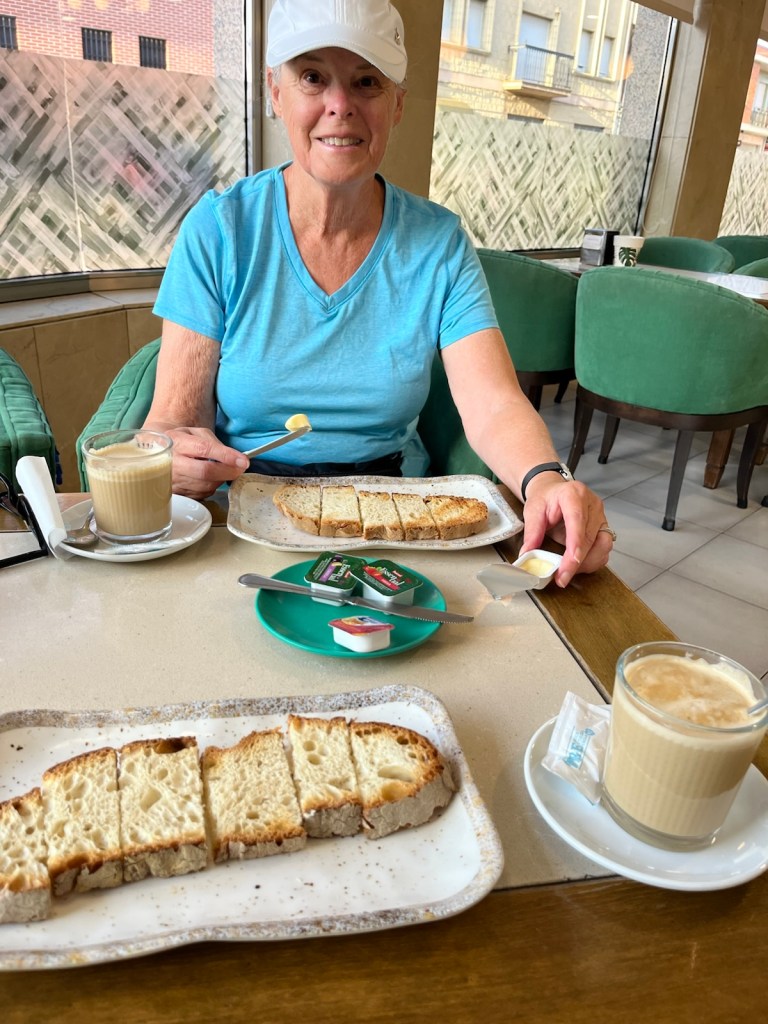
Wall mural in AstorgaPalacio Episcopal de Astorga (designed by Antoni Gaudi)Catedral de Santa María de AstorgaMain entrance of Catedral of AstorgaOur breakfast stop before completing our walk through Astorga.Leaving Astorga on a sidewalk.The sidewalk became a familiar dirt path.Walking through the Maragato community of Murias de Rechivaldo, (pop. 108).
The Maragato culture, centralized in about 40 villages around Astorga is rumored to be descended from the Berbers of North Africa, who arrived with the Muslim conquest in the 8th century and later converted to Christianity. Maragato men traditionally worked as muleteers, mule drivers who transported goods (especially fish and gold) around the peninsula.
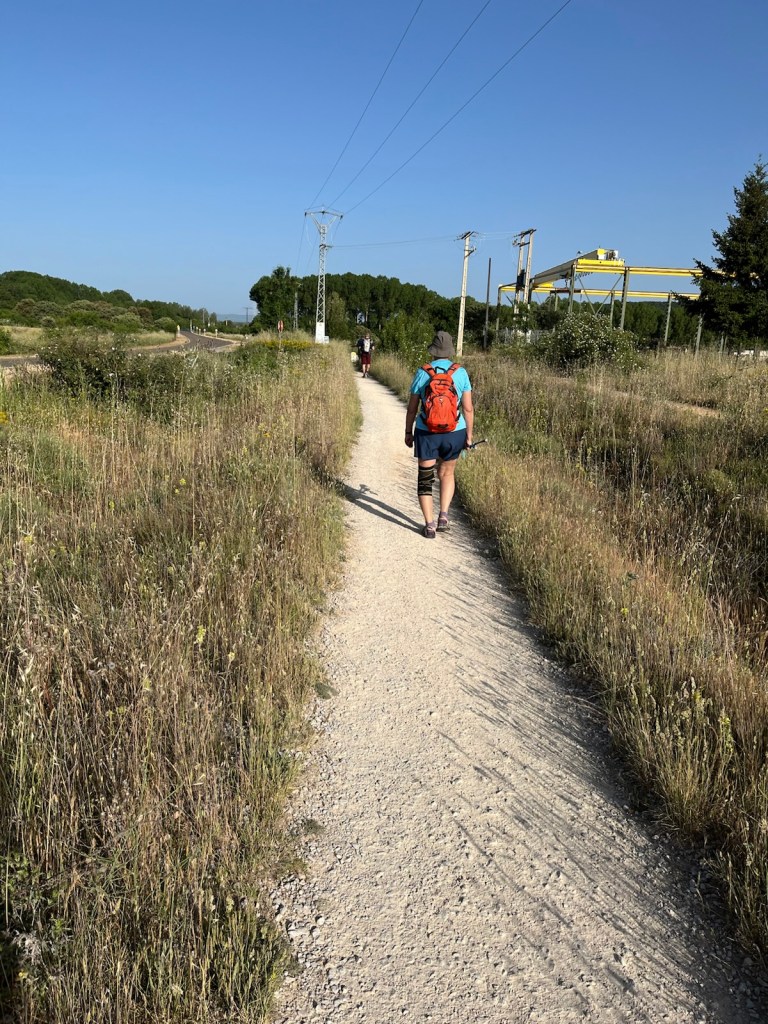
After a short break, we left the Maragato village, rejoined the dirt path and continued for several miles as we climbed toward the Irago Mountains.Arriving at the entrance of Santa Catalina de Somoza with the Iglesia de Santa María in the background.
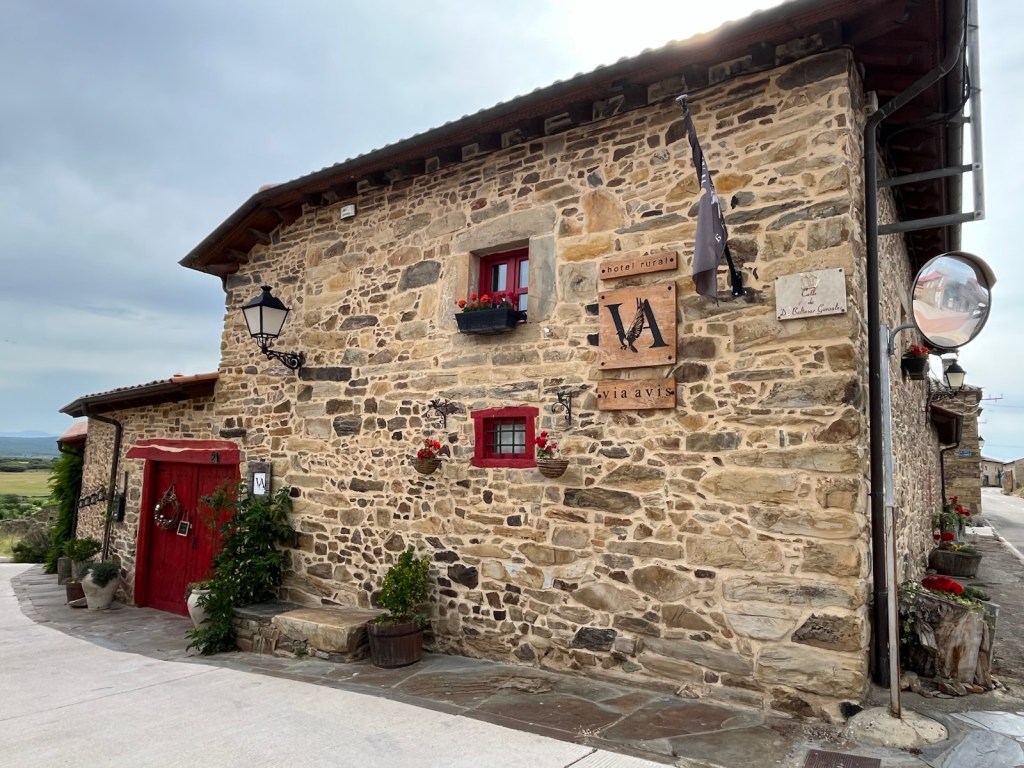
This is our 7th visit to Santa Catalina and our 3rd to Via Avis. Translated, ” the Birds’ Way” it refers to the belief that the birds were the guide for souls on the way into Paradise.
The house is restored from the original 1776 structure. It’s a very upscale B&B with 6 double bedrooms, each with its own personality, but always related to birds and their mythology.
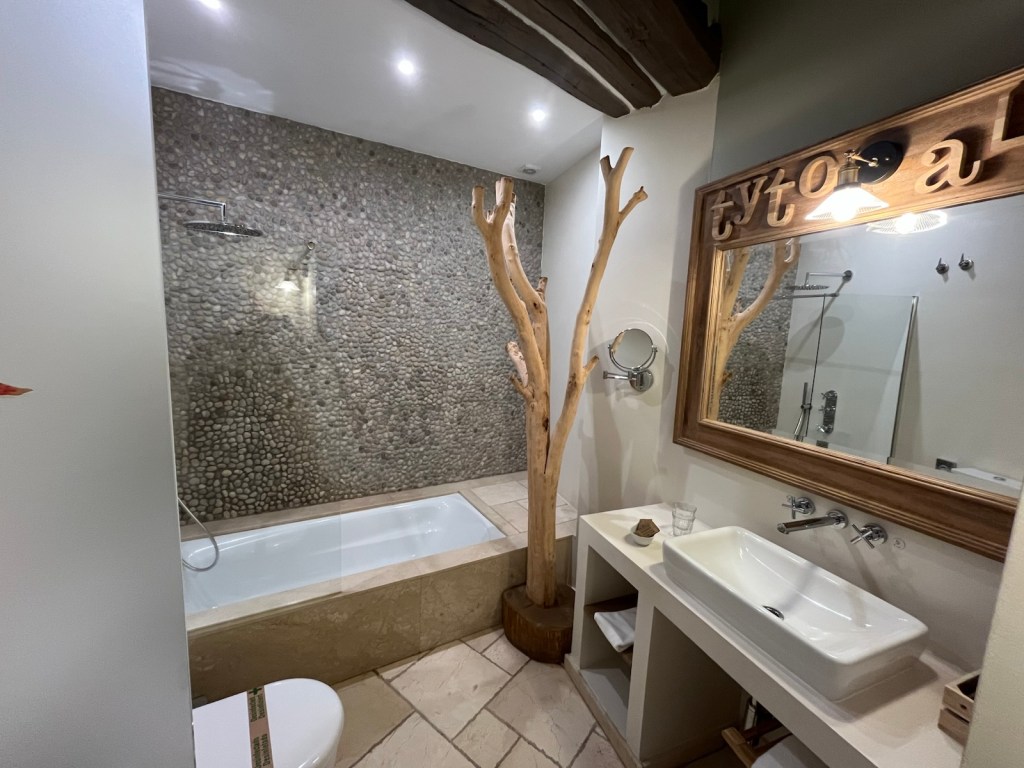
Our bedroom located just off the house living room, bar/kitchenette and large windows, which provide inpressive views of the surrounding Maragateria region.Our unique bathroom. In our opinion, Via Avis is among the top accommodations on the Camino Frances.Via Avis- Santa Catalina de Somoza
After a having pizzas for our main meal in one of the two bars in the village (pop.60), we spent the afternoon chatting with a young man from Toulouse, France who started the Camino in León just a day ago, with his father, riding bikes. We also chatted with a lady from the Netherlands who had recenty moved to Santa Catalina and was working part time with Carlos and Dainia, our Hosts. As the day wound down, we reverted to our routines and prepared for tomorrow’s walk on the Camino Frances.
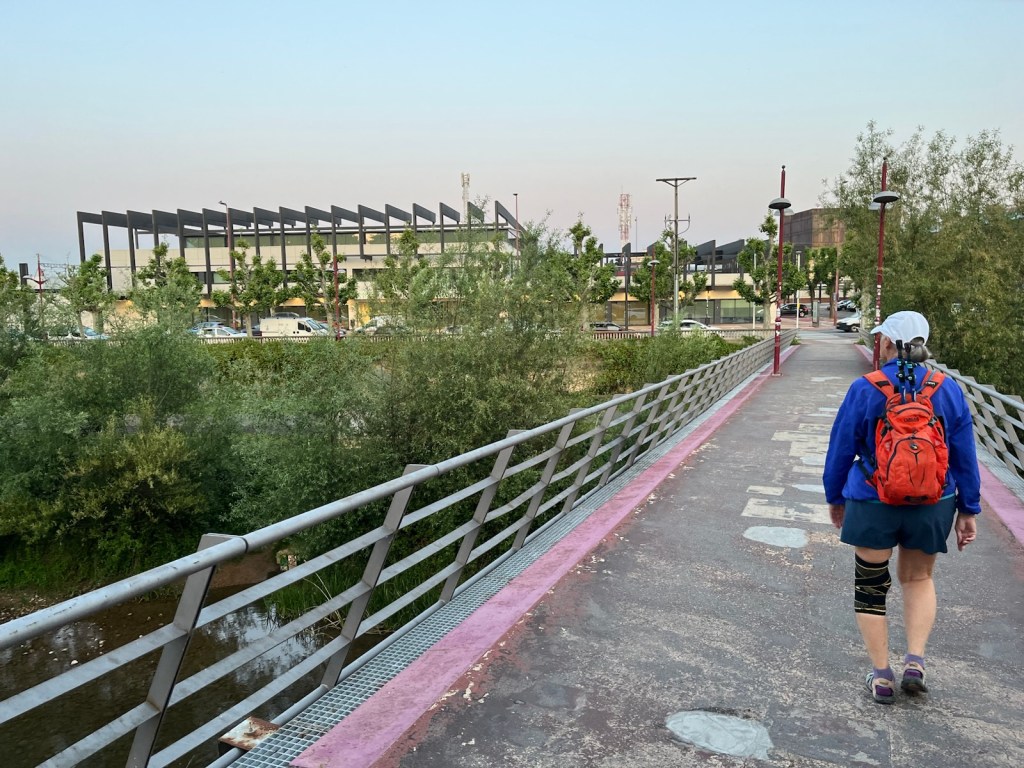
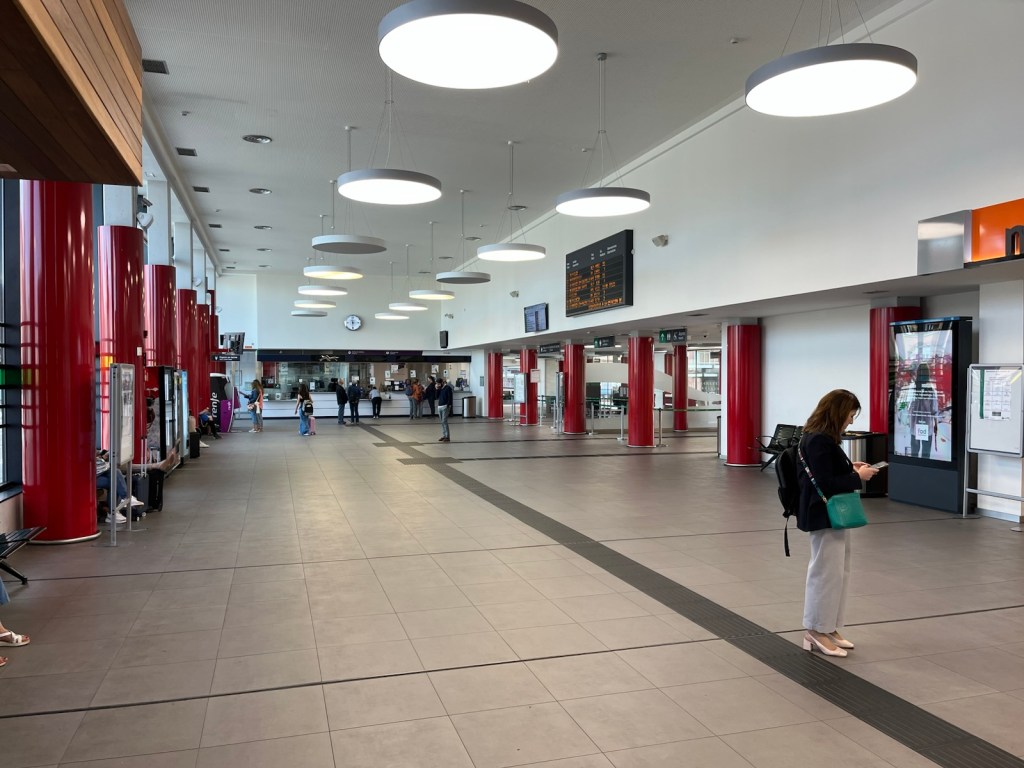
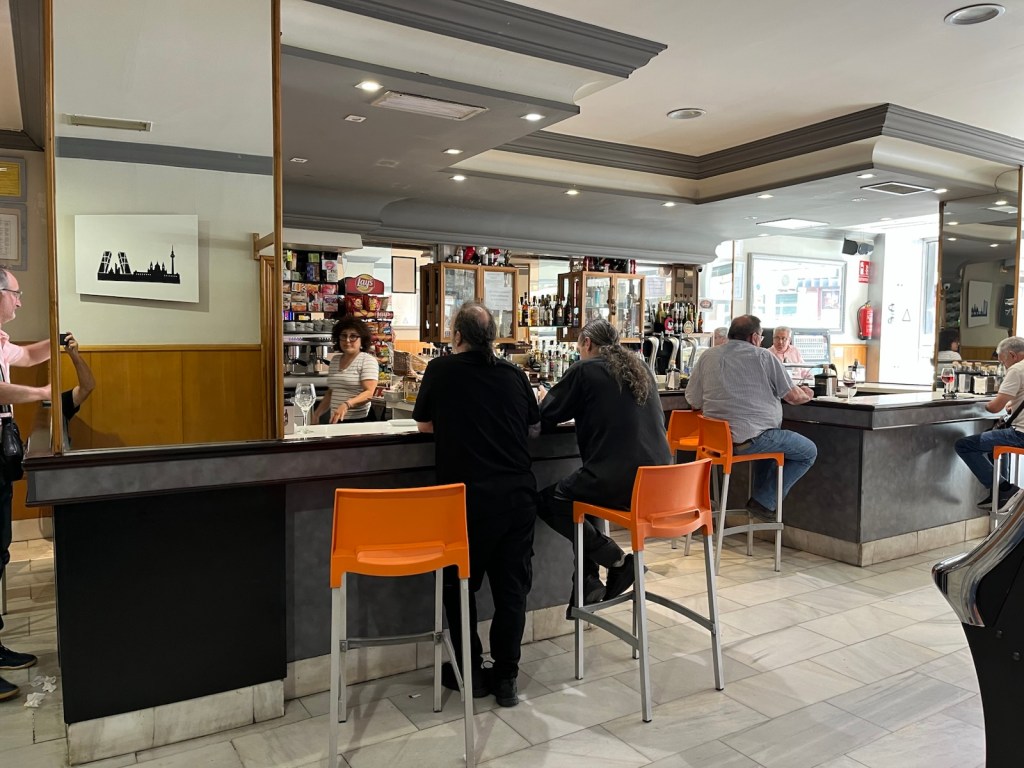
So, as planned, we walked the 20 minutes from our apartment to the León bus station, at 6:30 this morning. Unplanned was our wait until 7:30 for the bus station cafeteria to open.
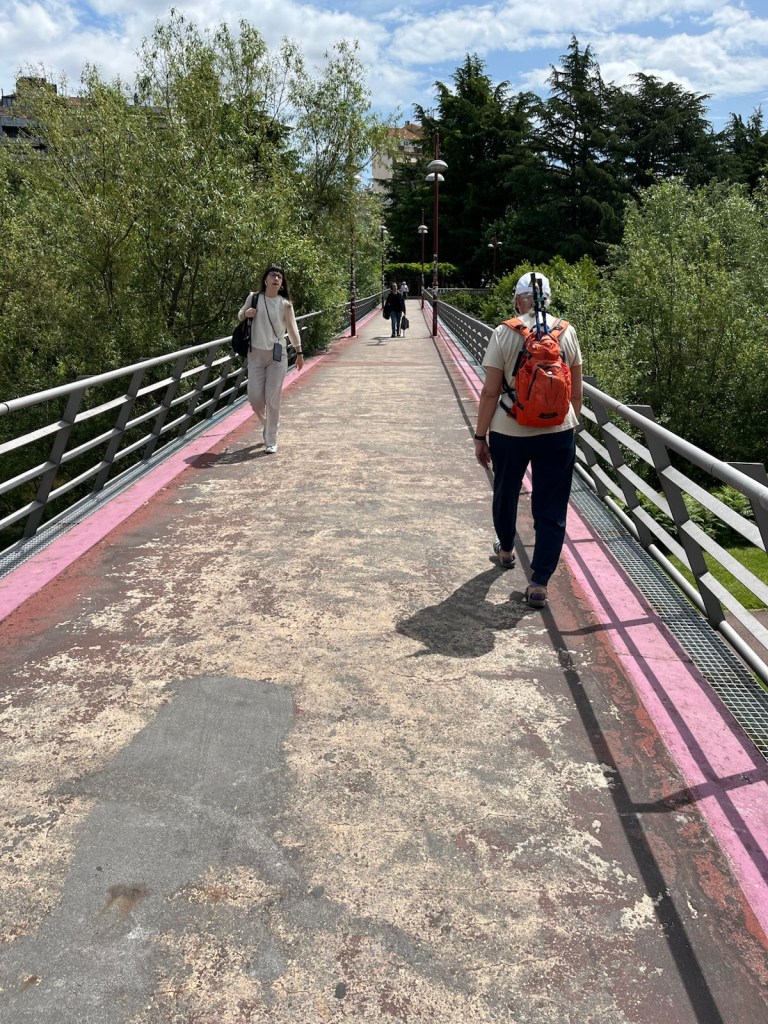
Our early morning walk to the bus station, crossing the pedestrian bridge… Bus station is the modern structure to the left.
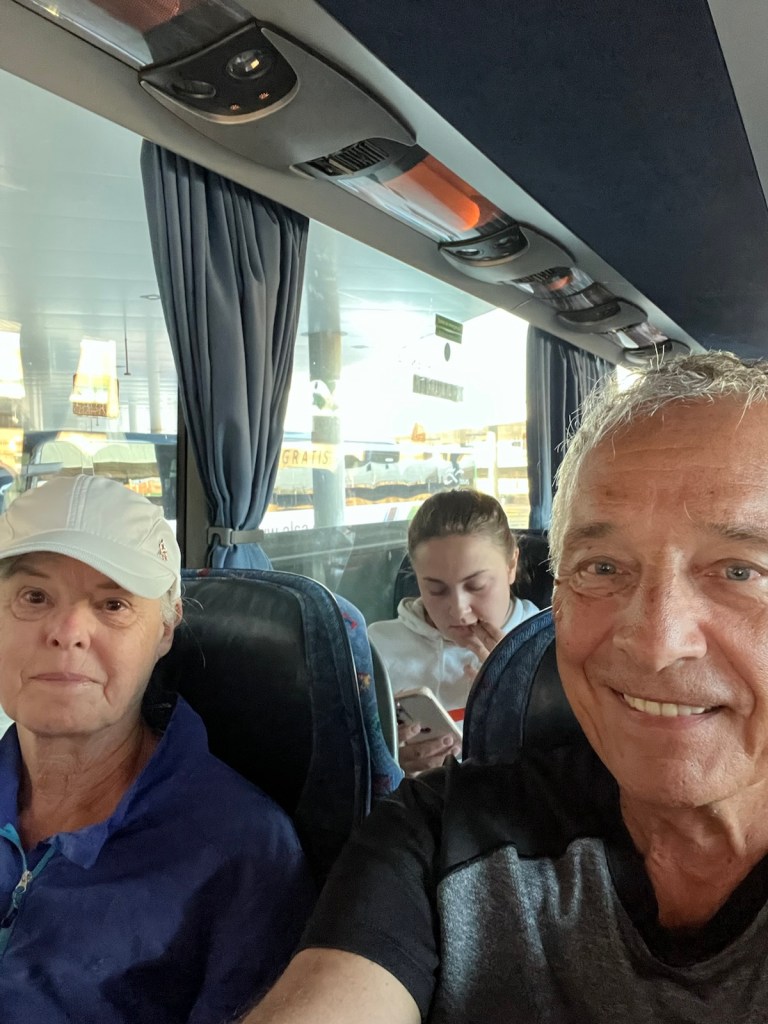
We had a tiny cafe con leche and croissant for breakfast and then boarded the 8:00 bus to Hospital de Orbigo, as planned, to skip the industrial and boring 22 miles west of León.
After a brief rest stop at Hospital, we began the 7 miles west walk to San Justo de la Vega.
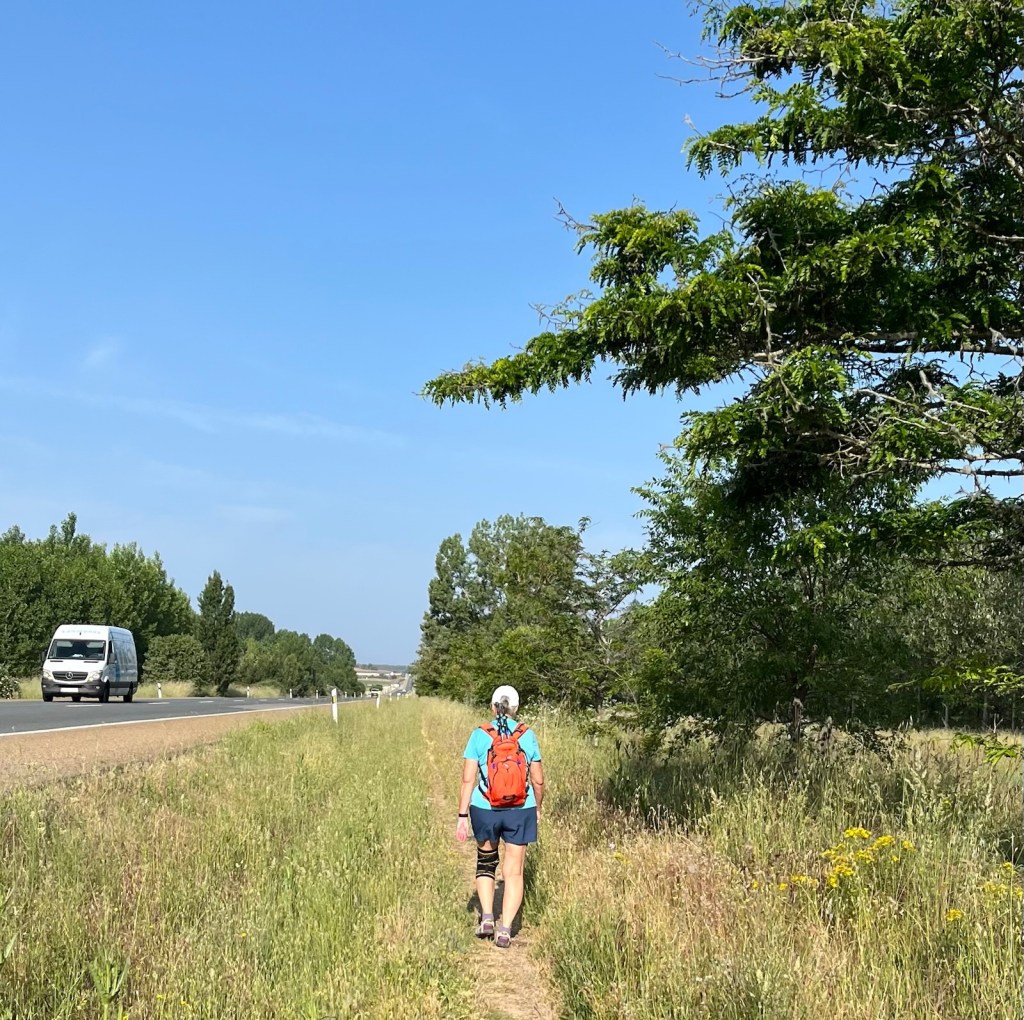
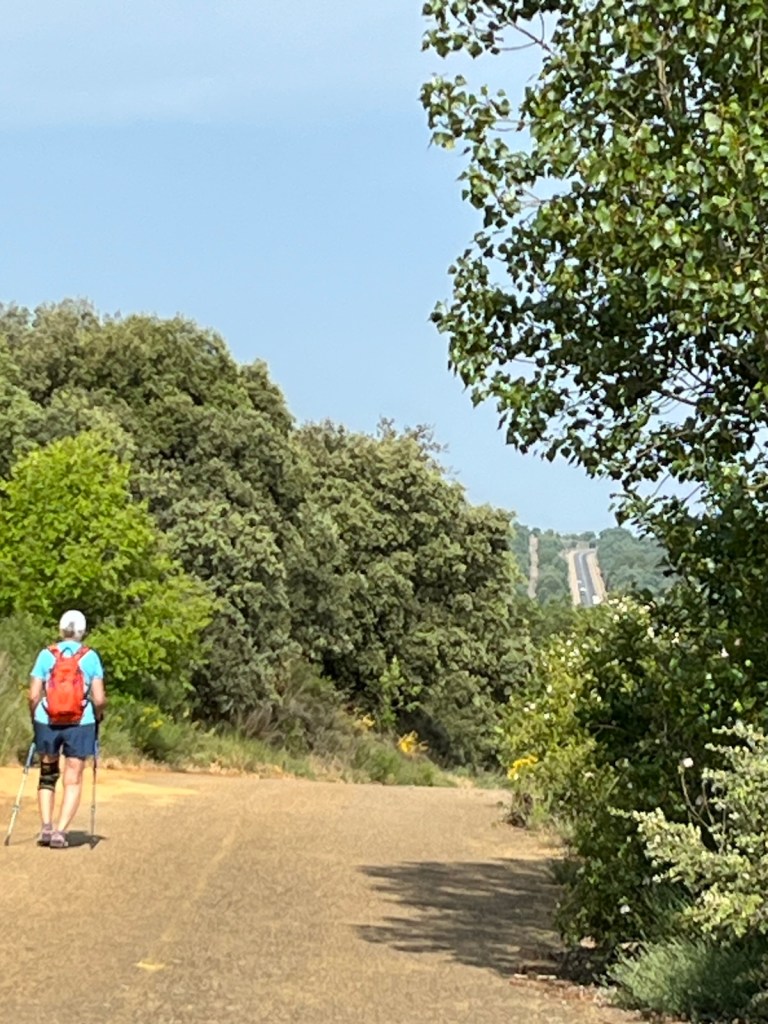
On board the ALSA bus and on our way to Hospital de Orbigo.Shortly after leaving Hospital de Orbigo.Switching from the edge of the highway to a path ( “less traveled”).Our path was obviously the one less traveled as indicated by the bridge dis-repair and the overgrowth.A nice wide paved path on the right side if the road.A nice wide, paved path to the left of the highway. In the distance (shown here in telephoto x3) is the hill leading into San Justo and our stimulus to call it quits at the service station.
As planned, we stopped at the service station a few miles short of San Justo for a much needed break from the 72 degree sun.
We realized that too much of a good thing, like a 3, rather than a 2 day break in León must have adversely affected our stamina, so we made an unplanned call for a taxi to take us the remaining distance into San Justo to our hotel.
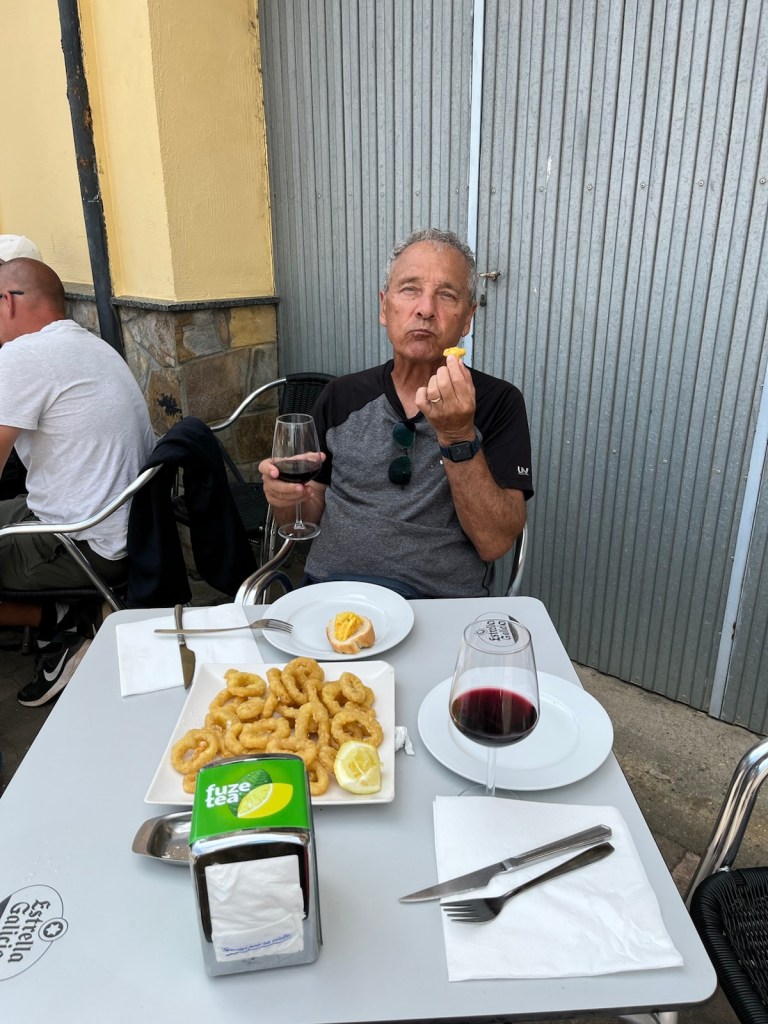
Our hotel was not ready for us, nor did they offer food before 1:30, so we retraced our steps to the Oasis Bar and had a glass of Mencía wine to go with a racione of calamari to fill our tummies and the time gap between our planned Camino and the actual circumstances facing us.
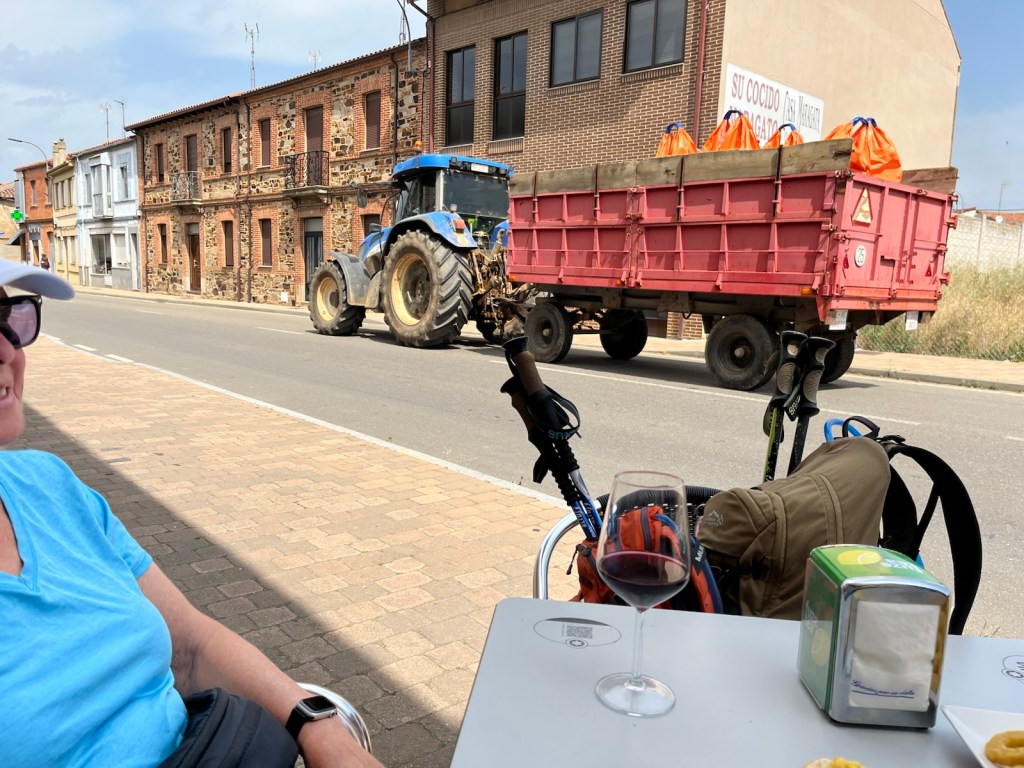
The best event of the day…. shared calamari and Mencía wine.Tractor Ambiance, San Justo de la Vega style!
We checked in to Hostal Juli at 1:00, had a so-so main meal at 3:00 and hung out in and around our room for the remainder of the day.
We didn’t take rest days on our initial 3 Caminos, for no particular reason and fortunately didn’t need them. However, after the pandemic, we began planning one or more rest days in Burgos and León for subsequent Caminos. Burgos and León are located near the 1/3 point and 2/3 point, respectively, of the walking distance between SJPDP and Santiago. For a given pilgrim, the Camino experience may demand adjustments that may not be accomplished in the smaller villages along the way. A rest day in either Burgos and/or León can provide an opportunity to address most any unfulfilled needs.
Both cities offer a wealth of history, cuisine, architecture, logistics, lodging, shopping, medical and other services to make good use of the “resting time” allocated.
Our Camino2025 plan called for 3 rest days (Friday, Saturday and Sunday) in León,
before moving on west on Monday morning.
León began as a Roman military encampment in 29CE and developed into a permanent settlement charged with protecting Galician gold on its journey to Rome. Visigoths took the city in 585, only to lose it to Muslim invaders in 712. The city was reconquered by Ordoño I around 850, who initiated a building boom and welcomed Mozárabic refugees (Christians living under Muslim rule). The city was leveled in 988 by Al-Mansur’s troops.
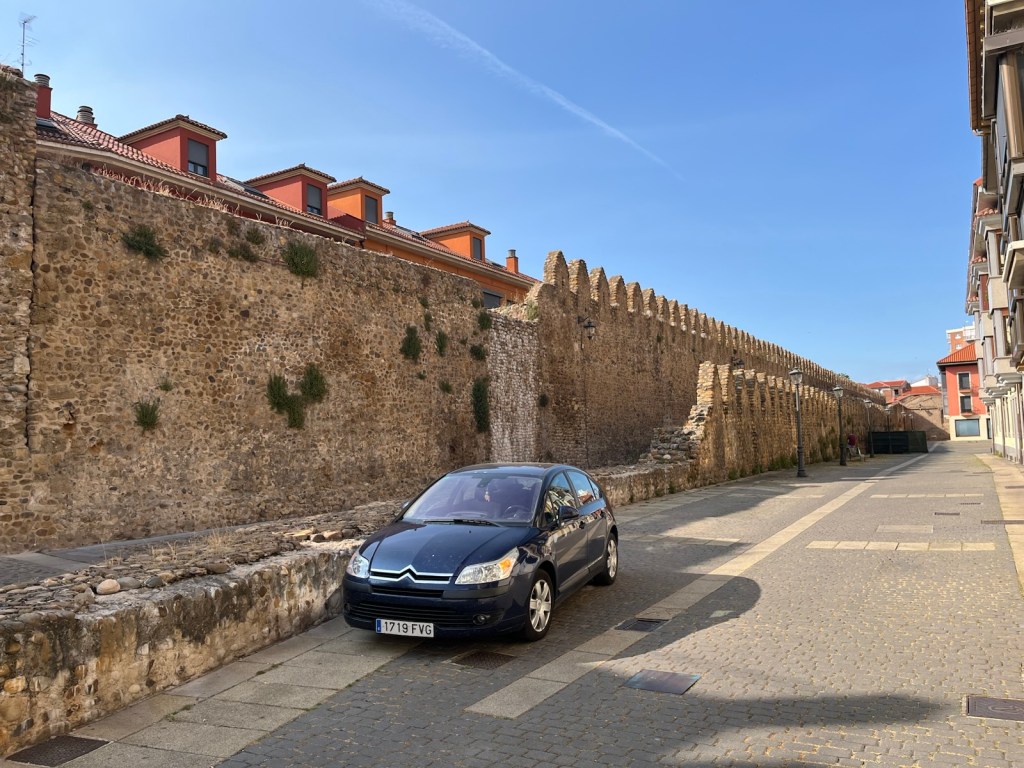
The walls around the historic center of Leon are still very visible. The oldest sections were built by Legion VII Gemina at the end of the 1st century. In the 3rd century, a second wall was built in front of the original walls. The Roman walls are 17ft thick and 26ft high with semi-circular towers at regular intervals! The Medieval walls were built in the 14th century and are outside the Roman walls on the south and west sides.
A section of the walls of Leon, less than a block from our apartment.
Rebuilding León began soon after the Al Mansur attack in the 11th century and León began to flourish as a wool industry center. In 1188, the city hosted the first Parliament in Europe under Alfonso IX and became wealthy enough to construct the astonishing cathedral.
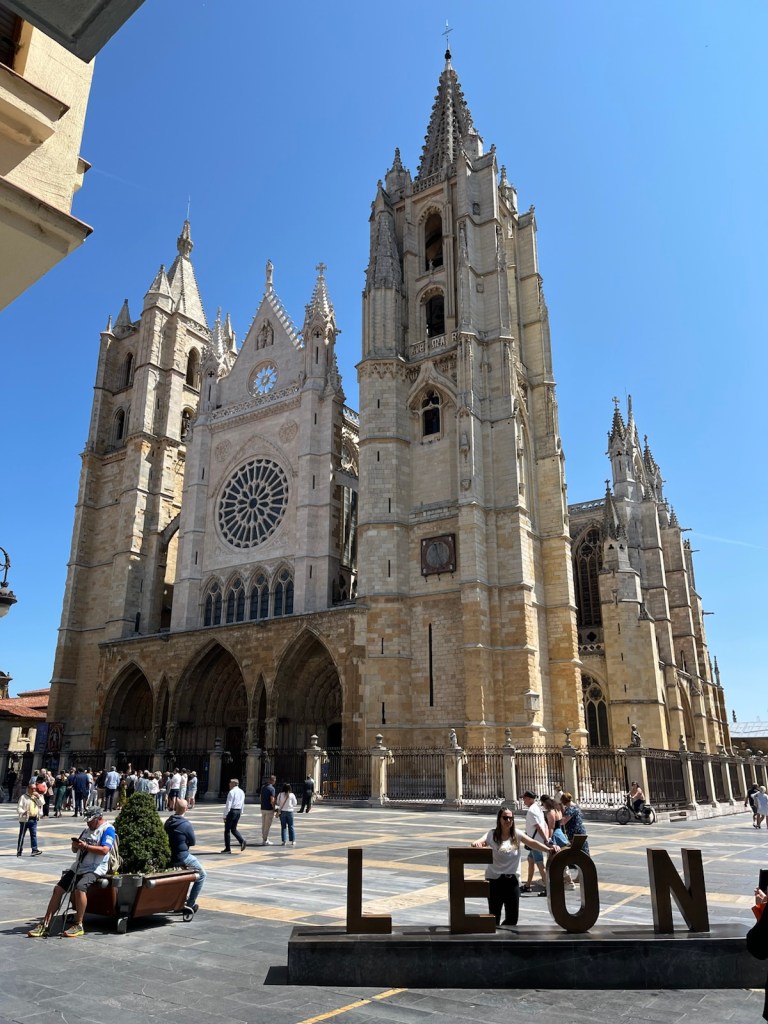
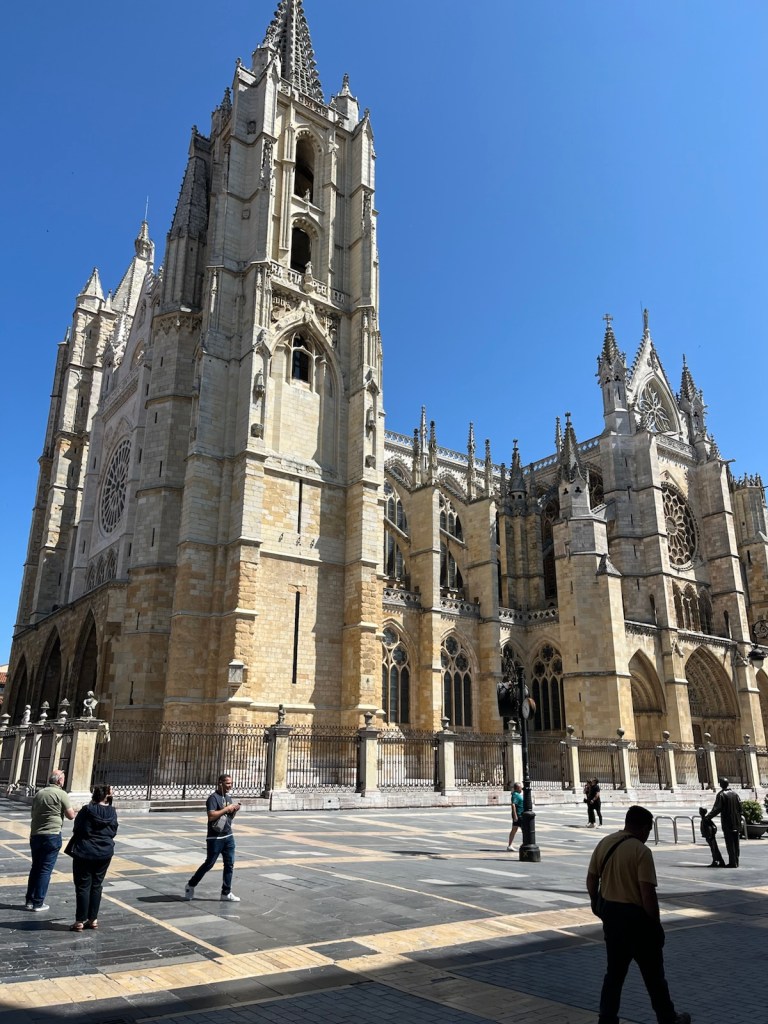
Catedral de Santa María de LeonAnother view of the Leon Catedral.
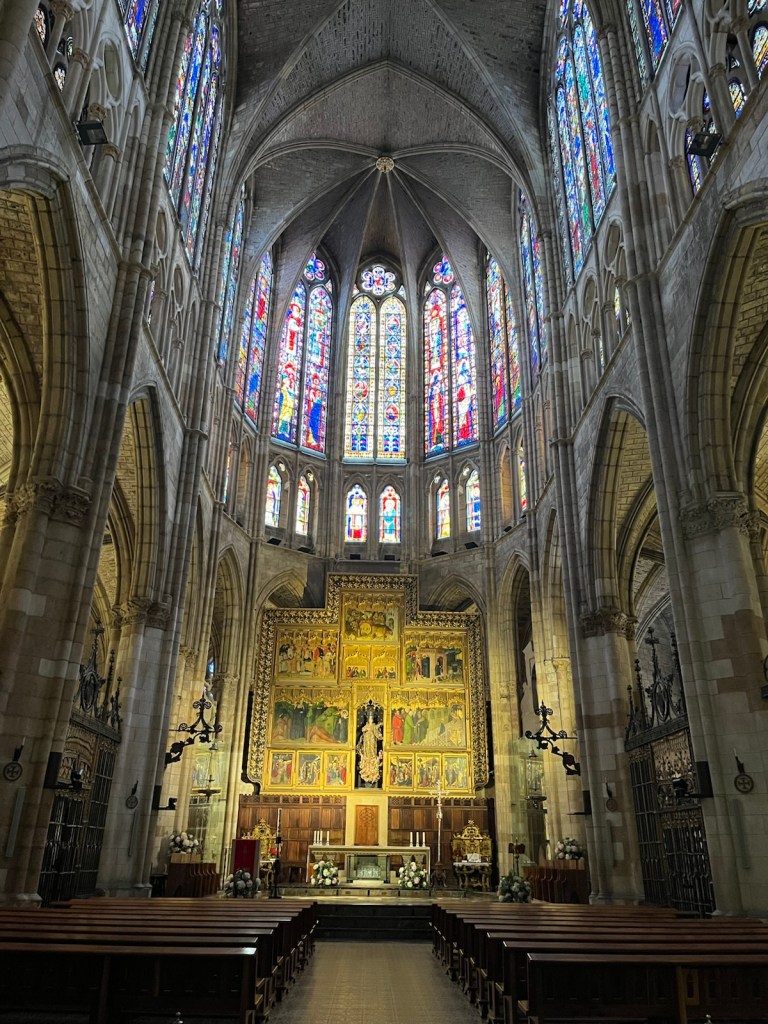
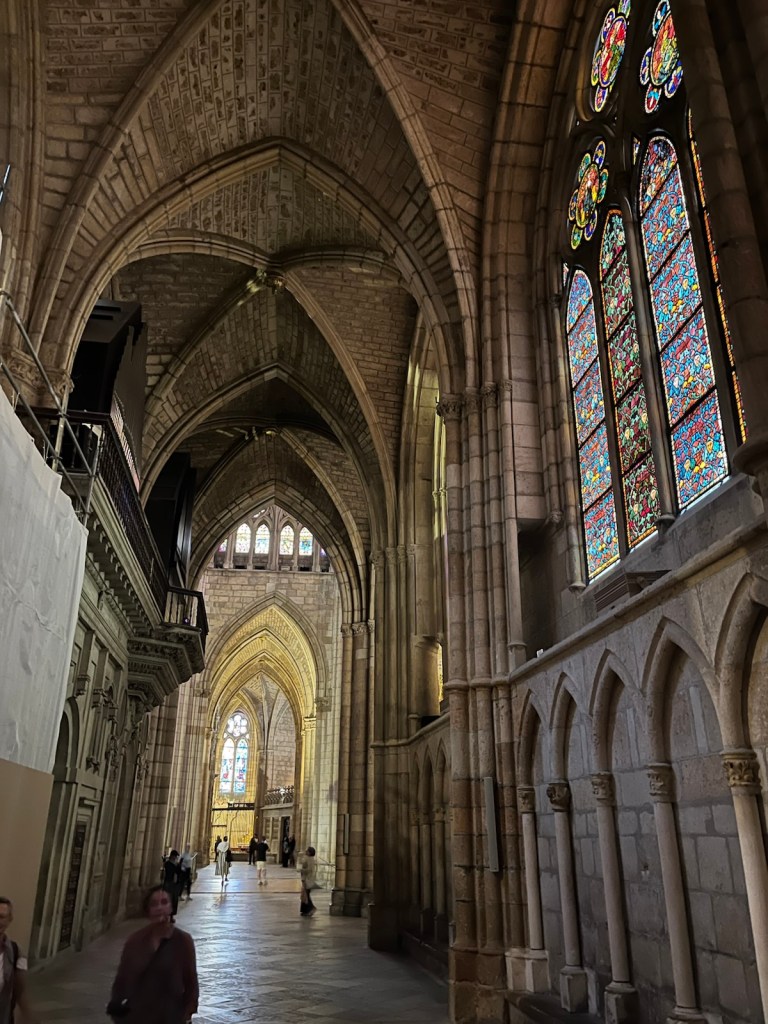
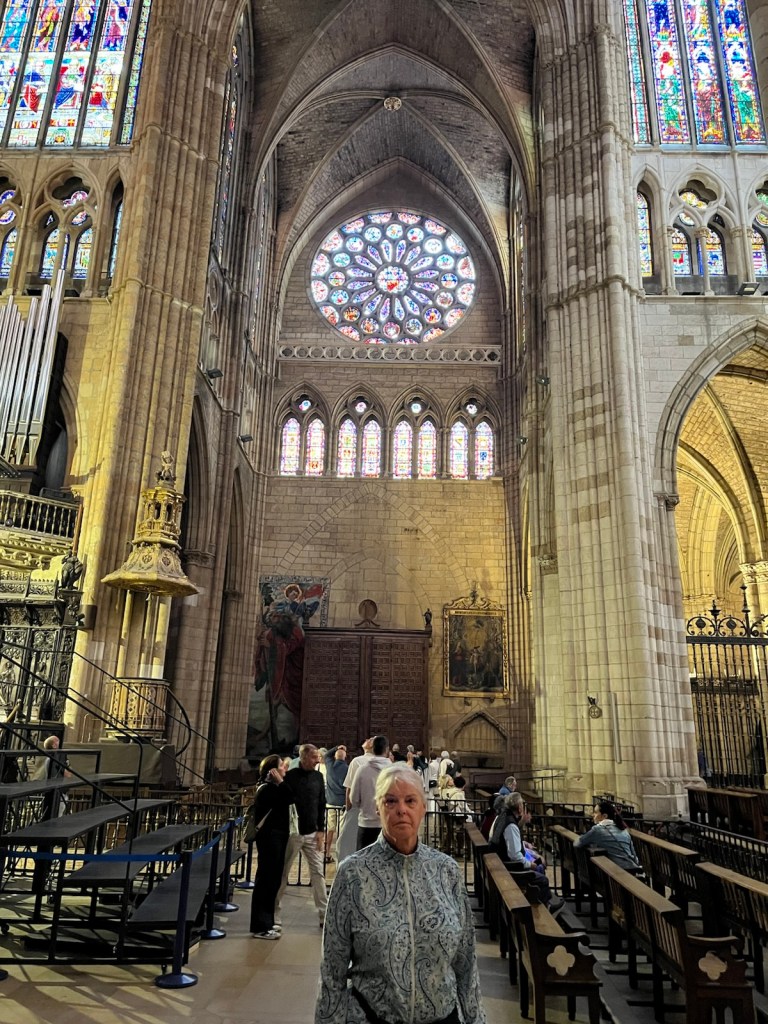
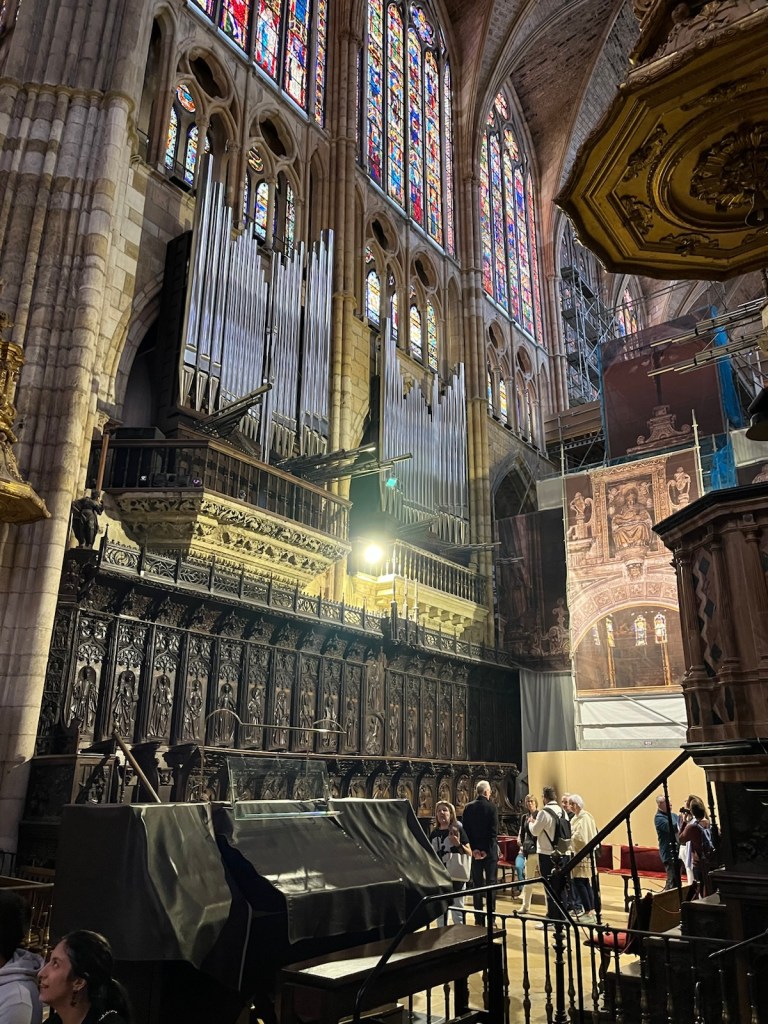
León’s finest treasure is its sublime Gothic cathedral, featuring 1,800m² of magnificent stained glass windows from the 13th-15th centuries. Without a flashy central retablo, the cathedral lets the streaming light steal the show. This is the fourth church on this spot, begun in 1205 and completed in record time (about 100 years).
Below are various photos from our Sunday morning visit, highlighting the interior of Santa María de León including the beautiful stained glass windows and magnificent organ.
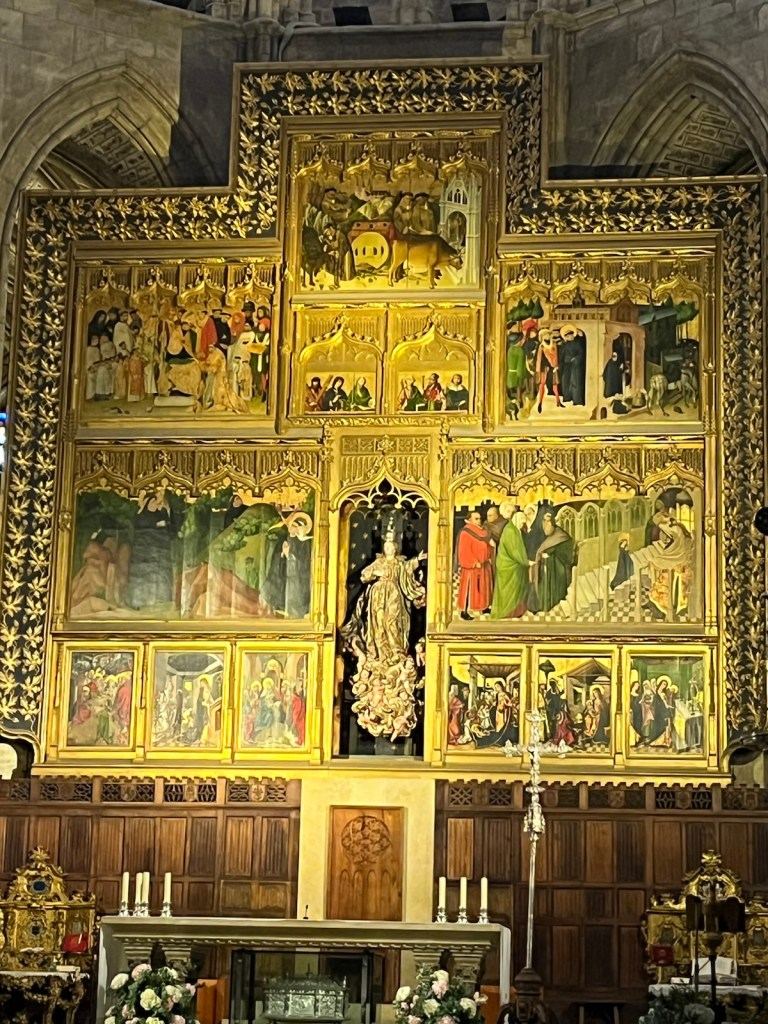
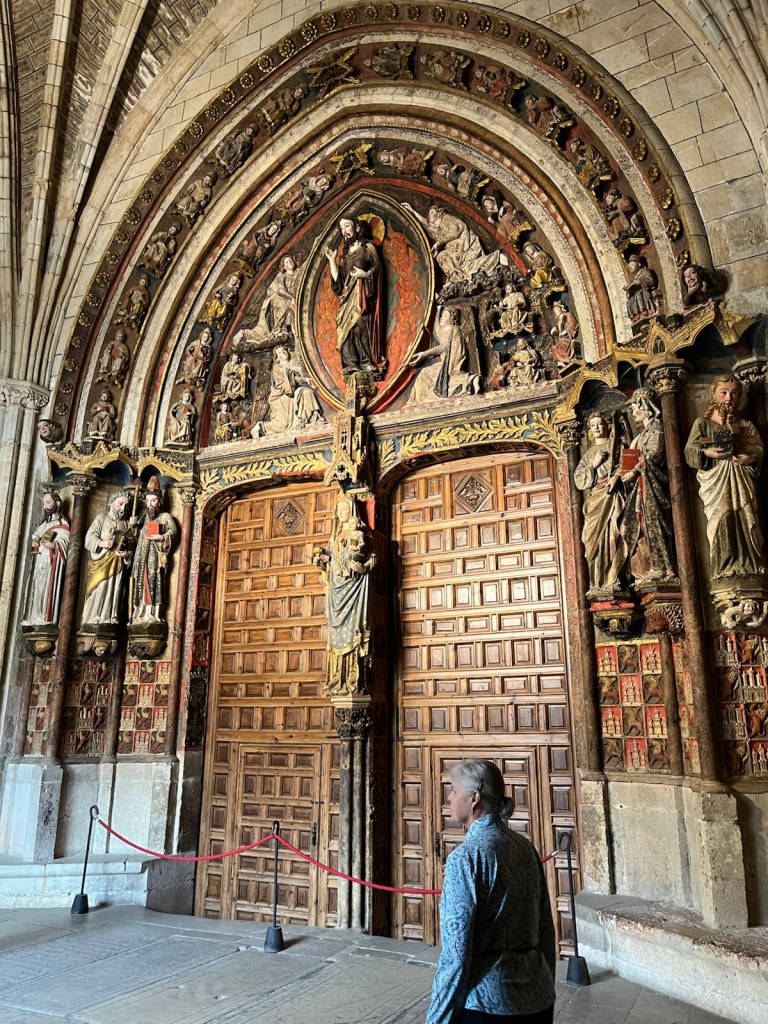
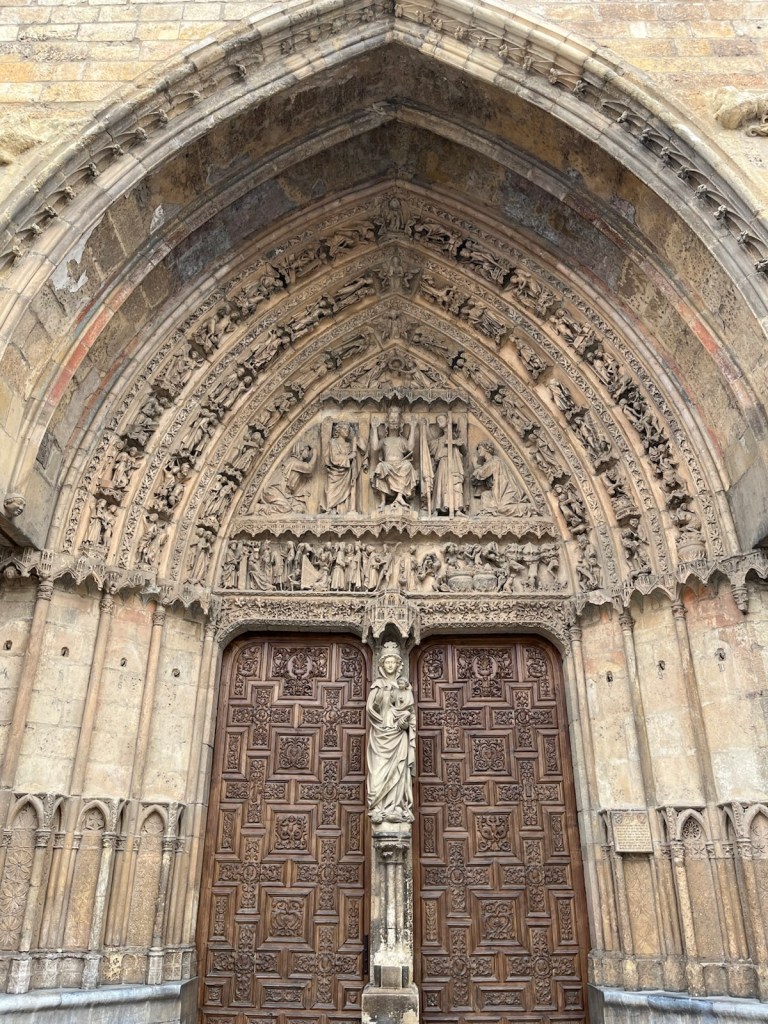
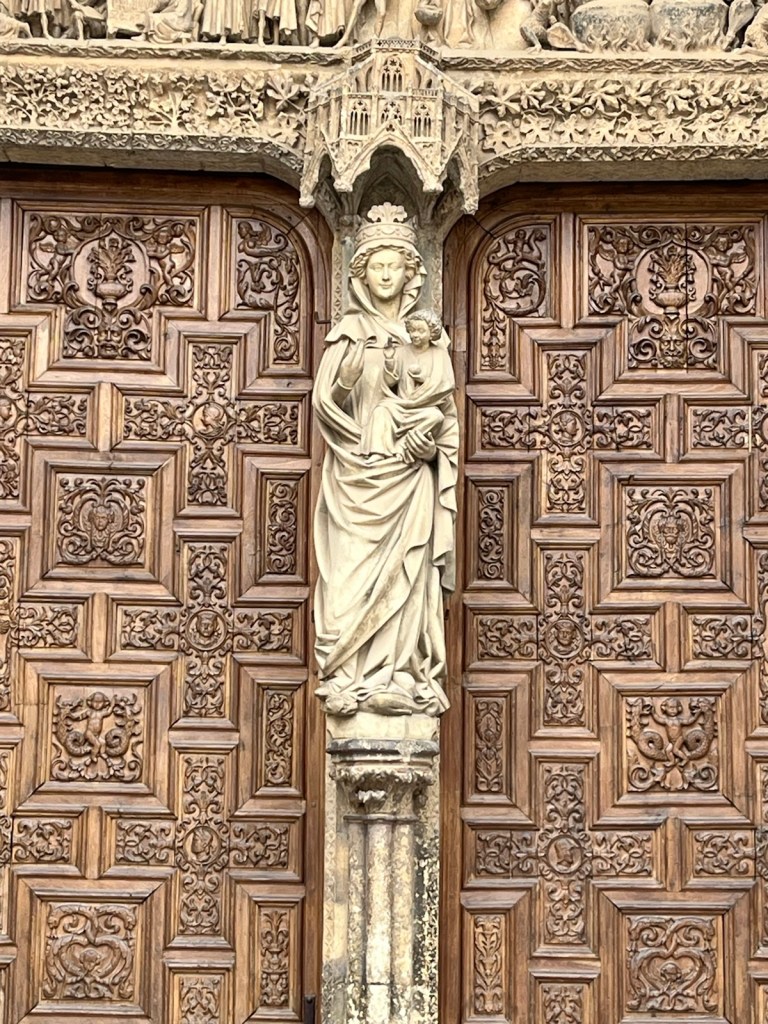
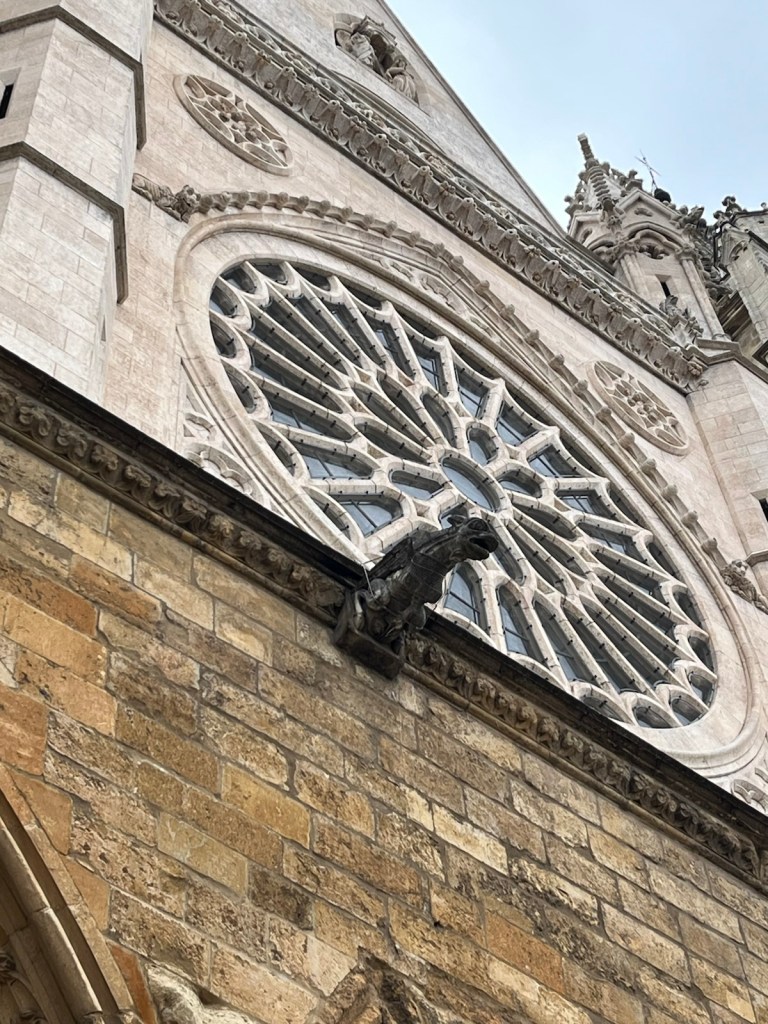
The relatively simple main altar, surrounded by magnificant stained glass windows.Window over the main entranceWindows and internal structures.more windowsCloseup of the main altarArt work behind the main altarMore glass windowsThe magnificant organ and pipes and choir loft.opposite side of the choir loft, pipes and organEntrance to the Catedral interior from the Cloisterthe Catedral cloisterMain entrance of the Catedral from the outsideCloseup of the White Virgin at the main entrance.Gargoyle hovering over the main entrance of the Catedral.
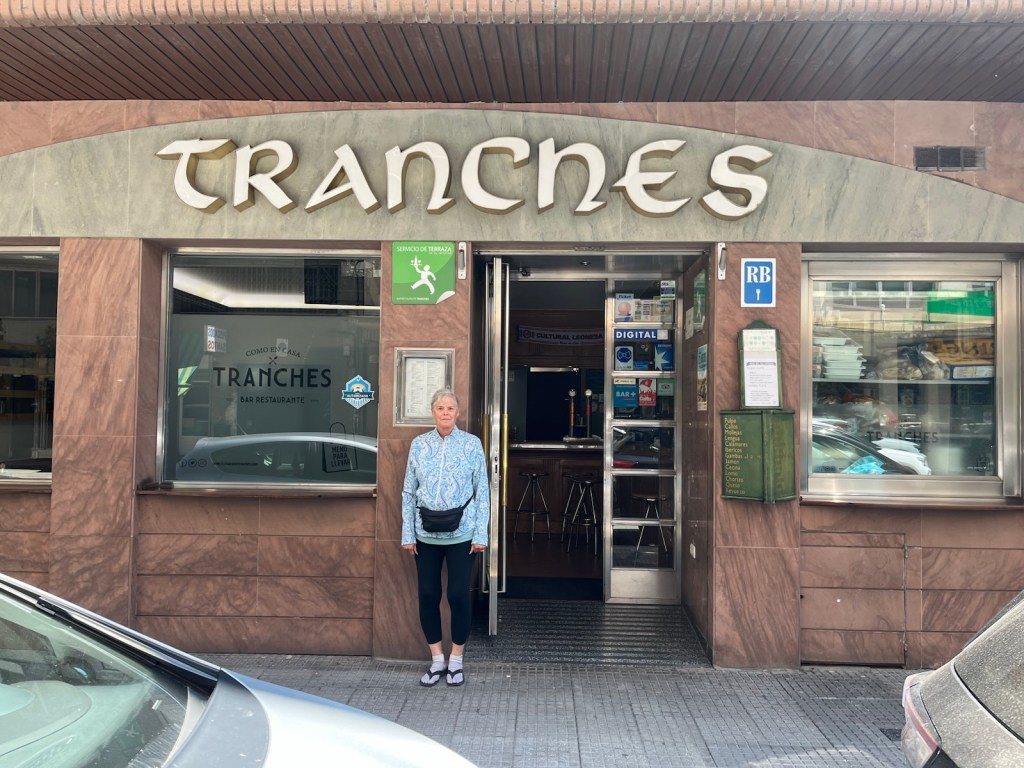
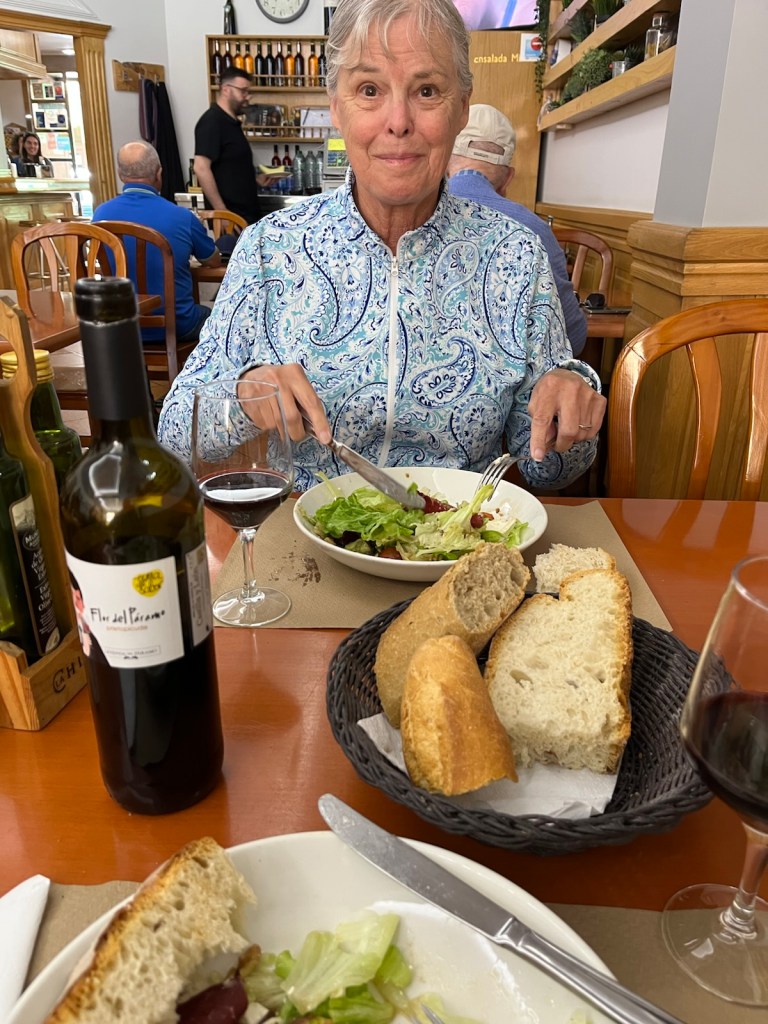
Last September, while in Leon on Camino2024, we discovered Tranches, a nice, family owned restaurant which had good food and a warm, friendly atmosphere. They offer local cuisine items on a menu that changes daily, but also contains familiar items. Total cost for a single two-course meal is 15€ including a nice local wine, fresh bread and dessert (postre).
Our “go to” restaurant in Leon
Tranches is less than 50 steps from our apartment and its open hours matched our preferences. We had our main meals here on Friday and Saturday.
For our first course on Friday, for example, we were introduced to a nice, young Leon wine (2023 Cosecha) made from 100% Prieto Picudo grapes … a first for us. It was paired with a salad consisting of fresh, crisp lettuce, thin sliced cured beef, assorted nuts, grilled coat cheese dressed with balsamic and olive oil.
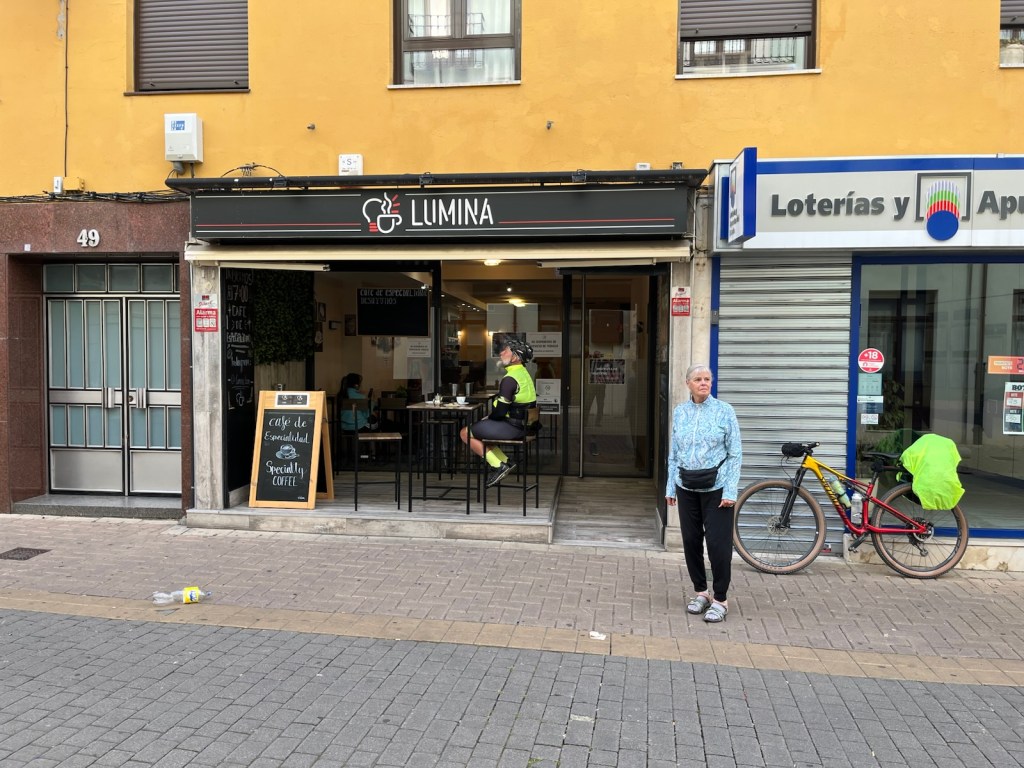
On Sunday morning, we ventured out at 8:30 to have breakfast and spent the next half-hour searching for a place that was open. We finally found a small cafe not far from our apartment, called, “Lumina”.
A good place for breakfast, especially on a Sunday morning.
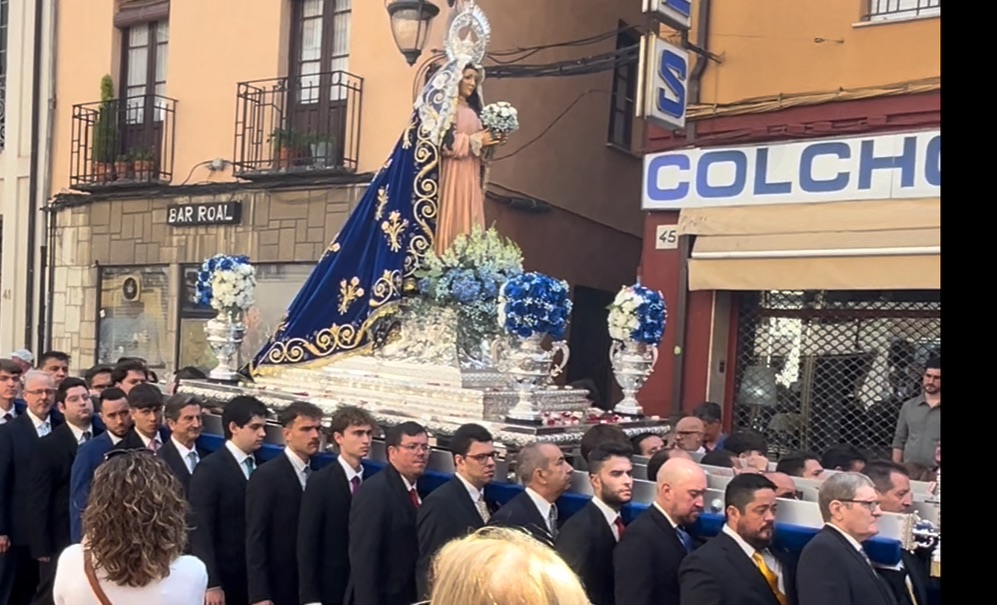
After our Sunday morning visit to the Catedral, we encountered a large procession which blocked our way to the apartment. It was apparently the León celebration of Corpus Christi, a religious and art event.
Leading the procession was the Virgin Mary, followed by city dignitaries, marching to the cadence of a large band.
Once the procession cleared our way we decided to stopped at a small neighborhood grocery store and bought the fixins’ for preparing our main meal for today in our apartment kitchenette.
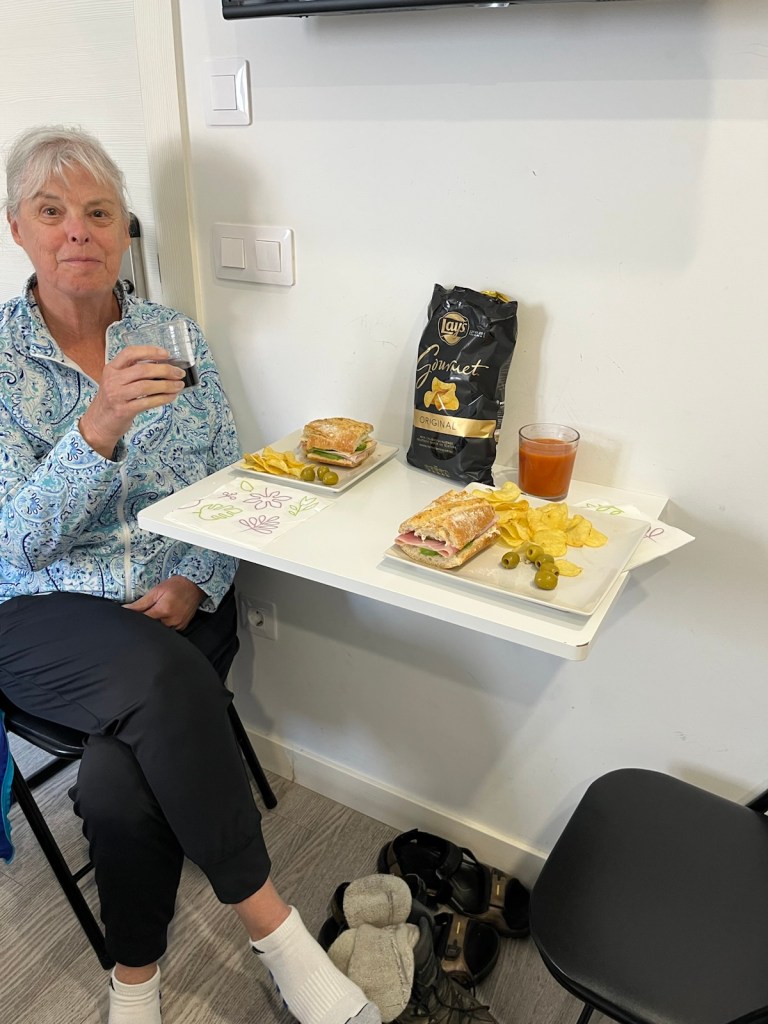
The result of our market visit was a tasty lunch of: “Gourmet” potato chips, Spanish olives. and a fresh warm bread sandwich of ham, Gouda cheese and sliced avocado. We both had glasses of our Mencia wine and Jim also had a glass of gazpacho. Yum.We found a nice wine made from our favorite Mencía grapes. It was a real bargain at 4.11€!!!
We spent part of the afternoon making preparations for rejoining the Camino tomorrow and spent the remainder actually resting.
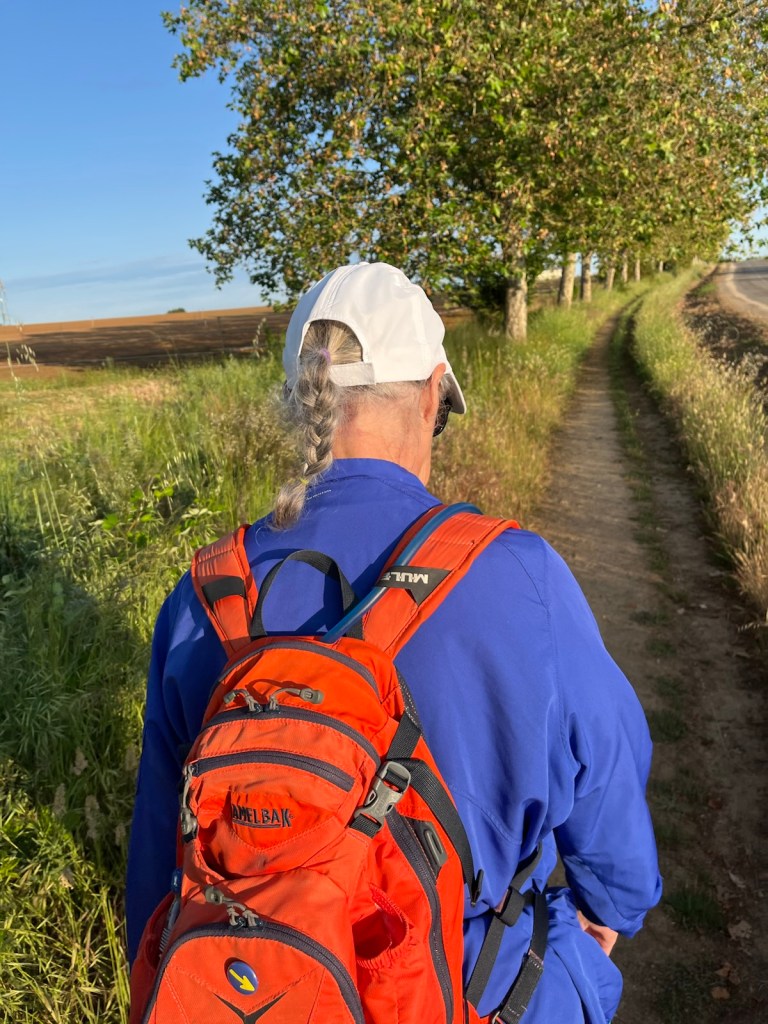
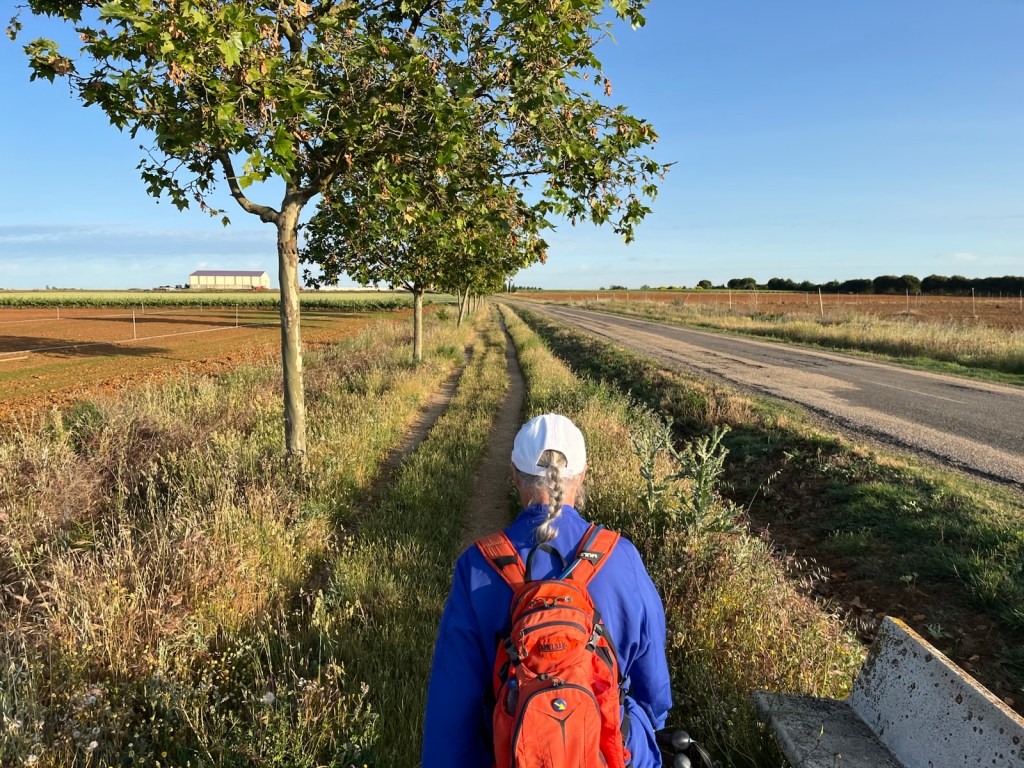
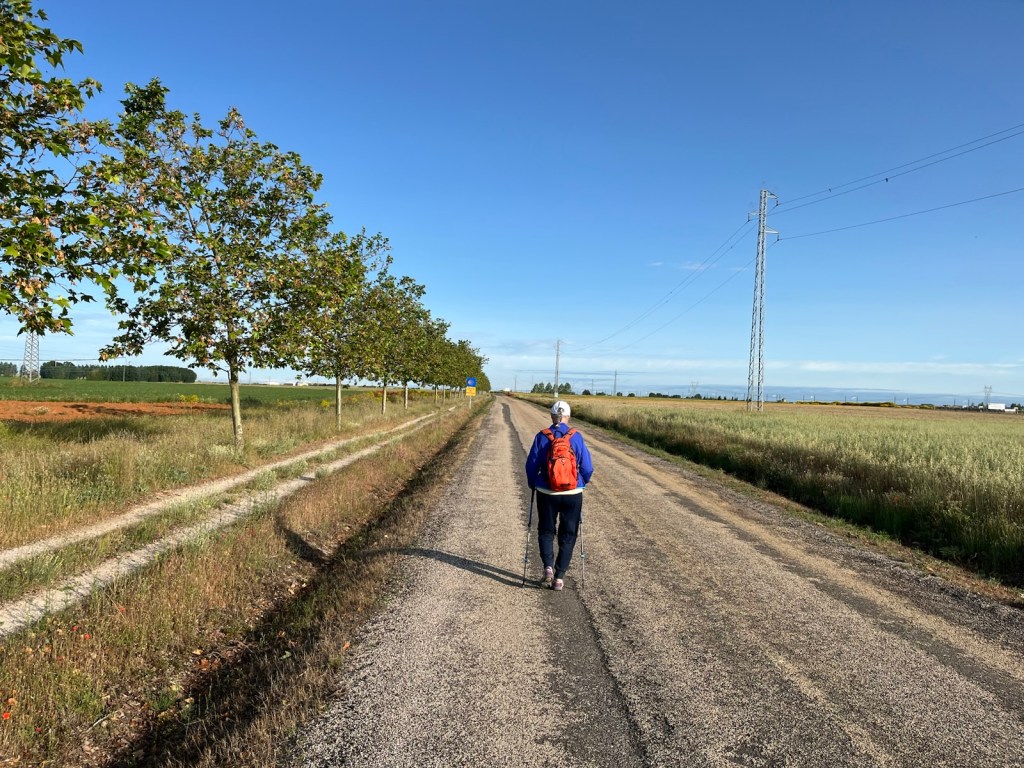
Leaving La PeralaUnusual church steeple in Bercianos, rebuilt after the original Iglesia de San Salvador collapsed in 1998.Jim gifted Linda with a braid in exchange for his trim.The entire walk to Burgo Ranero was on the dirt path with this typical scenery…… or breaking the monotony by walking in the little used road.
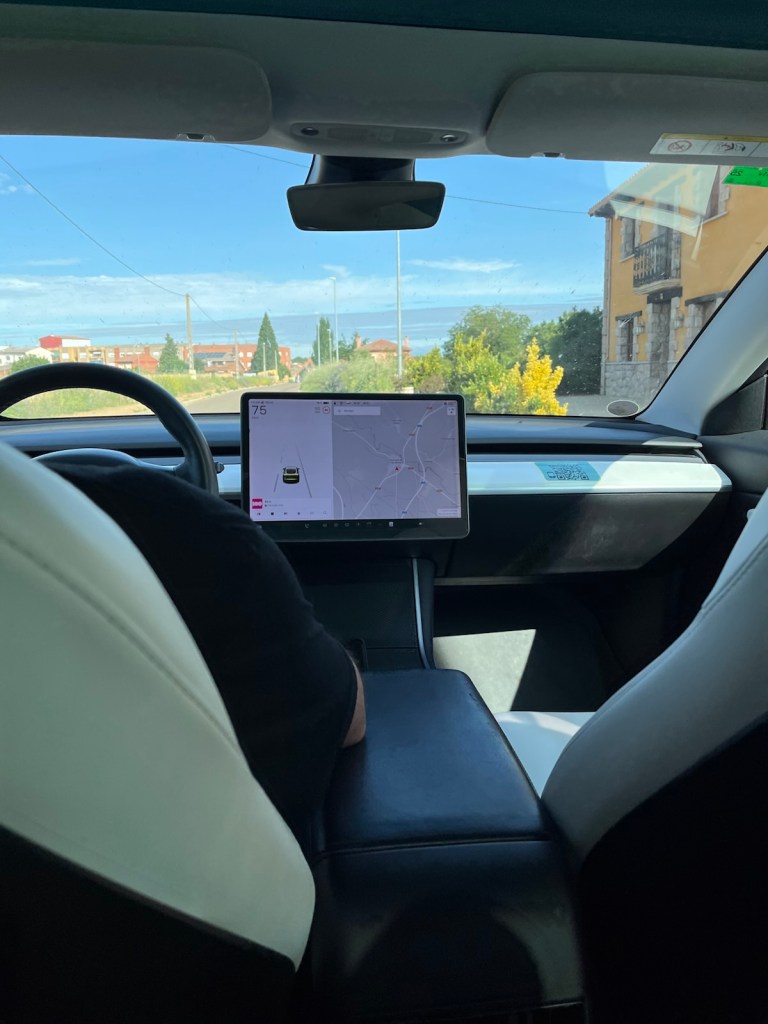
Once we got to Burgo Ranero we got rather busy. We had a nice breakfast then ask the lady manager to call our favorite taxi. He’s known as “Tesla Taxi”.
Moving on the Camino in a Tesla!
The taxi driver took us to Mansilla de los Mulas, where we waited 15 minutes and then boarded a bus to Leon.
We disembarked at the Leon bus station and immediately purchased two bus tickets to take us from Leon to Hospital de Orbigo on Monday morning.
We then walked a block and a half to the Leon train station and bought our train tickets from Santiago to Madrid for July 1.
Leon Train Station
Next, we sent a message to our accommodation in Leon to find out when our room would be ready. He responded 10 minutes later and said our room would be ready at 1:40.
It was 12 noon and our main tasks were completed, so we began the mile or so walk to our apartment, Lodging City, adjacent to the old section of Leon.
Beginning our walk from the Train Station to our apartment.
Along the way we stopped for an orange juice break and when we were only a block away we made one final stop for more hydration and pintxos.
Our stop for drinks and pintxos at Bar Marbella, a few steps from our apartment.
We rang the bell at 1:39 and were admitted to our room and checked in.
A familar restaurant was open as we passed it on the way to our room, so we returned there for our main meal, then retired to our room, beginning our planned 3 day rest in Leon, a favorite stop on the Camino.



















 Jimandi