
Walked: 5.6 mi. Camino2025: 172 mi.
We decided to give ourselves a gift today by employing a taxi to help us skip the section between Foncebadón and Molinaseca. Although the scenery is extraordinary “top-of-the-world”, the potential for Camino ending injury trying to navigate the paths (actually washes) down into El Acebo, for us, far outweighs the reward. We confirmed this assessment when we walked this section last year, after skipping it for several previous Caminos.
Further, having walked from El Acebo to Molinaseca 3 times before deciding the risk/reward ratio on that section was too high… we have skipped it the last 4 Caminos, including today.
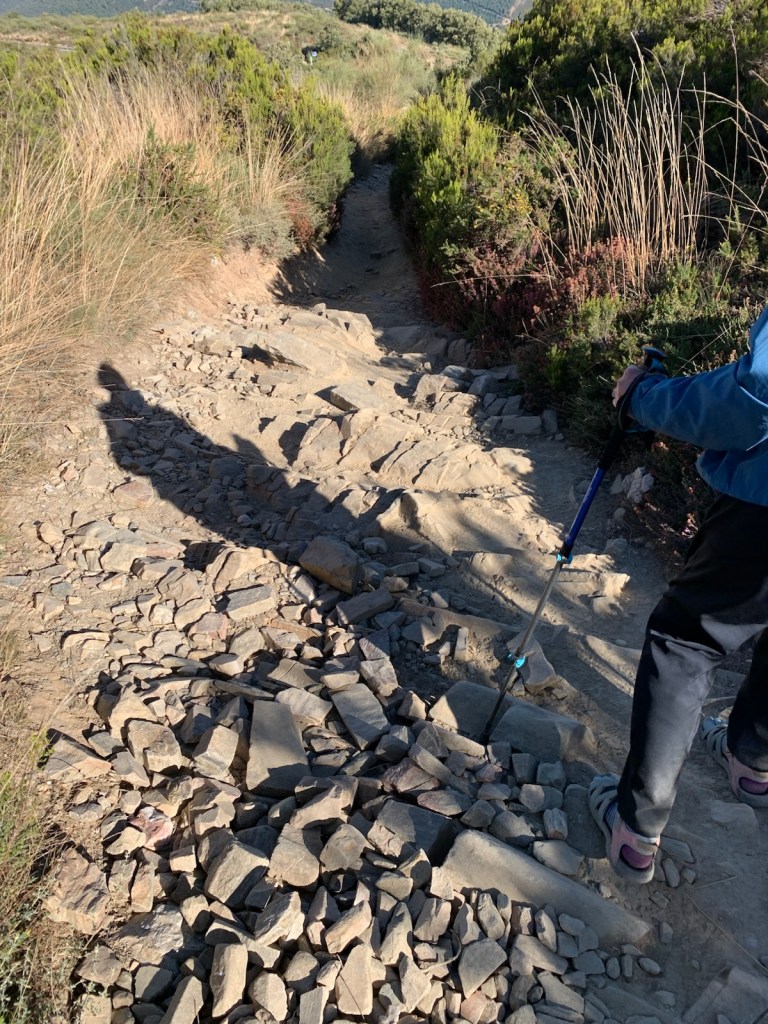
So, we had breakfast at La Posada del Druida in Foncebadón first, then met the taxi at our door and made the very scenic ride down the mountain through El Acebo…

… then continued on to the Roman bridge going into Molinaseca, where the taxi driver let us out.
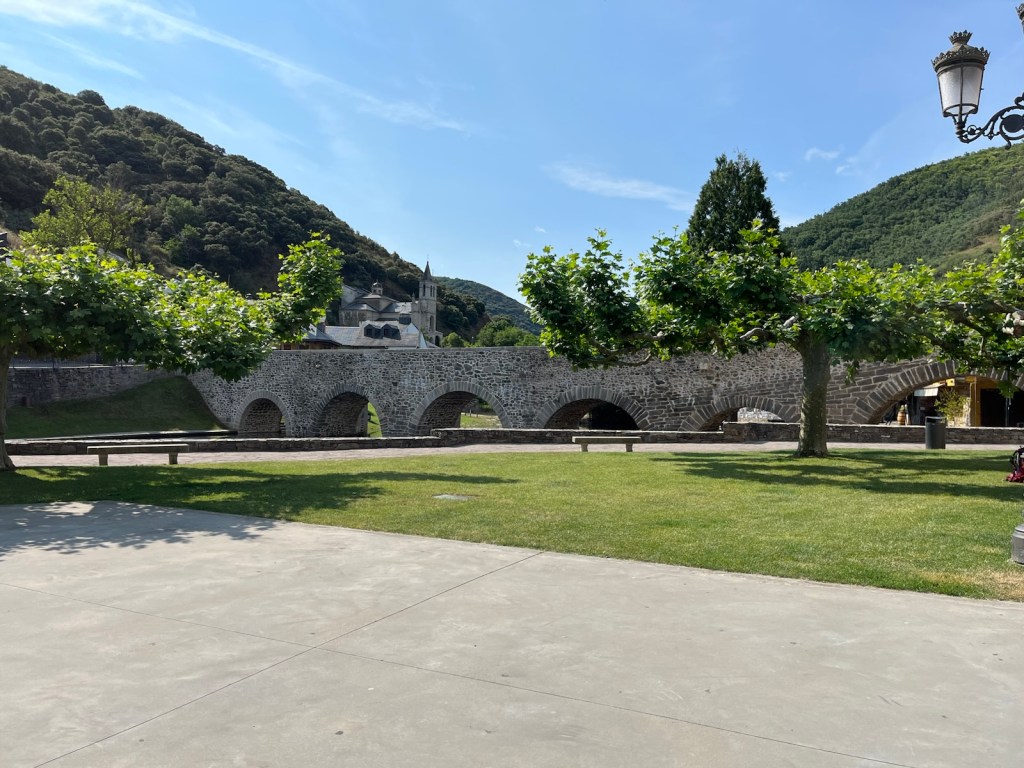
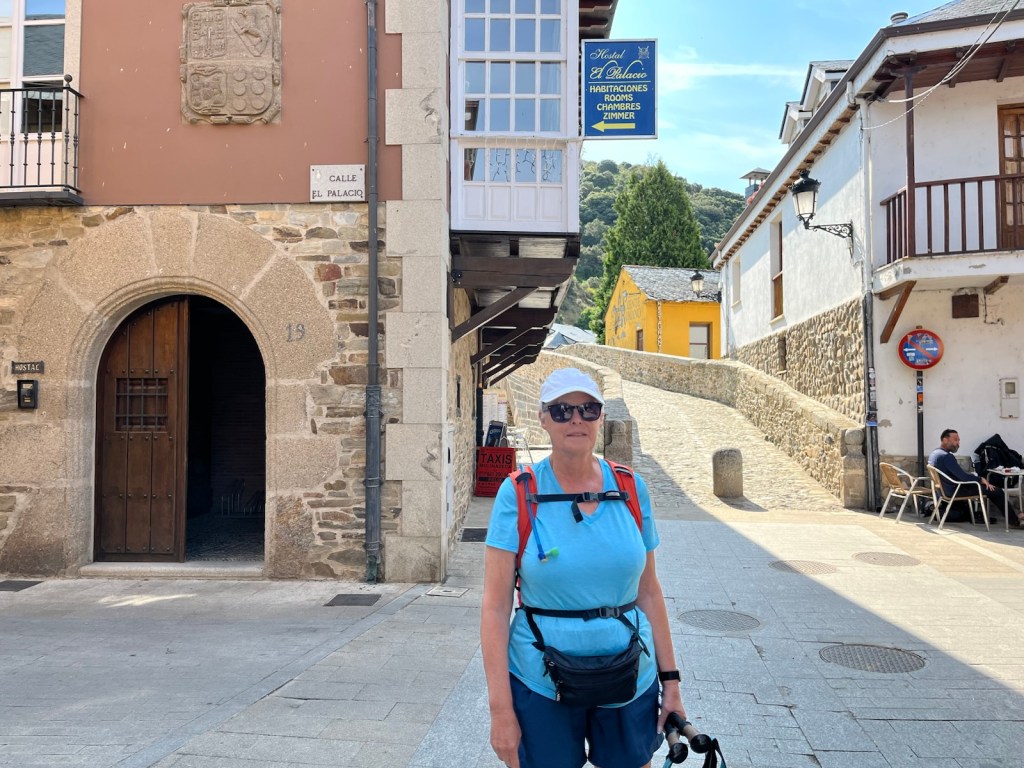
We walked across the bridge, stopped for an OJ, then began walking toward Ponferrada.
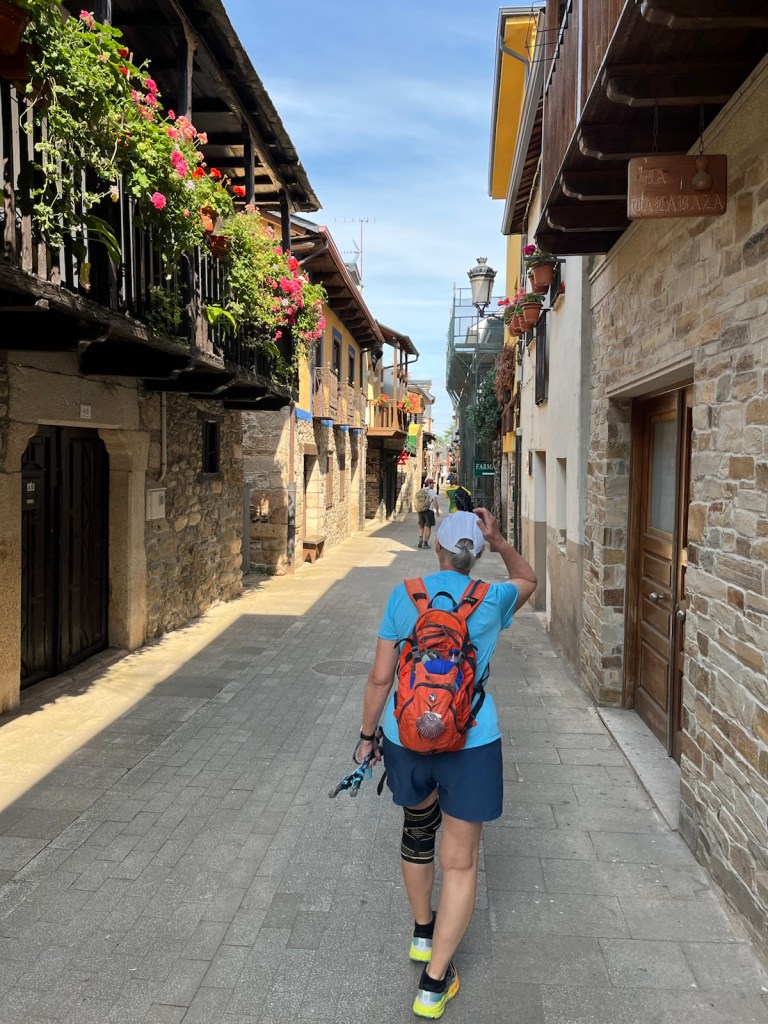


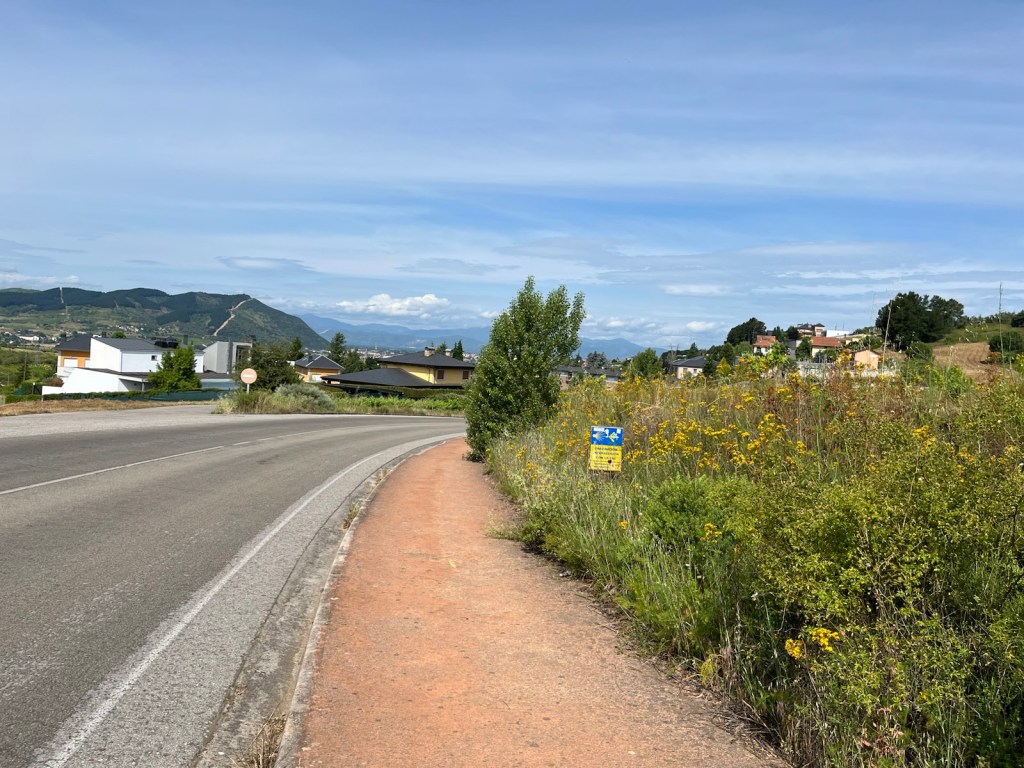
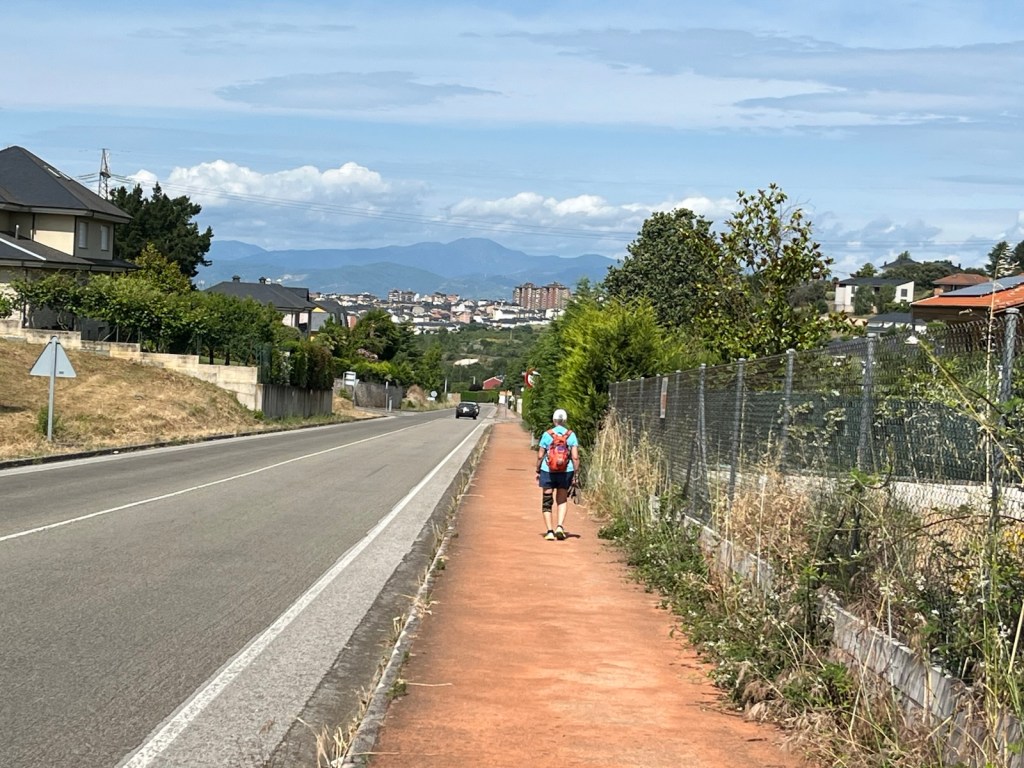

Ponferrada started off as a Celtic settlement, followed by a Roman mining town. The city was destroyed first by the Visigoths and then Muslim invaders. After the Reconquista, Bishop Osmundo of Astorga commissioned a pilgrim bridge here, which was unusually constructed with steel beams, giving the city its modern name. Ponferrada was a booming pilgrimage town, with diverse merchants including Franks and Jews, who were protected during a 15th-century restriction that called for segregating communities. The railroad came to the city in 1882 and in the 1940s the town grew with the coal industry.
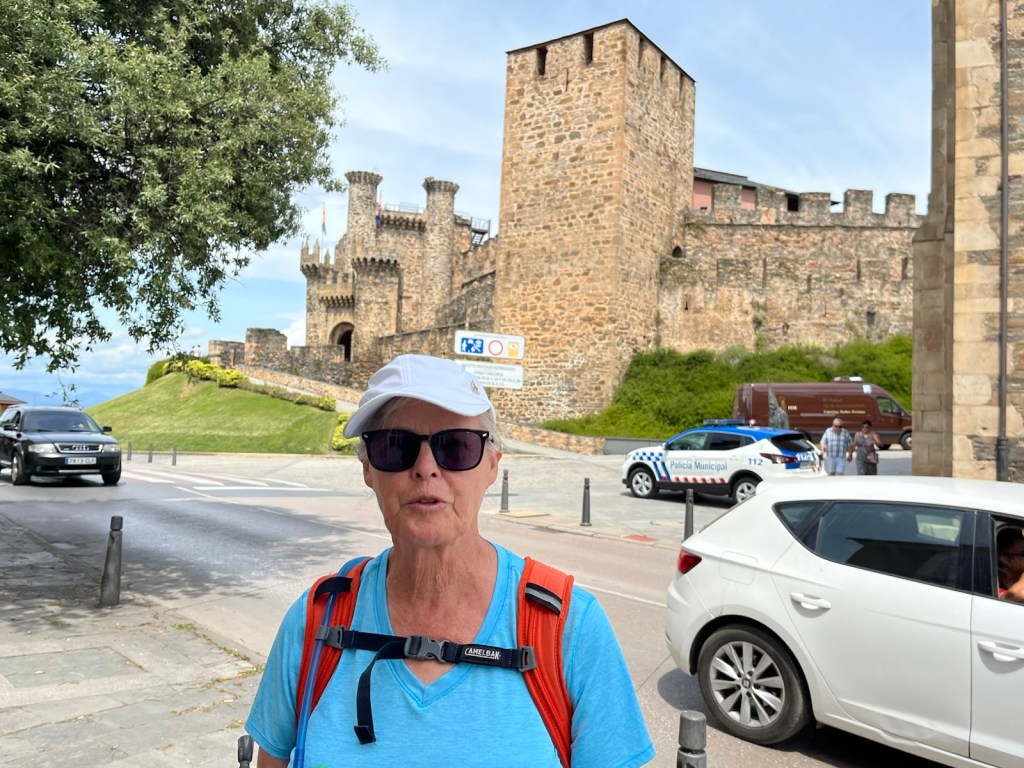
The Templar Castle was built in the 13th century over a destroyed Visigoth fort, which was built over a Roman fort, which was built over a pre-Roman castro. Soon after its completion, the Templars were banished.
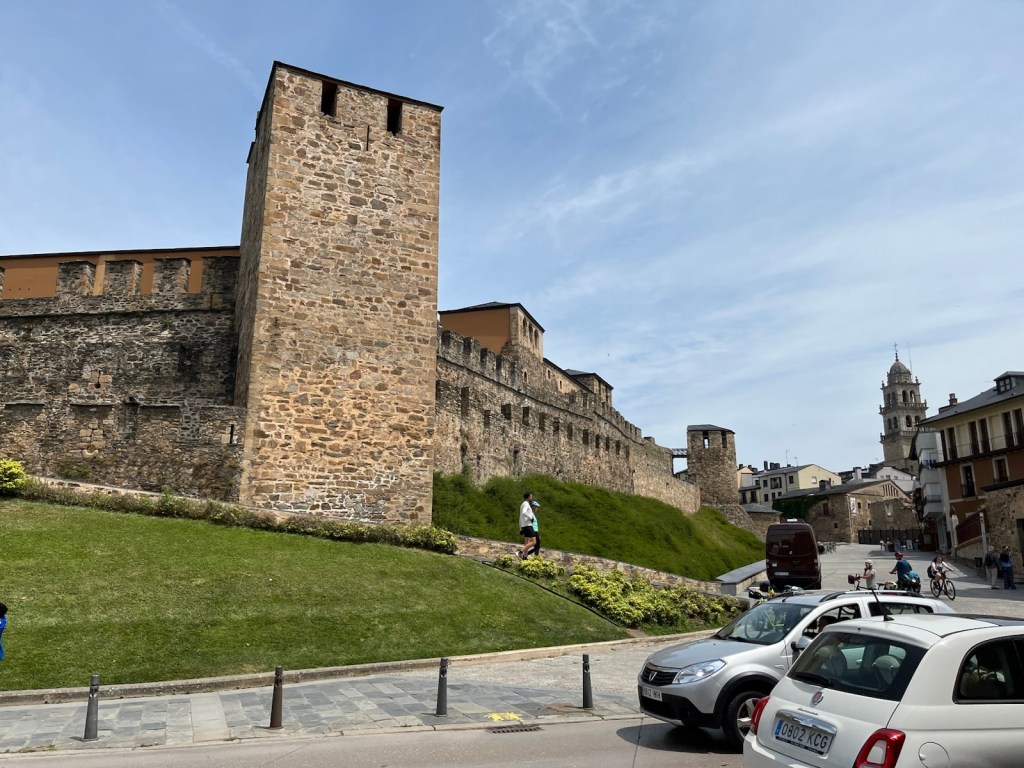
We didn’t spend any time at the old city or the castle, having visited many times before today. We continued on into the modern city looking for a place to have lunch before walking on to our hotel for the evening.
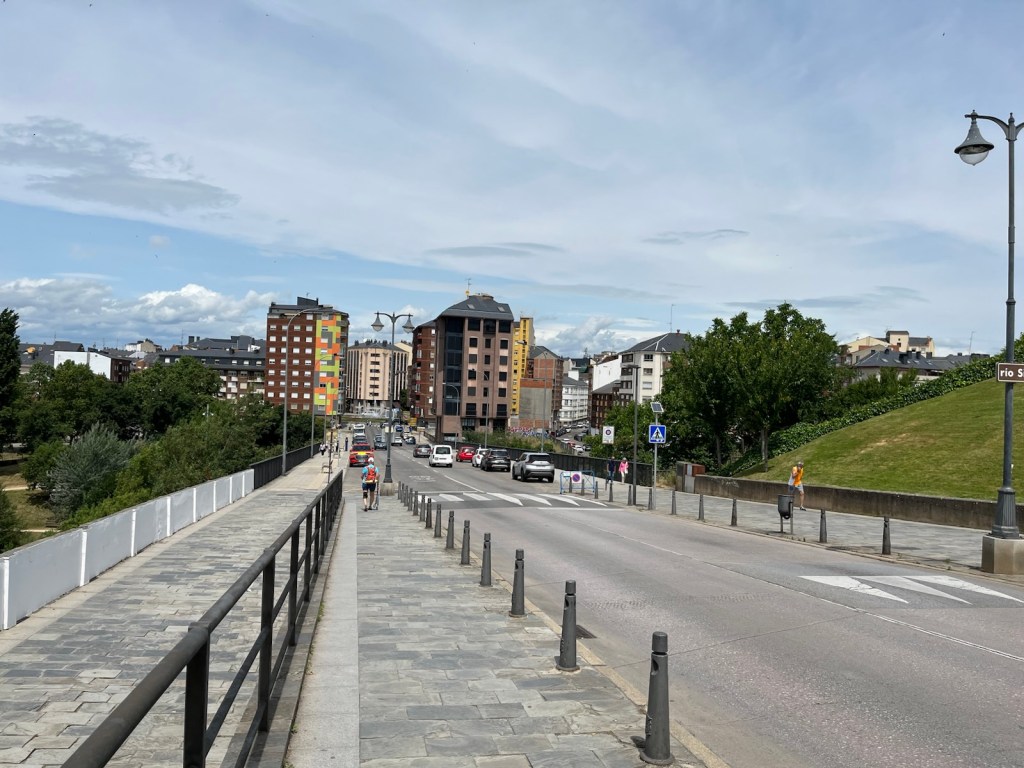
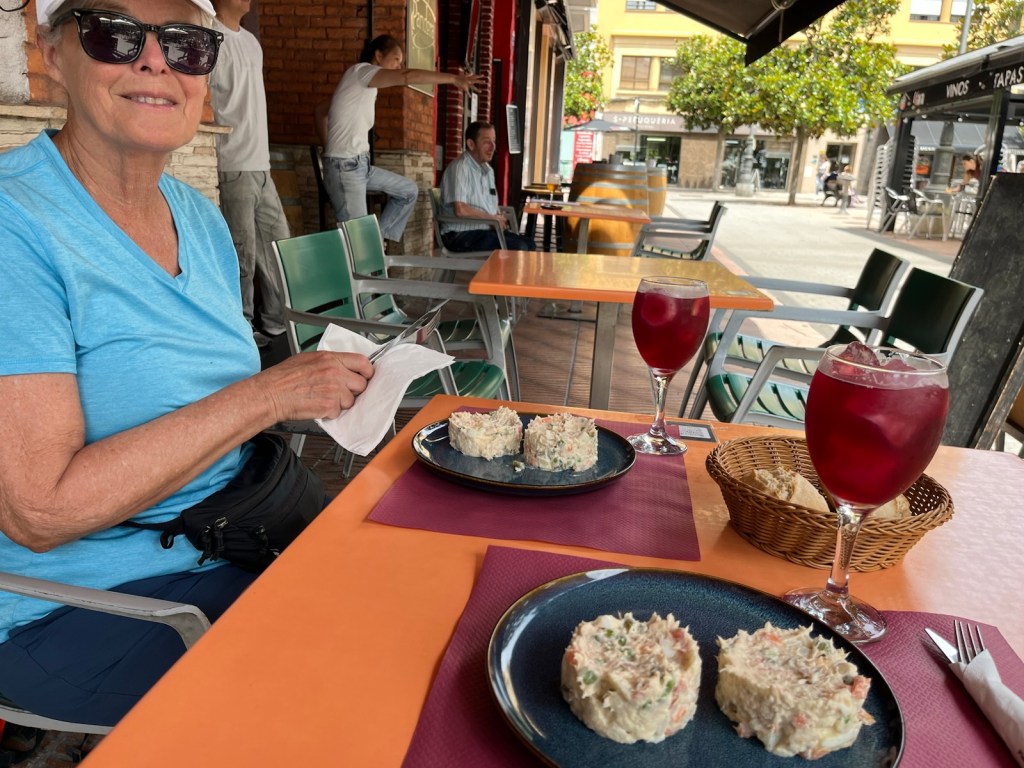
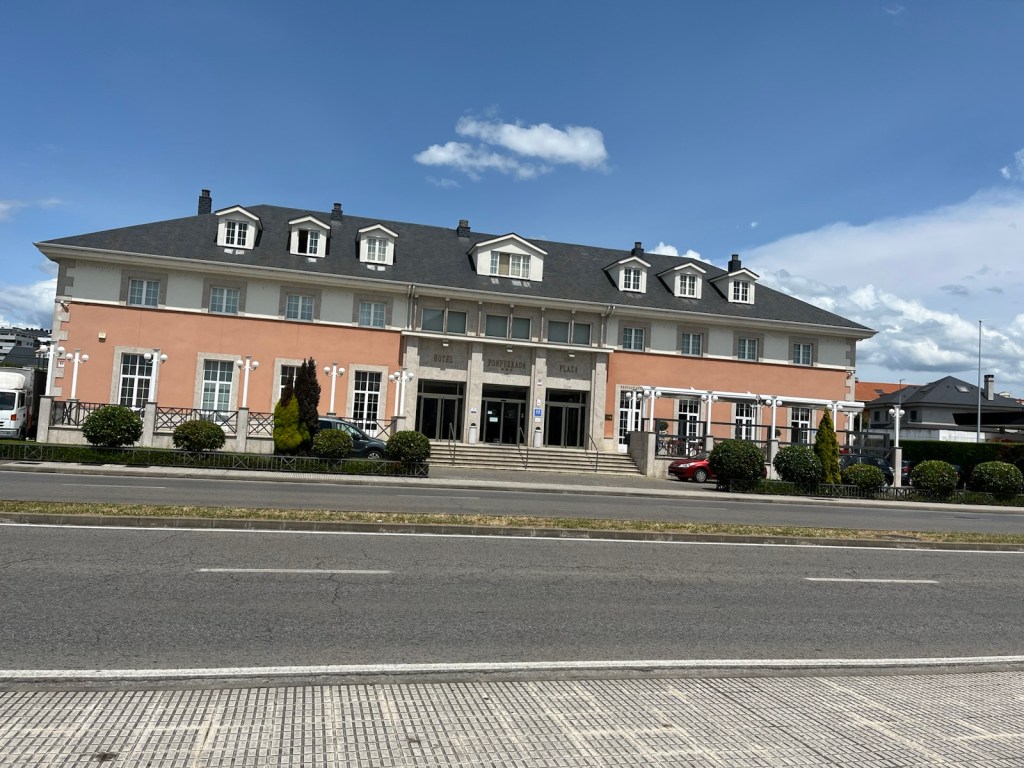
We paced ourselves today after a strenuous day yesterday and a longer than usual walk planned for tomorrow. The first half of our walk is through the city and suburbs of Ponferrada with the second half through vineyards and countryside. We’re looking forward to it!
 Jimandi