
Depart Time: 7:40. Temp: 43 F RH: 50 %
Walked: 8.4 mi. Camino 2024: 174 mi.
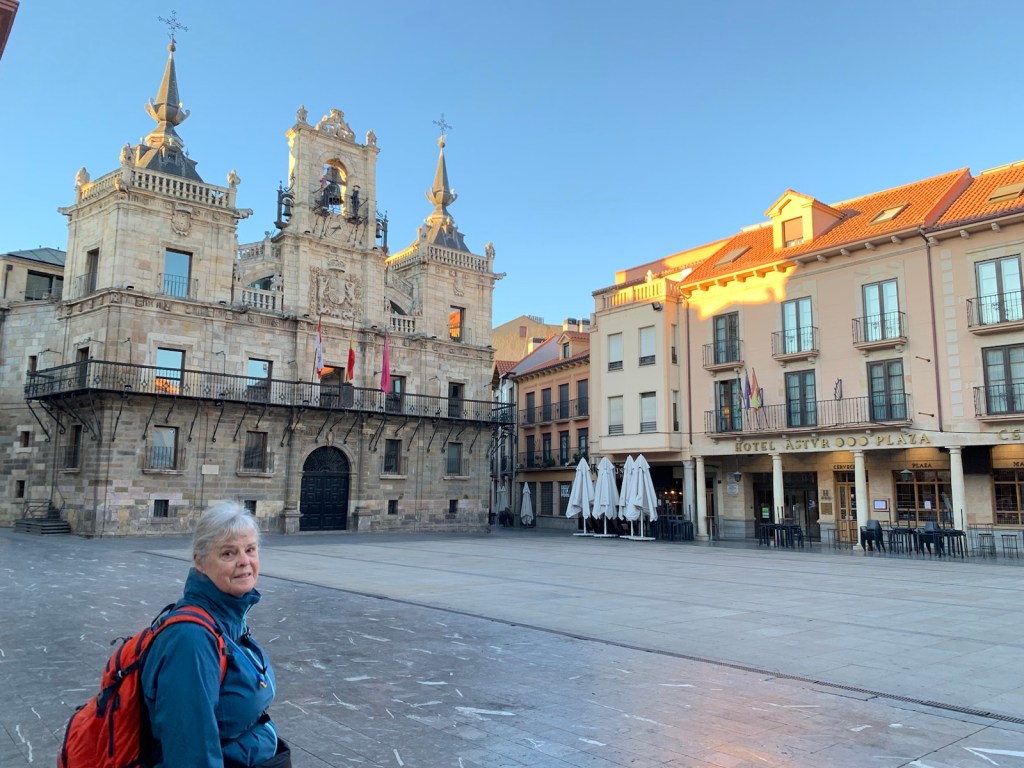

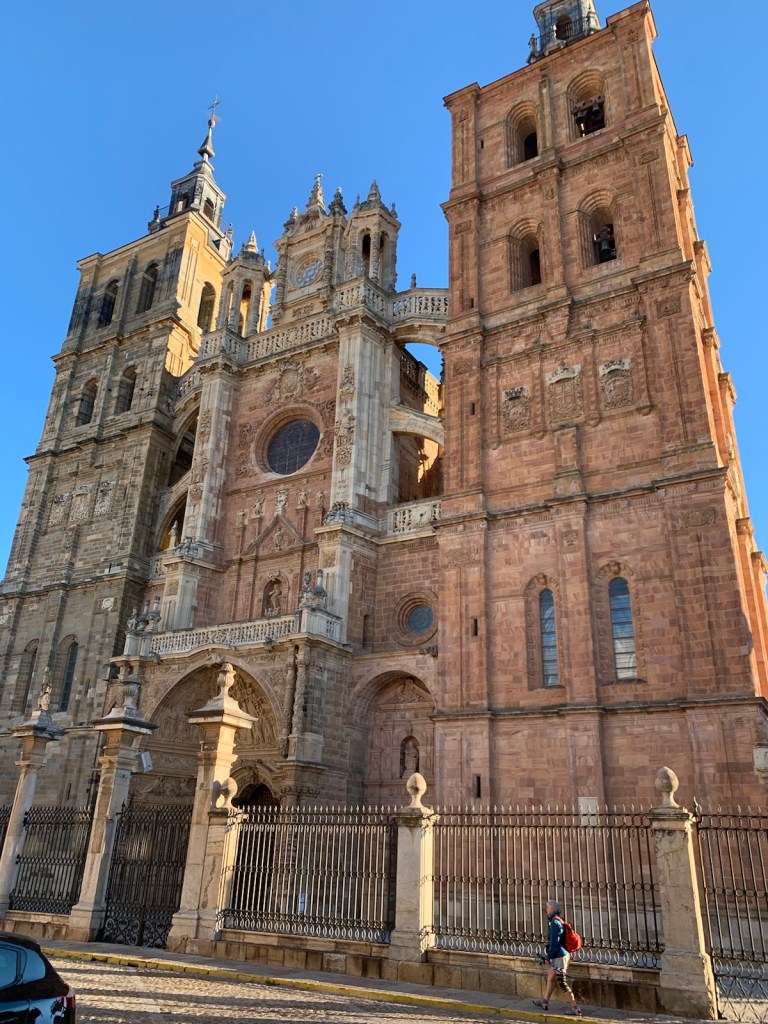
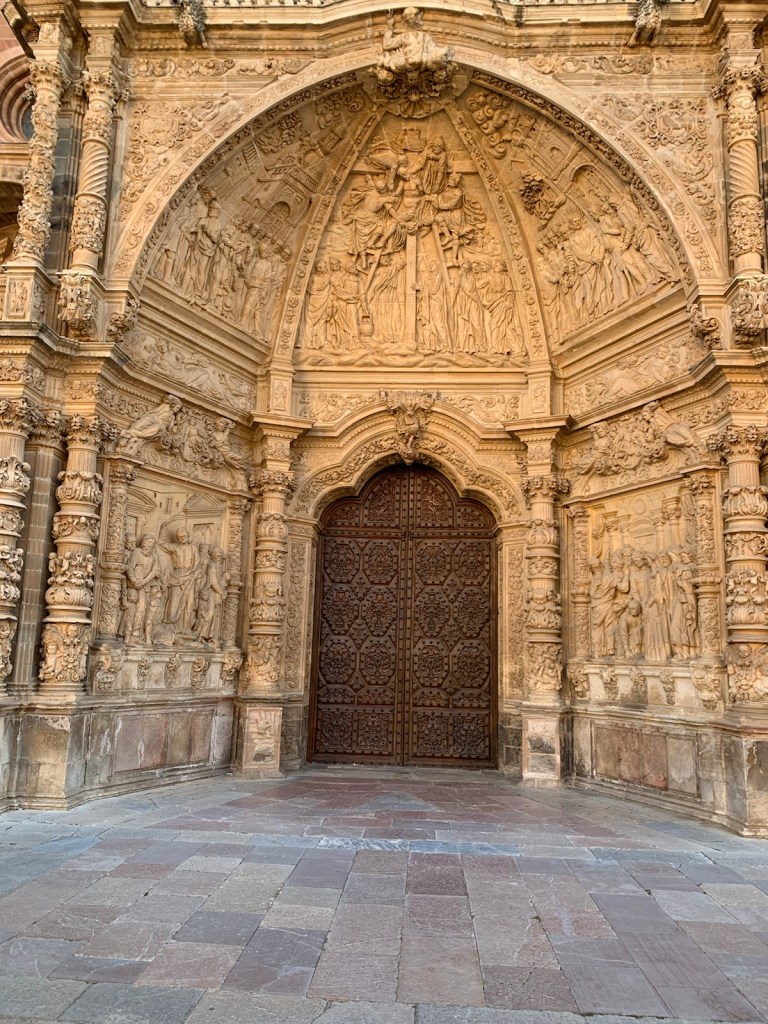
Astorga is a pleasant city with interesting and varied historical buildings, just the right size to not be too overwhelming with main sites confined to the small Old City. First a Celtic settlement, Astorga developed into an important Roman city at the crossroads of the Via Trajana and the Vía de la Plata, as well as an important center for Christianity. According to legend, both St. James and St. Paul preached here. The bishopric of Astorga was one of the earliest Christian titles. The city passed to the Visigoths in the 5th century and was destroyed by the Muslims in 714, then reconquered by Ordoño I in the mid-9th century. After León was destroyed by Al-Mansur’s army, Astorga acted as the capital of the kingdom. The city flourished with the pilgrim trade and housed 21 pilgrim hospitals, the second most on the Camino Francés (after Burgos). One of these hosted Saint Francis of Assisi on his pilgrimage in 1214.
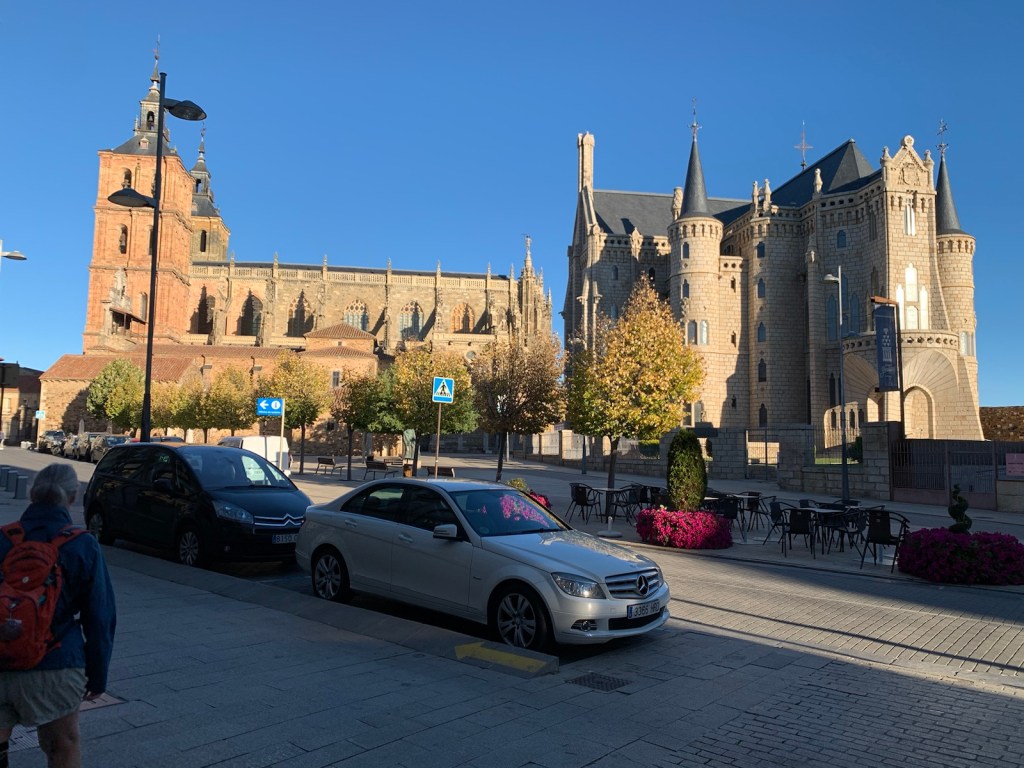
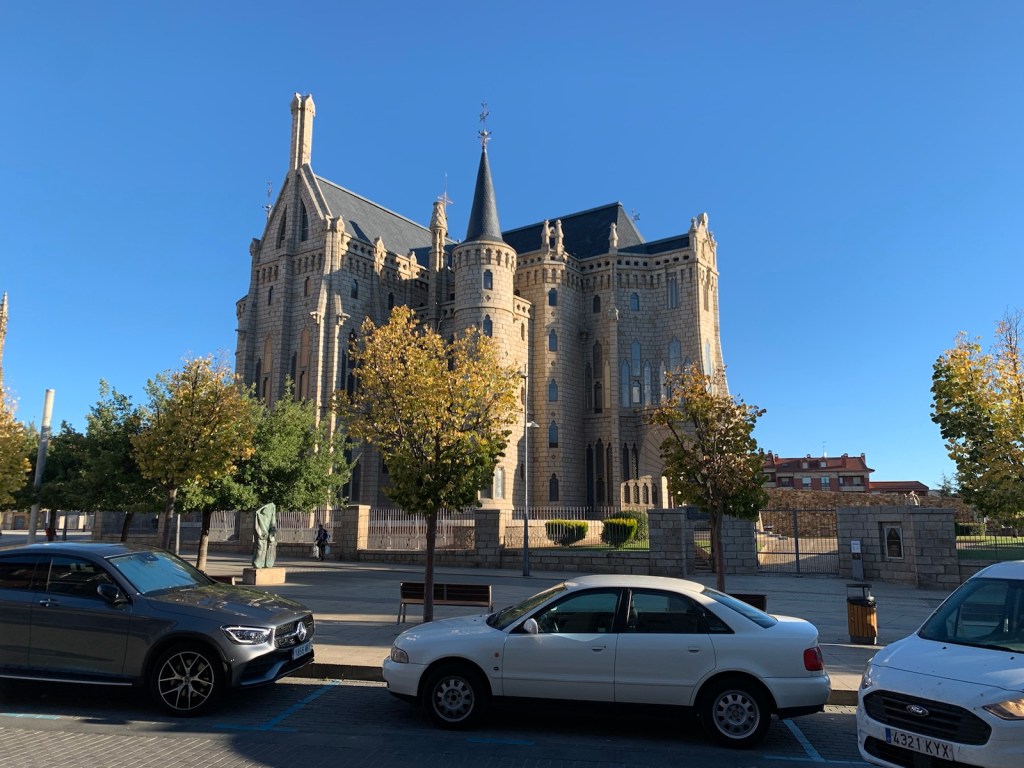
The Palacio de Gaudí, was a palace for Archbishop Juan Bautista Grau Villespinós until his death, when it sat empty until serving as a military headquarters for the Falange movement. In 1963, it housed the Museo de los Caminos with an impressive collection of religious art associated with the Camino.
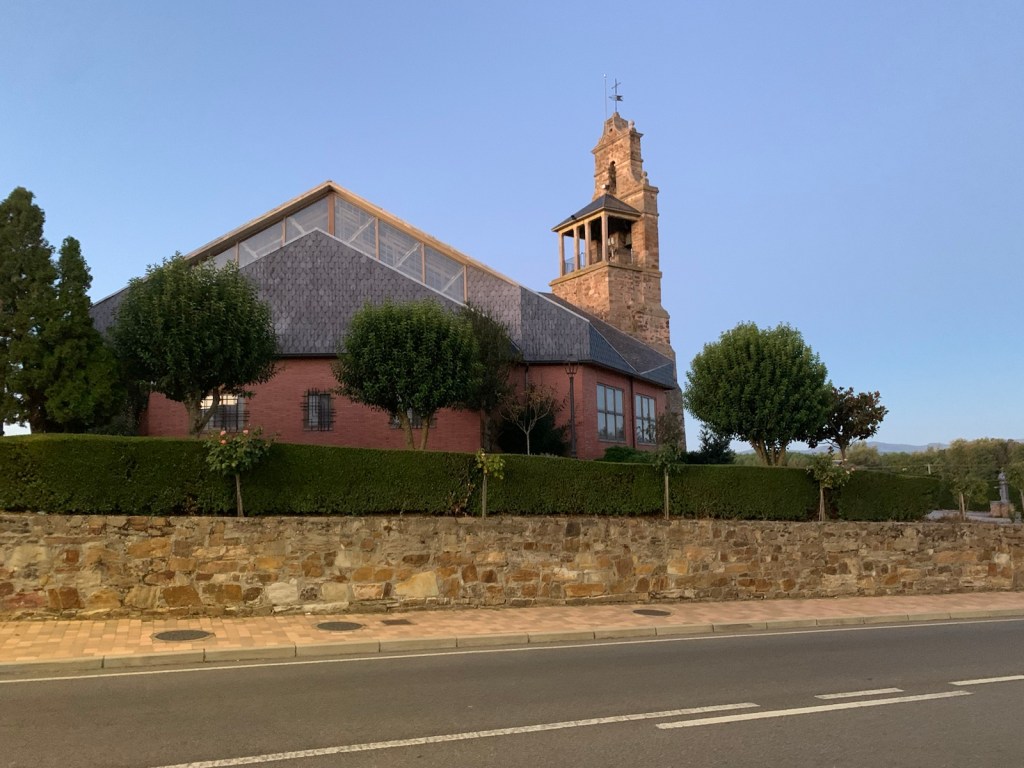
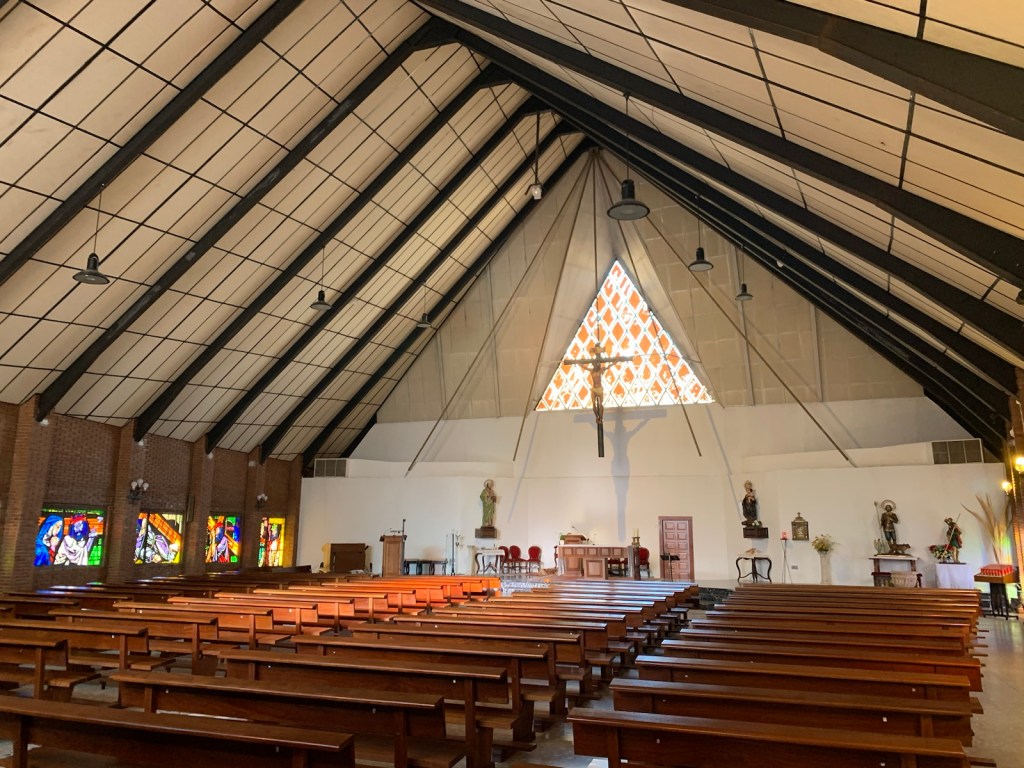
Just before leaving the city we passed another small church covered with Camino and other religious mosaics. We couldn’t find the name of the church anywhere on the site or elsewhere. The interior included a large number of colorful stained glass windows and an otherwise subdued sanctuary design. It reminded us of the Helsinki Rock Church in Finland.

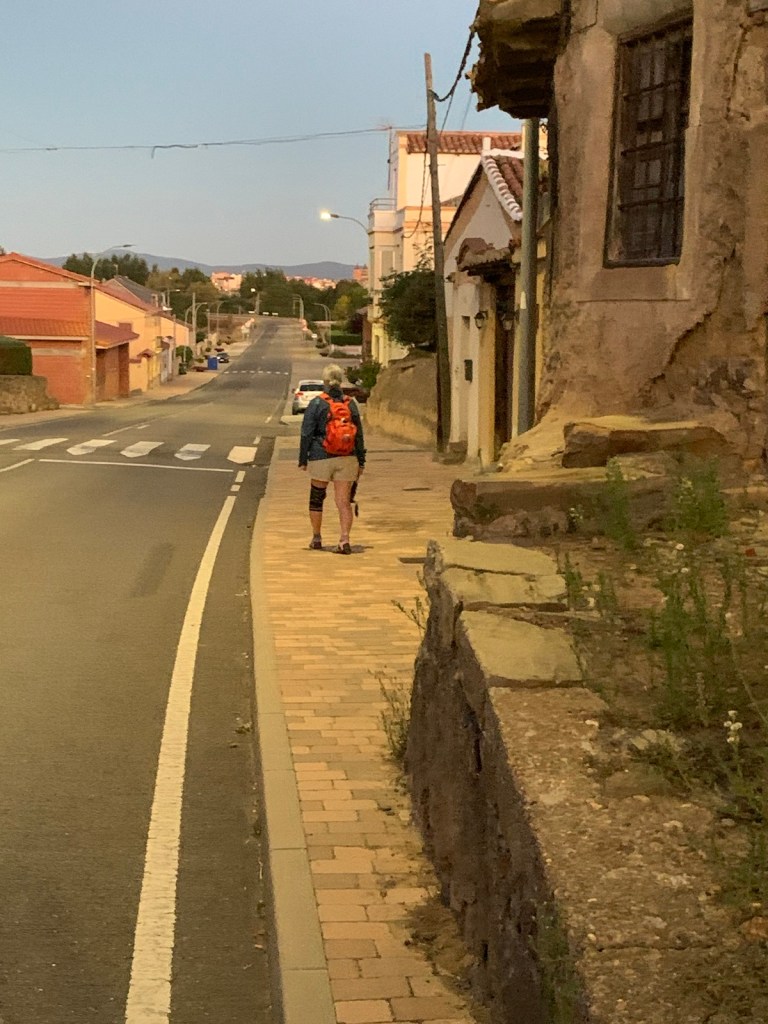
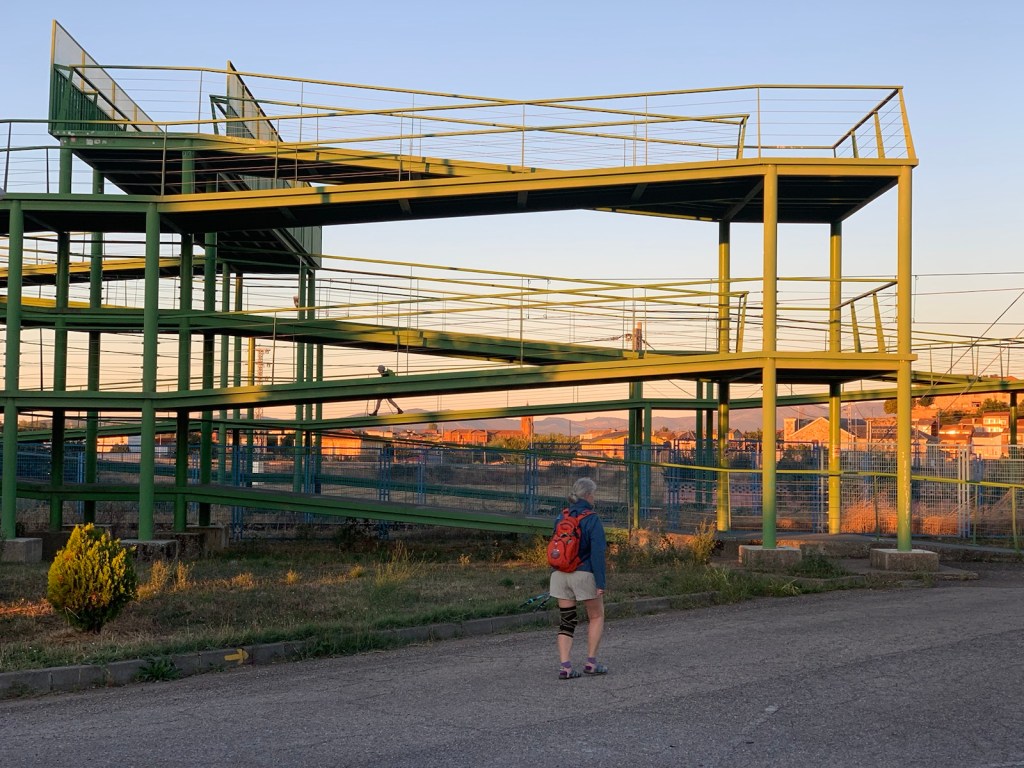
We walked out of Astorga on a sidewalk that continued for half a mile or so, crossed an expressway then continued on a dirt path to the Maragato village of Murias de Rechivaldo where we stopped at a popular bar (“Cris”) for a Colacao.
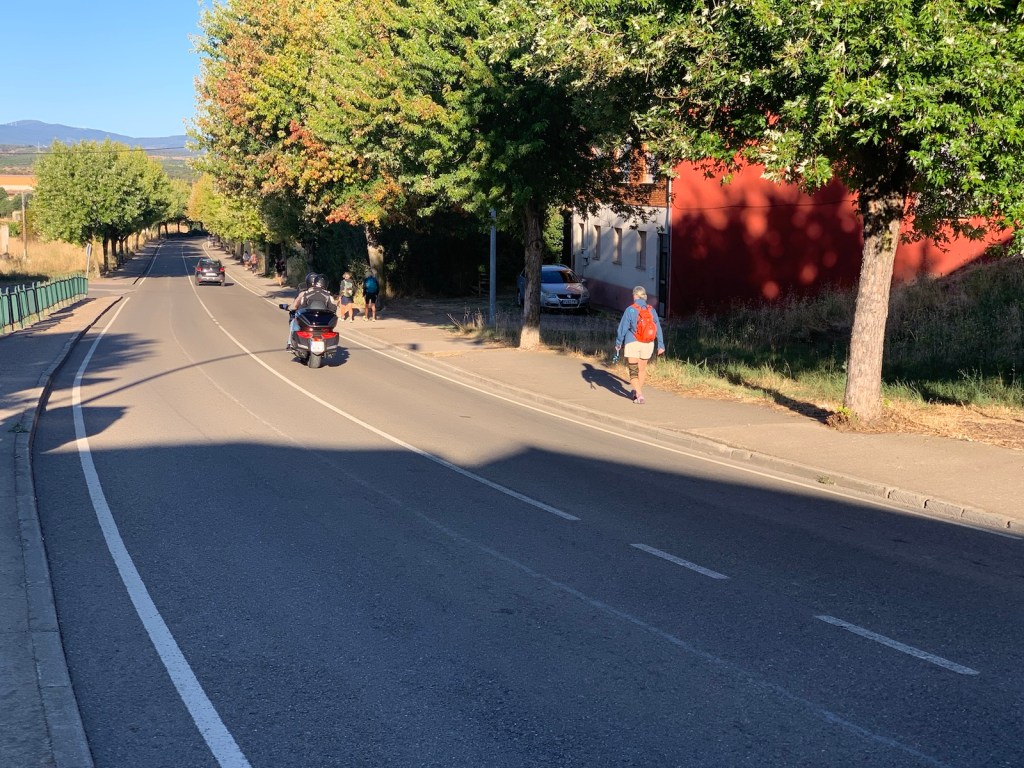
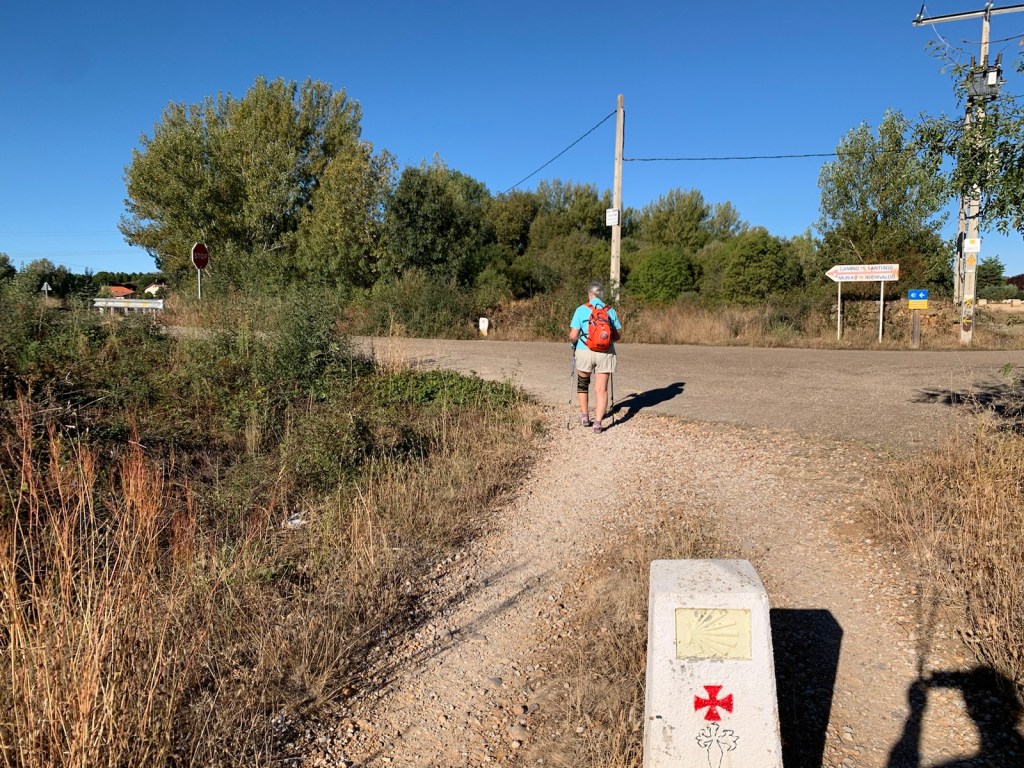
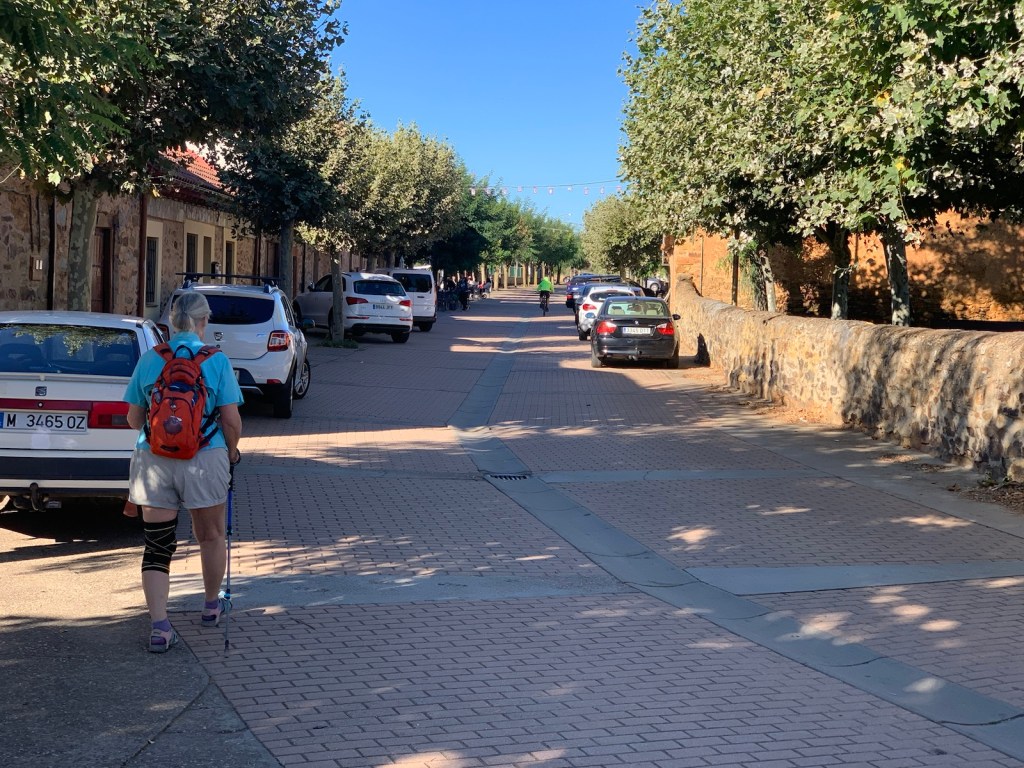
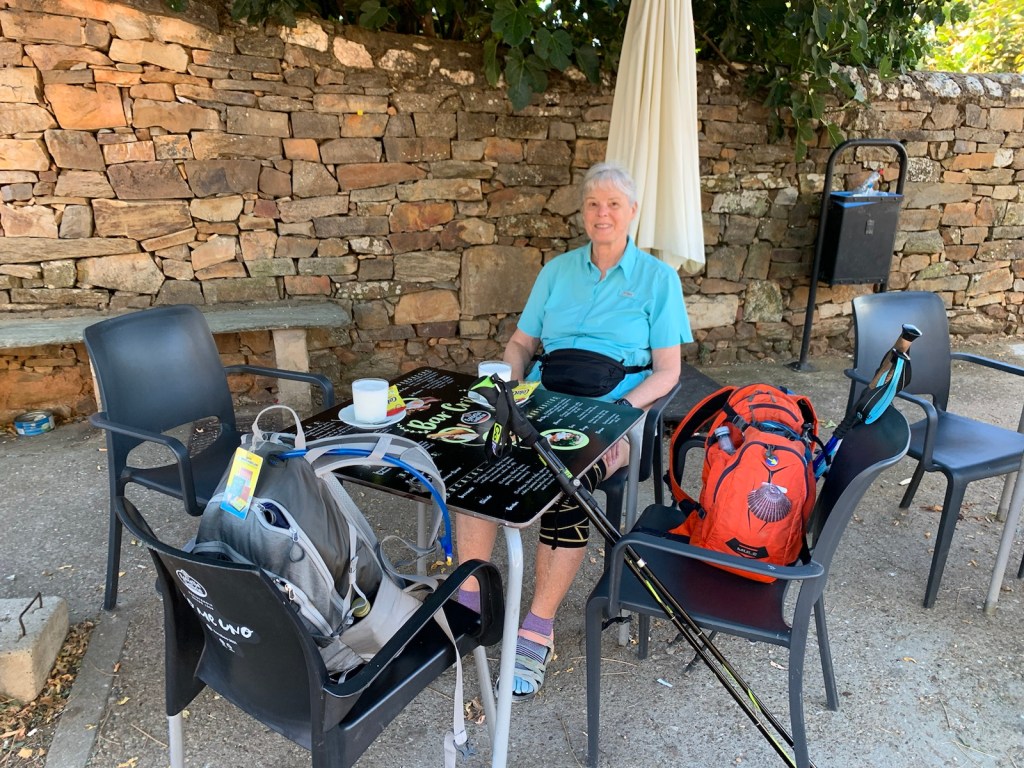
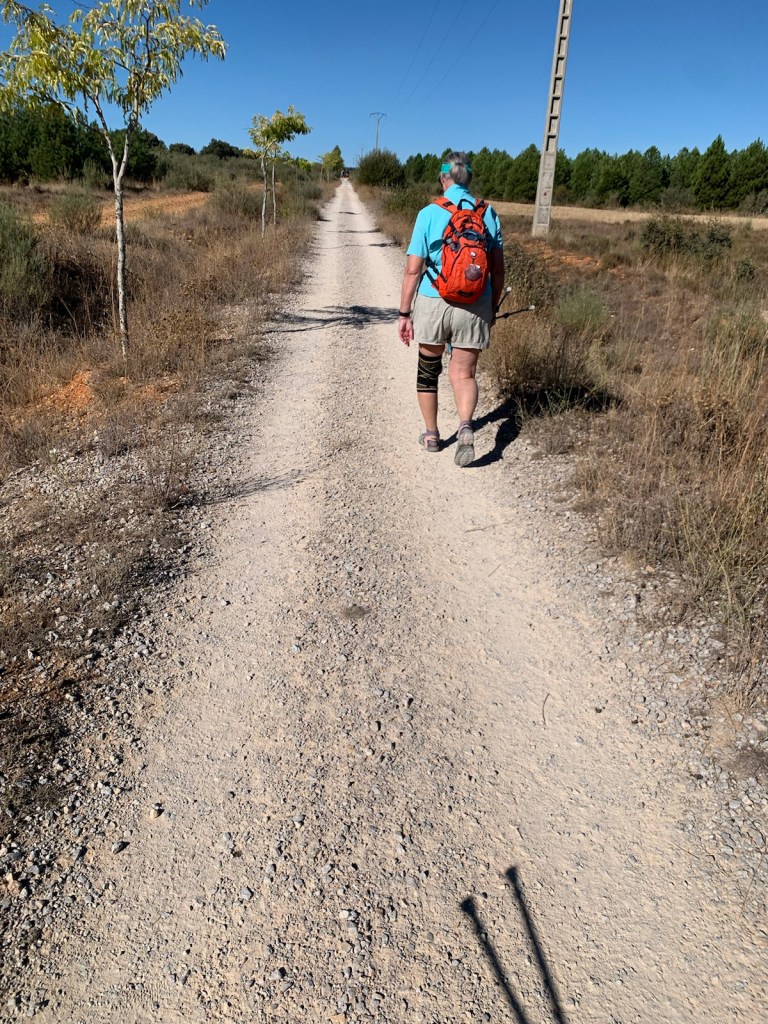
We continued our walk on to Santa Catalina along a straight, dirt path for the next 2.5 miles on a gradual uphill grade, working our way into the Cantabrian Mountains.
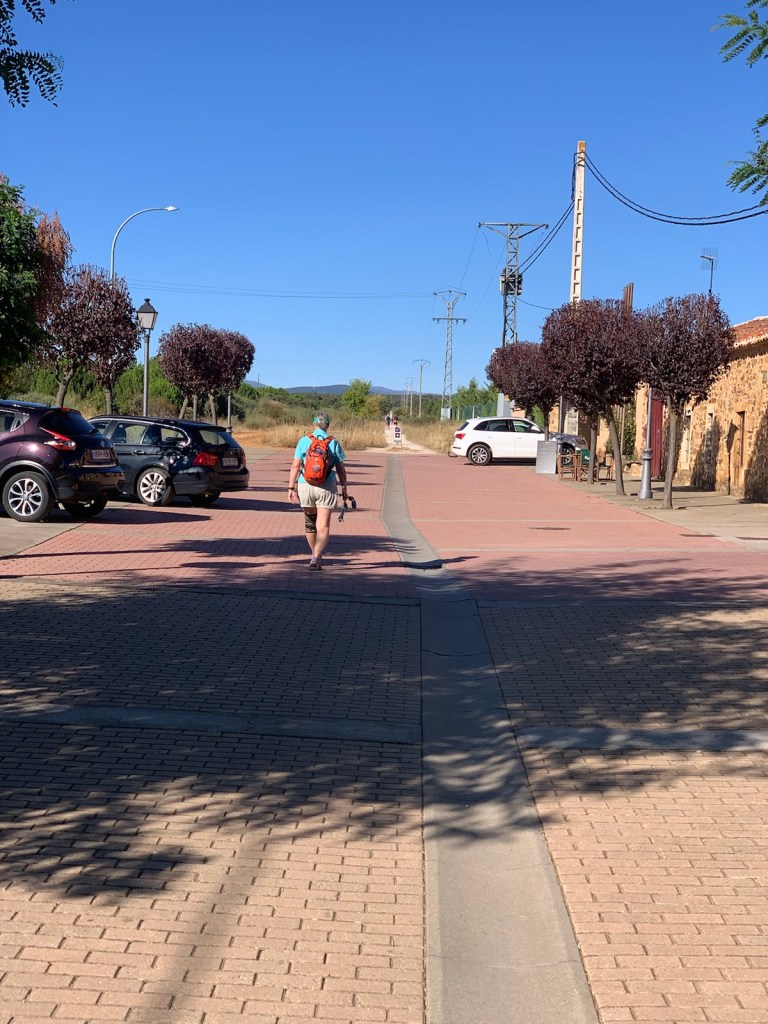


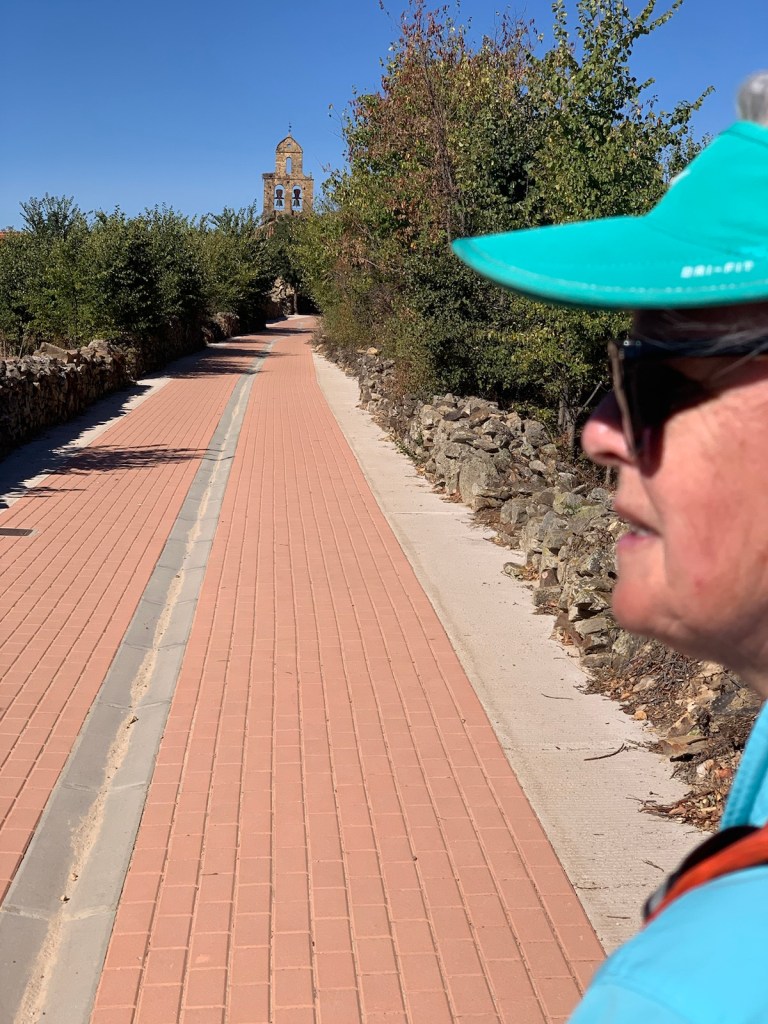
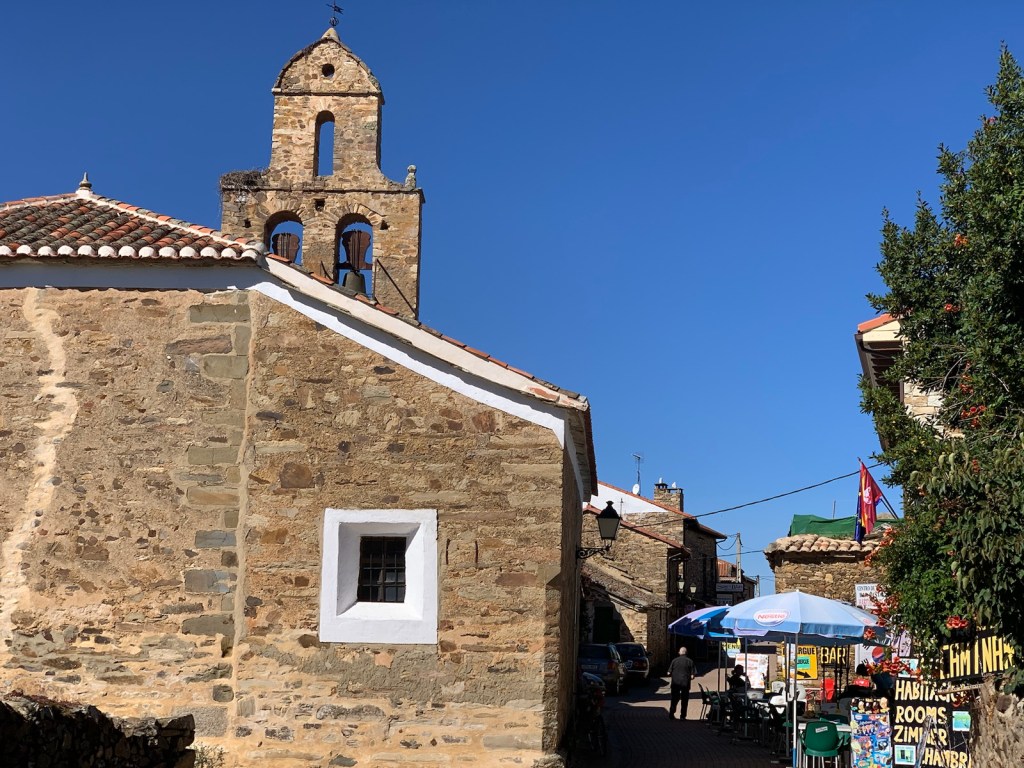
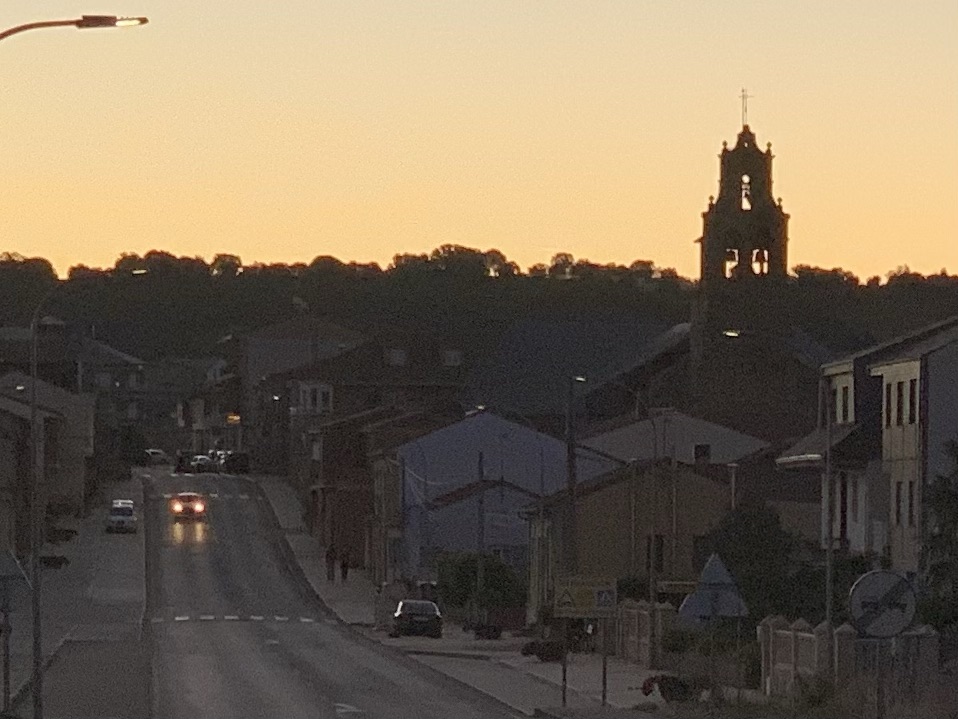
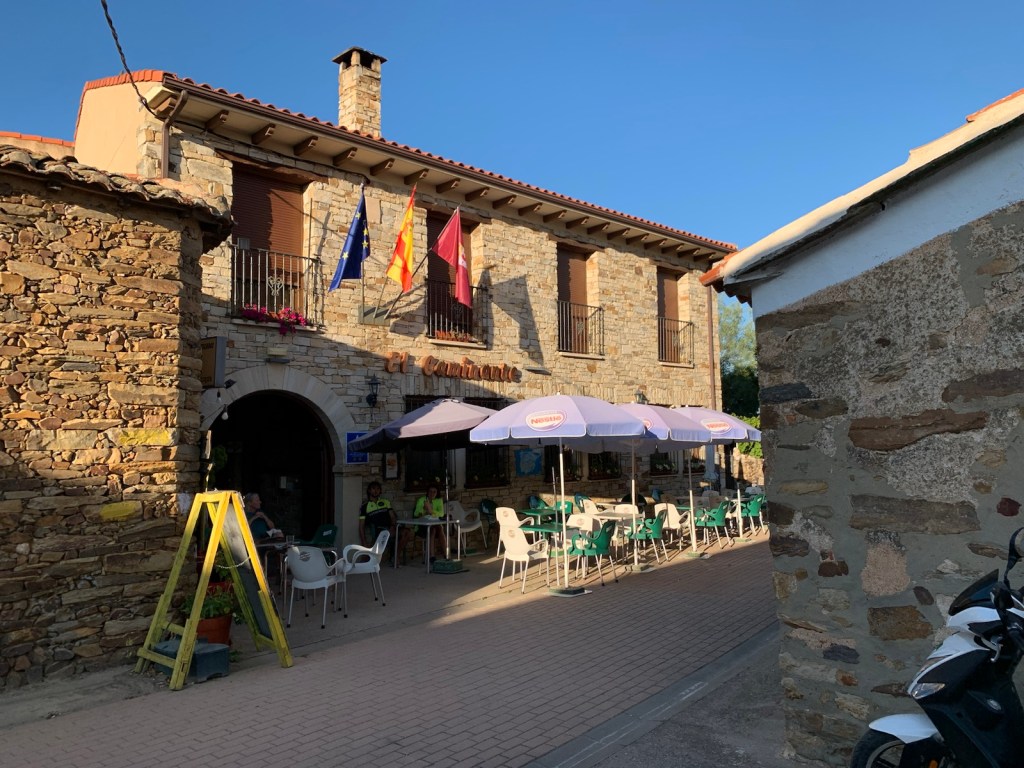
We arrived in Santa Catalina de Somoza (pop.60) before check in time, so we stopped for a seat and refreshment at the first of two bars, El Caminante, in the village.
We’ve stayed in Santa Catalina in all 6 of our Caminos.
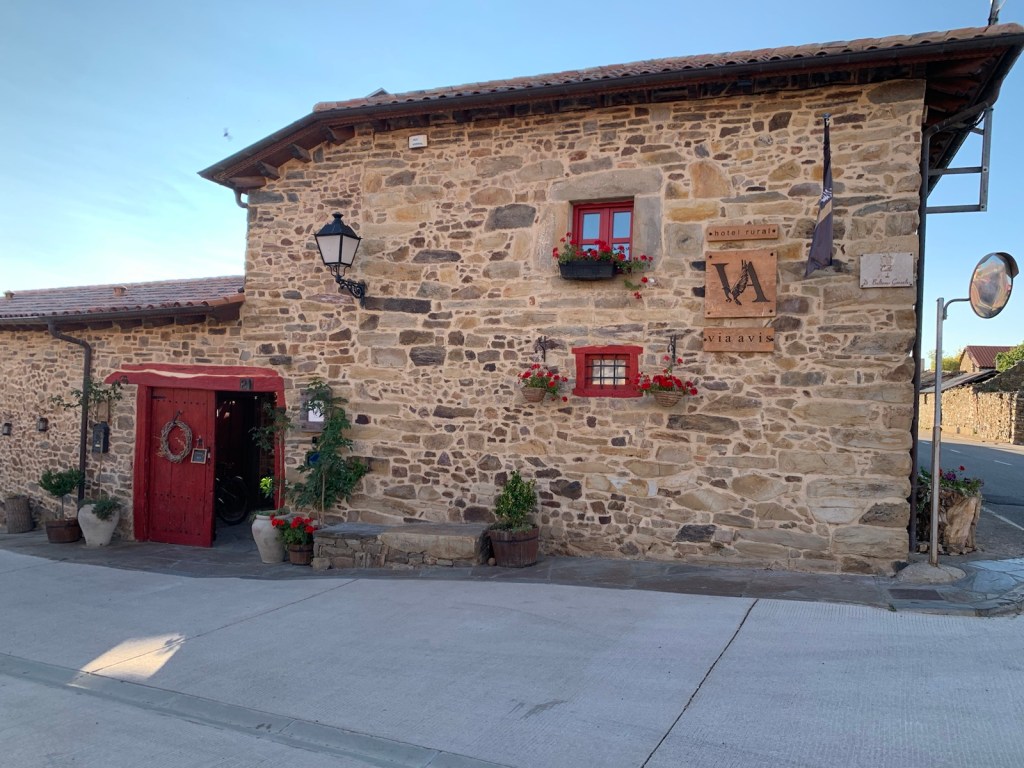
We checked in to Via Avis and were recognized and welcomed by Carlos the owner. Carlos is from Spain and his wife, Daina, from Lithuania, run Via Avis. They are a charming couple that we got to know during our visit last year.

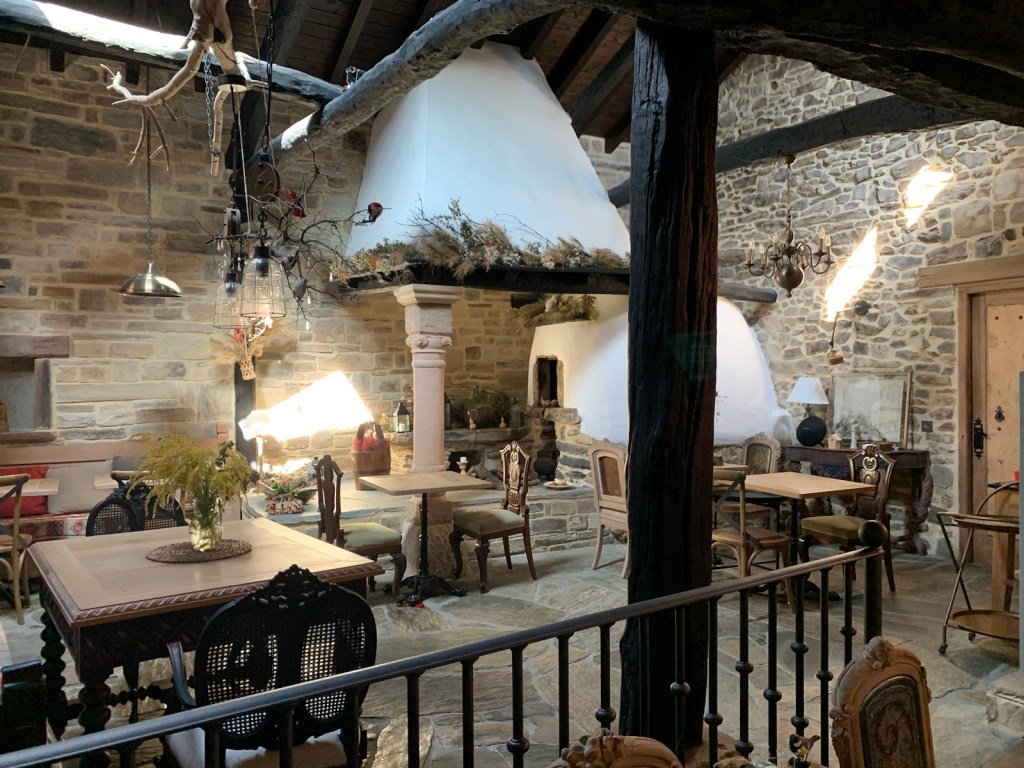
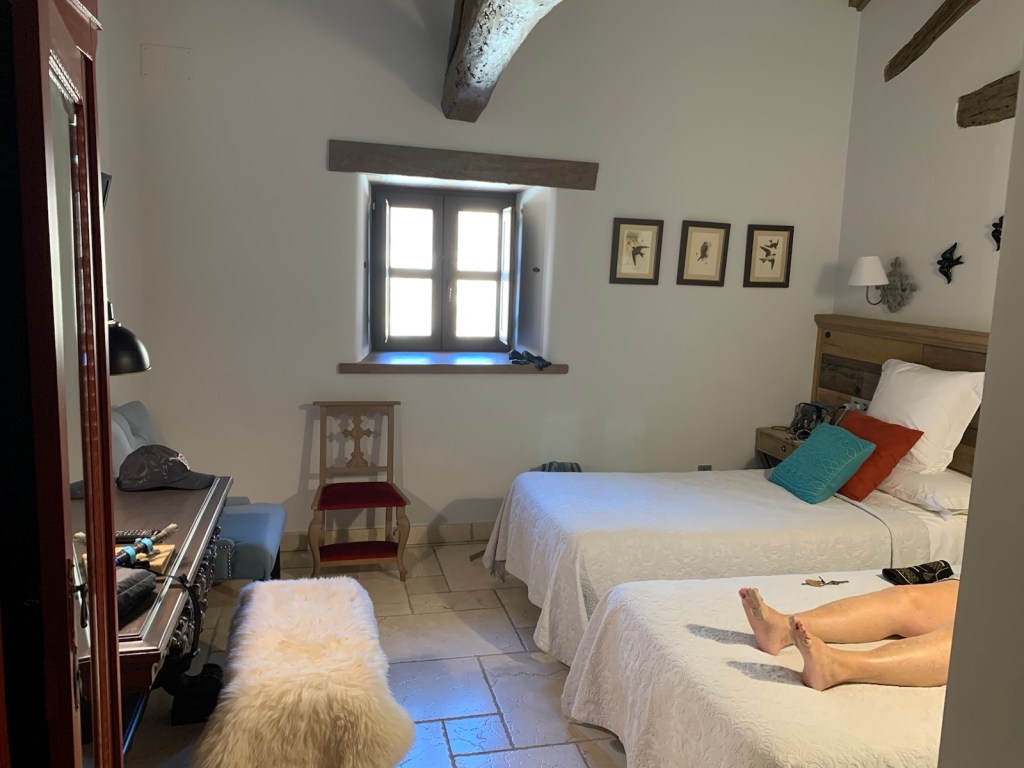
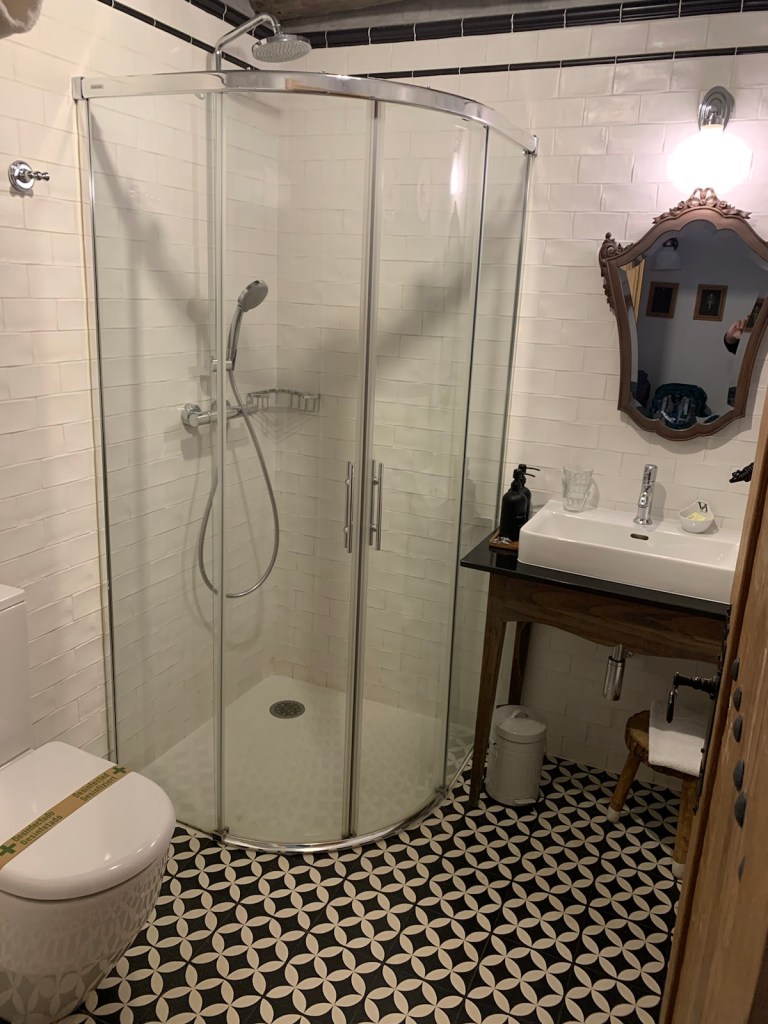
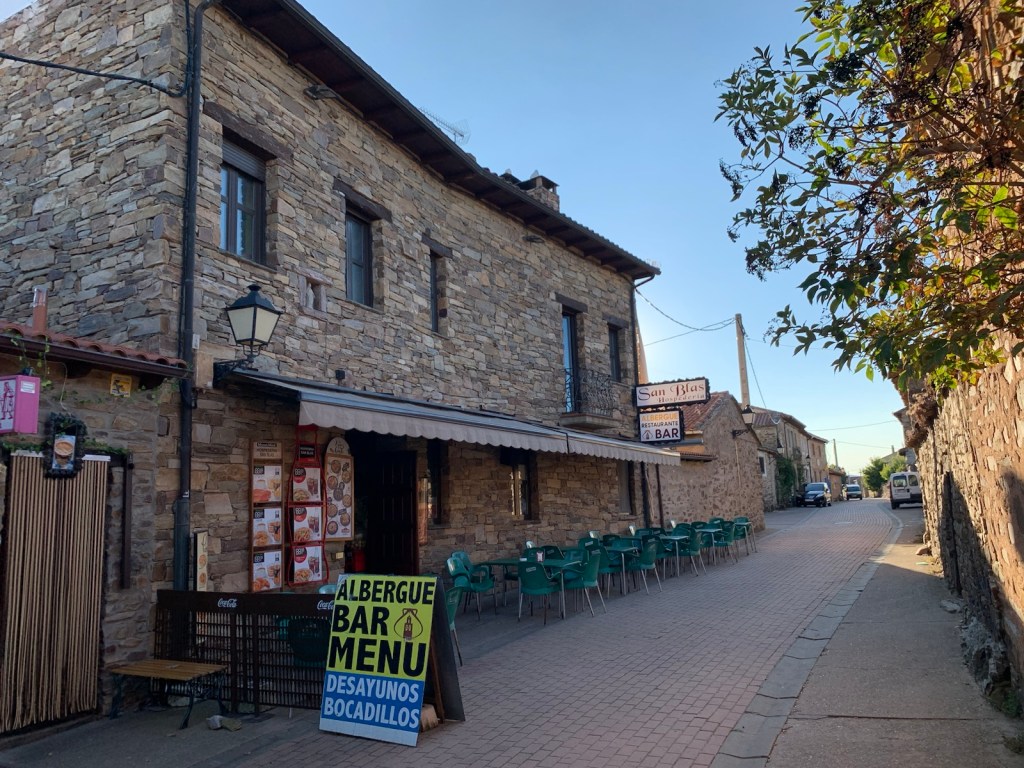
After getting settled, hand washing and hanging out clothes, we got lunch/dinner at San Blas, then retired to Via Avis for reading, blogging and napping.
We finished another long walk unscathed and are looking forward to another challenge as we climb higher into the Cantabrians.
 Jimandi