
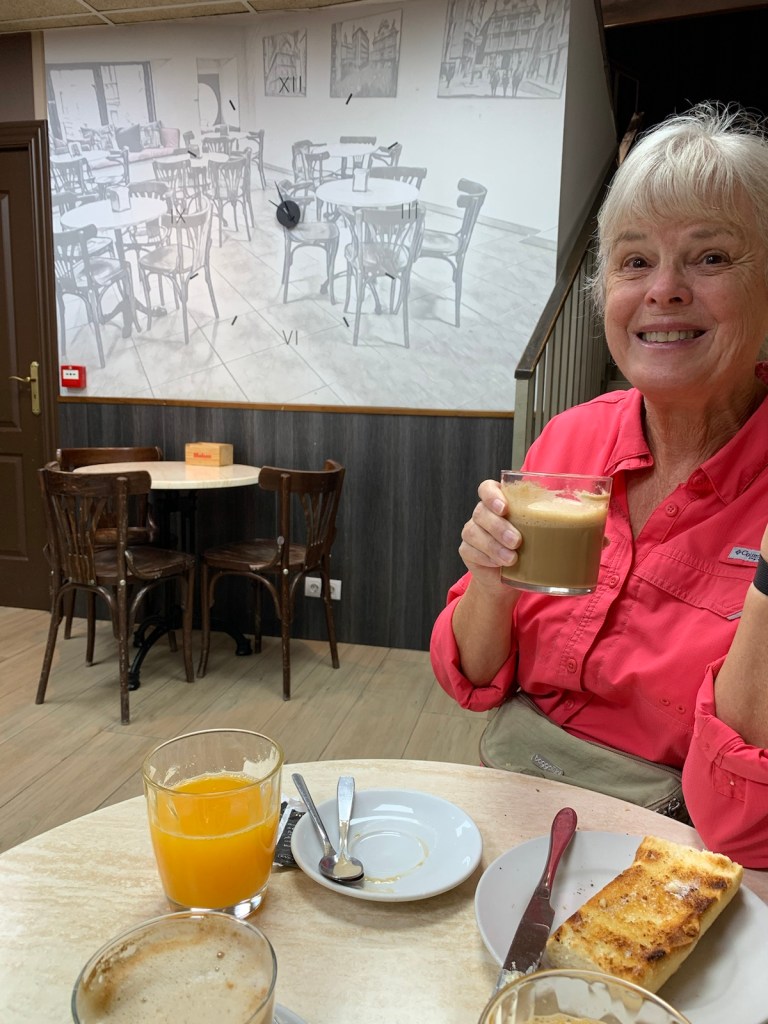
We slept in this morning then had a nice breakfast in a favorite spot a short distance from our hotel.
While Linda took advantage of the down time to relax in our room, Jim ventured out to stretch his legs and appreciate, perhaps for one more time, our favorite of Camino cities.
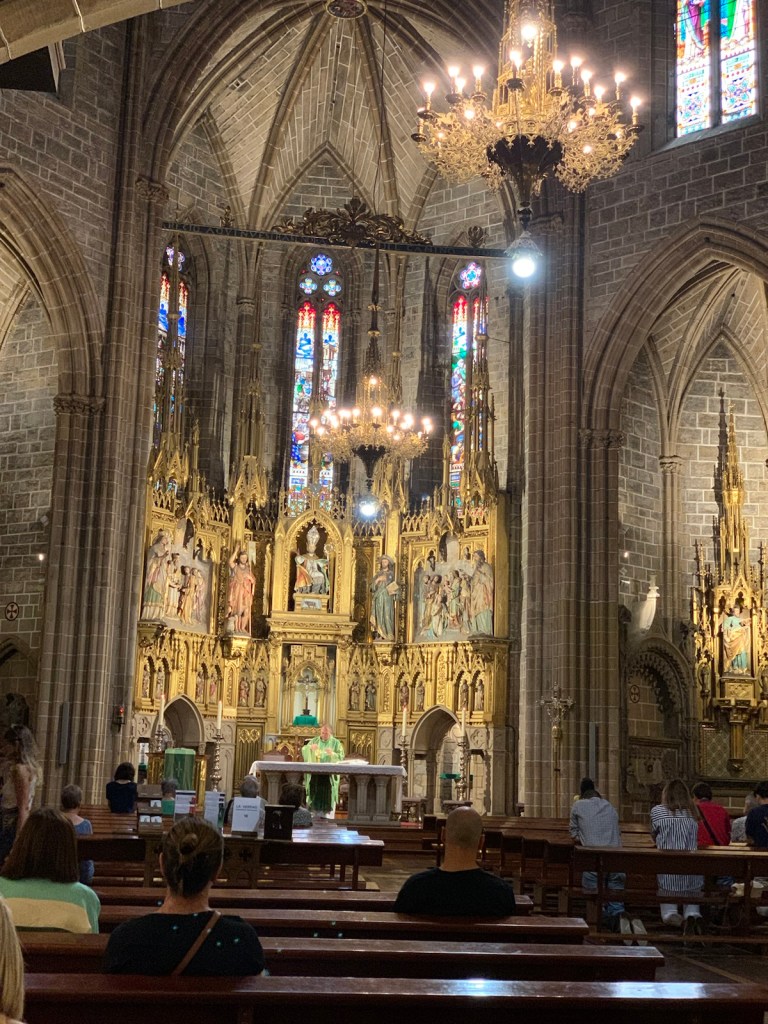
San Saturnino o San Cernin was built in the XIII century by the French inhabitants of Pamplona, as a church and a fortress, for protection from unfriendly ” neighbors”. The two towers were ” watch towers” for the fortress.

Under a 1423 treaty, the three urban jurisdictions of Pamplona became a single municipality, under the same coat of arms and taxes. This treaty, at the same time, ordered the destruction of the physical boundaries (mainly walls) between the three of them, conserving the outside protections.
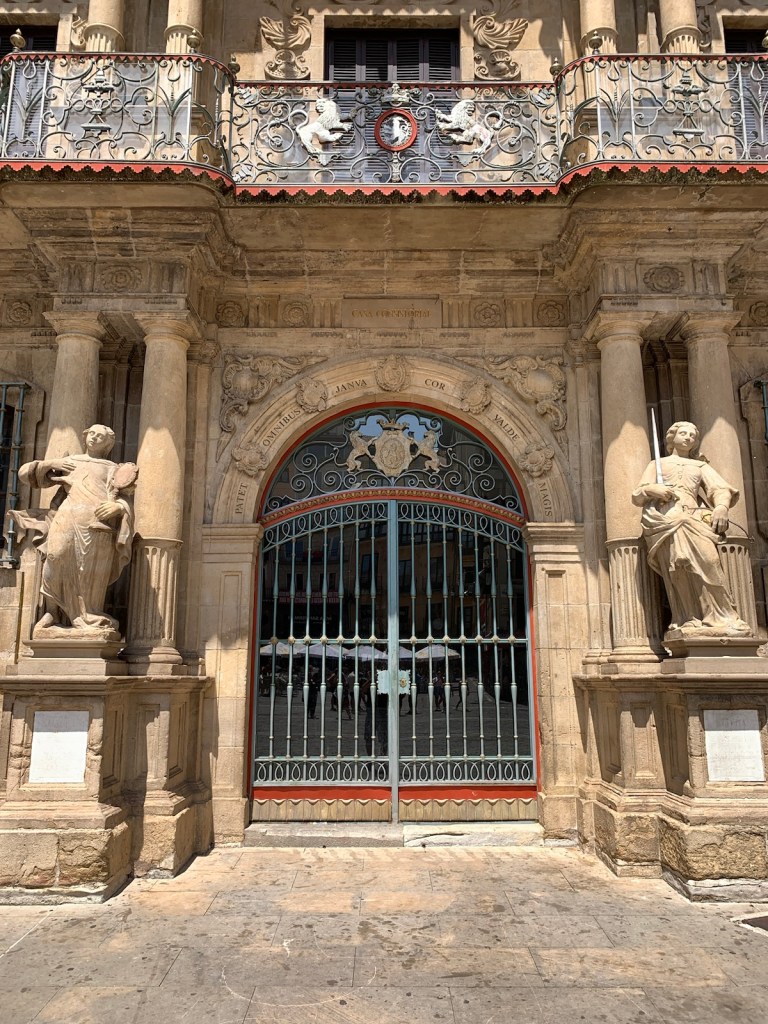
The point where the three jurisdictions came together became the site of the City Hall. This is also the building from which, today, the City Council President launches the ceremonial rocket that marks the “Chupinazo”, or official opening ceremony of the annual fiesta of San Fermin (July 6-14).
San Fermin is said to have been the son of a Roman of Senatorial rank in Pamplona in the 3rd century. He was converted to Christianity by a disciple of Saint Saturnino. According to tradition, he was baptised by Saturninus (also known as Saint Cernin) in Pamplona. Fermín was later ordained a priest in Toulouse, and returned to Pamplona as its first bishop. On a later preaching voyage, Fermín was dragged to death in AD303. He is considered a matyr in the Catholic Church. It is believed he died on September 25, AD 303. Saint Fermín is said to have met his end by being dragged through the streets with angry bulls running after him, hence the tradition.
Jim next walked to the Plaza Castillo, the center of old Pamplona.

He then walked to another favorite, Bar Gaucho, for a sampling of pintxos. Unfortunately, it was closed, perhaps to give its staff a well deserved break after two weeks of non-stopped festivities.
But, alas, a mere 15 steps away was Bar Guria, a new find and the sampling began.

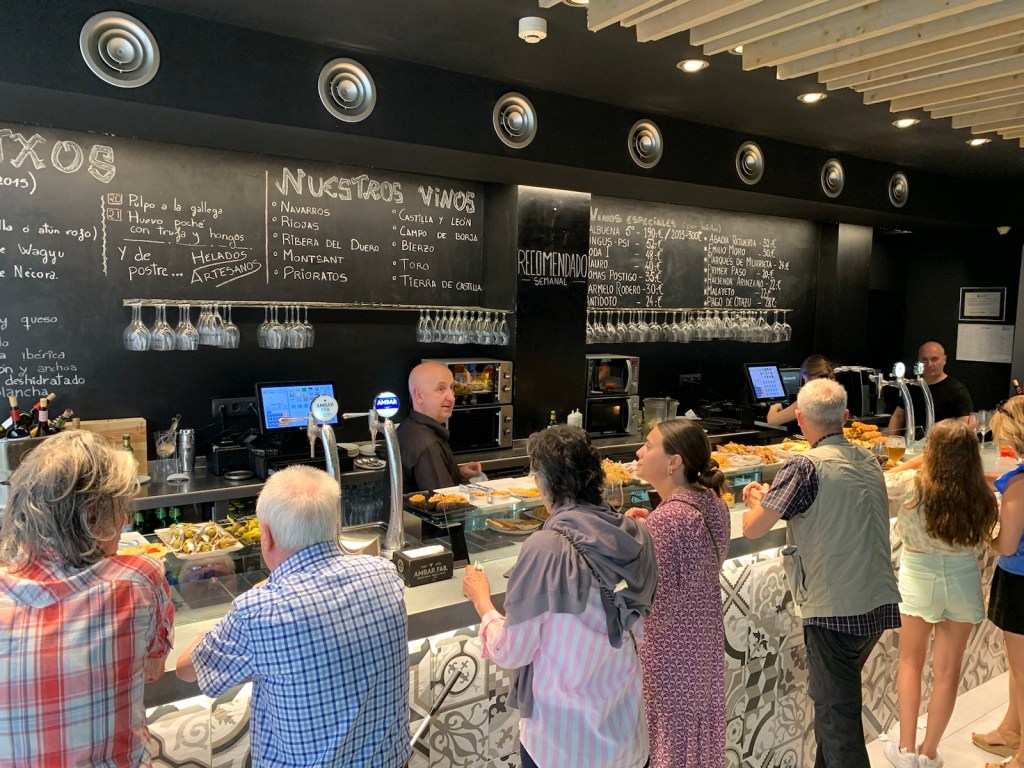

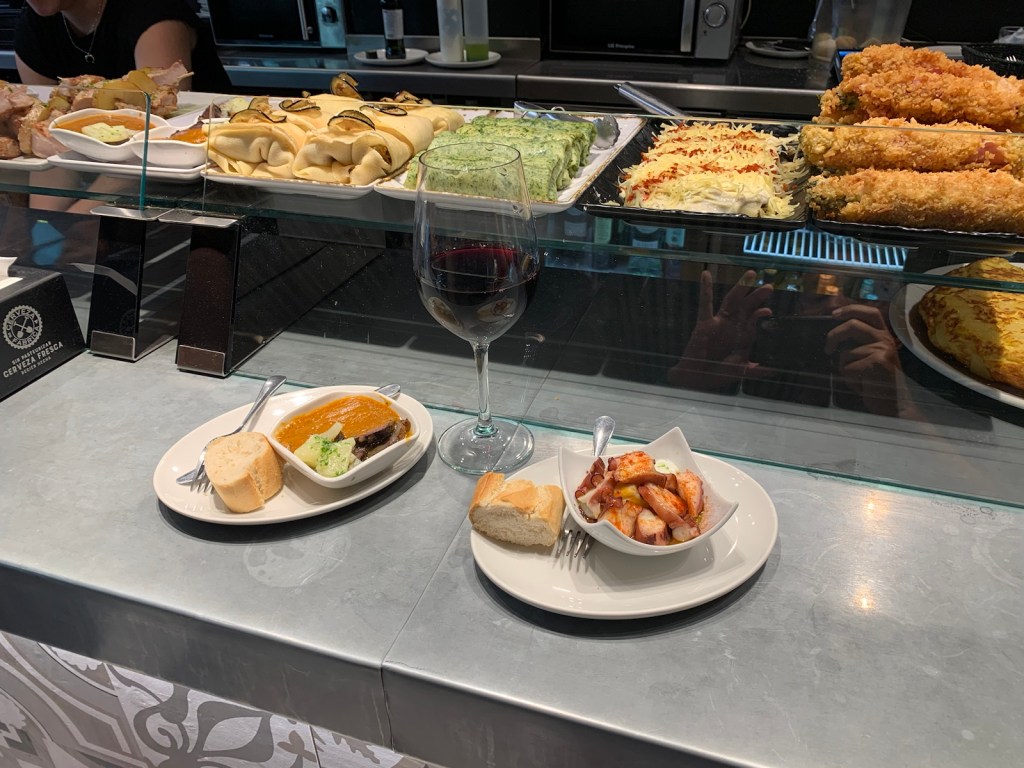
Jim’s first selection was (left) was Carilleras: pork cheeks, potato slices in a well seasoned red brown sauce. The second selection (right) was Pulpo a la Gallega: octopus and potato slices seasoned with sea salt, Spanish paprika and extra virgin olive oil. And a nice glass of vino tinto Navarro red wine. It was a very successful sampling… everything was delicious.
His pintxo appetite now sated, Jim ambled halfway up a nearby street to Caminoteca, an “everything-you-need-for-walking-the-Camino-in-case-you-forgot-to-bring-it” store.

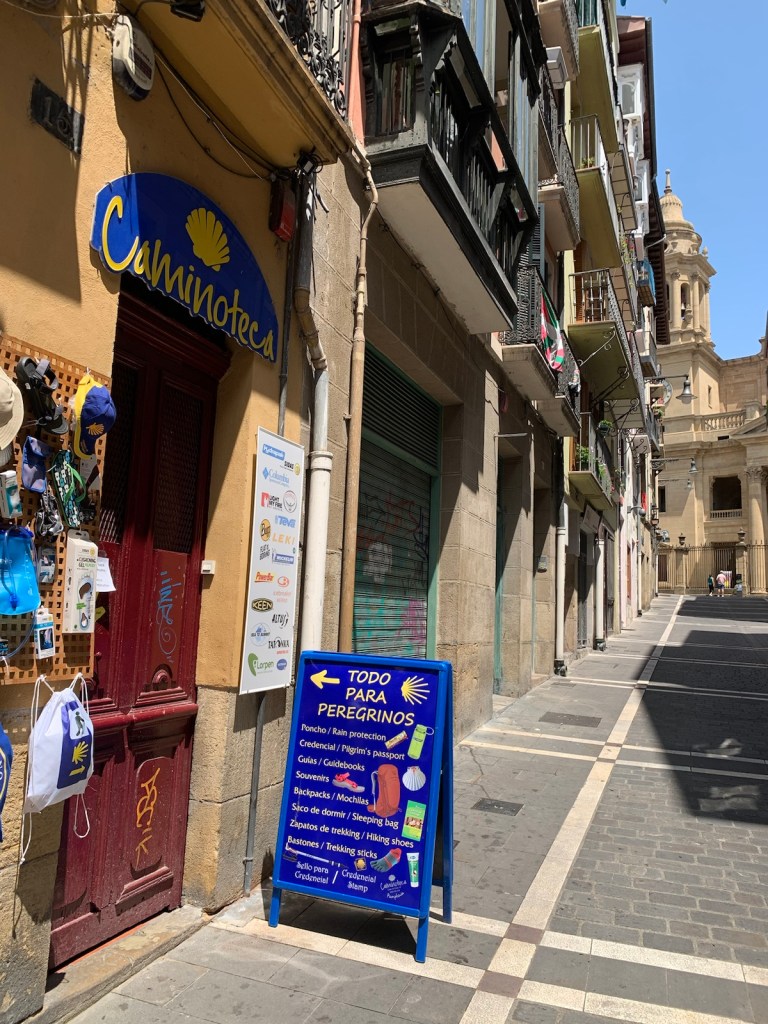
We’ve shopped here numerous times and found some neat stuff at very reasonable prices like trekking poles, hydration bladders, socks, etc. It’s a great resource after walking the first 45 miles of the Camino Frances and it easy to find… a few steps down the street from the Catedral.
After a 2 hour mini-adventure in Pamplona, Jim returned to hotel Maisonave to find Linda ready for a late lunch. We ventured out together and found a nice shady outdoor table and enjoyed a late lunch.

Just as we were waiting to pay our bill, an American couple who moved to southern Spain five years ago and were in town for the San Fermin festival stopped by our table and introduced themselves.
We chatted briefly and they hurried on their way and we returned to our room to prepare for continuing Camino 2023… pondering our own future… hmmm.
 Jimandi